14 Top-Rated Tourist Attractions in Sicily
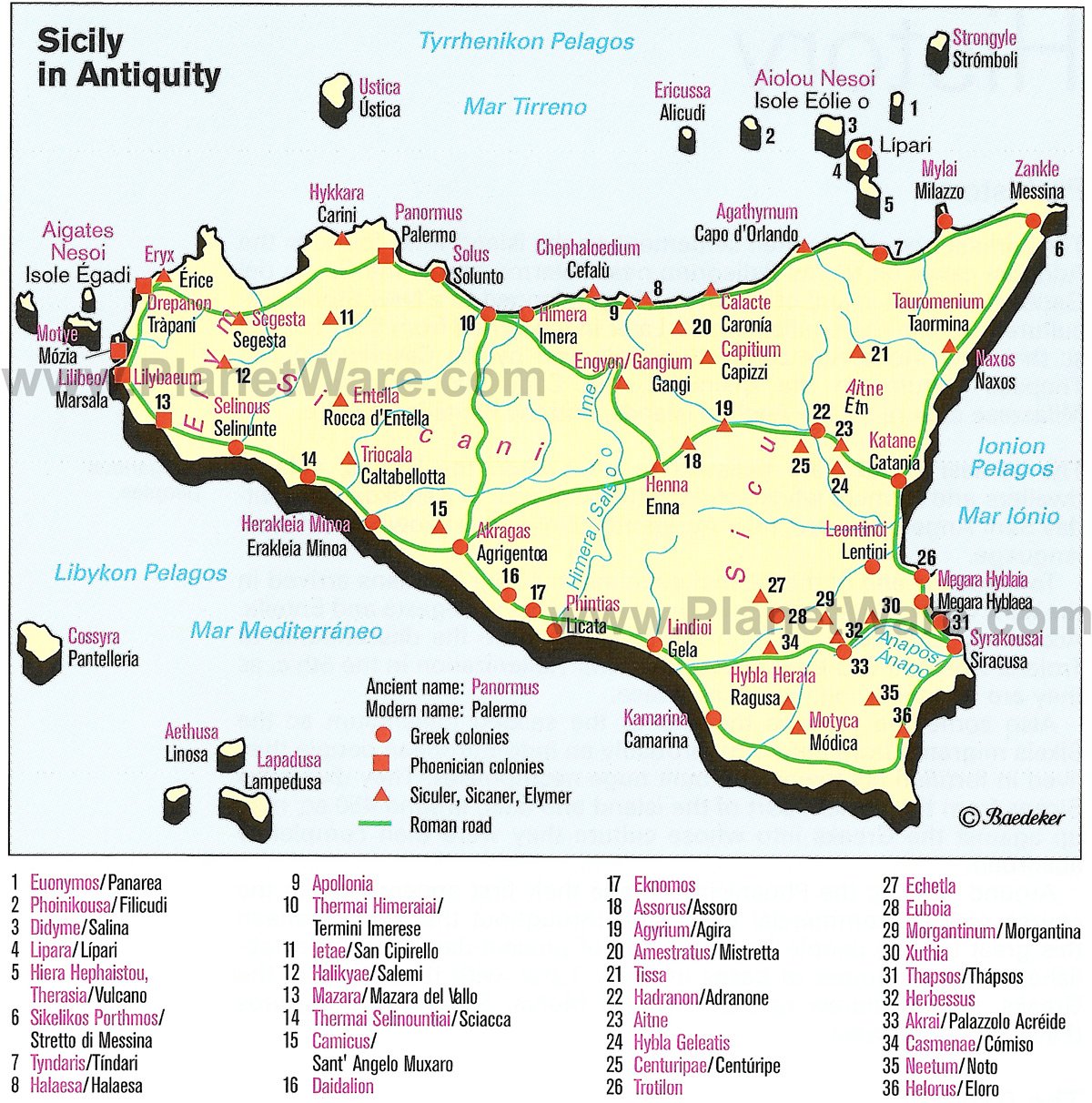
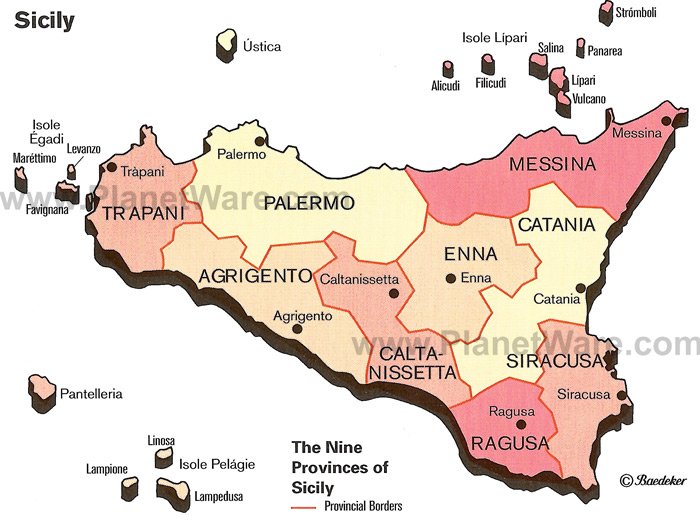
Sicily is full of superlatives, many of them relating to treasures of the ancient world. In Agrigento's Valley of Temples, for example, you'll see one of the three most perfect temples in the Greek world. At Selinunte is one of the largest of all known Greek temples. Villa Romana del Casale in Enna, with more than 3,500 square meters of mosaics, is one of the best-preserved villas anywhere in the Roman Empire and now a UNESCO World Heritage Site.
So are the twin towns of Ragusa and Modica for representing Europe's zenith of Baroque art. Both the stunning mosaics and the exquisite cloister at Monreale are considered highlights of European art, and the collections at Palermo's Archeological Museum rank it as one of Italy's best.
Sicily has its share of natural wonders, too, with Mount Etna ranking as continental Europe's tallest active volcano, and the nightly display from Stromboli, in the neighboring Aeolian Islands, its most dependable. Beyond its tourist attractions, you'll enjoy Sicily for its lively local culture and spirited people.
Discover the best things to do on this diverse island with our list of the top attractions in Sicily.
- 1. The Cathedral of Monreale
- 2. The Valley of Temples in Agrigento
- 3. Church Mosaics in Palermo
- 4. Eastern Temples at Selinunte
- 5. Explore Mount Etna by Rail or Cable Car
- 6. Villa Romana del Casale in Enna
- 7. Parco Archeologico della Neapolis, Syracuse
- 8. Taormina's Townscape and Greek Theater
- 9. Aeolian Islands
- 10. Go to the Beach
- 11. Antonino Salinas Regional Archeological Museum
- 12. Ragusa and Modica
- 13. Cefalù Cathedral
- 14. Ortigia
- Sicily (Palermo) - Climate Chart
1. The Cathedral of Monreale
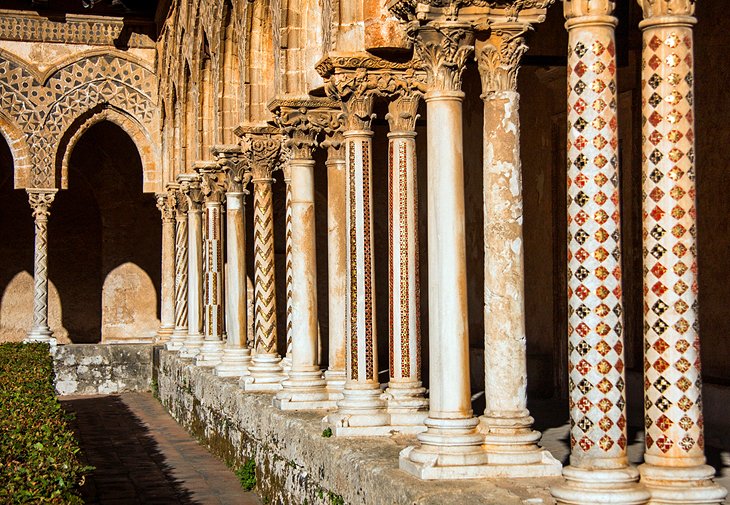
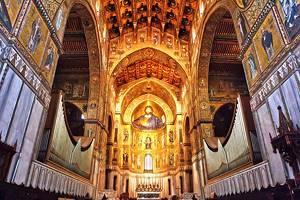
The cathedral of Monreale reflects at once the politics, religion, and artistic heights of Sicily under the Normans. And in doing so, it also achieved a place in the art history of Europe, all the more remarkable because it remains today almost exactly as it was built in the 1100s.
The cathedral's architecture represents the move away from Eastern Byzantine forms, but its decoration with dazzling mosaics – considered the church's magnificent highlight – keep it firmly in the Byzantine traditions. They cover every available surface, in intricate illustrations of Biblical text and themes rendered in vibrant colors and with exceptional artistic virtuosity.
Artistically, the cloister ranks right alongside the mosaics, a masterpiece of 228 double columns, with intricately carved capitals, surrounding a garden with a lovely fountain in one corner. The stone carving is not only beautiful, but the motifs are an engaging mix of mythical, religious, animal, floral, and human figures. Many of the columns are inlaid with colored stones, and no two are alike.
Just a few steps from the cathedral, the boutique hotel Palazzo Cuto occupies a historic home furnished in antiques and decorated by paintings and sculptures. Views from the hotel are spectacular, sweeping across Palermo and the inland mountains.
Address: Piazza Vittorio Emanuele, Monreale
2. The Valley of Temples in Agrigento
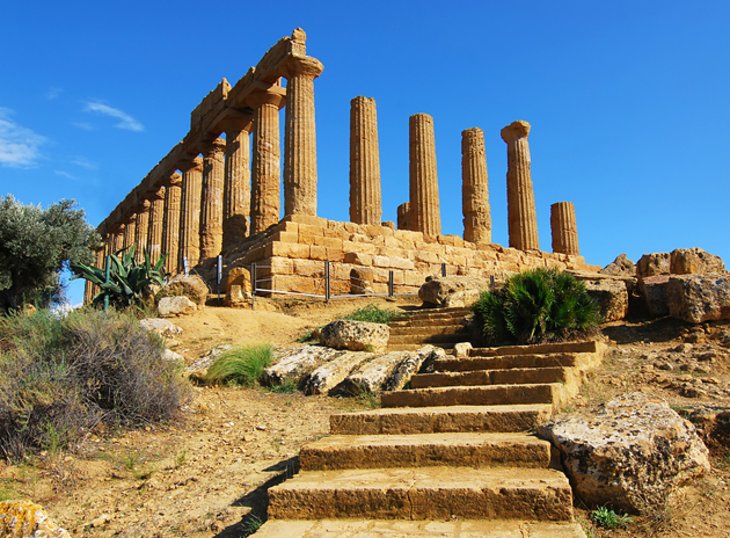
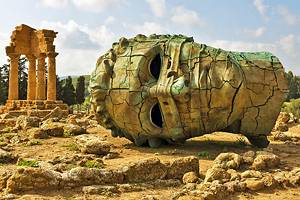
The large complex of temples and tombs in Agrigento dates as far back as 500 BCE and includes Sicily's best preserved Doric temple – Tempio di Concordia – one of the most perfect to survive anywhere. Along with it in the eastern group is the Tempio di Juno Lacinia, almost as large, and in the western group is Temple of the Olympian Zeus, the largest of them at 40 meters but toppled by an earthquake.
The circular Doric Tempio di Heracles, also in the western group, was destroyed by the Carthaginians and rebuilt by the Romans, only to be partially destroyed in an earthquake. The entire group is listed as a UNESCO World Heritage Site.
Luxurious guest rooms and suites of the Hotel Villa Athena overlook the Tempio della Concordia in the Valley of the Temples, and the garden surrounding the resort includes a swimming pool and spa.
Address: Valle dei Templi, Agrigento, Sicily
Official site: http://www.valleyofthetemples.com/
- Read More: Best Tourist Attractions in Agrigento
3. Church Mosaics in Palermo
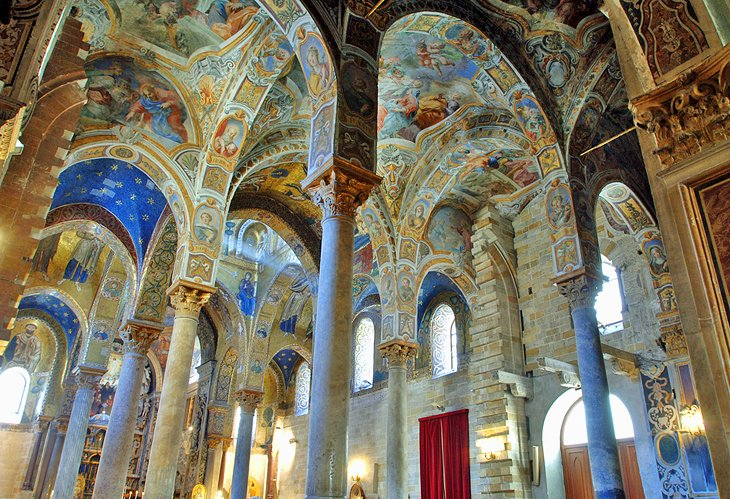
Two of Palermo's three major churches, the Cappella Palatina and Santa Maria dell'Ammiraglio, better known as La Martorana, are famed for their mosaics. Those in the chancel of the Normans' court church, Cappella Palatina, are thought to be from 1143 and the mosaic of Christ between Peter and Paul from about 1350. Other highlights of the church are the Arabic stalactite ceiling, the pulpit on carved and inlaid pillars, and the tall candelabra.
La Martorana's beautiful mosaics are also from the 12th century on a gold ground and are the oldest of their kind in Sicily. The image of Christ is the centerpiece, and elsewhere in the vaulting, dome, apses, and narthex are scenes from the New Testament.
The third church, the cathedral, is worth visiting for its 1453 Gothic-Catalan portico, monumental Norman tombs, and jewel-encrusted crown of Constance of Aragon in the cathedral treasury.
4. Eastern Temples at Selinunte
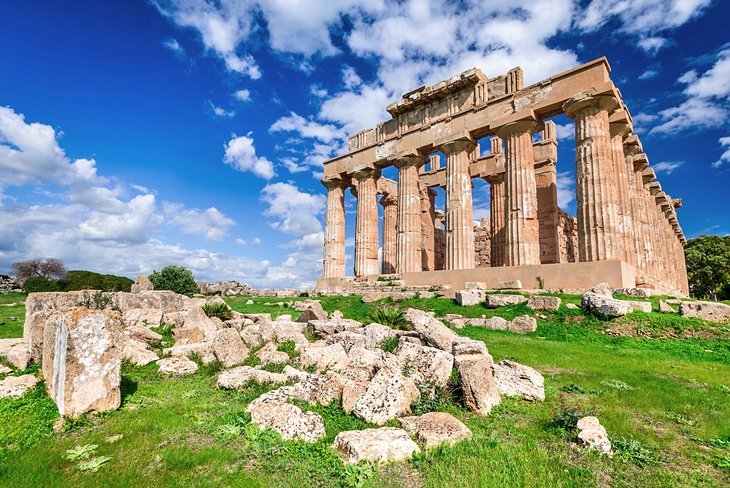
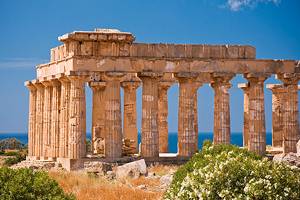
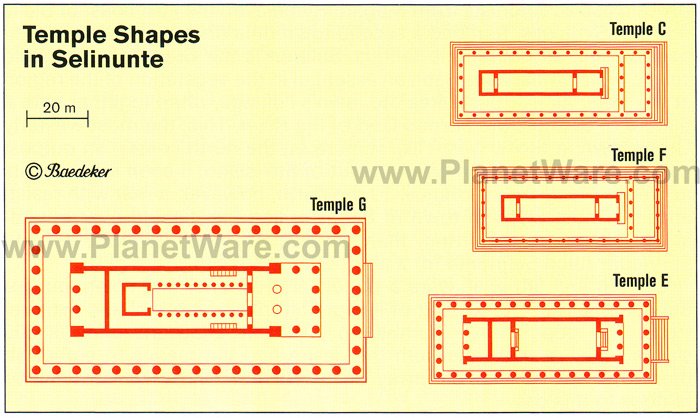
One of the largest and most significant of Sicily's ancient sites, Selinunte has eight Greek temples dating as far back as the fifth century BC, plus the nearby Temple of Demeter. The most important are those known as the Eastern Group, labeled by letter: Temple G for its impressive size and Temple E for its architectural grandeur, considered the highpoint of the Classical period. Temple G, now in ruin, was among the largest of all Greek temples.
In a separate section is the large Acropolis surrounded by defensive walls, some dating from the seventh century BC. Temple C is the largest and oldest, from about 550 BC, and sits on the highest ground.
5. Explore Mount Etna by Rail or Cable Car
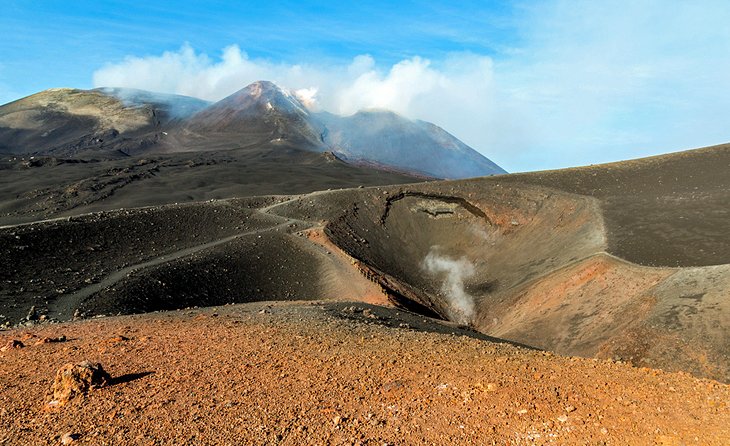
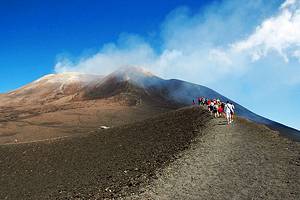
Etna is an enigma; even its height is never certain, as it changes with each new eruption. But at more than 3,000 meters, it rules the skyline with its often-smoking cone. Volcanic vents, fumaroles, hot springs, and lava flows add to its changing landscape, much of which you can explore (although not too close to the central crater) on foot or in all-terrain vehicles designed for traction in the volcanic surface.
Roads lead to the base of cable cars, which will take you to the 2,500-meter point, an easy day trip from Catania or Taormina. In the winter, you can ski near the summit.
A narrow-gauge railway, Ferrovia Circumetnea takes you almost completely around the mountain, or you can circle it by car, through towns with castles, archeological sites, and splendid scenery. Along Mount Etna's northern side, the Alcantara River has cut a spectacular gorge through a long-ago lava flow to create the Gole dell'Alcántara (Alcantara Gorge).

6. Villa Romana del Casale in Enna
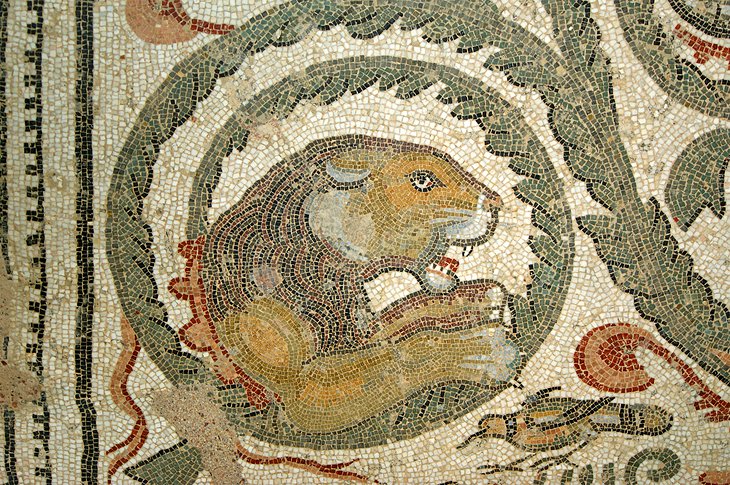
A 12th-century landslide buried this sprawling Roman villa outside Enna, thus preserving it almost intact to be discovered and excavated eight centuries later. One of the best-preserved villas anywhere in the Roman Empire, it still has most of the original decoration.
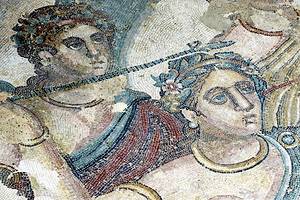
In the 50 rooms so far excavated are more than 3,500 square meters of mosaic floors with detailed scenes from mythology and contemporary life, including hunting wild animals for use in gladiatorial combat. The thermal baths with their colonnaded courtyard and fountain are especially beautiful. The villa is a UNESCO World Heritage Site.
Address: Contrada Casale 1, Piazza Armerina, Enna
- Read More: Top-Rated Tourist Attractions in Enna
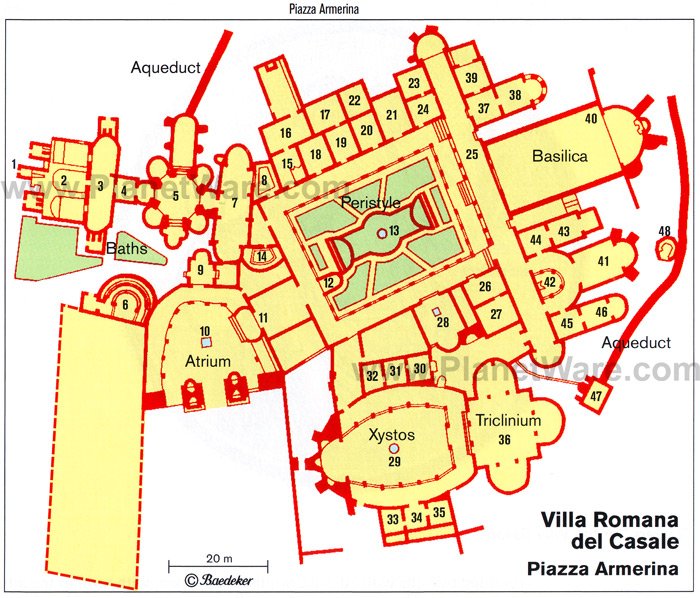
- (1) Entrance
- (2) Atrium
- (3) Aphrodite ante-room
- (4) Frigidarium
- (5) Salve and massage room
- (6) Tepidarium
- (8) Vestibule
- (9) Peristyle
- (10) Water system
- (11) Small temple
- (12) Small latrine
- (13) Palaestra or Salone di Circo
- (14) Large latrine
- (15) Room with stove
- (16) Inner hall
- (17) Dance hall
- (18) Geometrical stellar mosaics
- (19) Lost mosaics
- (20) Room of the Seasons
- (21) Room of the Little Hunt
- (22) Cupids fishing
- (23) Square mosaics
- (24) Octagonal mosaics
- (25) Corridor of the Great Hunt
- (26) Rectangular mosaics
- (27) Maidens exercising
- (28) Orpheus Room
- (29) Xystos
- (30) Amorettos at the grape harvest
- (31) Wine press
- (32) Vine growing
- (37) Vestibule of Polyphemo
- (38) Erotic scenes
- (39) Representations of fruit
- (40) The Great Basilica
- (41) Room with Arion
- (42) Atrium with columned hall
- (43) Boys hunting
- (44) Vestibule with Eros and Pan
- (45) Vestibule with a Small Circus
- (46) Musicians
7. Parco Archeologico della Neapolis, Syracuse
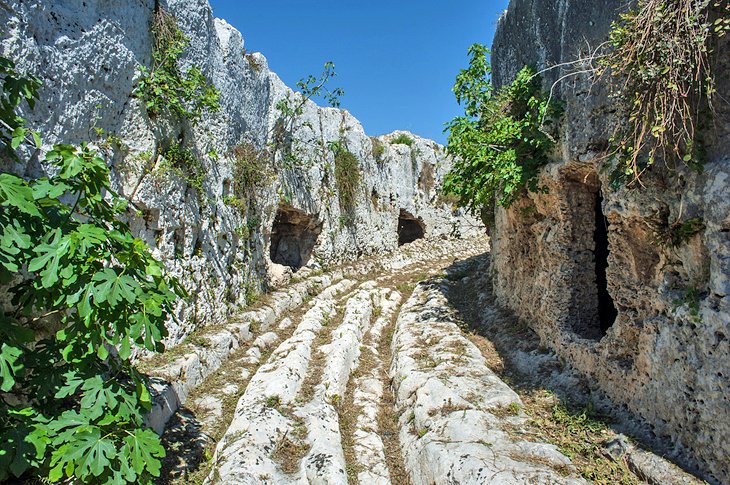
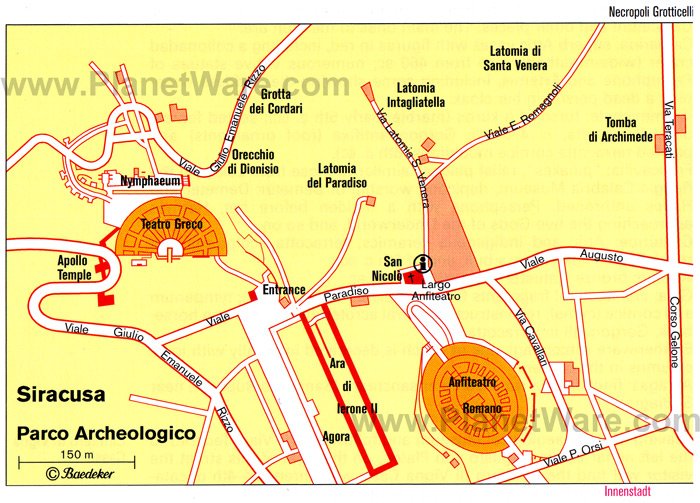
One of the largest theaters in the ancient Greek Empire is a good reason, but not the only one, to visit the archaeological park in Syracuse. The view of the excavations as you approach along Viale Rizzo will give you an idea of their extent, which includes both the Greek Theater and a large Roman Amphitheater.
The massive Altar of Hiero II dates from the third century BC, a century later than the 15,000-spectator Greek Theater. The Roman Amphitheater is from the third century AD and is partly hewn from the bedrock.
An interesting feature of this archaeological park is the opportunity to see the quarries where the building stone was cut on-site for the various structures. The largest of these is the Latomia del Paradiso, where limestone was quarried since the sixth century BC. One of the underground galleries has such perfect acoustics that it is known as l'Orecchio di Dionisio, the Ear of Dionysius.
- Read More: Top-Rated Tourist Attractions in Syracuse
8. Taormina's Townscape and Greek Theater
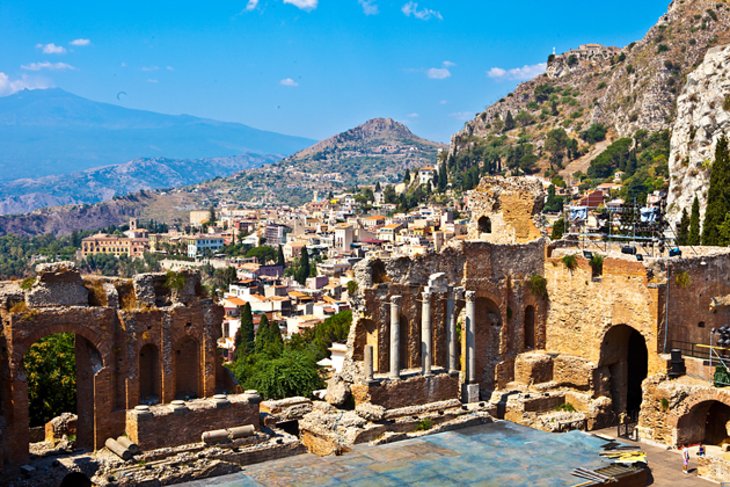
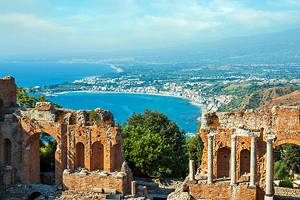
Competing with mountaintop Erice as Sicily's most beautiful town setting, Taormina would be a favorite with tourists even without its magnificent Greek Theater and its iconic view of Mount Etna. Taormina's streets open into terraces, each one with postcard-worthy views of the sea or mountain.
Corso Umberto is the main street, crossing the town in a series of squares and terraces and lined by venerable buildings, smart shops, and open-air cafés. Lanes lead upward, becoming long flights of stairs that lead higher and higher to more viewpoints and a castle.
The best-known view, immortalized by painters for centuries, is from the landmark Greek Theater, built in the third century BC by the Greeks and completely rebuilt a century later by the Romans. It is largely intact and used for performances.
For spectacular views of the town and Mt. Etna and a peaceful setting above the busy streets, choose the small, luxury boutique Hotel Villa Ducale. Guest rooms and suites are individually designed in a blend of traditional Sicilian and Italian contemporary style. A free shuttle takes guests to the town center and the beach.
9. Aeolian Islands
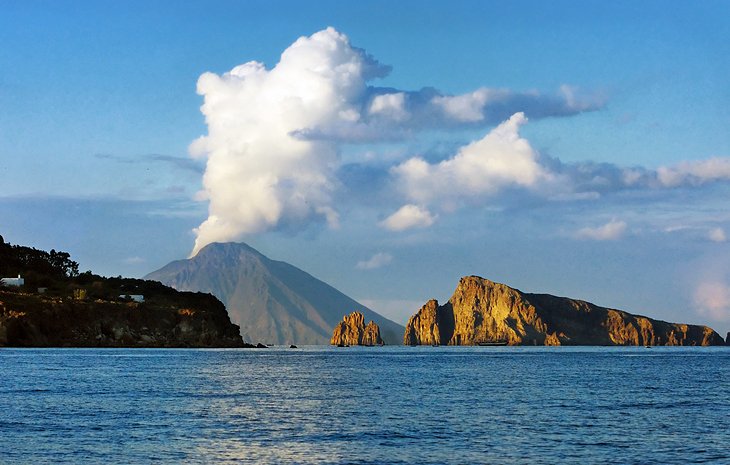
These seven islands, all of volcanic origin and some still active, lie off the north coast of Sicily and are easily reached by boat from Messina or Milazzo. The best known is perhaps Stromboli, whose pyrotechnics light the sky each night, much to the delight of passengers on cruise ships, which time their departures for the display.
The volcanic activity has created beautiful coastlines of rough, craggy rocks, as well as natural attractions-fumaroles and thermal and sulfur springs-to visit. Water sports of all kinds are another draw for tourists, who find beaches, boat rentals, diving, and scenic boat excursions, as well as ferry connections between the islands. Prehistoric sites abound, as do later sites from Greek and Roman periods.
10. Go to the Beach
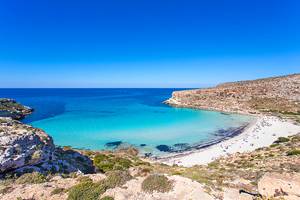
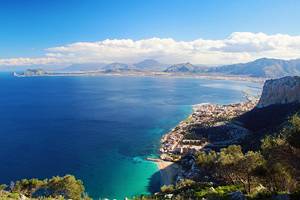
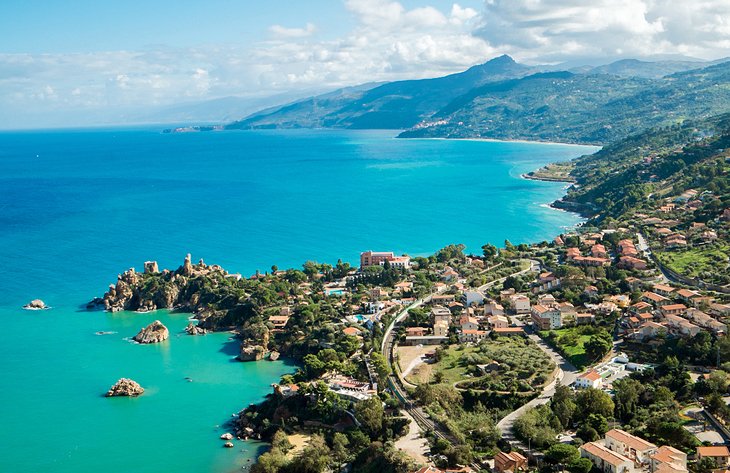
Some of the best beaches in Italy lie along the shores of Sicily, long stretches of white sand that slope into the turquoise waters of the Mediterranean, Tyrrhenian, and Ionian seas. While many of these beaches are equipped with the typical stabilimento balneare, with lounge chairs (lettini) to rent and the use of changing tents, showers, and restrooms, there are less developed beaches located inside nature preserves.
One of these is Torre Salsa, inside a World Wildlife Fund nature reserve close to Agrigento and Selinunte. Instead of the usual beach facilities and crowds of sun worshipers, you'll find six kilometers of unspoiled sand beach backed by white chalk cliffs. The water is just as pristine, clear, and filled with marine life, which makes this a popular place for snorkeling and scuba diving.
Also protected as part of a World Wildlife Fund nature reserve, the tiny island of Isola Bella is directly below Taormina, and reached by a cable car. It is connected to the mainland by a narrow strip of rocky beach, and the beach itself is pebbles instead of sand. But a more beautiful setting is hard to imagine, and the waters are crystal clear. Snorkeling is popular here, and there are lounge chairs for rent, as well as kayaks.
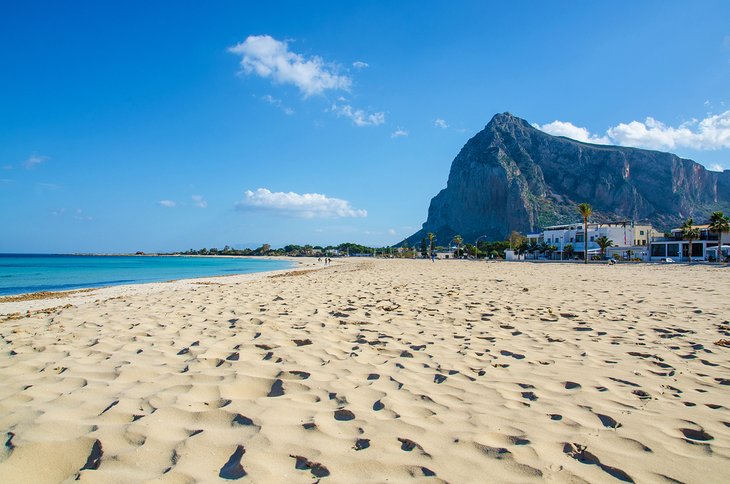
Adjacent to the Zingaro Nature Reserve, on Sicily's northwestern coast, and sheltered by a soaring headland at one end, is the beach of San Vito Lo Capo. The scene is idyllic, complete with palm trees, a kilometer-long beach of soft white sand, and clear blue water, and there are tourist facilities here.
11. Antonino Salinas Regional Archeological Museum
In a place so filled with Greek, Roman, and earlier sites, you'd expect to find many impressive museums. And you'd be right. But even among this abundance, Palermo's Antonino Salinas Regional Archeological Museum (Museo Archeologico Regionale Antonino Salinas) tops them all, and is one of the finest in all Italy.
Among its highlights are the Palermo Stone with hieroglyphics listing Egyptian Pharaohs of the third and fourth millennia BC, a colossal second-century BC statue of Zeus, and the outstanding sculptures and friezes from the temples at Selinunte. Look also for the Etruscan Mercury staff, grave carvings from Chiusi, Attic grave-reliefs, as well as Stone Age and Copper Age tools and vessels.
12. Ragusa and Modica
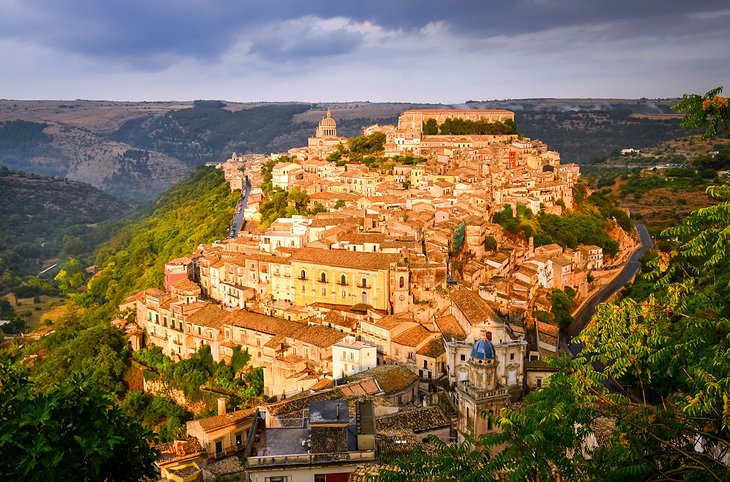
The earthquake of 1693 leveled much of the southern tip of Sicily, including the neighboring towns of Ragusa and Modica. Both towns were rebuilt in the then-current Baroque style, with local interpretations that became known as Sicilian Baroque. Along with six others, Ragusa and Modica were named a UNESCO World Heritage Site as the "culmination and final flowering of Baroque art in Europe."
Ragusa built a new town on a hill above the old one, but enough buildings were left in the old town for it to remain active, with new Baroque buildings replacing fallen ones. Modica, too, is built on two levels, and its upper town is highlighted by the Church of San Giorgio, built with materials recovered from fallen buildings after the earthquake. In the lower town, look for the 15th-century Gothic rose window in the Chiesa del Carmine.
- Read More: Top-Rated Tourist Attractions in Ragusa
13. Cefalù Cathedral
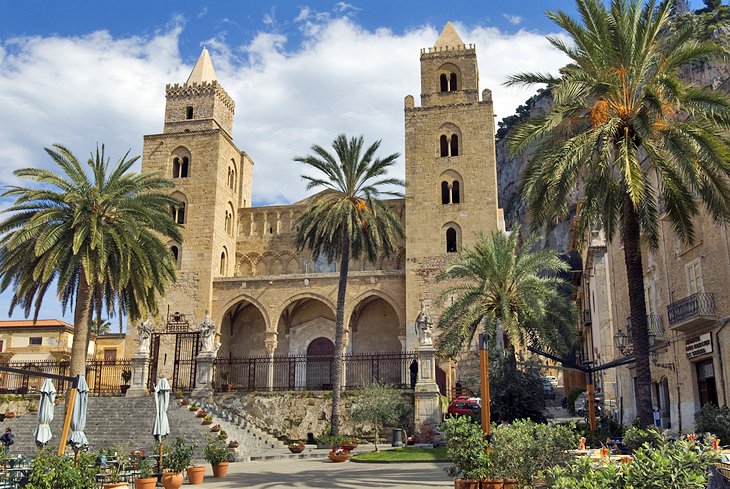
One of Sicily's most interesting medieval buildings, the imposing cathedral was built, so legend has it, by the Norman King Roger II as a votive offering for surviving a storm at sea. The cathedral is a Sicilian history book, with architecture and decorations reflecting almost every wave of conquest in the island's history. Look for Arab, Greek, Roman, Byzantine, and Norman elements.
The semi-circular dome of the apse is filled by a mosaic of Christ by Byzantine artists, among the best-preserved mosaics in Sicily. Along with the mosaics, look for the baptismal font from the 12th century and for the highly ornamental plasterwork in the choir.
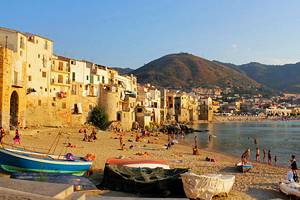
The cathedral stands out above winding stone streets that drop into the colorful fishing harbor and a long white-sand beach that stretches along the coast from right below the old town. If you're looking for a place to stay, Cefalu Sea Palace is an affordable beachfront resort with a large pool and rooftop restaurant.
Address: Piazza del Duomo, Cefalù
14. Ortigia
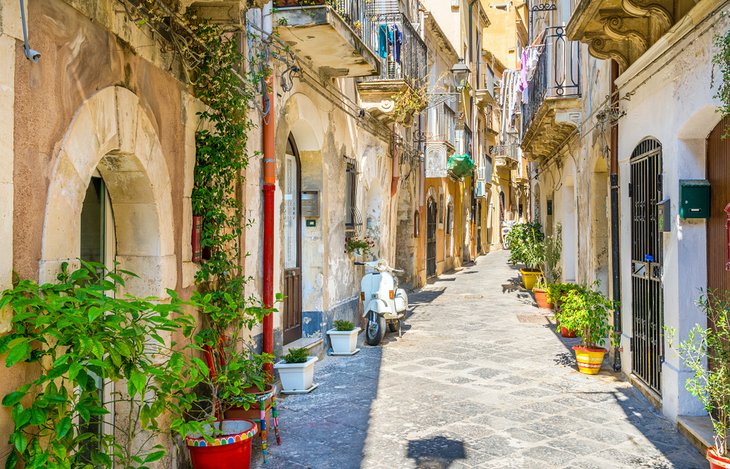
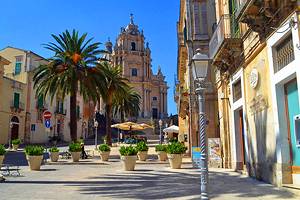
The Citta Vecchia (Old City) of Syracuse is on an island, a tightly packed warren of streets dating back to ancient times and connected to the larger new city by two narrow bridges. The Greeks fortified it, and built temples to Apollo and Athena.
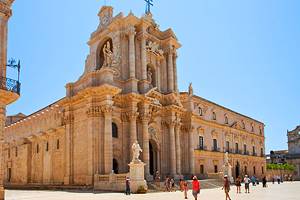
One of these remains today, incorporated into the cathedral in the 7th century (you can see its Doric columns in the walls). It later became a mosque for more than two centuries, and was re-Christianized by the Normans, who added the mosaics. It was rebuilt again after a 1693 earthquake, in the Sicilian Baroque style.
Also in the Citta Vecchia are remains of a Greek theater and a Roman amphitheater. These, the Cathedral and the Necropolis of Pantalica on the outskirts of the newer city, are part of a UNESCO World Heritage Site.
Besides seeing these landmarks, tourists find plenty of things to do in the narrow lanes and waterside promenades of this old city. Ortigia is a good place to get a feel for local life, in its shops, cafés, and the daily open-air market. Stroll along the promenade of Foro Italico and stop to enjoy the sea view from a shady bench.
Sicily (Palermo) - Climate Chart
| Average minimum and maximum temperatures for Palermo, Italy in °C | |||||||||||
| J | F | M | A | M | J | J | A | S | O | N | D |
| 15 10 | 15 10 | 16 11 | 18 13 | 22 16 | 25 20 | 28 23 | 29 24 | 27 22 | 23 18 | 19 14 | 16 12 |
| PlanetWare.com | |||||||||||
| Average monthly precipitation totals for Palermo, Italy in mm. | |||||||||||
| 71 | 66 | 58 | 43 | 25 | 13 | 5 | 13 | 41 | 99 | 94 | 81 |
| Average minimum and maximum temperatures for Palermo, Italy in °F | |||||||||||
| J | F | M | A | M | J | J | A | S | O | N | D |
| 59 50 | 59 50 | 61 52 | 65 55 | 71 61 | 77 68 | 83 73 | 84 75 | 80 71 | 73 64 | 67 58 | 61 53 |
| PlanetWare.com | |||||||||||
| Average monthly precipitation totals for Palermo, Italy in inches. | |||||||||||
| 2.8 | 2.6 | 2.3 | 1.7 | 1.0 | 0.5 | 0.2 | 0.5 | 1.6 | 3.9 | 3.7 | 3.2 |
More Related Articles on PlanetWare.com
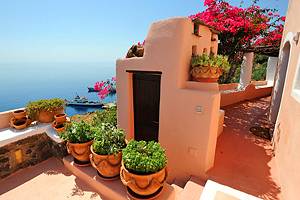
Exploring Sicily: Most tourists arrive in the busy port city of Messina, at the eastern tip of Sicily, and explore the nearby attractions on day trips from Messina. At the western end of the island, the historic port city of Trapani is filled with things to see and do; Selinunte is only one of the interesting day trips from Trapani.
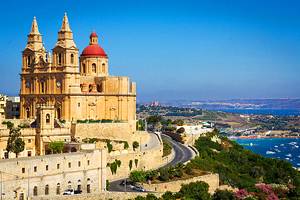
Where to Go from Sicily: Ferries connect Sicily to other Mediterranean islands. Weekly service runs to Cagliari, from which you can explore the attractions of Sardinia. More frequent ferries travel to Valletta, the main port for the island of Malta.