19 Top-Rated Tourist Attractions in Toledo, Spain
Authors Michael and Lana Law visited Toledo in the fall of 2022 as part of an extensive trip through Spain.
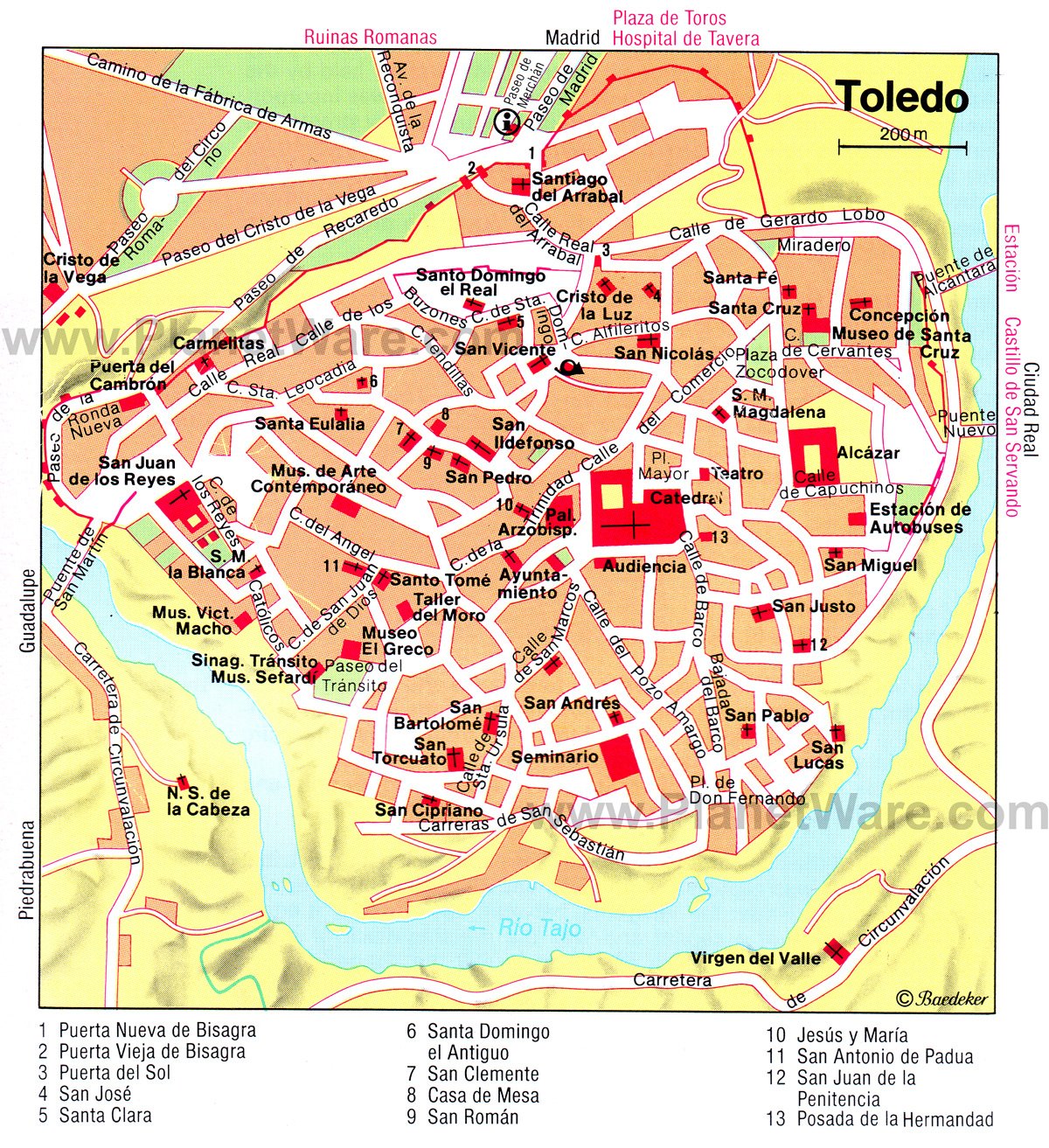
Toledo is the heart and soul of Spain. This monumental walled hilltop city is a captivating UNESCO World Heritage Site. Behind its daunting medieval walls, in a labyrinth of winding pedestrian streets, are some of the most important historical attractions in the country.
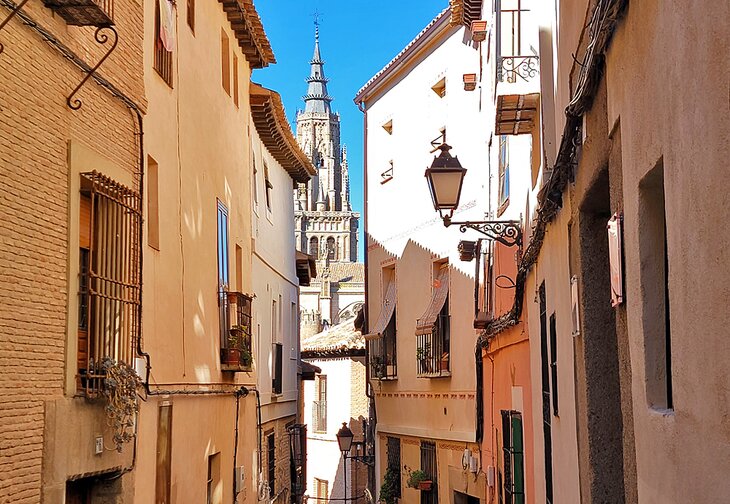
Magnificent old stone buildings and quiet cobblestone streets whisper the legacy of the past. For centuries, Christians, Jews, and Muslims flourished in a "city of three cultures" and built a dazzling array of churches, convents, palaces, fortresses, synagogues, and mosques. These are some of the most important places to visit in Toledo.
Toledo is also known for its traditional crafts, including damascene metalwork, antique-inspired swords, and handmade marzipan (sweet almond candies). However, the most famous artworks found in Toledo are the masterpieces by El Greco displayed throughout the city's churches and convents, as well as at El Greco Museum.
Toledo is one of the most popular day trips from Madrid, which is just half an hour away by train. However, the city abounds with sightseeing treasures, so it is well worth spending more time here. Discover interesting things to see and do with our list of top attractions in Toledo.
See also: Where to Stay in Toledo
- 1. Catedral de Toledo
- 2. Casco Histórico de Toledo (Old Town)
- 3. Mirador del Valle
- 4. Monasterio de San Juan de los Reyes
- 5. Alcázar de Toledo
- 6. Sinagoga del Tránsito
- 7. Museo de Santa Cruz
- 8. Museo El Greco
- 9. Mezquita Cristo de la Luz
- 10. Iglesia de Santo Tomé
- 11. Puente de Alcántara: 13th-Century Moorish Bridge
- 12. Las Murallas (Ramparts)
- 13. Santa María la Blanca: Ancient Synagogue Converted to a Church
- 14. Cristo de la Luz
- 15. Iglesia de San Ildefonso
- 16. Hospital de San Juan Bautista
- 17. Castillo de San Servando
- 18. Iglesia de Santiago del Arrabal
- 19. Roman Baths
- Where to Stay in Toledo for Sightseeing
- Day Trips from Toledo
- The Windmills in Consuegra
- Orgaz
- Arisgotas and the Museo de Arte Visigodo
1. Catedral de Toledo
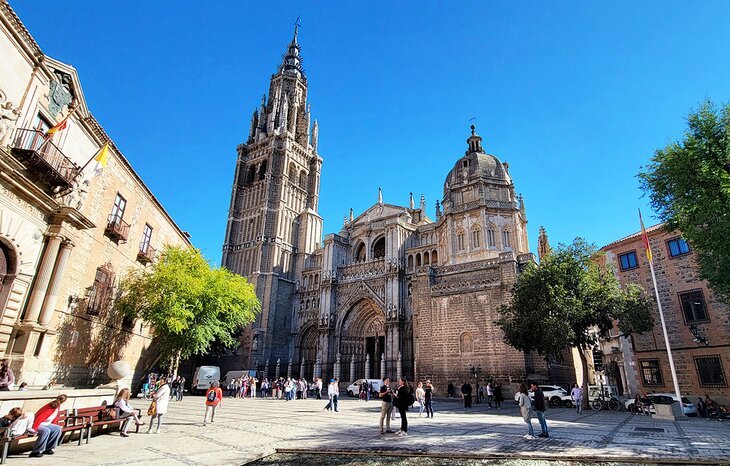
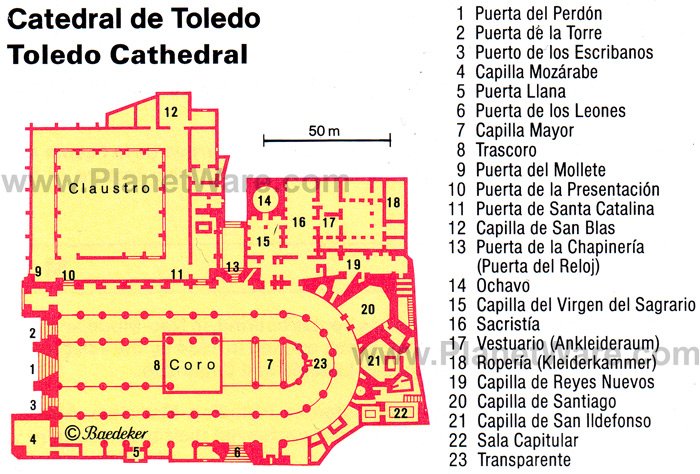
With its soaring tower and marvelous Gothic architecture, Toledo's cathedral is one of the most important Christian landmarks in Spain. It was built in the 13th century on the site of a Muslim mosque next to La Judería (Jewish quarter).
You will walk through the Puerta de Mollete doorway to enter. The cathedral's exterior is somewhat obscured by the tightly packed buildings surrounding it, but the grandiose sanctuary is astounding.
The enormous interior stretches 120 meters in length. A collection of 88 richly decorated columns makes a striking impression and beautiful stained-glass windows dating from the 14th to 16th centuries lend an ethereal glow.
The choir is considered one of the grandest works of art in Christendom, with masterfully carved Renaissance stalls. The stalls in the lower tier feature historical scenes from the Catholic Monarchs' conquest of Islamic Granada, and the upper tier depicts Biblical scenes by Alonso Berruguete and an alabaster Transfiguration in the left-hand section.
On the altar of the choir is a Romanesque-style stone figure of the Virgin Mary, the Virgen Blanca created in 1500. Surrounding the choir is a Plateresque screen created in 1548.
The richly gilded Capilla Mayor displays a huge gilded retablo of New Testament scenes with life-size figures, and the Churrigueresque-style domed marble altar is dedicated to the Virgin. The Flamboyant Gothic Capilla de Santiago contains the 15th-century marble tombs of the Condestable Álvaro de Luna and his wife. In the chapter house, are portraits by Juan de Borgoña and two paintings by Goya.
A highlight of the cathedral, the sacristy has two exceptional paintings: El Greco's Disrobing of Christ (El Spolio) and Goya's Arrest of Christ as well as a series of 16 Apostles by El Greco. The sacristy also displays paintings by Morales, van Dyck, Raphael, Rubens, and Titian.
Address: Plaza del Ayuntamiento, Toledo, Spain
2. Casco Histórico de Toledo (Old Town)
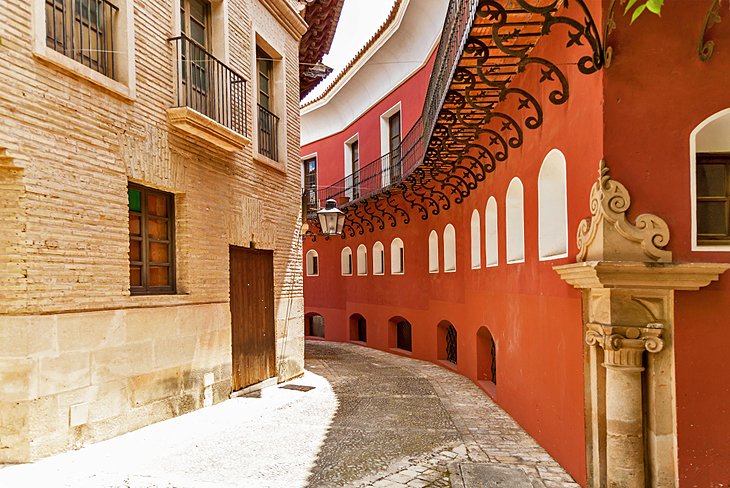
The essence of Toledo is found in the atmospheric narrow lanes of its Casco Histórico (Old Town), designated as a UNESCO World Heritage site. The Casco Histórico is a fascinating warren of winding pedestrian streets, peaceful courtyards, and artisan shops tucked away in little alleys.
The area contains over a hundred historic monuments: palaces, churches, convents, synagogues, and mosques. For centuries, Christians, Jews, and Muslims lived together in Toledo. The various cultures enjoyed a sense of mutual respect and harmony.
During the Middle Ages and until the Inquisition, La Judería (Jewish Quarter) was a thriving neighborhood. Visitors can trace the history by wandering the distinctively paved cobblestone streets and visiting two historic synagogues, one of which, El Tránsito, houses a Sephardic museum that illuminates the rich Jewish life in Toledo before the Inquisition.
3. Mirador del Valle
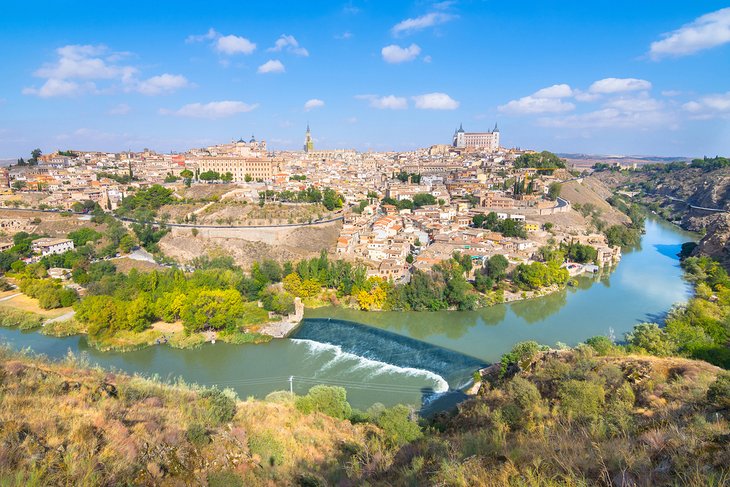
To admire breathtaking panoramas of Toledo while gaining a sense of the city's setting and topography, head to the Mirador del Valle. For those without a car, this hilltop viewpoint can be reached by hiking or by taking the Trainvision shuttle across the river.
If you have a vehicle, it's an easy drive to the viewpoint, with ample parking. Nearby is the Parador de Toledo; this lovely hotel is perched perfectly on the hill and is a wonderful place to have dinner on the terrace and watch the lights of Old Toledo come on.
4. Monasterio de San Juan de los Reyes
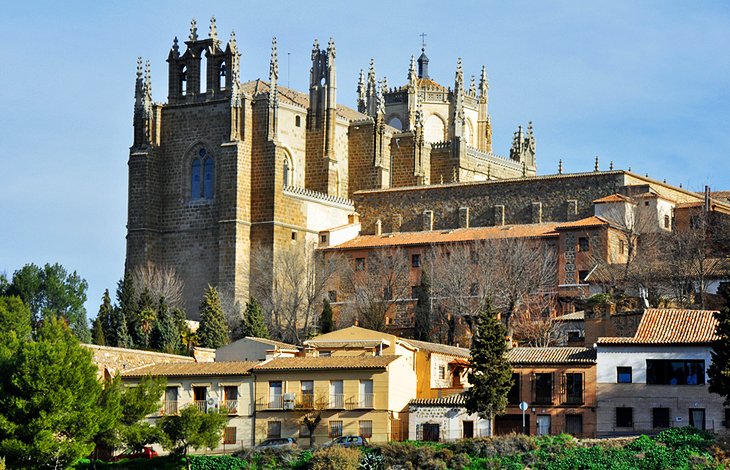
Northwest of the Judería and cathedral, the Monasterio de San Juan de los Reyes was a Franciscan convent founded in 1476. The church dates from 1553.
On the exterior facade are the chains of Christians freed from Moorish captivity. The monastery has a sumptuous chapel with a single nave and a stunning vault. Especially noteworthy are the retablo by Felipe Vigarny and Francisco de Comontes and the friezes of the coat of arms of the Catholic Monarchs in the transepts.
The 16th-century cloister is considered one of the finest examples of Late Gothic architecture in Spain. Looking out onto peaceful gardens, the cloister has a serene ambience that inspires spiritual reflection. In the upper gallery of the cloister, the ceiling features a very decorative artesonado ceiling.
The monastery is open to the public year-round.
Address: Calle de San Juan de los Reyes 2, Toledo
5. Alcázar de Toledo
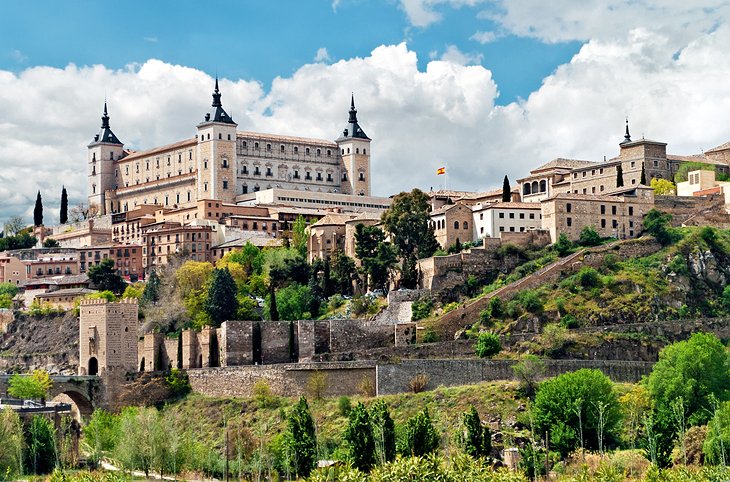
Standing watch over the city, the Alcázar has a commanding hilltop location. This ancient Moorish fortress, built on the site of an earlier Roman fort, was later renovated by the Christian Kings.
The imposing fortress has a square shape with crenellated defenses and four corner towers added under the reign of Emperor Charles V in the 16th century.
During the Spanish Civil War, the Alcázar was used as a Nationalist garrison and is considered as a monument to the heroism of Franco supporters. The Alcazar has been restored and now houses an Army Museum with excellent exhibits about the Civil War.
The Alcázar is reached from the Plaza de Zocodover, a lovely square at the center of Toledo that is lined with elegant arcaded houses. At 7 Plaza de Zocodover, the well-known Confitería Santo Tomé (confectionary shop) tempts visitors with its delectable handmade marzipan candies.
Address: Calle Unión, Toledo
6. Sinagoga del Tránsito
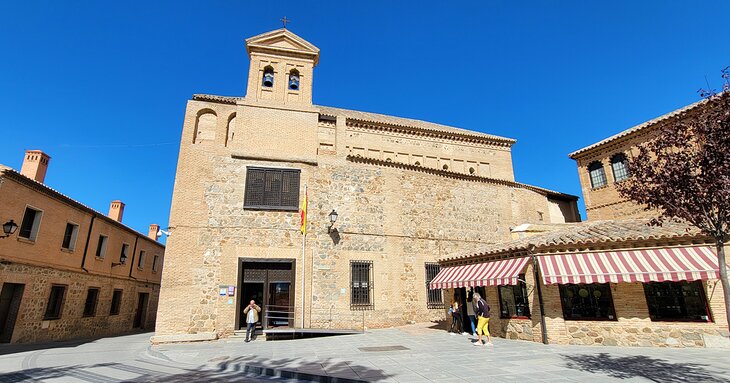
The most prominent Jewish monument in Toledo, the Mudéjar-style Sinagoga del Tránsito is in the heart of the Judería, which was a thriving Jewish community in the 14th century. Built in 1356 by Samuel Levi, treasurer to King Pedro I of Castile, El Tránsito Synagogue is the most important example of Sephardic (Jewish-Spanish) architecture in existence.
The synagogue is decorated with Moorish-influenced elements, as well as intricate geometric and floral motifs, along with inscriptions in Arabic and Hebrew. Exquisite geometric-patterned windows with cusped arches allow light to filter into the sanctuary. The interior also features an exquisite ceiling.
After the expulsion of the Jews from Spain in 1492, the synagogue was given to the knightly Order of Calatrava.
The rooms adjoining the Sinagoga del Tránsito house the Museo Sefardí (Sephardic Museum), which educates visitors about the history and culture of Spain's Jews. A highlight of the collection is the Sarcófago de Tarragona featuring a trilingual inscription in Hebrew, Latin, and Greek.
The Sinagoga del Tránsito and the Sephardic Museum are open Tuesday-Sunday. Tourists could plan to also visit the El Greco Museum, which is just steps away from the synagogue.
Address: Calle Samuel Levi, Toledo
7. Museo de Santa Cruz
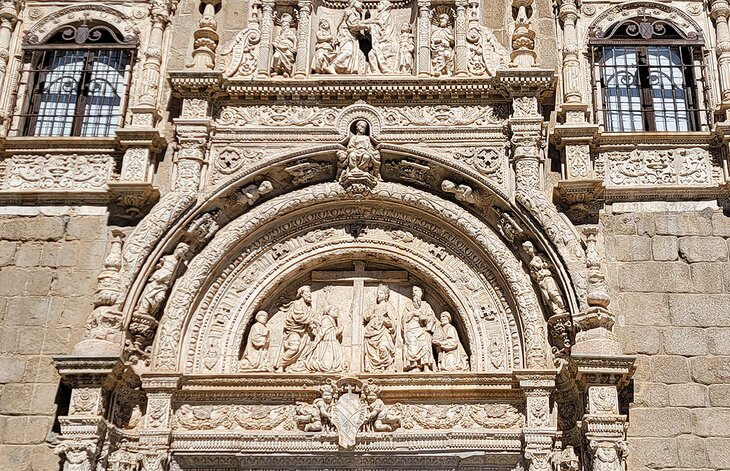
This exceptional museum is housed in the 16th-century Hospital de Santa Cruz, an elegant building with an exquisite Plateresque facade. The Santa Cruz Museum includes three collections: Fine Arts, Decorative Arts, and Archaeology.
In the Fine Arts collection, the paintings of the 16th and 17th century School of Toledo are the main attraction, especially the works by El Greco and Luis Tristán, a student of El Greco. Not to be missed is El Greco's large-scale masterpiece, the Assumption of the Virgin. Other highlights are the Christ in Chains by Morales and the Crucifixion by Goya. The retablo dedicated to the Virgin by Alonso Berruguete is another valuable piece.
The Decorative Arts section includes Flemish tapestries of the 15th and 16th centuries and a tapestry illustrating the signs of the Zodiac as well as local artisan crafts.
The Archeology section contains prehistoric, Roman, Visigothic antiquities, and exhibits of Moorish and Mudéjar decorative objects and ceramics.
Address: 3 Calle Miguel de Cervantes, Toledo
8. Museo El Greco
The famous master of Spanish painting, Doménikos Theotokópoulos was born in Crete (Greece's largest island) in 1541, and in 1577 came to Spain where he was simply called El Greco ("The Greek").
The Casa El Greco in the Jewish quarter near the synagogue of El Tránsito is the house where El Greco is known to have lived. Renovated in 1906, the building is decorated with furniture and sculptures that belonged to El Greco.
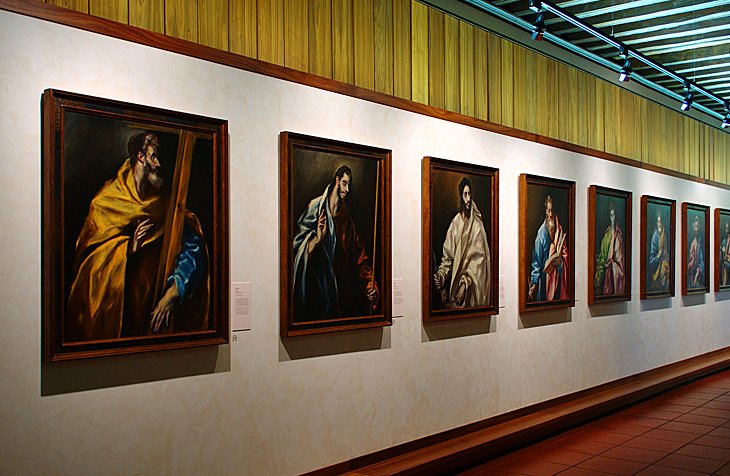
In the building adjoining the Casa El Greco is the Museo El Greco. On the first floor are three rooms containing more than 20 works by El Greco, including famous paintings View of Toledo, Christ with the Apostles, the Crowning with Thorns and San Bernardino. The museum also displays paintings by other Spanish painters including Zurbarán and Miranda.
Address: Paseo del Tránsito, Toledo
9. Mezquita Cristo de la Luz
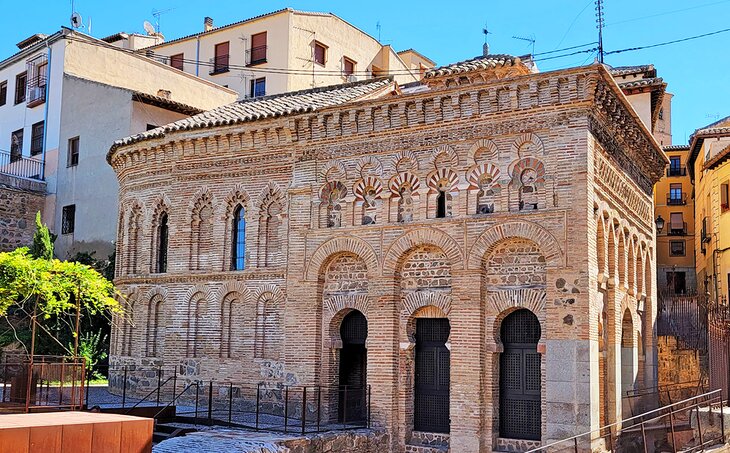
This 10th-century mosque is the oldest monument in Toledo and is remarkably well preserved. It's one of the best places to visit in Toledo for a glimpse of Andalusia's Islamic heritage.
Although it was converted into a church in the 12th century, the building has retained its original Mudéjar elements and is one of Spain's rare gems of early Hispanic-Muslim architecture.
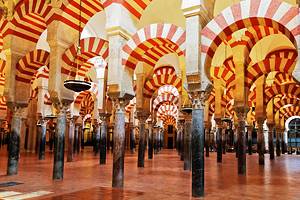
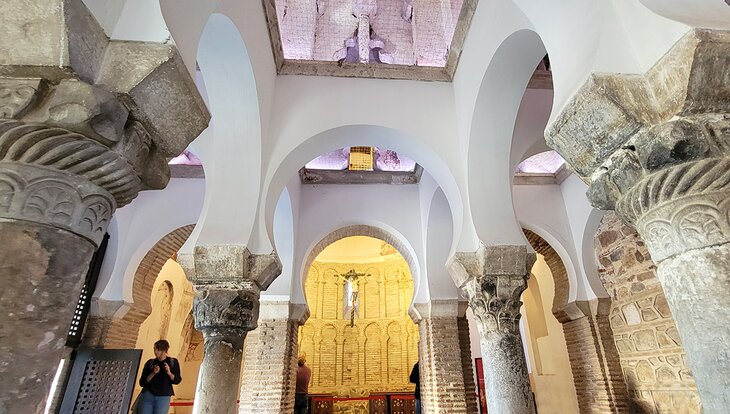
Like the Great Mosque of Córdoba, the Mezquita Cristo de la Luz was built during the Caliphal period and reveals similar features: a splendid vaulted interior with columns and horseshoe arches. The facade is adorned with intricate brickwork influenced by Middle Eastern art.
In front of the building is a lovely garden area with trees and flowering plants. Beyond the garden you step out onto the top of the ancient city walls. The views from here offer an interesting perspective over the city. If you look over the edge you'll be able to see, off to the right, one of the ancient city doors, the Puerta de Valmardón.
The admission fee allows access to the Mezquita Cristo de la Luz, the gardens, and the city wall.
Address: 22 Calle Cristo de la Luz, Toledo
10. Iglesia de Santo Tomé
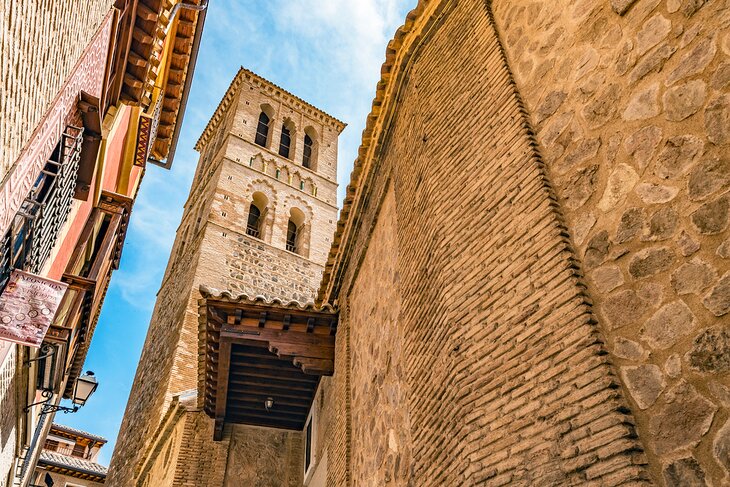
West of the cathedral bordering the Judería (old Jewish quarter), the 12th-century church of Santo Tomé is another monument that was originally a mosque. In the 14th century, the church was renovated by the Count of Orgaz in Gothic style with a Mudéjar tower.
Several of the windows also reveal Mudéjar design with the characteristic horseshoe arch shape. The church possesses one of El Greco's most famous paintings, the Burial of the Count of Orgaz (created in 1586), which is displayed in a special room.
Address: 1 Plaza de Santo Tomé, Toledo
11. Puente de Alcántara: 13th-Century Moorish Bridge
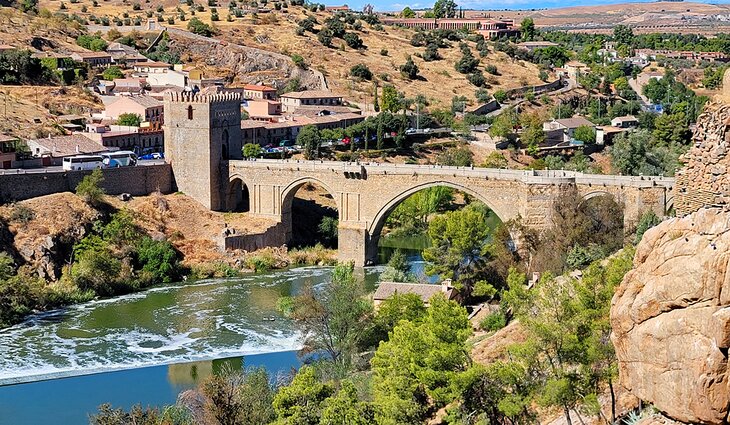
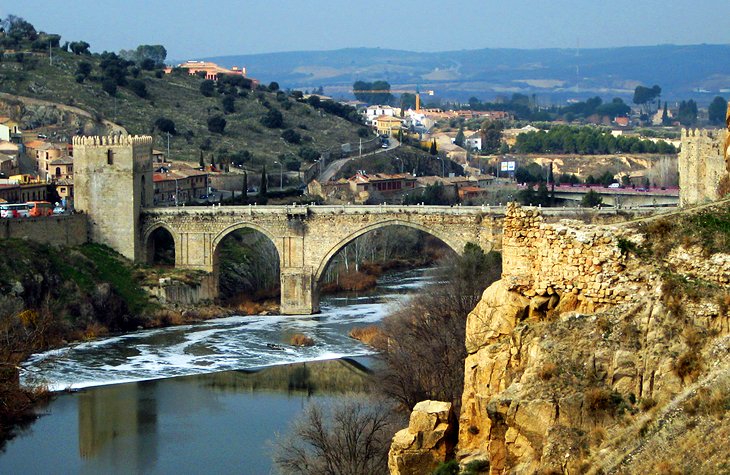
Below the Hospital de Santa Cruz, the Puente de Alcántara spans the dramatic gorge of the Tagus River. Originally an ancient Roman structure, the bridge was completely rebuilt by the Moors in 866. The present bridge dates mainly from the 13th and 14th centuries. The Puerta de Alcántara gate tower dates to 1484, while the Baroque gateway was built in 1721.
The best place in Toledo to get a view and picture of the bridge and the river gorge is at Plaza de Victorio Macho. You'll find it located just off Calle de los Reyes Catolicos, behind the Hotel San Juan de los Reyes and beside the Museo Victorio Macho. Although the lookout appears to be behind a fence, just walk towards the museum to find the always-open gate.
If you decide to walk down to the bridge, your effort will be rewarded with magnificent views of the Alcázar and the town, rising steeply up above the river.
Address: Calle Gerardo Lobo, Toledo
12. Las Murallas (Ramparts)
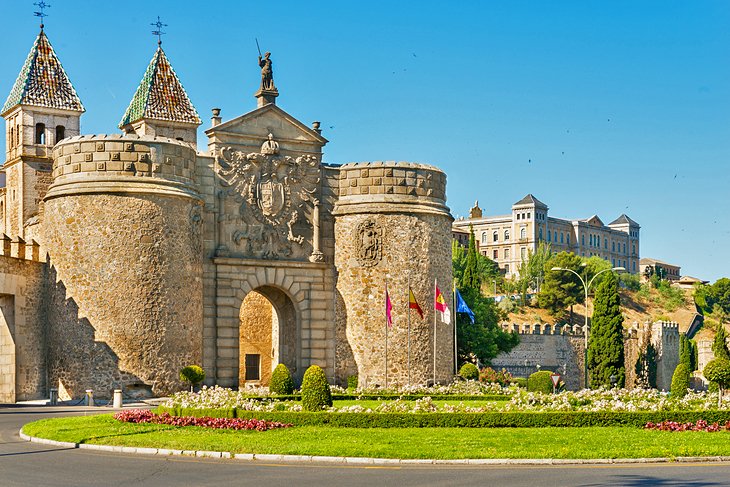
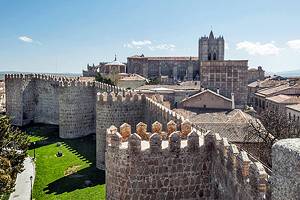
Constructed originally by the Romans, renewed by the Visigoths, expanded by the Moors, and enlarged again after the Christian reconquest, Toledo's walls are surprisingly complete today, with well-preserved reminders of the city's multi-layered history.
You can walk alongside the ancient ramparts, and stop to check out the three entrance gates (Puerta Vieja de Bisagra; Puerta del Cambrón; Puerta del Sol), which still provide access to the historic town center through the enormous defensive walls. Typical of Hispanic-Muslim urban planning during the medieval era, Toledo's imposing fortifications resemble a citadel surrounding a medina.
The only remaining part of the Moorish town walls is the Puerta Vieja de Bisagra, a 9th-century entrance gate. Typical of Muslim architecture, the gate features horseshoe arches; a central arch is the entrance, and two blind pointed arches are for decoration. This monument is also known as the Puerta Vieja de Alfonso VI because the king made his entrance to Toledo in 1085 through this gate.
The 14th-century Puerta del Sol is also impressive, built by the Knights Hospitaller.
13. Santa María la Blanca: Ancient Synagogue Converted to a Church
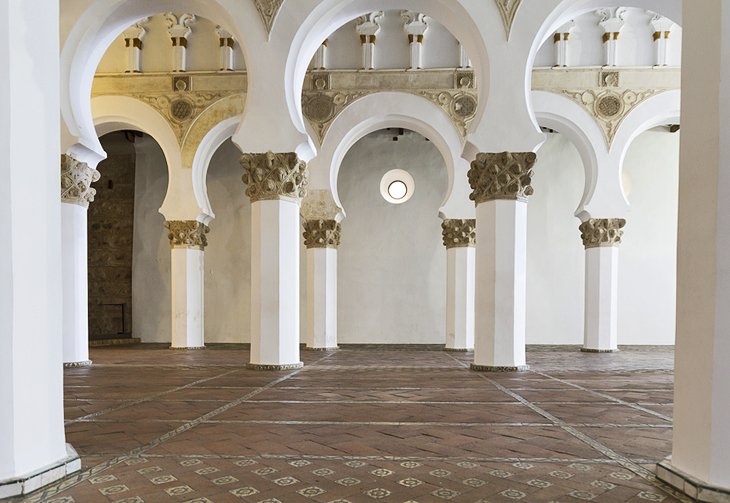
A few centuries older than El Tránsito, this 12th-century Mudéjar synagogue is in the Jewish quarter (La Judería) of Toledo, which at one time had at least ten synagogues. After the Christian Reconquest of Toledo in 1405, the synagogue was converted to the Church of Santa María la Blanca.
The splendid sanctuary features rows of pillars supporting 28 horseshoe arches, obviously influenced by Almohad-era Moorish architecture. The arches are supported by columns adorned with pine-cone capitals. Also noteworthy is the artesonado (decorative coffered wood) ceiling, characteristic of Mudéjar design.
In the eastern wall of the building, which faces the direction of Jerusalem was an ark that held the scrolls of the Torah. Elements of the later Christian church include Plateresque altars and an altarpiece by the School of Berruguete.
The monument is no longer used as a house of worship but is open to the public for visits (for an admission fee).
Address: 4 Calle de los Reyes Católicos, Toledo
14. Cristo de la Luz
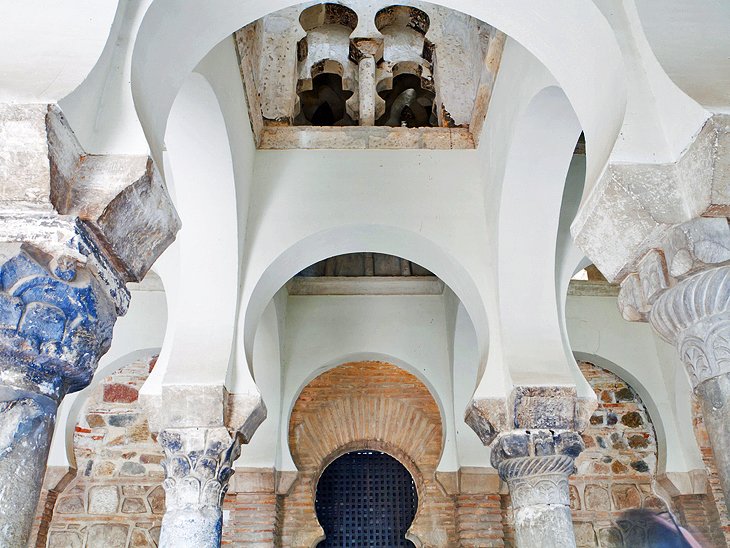
A fascinating monument that reflects Toledo's multicultural heritage, this little chapel was built as an Arab mosque in the year 999 on the site of an earlier Visigothic church. Concealed within a brick a wall, a precious statue of Christ from the church was discovered by Alfonso VI and El Cid.
The original Moorish building has remained intact with its arcaded facade and a series of vaulted horseshoe arches in the sanctuary that recall the Great Mosque of Cordoba.
Some of the interior columns are from the Visigothic church. In the 12th century, the mosque was converted to a Christian house of worship; the transept and Romanesque wall paintings date from this period. The apse with its blind arches exemplifies Mudéjar-style (Islamic-influenced) architecture.
Address: 22 Calle Cristo de la Luz, Toledo
15. Iglesia de San Ildefonso
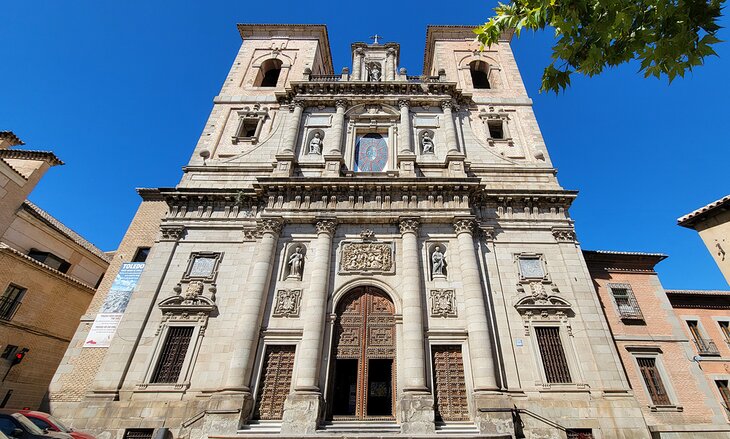
Near the cathedral in a charming square is the Baroque church of Saint Ildefonso. The church has an imposing twin-towered facade and an awe-inspiring, bright interior with two paintings by El Greco. Of special note is the stained-glass window above the entryway.
The church dates from 1629 and is in remarkably good condition. Toledo, with its warren of small streets, can feel a bit confining. For a bird's-eye view of the old town, climb the tower, and get your bearings.
Address: Plaza del Padre Juan de Mariana, Toledo
16. Hospital de San Juan Bautista
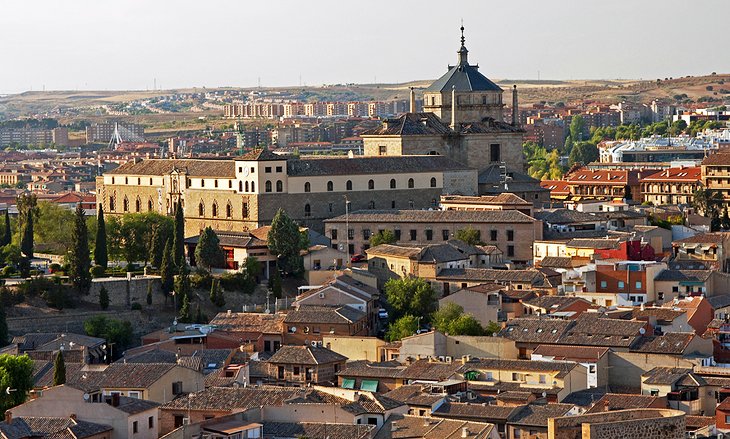
Outside Toledo's ancient town walls, the 16th-century Hospital de San Juan Bautista (also called the Hospital Tavera) is a large complex of buildings filled with notable works of art. You can visit the courtyards, church, and sacristy. Special guided tours also allow access to the museum and pharmacy.
Designed in the Renaissance-era classical style, the church has a stunning marble facade by Alonso Berruguete. Precious works of art in the church include the marble sepulcher of Cardinal Tavera by Alonso Berruguete and sculptures by El Greco, as well as the Saint Peter Crying painting by El Greco.
A highlight of the property is the Museo Fundación Duque de Lerma, which displays masterpieces of Italian painting from the 16th to 18th centuries, including works by El Greco, Tintoretto, Ribera, Canaletto, Alonso Sánchez Coello, Juan Francisco Zurbarán, Luca Giordano, and Juan Carreño de Miranda. Not to be missed is El Greco's Sagrada Family (Holy Family).
Address: 2 Calle Duque de Lerma, Toledo
17. Castillo de San Servando
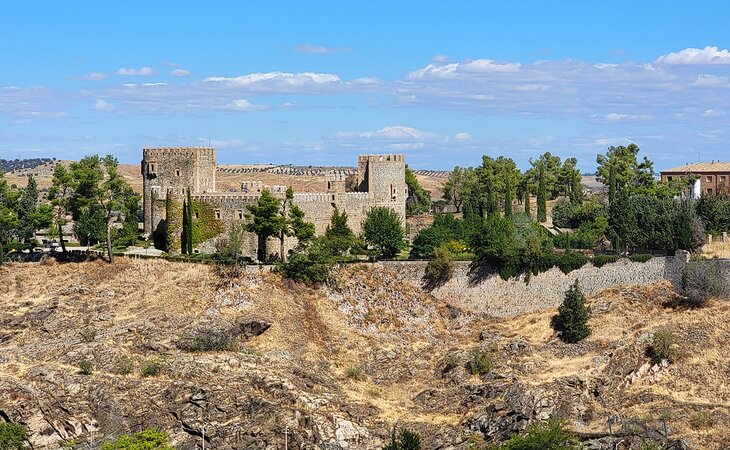
High above the left bank of the river, opposite the Alcántara bridge, is the 11th-century Castillo de San Servando. The castle was built in the 14th century as a monastery, commissioned by Alfonso VI but also served military purposes because of its strategic location.
The building is an exceptional example of a Mudéjar-style fortress in Spain. With its formidable towers, crenellated defense walls, and Arabic-style entrance gateway, the castle has an imposing presence.
This monument is not open to the public, you can only visit the exterior and the grounds. However, the castle has been converted to a youth hostel, which is ideal for those seeking budget accommodations, although the interior has retained very little of its historic character.
Address: Carretera de Circunvalación-Frente al Puente de Alcántara, Toledo
18. Iglesia de Santiago del Arrabal
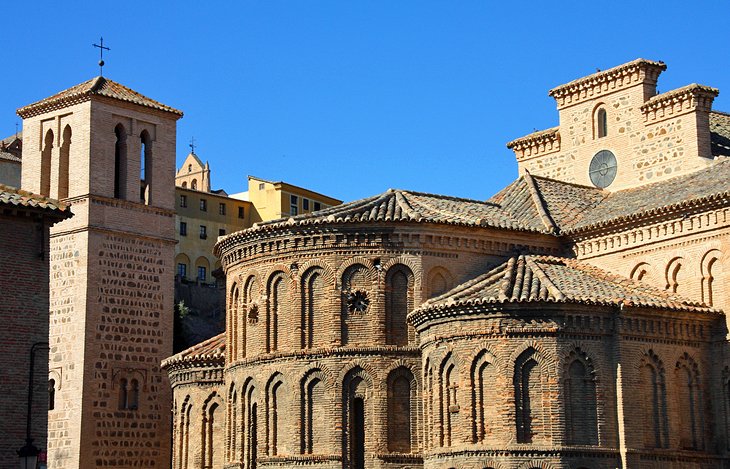
The 13th-century church of Santiago del Arrabal is found in an outer district of Toledo near the town walls. To arrive here, continue past the Puerta del Sol along the Calle Real del Arrabal.
This church is one of the most stunning Mudéjar landmarks in Toledo. Built of brick and masonry, the building has a decorative exterior of portals framed by Islamic-style horseshoe arches. The church is not open to the public, but tourists can visit the exterior of the building.
Address: Calle Real del Arrabal, Toledo
19. Roman Baths
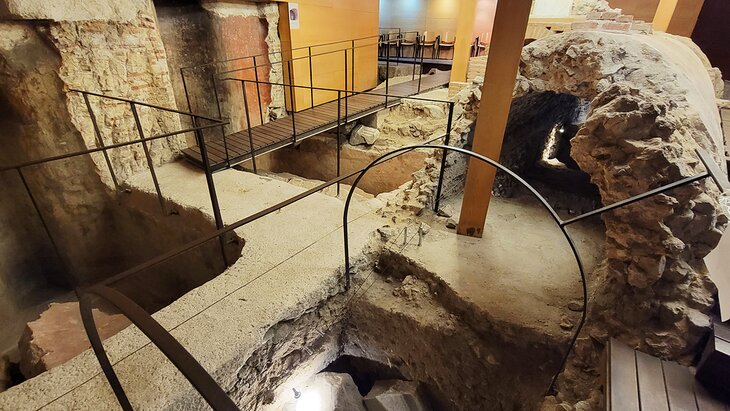
While exploring the historic city center, be sure to head underground to find remnants of Toledo's Roman past at the Roman Baths (Termas Romanas). The baths date from the late first or early second century and were in use until around the sixth century. They were only discovered and excavated in 1986.
A walking trail with metal bridges and glass floors takes you around and over the well-excavated baths, and multilingual staff are on hand to answer any questions you might have.
Located near Plaza Amador de los Rios, this free attraction is down two sets of stairs and underneath a building. It's small but worth a stop.
Where to Stay in Toledo for Sightseeing
Toledo's tourist attractions are inside its formidable medieval walls, so the most convenient hotels are those in this tight tangle of narrow stone streets. Hotels outside the walls are less convenient, but an escalator climbs to the Old Town. Here are some highly rated hotels in Toledo's best locations for sightseeing:
Luxury Hotels:
- The Hotel San Juan de los Reyes is in La Judería near the Sinagoga del Tránsito and the El Greco Museum. This four-star hotel has private parking, a casual café, a sunny outdoor terrace, and a gourmet restaurant that serves traditional local cuisine.
- Just outside the Casco Histórico, the Hacienda del Cardenal is near the escalator that takes tourists up to the Old Town. This upscale hotel occupies an elegant 18th-century villa in a lovely garden setting. Amenities include two restaurants, Arab Baths, and an outdoor terrace.
- The Eurostars Palacio Buenavista is about a five-minute drive outside the Old Town (a free shuttle service is available). Nestled in a tranquil environment with superb views of Toledo's cityscape, this five-star hotel features a spa, swimming pool, fitness center, and a restaurant.
Mid-Range Hotels:
- The four-star Sercotel Hotel Pintor El Greco is in the Casco Histórico, adjacent to the El Greco Museum. This quaint hotel has larger rooms than many in the old town.
- Next to the Alcázar in the heart of the Old Town, the four-star Sercotel Alfonso VI offers a 24-hour front desk and concierge services. Some of the rooms have private balconies.
Budget Hotels:
- In the city's historic center, the Hotel Santa Isabel occupies a 15th-century nobleman's house near the cathedral. This two-star hotel provides spacious rooms with modern amenities. The building's rooftop terrace affords stunning views.
- Rooms are small at the Hotel Domus Plaza Zocodover, but the hotel is excellent value for its location in the Old Town near the Santa Cruz Museum. Some rooms have views of the Alcázar and the cathedral.
Day Trips from Toledo
The Windmills in Consuegra
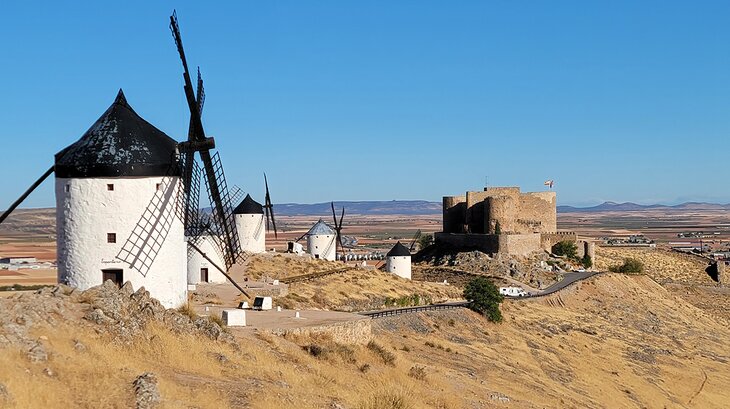
If the narrow confines of Toledo's Old Town have you craving wide-open spaces, a day trip to the Consuegra to see the windmills and castle is a good idea.
Standing proudly atop a ridge, these 12 restored windmills date from the 16th century and are said to be the inspiration for Cervantes when he wrote the Second Sally chapters in Don Quixote.
Today there's no need to plan an attack on these solid giants like Don Quixote. All you need to do is drive up a winding roadway and follow the gravel walkway. Although many people will tell you to go at sunset, the best time is actually mid morning, when the sun hits the windmills in a soft light.
The fields surrounding the ridge are planted with saffron, and the harvest typically takes place in October.
Also on the ridge is the Consuegra Castle dating from the 12th century. The castle is open for self-guided tours every day.
The drive time to Consuegra from Toledo is about 40 minutes.
Orgaz
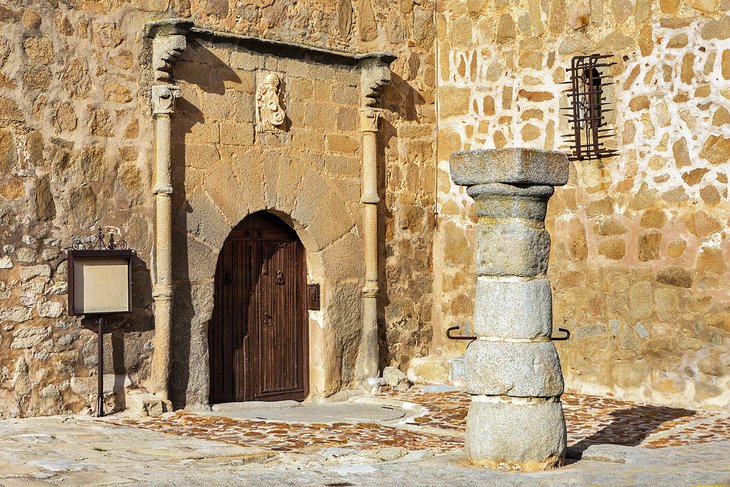
An undiscovered town deep in the countryside, Orgaz is an off-the-beaten path tourist destination 33 kilometers from Toledo (about a 25-minute drive).
This typical historic Spanish town has an elegant Plaza Mayor, a magnificent 18th-century cathedral, ancient town gates, a medieval castle built in the 14th century, and several little hermitage churches.
Arisgotas and the Museo de Arte Visigodo
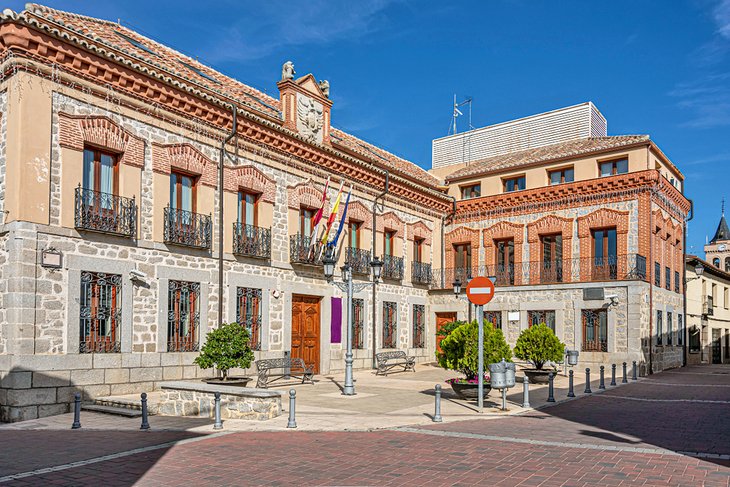
Those willing to travel five kilometers farther outside Orgaz to Arisgotas are rewarded with an interesting cultural attraction, the Museo de Arte Visigodo (Museum of Visigothic Art). The museum displays rare examples of archaeological finds from the 7th century (the Visigothic period).
In an unspoiled rural environment, the tiny village of Arisgotas only has 70 inhabitants. The village takes its name from the local oak groves.
For anyone with a sweet tooth, it's worth a detour less than 10 kilometers from Arisgotas to the nearby town of Sonseca. This small town is known for a special type of pastries called "Marquesas," little sugar-dusted almond cakes that are traditionally enjoyed at Christmastime.