18 Top-Rated Tourist Attractions in Segovia
Segovia is a place of romance, a living legacy of the past in an inspiring setting. Perched on a rocky hilltop, this historic walled town boasts stunning views and magnificent monuments.
The ancient aqueduct, fairy-tale castle, awe-inspiring cathedral, exquisite Romanesque churches, and mystical monasteries reveal Segovia's rich cultural heritage.
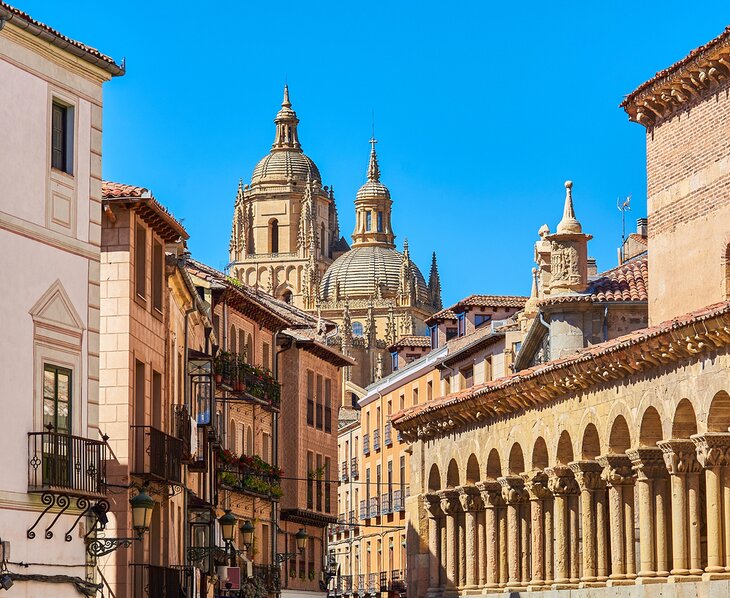
Steeped in complex history, Segovia's heritage begins with the Romans of 80 BCE. The town continued to flourish through the medieval Moorish period, saw the coronation of Queen Isabella "the Catholic" in 1474, and experienced a manufacturing boom in the 16th century. Reminders of all these periods are found throughout the city.
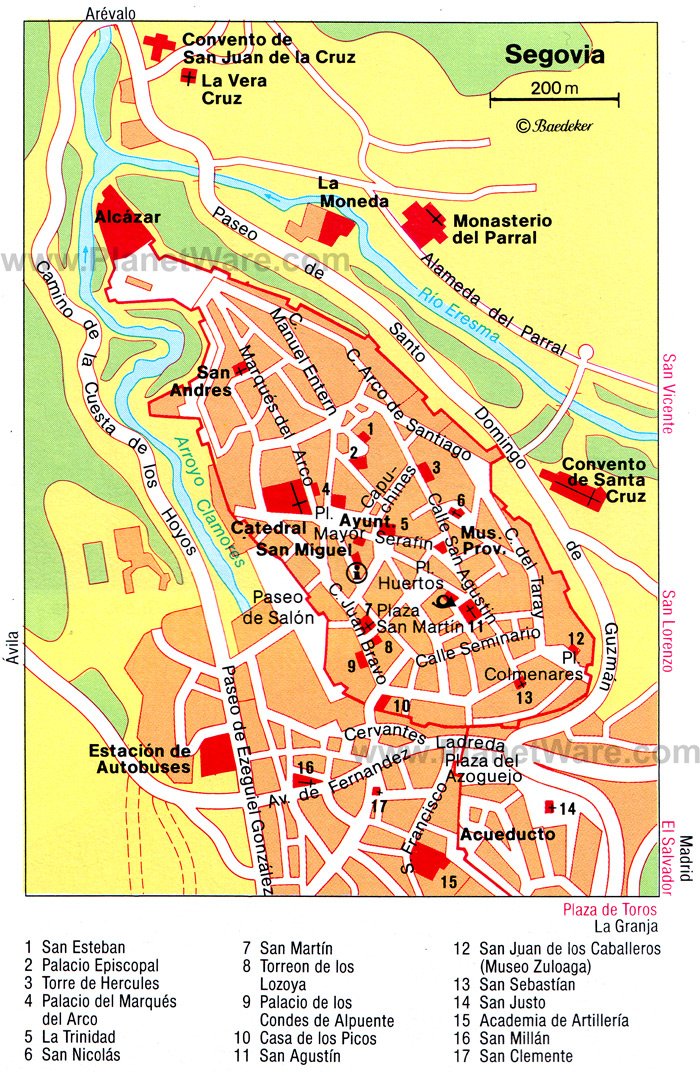
The majority of Segovia's tourist attractions and things to do are found in the Old Town (the historic city center), which is designated as a UNESCO World Heritage site. This atmospheric medieval world is the perfect place to visit if you love tangles of cobblestone streets, ancient alleyways, and charming squares.
While discovering the top attractions, visitors will enjoy wandering the narrow pedestrian lanes to find artisan boutiques, cafés, confectionary shops, and restaurants.
See also: Where to Stay in Segovia
- 1. Ancient Roman Aqueduct
- 2. Alcázar de Segovia
- 3. Palacio Real la Granja
- 4. Catedral de Segovia
- 5. La Judería (Jewish Quarter)
- 6. Real Casa de Moneda
- 7. Iglesia de la Vera Cruz
- 8. Monasterio de Santa Maria del Parral
- 9. Iglesia de San Esteban
- 10. Iglesia de San Martín
- 11. Iglesia de San Millán
- 12. Museo Gastronómico de Segovia
- 13. Museo Zuloaga
- 14. La Muralla de Segovia (Ramparts)
- 15. Iglesia de San Justo
- 16. Iglesia de San Clemente
- 17. Casa de los Picos
- 18. Museo de Arte Contemporáneo Esteban Vicente
- Where to Stay in Segovia for Sightseeing
1. Ancient Roman Aqueduct
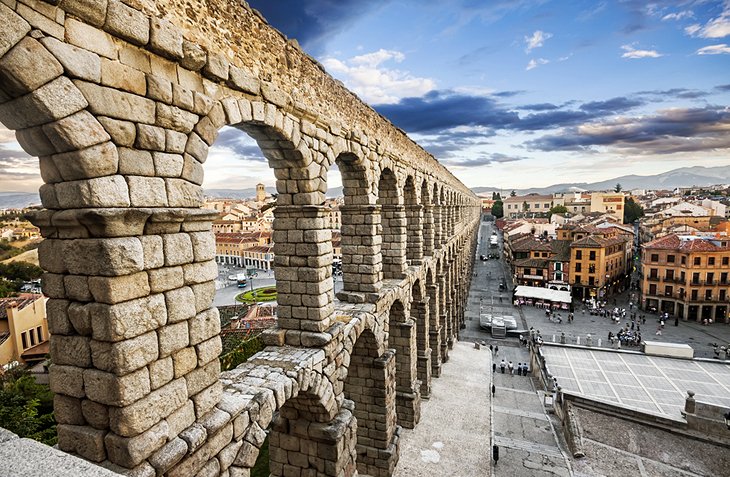
The Roman aqueduct is the symbol of Segovia and forms a magnificent backdrop for the historic city. A UNESCO World Heritage Site, this monumental structure has stood the test of time, enduring two millennia in a remarkably well-preserved condition.
The Segovia aqueduct is one of the two largest existing Roman structures in Spain. Built during the "Flavio" period around 50 CE, the aqueduct channeled water 17 kilometers from the Acebeda River in the Sierra de Fuenfría mountains through a deep valley to the ancient city.
A feat of engineering, the structure was constructed from 20,400 granite blocks without any cement, and the rows of 167 arches have held together in perfect form to this day.
The aqueduct begins near the Granja Palace outside of Segovia and transports water through a canal until it reaches the city.
The best place to view this monument is at the Plaza del Azoguejo, the hub of the Old Town, where the aqueduct reaches its maximum height of 28 meters.
The Plaza del Azoguejo area has many traditional Spanish restaurants (all within easy walking distance of the aqueduct) including the Restaurante Mesón de Cándido, located just beneath the aqueduct; the Restaurante Casa Duque, renowned for its country-style cuisine; and the Restaurante El Cordero, which serves typical specialties of Segovia.
The aqueduct ends at the Alcázar in an underground channel.
Address: Plaza del Azoguejo, Segovia
2. Alcázar de Segovia

With its turreted towers that seem straight of out Disneyland, this castle makes a fairy-tale impression. The fortress stands majestically above the city on a steep-sided rocky crag. The impenetrable location is testament to the original military purpose of the fortress.
Dating back to the 12th century, the Alcázar served as the royal residence of King Alfonso X in the 13th century. The building was enhanced in elegant Gothic style for Henry IV in the 15th century.
The last architectural renovation was completed in the 16th century by the architect Francisco de Mora. The marriage of Philip II and Anne of Austria was celebrated in the Alcázar's chapel.
The entrance to the castle is at the Torre de Juan II, a 14th-century tower ringed by 10 semicircular turrets. The monument is open to the public for visits (admission fee required) everyday year-round. April through October, the hours are 10am until 8pm; November through March, the hours are 10am until 6pm. Guided tours are available in English, French, and Spanish.
Visitors can tour all the rooms of the Alcázar, which are exquisitely furnished in period style with tapestries, arms, and armor. The Sala del Solio (Throne Room) is noteworthy for its ornate gilded ceiling. The Sala de la Galera has arched windows offering exceptional views of the river valley.
Audio guides (available in English and several other languages) explain each room in detail. The self-guided tour takes about 45 minutes. Guided tours in Spanish are available.
You can also ascend the Tower of John II to admire the views. From this vantage point, the views of the surroundings are amazing, including stunning panoramas of the town, the Sierra de Guadarrama, and the Meseta.
The Alcázar de Segovia is well designed to welcome visitors. Amenities include an information desk, cloak room, gift shop, and a cafeteria with an outdoor terrace that features sweeping views.
Address: Plaza de la Reina Victoria Eugenia, Segovia
Official site: www.alcazardesegovia.com
3. Palacio Real la Granja
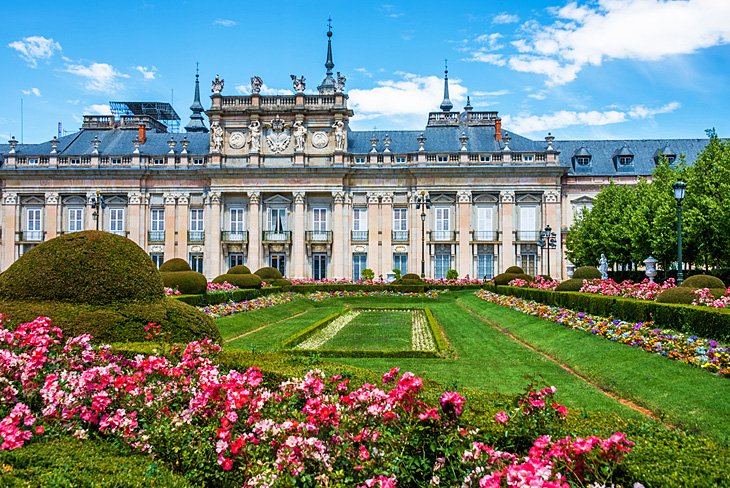
This elegant palace lies 11 kilometers from Segovia in the little town of San Ildefonso, nestled in the Sierra de Guadarrama. The town is a popular weekend retreat for the people of Madrid because of its gorgeous natural setting.
In the early 18th century, Philip V chose San Ildefonso as the site for his palace modeled on Louis XIV's Château de Versailles. Built between 1721 and 1739, the palace beautifully imitates the Baroque style of the famous French palace. Today, the former royal apartments are open to the public.
Visitors can see the Throne Room, the dazzling Room of Mirrors, and other apartments decorated with superb Flemish, French, and Spanish tapestries. The palace has an exquisite church that contains a red marble tomb of Philip V and his wife Isabella Farnese. Surrounding the palace are the Jardines de la Granja, extensive formal French gardens with beautiful fountains, which were modeled after the gardens of the Château de Marly, the leisure residence of Louis XIV.
Other highlights of the Palacio Real la Granja are the Museo de Tapices (Tapestry Museum), which displays exquisite tapestries created in the 16th century, and the Collegiate Church containing tombs of several Spanish monarchs.
Address: Plaza España 15, 40100 San Ildefonso o La Granja, San Ildefonso, Segovia
4. Catedral de Segovia
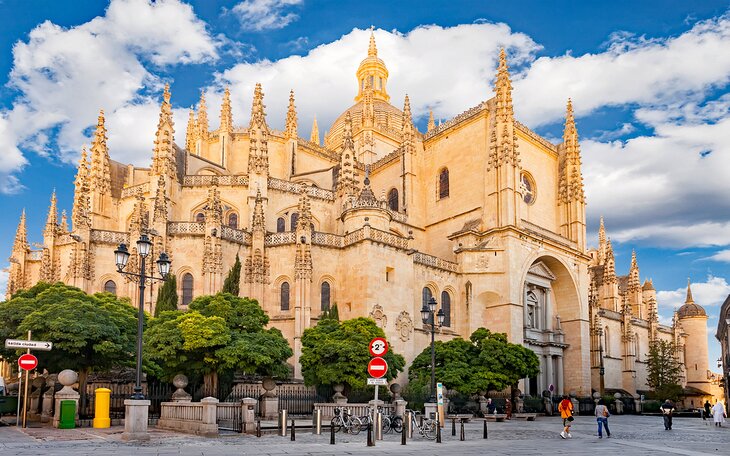
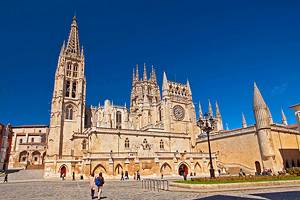
This majestic Late Gothic cathedral stands at the highest point of the Old Town, dominating its surroundings. The location offers commanding views of the entire city and the surrounding Sierra de Guadarrama foothills.
Dating from 1525, this soul-inspiring monument was the last Gothic cathedral built in Spain. The cathedral's intricately articulated façade and soaring towers create an impressive effect. The decorative Puerta del Perdón entrance was the masterpiece of Juan Guas.
Upon entering the enormous vaulted interior, visitors are struck by its Gothic grandeur. Illuminated by vibrant stained-glass windows, the 105-meter-long sanctuary has a sense of serenity and harmony.
Fine sculptures, artworks, and altars decorate the cathedral's 20 chapels, which are closed by grilles. The main altarpiece is beautifully crafted of marble, jasper, and bronze and displays a 14th-century ivory figure of the Virgen de la Paz.
A favorite thing to do for fans of ecclesiastical artifacts, the Museo Catedralicio de Segovia displays liturgical objects, religious paintings, and 17th-century tapestries. Exhibits are presented within 18 chapels of the cathedral. The museum collections contain noteworthy pieces crafted from gold and silver from the 15th to 18th centuries. There are also masterpieces of religious painting and tapestries from the School of Rubens.
The cathedral also has an archive room, the Archivo Capitular, which preserves more than 500 antique songbooks, documents, manuscripts, and books, including the Sinodal de Aguilafuente, the first book printed in Spain. The archive room is open Monday through Friday from 9am until 1pm.
Mass is celebrated at the cathedral Monday through Saturday at 10am, and on Sundays and holidays at 11am and 12:30pm. Tourists may visit the cathedral (admission fee required) Monday through Thursday from 9:30am until 7:30pm, Friday and Saturday from 9:30am until 9:30pm, and Sunday from 12:30pm until 9:30pm. Guided tours (in Spanish) of the cathedral and its tower are available for additional fees.
From May through September, tourists can take advantage of a special event: Visita Nocturna a La Torre (Night Visit to the Tower), which includes a guided tour of the illuminated cathedral and tower. Held on Friday, Saturday, and Sunday evenings at 9:30pm, the guided tour is available in Spanish or English (entry ticket required).
The cathedral stands on the Plaza Mayor in the center of the Old Town. A hub of activity, the square has many sidewalk cafés, and is surrounded by a maze of winding medieval streets that are worth exploring. Outdoor restaurant terraces and café tables spill out onto the square's cobblestone patio space, creating a lively atmosphere.
Address: Plaza Mayor, Segovia
5. La Judería (Jewish Quarter)
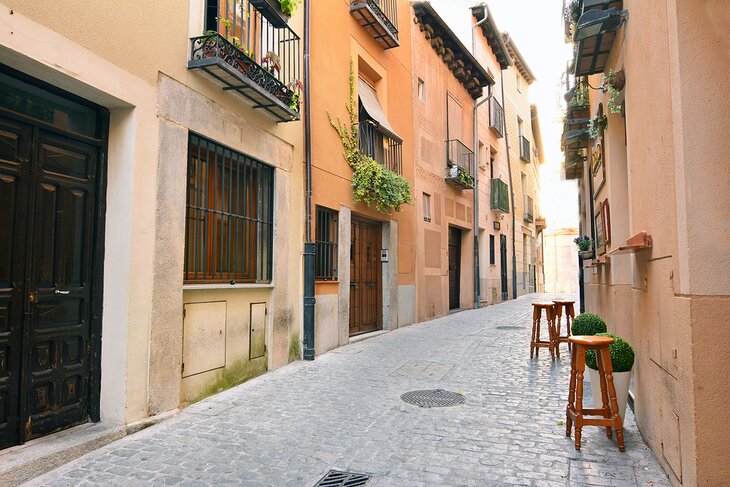
The old Jewish quarter is found in the area of Plaza de la Merced and the parish churches of San Miguel and San Andrés, and extends to the Plaza del Socorro. With its distinctive medieval ambience, the old Jewish quarter of Segovia offers hints of the Sephardic past. Street names like Judería Vieja and Judería Nueva offer the first clues.
The Convent of Corpus Christi also reveals its former life as a synagogue, built in the 13th century, and you can visit to see remnants of the synagogue's original décor, such as columns decorated with pineapples and scrolls. This is the best-preserved of the five synagogues that once existed in Segovia.
The quarter was once enclosed by seven gates including Puerta de San Andrés (Plaza del Socorro), a top sightseeing destination which now presents educational exhibits about local history.
The Antigua Carnicería Judía (Ancient Jewish Butcher) building now houses the Museo de Segovia (11 Calle Socorro), a museum of fine arts, ethnography, and archaeology. The museum is open Tuesday through Saturday from 10am until 2pm and 4pm until 7pm October through June (5pm until 8pm July through September), and on Sundays from 10am until 2pm; it's closed on Mondays, Sunday afternoons, and holidays.
At 12 Calle Judería Vieja, tourists will find the Centro Didáctico de la Judería, where exhibits and videos in English detail the history of Jews in Segovia and elsewhere in Spain. This museum is open every day of the week, but is closed in the afternoon on Monday, Tuesday, and Sunday.
6. Real Casa de Moneda
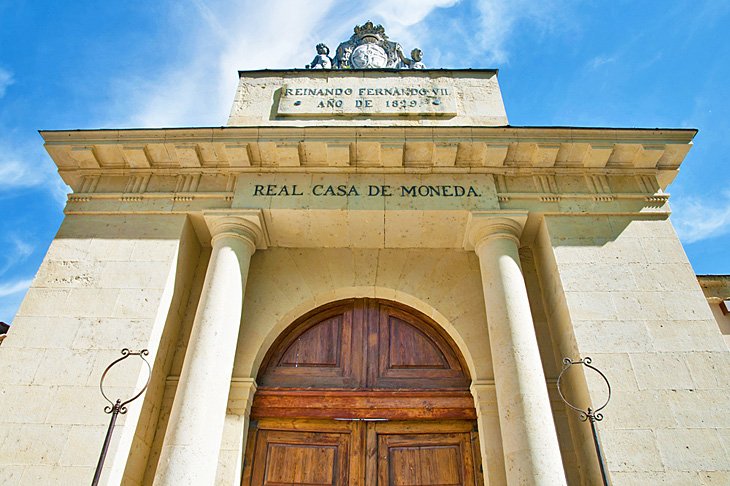
Beside the Eresma River near the Alcázar, the Real Casa de Moneda is Segovia's Royal Mint built in the 16th-century, which makes it one of the oldest examples of a commercial building in Spain. The Royal Mint was founded by Philip II and designed by Juan de Herrera.
The building operated as a mint between 1586 and 1869 and now houses a museum about the history of coin production in Spain. The original hydraulic system of the building is still intact, with a dam in the Eresma river.
The Real Casa de Moneda is open on Tuesday from 10am until 2:30pm, Wednesday through Saturday from 10am until 6pm, and Sunday from 10am until 3pm; closed on Monday.
Address: Calle de la Moneda, Segovia
7. Iglesia de la Vera Cruz
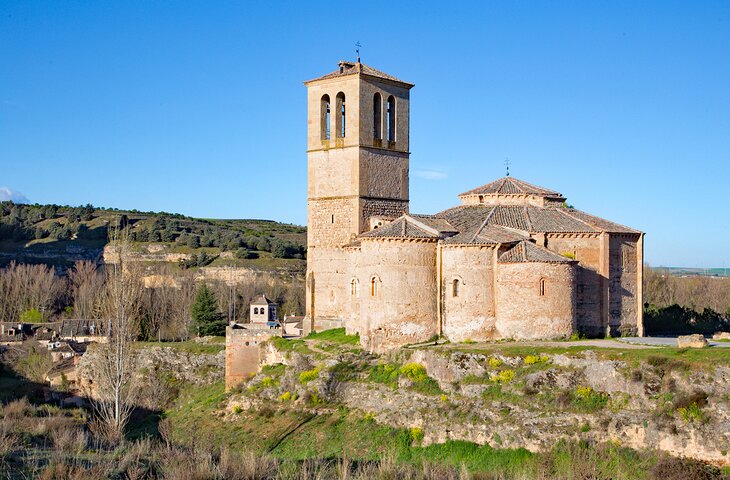
Listed as a National Monument, the Iglesia de la Vera Cruz is a splendid Romanesque church on a lonely road outside the historic town. Founded by the Knights Templar in the 13th century, it was inspired by the Church of the Holy Sepulchre in Jerusalem, where the knights originated. Vera Cruz translates to "True Cross."
The church has a simple, austere interior with three semicircular chapels and Mudéjar-style vaulting. Visitors feel a sense of mysticism in the somber sanctuary. The monument is open to the public from 10am until 1:30pm and 4pm until 6pm (until 7pm in summer) Tuesday through Sunday, and is closed on Mondays.
Also outside the walled Old Town is another attraction, about a 20-minute walk or short drive from the Church of Vera Cruz. Tucked away on the quiet Calle Marqués del Arco, the Convento de San José de las Carmelitas Descalzas was founded in 1586 by Saint John of the Cross. The tomb of this mystic poet who inspired the order is here.
Visitors approach the convent by a steep stone staircase, reinforcing the impression of ascending to a higher spiritual place. The convent is open to the public for visits; check with the Tourist Office about the hours.
Address: Carretera de Zamarramala, Segovia
8. Monasterio de Santa Maria del Parral
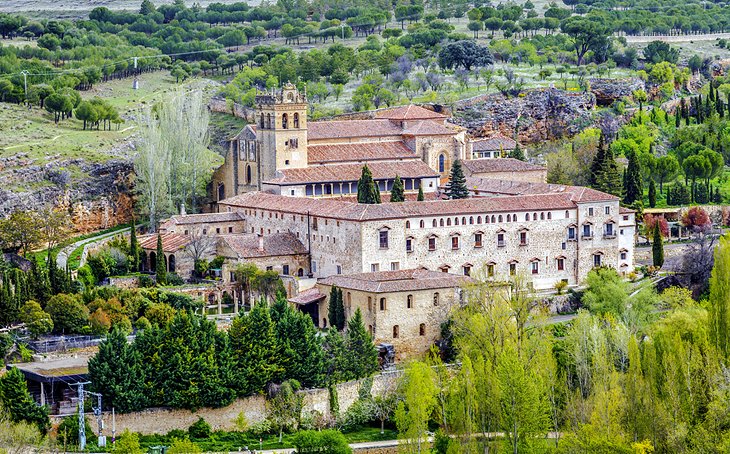
Nestled in the picturesque rolling hills outside of Segovia's historic center, this 15th-century monastery is a peaceful retreat in nature. Founded by Henry IV of Spain, the monastery combines Gothic and Renaissance architectural styles.
The main chapel of the church is Gothic, while the tower of the church is crowned with Renaissance ornamentation. Around the altarpiece are elaborate alabaster monuments to the Marquises of Villena, who were patrons of the monastery.
One of the highlights of the church is the Gothic doorway leading to the ante-sacristy. The monastery has four cloisters: the main cloister, La Portería, La Hospedería, and La Enfermería.
Listed as a National Monument, the monastery is open to the public for visits (donations suggested) from 11am until 5pm Wednesday through Sunday. It's closed on Mondays and Tuesdays. Mass is celebrated with Gregorian chants on Sundays at 12pm.
Address: 2 Calle Parral, Segovia
9. Iglesia de San Esteban
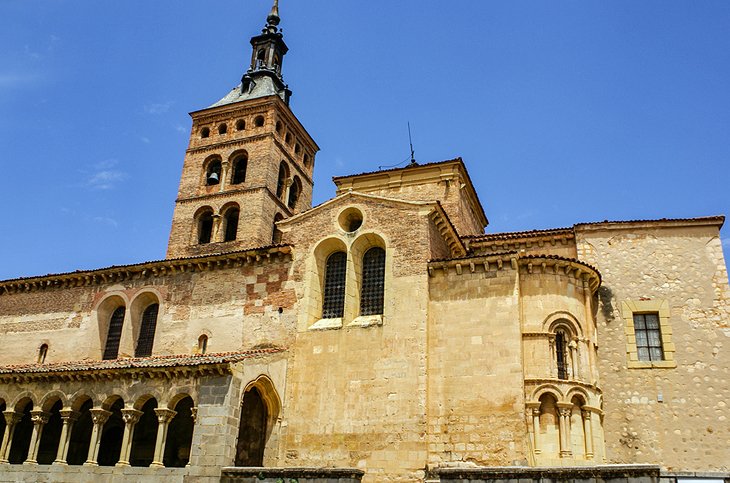
Constructed in the 12th and 13th centuries, the Iglesia de San Esteban is the most renowned of Segovia's Romanesque churches. In the Old Town north of the Plaza Mayor, the church is found in the slightly sloping Plaza de San Esteban.
The building is dominated by its tall tower, which consists of six arched segments relieved and topped by a steeple with a weathercock. Like most of Segovia's Romanesque churches, San Esteban has a loggia where meetings of the guilds were held.
Address: Plaza San Esteban, Segovia
10. Iglesia de San Martín
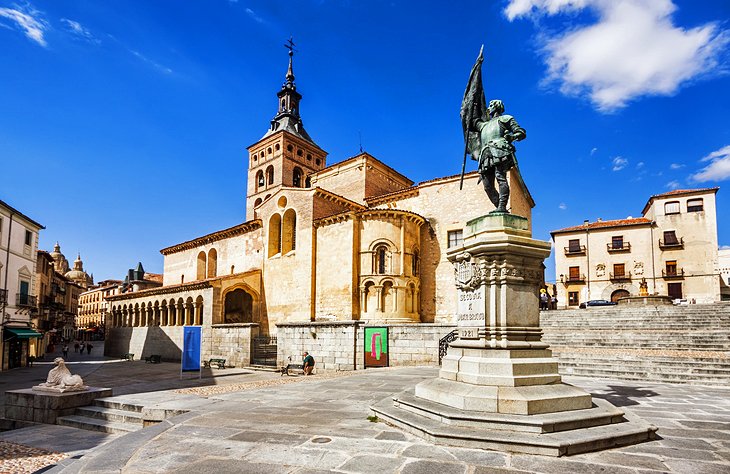
The splendid 12th-century Iglesia de San Martín exemplifies Castilian Romanesque architecture. The Gothic Capilla de Herrera contains tombs of the Herrera family, and the Capilla Mayor has a noteworthy recumbent figure of Christ by Gregorio Fernández.
Other remarkable artworks are the marble plaque depicting Saint Martin, the richly carved capitals featuring floral motifs and Biblical scenes, and the triptych by the Flemish painter Adriaen Isenbrandt.
The church faces the picturesque little Plazuela de San Martín, with its fountain decorated by two mermaids. On the steps up to the square is a house with a four-arched gallery that was the birthplace of Juan Bravo, one of the leaders of the rising of the Comuneros, while next to it is the impressive 16th-century Torreón de los Lozoya.
Address: Plazuela de San Martín, Segovia
11. Iglesia de San Millán
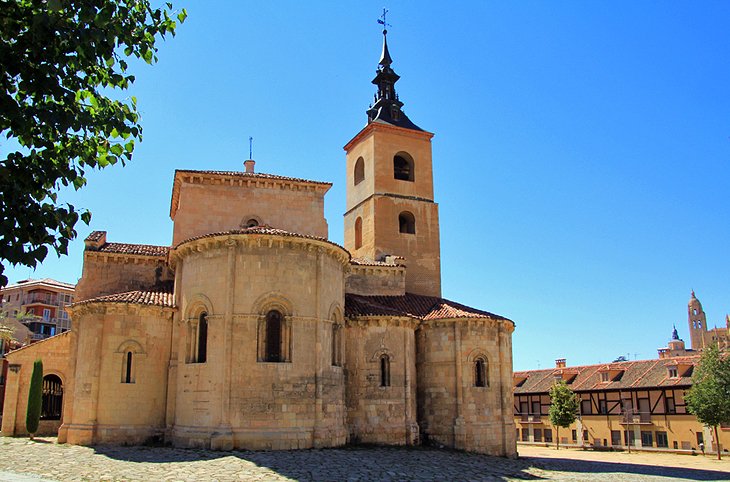
The Iglesia de San Millán lies outside the walled historic center of Segovia, in the old Moorish quarter where Mozarab artisans once worked.
The church is a typical 12th-century Romanesque church with three naves and three apses, yet the architecture also reveals some Islamic influence, including Caliphate-style vaulting and decorations.
Modeled after the Cathedral of Jaca, the church has a tower from a previous Moorish building. The interior features exquisite Mudéjar art works, horseshoe arches, and an interesting 14th-century Gothic crucifix.
Address: Avenida Fernández Ladreda, Segovia
12. Museo Gastronómico de Segovia

The Gastronomic Museum of Segovia introduces the traditional food products of the region, with exhibits, utensils, and audiovisuals. Located in an old house, part of the museum includes remains of its Roman origins.
For gourmands, this museum is one of the best places to visit for an overview of local cheeses and other regional specialties. The exhibits describe gastronomic delicacies, such as dishes typically offered in Segovia restaurants. There's even the chance to sample the specialties.
Address: Calle Daoiz 9, Segovia
13. Museo Zuloaga
In the Old Town, from the Plaza del Azoguejo, steps beside the aqueduct ascend to the upper town.
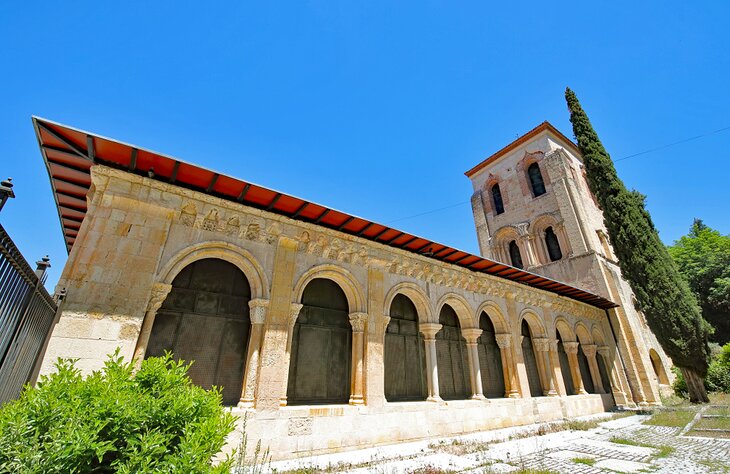
From the top, a street to the right leads to the Plaza Colmenares, and in this square is the Iglesia de San Juan de los Caballeros. Constructed between the 11th and 13th centuries, this Romanesque church was once the burial place of the leading families of Segovia.
Daniel Zuloaga bought the Church of San Juan de los Caballeros in 1905 and used the interior space as an art studio. The building now houses the Museo Zuloaga, which displays paintings by Ignacio Zuloaga and ceramics and other art works by Daniel Zuloaga.
Address: Plaza de Colmenares, Segovia
14. La Muralla de Segovia (Ramparts)
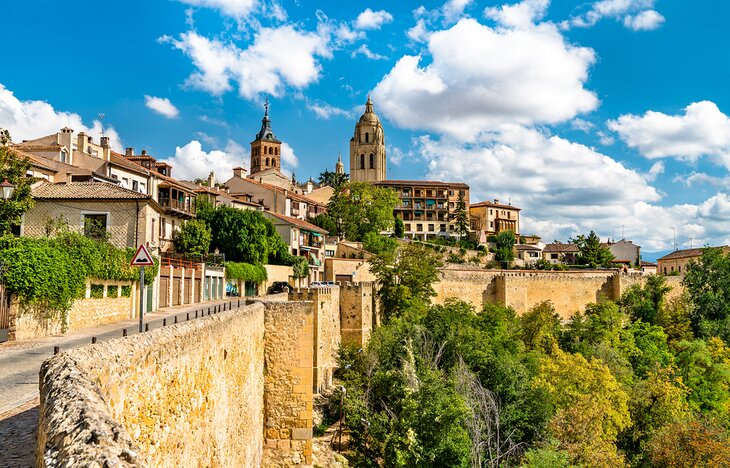
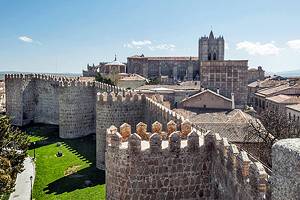
A typical medieval walled town, Segovia is surrounded by formidable ramparts dating back to the 11th century. A substantial portion of the ancient limestone walls has been preserved, starting at the Alcázar fortress.
The ramparts feature characteristic crenellations, blind arches, towers, and entrance gates with horseshoe arches. Three of the old entrance gates remain: San Andrés gate, San Cebrián Gate, and Santiago Gate.
For tourists, walking along the ramparts is one of the best ways to view the city's monuments. Inside the former guards' headquarters, tourists can see the walls that defended the upper areas of the city.
Address: Punto de Información Turística La Muralla, 6 Plaza del Socorro, Segovia
15. Iglesia de San Justo
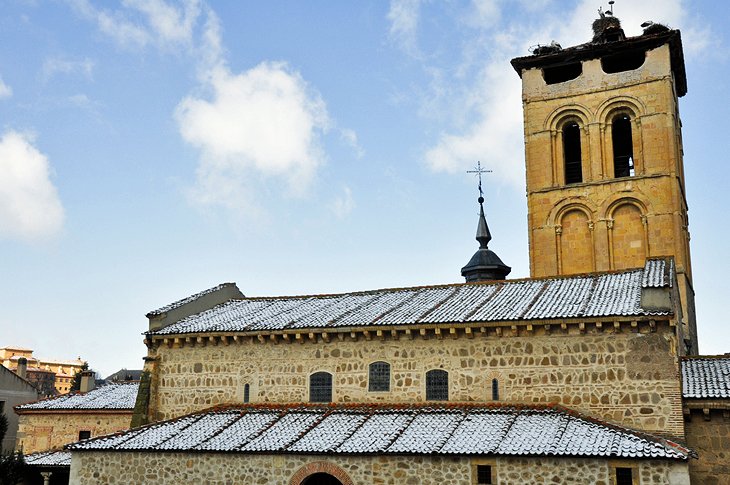
Near the ancient Roman aqueduct, the Church of San Justo is a gem of Romanesque architecture with a prominent tower.
The church was built in the 13th century and was an important stop on the Way of Saint James medieval pilgrimage trail to Santiago de Compostela in northern Spain.
Although the church is small, it is a treasure trove of art works. Particularly noteworthy are the vibrant Romanesque frescoes in the apse, with an impressive Pantocrátor and scenes from the Passion of Christ and the lives of the Saints.
Address: Calle Pedro de Fuentidueña, Segovia
16. Iglesia de San Clemente
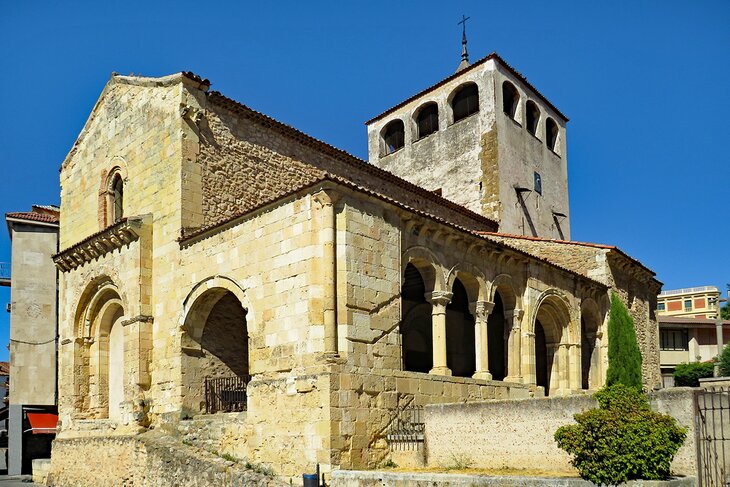
Outside of Segovia's ancient walls, from the Plaza del Azoguejo, the Avenida de Fernández Ladreda runs southwest to the Iglesia de San Clemente. This exquisite 13th-century Romanesque church has an arcaded portico on the exterior.
The interior features an interesting apse featuring blind arches. Not to be missed are the 13th-century frescoes on the righthand side of the Capilla Mayor.
17. Casa de los Picos
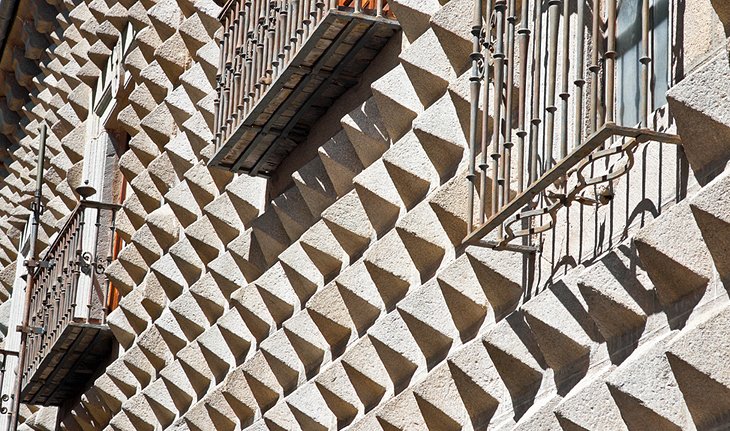
This 15th-century aristocratic mansion is worth a detour to admire its striking façade resembling a coat of armor, with a relief of pyramid-shaped granite blocks. Notice the coats of arms above the balconies, reflecting the stature of the De la Hoz family who owned the house.
Charming decorative tiles featuring pictures of Segovia buildings are found at the entrance and in the courtyard. The Casa de los Picos now houses the Segovia Art School and an exhibition hall that presents temporary exhibitions throughout the year.
To arrive here, take the Calle Cervantes or the flight of steps beside the aqueduct and turn left at the top.
Address: Calle Juan Bravo 33, Segovia
18. Museo de Arte Contemporáneo Esteban Vicente
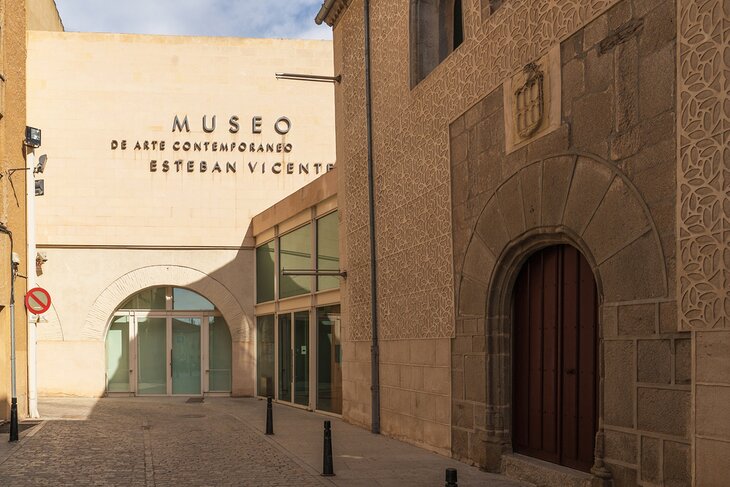
Fans of abstract and modern art will want to stop into the converted 15th-century palace of Henry IV, now a gallery of the works of 20th-century Spanish painter Esteban Vicente.
The modern exhibit spaces are dedicated to the collection of 153 works by Vincente, which include oil paintings, collages, drawings, small sculptures, and works in other media.
The greatest emphasis is on those done later in his career, when he lived and worked in the United States, but the entire evolution of his work in various media is covered.
Address: Plazuela de las Bellas Artes, Segovia
Official site: http://museoestebanvicente.es/en/
Where to Stay in Segovia for Sightseeing
Enclosed in well-preserved ramparts, the old city of Segovia is less than a kilometer from the end where the aqueduct enters it to the Alcázar on the other end. In the center is Plaza Mayor, where the cathedral stands. Because the walled historic center of Segovia is relatively small, anywhere inside it is convenient for visiting the main attractions. Here are some highly rated hotels in Segovia:
Luxury Hotels:
- In a renovated 16th-century convent near the Church of Saint Esteban in the Old Town, the five-star Aurea Convento Capuchinos offers spacious modern guest rooms, some with views. Amenities include a concierge, fitness center, spa with Turkish baths, garden, gourmet restaurant, and private parking.
- The four-star Hotel San Antonio el Real is outside of Segovia's historic center, next to the Aquedect (which is about a 20-minute walk from the Plaza Mayor). The hotel occupies a 15th-century convent (a National Monument). Highlights of the property include the elegant fine-dining restaurant and the tranquil garden cloister.
Mid-Range Hotels:
- The Hotel Don Felipe is in the Old Town, only a five-minute walk from the Alcázar. This three-star hotel features a garden, rooftop terrace, cafeteria, and private parking. The upper-floor guest rooms have balconies with views.
- In the heart of the Old Town on the Plaza Mayor, the Infanta Isabel Hotel provides spacious and beautifully decorated guest rooms. The larger rooms have wrought-iron balconies overlooking the cathedral. This three-star boutique hotel offers concierge services and private parking.
- The three-star Hotel Spa La Casa Mudéjar is a few steps from Plaza Mayor in the heart of the Old Town. Accommodations are in a renovated 15th-century mansion, featuring Mudéjar coffered ceilings and updated with a spa, sauna, and a restaurant that serves Sephardic cuisine. Some rooms offer views of the Guadarrama Mountains.
Budget Hotels:
- The Hotel Condes de Castilla stands next to the Iglesia de San Martín in the Old Town. A renovated 13th-century Castilian palace, updated with 21st-century comforts, it provides three-star accommodations. Amenities include private parking and concierge services. The hotel has a cozy restaurant that specializes in traditional cuisine of the region.
- In a quiet area of the Old Town near the Plaza Mayor, the Exe Casa de Los Linajes is a three-star hotel in a remodeled 16th-century palace. The hotel has a restaurant, fitness center, garden, private parking, and an outdoor terrace with views. Spacious, bright guest rooms are outfitted with new mattresses and modern amenities.