12 Top-Rated Things to Do in Olympic National Park
Author Brad Lane has taken several trips to Olympic National Park, including a solo backpacking trip throughout the Seven Lakes Basin in September 2021.
Olympic National Park, abutting the Pacific Ocean on the Olympic Peninsula of northwest Washington State, draws millions of visitors each year into its wild environments. From glaciated mountain peaks to a rugged coastline, including one of the finest expanses of temperate rain forest in North America, Olympic is isolated, rugged, and a top spot to scratch off some wanderlust.
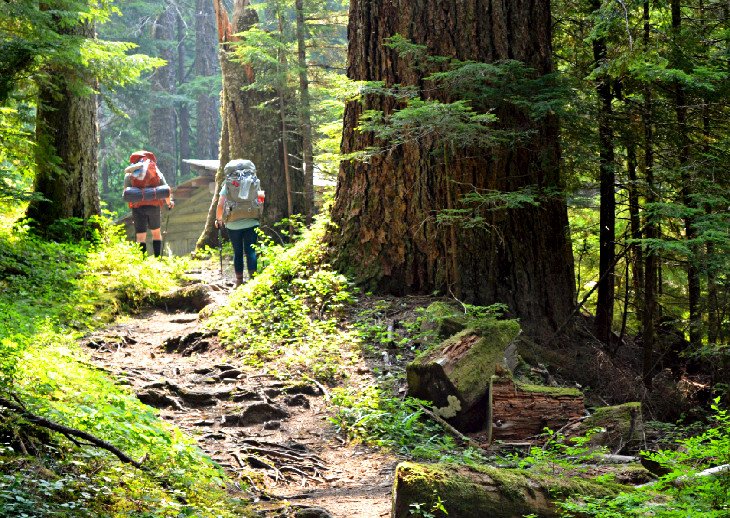
Planning a trip to Olympic National Park can feel overwhelming with so many exciting things to do. No roads cut through the wild interior of the park, leaving visitors circling the peninsula on a multi-day trip. Several campgrounds, charming towns, and hiking trails line all sides of the peninsula, beckoning one memorable experience after the other.
The peninsula is explorable throughout the year, though arguably the best time to visit Olympic National Park is between the months of May and September. This less-rainy season attracts sizeable crowds, making it worth planning ahead with reservations and applicable permits.
Plan your trip to one of America's wildest national parks with our guide to Olympic National Park and the Olympic Peninsula.
See also: Where to Stay near Olympic National Park
- 1. Start at the Olympic National Park Visitor Center in Port Angeles
- 2. Explore the Hoh Rain Forest
- 3. Enjoy the View atop Hurricane Ridge
- 4. Hike to Marymere Falls
- 5. Soak in Sol Duc Hot Springs
- 6. Catch the Sunset at Rialto Beach
- 7. Spend the Night in the Lake Crescent Lodge
- 8. Pitch a Tent or Park an RV
- 9. Find Treasure at Kalaloch or Ruby Beach
- 10. Visit Neah Bay
- 11. Dive into Lake Quinault and Quinault Rain Forest
- 12. Make a Base Camp in Forks
- Where to Stay near Olympic National Park for Sightseeing
- Map of Things to Do in Olympic National Park
1. Start at the Olympic National Park Visitor Center in Port Angeles
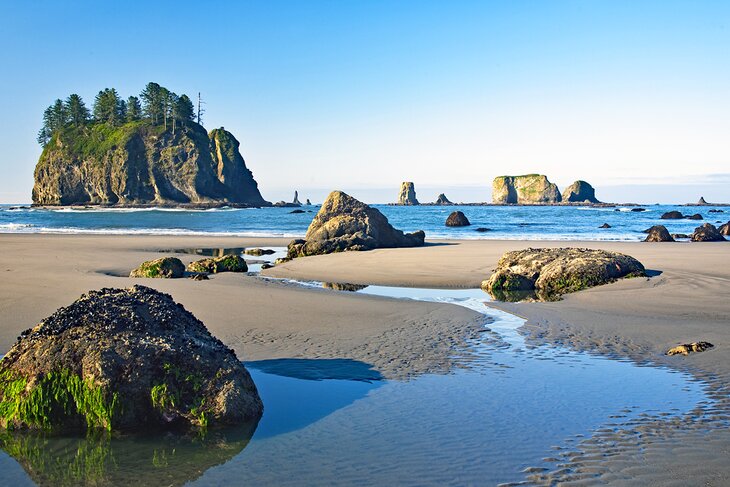
The main Olympic National Park Visitor Center is in the charming town of Port Angeles, on the northern coast of the peninsula. It's a great resource for first-time visitors to discover more about the vast ecosystems and many things to do. Rangers at the Visitor Center are happy to answer any questions visitors might have.
The Visitor Center is also home to the Wilderness Information Center, where interested explorers can pick up backcountry permits. And while the Visitor Center in Port Angeles is the largest, additional visitor and ranger stations are found at the Hoh Rain Forest, Hurricane Ridge, and Kalaloch.
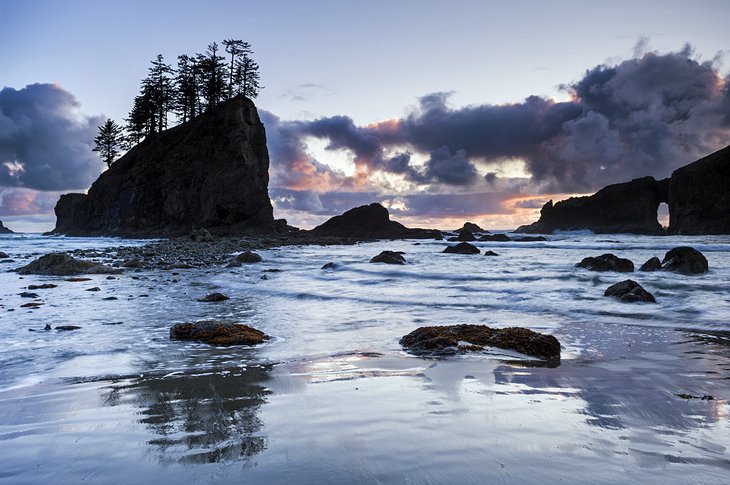
The Olympic National Park Visitor Center is only one of the many places to visit in Port Angeles. Other things to check out include the Olympic Discovery Trail and the crescent-shaped sand spit known as Ediz Hook. This seafront city also provides a great jumping-off point, with many hotels and restaurants.
Accommodation: Best Lodging Options for Olympic National Park
2. Explore the Hoh Rain Forest
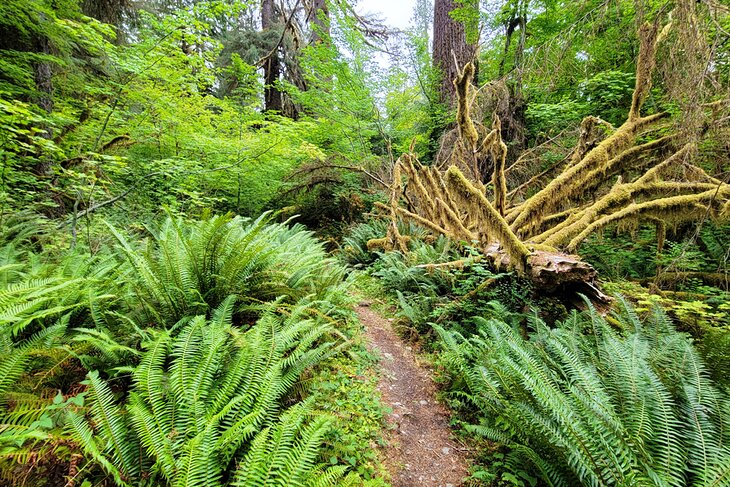
The abundant rain on the west side of Mount Olympus, at the heart of the park, lends to lush surroundings and some of the last few examples of temperate rain forests in the country.
Most visitors head to the Hoh Rain Forest to experience this vast expanse of nature, and for good reason. This overgrown area is unbelievably engaging and endowed with every shade of green on the spectrum.
Visitors have a few different options to explore the environment, including the family-friendly Hall of Mosses and Spruce Nature Trail. These flat paths make a short circle around the dense landscape surrounding the Hoh Rain Forest Visitor Center.
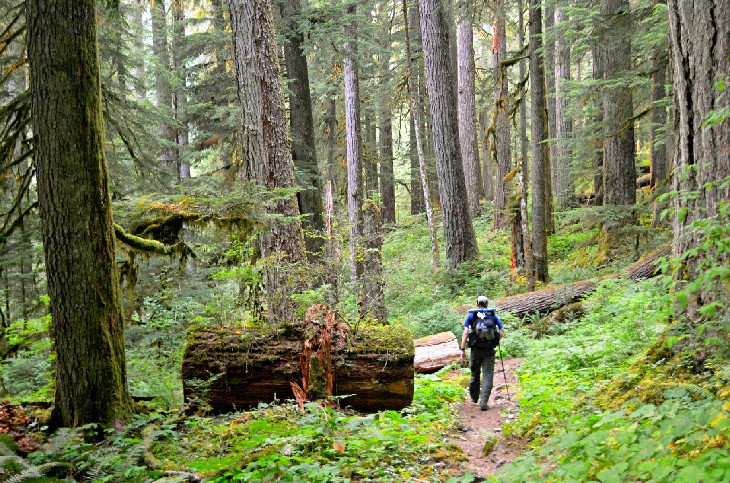
Alternatively, the world-famous Hoh River Trail extends 17 miles from the Visitor Center to the terminal moraine of the Blue Glacier of Mount Olympus. The first 13 miles of the trail are moderate and mostly flat, following the contours of the Hoh River, enabling a fun out-and-back family hike experience.
3. Enjoy the View atop Hurricane Ridge
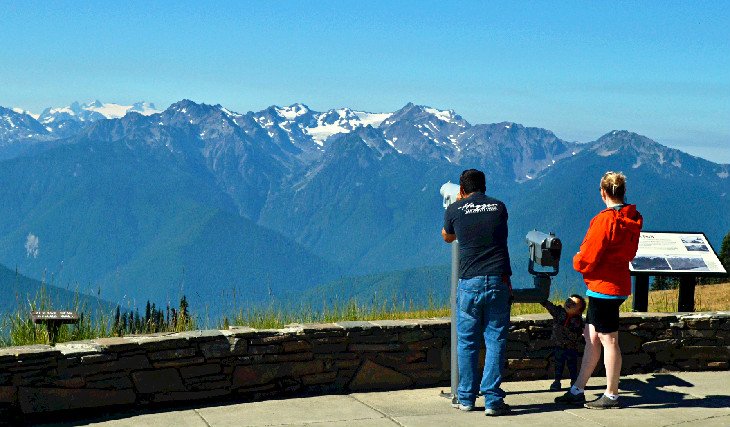
A 20-mile-long scenic road runs from Port Angeles up to Hurricane Ridge Visitor Center (altitude 5,200 feet; no overnight accommodation).
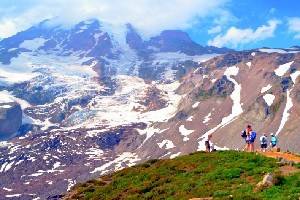
Magnificent views of the glacier-covered Olympic Mountains and over the Strait of Juan de Fuca to Vancouver Island in Canada await at this popular place to visit. It is a particularly spectacular sight in late summer when lupines and delicate valerian dot the alpine meadows.
Hurricane Ridge is a common first stop when exploring Olympic National Park from Port Angeles. The Heart O' the Hills Campground, at the base of the drive up to Hurricane Ridge, is a popular campground close to town.
4. Hike to Marymere Falls
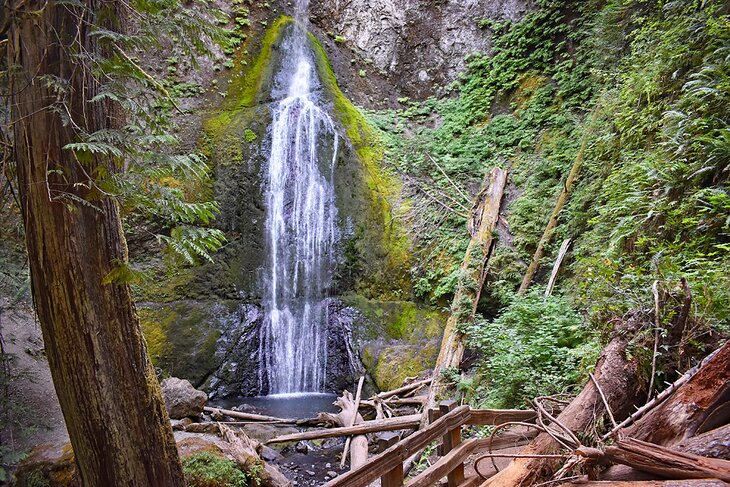
Among all the best hiking trails in Olympic National Park, the hike to Marymere Falls is always a top family favorite. The hike and waterfall are on the northwest side of the park, near Lake Crescent, and accessible from Port Angeles with a 20-mile drive.
It might be the short nature of the hike that attracts families, with less than a mile of hiking required to reach the 90-foot falls. But it's also the dazzling display of gravity that really puts Marymere on the map. Take some time to enjoy this falling attraction from the designated viewing area.
Marymere is also popular thanks to its location in the park. Lake Crescent itself is a major tourist draw, with several campgrounds and other hiking trails throughout the area. Head to the nearby Mount Storm King Trailhead for a more challenging endeavor, featuring a four-mile round trip and an incredible view across the lake.
Read More: Top-Rated Waterfalls in Washington State
5. Soak in Sol Duc Hot Springs
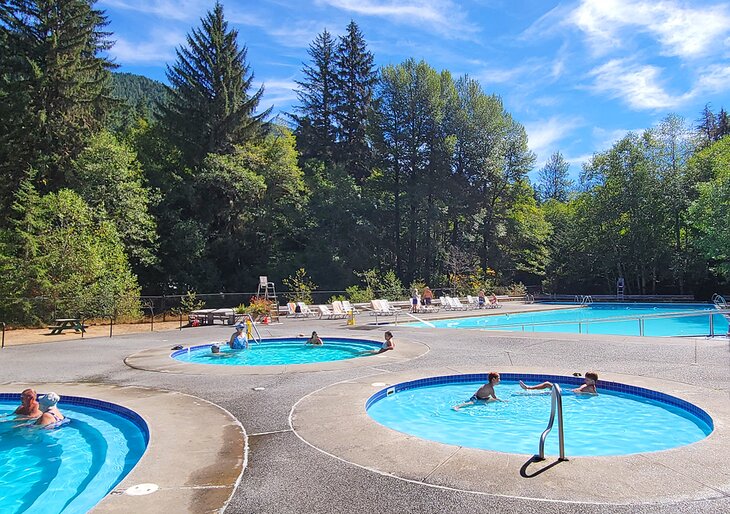
Sol Doc Hot Springs is a concessionaire-run resort and hot springs within Olympic National Park. Its therapeutic waters have long attracted visitors. Simple cabins, a lodge, and an adjacent campground are situated next to a scenic river for guests who want to spend the night, and day-trippers are also welcome to pay a day fee to enjoy the waters.
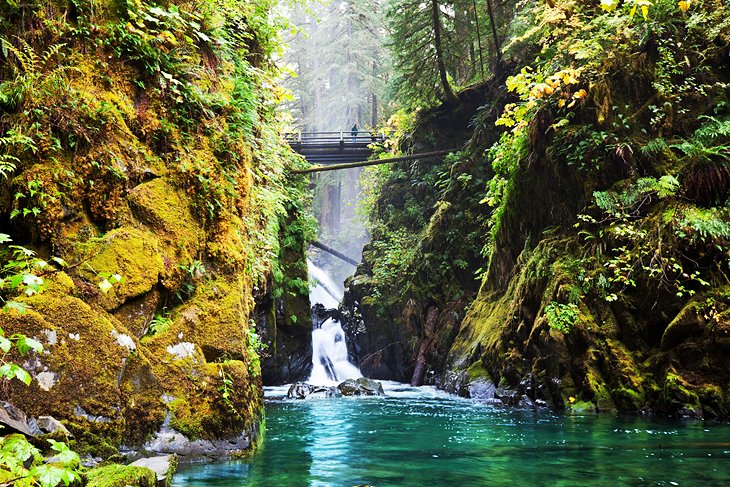
Near the resort, the Sol Duc Falls trailhead invites exploration into a dense alpine environment, where permit holders can venture farther into the stunning Seven Lakes Basin of the park.
Read More: Top-Rated Hot Springs in Washington
6. Catch the Sunset at Rialto Beach
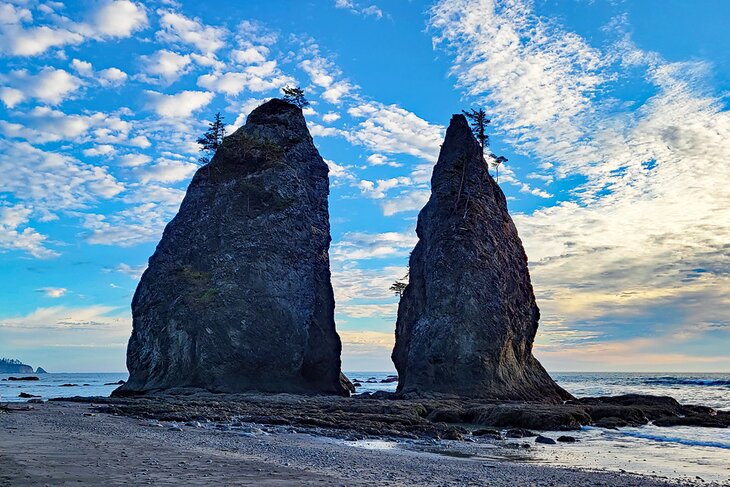
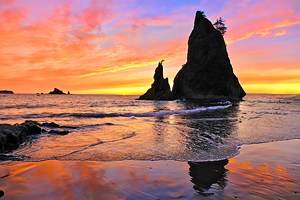
The wild Olympic Coast is on full display at Rialto Beach, inland from the Mora area of the park. This stunning coastline extends north from the Quillayute River, revealing dramatic sea stacks and a changing tide the entire way. It's a popular spot for beachcombing and exploring the wild environment.
Take some time to hike 1.5 miles north on Rialto Beach to the aptly named Hole-in-the-Wall. This massive rock feature delivers a unique tunnel carved out of the rock and is a stunning area to visit, especially during low tide. The entire area is crawling with sea life when the water is low.
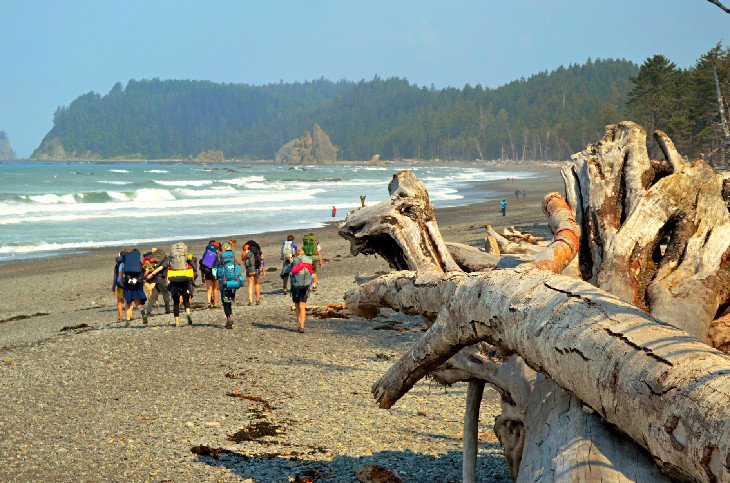
The sunsets are also a spectacular time to visit. One of the most popular ways to spend the night near Rialto Beach is at the Mora Campground, near the end of Mora Road and the beach. Visitors also apply for backpacking permits along the beach and camp out in the wood line overlooking the ocean.
Read More: Best Beaches in Washington State
7. Spend the Night in the Lake Crescent Lodge
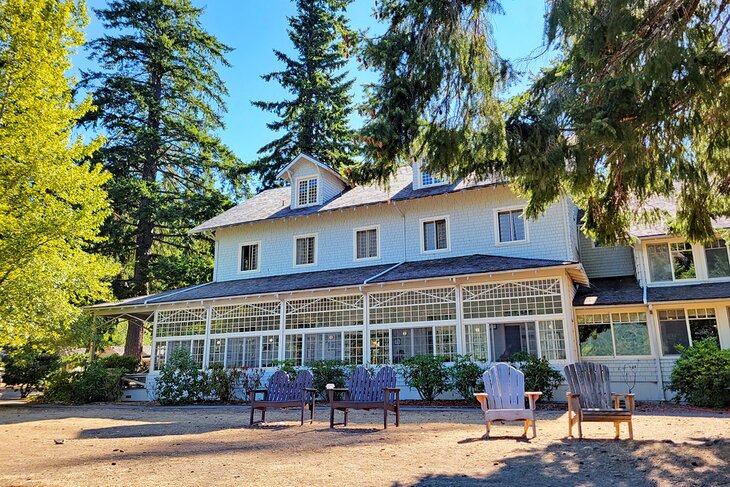
Highway 101 passes Lake Crescent, about 20 miles west of Port Angeles, on the northern side of the peninsula. This glacier-carved lake shines with natural beauty and attracts visitors throughout the summer. And the historic Lake Crescent Lodge, adjacent to the water, offers a wonderful place to spend the night.
Various rooms and suites cater to different types of travel at Lake Crescent Lodge. Original lodge rooms are still available without modern amenities like internet access, but they have abundant charm. Larger rooms, suites, and fireplace cabins are also available.
Read More: Best Lakes in Washington
8. Pitch a Tent or Park an RV
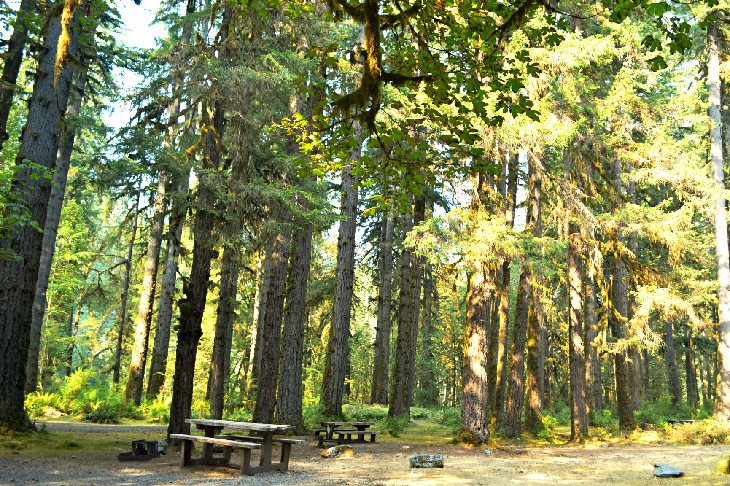
Olympic National Park has an abundance of auto campgrounds open throughout the year. While places like Heart O' the Hills, the Hoh Rain Forest, and South Beach Campgrounds are some of the most popular, the best campgrounds in Olympic National Park deliver instant access to a stunning environment.
Advanced reservations, where available, are especially advised throughout the summer and particularly on the weekends.
9. Find Treasure at Kalaloch or Ruby Beach
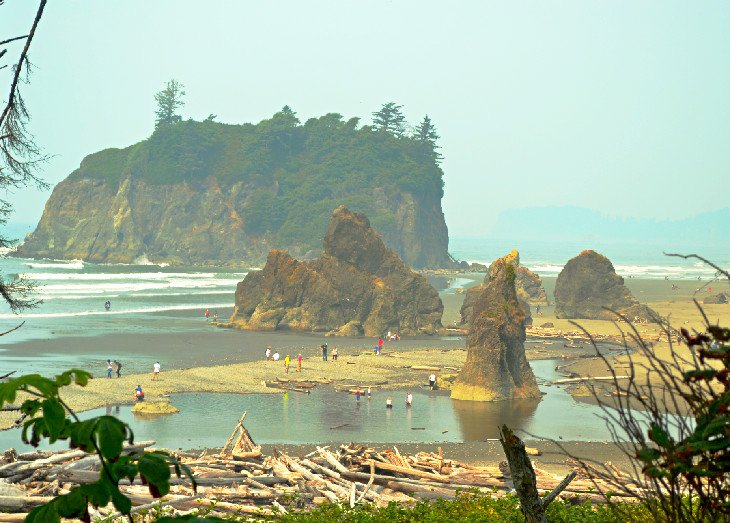
Ruby and Kalaloch Beach are two picturesque beaches on the southern Olympic Coast, less than five miles from one another. Changing tides, dramatic sea stacks, and an abundance of driftwood define either beach, though both have a unique charm of their own.
Visitors reach either beach by heading south on the 101 from Forks. Expect an adventurous nature on this side of the West Coast. While visitors do sunbathe in the summer, more common activities include beach walking, nature photography, and combing the sand for tidal treasures. Kalaloch Beach is also home to the unique cypress known as the Tree of Life, clinging by its roots to the side of a crumbling seawall.
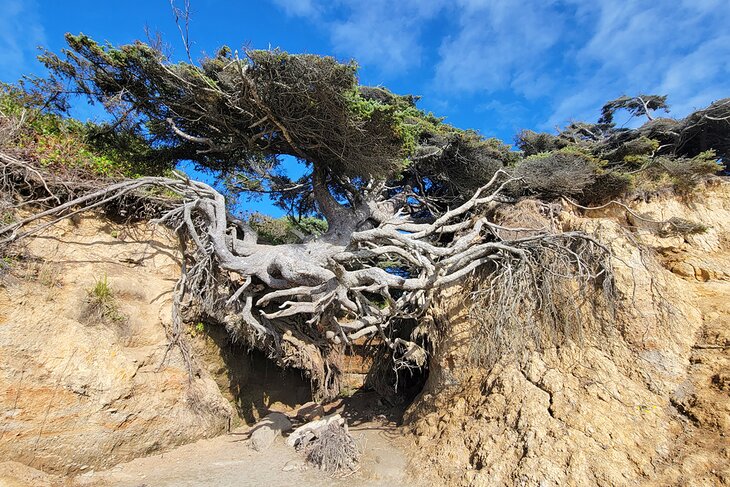
Kalaloch and Ruby Beaches are just two of many signature ocean areas of Olympic, and there's plenty more to explore at places like Rialto Beach, Second Beach, and Shi Shi Beach.
10. Visit Neah Bay
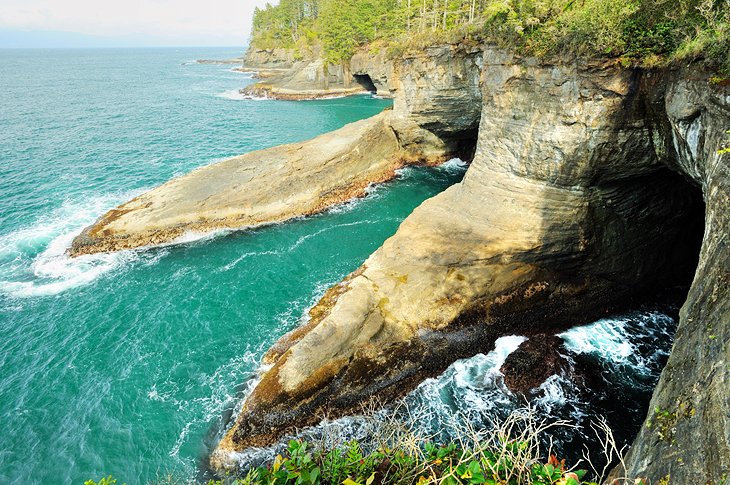
Neah Bay is a small community located on the far northwestern tip of the Olympic Peninsula, on the Strait of Juan de Fuca. It is the gateway to Cape Flattery, the northwesternmost point in the contiguous United States, which is reached via a hiking trail.
The community's Makah Cultural & Research Center works towards preserving the Makah language through various programs. The center also operates the Makah Museum, which features a permanent collection of exhibits related to local history.
11. Dive into Lake Quinault and Quinault Rain Forest
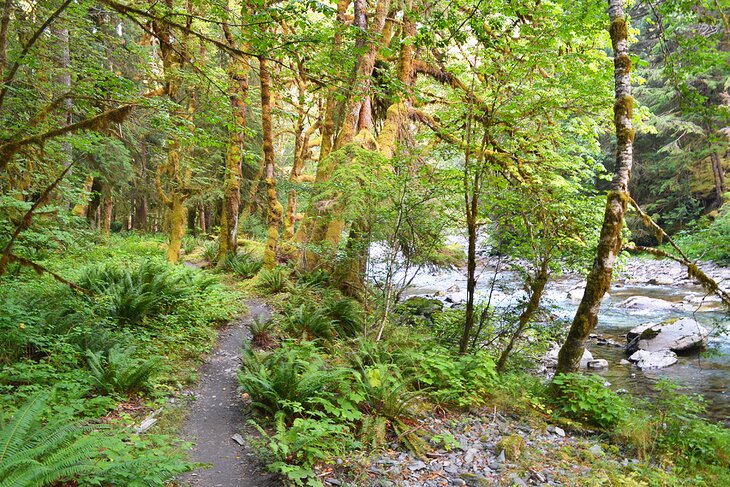
The Hoh is the rainforest most commonly associated with Olympic National Park, but it's not the only lush environment to explore. Quinault Rain Forest is another dense landscape saturated with precipitation on the same soaking side of the Olympic Mountains, a bit farther southwest on the peninsula.
The best way to access the Quinault Rain Forest is by visiting Lake Quinault, overseen by the Quinault Indian Nation. From here, visitors can hop on the half-mile Quinault Rain Forest Nature Trail nearby. Alternatively, visitors can head deeper into the dense surroundings via the North Fork or Graves Creek Road.
Take some time to enjoy Lake Quinault while visiting. A historic lodge is on-site, offering cozy accommodations and lakeside views. A dining room, museum, and non-motorized boat rentals are also available.
12. Make a Base Camp in Forks
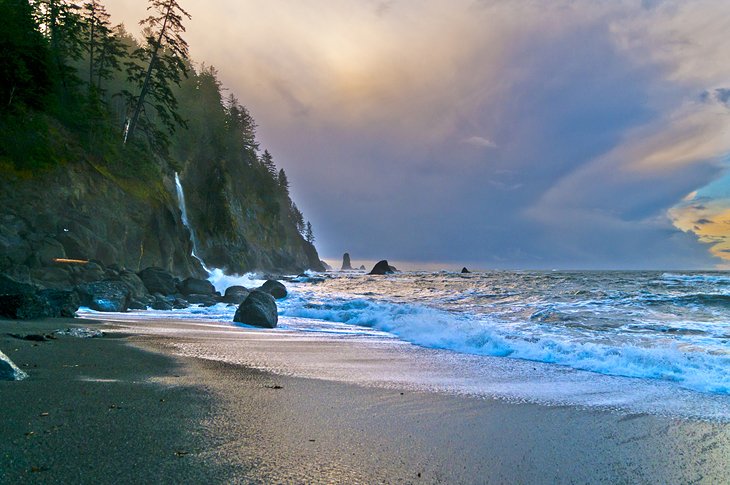
Near the coastal western section of the national park, the town of Forks is the main hub for the surrounding area. Many scenic driving tours explore the area's hiking opportunities, waterfalls, and hot springs.
This town makes a great base from which to reach the beaches near the coastal village of La Push. The Forks Timber Museum offers a chance to learn everything you ever wanted to know about loggers, logging history, and equipment used by the forest industry.
Where to Stay near Olympic National Park for Sightseeing
Mid-Range Hotels: Many great accommodations can be found within or surrounding Olympic National Park, all of which offer easy access to the stunning scenery.
- Olympic Lodge, in Port Angeles, is one of the top-rated hotels of the entire peninsula thanks to its gorgeous views, first-class service, and proximity to the Olympic National Park Visitor Center.
- For coastal explorations, the Kalaloch Lodge puts overnight visitors right next to the ocean and provides spacious rooms, a great location, and easy access to the nearby Hoh Rain Forest.
- For other family-friendly, mid-range accommodations, the Lake Crescent Lodge is near its namesake body of water and Marymere Falls.
Budget Hotels: The best-value hotels are going to be found within the cities and communities that border the national park.
- In Port Angeles, the All View Motel is popular for its friendly rates, clean facilities, and easy access to places like Lake Crescent and Hurricane Ridge.
- In the nearby city of Sequim, also known as the "Lavender Capital of America," the Holiday Inn Express Hotel & Suites North Sequim is a highly reputable hotel with favorable rates.
- To stay closer to the beach and the stunning Olympic coastline, The Pacific Inn Motel in Forks provides fast access to the ocean, clean rooms, and a great overnight rate.
Map of Things to Do in Olympic National Park
More Related Articles on PlanetWare.com
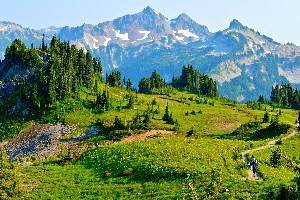
Washington Outdoors: Washington is a wonderful state for outdoor pursuits. For ideas on adventures in the state, see our articles on the Best Hiking Trails in Washington and the Best Campgrounds in Washington. Other fun activities to try here include white water rafting and kayaking, and in winter, the ski resorts in Washington are worth checking out.