14 Top-Rated Attractions & Things to Do in Salamanca
Visiting the UNESCO World Heritage City of Salamanca feels like strolling through an open-air museum with magnificent historic monuments on display. From the hallowed halls of the ancient university to its glorious cathedrals and soul-inspiring convents, the attractions of Salamanca take tourists on a journey back in time.
This celebrated university town has been famous since the Middle Ages when it drew students from all over Europe, and it still has a youthful energy.
The best way to discover Salamanca is to simply wander around the old cobblestone streets, following in the footsteps of Spain's greatest philosophers, scientists, writers, and artists. The town has an almost magical ambience, as the edifices made of Villamayor stone seem to glow a golden hue in the sunlight, and by night, the buildings are beautifully illuminated.
Discover the best places to visit in this enchanting city with our list of the top attractions and things to do in Salamanca.
See also: Where to Stay in Salamanca
- 1. Plaza Mayor
- 2. Catedral Nueva (New Cathedral)
- 3. Casa de las Conchas (House of Shells)
- 4. Catedral Vieja de Santa María de la Sede (Old Cathedral)
- 5. Casa Lis: Museo Art Nouveau y Art Déco
- 6. Old Town Landmarks
- 7. Convento de San Esteban
- 8. Salamanca University's Historic Buildings
- 9. La Clerecía: A 17th-Century Baroque Church
- 10. Convento de las Dueñas
- 11. Museo de Historia de la Automoción de Salamanca
- 12. Domus Artium (Museum of Contemporary Art)
- 13. Day Trip to Zamora
- 14. Visit El Campillo
- Where to Stay in Salamanca for Sightseeing
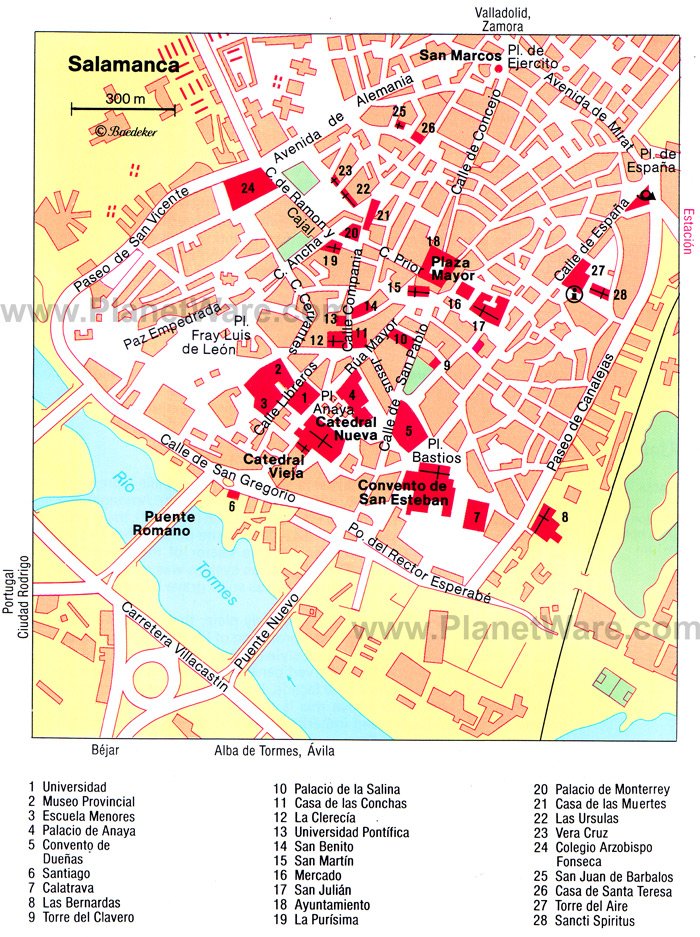
- Map of Attractions & Things to Do in Salamanca
1. Plaza Mayor
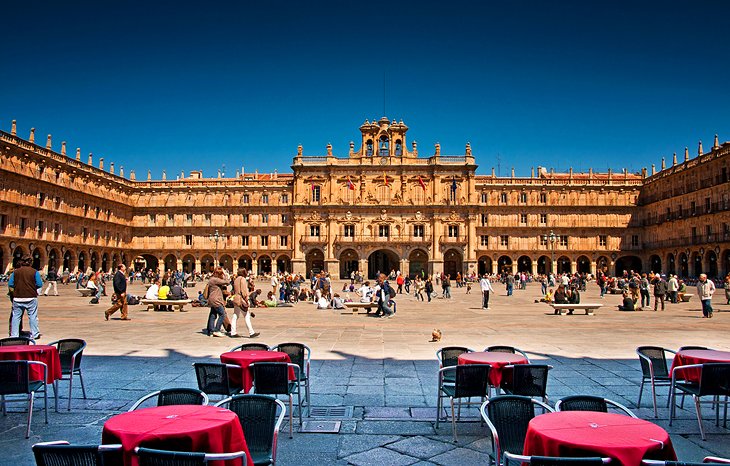
At the heart of Salamanca, this elegant public square is considered one of the grandest plazas in Spain. The square is lined with arcaded three-story buildings in uniform architectural style. The buildings were begun in 1729 based on the designs of Alberto de Churriguera and completed in 1755.
Among the monumental buildings on this square are the Pabellón Real (Royal Pavilion) by Alberto de Churriguera and the Churriguera-style Ayuntamiento (Town Hall) by Andrés García de Quiñones.
Historically, this spacious square of Plaza Mayor has served as a setting for ceremonial occasions, as well as bullfights until the 19th century. Many cafés and restaurants are found under the arcades, which makes the square an especially lively scene in the evenings. This square is one of the best places to visit in Salamanca to experience the city's nightlife.
At the southwest corner of the Plaza Mayor, the Calle del Prior leads to the Palacio de Monterrey, an Italian-style Renaissance palace with a splendid Plateresque exterior. Visitors can see the interior (which contains noteworthy artworks) by taking a guided tour. Tours are available every day. Tickets may be purchased in advance at the Tourism Office. Late afternoon tours on Mondays are free of charge.
2. Catedral Nueva (New Cathedral)
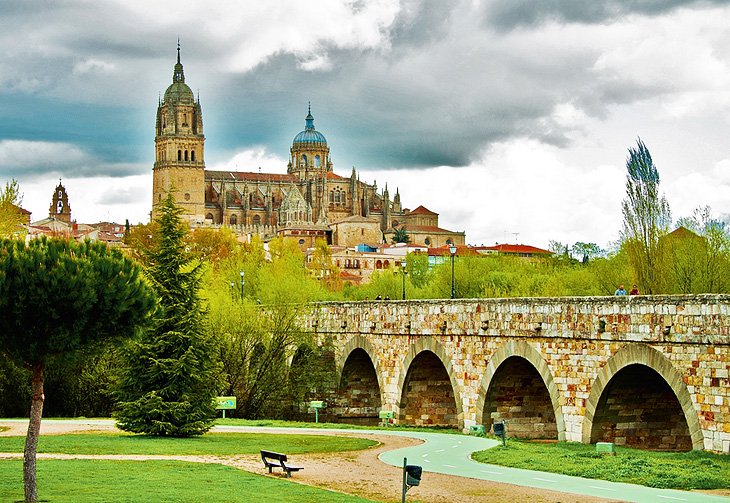
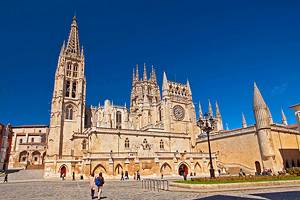
Presiding over the town from a commanding hilltop location, the New Cathedral is a monumental building that outshines the Old Cathedral in size and Gothic grandeur. Although this cathedral dates back to 1513, it is called "new" because the town's original cathedral was constructed beginning in the 12th century. The Old Cathedral and New Cathedral stand beside each other.
The New Cathedral was begun in the early 16th century by Juan Gil de Hontañón and completed in the 18th century by Alberto de Churriguera. Because it took two centuries to complete, the building displays a combination of Gothic, Plateresque, and Baroque architectural elements.
The Plateresque doorways are richly decorated, especially the west doorway and the north doorway, which features a relief of Christ's entry into Jerusalem. The 110-meter-high tower has a beautiful dome.
Impressive dimensions of 104 meters in length and 48 meters in width give the interior an overwhelming effect of spaciousness. The domed sanctuary soars to a height of 38 meters.
Various chapels display masterpieces of art, including the tomb of Saint Ánchez de Palenzuela in the Capilla Dorada and the figure of the Virgen de la Cueva, patroness of Salamanca, in the Capilla del Mariscal.
In the Capilla del Cristo de las Batallas is an 11th-century crucifix presented by the Cid to his comrade in arms Jerónimo, later Bishop of Salamanca.
The New Cathedral is open to the public for guided visits (for an admission fee). Visitors may opt to use an audio guide.
Address: Plaza Juan XXIII, Salmanca
3. Casa de las Conchas (House of Shells)
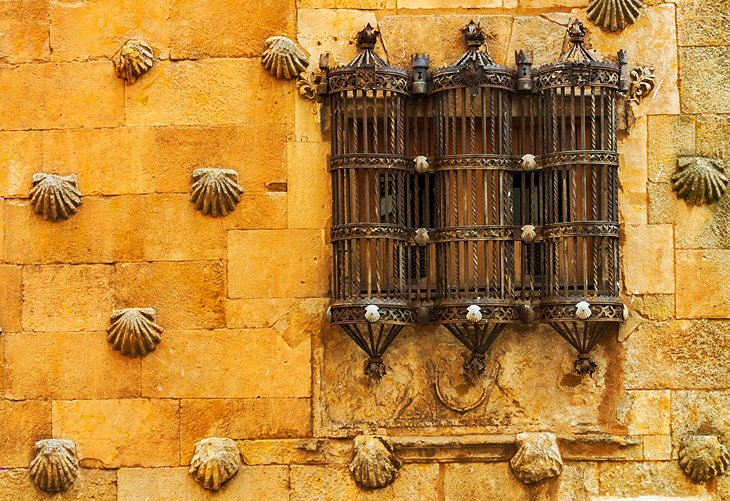
Built in the 15th century, this Renaissance palace was the residence of Talavera Maldonado, a Knight of the Order of Santiago.
The most notable feature of the palace is the facade decorated with carvings of scallop shells, the symbol of medieval pilgrims traveling the Way of Saint James to Santiago de Compostela. Over three hundred shells sculpted from sandstone adorn the outer walls of the building.
Depending on the time of day, the sunlight creates an interesting effect on the pattern of the facade. The building also has Mudejar architectural elements, typical of Isabelline art. Notice the Gothic coat of arm on the entrance door and the intricate wrought-iron grilles on the windows.
Today, the mansion houses the Salamanca Public Library and an information office. Tourists may visit the inner courtyard of the building, which is a lovely two-story space.
Address: 2 Calle Compañía, Salamanca
4. Catedral Vieja de Santa María de la Sede (Old Cathedral)
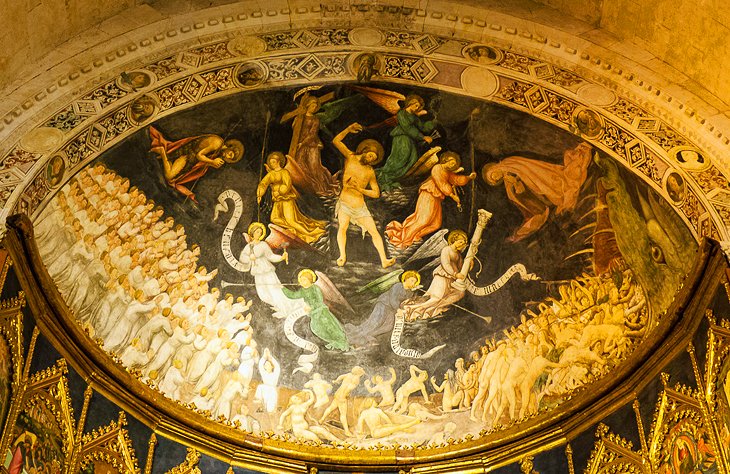
The oldest Christian monument in Salamanca, the Old Cathedral was built between 1100 and 1200. This magnificent Romanesque cathedral is one of the most splendid buildings of this architectural period in Spain.
Although the Old Cathedral is not as grand as the New Cathedral, it has its own special beauty and a captivating ambience of tranquility. The cathedral also contains beautiful tombs of bishops and of the cathedral's aristocratic patron (owner of the Casa de las Conchas).
The 14th-century Capilla de Santa Bárbara was where university students appeared before their examiners for their final examinations.
Other interesting architectural features include the cathedral's Torre del Gallo, a distinctive tower named after the figure of a cock that crowns it, and the 12th-century cloister with its serene setting. The cloister was damaged in the 1755 earthquake and rebuilt after 1785, so little of the Romanesque design has survived.
The Old Cathedral is open to the public for guided tours. The Old Cathedral adjoins the New Cathedral and is entered from the south aisle of the New Cathedral. The best view of the Old Cathedral is from the Patio Chico.
Address: Plaza Juan XXIII, Salamanca
5. Casa Lis: Museo Art Nouveau y Art Déco
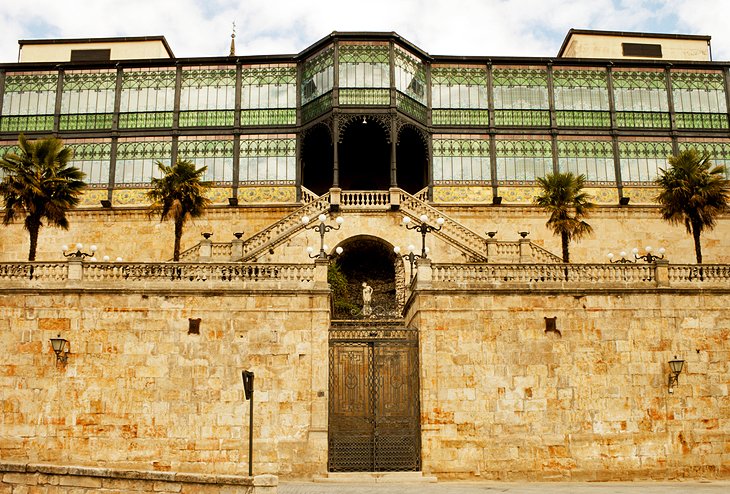
This exceptional museum of decorative arts is in Casa Lis, an Art Nouveau building constructed in the early 20th century. However, the north facade of the building reveals elements of Modernist architecture, one of the few examples in Salamanca.
With almost 2,500 pieces, the collection spans from the end of the 19th century to the beginning of the 20th century. The assortment includes jewelry, decorative glass, objects d'art, furniture, antique toys, and even a Fabergé egg.
The assortment of paintings is especially noteworthy, with works by painters from Salamanca, such as Celso Lagar and Mateo Hernández, as well as pieces by 19th-century artists of the Catalonia region.
The museum is open Tuesday through Sunday. Guided tours are available. Visitors also appreciate the gift shop and a café at the museum.
Address: 14 Calle Gibraltar, Salamanca
6. Old Town Landmarks
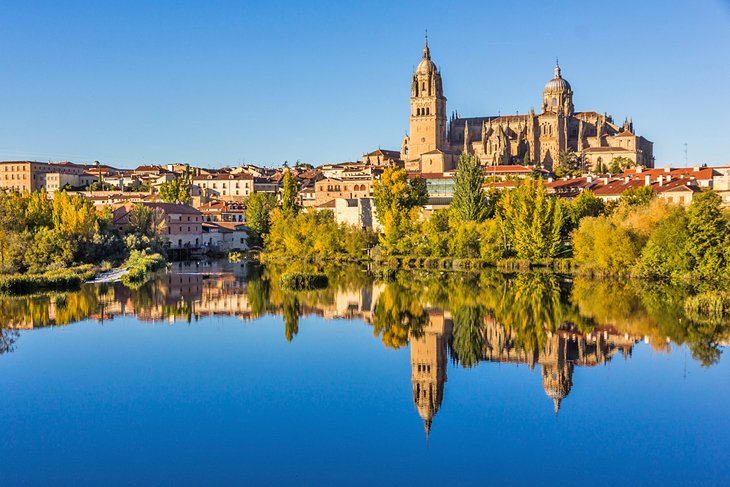
Salamanca's Casco Historico (Old Town) is where you will find nearly all of the city's most popular tourist attractions, including the cathedrals and university buildings. There are also numerous historic landmarks and buildings scattered throughout the Old Town that are worth a visit.
The Roman Bridge (Puente Romano) is an important landmark tied closely to the city's identity, having been a part of Salamanca's coat of arms since the 13th century. The bridge itself dates back to the first century CE, with more than half of its original stone arches still intact.
The Palacio de la Salina is well worth a visit to appreciate its ornately decorated Plateresque façade and arcaded patio. This historic building is a former manor house and now serves as the home of Salamanca's Provincial Council. Tourists may visit the patio, which is the only part of the building open to the public. Admission to the patio is free, and it is open every day.
Another small but popular place to visit is Huerto de Calixto y Melibea, a lovely garden located on Calle Arcediano. It is known for its diversity of plant life, romantic ambience, and excellent views of the river and Cathedral. The garden is open every day free of charge.
7. Convento de San Esteban
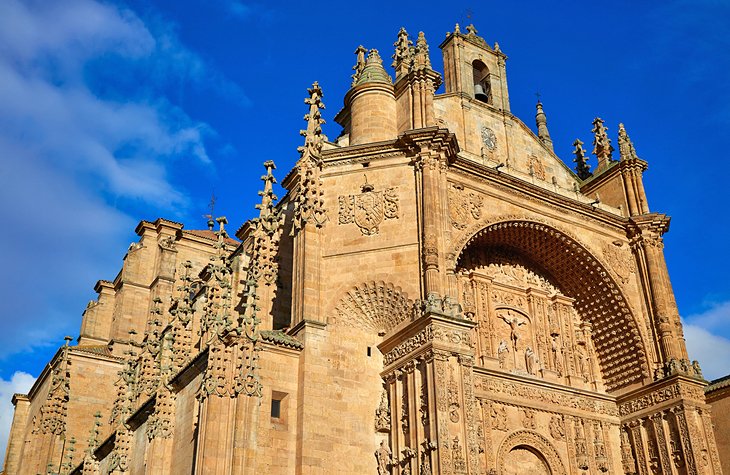
The Convento de San Esteban is found a little way from the Puente Nuevo (New Bridge), in a peaceful setting. This Dominican monastery has a splendid church built between 1524 and 1610 with a facade that exemplifies lavish Plateresque decoration.
The church boasts a gilded high altar of 1693 by José de Churriguera, one of the sculptor's greatest works, and three side altars created by his pupils. To the left of the high altar is the tomb of the Duke of Alba, governor of the area of the Netherlands that was once under Spanish rule.
Not to be missed are The Triumph of the Church fresco (above the choir), created by Antonio Palomino in 1705, and convent's two-story cloister featuring exquisite medallions, lovely ornamental figures, and a staircase by Gil de Hontañón.
The convent is open to visitors daily (with an entrance fee). Guided tours are available by appointment.
Address: Plaza del Concilio de Trento, Salamanca
8. Salamanca University's Historic Buildings
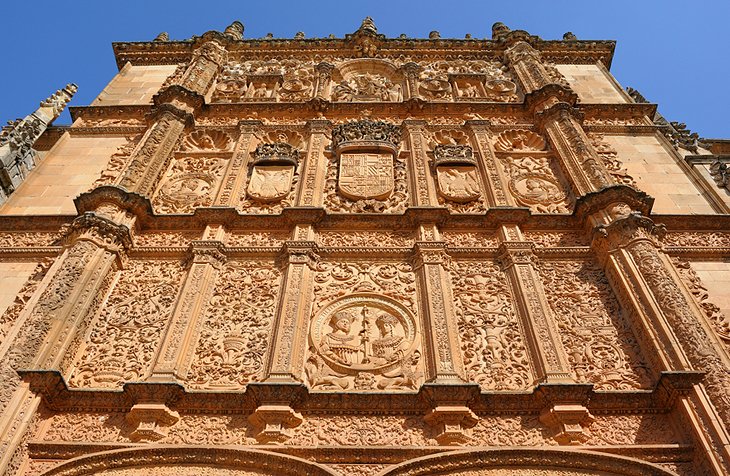
In the historic center of town is the world-famous Salamanca University, founded in 1218 as the first university in Spain and modeled after the University of Bologna in Italy. Salamanca University became one of the most important centers of learning in Europe during the Middle Ages.
Salamanca University recognized the Copernican system (the concept that the sun is the center of the universe) at a time when the church still regarded this idea as heresy. Another claim to fame: Miguel de Cervantes, Spain's most well-known writer and author of the novel Don Quixote, was a student of the university.
The university's main buildings center around the Patio de Escuelas, including the Escuelas Mayores, which is considered a masterpiece of Plateresque ornamentation; the Escuelas Menores, university preparatory schools established in 1428; and the Hospital del Estudio, now the Rector's office, which dates back to 1413 and was built as a hostel for poor students.
On the south side of the square is the Sala Calderón de la Barca (the old University Library) decorated with a famous ceiling painting, Cielo de Salamanca (Sky of Salamanca) by Fernando Gallego in 1480. The painting illustrates the knowledge of astronomy in the late 15th century, with signs of the Zodiac, numerous constellations, and the four winds.
Another attraction on the Patio de Escuelas is the Museo de Salamanca at #2 Patio de Escuelas. This museum occupies the 16th-century Casa de los Doctores de la Reina (House of the Doctors of the Queen), an impressive example of Renaissance civil architecture. Open year-round every day except Mondays, the museum displays collections of archaeology, fine arts, and local ethnology.
Address: Patio de Escuelas, Salamanca
9. La Clerecía: A 17th-Century Baroque Church
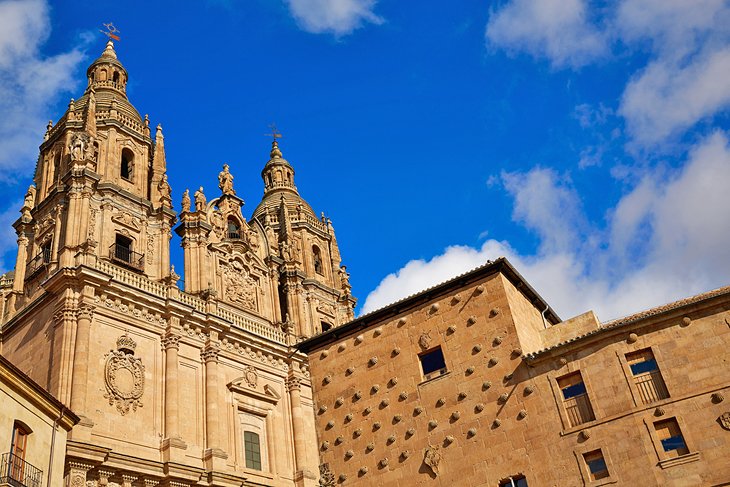
Opposite the Casa de las Conchas is La Clerecía, a masterpiece of 17th-century Baroque architecture. The large domed church features an imposing twin-towered facade by Quiñones, a magnificent Churrigueresque high altar, and three-floored cloister in ornate Baroque style.
Commissioned by Queen Margarita of Austria, wife of Philip III of Spain, the Clerecía was designed by Juan Gomez de Mora as a church and Jesuit ecclesiastic college. It was originally known as the Royal College of the Company of Jesus.
The building incorporated a section for the church and classrooms and a monastery space where the monks lived. Today, the Clerecía serves as the headquarters of Salamanca Pontificia University.
This monument is open to the public every day (with an admission fee). Entrance is free of charge on Tuesday mornings. Tourists will enjoy seeing the splendid interior of the church and may also visit the Clerecía Towers to take in exceptional views of the city.
Address: 5 Calle Compañía, Salamanca
10. Convento de las Dueñas
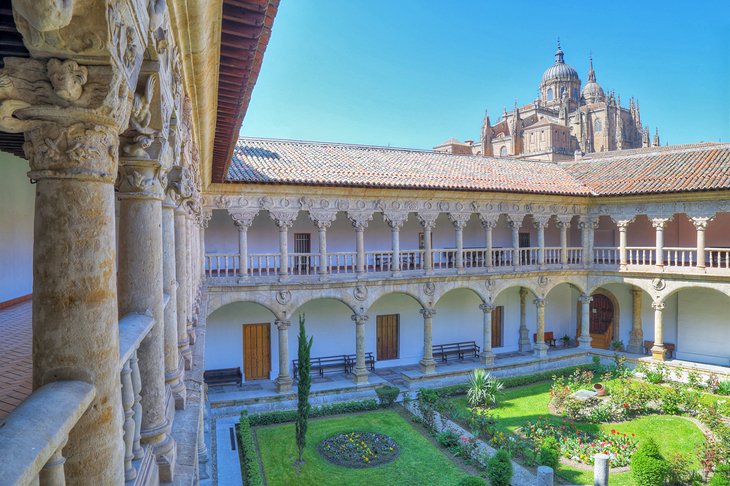
An interesting example of Mudéjar (Moorish-Christian) architecture, this lovely 15th-century convent is found just north of the Convento de San Esteban on the same square at the far side of the Avenida de los Reyes. The Convento de las Dueñas was founded in 1419 as a convent for Dominican nuns.
Several special design features distinguish the building, including the beautiful tiling characteristic of Moorish decor and the ornate Plateresque facade created in 1533. The convent's church was built in the mid-16th century with a single nave.
One of the highlights of the convent is the two-story Renaissance cloister, with capitals depicting fearsome beasts and human figures that seem inspired by Dante's Divine Comedy.
This monument is still a working convent but is open to visitors Monday through Saturday. Entrance requires an admission fee.
Address: Plaza del Concilio de Trento, Salamanca
11. Museo de Historia de la Automoción de Salamanca
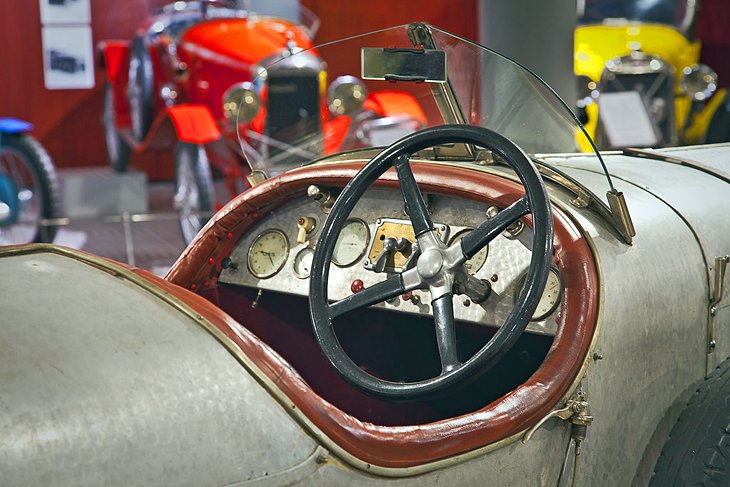
Vintage car enthusiasts will appreciate the Museum of Automotive History, which displays an extensive collection of antique vehicles and related memorabilia. The museum also presents the history of auto manufacturing and design.
Among the museum's 150 vehicles are many prestigious European models such as Rolls Royce, Jaguar, and Mercedes-Benz. There is also an assortment of racing cars, including the Formula 1 cars that have been featured in world-class competitions.
Address: Plaza del Mercado Viejo, Salamanca
Official site:http://museoautomocion.com/en/
12. Domus Artium (Museum of Contemporary Art)
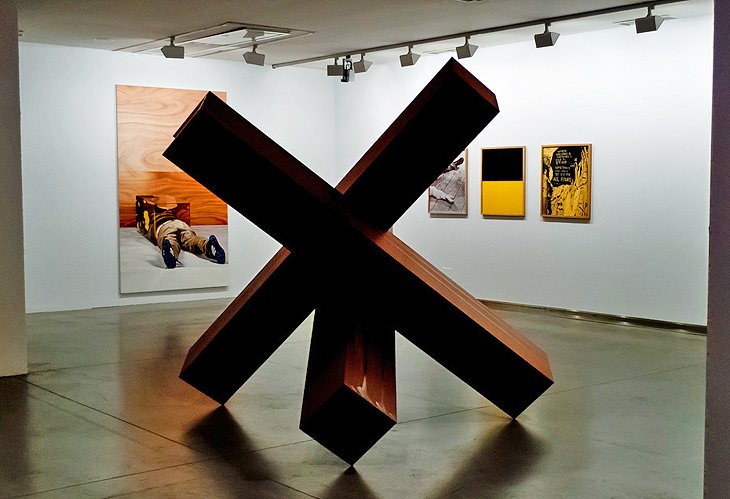
This innovative museum was created in 2002 when Salamanca was designated as a European Cultural Capital. The Domus Artium houses a collection of contemporary art in a building that was formerly a prison. The space was completely renovated, as well as expanded to display the art works to the best advantage.
Much of the collection focuses on avant-garde-style works and art created with novel technologies.
The museum is open Tuesday through Sunday and admission is free. Guided tours are available.
Address: Avenida de la Aldehuela, Salamanca
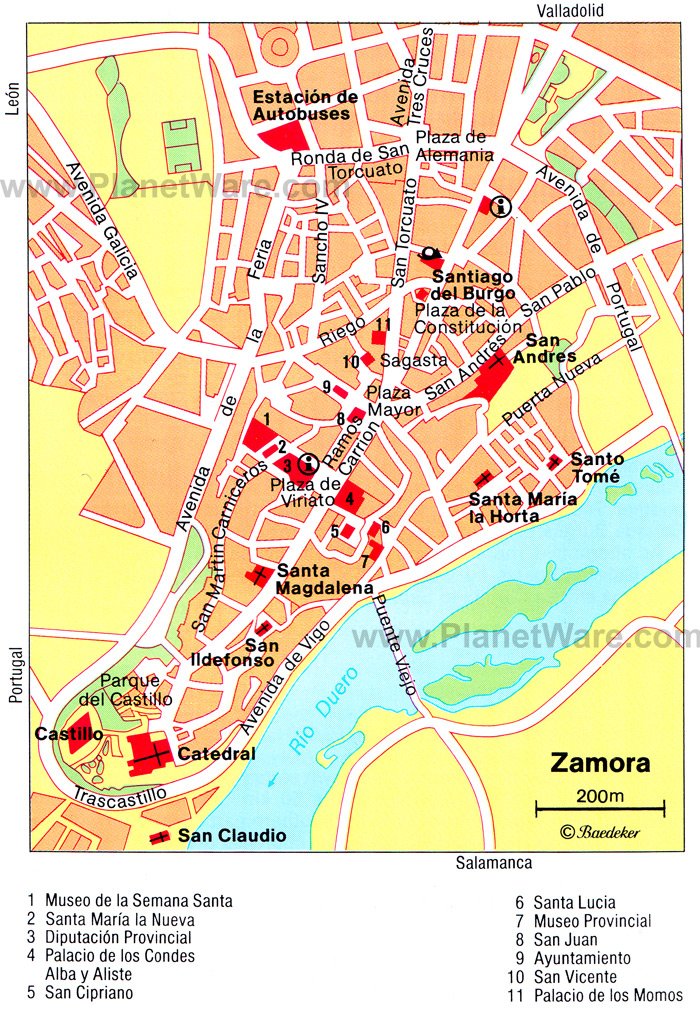
13. Day Trip to Zamora
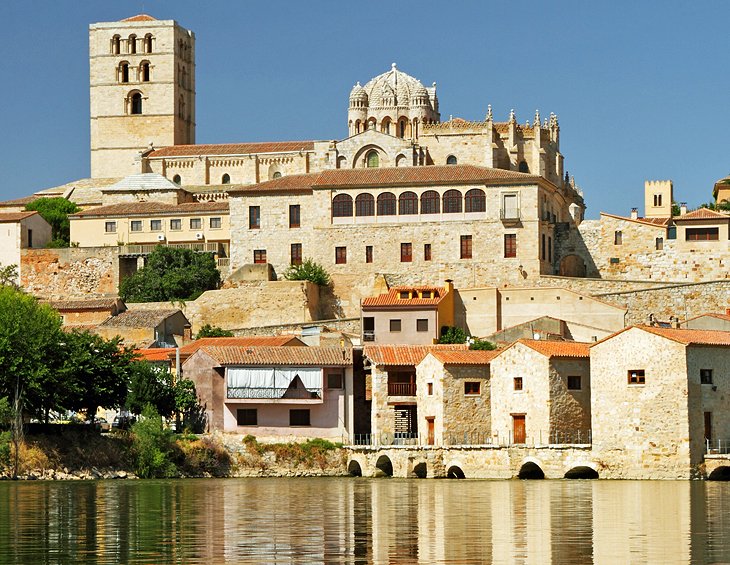
With its old-world charm and splendid Romanesque churches, the historic town of Zamora makes a wonderful day trip from Salamanca (about 65 kilometers away). Because of its numerous churches of the 12th and 13th centuries, Zamora has been called a "museum of Romanesque art."
The Catedral de Zamora stands on a highpoint of the Old Town surrounded by its defense walls and gates. Built between 1151 and 1174, the architecture is mainly Romanesque. The spacious domed interior features exquisite choir stalls created by Rodrigo Alemán in 1480. Carvings on the stalls depict figures of saints and famous men of antiquity, as well as scenes of country life.
The cathedral's Capilla Mayor has a beautiful marble retablo. The high altar is flanked by two Mudéjar pulpits.
From the cathedral, the Calle de los Notarios leads to the 11th-century Iglesia de San Ildefonso. In the church's Capilla Mayor are relics of the town's two patron saints, Saint Atilano and Saint Ildefonso.
From San Ildefonso, the Calle Ramos Carrión leads north to the little Romanesque Templar church of Santa Magdalena. This 12th-century monument has a splendid arched doorway with lions' and dragons' heads, and the interior has finely carved capitals and reliefs.
Calle Ramos Carrión then runs from Santa Magdalena to the Plaza de Claudio Moyano, where the 12th-century Romanesque Iglesia de San Cipriano is found. This church has wonderful relief decorations on the exterior, and the interior boasts a screen in the apse that is considered the oldest in Spain.
Outside the town walls, south of the cathedral on the banks of the Duero River, is another Romanesque church, the 11th-century Iglesia de San Claudio de Olivares.
14. Visit El Campillo
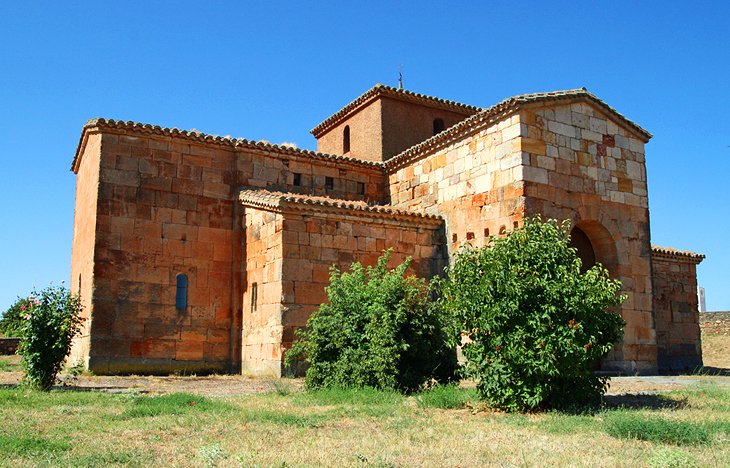
About 24 kilometers from Zamora, on Calle Larga in El Campillo, is a fascinating ancient church. The Iglesia de San Pedro de la Nave is a Visigothic church that dates to the seventh century.
In 1931, the church was removed from its original site several kilometers away because the location is now submerged by a lake. The church is renowned for its magnificent carved capitals, which rank among the finest sculpture produced in Christian Spain before the arrival of the Moors.
Where to Stay in Salamanca for Sightseeing
Inside the encircling streets that replaced its town walls, Salamanca's Old Town contains most of the city's tourist attractions: the Plaza Mayor, the cathedrals, the Convento de San Esteban, and many other palaces and churches. Our list of highly rated hotels includes hotels in the Old Town, as well as in other convenient places to stay in Salamanca:
Luxury Hotels:
- Close to the Casa Lis, the four-star NH Salamanca Puerta de la Catedral offers stylish modern guest rooms in a historic building, some with balconies or windows overlooking the cathedral. The hotel has a 24-hour front desk, concierge, restaurant, and breakfast buffet.
- The five-star Hotel Rector is ideally located near the university and cathedrals. Guest rooms at this boutique hotel feature plush contemporary decor, marble-accented bathrooms, and bathrobes and slippers. Amenities include a 24-hour front desk, concierge, and evening turndown service. Guests may request rides from the hotel's private chauffeured car.
- An upscale centrally located hotel, the four-star Eurostars Las Claras is a few blocks from Calle Mayor and an easy walk from the Plaza Mayor and main attractions. The spacious guest rooms feature modern amenities, such as flat-screen televisions and soundproofing. The hotel has a 24-hour front desk, restaurant, on-site parking, and a breakfast buffet.
Mid-Range Hotels:
- The spacious guest rooms at the Ikonik Plaza Mercado hotel feature original wooden shutters and vaulted ceilings. Accommodations include single, double, and triple rooms. Just steps way from the Plaza Mayor, this three-star hotel has a concierge, café, and parking. A breakfast buffet is available.
- The four-star NH Collection Salamanca Palacio de Castellanos boasts spectacular views of the Plaza de Concilio de Trento, the Convento de Las Dueñas, and the Catedral Nueva. The hotel provides bright, spacious guest rooms decorated in sleek minimalistic style. Amenities include an outdoor terrace, concierge, and a breakfast buffet.
- In the heart of the Salamanca's Old Town, the abba Fonseca Hotel is a five-minute walk from the university and 10-minute walk to the Plaza Mayor. This four-star hotel has a gourmet restaurant, fitness center, Jacuzzi, and on-site parking. A continental breakfast is available.
Budget Hotels:
- Just off Rua Mayor between Plaza Mayor and the university, the nicely renovated Hosteria Sara has surprisingly quiet rooms with kitchenettes.
- Plaza Mayor is just around the corner from Sercotel Las Torres, as are plenty of restaurants and cafés, but rooms are quiet. This three-star hotel offers a 24-hour front desk, concierge services, and a breakfast buffet.
- Overlooking a park and close to the train station, the ibis Salamanca is about a 10-minute walk from Plaza Mayor. Amenities includes 24-hour check-in, a restaurant, café, and on-site parking.
Map of Attractions & Things to Do in Salamanca
More Related Articles on PlanetWare.com
Exploring Avila: Heading southeast toward Madrid, the UNESCO-listed city of Avila is just over an hour's drive from Salamanca. Here, you will find the ancient city walls still intact, protecting the numerous historic sites, from medieval convents to Renaissance palaces. Avila is also home to Spain's oldest Gothic cathedral, the impressive Catedral de San Salvador.
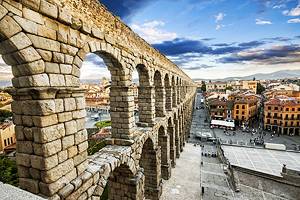
Exploring Segovia: The smaller city of Segovia is also still protected by walls, home to several religious and architectural attractions, a fairy-tale castle, and a Roman aqueduct. Overflowing with old-world charm, this is the perfect place for those who love to wander ancient alleyways and cobblestone streets to find the perfect café.
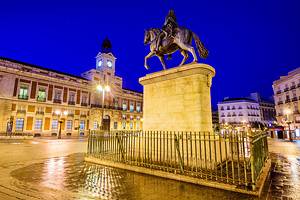
Exploring Madrid: Madrid combines its rich history and culture with the lively pace of modern city life. Tourists can discover world-class museums and an abundance of stunning landmarks. Thanks to its wide variety of hotel options and central location, many tourists choose to stay in Madrid and take day trips to nearby attractions.
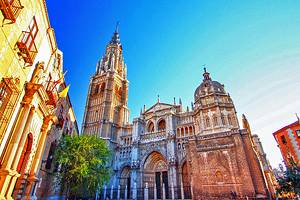
Exploring Toledo: Among the popular day trips from Madrid is Toledo, a UNESCO World Heritage Site. Called the "city of three cultures," Toledo has long been home to Muslims, Jews, and Christians who have built an assortment of beautiful mosques, synagogues, and churches over the centuries. Toledo is also known for its association with El Greco, and for traditional crafts including damascene metalwork and swords.