11 Top-Rated Tourist Attractions in Rouen
Author Lisa Alexander lived in France for two years and has traveled extensively through the country.
A stroll through the quaint old streets of Rouen, in Upper Normandy, feels like a walk back in time. There are historic places to visit at every turn, from the Middle Ages to the modern era.
For believers, the journey leads a few steps closer to heaven. Rouen has more than 50 religious buildings, and many of the churches are gems of Gothic architecture. You can also retrace the steps of Joan of Arc to see where she went to trial and where she was martyred.
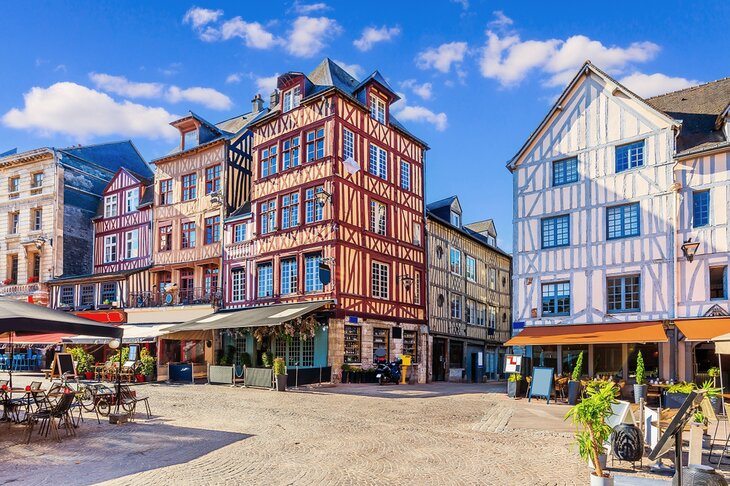
Most of the top tourist attractions and things to do in Rouen lie within the city's pedestrian zone, a charming area of winding medieval lanes and half-timbered houses. Highlights include the magnificent cathedral, the renowned Fine Arts Museum, and the remarkable Gros-Horloge clock tower.
Rouen still reveals the destruction suffered during the Second World War. The exquisite façade of the Palais de Justice has evidence of shell holes from Allied bombings.
Soak up the history and culture in this charming town with our list of the top attractions in Rouen.
See also: Where to Stay in Rouen
- 1. Cathédrale Notre-Dame de Rouen
- 2. Musée des Beaux-Arts
- 3. Abbatiale Saint-Ouen
- 4. Aître Saint-Maclou
- 5. Palais de Justice and Monument Juif
- 6. Tour du Gros-Horloge (Big Clock Tower)
- 7. Eglise Saint-Maclou
- 8. Eglise Jeanne d'Arc
- 9. Musée Le Secq des Tournelles
- 10. Musée de la Céramique
- 11. Tour Jeanne d'Arc
- Where to Stay in Rouen for Sightseeing
- Day Trips from Rouen
- Route des Abbayes
- Saint Martin de Boscherville
- Map of Tourist Attractions in Rouen
1. Cathédrale Notre-Dame de Rouen
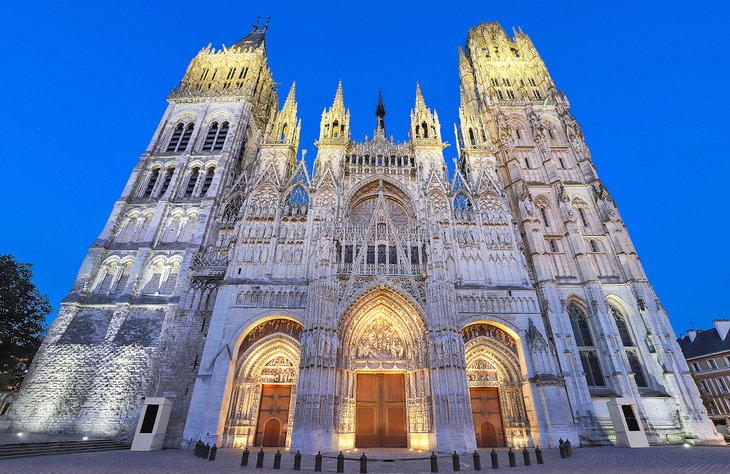
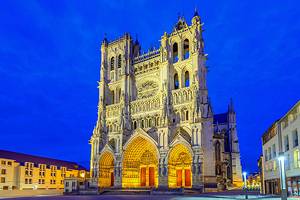
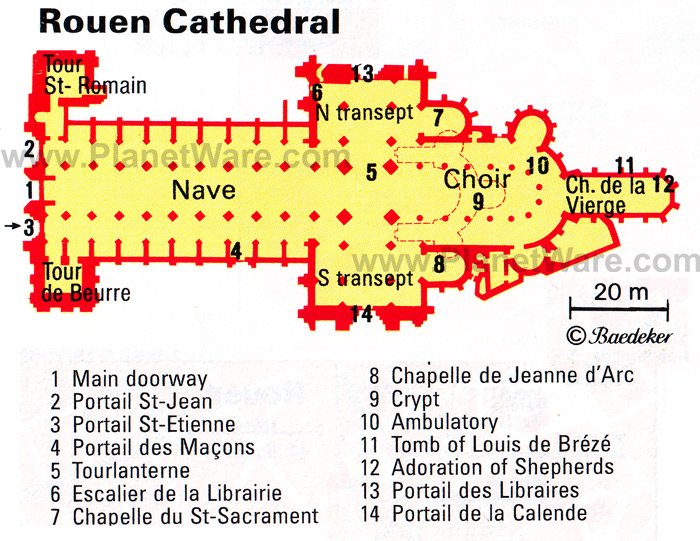
In the heart of the old town, the Cathédrale Notre-Dame de Rouen is a stellar example of Gothic architecture and holds the title of France's tallest cathedral. The monument's main structure was built in the 13th century, but the building was not completed until the 16th century.
The dazzling elaborate façade inspired Impressionist painter Claude Monet. The cathedral's central doorway was the subject of Monet's famous painting series. He painted the scene at different times of day to capture the effects of various lighting.
Above the façade, two towers loom over the town. The tower on the right is called the Tour du Beurre (Butter Tower) because it was paid for by offerings from the faithful, who in return were permitted to eat butter during Lent.
The cathedral also boasts France's highest spire at 151 meters. Despite damage during the Second World War, the cathedral still has some original stained glass windows.
During summer, splashy illuminations and sound effects bring the Rouen Cathedral to life. The Cathedral Light Show delights onlookers with its colorful animations projected onto the monument's façade, along with music, which tells the story of the Viking invasions of the 9th century and heroic saga of Joan of Arc in the 15th century.
The Cathedral Light Show is held at 11pm on weekends in June and every evening from July through mid September (show times are earlier in the late summer).
Address: 3 Rue Saint-Romain, Rouen
2. Musée des Beaux-Arts
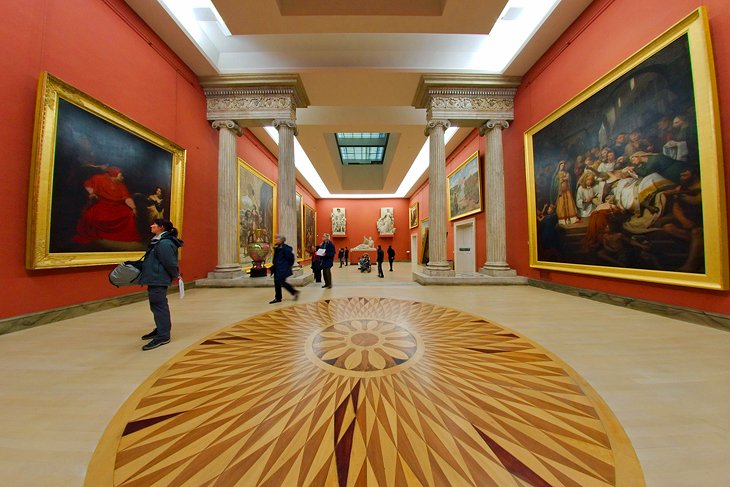
The Musée des Beaux-Arts ranks among the most important art museums in France. This exceptional fine arts museum is renowned for its variety and breadth of artistic movements. The collection presents a wide range of paintings, sculptures, drawings, and objets d'art from the 15th century to the 21st century.
The most notable works include the 17th-century masterpieces by Caravaggio, Diego Velázquez, Anthony van Dyck, Nicolas Poussin, and Philippe de Champaigne. 19th-century works include those by Eugène Delacroix, Théodore Géricault, and Paul Delaroche as well as Impressionist works by Claude Monet, Alfred Sisley, Camille Pissarro, and Pierre-Auguste Renoir.
Address: Esplanade Marcel-Duchamp, Rouen
3. Abbatiale Saint-Ouen
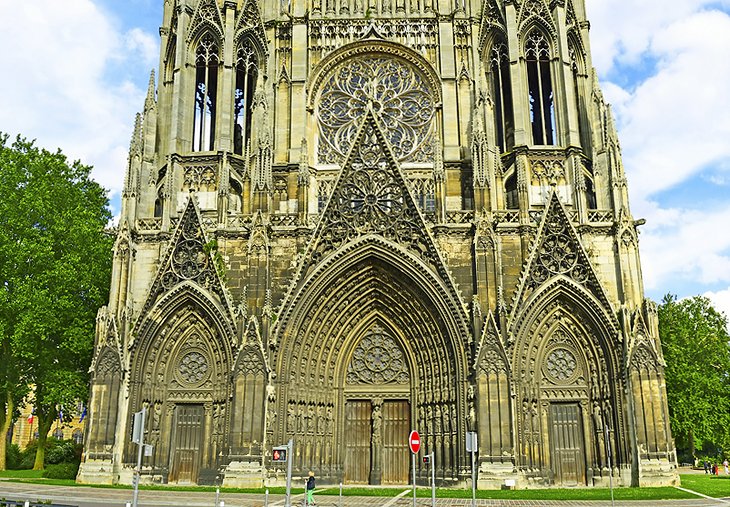
This majestic 14th-century building was created as a church for the powerful Benedictine monastery of Saint-Ouen. A masterpiece of Late Gothic (Rayonnant) architecture, the abbey church is classified as a Historic Monument.
Immense in its proportions (137 meters long by 33 meters high), the vaulted interior offers a peaceful space for spiritual worship. Exquisite 14th-century stained-glass windows allow light to filter into the sanctuary. In the south transept of the abbey is the Portail des Marmousets that depicts events of the Virgin Mary.
Be sure to see the famous Cavaillé-Coll organ, which is often used for musical concerts. Considered one of the most beautiful organs in the world, this particular Cavaillé-Coll organ has 5,000 pipes and four keyboards that produce perfect pitch.
On the same square as the abbey stands the Hôtel de Ville (Town Hall), once used as the dormitory for the monastery's monks. Behind the Hôtel de Ville are the former abbey gardens, now a public park.
Address: Place du Général de Gaulle, Rouen
4. Aître Saint-Maclou
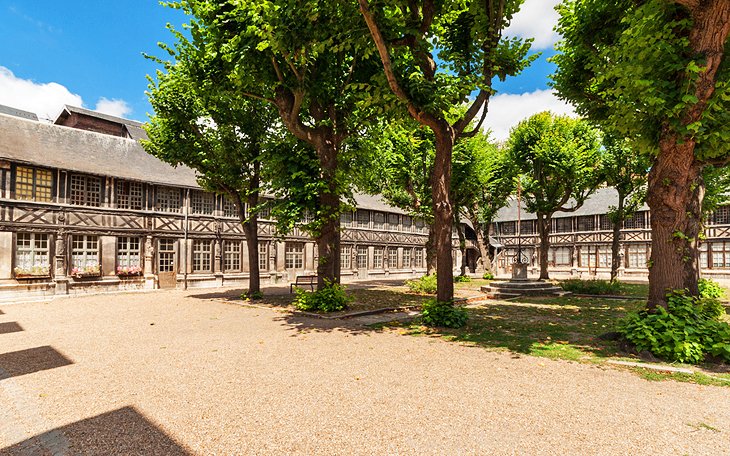
During the "Black Death" plague of 1348, around a third of the town's inhabitants perished. The now-pleasant courtyard of the Aître Saint-Maclou stands on a site that was once used for burials, and the buildings surrounding the cemetery served as the ossuary.
Listed as a Historic Monument, the building's galleries feature macabre décor depicting skulls, bones, gravedigger tools, and objects of funeral rites. The skeleton of a cat was discovered in the masonry. During the Middle Ages, cats (especially black cats) were considered to be evil spirits, and the cat would have been enclosed here (while still alive) to protect against bad luck.
The colonnaded galleries of the Aître Saint-Maclou also feature décor on a macabre theme. For instance, one set of intricately carved stone columns depicts "La Danse Macabre" (The Macabre Dance), a motif that was common in Europe in the 15th century, and this particular artistic rendition in sculpture is one of the finest examples found in France.
The recently restored "La Danse Macabre" at the Aître Saint-Maclou is open to the public. Guided tours are available in French. Groups may request guided tours in other languages.
The Aître Saint-Maclou also hosts art exhibitions, lectures, concerts, art workshops, and guided nighttime visits.
Address: 188 Rue Martainville, Rouen
5. Palais de Justice and Monument Juif
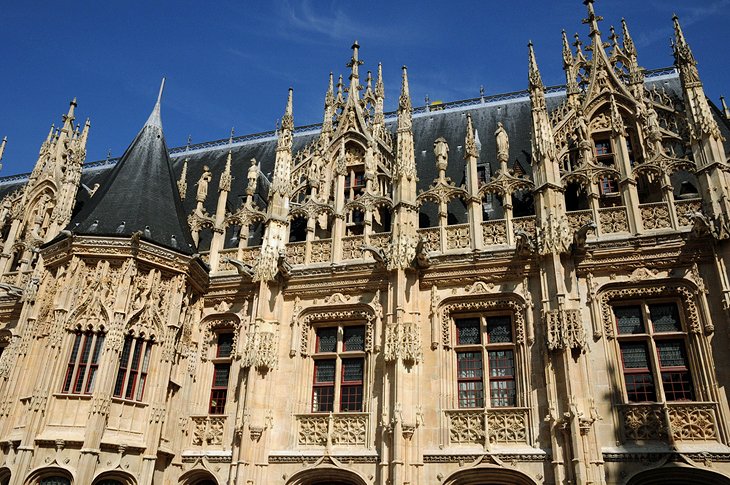
A splendid example of medieval civilian architecture, the Palais de Justice houses the Rouen Law Courts and was the meeting place of the Parliament of Normandy. This Gothic masterpiece was built in the early 16th century, damaged during World War II, and subsequently restored.
The building is not open for tours, but you can see the ornate detailing of the façade and especially the incredible gargoyles. The central wing features a resplendent balustrade, soaring pinnacles, and perforated buttresses. The Palais de Justice was damaged during an Allied bombing in 1944, and the shell holes are still visible in the building's exterior walls.
In 1976, during a renovation of the Palais de Justice, the remains of a beautiful stone building were uncovered beneath the courtyard. The building was determined to be the lower room of an old Yeshiva (rabbinical school) that dates from 1100. Once uncovered, this Monument Juif (Jewish Monument) was immediately protected by an archaeological crypt.
The location was at the center of the old Jewish quarter that flourished during the time of William the Conqueror until the expulsion of the Jews in 1306. Rouen's Monument Juif is the oldest Jewish monument discovered in France.
The Monument Juif site is now called La Maison Sublime. Tourists may visit the site on a guided tour, which must be reserved in advance. The one-hour guided tours are available on Saturdays at 10:30am and 2:30pm.
Address: 36 Rue aux Juifs, Rouen
6. Tour du Gros-Horloge (Big Clock Tower)
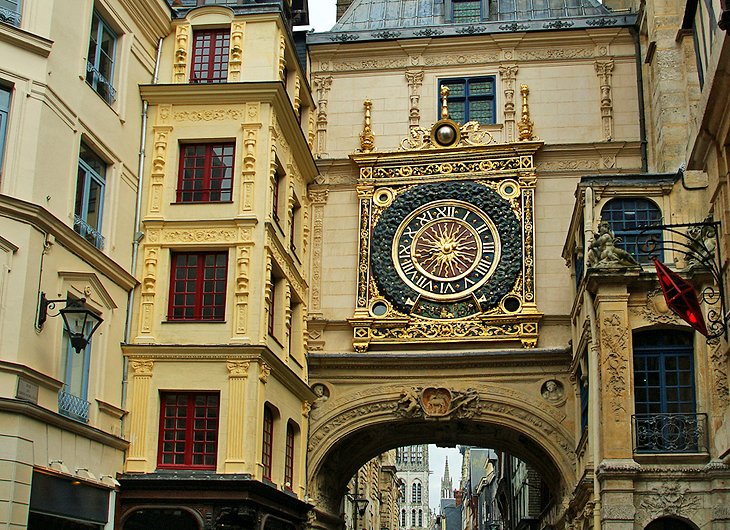
One of the most emblematic sites in the historic center of Rouen, the Gros-Horloge lies just south of the Palais de Justice.
From the southeast corner of the Place du Vieux Marché (where the Eglise Jeanne d'Arc is located) the Rue de Gros-Horloge leads to the cathedral. Halfway along this charming route of cobblestone streets and half-timbered houses, the Tour du Gros-Horloge adjoins a Renaissance pavilion.
The Gothic belfry tower was built in 1389 for defensive purposes and the decorative clock dates from 1889. The belfry clock still serves its timekeeping functions for the city. Visitors should take a moment to admire the clock's incredible details.
The deity symbolizing the day of the week appears on a triumphal chariot at noon. A globe above the dial shows the phases of the moon, and sheep represent the wool industry. Depicted in the middle of the clock, a Passover lamb represents the arms of the city.
Address: Rue du Gros-Horloge, Rouen
7. Eglise Saint-Maclou
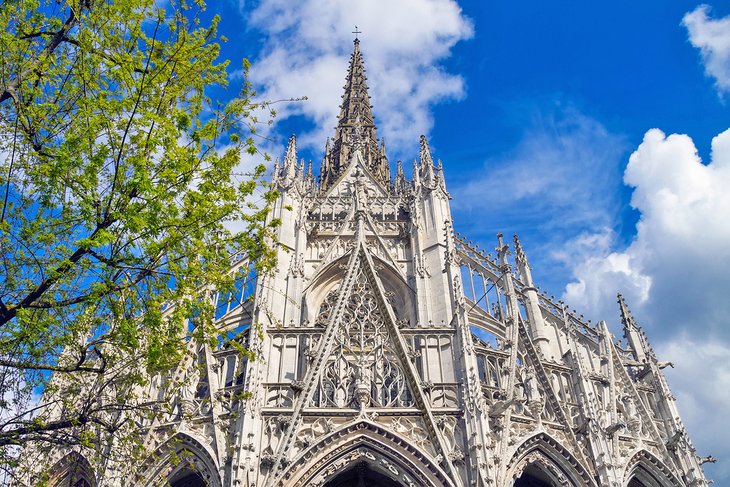
The Eglise Saint-Maclou is just a short walk east of the cathedral. This jewel of Flamboyant Gothic architecture was built in 1437 and dedicated to Saint Malo. A blend of different architectural styles is found throughout the church, from the Gothic staircase to the Baroque confessionals.
The ornate façade features five arched porches, which provide a dramatic entrance to the church. The porches enclose Renaissance-era wooden doors embellished with intricately carved Biblical scenes.
Saint-Maclou Church was severely damaged during WWII and has been well restored. In particular, the belfry was repaired and its five church bells now resound with daily chiming.
Address: Place Barthélémy, Rouen
8. Eglise Jeanne d'Arc
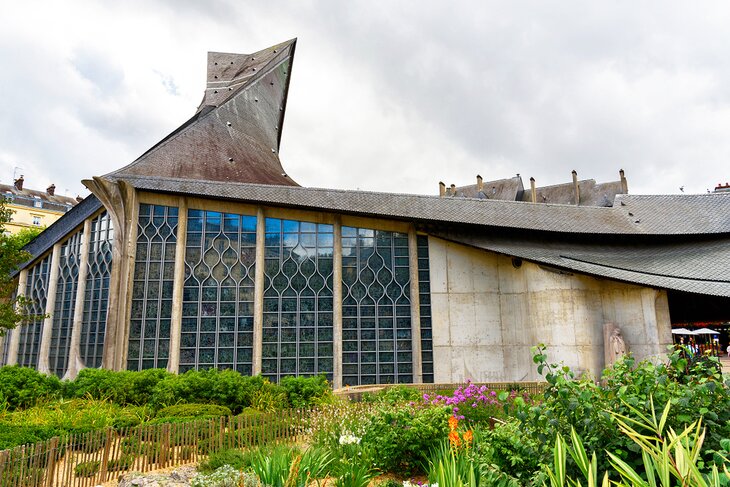
This surprisingly modern church let's you appreciate the invincible spirit of Joan of Arc, who spent the last days of her life in Rouen. The church was built at the Place du Vieux Marché, the very site where Joan of Arc was martyred (she was burned at the stake in the center of the square).
Designed to commemorate the famous saint, the Eglise Jeanne d'Arc was given a radical design. The shape of the church's roof represent the flames of the stake. Inside the church are spectacular Renaissance stained-glass windows that were taken from the former Church of Saint-Vincent.
This contemporary church provides an inspiring place for spiritual contemplation. The church is open to the public, free of charge, every day year-round (except on December 25th and January 1st).
Every year on or around May 30th, the Jeanne d'Arc Festival is held here to commemorate the French heroine.
Address: Place du Vieux Marché, Rouen
9. Musée Le Secq des Tournelles
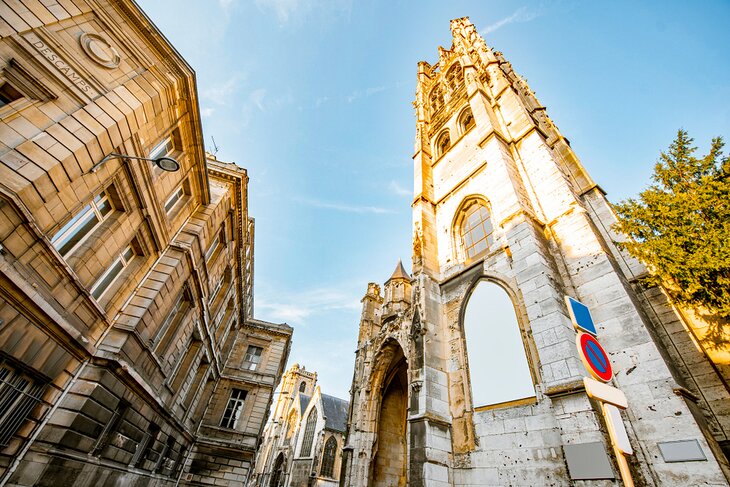
Housed in the former Gothic church of Saint Laurent, this unique museum boasts an exceptional collection of antique wrought-ironwork. The 15th-century church building still has its stunning stained-glass windows, including the remarkable "Tree of Jesus" window.
The largest museum of its kind in the world, it contains 14,000 items that date from the Gallo-Roman era to the 19th century. The collection covers a wide range and variety of ironwork, such as railings, door knockers, locks, scientific instruments, and jewelry.
Address: Rue Jacques-Villon, Rouen
Official site: http://museelesecqdestournelles.fr/en
10. Musée de la Céramique
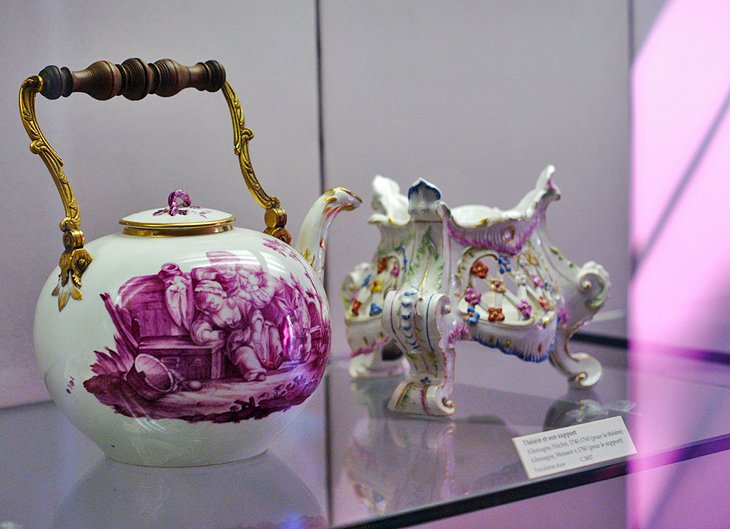
In the elegant Hôtel d'Hocqueville, the Museum of Ceramics displays a wonderful collection of faience and porcelain. The collection includes earthenware from Rouen, as well as from other cities, such as Delft in Holland.
Exhibits are devoted to delicate 19th- and 20th-century Sèvres porcelain objects, created by the ateliers of France's renowned Manufacture de Sèvres. There are also examples of Rococo chinoiserie, ceremonial dinnerware sets, and lovely faience sculptures.
Address: 1 Rue Faucon, Rouen
11. Tour Jeanne d'Arc
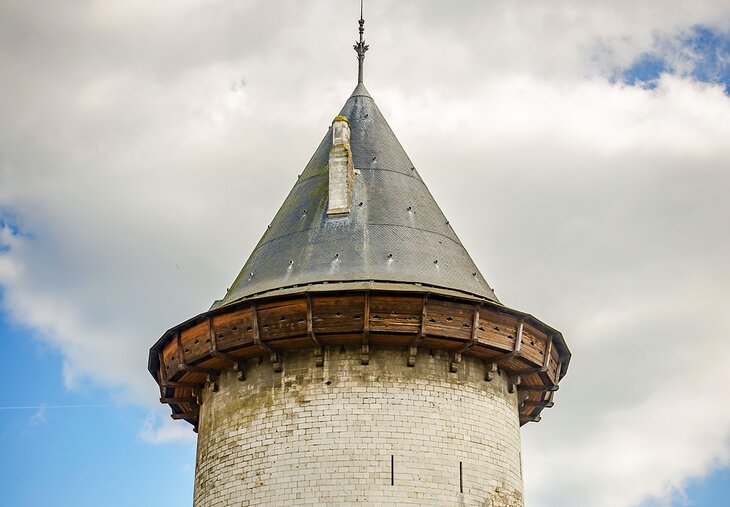
When Joan of Arc was brought to trial in 1431, she was taken to the dungeon of this tower to stand before her judges. Here she endured threats of torture by those who accused her of heresy.
Classified as a Historic Monument, the Tour Jeanne d'Arc (also called the "Donjon de Rouen") is the only remaining part of the château built by Philippe Auguste in 1207. This large and imposing cylindrical tower features three superimposed rooms and an attic.
The Tour Jeanne d'Arc is open to the public free of charge for independent visits on Saturdays and Sundays from 2:30pm until 4pm. Guided tours are available on Saturdays and Sundays at 3pm.
Once a forbidding dungeon, today the Tour Jeanne d'Arc provides a venue for an amusing game. The Hyper Escape Game was created specifically for this heritage site. Combining virtual-reality activities and puzzles, the Hyper Escape Game (in French or English) allows participants to experience the Siege of Rouen that occurred in 1419.
This 60-minute game is available on Wednesday, Thursday, Friday, and Saturday between 4:30pm and 11:30pm and Sunday between 4:30pm and 10pm. Visitors may schedule game reservations for teams of three to six players.
Address: Rue Bouvreuil / Rue du Donjon, Rouen
Where to Stay in Rouen for Sightseeing
The best place to stay in Rouen is the historic city center, with medieval buildings, winding cobblestone streets, and plenty of restaurants and shops. This is also a pedestrian-only zone and home to many of the main attractions. Below are some highly-rated hotels in convenient locations:
Luxury Hotels:
- The Hotel de Bourgtheroulde, Autograph Collection is housed in a modernized 15th-century building just steps from the pedestrian-only historic city center. The hotel has a fine-dining restaurant open for special events, a casual brasserie, and an upscale spa with an indoor swimming pool and sauna.
- In a half-timbered historical structure is the four-star Hôtel Mercure Rouen Centre Cathédrale Hotel, just steps away from the cathedral. Amenities include a breakfast buffet, snack bar, and complimentary newspapers.
- In a prime location near the Place du Vieux Marché is the contemporary-style Best Western Plus Hôtel Littéraire Gustave Flaubert. This four-star hotel offers 24-hour front desk reception, a breakfast buffet, and a fitness center.
Mid-Range Hotels
- The charming three-star Hôtel Mercure Rouen Centre Cathédrale is found on a picturesque pedestrian street, in the heart of Rouen's old town. Occupying a quaint half-timbered building, the hotel features cozy rooms with old-fashioned décor and a lovely garden patio.
- Offering a great value for the price, the ibis budget Rouen Centre Rive Gauche is convenient if you are visiting Rouen with a car. The historic center of Rouen is about a 10-minute drive. This modern two-star hotel offers 24-hour check-in and a breakfast buffet.
Budget Hotels
- Featuring rooms with high ceilings and half-timbered walls, the two-star Hôtel Morand is a good budget option near the train station and the Musée des Beaux-Arts. It's just a short walk from the old town (historic center).
- Another historic half-timbered building, Le Vieux Carré hotel has a beautiful courtyard where breakfast is served on warm days. The hotel is just a 5-minute walk from the cathedral.
- A 10-minute tram ride from the city center is the two-star ibis budget Rouen Petit Quevilly, featuring basic guest rooms and easy access to the motorway.
Day Trips from Rouen
Route des Abbayes
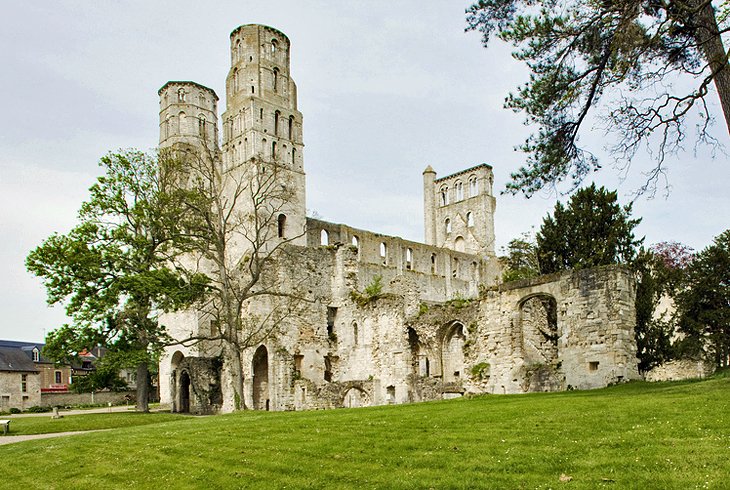
One of the most enjoyable things to do on a clear, sunny day is to take a scenic drive along the picturesque "Route des Abbayes," which leads between Rouen and Le Havre, running parallel to the Seine River for much of the way.
This well-signposted route offers a delightful scenic drive. The ever-changing landscape and many historic buildings, such as the abbeys of Jumièges and Saint-Wandrille, make this journey worthwhile.
Saint Martin de Boscherville
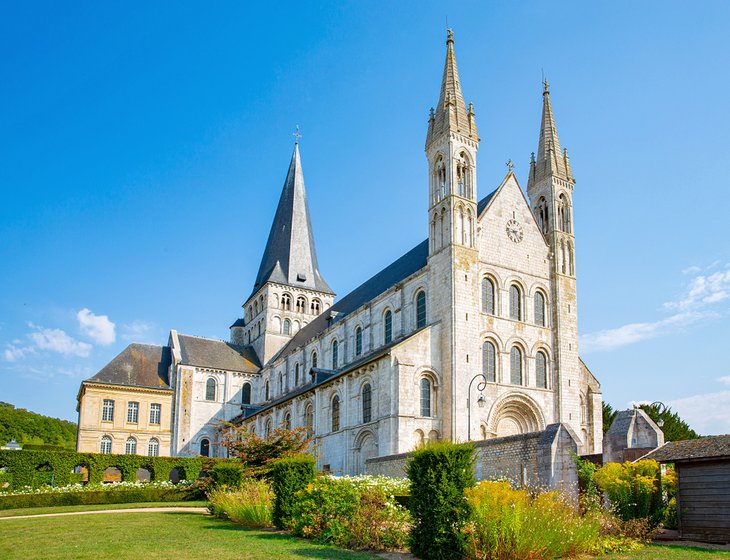
About 12 kilometers from Rouen, the small village of Saint Martin de Boscherville lies in a Regional Natural Park along the Seine River. The 12th-century Abbey of Saint-Georges de Boscherville and the surrounding scenery are the main tourist attractions.
The village is part of the Parc Naturel Régional des Boucles de la Seine Normande, a gorgeous area of Normandy bounded by pristine marshlands of the Seine and the lush Roumare Forest.
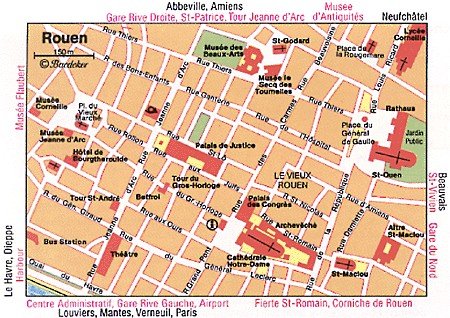
Map of Tourist Attractions in Rouen
More Related Articles on PlanetWare.com
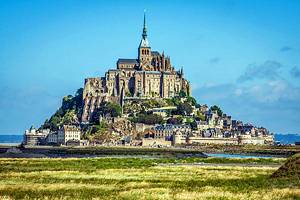
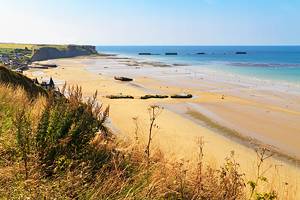
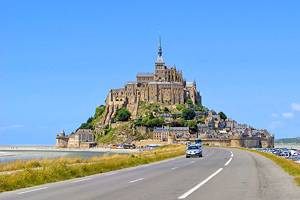
Nearby Attractions in Normandy: After visiting Rouen, most travelers will want to explore the Normandy region. This picturesque region features unspoiled natural scenery, charming old port towns, and the UNESCO World Heritage Site of Mont Saint-Michel (a three-hour drive away). For those interested in World War II history, the D-Day Landing Beaches (about a two-hour drive away) are not to be missed.
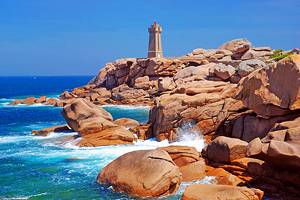
Places to Visit in the Brittany Region: Many tourists visit Rouen as a day trip from Paris, which is a two-hour train ride away. However, Rouen is also an excellent base for sightseeing in Brittany. Along the Atlantic coast southwest of Normandy, the distinctive region of Brittany boasts picture-perfect medieval towns with half-timbered houses, alluring fairy-tale castles, ancient megalithic monuments, and quaint fishing villages.