23 Top-Rated Tourist Attractions in Rome
In a city so filled with icons of antiquity and the Christian faith, it's hard to know where to go first. Of course, your own interests will govern your choices, but there are certain sites that are almost obligatory landmarks of Italy and top attractions in the world, such as the Colosseum and the Pantheon.
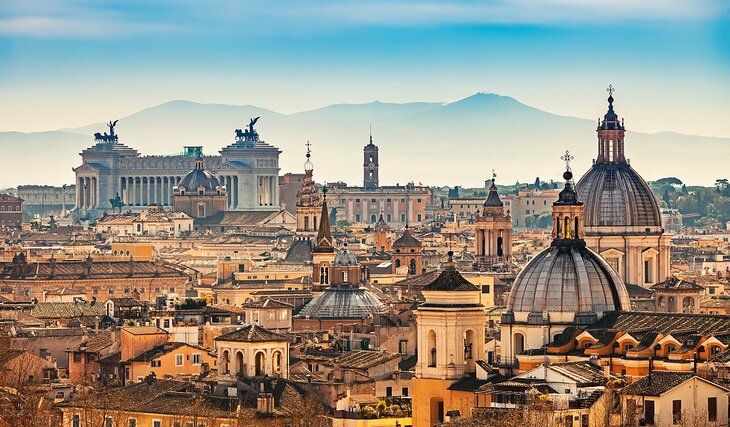
A word of caution: try to vary your experiences as you explore Rome, so that you don't visit too many ancient sites or churches in a row. And intersperse these more serious attractions with a few that are simply tourist icons: the Spanish Steps and that place all tourists must go to toss in their coin, the Trevi Fountain.
Rome is so big that it can overwhelm you, so even the most devoted sightseer needs to take some time to kick back and enjoy la dolce vita in a park or sidewalk café.
You'll be able to choose the best places to visit with this handy list of the top attractions in Rome.
- 1. The Colosseum and the Arch of Constantine
- 2. Vatican City
- 3. The Pantheon
- 4. Roman Forum
- 5. Trevi Fountain
- 6. Vittorio Emanuele II Monument
- 7. Centro Storico & the Spanish Steps
- 8. Via del Corso, Rome's Shopping Street
- 9. Santa Maria Maggiore
- 10. Piazza Navona
- 11. Piazza del Popolo & Santa Maria del Popolo
- 12. Palatine Hill
- 13. Villa Borghese Gallery and Gardens
- 14. Castel Sant'Angelo National Museum
- 15. Trastevere
- 16. Capitoline Museum
- 17. Baths of Caracalla
- 18. San Giovanni in Laterano (Basilica of St. John Lateran)
- 19. The Catacombs and Via Appia Antica (Appian Way)
- 20. Palazzo Doria Pamphilj
- 21. Basilica of San Clemente
- 22. Domus Aurea: Nero's Golden House
- 23. Terme di Diocleziano (Baths of Diocletian National Museum)
- Where to Stay in Rome for Sightseeing
- Tips and Tours: How to Make the Most of Your Visit to Rome
- Rome, Italy - Climate Chart
- More Things to See and Do in Rome
1. The Colosseum and the Arch of Constantine
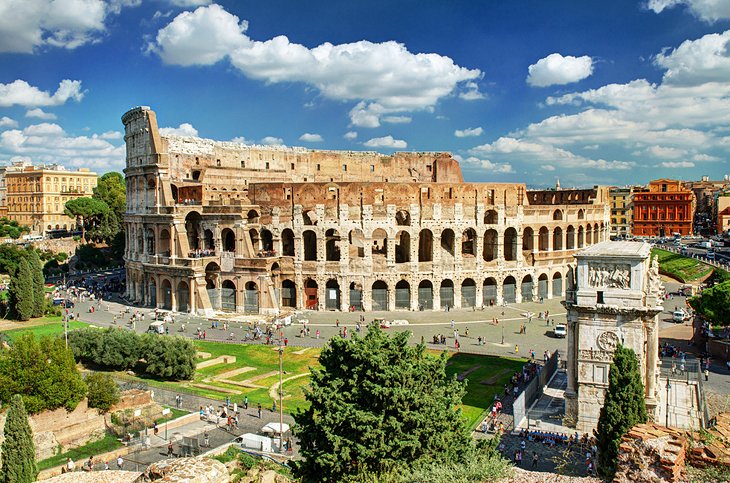
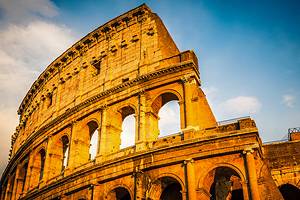
As the Eiffel Tower is to Paris, the silhouette of the Flavian Amphitheatre is to Rome. The largest structure left to us by Roman antiquity, the Colosseum still provides the model for sports arenas - present-day football stadium design is clearly based on this oval Roman plan.
The building was begun by Vespasian in AD 72, and after his son Titus enlarged it by adding the fourth story, it was inaugurated in the year AD 80 with a series of splendid games. The Colosseum was large enough for theatrical performances, festivals, circuses, or games, which the Imperial Court and high officials watched from the lowest level, aristocratic Roman families on the second, the populace on the third and fourth.
Beside the Colosseum stands the Arch of Constantine, a triumphal arch erected by the Senate to honor the emperor as "liberator of the city and bringer of peace" after his victory in the battle of the Milvian Bridge in 312.
Lines are long and move slowly, so you can save time by joining the Skip the Line: Ancient Rome and Colosseum Half-Day Walking Tour and have a knowledgeable guide, as well.
Author's Tip: For an unforgettable experience, especially in the heat of mid-summer, visit the Colosseum on a special night tour. Not only is it cooler then, but the monument is magical with its interior bathed in golden light.
2. Vatican City
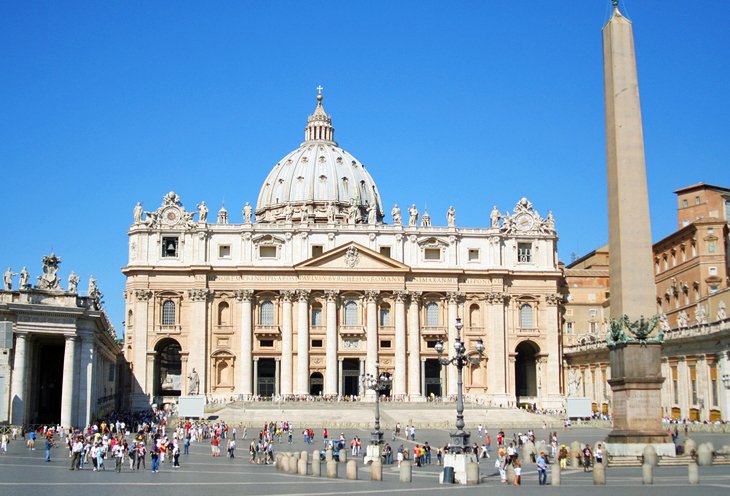
The Vatican is the smallest independent state in the world, with an area of less than half a square kilometer, most of it enclosed by the Vatican walls.
Inside are the Vatican palace and gardens, St. Peter's Basilica, and St. Peter's Square, an area ruled by the Pope, supreme head of the Roman Catholic Church. This compact space offers a lot of things to see, between its museums and the great basilica itself.
Inside St. Peter's Basilica is Michelangelo's masterpiece, Pieta, along with statuary and altars by Bernini and others.
The unquestioned highlight of the Vatican museums is the Sistine Chapel, whose magnificent frescoed ceiling is Michelangelo's most famous work.
In the Vatican Palace are the Raphael Rooms; the Borgia Apartments; the Vatican Library, and a number of museums that include the Picture Gallery, Museum of Secular Art, Etruscan Museum, and others. The collections you can see in these cover everything from papal coaches to 20th-century art reflecting religious themes.
Ticket lines for the Vatican's attractions are incredibly long, and you can spend several hours waiting in line. To save time, purchase a Skip the Line: Vatican Museums with St. Peter's, Sistine Chapel, and Small-Group Upgrade tour in advance. This three-hour tour allows you to bypass the long lines and walk straight into the museums with a knowledgeable guide. Headsets are provided, and you can choose from several different departure times or upgrade to an evening or small-group tour.
3. The Pantheon
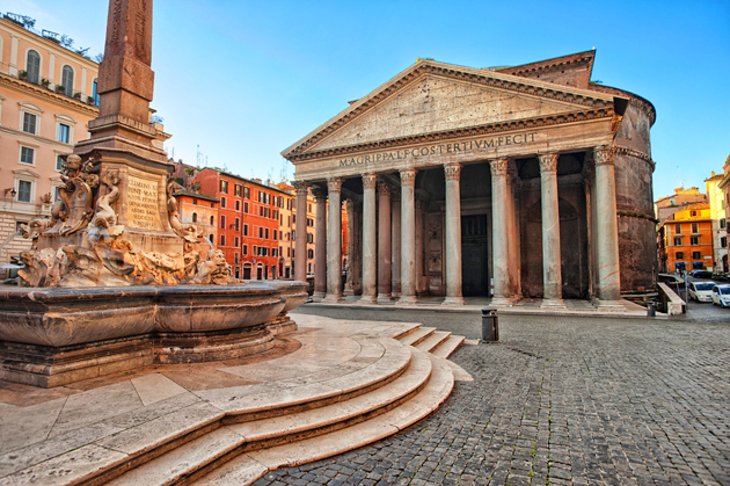
The Pantheon - the best-preserved monument of Roman antiquity - is remarkably intact for its 2000 years. This is despite the fact that Pope Gregory III removed the gilded bronze roof tiles, and Pope Urban VIII ordered its bronze roof stripped and melted down to cast the canopy over the altar in St. Peter's and cannons for Castel Sant'Angelo.
The Pantheon was rebuilt after damage by fire in AD 80, and the resulting brickwork shows the extraordinarily high technical mastery of Roman builders. Its 43-meter dome, the supreme achievement of Roman interior architecture, hangs suspended without visible supports – these are well hidden inside the walls – and its nine-meter central opening is the building's only light source.
The harmonious effect of the interior is a result of its proportions: the height is the same as the diameter.
Although the first Christian emperors forbade using this pagan temple for worship, in 609 Pope Boniface IV dedicated it to the Virgin and all the Christian martyrs, and since then, it has become the burial place of Italian kings (Victor Emmanuel II is in the second niche on the right) and other famous Italians, including the painter, Raphael.
Author's Tip: If you visit the Pantheon on a rainy day, be careful of the floor in the center. There is no umbrella over the hole in the roof, and the floor can get very slippery when wet.
4. Roman Forum
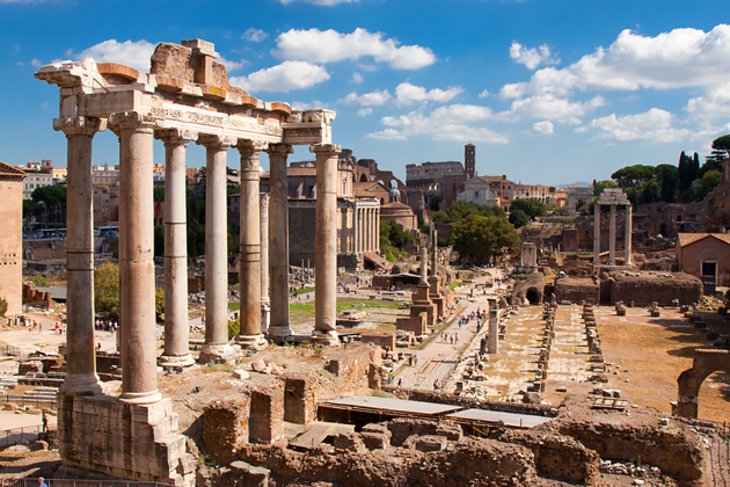
Walking through the forum, now in the middle of a throbbing modern city, is like stepping back two millennia into the heart of ancient Rome. Although what survives of this center of Roman life and government shows only a small fraction of its original splendor, the standing and fallen columns, its triumphal arches, and the remains of its walls still impress, especially when you consider that for centuries, the history of the Forum was the history of the Roman Empire and of the Western world.
Roman political and religious life was centered here, along with the courts, markets, and meeting places. After the seventh century, the buildings fell into ruin, and churches and fortresses were built amid the ancient remains. Its stones were quarried for other buildings and it was not until the 18th and 19th centuries that systematic excavations brought the ancient buildings to light from under a 10-meter layer of earth and rubble.
Highlights of the Roman Forum are the Temple of Antoninus Pius, the Temple of Castor and Pollux, the Temple of Saturn, the Arch of Septimus Severus, the Curia, the Temple of Vesta, and the Arch of Titus.
Tip for Parents: If you're traveling in Rome with children, unless they are fascinated by the Romans, the Forum might be a place best seen from above, instead of by walking through its five acres of largely ruined buildings. It is one of Rome's most popular and important tourist attractions, but it's a lot for kids to take in and it doesn't have the lure of the Colosseum's tales of lions and gladiators.
5. Trevi Fountain
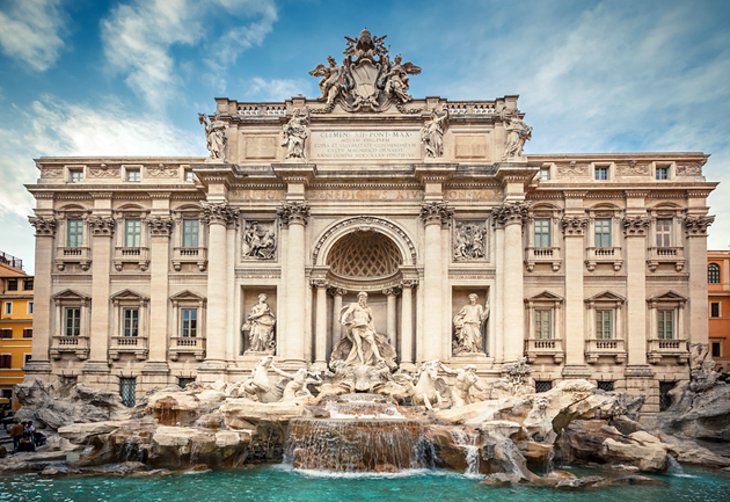
One of the city's most popular tourist attractions, this 17th-century masterpiece has been immortalized in films until it is almost a required visit. Throwing a coin (not three) into the Trevi Fountain (Fontana di Trevi) is a tradition that is supposed to assure your return to Rome.
Rome's largest fountain, Fontana di Trevi is supplied by an aqueduct originally constructed by Agrippa, the great art patron of the first century BC, to bring water to his baths. The fountain was created for Pope Clement XII between 1732 and 1751 by Nicolò Salvi, and built against the rear wall of the palace of the Dukes of Poli.
It depicts the sea god Oceanus (Neptune), with horses, tritons, and shells. The water swirls around the figures and the artificial rocks and collects in a large basin, always filled with coins.
What happens to all that money? Twice a year it is gathered using long-handled brushes, and donated to Caritas, Rome's Catholic charity.
6. Vittorio Emanuele II Monument
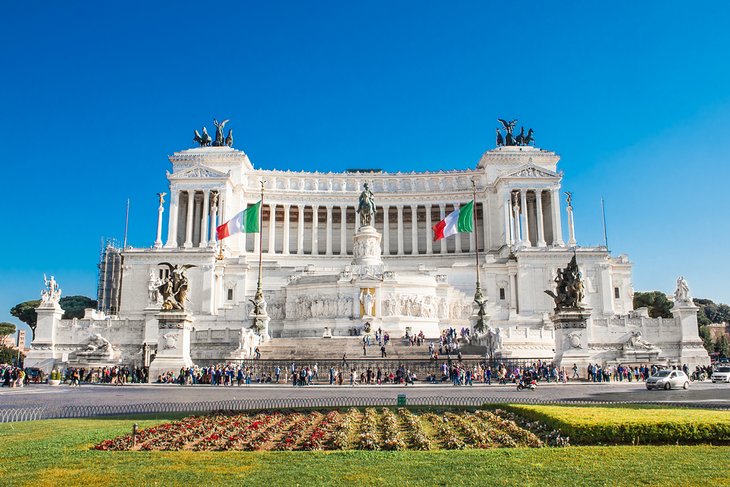
It's ironic that this grandiose monument, considered one of the national symbols of Italy, is rarely admired by Romans, who liken it to a wedding cake or a giant typewriter. Like it or not, the vast neo-classical structure crowns Capitoline Hill, the symbolic center of ancient Rome, overlooking the later city across Piazza Venezia.
Built between 1885 and 1935, it is a monument to King Vittorio Emanuele II, the first king of the unified Italy, represented here in an equestrian statue. Italy's tomb of the unknown soldier is here, along with a museum of the Italian unification. A lift will take you to the topmost terrace for 360-degree views of Rome.
Address: Piazza Venezia, Rome
7. Centro Storico & the Spanish Steps
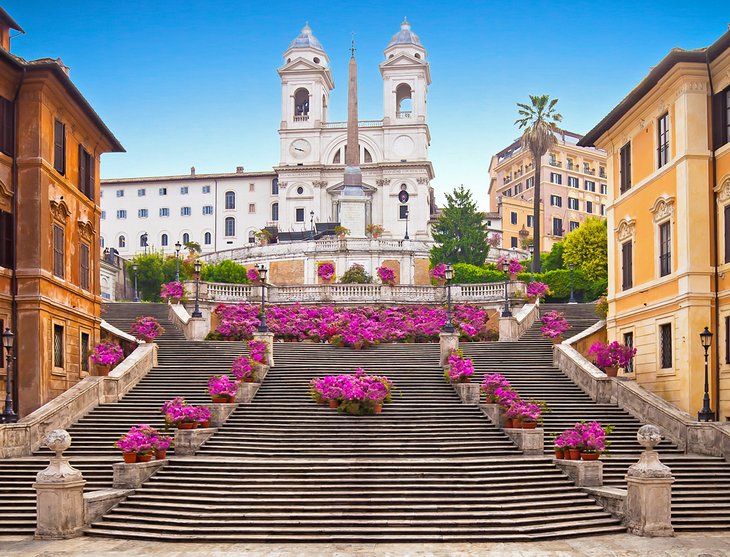
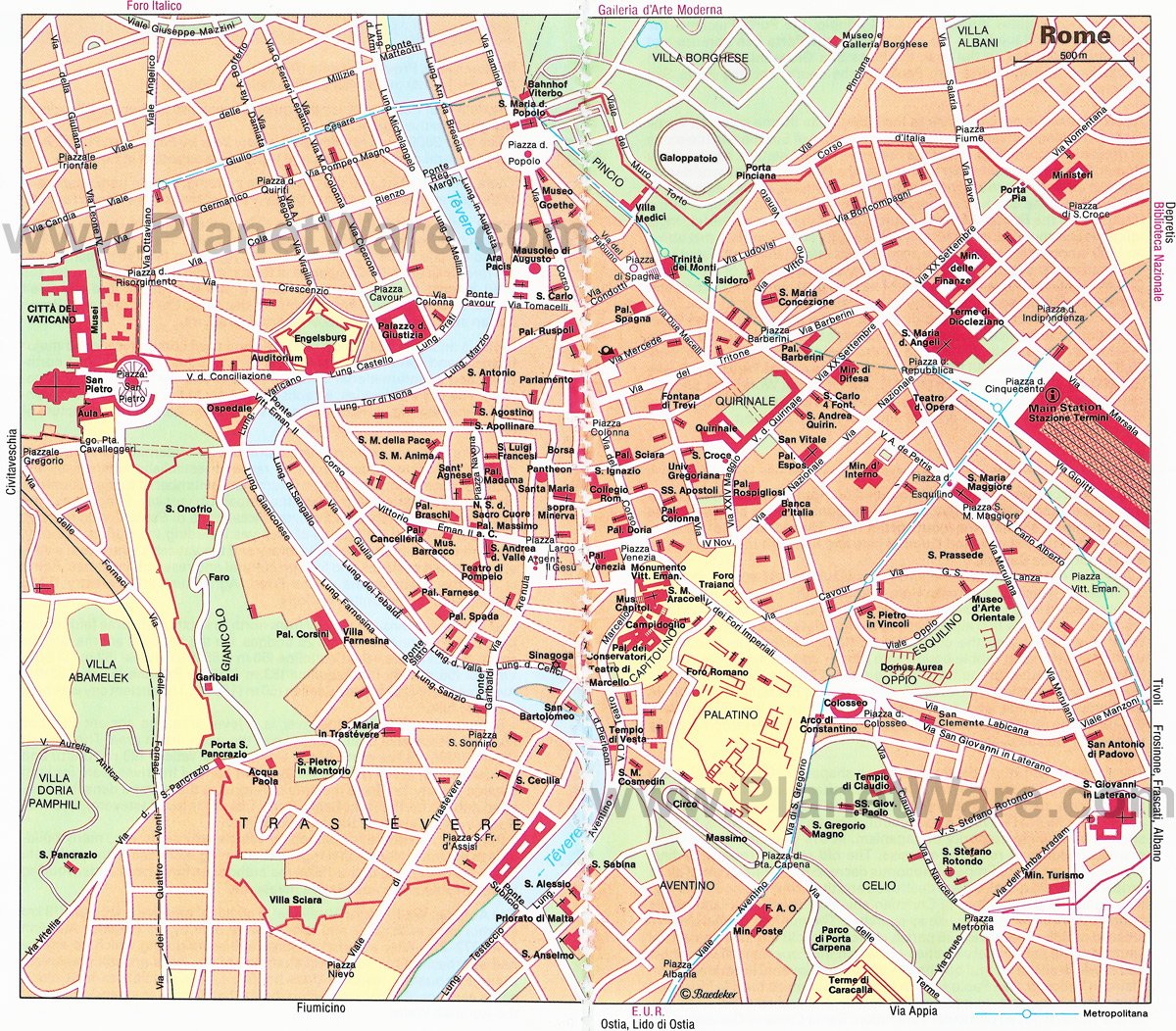
Take a look at a Rome tourist map, and you'll see one area so filled with things to do that it's hard to read the street names. This is the Centro Storico, the historic center of Rome, with so many art-filled churches, resplendent palaces, and lively squares that you could spend your whole vacation strolling its ancient streets and lanes.
Spend some time just to absorb the neighborhood's atmosphere instead of going from one of its must-see sights to the next. Along with Piazza Navona, the Trevi Fountain, and the Basilica of Santa Maria Maggiore, stop in less well-known churches, such as Santa Maria del Popolo, where you'll find works by Bernini and Caravaggio.
Pause at the Spanish Steps, the flight of irregular stairs and landings that lead up to the French church of Trinità dei Monti. The stairs take their name from Piazza di Spagna, the plaza at their base and one of Rome's most typical squares. The stairs have long been a favorite haunt of tourists.
You can no longer channel your inner Audrey Hepburn and eat gelato on the steps as she did in Roman Holiday. Sitting or eating on the steps is banned to protect them after a complete cleaning and restoration, and the ban is enforced.
The boat-shaped fountain at the foot of the Spanish Steps is known as the Barcaccia and was created by Pietro Bernini, father of the great Baroque architect Gian Lorenzo Bernini.
Via Condotti, leading southwest from Piazza di Spagna, is Rome's most fashionable shopping street, where the Caffè Greco is famous for the artists, writers, and musicians who have frequented it.
Address: Piazza di Spagna, Rome
8. Via del Corso, Rome's Shopping Street
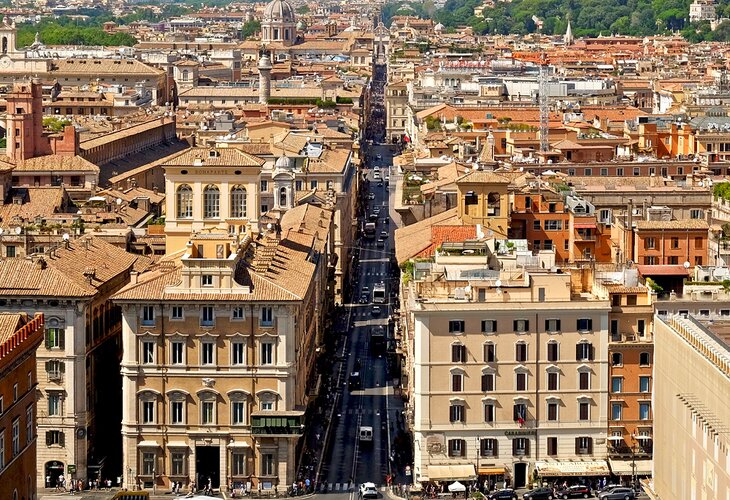
Marking a straight line from Piazza the Piazza Venezia to Piazza del Popolo, Via del Corso is Rome's Main Street. Lined with shops and places to eat, and a few palaces housing art museums, including the magnificent Palazzo Doria Pamphilj. Work is underway to restore and re-design the century-old landmark Alberto Sordi Gallery, which will reopen as Agorà, with fewer shops and more public space for arts and entertainment.
While the shops are mostly name brands, you'll find some designer boutiques here and on the radiating side streets. Not all of Italy's fashion comes from Milan's catwalks, and fashionistas will find more high-end boutiques and prestigious names on streets around Piazza di Spagna, especially Via Venizia and Via dei Condotti.
Between Piazza del Popolo, at the end of Via del Corso, and Piazza di Spagna, look for antique shops and art galleries on Via del Babuino. To mix charm and cinema history with shopping, and find small shops and galleries on the parallel Via Margutta.
Note to Movie Fans: Federico Fellini lived on Via Margutta and Gregory Peck's apartment scenes in Roman Holiday were filmed at No. 51.
9. Santa Maria Maggiore
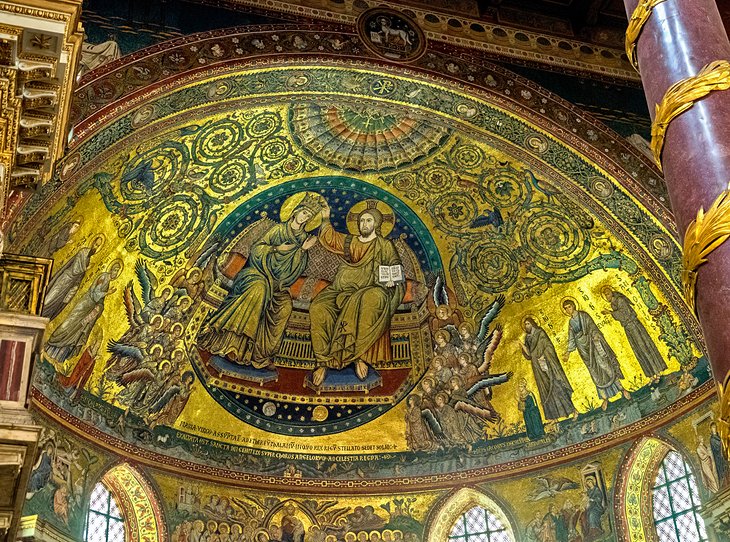
One of the most majestic of the churches in Rome, Santa Maria Maggiore has stood here since the fourth-century Pope Liberius had a vision of the Virgin directing him to build a church where snow fell the following day. Although it was August, snow did fall on the Esquiline hill the next morning, so here the great basilica was built.
Mass has been celebrated here every day since the fifth century. The three aisles of its 86-meter-long interior are separated by 40 columns of marble and four of granite, and the apse added in the 13th century is lined with mosaics of Old and New Testament themes, masterpieces of Rome's famous mosaic artists.
Rome's oldest mosaics, as old as the fourth century, decorate the upper walls, and the floor is inlaid with colored stone in the style of the expert 12th-century artisans of the Lake Como region. The first gold to reach Italy from the Americas shines on the coffered ceiling. Two popes are buried here; it's one of Rome's four papal basilicas, an important place of pilgrimage.
Author's Tip: Although admission to Rome's churches is free, you may need to put a euro in the meter to illuminate some artworks or chapels. Keep some coins handy for a better look at the mosaics in Santa Maria Maggiore. It is also a nice gesture to put a few coins in the offering boxes to help the churches maintain their priceless treasures.
Address: Piazza di Santa Maria Maggiore, Rome
10. Piazza Navona
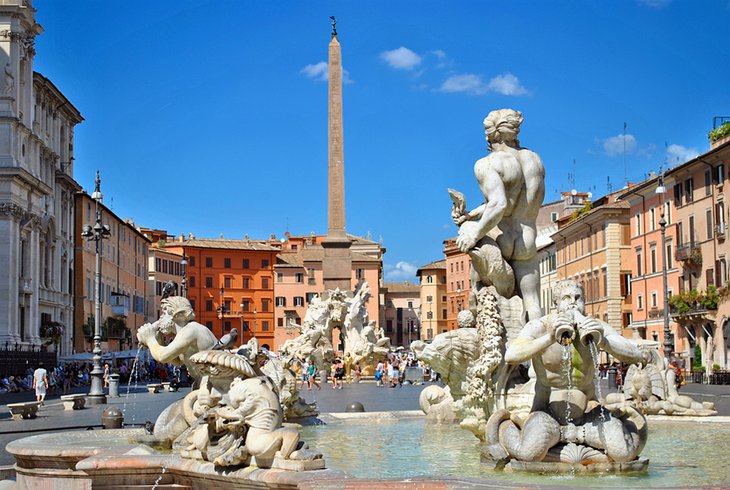
One of Rome's most characteristic Baroque squares, Piazza Navona still has the outline of the Roman stadium built here by Emperor Domitian. It was still used for festivals and horse races during the Middle Ages, and was rebuilt in the Baroque style by Borromini, who also designed the magnificent series of palaces and the church of Sant'Agnese, on its west side.
Its facade, campanile, and dome highlight the way Baroque architecture weaves convex and concave surfaces, gables, windows, columns, and piers into a unified design. In the crypt of Sant'Agnese are Alessandro Algardi's 1653 The Miracle of St. Agnes and the remains of a Roman mosaic floor. Sant'Agnese provided a model for Baroque and Rococo churches in Italy and elsewhere.
Although Borromini designed the square and its surrounding facades, it was his archrival, Bernini, who created its centerpiece, the beautiful Baroque fountain, Fontana dei Fiumi. The spirited fountain represents the four rivers then thought to be the largest on each of the known continents, with figures personifying the Nile, Ganges, Danube, and Rio de la Plata around the large basin, each accompanied by plants and animals of their respective regions.
The two other fountains in the square are the 16th-century Fontana del Moro in front of the Palazzo Pamphili, erected by Giacomo della Porta, and the 19th-century Fontana del Nettuno with its figure of Neptune. Today, the square is filled with Romans, tourists, street artists, musicians, souvenir kiosks, cafés, and during December, one of Rome's best Christmas markets.
Nearby, between the Piazza and the Pantheon, the church of San Luigi dei Francesi contains three major paintings by Caravaggio from the late 16th century, including one of his most famous, The Calling of St. Matthew. No information about the paintings is available in the church, but you can download an audio guide in English on the San Luigi dei Francesi website. The church itself is worth seeing for its elaborate ceiling and inlaid marble floors. Like others in Rome, the church is free to enter
11. Piazza del Popolo & Santa Maria del Popolo
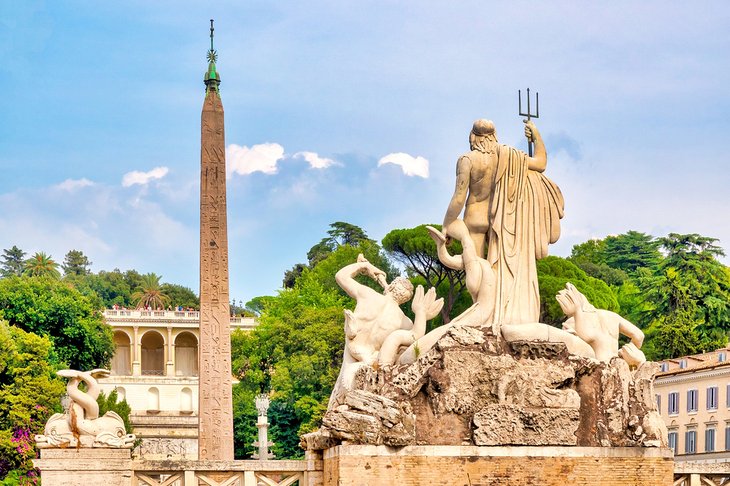
Symmetrically situated at the apex of a triangle of streets that include Via Corso, Rome's main shopping street, Piazza del Popolo was designed in the early 19th century as the northern entrance to the city center. At its center, the Egyptian obelisk, called Flaminio, rises above a fountain, where four white marble lions spout fans of water into four round travertine pools.
Facing one side like mirror images at either side of Via della Corso are the twin churches of Santa Maria dei Miracoli and Santa Maria in Montesanto, and at the opposite side of the grand piazza is the Augustinian Basilica of Santa Maria del Popolo.
Inside, you'll find Pinturicchio frescoes and two tombs by Andrea Sansovino in the choir, and two beautiful chapels. The Chigi Chapel was designed by Raphael in 1515, and the Cesari Chapel holds two important Caravaggio paintings.
Next to the basilica, climb the steps to the Pincio Terrace for views down onto the piazza and across the city of Rome.
12. Palatine Hill
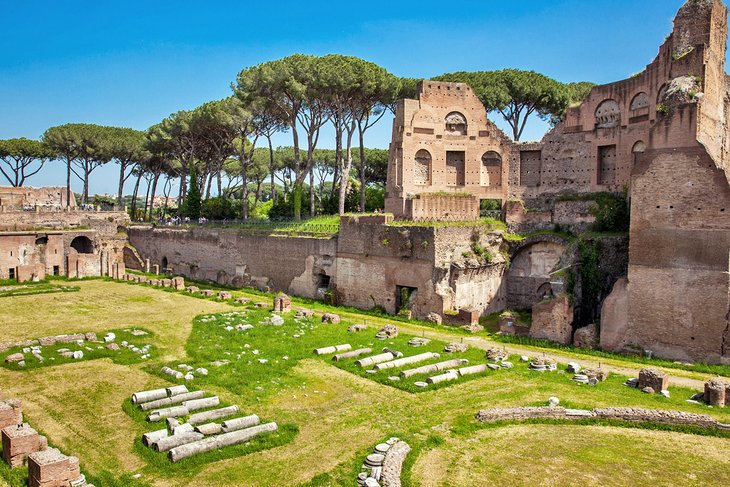
Strategically set 50 meters above the Tiber, the Palatine Hill shows evidence of Rome's earliest settlement: rock cuttings found in front of the Temple of Cybele show human activity as long ago as the ninth century BC. Later, this was the site chosen by the emperors and great aristocratic families for their palaces.
The Farnese Gardens were laid out on the hill in the 16th century for Cardinal Alessandro Farnese, a pleasure park of terraces, pavilions, lawns, flowerbeds, trees, and fountains designed as a kind of stage-setting for social gatherings.
Highlights of the Palatine Hill are the House of Livia (Augustus' wife), the semi-subterranean Cryptoporticus, Domus Flavia, Domus Augustana, and most imposing of all, the Baths of Septimius Severus. The Palatine Hill is a lovely place to explore, combining a park with magnificent and impressive ruins of ancient Rome.
13. Villa Borghese Gallery and Gardens
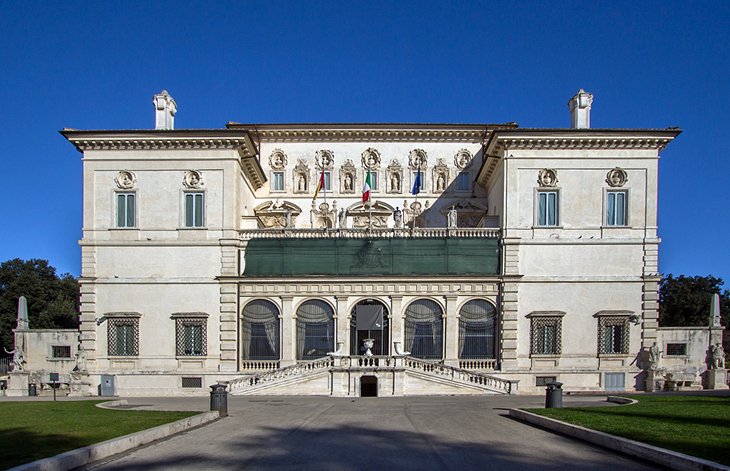
One of Rome's largest parks, the Borghese Gardens contain multiple attractions that include two museums, the most prominent of which is the Villa Borghese. Built as a party villa and to house the Borghese art collection, the gallery contains paintings, sculptures, mosaics, and reliefs, most from the 15th to the 18th century, and include works by Raphael, Titian, Caravaggio, Bernini, Dürer, and Rubens.
Elsewhere in the park, Villa Giulia was built as a summer residence for the 16th-century Pope Julius III and houses the Etruscan Museum. More villas are from the world exposition that was held in Rome in 1911.
The park is an English-style landscape garden, with walking paths and ponds where you can rent row boats. You can also rent bikes or a surrey to explore the park. There is a good zoo, Bioparco di Roma, with naturalized enclosures and a miniature trail connecting its various sections. A number of its attractions will appeal to children, including playgrounds, weekend pony rides, and occasional puppet shows.
Many of its attractions will appeal to children, including playgrounds, weekend pony rides, and occasional puppet shows, making it one of the most popular things to do in Rome for families.
One of the secrets of the Borghese Gardens is the replica of Shakespeare's Globe Theatre, where you can watch opera performances or Shakespeare plays. Plays are always in Italian, but an occasional opera is in English. You can rent a cushion and sit on the floor or you can sit in the balconies that ring the interior.
Address: Piazzale del Museo Borghese, 5
14. Castel Sant'Angelo National Museum
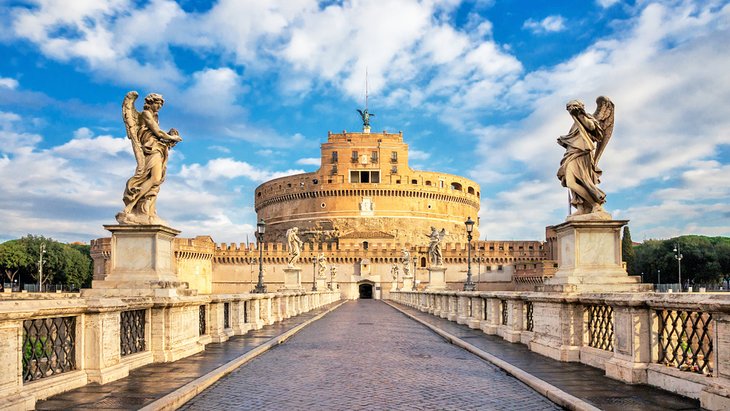
Begun in AD 135 as a mausoleum for the Emperor Hadrian and his family, Castel Sant'Angelo is a massive drum-shaped structure overlooking the Tiber near the Vatican. Over the millennia of its existence, Castel Sant'Angelo has been used as a papal residence and a fortress, and more recently as a National Museum.
In AD 271, Emperor Aurelian took advantage of its position guarding the northern approaches to the city and incorporated it into his new system of walls surrounding the city. As a bastion, it protected the city from barbarian attacks, and by the Middle Ages had become a substantial fortress. In times of peril, popes fled here across a secret elevated corridor, the Passetto di Borgo, and stored their most precious riches in the castle's treasury.
Visitors reach the castle across a pedestrian bridge lined with statues of angels (by Bernini), and ascend to its five floors on a spiral ramp. At its various levels are prison cells, a large collection of weapons, and splendidly decorated papal apartments covered in Renaissance frescoes. At the top is a terrace with stunning views of the city.
Address: Lungotevere Castello 50, Rome
15. Trastevere
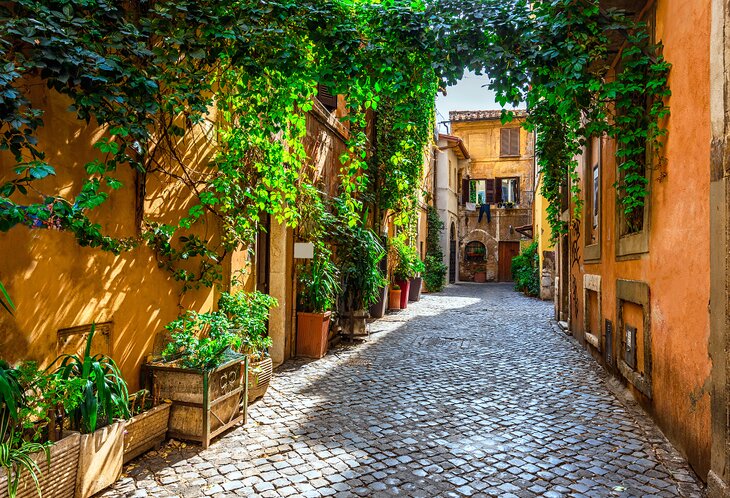
Across the Tiber River and off the most popular tourist routes, Trastevere feels like an earlier Rome, with its medieval lanes and narrow alleys. You'll find bits of Roman stonework in its old buildings, and occasional inscriptions that remind you that this was for three centuries the Jewish Ghetto, its gates closed and guarded at night.
Today it is a charming neighborhood with two outstanding churches that are rarely on tourist itineraries. In the third century, before Rome's Jewish population gravitated to this side of the river, Santa Maria in Trastevere was one of the first places where Christians could worship except in secret.
Renovated several times, the last in the Baroque period, the church interior is decorated with patterned marble floors, a gold-washed coffered ceiling, and exceptional medieval mosaics. Also with good mosaics, and a fine 13th-century fresco, Santa Cecilia in Trastevere hides the foundations of a Roman home.
Author's Tip: It's no secret that Trastevere is a good place to find restaurants serving authentic Roman dishes, but you'll find them less crowded than those in the popular tourist areas.
16. Capitoline Museum
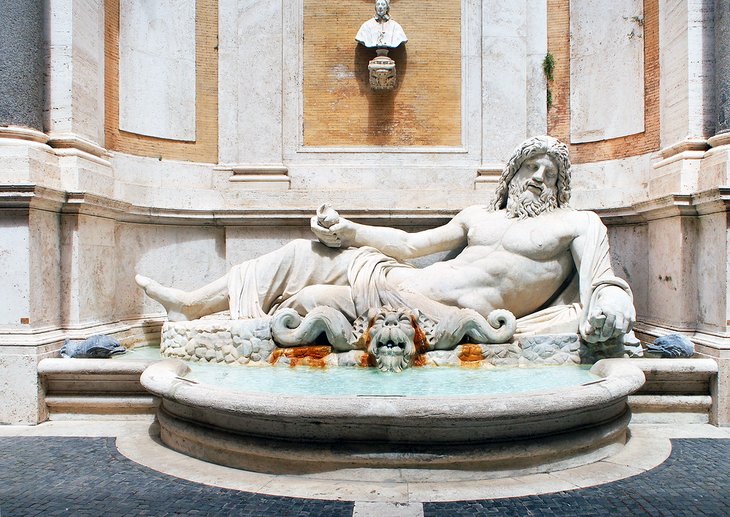
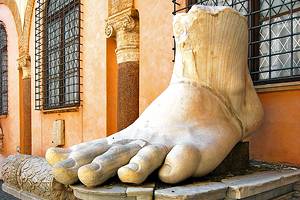
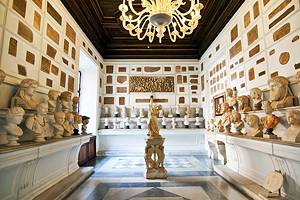
Two palaces on Piazza del Campidoglio house Europe's oldest public collection of art, founded in 1471. Primarily devoted to sculptures from across the ancient world, the highlights of the Capitoline Museum treasures include the realistic Hellenistic bronze Boy with a Thorn; Capitoline Venus, from a 4th-century BC original by Praxiteles; a 4.24-meter-tall Roman equestrian statue of Marcus Aurelius; a Roman sculpture of the Dying Gaul; and the Capitoline She-Wolf, an Etruscan work from the 6th century BC.
More "modern" sculptures include a head of Medusa, by the 17th-century Baroque sculptor Gian Lorenzo Bernini. Although the Capitoline Museum is best known for its outstanding collection of classical sculptures, its Capitoline Picture Gallery exhibits paintings by Titian, Veronese, and Rubens, along with Caravaggio's compelling John the Baptist.
Address: Piazza del Campidoglio, Rome
17. Baths of Caracalla
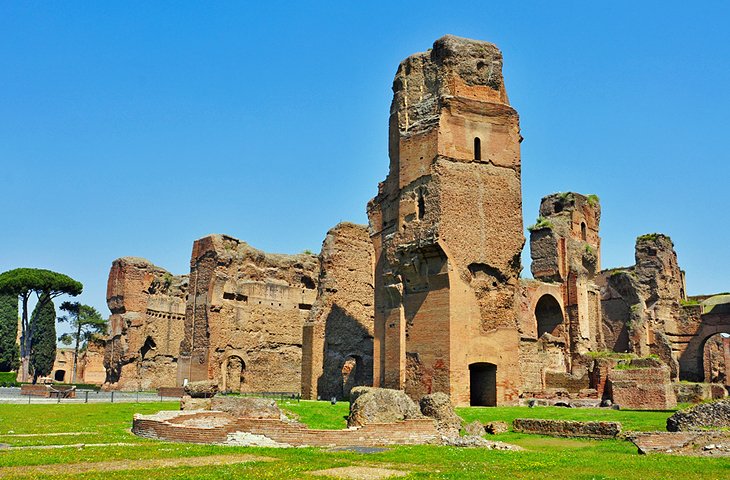
Completed by Caracalla in 216, these were much more than public baths. They were a complete sports center, with hot and cold baths, a swimming pool, dry and steam saunas, gymnastics and sports facilities, social rooms, gardens, libraries, hairdressers, and shops.
The massive and imposing structure covered an area of 300 square meters, a complex of gigantic halls whose domes and vaulting were supported by huge columns and piers. It could accommodate 1,500 people at a time. The floors and walls were covered with marble, mosaics, and frescoes; even in ruin, their splendor is still evident.
Address: Via delle Terme di Caracalla 52, Rome
18. San Giovanni in Laterano (Basilica of St. John Lateran)
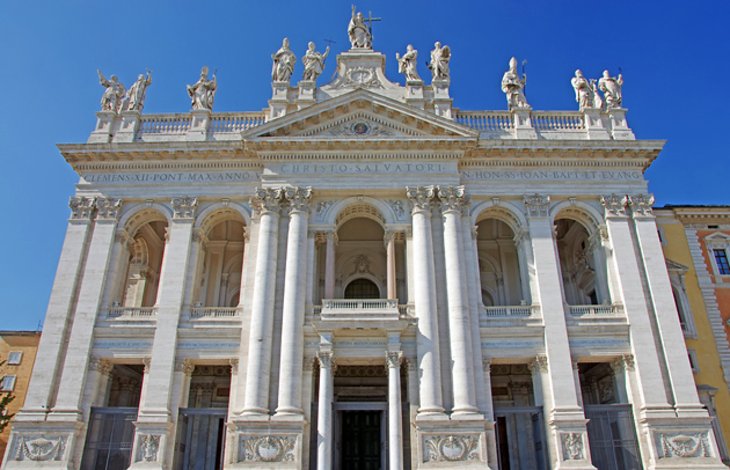
As you might expect for the episcopal church of the Pope, St. John Lateran is one of Rome's most impressive churches. After centuries of alterations, it still retains its original form from the age of Constantine, when it was built.
Its façade, by contrast, is a purely Baroque embellishment and a fine example of that period. Along with the mosaics in the apse, be sure to notice the beautiful 16th-century wooden ceiling. If the octagonal baptistery, San Giovanni in Fonte, looks a bit familiar, it's because it provided the model for later ones throughout Europe.
Built by Constantine, it is the world's oldest Christian baptistery. Across the piazza, in the church of the Scala Santa, is the Holy Staircase, 28 steps believed to have been brought to Rome in the fourth century by St. Helen, from Pilate's palace in Jerusalem.
19. The Catacombs and Via Appia Antica (Appian Way)
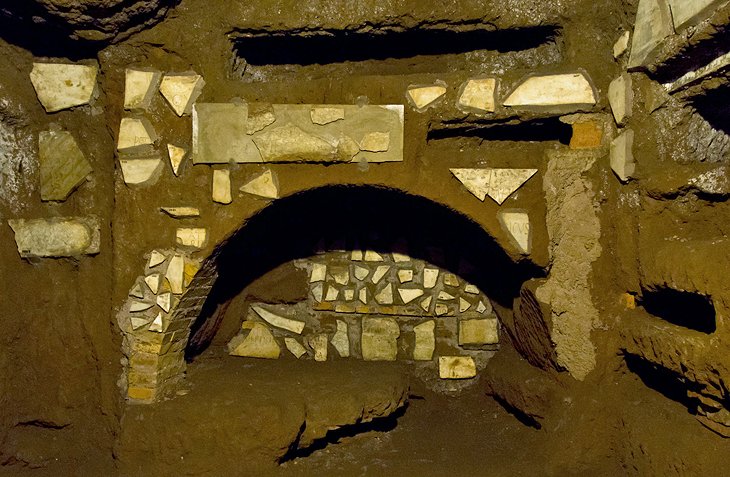
The Catacombs of San Callisto (St. Calixtus) and San Sebastiano, both underground burial places in the Via Appia Antica, are extensive — the San Callista Catacomb fills an area of 300 by 400 meters — with intricate multi-layered networks of passages and chambers carved into the soft tufa. In addition to the tombs, St. Calixtus has six sacramental chapels, constructed between 290 and 310, with both pagan and early Christian wall paintings.
In the Papal Crypt are the tombs of most of the martyred Popes of the third century identified by Greek inscriptions. San Sebastiano, one of Rome's seven pilgrimage churches, was built in the fourth century on the site of old cemeteries and catacombs that, along with the foundations of a Constantinian basilica, can be explored.
Tomb chambers are on several levels with fine paintings, stucco decorations, and inscriptions dating to the first century AD. Although venerated remains are thought to have been brought here for safekeeping during persecutions, these were cemeteries, not hiding places for Christians.
A little west of the Via Appia Antica, not far from the catacombs of San Callisto, the Catacombs of Domitilla are the largest and among the most impressive in Rome, with 15 kilometers of underground chambers and passages and a complete subterranean basilica.
Dedicated to the martyred saints entombed there, Nereus and Achilleus, the basilica was a major pilgrimage destination until the Middle Ages. More than 80 painted tombs and a second-century fresco of The Last Supper survive in its galleries.
Outside the Porta San Sebastiano, the Arch of Drusus is near the beginning of the Via Appia Antica, one of the oldest and most important of the Roman highways, built around 300 BC and extended to the port of Brindisi about 190 BC.
Running parallel with the road are the ruins of some of the aqueducts that supplied the city with water, and among the cypresses along its sides are remains of tombs belonging to aristocratic Roman families. The most prominent of these is the first-century tomb of Caecilia Metella and her husband.
Address: Via Appia Antica, Rome
20. Palazzo Doria Pamphilj
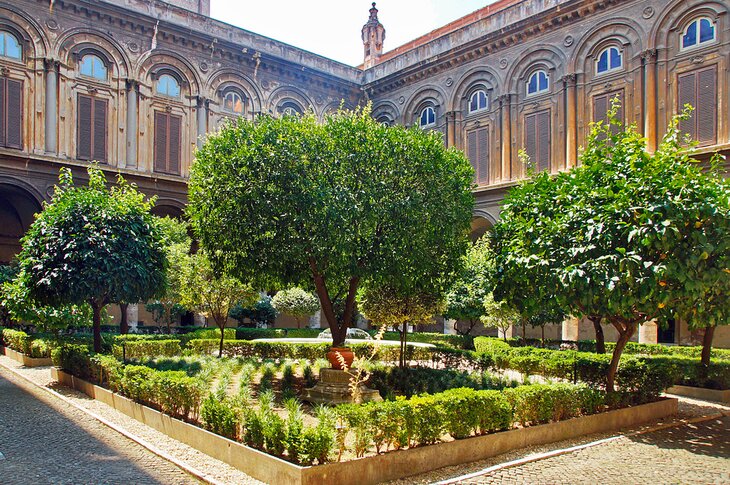
Rome's finest private collection of art is displayed in the magnificent Baroque galleries, state rooms, and chapel of the Palazzo Doria Pamphilj. Representing works by European masters from the 15th through the 18th centuries, the collections include paintings by Filippo Lippi, Brueghel the Elder, Correggio, and Raphael, along with major works by Caravaggio (Rest in the Flight into Egypt) and Titian (Salome with the Head of John the Baptist).
Velázquez's Portrait of Innocent X is one of the collection's highlights. Another image of the same Pope is a sculpture by Bernini. The palace itself almost outshines its contents, with frescoed ceilings and Baroque decoration; a good audio guide in English enlivens the tour. The gardens are beautiful, with an intricately patterned parterre with labyrinth elements.
Address: Via del Corso 305, Rome
21. Basilica of San Clemente
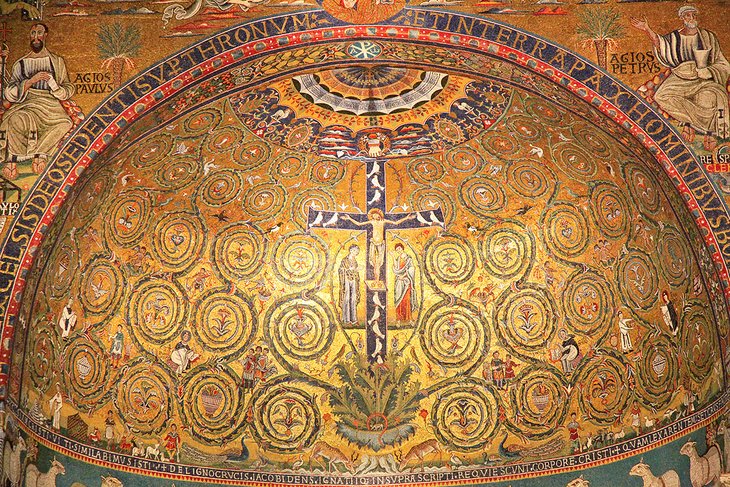
One of Rome's oldest churches and with the city's most beautifully decorated apse, covered in mosaics of Old and New Testament scenes, San Clemente has a further fascination: the multiple layers of its history as each era built upon the last.
You can descend from the 12th-century church into a previous church, a 4th-century basilica with Romanesque frescoes of New Testament scenes. Below that are the excavated foundations of a Roman home from the 2nd century AD, with a shrine to the sun god Mithra, with a carved relief on the altar. From the foundations of the house, you can walk on the ancient streets of this former Roman neighborhood.
But do take time to look around the upper church, to see the mosaics, the inlaid marble floors, and the early Renaissance frescoes by Masolino in the St. Catherine's Chapel.
Address: Via San Giovanni in Laterano 108, Rome
22. Domus Aurea: Nero's Golden House
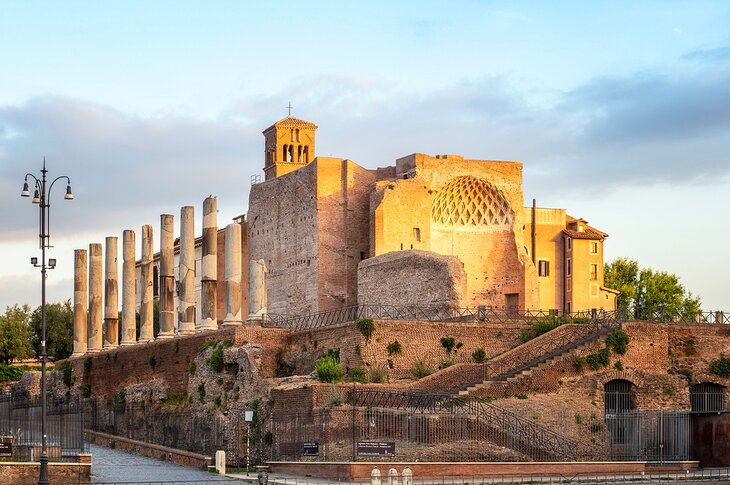
In July of 64 CE, a six-day fire destroyed almost three-fourths of the city. The cruel and unpopular emperor Nero took advantage of the cleared land to build a palace of unheard-of proportions, the Domus Aurea, or Golden House. Rooms were lined in rare marble and elaborately decorated in gold and precious stones.
The palace was never finished, and Nero's successors, attempting to erase all memory of the hated ruler and his reign, buried it, and Rome grew over it. Excavations continue to disclose more of its splendors, and you can tour the active archaeological site to see the halls and rooms that have been uncovered, some with excellent frescoes.
With the help of a video outlining the history and virtual reality technology that recreates the atrium and one hall, you can get a sense of what the palace looked like in Nero's time. Both are included in tours.
Tip: Even on the hottest days, bring something with long sleeves, as the underground excavations site is quite cold year-round.
Historical Note: Did Nero really fiddle while Rome burned? Although he took advantage of the destroyed city to build his extravagant villa, and there was disgruntled mumbling at the time that he had ordered the fire set to clear the land, no historical evidence or contemporary account mentions his playing any musical instrument.
Address: Via della Domus Aurea, Rome
23. Terme di Diocleziano (Baths of Diocletian National Museum)
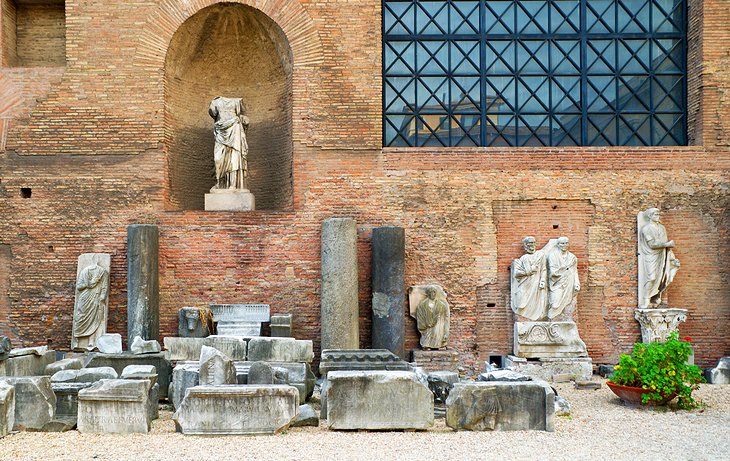
Diocletian's baths were so enormous that today, they contain two churches, large parts of a Carthusian monastery and a major museum. Michelangelo used the vast tepidarium (hot baths) as the shell for his church of Santa Maria degli Angeli, and the Museo Nazionale Romano, Rome's National Museum, fills another section with treasures of antiquity: Greek and Roman sculpture, pre-Christian and later sarcophagi, and beautiful mosaics and frescoes.
The late-16th-century church of San Bernardo alle Terme was built in a rotunda at the corner of the baths; its dome is like that of the Pantheon, but only half its size.
Where to Stay in Rome for Sightseeing
While Rome's main tourist attractions don't exactly cluster, most of the major ones are within a 20- to 30-minute walk of each other, so several areas are convenient for sightseeing. The Monti neighborhood is perhaps the most central to the Forum, Colosseum, Trevi Fountain, and even the Spanish Steps and Borghese Gardens. Here are some highly rated hotels in Rome's best locations for sightseeing:
Luxury Hotels:
- Palazzo Manfredi - Relais & Chateaux is next to the Colosseum, and you can overlook it while enjoying breakfast in the rooftop restaurant.
- Boutique Hotel Campo de Fiori has a rooftop garden overlooking the colorful daily market in one of Rome's most traditional neighborhoods, near the Pantheon and an easy walk from Palatine Hill and the Vatican.
- Two blocks from the Colosseum, Hotel Capo d'Africa is in a neighborhood filled with small restaurants.
Mid-Range Hotels:
- The four-star Mercure Roma Centro Colosseo is an easy walk from the Colosseum, which you can see from the hotel's rooftop swimming pool and from some of the guest rooms.
- In Monti, close to both the Colosseum and Forum, Hotel Fori Imperiali Cavalieri is surrounded by restaurants and shopping.
- Opposite the Opera House in Monti, iQ Hotel Roma has a covered rooftop terrace and modern décor.
Budget Hotels:
- Amid restaurants and shops in Monti, between the Forum and opera house, Hotel Artorius is not adjacent to any major attractions, but lies within a 20- to 30-minute walk from the Forum, Colosseum, Trevi Fountain, Vittoriano, and museums.
- Also in the lively Monte neighborhood, and an easy walk from the Colosseum and other attractions of ancient Rome, Hotel Grifo offers a rooftop terrace and free breakfast.
- On the west bank of the Tiber, south of Vatican City, Trastevere is one of the city's most colorful neighborhoods. Although Trastevere has several small B&Bs, Cassiodoro is one of its few hotels, surrounded by traditional restaurants and shops.
Tips and Tours: How to Make the Most of Your Visit to Rome
- Sightseeing Tour by Bus: For maximum flexibility while you're seeing all the top attractions, sign up for the Rome Hop-On Hop-Off Sightseeing Tour on an open-air double-decker bus. Accompanied by audio commentary, this convenient ticket covers all the top sights, with eight different stops, and you can hop on and off at your favorite attractions. You can choose a tour that's valid for either 24 or 48 hours and upgrade to packages that include time-saving skip-the-line admission to attractions like Palatine Hill, the Colosseum, and the Roman Forum.
- Segway Tour: Another way to see the top sights without worrying about navigating your way around the city is on the Rome Segway Tour. Included in this three-hour excursion are a brief orientation session, helmets, wet weather jackets (if needed), and audio commentary. Meet your guide near Piazza Venezia and see the sights of Ancient Rome, including the Colosseum, the Roman Forum, and Circus Maximus, learning all about them as you zoom around the city.
- Gladiator Experience: If you've always wondered what it's like to brandish a sword like Spartacus, consider signing up for the Roman Gladiator School: Learn How to Become a Gladiator experience on the Appian Way, near the Colosseum. This two-hour private lesson is suitable for anyone aged six years and older and includes entrance to the Gladiator School of Rome Museum as well as clothing and weapon hire.
- Tivoli Day Trip: Organized tours are a great way to explore the attractions in the beautiful countryside around Rome. You can relax and let a professional guide do the work without the hassle of driving, finding your way, and parking. On the Tivoli Day Trips from Rome: Villa d'Este and Hadrian's Villa tour, you can explore two World Heritage-listed historic villas, built as vacation homes for the Roman elite, as well as their gorgeous gardens. The tour includes transportation in a comfortable coach, villa admission, and headsets so you can easily hear the guide.
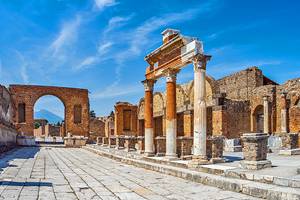
- Pompeii Day Trip: Another popular excursion is the Pompeii Day Trip from Rome. On this full-day tour, you can hike to the crater of Mt. Vesuvius (in summer) or visit the National Archeological Museum of Pompeii (November 16 through March 31), as well as see the sights of Pompeii. Entrance fees and lunch are included.
Rome, Italy - Climate Chart
| Average minimum and maximum temperatures for Rome, Italy in °C | |||||||||||
| J | F | M | A | M | J | J | A | S | O | N | D |
| 12 2 | 14 3 | 16 5 | 19 7 | 24 11 | 28 14 | 31 17 | 31 17 | 28 14 | 23 10 | 17 6 | 13 3 |
| PlanetWare.com | |||||||||||
| Average monthly precipitation totals for Rome, Italy in mm. | |||||||||||
| 84 | 76 | 69 | 69 | 48 | 41 | 23 | 36 | 76 | 107 | 119 | 91 |
| Average minimum and maximum temperatures for Rome, Italy in °F | |||||||||||
| J | F | M | A | M | J | J | A | S | O | N | D |
| 53 35 | 56 37 | 61 40 | 66 44 | 74 51 | 81 57 | 88 62 | 87 62 | 81 57 | 72 50 | 62 43 | 55 37 |
| PlanetWare.com | |||||||||||
| Average monthly precipitation totals for Rome, Italy in inches. | |||||||||||
| 3.3 | 3.0 | 2.7 | 2.7 | 1.9 | 1.6 | 0.9 | 1.4 | 3.0 | 4.2 | 4.7 | 3.6 |
More Things to See and Do in Rome
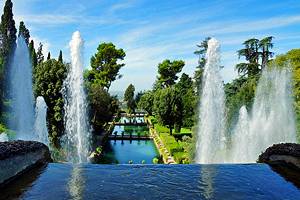
Where to Go near Rome: When you have seen Rome's ancient sites, you'll want to explore some of the city's surroundings. The town of Tivoli lies 30 kilometers east of Rome, with Hadrian's Villa and one of the most beautiful gardens in Italy.
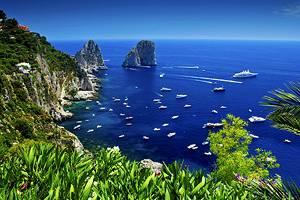
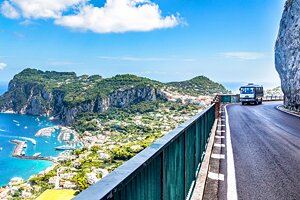
Places to Visit from Rome: In just over an hour by train, you can step into the exuberant street life of the vibrant city of Naples. From here, you are only a short ferry ride from the idyllic island of Capri, across the Bay of Naples. Or take a train the short distance to the ancient city of Pompeii, under the still smoldering cone of Mt. Vesuvius.