15 Top-Rated Day Trips from Florence
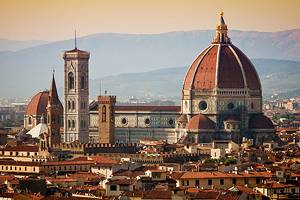
With Bologna less than an hour's train ride to the north, Siena to the south, and the combination of Pisa and Lucca to the west, Florence is ideally located for tourists exploring the attractions of central Italy. And with Italy's fast intercity trains, you can travel even farther and spend a day in Venice.
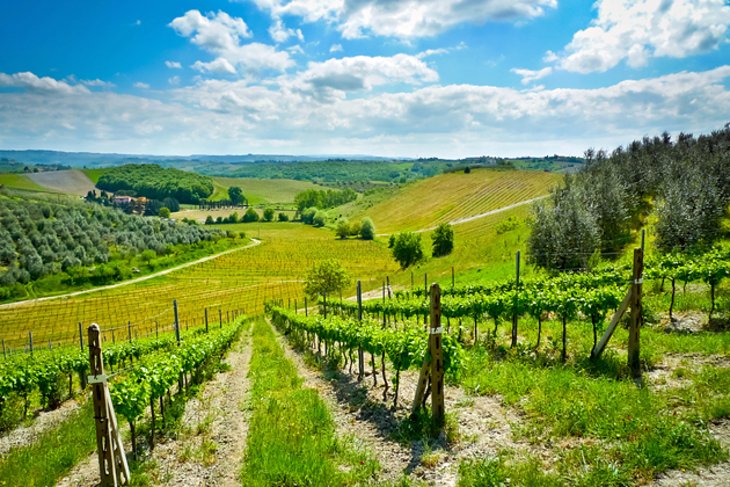
But even closer than any of these are the Chianti hills, the beautiful rolling Tuscan countryside, and art-filled Prato and Pistoia. You may be surprised at how much of Tuscany you can see in one day of sightseeing; with so many things to do nearby, you'll find plenty of tempting places to go in our list of the best day trips from Florence.
1. Pisa
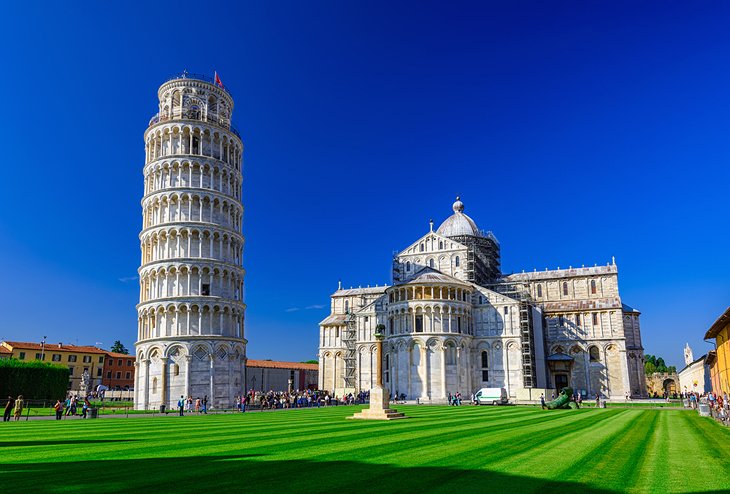
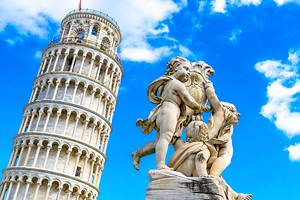
The famous Leaning Tower, the Torre Pendente, is one of the most easily recognized icons of Italy, but it's only one of an entire ensemble of outstanding attractions in Pisa, all within a small area that make up its UNESCO World Heritage site. Along with the tower are the Cathedral of Santa Maria Assunta, the Baptistery, and Campo Santo, close together in the Campo dei Miracoli (Field of Miracles).
The tower, a separate bell tower for the cathedral, was begun in 1173 and began to lean almost from the start. The cathedral was begun a century earlier to celebrate Pisa's naval victory over the Saracens; enlarged and embellished over the centuries it is the definitive example of the Pisan architectural style.
Its artistic highlight is the carved marble pulpit by Giovanni Pisano, but be sure to also see the 13th- /14th-century mosaic in the apse by Cimabue and the bronze doors of the Porta di San Ranieri, with scenes from the lives of the Virgin and Christ. In the adjacent baptistery there's another carved marble pulpit from the 13th-century, a masterpiece of Romanesque sculpture.
Priceless silver masterpieces, embroideries, tombs, sculptures, and paintings are displayed in the Museo dell'Opera del Duomo, where you can also get the best close-up view of the Leaning Tower. You can visit Pisa from Florence and avoid the long wait to climb the tower on a Pisa Half-Day Trip from Florence Including Skip-the-Line Leaning Tower of Pisa Ticket. Led by an expert guide, the trip includes travel to Pisa through the Tuscan countryside on an air-conditioned coach.
The best way to get from Florence to Pisa independently is by one of the more than 40 trains traveling there each day. For the high-speed trains that take about 50 minutes, get a Regionale Veloce ticket; local commuter trains can take almost twice as long.
2. Bologna
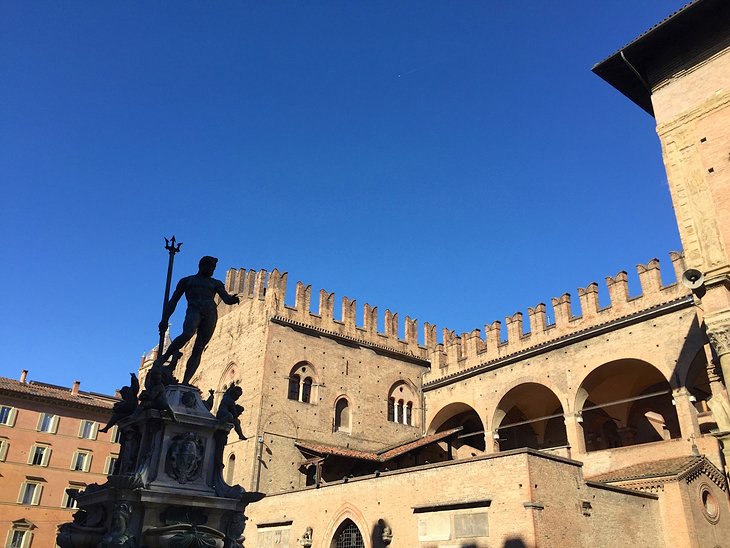
Only about half an hour from Florence by train, Bologna is one of Italy's most appealing cities for tourists. Known for its good food, it is also a city of beautiful arcades that line its streets and provide shelter from the summer sun. Fine old shopfronts, restaurants, and cafés hide underneath the columned passages, making Bologna a favorite city for shopping.
Although not as famous as Pisa's, Bologna's tall brick towers lean at more alarming angles, and the perception is magnified by their height and slender construction. Twenty of the original 100-plus towers remain, and you can climb to the top for views. At the center of Bologna are the broad Piazza Maggiore and Piazza del Nettuno, named for the 16th-century fountain, among the finest of its period.
Overlooking Piazza Maggiore is the still unfinished facade of the great Basilica of San Petronius. This is only one of Bologna's interesting and art-filled churches; Santo Stefano is the oldest of these and the most atmospheric.
3. Siena
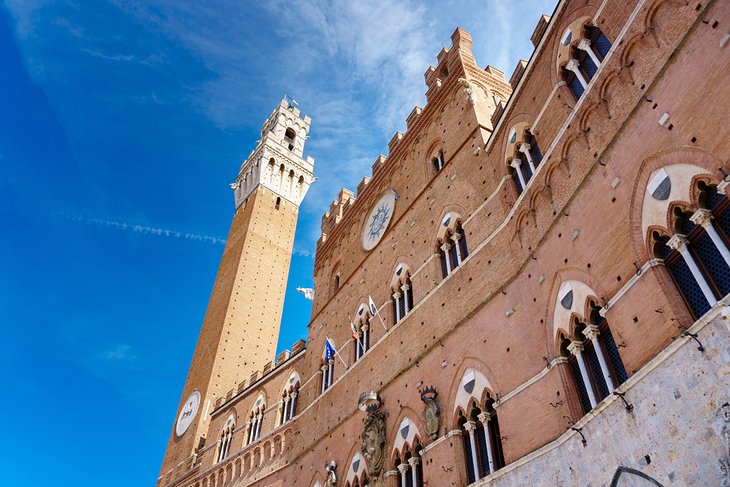
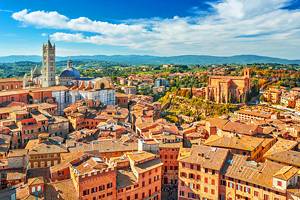
In the 13th and 14th centuries, Siena was a major rival to Florence in its wealth and power and also for its art and architecture. Its artists rivaled those of Florence, as you can see from the magnificent cathedral, one of Italy's finest examples of Gothic architecture.
Throughout the city are more premier examples of Gothic churches and palaces, most of them constructed of bricks made from Siena's characteristic red clay. Alternating stripes of dark and light marble cover the façade and walls of Siena's cathedral, further adorned by statues and reliefs, all the work of famed artist Giovanni Pisano.
Inside is a veritable museum of artworks by Nicola and Giovanni Pisano, Donatello, Lorenzo Ghiberti, Bernini, and others, whose paintings, sculptures, carvings, frescoes, stained glass, and gold work fill the church and its chapels, crypt, library, and museum.
Just walking through Siena's narrow medieval streets is a pleasure, but be prepared for some climbing, as the city is built on hills. Even its main square, the huge Piazza del Campo where the famous Palio horse race is held, slopes downhill.
Frequent direct trains from Santa Maria Novella station in Florence take about 90 minutes to reach Siena; those requiring a change take about 20 minutes longer. The bus from Florence's Autostazione takes 1 hour 45 minutes.
Along with being a shorter trip, the bus has the advantage of depositing passengers right in the heart of Siena. The train station is below the town, outside the city walls. There is an escalator in the train station, so you don't need to make the 20-minute climb.
Author's Tip: Be aware, though, that the trip by bus is on winding roads, so the train may be more comfortable for some.
Read More:
4. Lucca
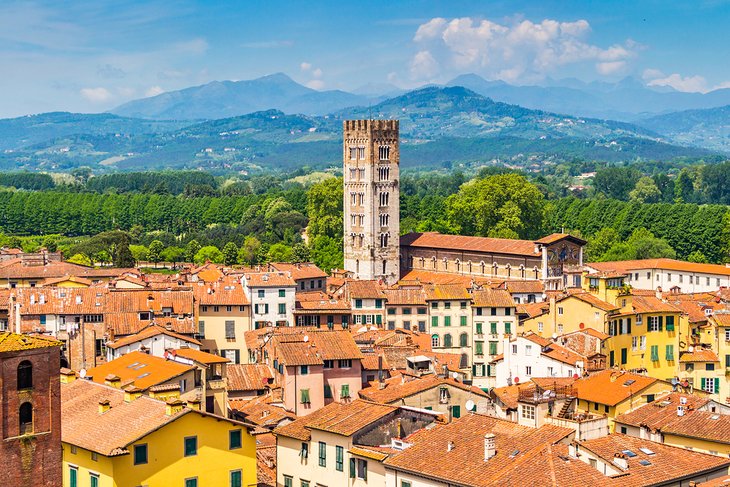
Unlike most walled cities in Europe, the walls around Lucca are not medieval but were built in the Renaissance era, in the 16th century. Built wide to support heavy artillery and planted with trees to help support the earthwork, the walls made a perfect promenade in the 19th century, when they were no longer needed for defense.
Today, they are one of Lucca's greatest attractions. There's plenty more to see and do here: an oval piazza surrounded by tall houses that were built into the walls of a Roman arena, churches filled with priceless art, the home of operatic composer Giacomo Puccini, and some of Tuscany's most beautiful examples of Romanesque architecture.
The foremost Romanesque church is San Michele in Foro, and don't miss climbing the tall Guinigi Tower, where there's a tree-shaded mini park at the top.
Buses and trains take almost the same time, about 80—90 minutes. Direct buses leave Porte Nuove Belfiore in Florence every hour or two, and direct trains depart Santa Maria Novella at about the same frequency. As the routes vary, some direct trains take longer.
Driving from Florence to Luca is a straightforward trip of about 50-70 minutes on the A11 highway. Check local conditions, because the slightly longer A1 may get you around traffic congestion close to Florence. Driving also makes it easier to make stops in the charming towns of Prato and Pistoia.
5. Cinque Terre
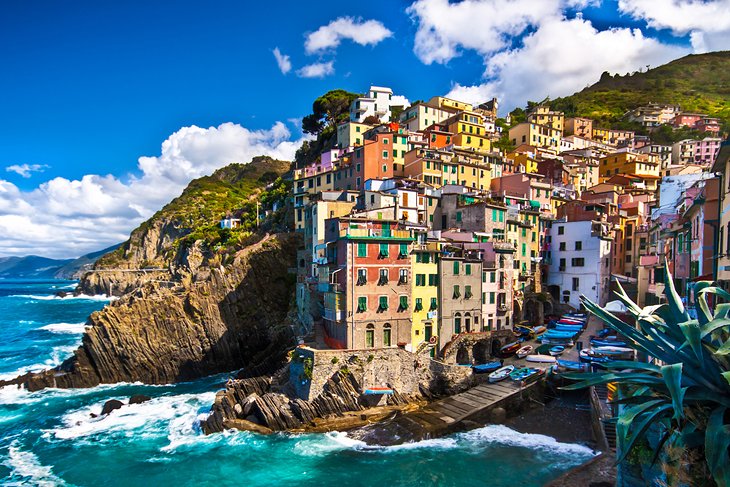
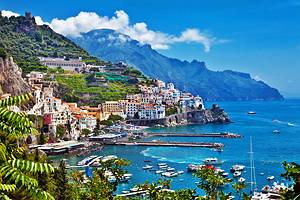
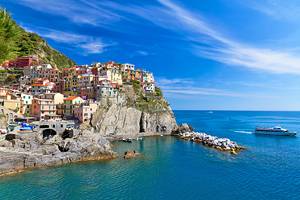
The five picturesque villages that stud the steep hillsides and cliffs above the Ligurian Sea have taken on an iconic status. Monterosso al Mare, Vernazza, Corniglia, Manarola, and Riomaggiore are joined by a railroad that burrows through the headlands between them, and by a trail skirting the vine-cloaked fields, and in places, carved into the steep cliffs.
Even though they are popular with tourists, the villages of the Cinque Terre retain their feeling of remoteness and their charming, narrow lanes lined by colorful houses. Tiny harbors protect fishing boats, and some offer places to swim between hikes.
The land and culture of the Cinque Terre is protected as a national park and has been designated a UNESCO World Heritage Site. Without the traditional must-see sights, churches, or museums, it's the Cinque Terre's natural beauty and carefree atmosphere that are the attraction.
An easy way to get there is on a Cinque Terre Semi-Private Day Trip from Florence, a full day that includes round-trip travel in an air-conditioned minivan, a cruise between Manarola and Vernazza, entrance fees to the coastal walking path, and time to explore the villages. A maximum of eight people guarantees personal service.
For a more active experience, join the Cinque Terre Hiking Day Trip from Florence to hike a 5.5-kilometer stretch of the famed Cinque Terre walking path between towns with a guide. The tour includes a 40-minute boat ride along the Riviera, a train ride between towns, time for a swim, and transport from Florence on an air-conditioned coach.
The trip from Florence's Santa Maria Novella station to La Spezia by direct train takes about two hours, and there you must change to the 5 Terre Express train, a frequent service that connects all the villages. If you plan to stop at all five, get the Cinque Terre Train Card for unlimited stops; the card also includes admission to the National Park trails without the usual fee.
Author's Tip: The train route from La Spezia along the coast is very scenic; for the best views, choose the left side of the train heading north and the right side going south.
6. Monti del Chianti (Chianti Hills)
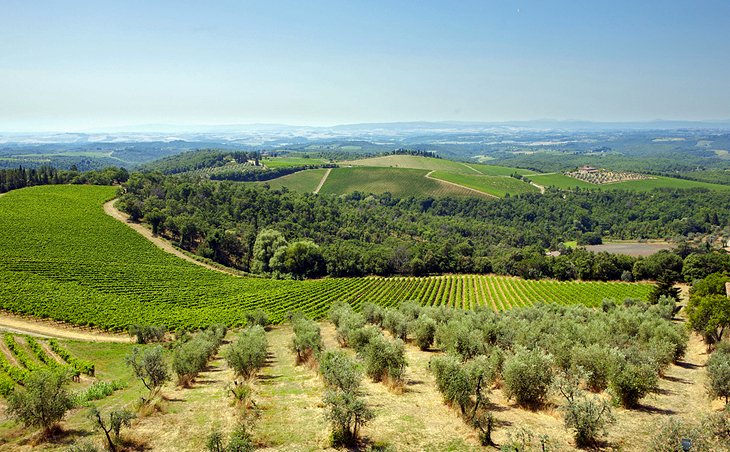
A drive through the Monti del Chianti takes you through some of the most attractive scenery in Italy. The Chianti Hills, with their olive groves and woods of chestnut and oak, lie between Florence and Siena, and Route 222, the Via Chiantigiana, twists and turns through this region.
Greve, in the heart of the Chianti Classico region, has an impressive piazza lined with arched colonnades, and beyond Greve, the landscape grows even more picturesque. An outstanding viewpoint is from the medieval fortress in Castellina.
7. San Gimignano
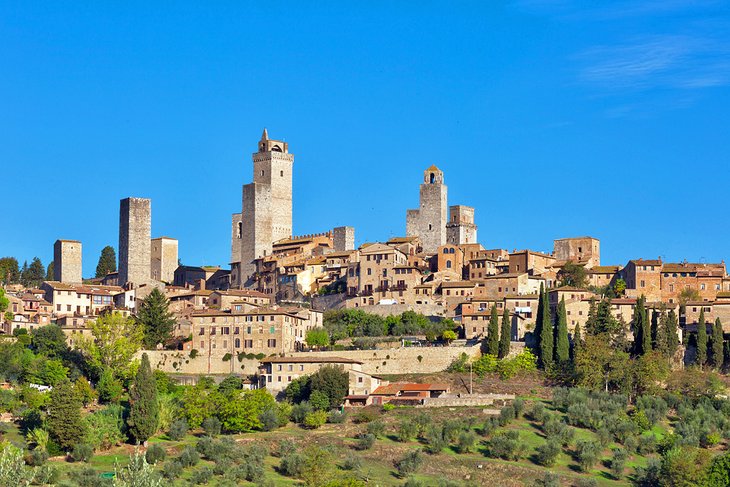
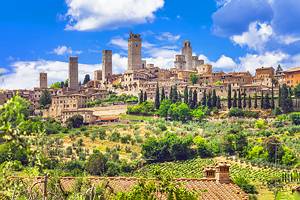
Easy to recognize from its skyline bristling with medieval towers, San Gimignano is the postcard village of the Tuscan hill towns. At its height in the Middle Ages, San Gimignano was a stop on the Via Francigena, the main pilgrimage route to Rome, and when the flow of pilgrims slowed in the late Middle Ages, the town became a nearly forgotten backwater.
As a result, its medieval towers, walls, and churches were not torn down to make room for new development, so 13 of its original 70 towers, its largely intact 13th-century walls, the Romanesque Knights Templars' Church of San Iácopo, and even a 14th-century Herb Pharmacy and Herbarium remain for tourists to enjoy.
San Gimignano is about 50 kilometers southwest of Florence, and not far from the less-visited hill town of Volterra, so the two are easy to combine on a day trip.
You can get to San Gimignano by bus in about 70-80 minutes (up to 2 hours in the summer) from the bus terminal next to Santa Maria Novella station in Florence. You'll need to change lines in tiny Poggibonsi, and as you can't reserve ahead, there is no guarantee that you will get a seat. For this reason, it's best to leave very early in the day, especially in high tourist season or on weekends.
8. Assisi
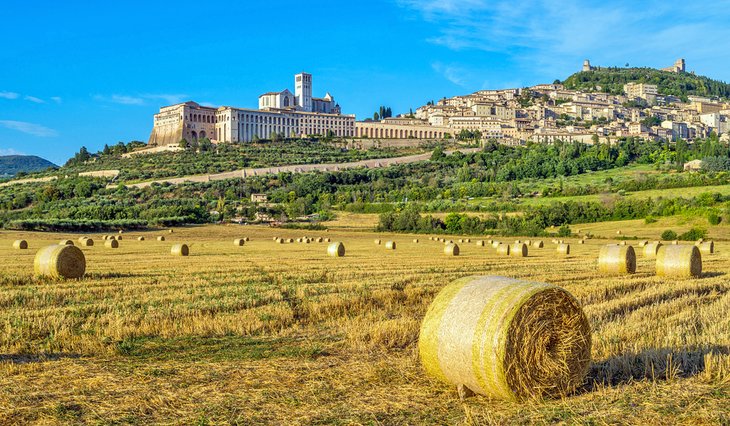
Although most tourists have heard of Assisi because of its connection with St. Francis of Assisi, and many make the trip as part of a pilgrimage or religious tour, they are often surprised to find that Assisi is far more than the popular saint. Because of his presence and legacy, Assisi attracted the great artists, inspired to commemorate his work with their own.
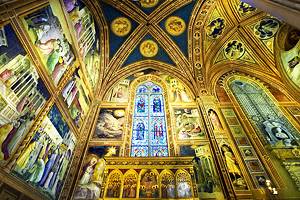
The Basilica di San Francesco, built over the saint's tomb in the early 13th century, is one of the world's most important pilgrimage sites, decorated over the centuries by artists including Giotto, Cimabue, and Andrea da Bologna. The town's Cathedral of San Rufino, from the 12th and 13th centuries, has outstanding early medieval stone carvings of animals, mythical beasts, foliage, and saints.
Convent of Santa Chiara and the 9th-century church of Santa Maria degli Angeli have St. Francis connections, as well. You can combine a tour of Assisi with a visit to the charming nearby Umbrian town of Cortona on an Assisi and Cortona Day Trip from Florence that includes stops at the Basilica, Convent of Santa Chiara, and Santa Maria degli Angeli.
The 2-hour drive to Assisi is by far the quickest way to get there from Florence on your own. Buses and trains take a minimum of 3 hours and 45 minutes each way, making an exhausting day trip without much time for sightseeing
Read More: Top Tourist Attractions in Assisi
9. Venice
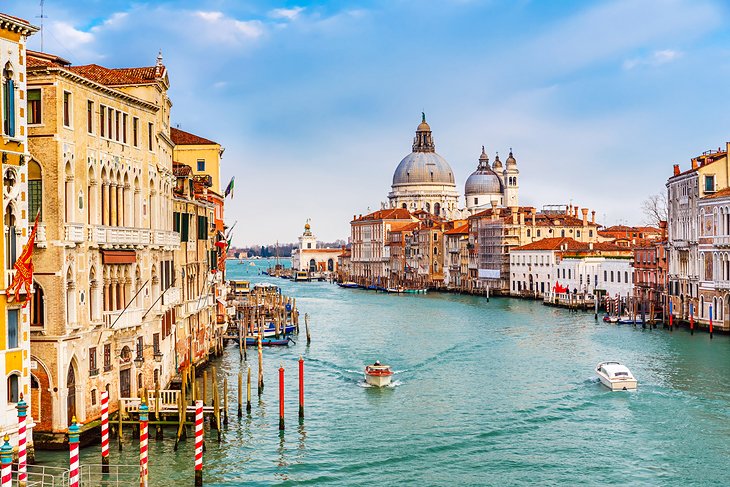
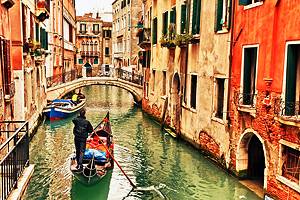
While Venice may seem a long way from Florence, Italy's fast and efficient rail system makes Venice a viable day trip. Direct trains between the cities are frequent, and leaving Santa Maria Novella station after 8am will put you in Venice by 10:30. Step out of the station and right onto a Vaporetto for a scenic ride the entire length of the Grand Canal, past the most beautiful palazzi, to alight at St. Mark's Square.
The day is yours to wander the atmospheric streets and passageways, visit St Mark's Basilica, take a tour of the Doge's Palace, browse the shops of San Polo, even take another vaporetto ride to watch the glassblowers and do some shopping on the island of Murano. Dine in Venice, watching the lights come on along the Grand Canal, or take a late afternoon train back to Florence for dinner
Read More: Top Tourist Attractions in Venice
10. Pistoia
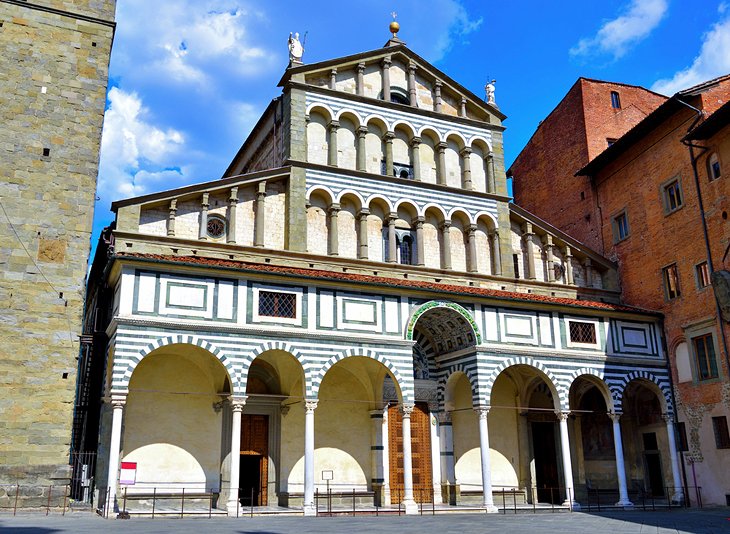
It's the abundance of remarkable medieval churches that attract tourists to Pistoia, about halfway between Florence and Lucca. For a relatively small city, it has more than its share of outstanding art from the Middle Ages.
Begin at the Cattedrale di San Zeno, built in the 12th to 13th century, whose facade and arched portico is decorated with panels of majolica and a glazed terra-cotta lunette by Andrea della Robbia.
From the main church, you can enter the Cappella di San Iácopo to admire a magnificent silver altar that shows a succession of styles from Early Gothic to Renaissance. Opposite the cathedral is the 14th-century baptistery, designed by Andrea Pisano in alternating bands of white and green marble, and a small rose-window.
Pistoia is 30-45 minutes by car on the A1 and less than an hour by train; direct trains depart every half hour from Santo Maria Novella station. The Pistoia train station is a 10-15-minute walk from the Cathedral. If you're driving, you'll have to park in one of the free lots outside the city and take the free shuttle into the historic center.
Read More: Top Tourist Attractions in Pistoia
11. Arezzo
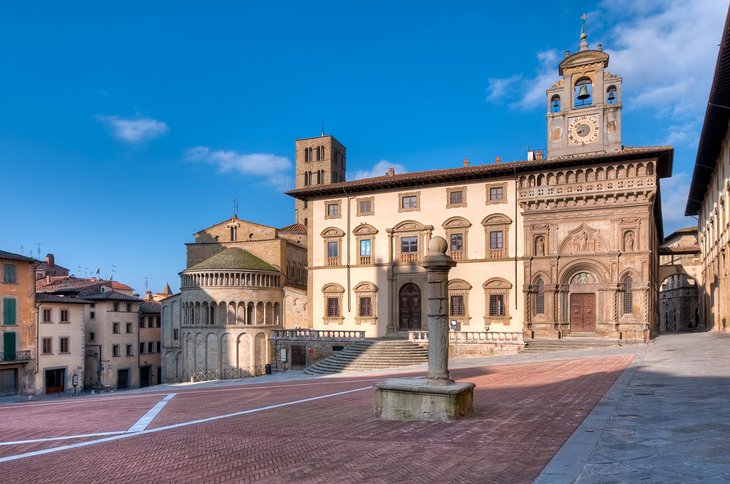
Only about 80 kilometers from Florence, the town of Arezzo was a Roman outpost, but dates back to Etruscan times. You'll find reminders of all these eras in its museums and churches, along with art by some of Italy's great names.
Cimabue worked in Arezzo; the architect/artist Vasari lived here; and Andrea della Robbia, Piero della Francesca, and Nicola Pisano all contributed to its treasury of medieval and Renaissance art. The cathedral is especially known for its remarkable stained-glass windows and the frescos in the church and sacristy.
Direct trains depart Santa Maria Novella station almost hourly, taking 1 to 1.5 hours to reach Arezzo. You can drive there in less than an hour.
Author's Tip: The parking lot on Via Giuseppe Pietri has an escalator to take you to the historic center.
12. Prato
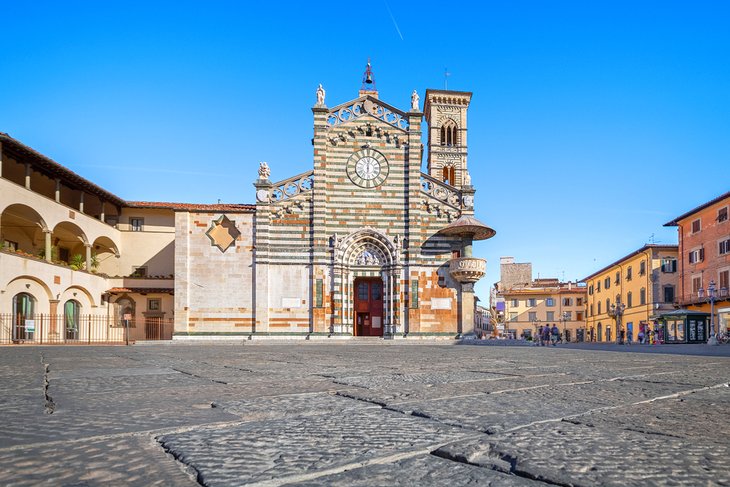
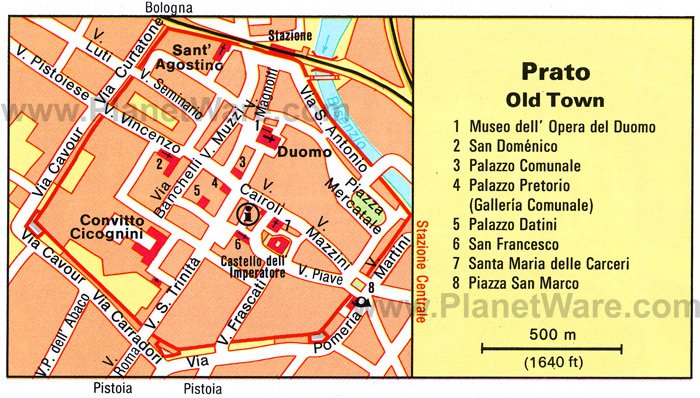
Less than 25 kilometers from Florence, Prato is a center for art, both historic and contemporary. The choir of its cathedral is decorated with two outstanding cycles of frescoes that Filippo Lippi painted between 1452 and 1466, when he was at the height of his artistic career. The Cappella del Sacro Cíngolo is illuminated with 14th-century frescoes by Agnolo Gaddi.
There are glazed terra-cotta panels by Andrea della Robbia in the church of Santa Maria delle Carceri, and the Museo Civico (Municipal Gallery) contains works by Filippo Lippi and Bernardo Daddi.
The Museo di Pittura Murale (Museum of Mural Painting) concentrates on the art of fresco painting, and the Centro per l'Arte Contemporanea Luigi Pecci (Museum of Contemporary Art) explores painting, sculpture, design, video, and other forms of creative expression.
Prato is 20-25 minutes by car on the A1 and 35 minutes by train; direct trains depart every half hour from Santo Maria Novella station.
Address: Piazza del Duomo 49, Prato
13. Monteriggioni
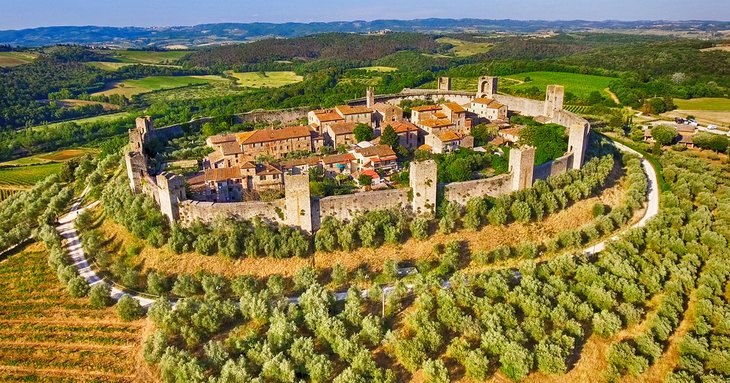
Crowning a hilltop and completely encircling the medieval town, the picture-perfect castle of Monteriggioni looks much as it did when it was new, in the 13th century. All 14 of its square towers still overlook the valley, as they were intended to do when the Sienese built it to warn them of approaching armies that might threaten the city.
Inside the walls, in Piazza di Roma, the imposing Church of Santa Maria Assunta dates from the same time as the castle: Romanesque with some Gothic embellishments.
To experience a bit of the city's original atmosphere, visit during the July Festival of Monteriggioni, when the streets are filled with medieval costumes, minstrels, music, games, performers, dancing, and craftspeople.
Monteriggioni is 45 minutes from Florence by car or about 1.5 hours by bus. These are infrequent, however, so you need to plan the times carefully. Buses depart from Firenze Autostazione, next to the train station
14. Montecatini Terme
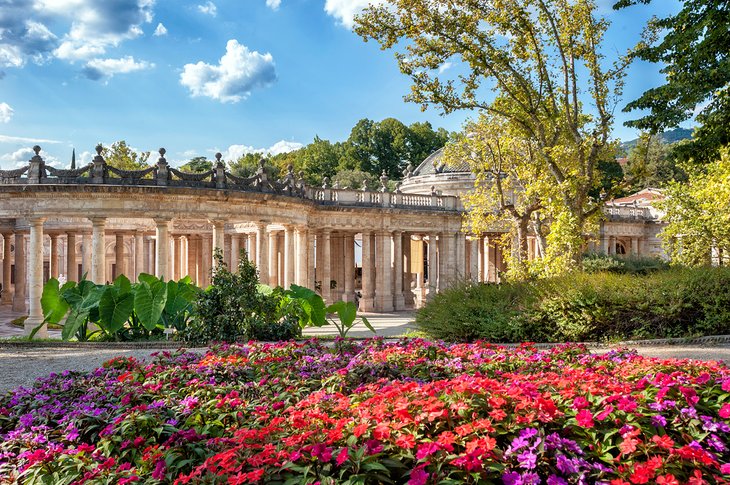
One of the most famous spas in Europe, the mineral springs at Montecatini Terme were used by the ancient Romans, and by the end of the 18th century had grown to an elegant and luxurious spa resort – and the largest one in Italy.
The colonnaded pavilions are set among equally beautiful gardens that you can stroll through, even if you are not using the spa. There are occasional exhibitions in the library and concerts in the evening. The Accademia d'Arte is a small art museum.
On a hilltop above the Terme is the medieval village of Montecatini Alto, which you can reach via charming funicular that dates to the early 20th century. Montecatini Terme is about halfway between Florence and Lucca.
Montecatini Terme is 35 minutes by car on the A1 and less than an hour by train; direct trains depart every half hour from Santo Maria Novella station. You can get there by bus from Firenze Autostazione in about 45 minutes.
Author's Tip: Parking is free on the centrally located Via Cimabue.
15. Villa Poggio a Caiano
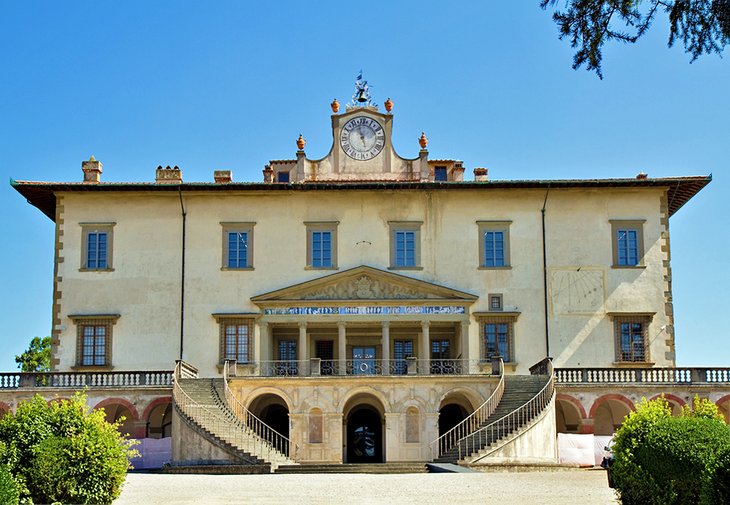
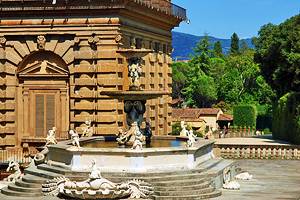
When the summer heat became too oppressive in Florence, the Medicis moved to their summer villas in the surrounding hills. They commissioned the best architects, artists, and garden designers to create summer palaces surrounded by acres of manicured gardens and hunting parks. The grandest of these is Villa Poggio a Caiano, about 22 kilometers from the center of Florence on the way to Pistoia.
Begun in 1485 by Lorenzo the Magnificent, the villa represents many features of the new Renaissance architectural ideas, especially its relationship with the outdoors and its natural surroundings. Instead of an enclosed central courtyard, the villa has an open loggia running along the outside of all four faces of the building. This turns the building's focus to the outdoors, engaging the surroundings in the architecture itself.
The theme is carried out in the villa's central hall, where frescos from the early 1500s feature rural scenes along with classical subjects and scenes from the lives of Cosimo and Lorenzo de Medici.
Along with the lavishly decorated apartments, the villa houses the Museum of Still Life on the second floor.
Frequent buses from Porte Nuove Belfiore station in Florence will get you to Villa Poggio a Caiano in about 35 minutes. You can drive there in about 50 minutes via SS 67 and Via Pistoiese.
Address: Piazza dei Medici 14, Poggio a Caiano
Map of Day Trips from Florence
More Related Articles on PlanetWare.com
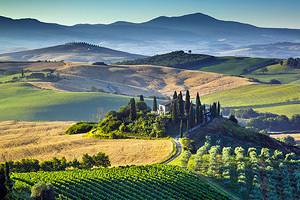
More Places to Visit in Tuscany: Florence also makes a good base for several overnight trips, perhaps combining several of the hill towns or traveling south to some of the towns described in our page on day trips from Siena. For even more ideas of things to do, see our page on the top tourist attractions in Tuscany.
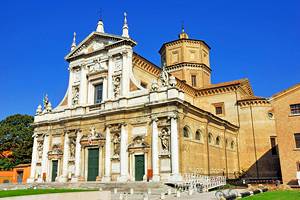
Where to Go from Florence: Some of the top tourist attractions in Italy are easy to reach from Florence. Follow SR 302 through Borgo San Lorenzo, where you'll find another former Medici palace and garden, to Ravenna, with its spectacular churches lined in Byzantine mosaics.