15 Top-Rated Day Trips from Lisbon
Author Paul Bernhardt lives in Portugal and is based in Lisbon.
Beyond Lisbon and its long list of attractions lies a wealth of day trip options. Some of the most rewarding tourist destinations can be reached within an hour of the city center, either by car, bus, or train. Surrounding Lisbon are ancient castles, sumptuous palaces, and a host of other historic monuments waiting to be discovered.
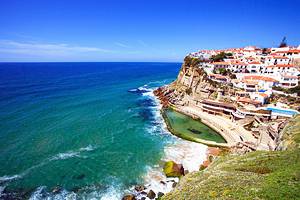
Along the coast, you'll find traditional fishing villages where the way of life has changed little over the centuries, as well as some of the region's liveliest resorts fringed with beaches of golden sand. Away from the crowds are unspoiled nature reserves, rivers, and estuaries teeming with colorful flora and fauna — havens of wildlife that can be explored on foot or by boat.
Whether heading north or south from Portugal's capital, discover the best places to visit with our list of the top day trips from Lisbon.
- 1. Sintra
- 2. Palácio Nacional de Queluz
- 3. Cascais
- 4. Évora
- 5. Batalha
- 6. Fátima
- 7. Mosteiro Pálacio Nacional de Mafra
- 8. Costa da Caparica
- 9. Serra da Arrábida
- 10. Sesimbra
- 11. Reserva Natural do Estuário do Sado
- 12. Óbidos
- 13. Nazaré
- 14. Alcobaça
- 15. Peniche
- Tips and Tours
- Map of Day Trips from Lisbon
- More Must-See Destinations beyond Lisbon
1. Sintra
Arguably the most rewarding day trip from Lisbon is to Sintra. About 30 kilometers northwest of the city center, the town is easily reached by train with direct connections operating daily out of Lisbon's Rossio railway station. The journey takes around 40 minutes.
Sintra's rugged, verdant beauty; its ancient castle; and its collection of historic palaces are recognized as a UNESCO World Heritage cultural landscape.
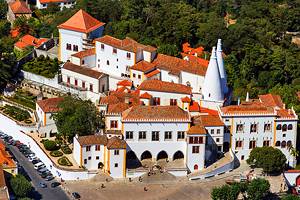
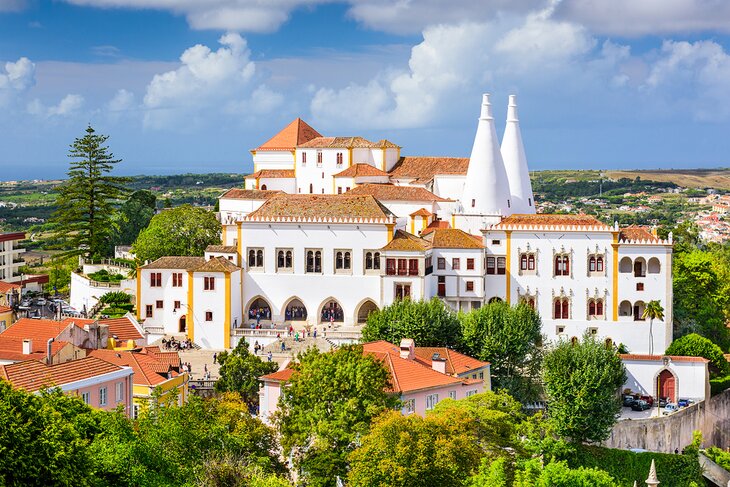
You can begin your day of sightseeing by visiting the Palacio Nacional de Sintra. Centrally located in the old town, this impressive late-14th-century palace is characterized by its tapering twin chimneys. Once the summer retreat of the kings and queens of Portugal, this former royal residence is a great first stop before exploring Sintra's many other attractions. Allow a good hour to absorb its numerous halls, rooms, and salons.
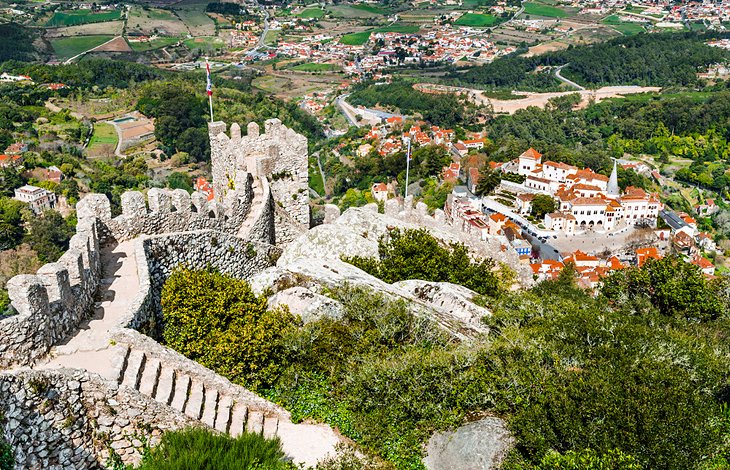
Unless you're up for some hill walking consider taking a shuttle bus up to the Castelo dos Mouros. Dating from the 8th century, the Moorish Castle stands prominently above the old town. You can walk the ancient battlements, and the views across the Serra de Sintra mountain range and the Lisbon plains below are breathtaking.
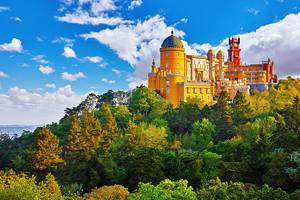
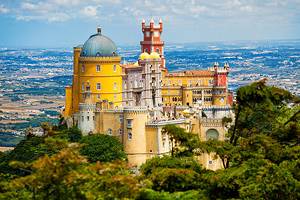
Crowning the Serra is the fantastical, Disneyesque Palácio da Pena. Considered by many to be the highlight of their visit to Sintra, the Pena Palace can also be reached by bus or on foot by following the nature trail that meanders steeply through a blanket of picturesque woodland. Built in the mid-19th century by the German Baron von Eschwege, this also became a favorite retreat for vacationing monarchs, a fact reflected by the lavish interior and opulent décor. You could easily spend a couple of hours up here, soaking up the atmosphere and taking in more incredible views.
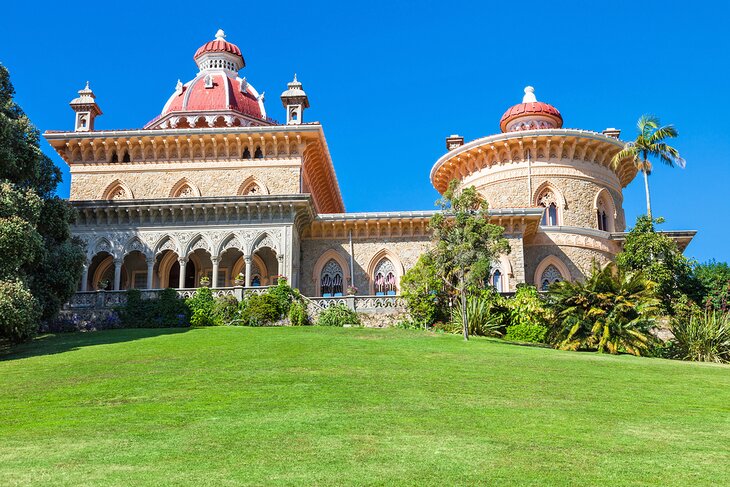
If you've purchased a shuttle bus ticket it's quite easy to call in on Sintra's other great palace at Monserrate. Here, it's the gardens that dazzle rather than the building itself, landscaped in the late 18th century by the English author William Beckford.
Back in the old town and within pleasant walking distance of the central square along a relatively flat road is Quinta da Regaleira. Again, it's the actual grounds that delight, although the turreted mock-Manueline Palácio dos Milhões is certainly worth investigating.
With plenty of cafés and restaurants to choose from, you'll certainly want to have lunch in Sintra. But dinner here can be particularly memorable, especially given that the great romantic poet Lord Byron once declared the destination a "glorious Eden."
If you are not the do-it-yourself type and don't want the hassle of catching a train and a bus and finding your way around, book a Sintra and Cascais Day Trip from Lisbon. This tour takes you to Sintra, the Sintra Natural Park, the Pena National Palace and Pena Nature Park, the cliffs of Roca Cape at the westernmost point of continental Europe, and a drive along the Atlantic Coast, with a stop at the town of Cascais.
2. Palácio Nacional de Queluz
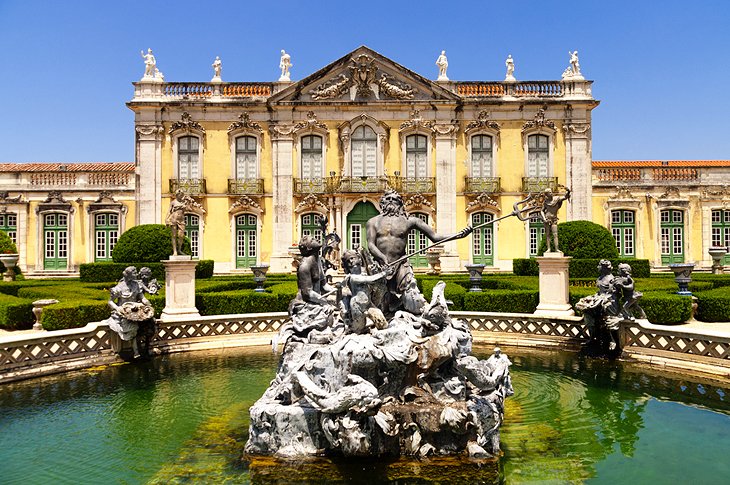
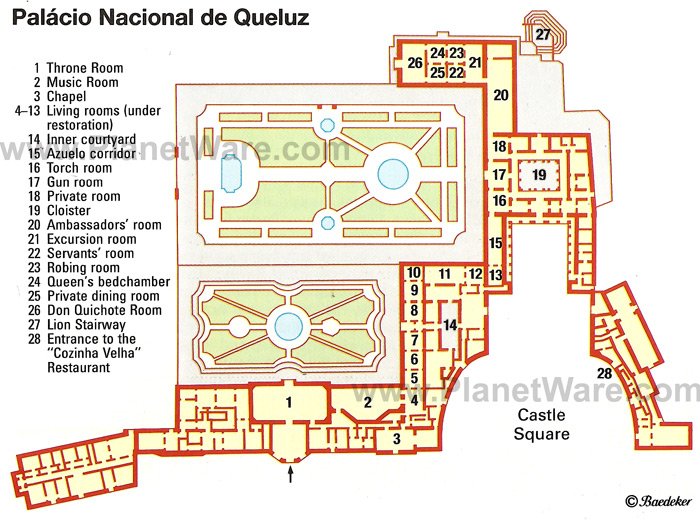
The National Palace of Queluz lies around 14 kilometers northwest of Lisbon and 16 kilometers southeast of Sintra. Built between 1747 and 1794 for King Pedro and his wife, later Queen Maria I, this is one of Portugal's most sumptuous palaces.
Originally designed by Mateus Vincente, a pupil of Johann Friedrich Ludwig, who built the Mosteiro Pálacio Nacional de Mafra, the Palácio Nacional de Queluz is a landmark of both Portuguese architecture and landscape design, although French architect Jean-Baptiste Robillon later added lavish interior flourishes and the formal gardens.
As much a museum as a historic monument, the significant collection reflects the extravagant taste of the 18th- and 19th-century courts and includes Baroque, Rococo, and Neoclassical pieces. Tour highlights include the elegant Throne Room, which dates from 1774. Embellished with mirrors, paintings, and gilded statues all set under a beautiful ceiling, this is the largest of the palace's three staterooms.
The grand Sala do Embaixadores, with its carved gilt pinewood decoration, porcelain chinoiserie, and stunning trompe l'oeil ceiling is where diplomats and foreign ministers were received. The exquisitely ornate Dressing Room and Dom Quixote Room, where King Pedro VI was born and died are especially exotic in their decoration.
Outside, the serene gardens, which were used for hosting concerts and other royal get-togethers, are adorned with topiary, fountains, and the largest collection of sculptures by English John Cheere (1709-1787) outside of England. On certain days, the grounds provide the setting for virtuoso demonstrations of horsemanship by the Portuguese School of Equestrian Art, which is based at the palace. In addition, the palace also hosts displays of falconry.
Palácio Nacional de Queluz can be reached by taking the Sintra line train from Rossio to Queluz-Belas station. A 15-minute walk following the signs will lead you to the palace and gardens.
Address: Largo do Palácio, Queluz
3. Cascais

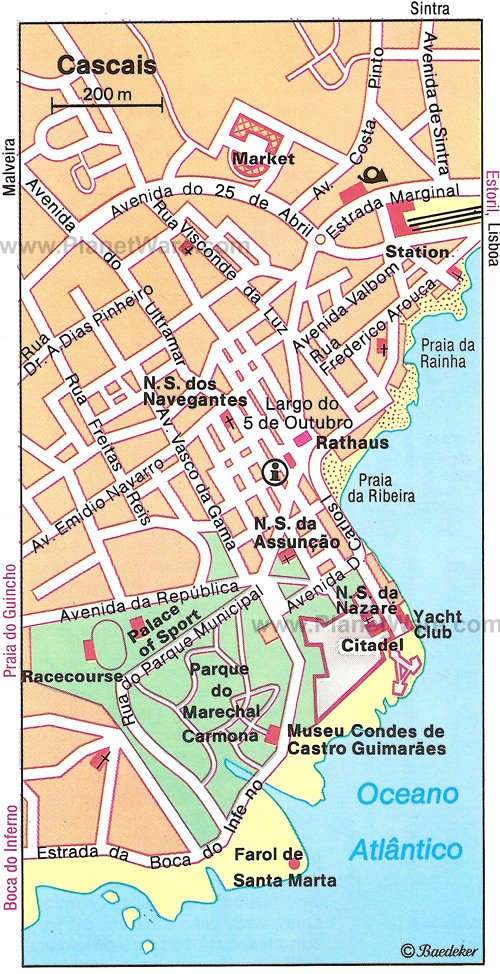
The lively coastal resort of Cascais lies 25 kilometers west of Lisbon. It's a popular day trip destination for residents and visitors alike and is conveniently located at the end of the Cais do Sodré-Cascais railway line. The excursion itself is a pleasant experience, with the line hugging the coast, and trains calling at various seaside towns along the way, including Carcavelos and Estoril.
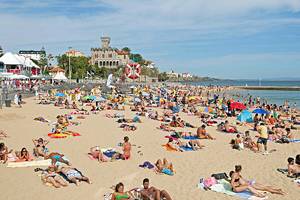
Draped around a shallow bay with its own sandy beach, Cascais combines tradition with nobility. A busy fishing port since medieval times, Cascais evolved in the 19th century when King Luís I moved his summer activities to the Palácio da Cidadela, the town's 17th-century waterfront fortress. Soon afterward, a slew of grand mansions sprang up in and around the town as Cascais took advantage of the royal seal of approval.
Today, these opulent properties stand side by side with rows of former fishermen's cottages. The citadel is now a plush hotel and a thriving cultural space open to the public, and Cascais still enjoys a rather glamorous, cosmopolitan reputation.
The resort is easily explored on foot, and the old town is particularly alluring. Get lost on purpose by wandering the narrow lanes that snake away from the harbor before heading for the leafy Parque do Marechal Carmona and the nearby spruce and engaging Museu do Mar-Rei D. Carlos, where the association between the town and the sea is imaginatively illustrated by a collection of model boats, ancient maps, and treasure salvaged from ships wrecked along the coast.
Nearby is the modernist landmark Casa das Histórias, a museum dedicated to Paula Rego, Portugal's most controversial living artist. The permanent collection of vivid pastels, engravings, and collages are compelling but sometimes disturbing and better suited to a mature audience. Works by Rego's late husband, Victor Willing, are also displayed. The Sea Museum and the Paula Rego House of Stories and Pictures are both free to enter.

From the park, it's a pleasant walk to the Marina de Cascais. The marina esplanade sits under the impressive walls of the fortress and is lined with an assortment of cafés and restaurants. After admiring the expensive yachts and motor boats, carry on to the Santa Marta Lighthouse, which houses a modest but engaging museum. It's possible to climb the distinctive blue-and-white striped tower for a splendid coastal panorama.
Nearby, another free-to-enter visitor attraction, the Museu-Biblioteca Conde Castro Guimarães, is worth a diversion for its ornate rooms decorated with beautiful Indo-Portuguese furniture, paintings, and antiques. The library houses some rare, illuminated 16th-century manuscripts, with one dating from 1505.
About three kilometers west of Cascais town center, along the broad Avenida Rei Humberto de Itália coastal road, is Boca do Inferno (Mouth of Hell), a chasm carved out of the cliffs. Seawater crashes into the caves below sending a spectacular plume of spray high into the air. The accompanying boom resembles the sound of cannon fire.
Farther north is Praia do Guincho, one of the region's most spectacular beaches and famed as a world-class surfing and windsurfing destination. In the distance, along the Sintra coast, is Cabo da Rocha, the most westerly point of mainland Europe. A lighthouse tops the windblown headland.
4. Évora
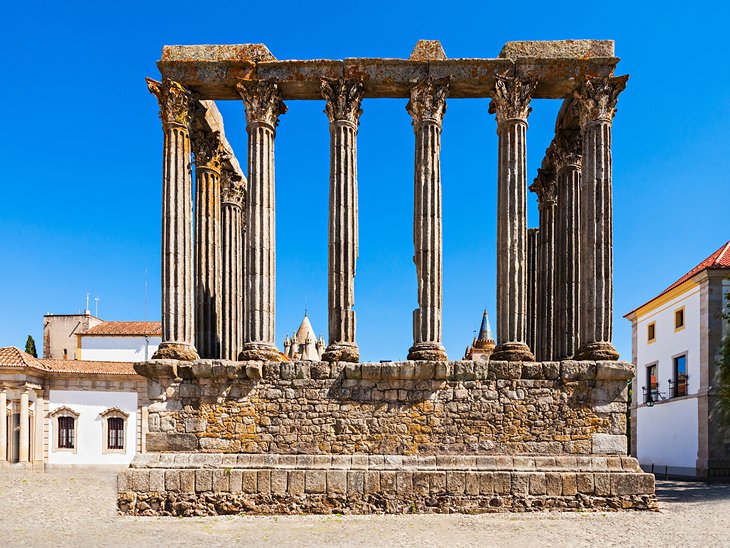
Long a favorite with tourists and just an hour's drive from Lisbon, Évora, the Alentejo's regional capital, is blessed with some of the most impressive attractions in Portugal. Indeed, UNESCO has awarded the old center World Heritage status for the wealth and rarity of the historic monuments.
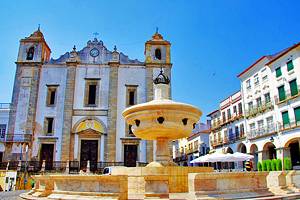
The Old Town is small and compact and a delightful place to spend a morning or afternoon wandering around the slightly confusing warren of ancient streets. Several of Evora's must-see attractions include the Sé, its 12th-century cathedral; the Museu de Évora; and the iconic Roman Temple. You'll find them off the main square, along with a pleasant park offering fantastic views out over the surrounding countryside.
Make your way down to the Praça do Giraldo and snag a patio table here under the shadow of the 16th-century Igreja de Santo Antão. Other wonderful al fresco dining options are mere steps away down Alcarcova de Baxio.
All these sights and more can be explored at leisure by joining the Small-Group Évora Day Trip from Lisbon with Olive Oil Tastings — a wonderful introduction to the destination.
5. Batalha
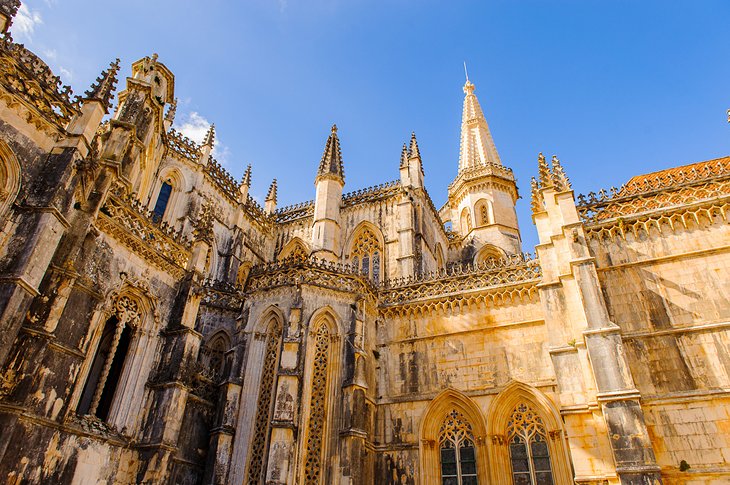
One of the jewels in Portugal's cultural heritage crown is located in this quiet provincial town — Mosteiro da Batalha (Battle Abbey). A UNESCO World Heritage Site attraction, Santa Maria da Vitória, to give its full name, stands as a magnificent example of Portuguese Gothic architecture replete with dazzling Manueline flourishes.
Built from honey-hued limestone to commemorate João I's 1385 victory over Castile at Aljubarrota, construction began in 1388 and took almost a century to complete.
You enter through an impressive portal decorated with religious motifs and statues of the apostles in intricate late-Gothic style. The Gothic character is further underlined in the Claustro Real (Royal Cloister). Note the Capelas Imperfeitas, and look out for the towering 15-meter-high portal with its filigree latticework.
Another highlight is the Capela do Fundador (Founder's Chapel), which houses a royal pantheon. It contains the tomb of João I and his English wife, Philippa of Lancaster, as well as the remains of Prince Henry the Navigator.
Afterward, if time permits, make a point of visiting the small hamlet of São Jorge, four kilometers south of Batalha. It's near here that the Battle of Aljubarrota took place and the reason the abbey was commissioned in the first place. A useful interpretation center explains the background behind the bloody encounter.
6. Fátima
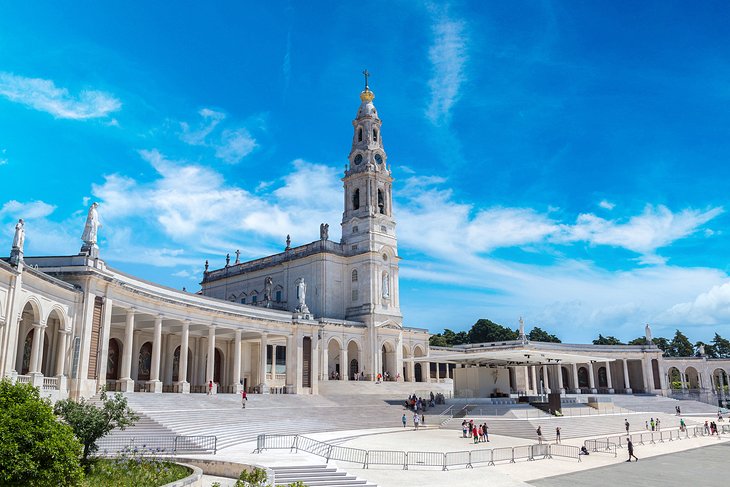
One of the most important pilgrimage destinations in the Catholic world, the Santuario de Fatima (Sanctuary of Fátima) is a devotional shrine that attracts thousands of devotees on the 12th and 13th of May and October during the annual pilgrimage to this little farming village, set deep in the heart of Portugal's Estremadura region.
This is the biggest religious event of its kind in Spain and on par with Lourdes in France. It commemorates the widely-believed appearance of the Virgin to three shepherd children on May 13, 1917. The children, Lúcia Santos and her young cousins, Jacinta and Francisco, were ordered by a shining figure in an oak tree to return to the same tree on the same day for six months, with the apparition appearing a further five times. By now word had spread of the divine visit, and on their final appointment, the youngsters were accompanied by 70,000 pilgrims.
The sanctuary is dominated by the mighty Neo-Baroque Basílica de Nossa Senhora do Rosário de Fátima, which holds the tombs of the revered threesome in the Capela das Aparições (Chapel of the Apparitions), built on the spot where the Virgin supposedly appeared.
In front is a huge esplanade twice the size of St. Peter's Square in Rome. It's on this gargantuan concourse that the faithful gather every year to celebrate the apparition's earthly jaunt. Every hotel, hostel, campsite, café, and restaurant in the vicinity heaves under the weight of the throng. The basilica, however, attracts a steady flow of worshippers and religious tourists throughout the year, drawn by their faith and a desire to stand in one of the most venerated destinations in Christendom.
7. Mosteiro Pálacio Nacional de Mafra
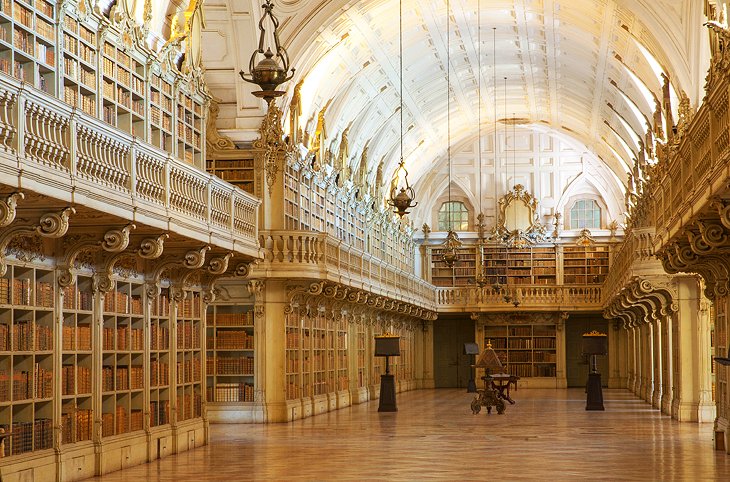
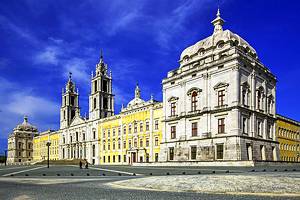
One of Portugal's most impressive historic monuments — and certainly one of its largest — the Mosteiro Pálacio Nacional de Mafra overwhelms the small town of Mafra, 40 kilometers northwest of Lisbon.
This mighty Baroque palace dates from the early 18th century. It was commissioned by King Joao V and originally intended as a simple monastery, but as royal coffers began to overflow with wealth from Brazil, the extravagant monarch extended the floor plans to include a sumptuous palace and a magnificent basilica.
Exploring Mosteiro Pálacio Nacional de Mafra requires a good two hours of your time, but you can draw out the day by combining a tour with a visit to the lively seaside town of Ericeira, just 12 kilometers west of Mafra. Blessed with a series of fine sandy beaches and a picturesque waterfront, Ericeira's association with Mafra is tangible — Portugal's last king, King Manuel II, fled the palace on October 5, 1910, and boarded a ship in the harbor bound for England, fleeing into exile as Portugal's monarchy finally collapsed.
An irregular bus service connects Lisbon and Sintra with Ericeira and Mafra, so it's more practical to travel by vehicle.
8. Costa da Caparica
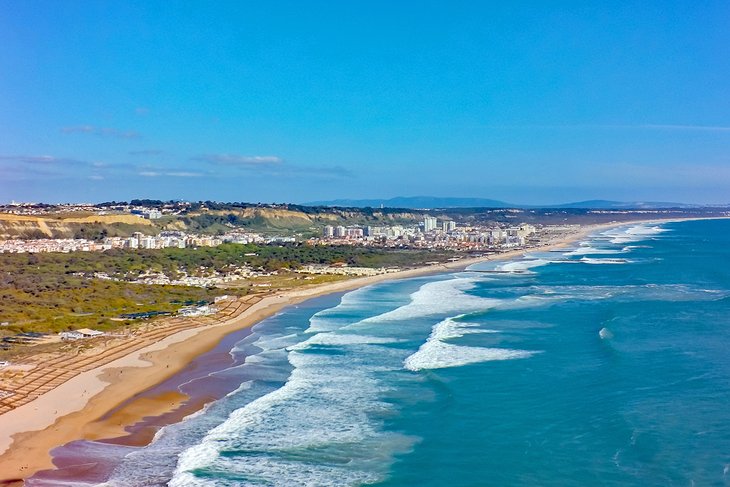
The long, broad band of sand known as the Costa da Caparica is Lisbon's most popular summer playground. At its hub is the seaside resort of Caparica. During the high season, and on weekends, this place is packed with locals escaping the heat of the city. A laid-back, family atmosphere prevails, and if you don't mind crowds, this is certainly a holiday destination worth investigating.
Caparica is located across the river, 18 kilometers south of Lisbon. Regular express buses depart from Cacilhas, on the south bank, and the journey (traffic permitting) takes around 30-40 minutes. A slower service that will get you there in around an hour leaves from Praça de Espanha, in the city center.
If you're driving, be aware that parking space at Caparica is fiercely contended. The stretch of sand is immense and backed by rolling dunes. Those beaches nearest the resort fill up quickly, and if you're seeking solitude, you'll need to head for the costa's southern reaches. A mini-railway (Comboio da Praia) runs along the dunes to Fonte da Telha. Alight at the end of the line for peace and quiet.
Some excellent beachfront cafés and restaurants serve Costa da Caparica, and many stay open during the slower winter months. Off-season, the water is too chilly to swim in, although that doesn't deter die-hard surfers. The upside, however, is that the blissfully empty beaches make for some exhilarating walks.
The south bank of the River Tagus is also the location of one of Lisbon's more unusual visitor attractions: the giant Cristo Rei (Christ the King) monument, a mirror image of the more famous and much larger Cristo Redentor statue in Rio de Janeiro. Near the town of Almada and the Ponte 25 de Abril suspension bridge, the towering statue, inaugurated in 1959 as part of a chapel and library complex, was commissioned by the church in 1940 in recognition of Portugal's decision not to enter the Second World War.
Standing 28 meters tall, the statue of Christ, arms outstretched like its Brazilian counterpart, is itself mounted on an enormous 82-meter pedestal. The monument is visible from various viewpoints in the city and is illuminated at night.
But to really appreciate this mini Christ the Redeemer, take the lift and then climb the few steps to the top of the pedestal. From here, the panorama across the bridge, the river, and the Portuguese capital are truly dramatic (the best time to photograph the city is during the afternoon, when the sun is behind you).
The easiest way to get to the monument is via the ferry from Cais do Sodré to Cacilhas. You can then catch a bus or hail a taxi up to the statue. Alternatively, you can walk four kilometers from the harbor.
9. Serra da Arrábida
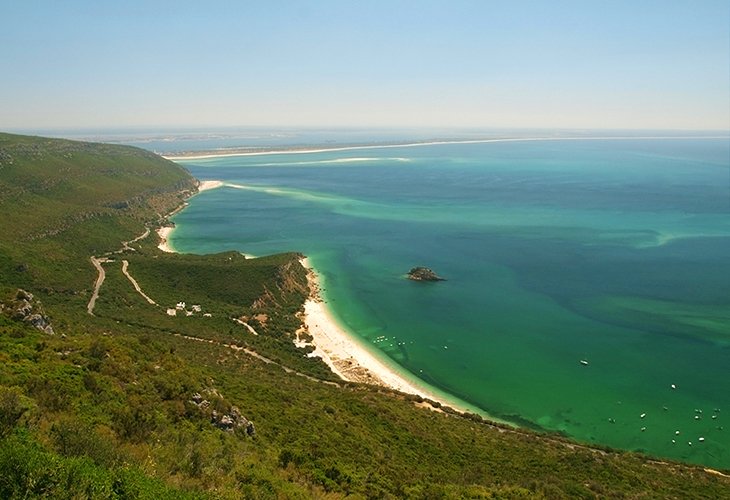
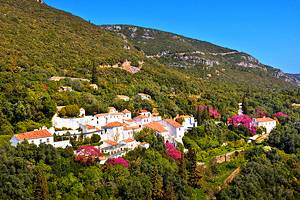
A road trip through the starkly beautiful Serra da Arrábida is one of the most enjoyable ways to spend a day out of Lisbon. The wild, craggy mountain range rises 500 meters over the bay of Setúbal, some 38 kilometers south of the Portuguese capital, and encompasses the protected Parque Natural da Arrábida.
Blanketed with verdant woodland and scrub, this stunning landscape is home to a fascinating variety of flora and fauna, and it's possible to park the car and follow a number of signed nature trails. While the region is served by bus, public transport is limited, so to do the region justice, you really need a vehicle.
For the most dramatic views, follow the Estrada de Escarpa (N379-1), a narrow winding coastal road that snakes past Sesimbra all the way to Cabo Espichel, a precipitous headland topped by a lighthouse.
10. Sesimbra
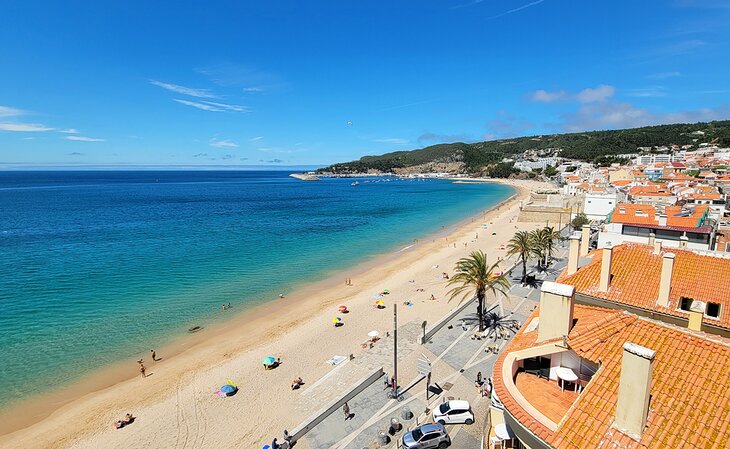
The traditional fishing village of Sesimbra is an enchanting day-trip destination that is immediately appealing for its busy little harbor and the 17th-century Fortaleza de Santiago, which houses the lovely Museu do Mar (Museum of the Sea). Sesimbra is a working port and is the base for a colorful fleet of trawlers and smaller boats.
The attractive old town center is a warren of narrow streets and winding alleys brimming with restaurants, where the aroma of grilled sardines floats on the salt-laced breeze. Hemmed in on either side by inviting golden-sand beaches, the harbor and its quayside is a delight to explore, especially in the late afternoon when the boats return with the day's catch.
This is also the departure point for adventure tourism attractions, including diving expeditions and sea kayaking excursions.
Sesimbra is a good day trip destination from Lisbon if you are looking to spend some time on a beach. The water is often fairly calm, clear, and shallow for a reasonable distance.
The Romans occupied Sesimbra, but it was the Moors who built the castle high above the town. Dating from the 10th century, it can be reached by vehicle or a stout pair of legs. Either way, the views from the weatherworn battlements, which encircle the 18th-century church of Nossa Senhora do Castelo, are inspiring, especially at sunset.
Sesimbra is 40 kilometers south of Lisbon and lies on the edge of the Atlantic Ocean under the lip of the Parque Natural da Arrabida mountain range. The drive here is straightforward and the better option if you're intending to explore the outlying area. However, arriving by bus is more convenient if all you want is to meander around town on foot and perhaps investigate the beach.
11. Reserva Natural do Estuário do Sado
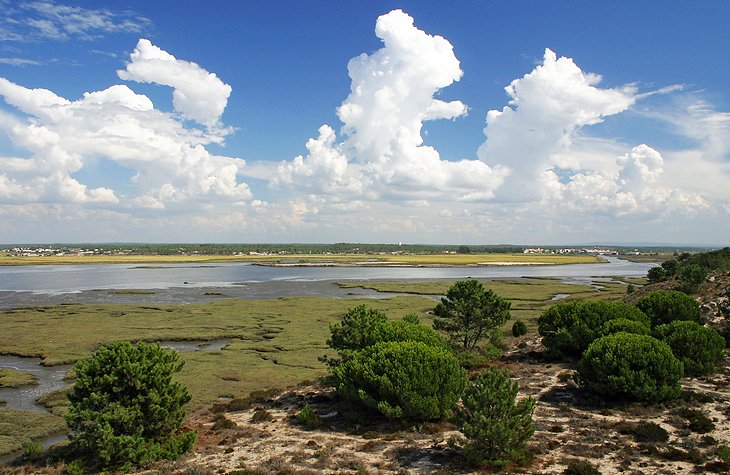
There are all sorts of reasons to visit the Sado Estuary Natural Reserve, not least to watch the amazing variety of birdlife that congregates along the shore and across the mudflats.
The estuary, though, is equally celebrated for the resident bottlenose dolphins that patrol the shallows and the mouth of the estuary. These graceful and intelligent mammals can be seen in all their playfulness by joining a sightseeing cruise that brings passengers to within a few meters of these amazing beasts. A dolphin seafari can be combined with discovering Sétubal, where the cruise boats depart.
This busy port is noted for two architectural draws, the Igreja de Jesus and Castelo de Sao Filipe, perched on a bluff high above the city. The city lies on the northern flank of the estuary, opposite the Península de Tróia, and you can extend your day trip by packing a picnic and catching the ferry to this largely untouched spit of sand, where the ruins of the Roman town of Cetóbriga can be visited.
Setúbal is well connected with Lisbon — the A2 motorway will get you here in about 30 minutes. A light railway also serves the destination, as does a regular bus service.
12. Óbidos
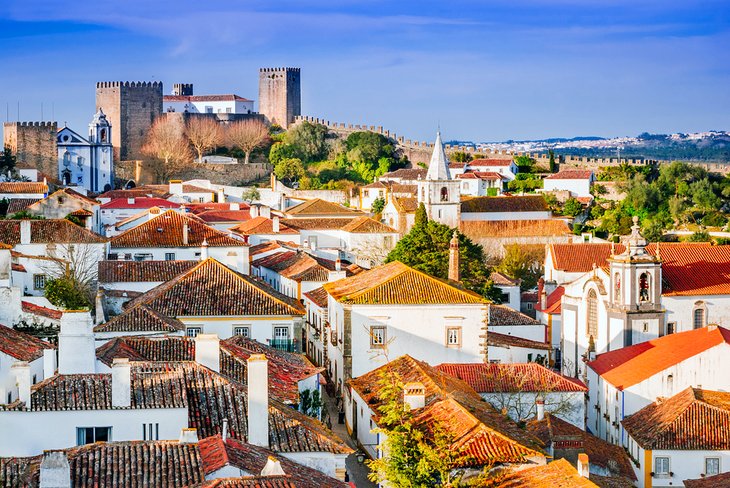
Few destinations in Portugal are as enchanting as Óbidos. Achingly pretty and exuding fairy-tale charm, this picturesque walled town set 80 kilometers north of Lisbon dates back to the 12th century, and its romantic medieval character is quite bewitching.
To the Portuguese, it's known as the "wedding gift town" after King Dom Dinis gifted what was then an important port in the 13th century to his wife, Queen Isabel of Aragon. Completely enclosed by crenelated walls (where once boats moored before the sea retreated), historic Vila da Óbidos, or village, is distinguished by the massively towered castle that looms over a warren of lanes and whitewashed cottages. Today, it is a charming pousada (hotel).
The main entrance to Óbidos is the grandiose Porta da Vila, an impressive gateway that opens onto Rua Direita, the village's main street lined with traditional houses, authentically styled shops, and a host of cafés and restaurants.
Of the must-see period attractions, the most evocative is the Igreja de Santa Maria, the church where in 1444, 10-year-old king, Afonso V, married his eight-year-old cousin, Isabel of Coimbra.
Not surprisingly, such an attractive and history-laden destination can get very busy. So to get the best out of a visit consider joining a small-group day trip from Lisbon led by an expert guide.
13. Nazaré
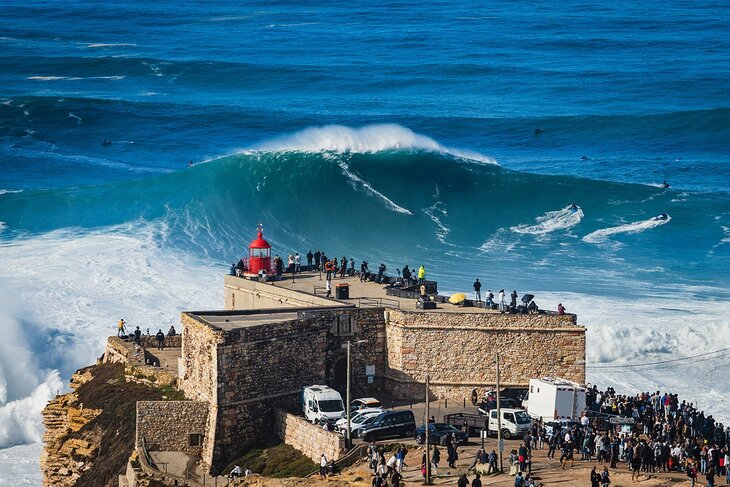
For years, the fishing town of Nazaré was, for the most part, the preserve of visiting locals, drawn in summer to the glorious town beach that fronts this traditional seaside resort located 122 kilometers north of Lisbon. But all that changed in November 2011, when U.S. professional big-wave surfer Garrett McNamara tamed a monstrous 24-meter wave off North Beach near the lighthouse to set a world record for the largest wave ever surfaced.
In 2022, Sebastian Steudtner from Germany set a Guinness World Record by riding an incredible 26.21-meter (86.1-feet) wave. To see the waves in their enormity, it's best to get up high and look down. The best spot in Nazaré is just to the north of the lighthouse on the high bluff.
Always a favorite surfing destination, Nazaré today is arguably the world's most famous big-wave hot spot. Every year, usually in November, this sleepy resort greets boarders from around the planet, who come here to witness this spectacularly fearsome phenomenon, when these awesome waves are formed by a unique underwater canyon off Nazaré.
Despite its global fame, Nazaré still manages to retain a modicum of tradition. Along the beachfront fisherwomen can be seen drying fish on wire racks, while their menfolk mend nets. High on a cliff above the town is Sítio, an older extension of the town. A funicular climbs the 110 meters to the top of the headland to afford visitors a jaw-dropping perspective of the Nazaré coastline.
To savor this extraordinary Atlantic Ocean landscape and more, why not join a small-group day trip from Lisbon and catch all the sites as part of a guided tour?
14. Alcobaça

A 15-minute inland drive from Nazaré brings you to Alcobaça and Portugal's largest church, the Mosteiro de Santa Maria de Alcobaça. Founded in 1153, the monastery is one of the country's greatest monuments, a masterpiece of early-Gothic architecture whose heart is the beautiful Claustro do Silencio - one of the largest medieval Cistercian cloisters in Europe.
The abbey church is the burial site of 14th-century King Pedro I and his doomed lover, Inês de Castro. You can't miss their elaborately carved tombs, placed foot to foot as if together for all eternity.
Deserving of its classification as a UNESCO World Heritage Site, the monastery deserves a couple of hours of your time. Come here in mid-November and join the festivities surrounding the Mostra de Doces Conventuais, a weekend of feasting on conventual sweets, pastries, and other divine treats.
15. Peniche
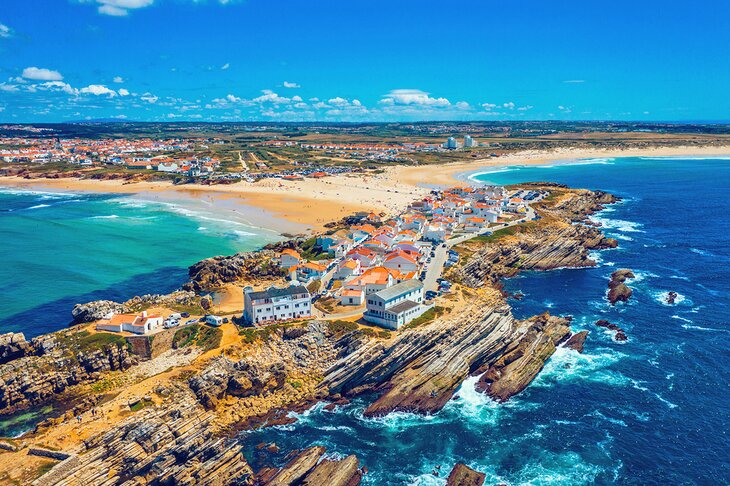
If the tight confines of Lisbon have you looking and craving wide-open spaces, head north to the beach town of Peniche. Here, you'll find massive beaches fronting the wild Atlantic Ocean. Take a stroll along the pancake-flat beaches and feel the cool breezes off the water refresh your spirit.
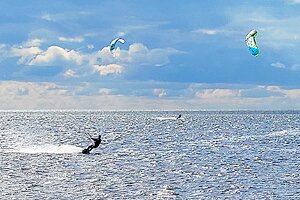
The beaches here are also well-known hot spots for surfing if you dare brave the icy waters. Two of the most popular surfing beaches are Medão Grande Beach and Lagido Beach, the latter being a stop on the World Surf League Tour.
The small city is one of the country's major fishing centers, so be sure to wander through the Old Town and settle in for a lunch of the freshest seafood you'll find anywhere. Just offshore is the Island of Berlengas, one of Portugal's top scuba diving locations.
Peniche is about 75 minutes north of Lisbon.
Tips and Tours
- Multi-Stop Tour: If you want to visit multiple destinations near Lisbon on a day trip, the Óbidos, Nazaré, Fátima and Batalha Day Trip is an excellent choice. This well-organized full-day excursion takes in several historic and photo-friendly locations, including two World Heritage-listed sites. Entrance fees for some of the attractions and convenient pickup and drop-off at select hotels is included.
- Public Transport: Lisbon is well connected to several surrounding regions. A modern road and rail network serves the city, and an efficient and inexpensive coach and bus service can be relied upon for reaching outlying towns and villages.
Map of Day Trips from Lisbon
More Must-See Destinations beyond Lisbon
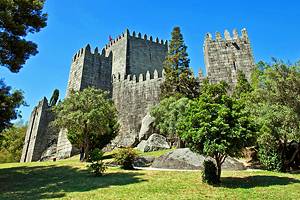
Many tourists choose Lisbon as their vacation base, and while there are plenty of things to do in the Portuguese capital, exploring farther afield can add tremendous value to your vacation experience. The aforementioned Évora is an hour's drive southeast and is best visited in spring, when the countryside is flecked with colorful blooms. The region is also known for its abundance of evocative castles.
An hour or so north is Tomar, a city forever associated with the mysterious Knights Templar and the magnificent Convent of Christ, also a UNESCO World Heritage Site. For more ideas on where to go and what to see consult our detailed itineraries page and inspire your wanderlust using our best places to visit in Portugal article.