16 Top-Rated Tourist Attractions & Things to Do in Pisa
Pisa was a major Roman port, but the Arno River has since silted up, leaving it 10 kilometers inland. In 1063, Pisa's navy was instrumental in defeating the Saracens at Messina and Palermo, beginning Pisa's rise to control Mediterranean shipping. The cathedral was built in thanks for these victories and enriched by booty brought back by its fleet in the First Crusade.
Commerce and industry flourished, and Pisa's architects, sculptors, and painters became famous throughout Europe. In 1284, rival Genoa defeated Pisa's navy, and in 1406, Pisa fell to Florence. But the ruling Médici took a keen interest here, constructing bridges and canals, so the city continued to thrive.
Pisa is the birthplace of Galileo Galilei (1564-1642), and legend holds that the cathedral's swaying chandelier inspired him to design the clock pendulum. Pisa's main tourist attractions – the Leaning Tower, Cathedral, Baptistery, and Campo Santo – are close together in the Campo dei Miracoli (Field of Miracles), and comprise a UNESCO World Heritage site.
If you're wondering where to eat or go shopping in Pisa, follow Via Maffi from the Campo dei Miracoli to the busy Borgo Stretto, lined with shops, cafés, and restaurants.
For more ideas, see our list of the top tourist attractions in Pisa.
See also: Where to Stay in Pisa
- 1. The Leaning Tower of Pisa
- 2. Cathedral of Santa Maria Assunta
- 3. Baptistery
- 4. Campo Santo (Sacred Field)
- 5. Museo dell'Opera del Duomo (Cathedral Museum)
- 6. Murale Tuttomondo by Keith Haring
- 7. Arsenals & Museum of Ancient Ships
- 8. Santa Maria della Spina
- 9. Stroll along Borgo Stretto
- 10. Palazzo dei Cavalieri
- 11. Palazzo Blu
- 12. Basilica Romanica di San Piero a Grado
- 13. Orto Botanico (Botanic Garden)
- 14. Santo Stefano dei Cavalieri
- 15. Museo Nazionale di San Matteo (National Museum of San Matteo)
- 16. Go to the Beach
- Where to Stay in Pisa for Sightseeing
- Tips and Tours: How to Make the Most of Your Visit to Pisa
- Map of Tourist Attractions & Things to Do in Pisa
- Pisa, Italy - Climate Chart
- More Things to See and Do near Pisa
1. The Leaning Tower of Pisa
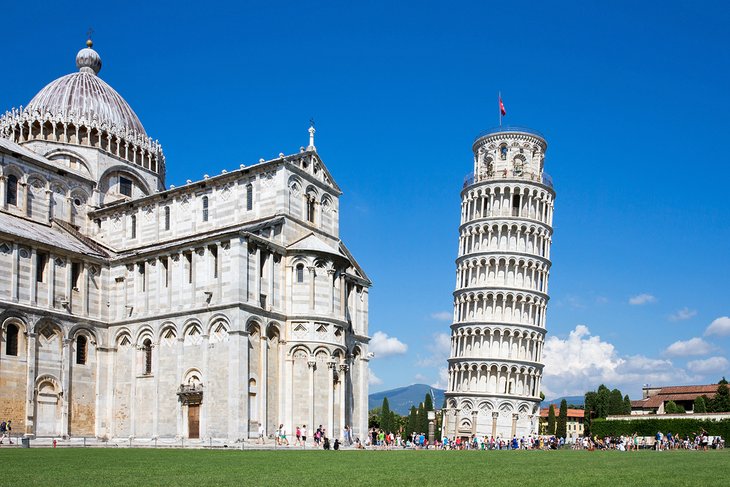
Every child has heard of it, and every visitor to Pisa probably heads first to what is undoubtedly the world's most famous tower: La Torre Pendente, the leaning campanile standing next to the cathedral.
The foundation stone was laid in 1173, when Pisa was Italy's most powerful maritime republic, and its loggia-like tiers were modeled after the cathedral facade. Even before the third story was completed, the tower had already begun to sink alarmingly on its south side. When counterweighting the north side and slightly increasing the height of the south walls proved ineffective, construction was halted.
Almost 100 years later, work resumed, attempting to counteract the tilt by angling the upper stories more towards the vertical. The open bell-chamber was added to the white marble tower in 1350-72, by Tommaso Pisano.
Until 1990, tourists climbed the spiral staircase of 294 steps to the top platform, but with the angle of tilt increasing by one millimeter a year, it was calculated that the tower would topple by the year 2000.
When rotational movement around the axis was also detected, increasing the risk, the tower was closed in 1990 to allow an expensive program of restoration. When the tower re-opened in 2001, the 5.5-degree tilt had been modified to about 3.99 degrees, leaving the top out of line by 3.9 meters. You'll also notice a slight curve in the tower, resulting from attempts by various architects to correct its tilt during construction.
Address: Piazza dei Miracoli, Pisa
Official site: http://www.opapisa.it/en
2. Cathedral of Santa Maria Assunta
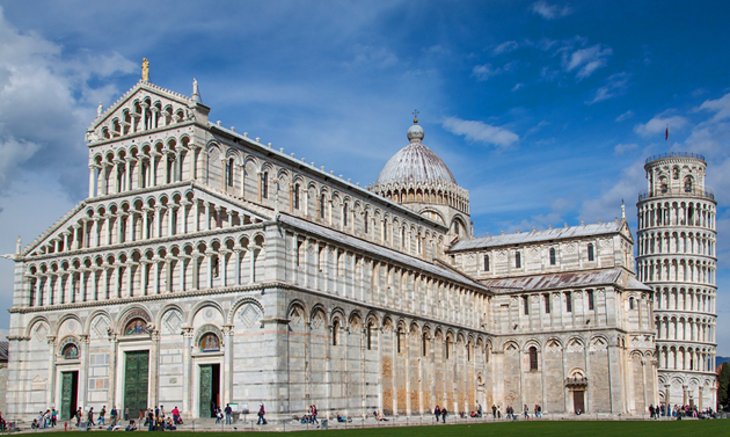
The definitive example of the Pisan architectural style, the Cathedral of Santa Maria Assunta is a five-aisled Romanesque basilica of white marble designed by Pisan architect Buscheto. Begun in 1063, after Pisa's naval victory over the Saracens, it was consecrated (still unfinished) in 1118, and towards the end of that century, a new west front was added and the main apse was completed.
The decorated arcading on the splendid façade is continued round the side walls, and its transepts end in small apses that project well beyond the aisles. Dominating the whole interior is a well-proportioned oval dome. In the apse is a 13th- to 14th-century mosaic of Christ enthroned between the Virgin and John the Evangelist, by Cimabue. Don't miss the bronze doors of the Porta di San Ranieri, with scenes from the lives of the Virgin and of Christ.
The artistic highlight in the cathedral is the pulpit by Giovanni Pisano, which is similar to the one in the Church of Sant'Andrea in Pistoia. It was created between 1302 and 1311, and Giovanni Pisano's vigorous style and rounded forms mark a departure from the severe style of his father Nicola, whose more angular pulpit you can see in the baptistery.
The pulpit is supported on columns (the shorter ones borne on lions) and figures of the Archangel Michael, Hercules, and Christ, with the Four Evangelists around the base. Relief panels around the pulpit show New Testament scenes.
Address: Piazza dei Miracoli, Pisa
3. Baptistery
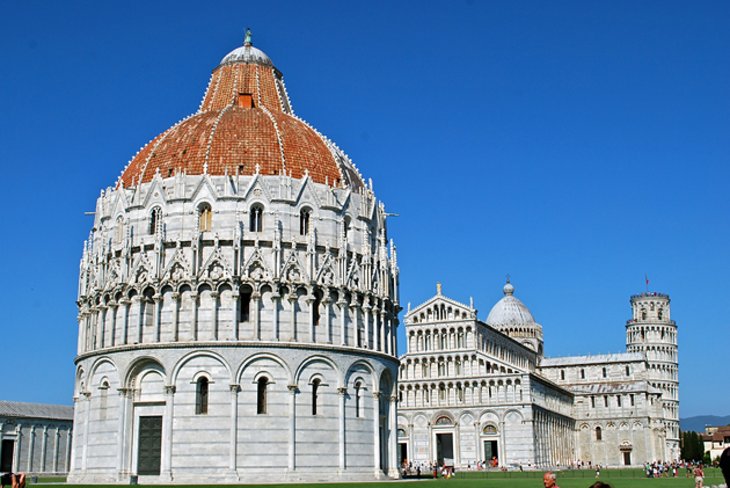
West of the cathedral, the free-standing baptistery was begun in 1153, almost a hundred years after the cathedral but still in the great days of Pisa. It carries out the design of the cathedral by using the same building material, patterning with different colors of stone, and by the blind arcading and dwarf galleries.
But as work continued over two centuries, it began to show the transition from Romanesque to Gothic between the lower and the upper levels. In 1260, Nicola Pisano took over responsibility for the project, followed (1285-93) by his son Giovanni. The conical dome stands on four pillars and eight columns, creating an effect of light and solemnity.
Like the cathedral, the baptistery's unquestioned highlight is the free-standing marble pulpit, a 1260 masterpiece by Nicola Pisano and one of the great masterworks of Romanesque sculpture. It is decorated with relief panels depicting New Testament scenes with great artistic intensity.
Be sure also to see the font by Guido da Como (1246) and the figures of saints by students of Nicola and Giovanni Pisano. The baptistery is also notable for its superb acoustics, which the guides usually make a point of demonstrating.
Address: Piazza dei Miracoli, Pisa
4. Campo Santo (Sacred Field)
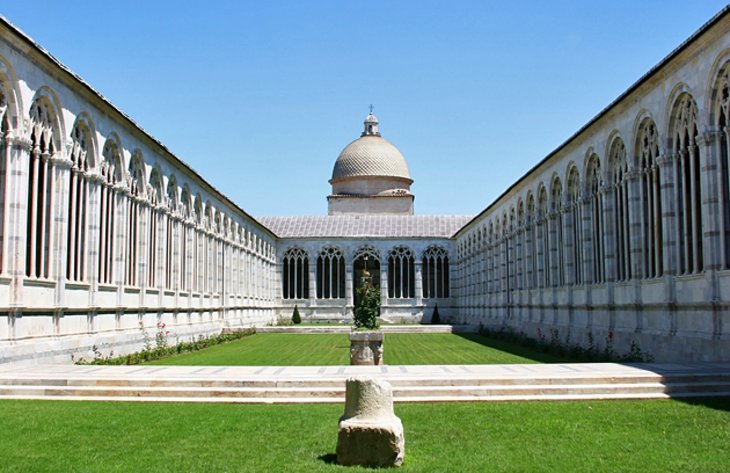
According to local legend, Archbishop Ubaldo dei Lanfranchi returned from the Fourth Crusade with several shiploads of earth from Golgotha, so that the citizens of Pisa could be buried in sacred soil. The construction of the Camposanto (Sacred Field) to hold it began in 1278, a large rectangular cloister whose gallery of arches decorated with Gothic tracery open into the courtyard.
On the floor of the cloister are the graves of Pisan patricians, and around the sides are Roman sarcophagi. The walls were covered with 14th- and 15th-century frescoes, but a fire caused by artillery bombardment in 1944 melted the lead roof, either destroying or badly damaging the frescoes.
The upside of this tragic loss was the uncovering of the original artists' sketches in red pigment on the walls underneath. These sinópie were the artist's most important contribution to a fresco, specifying every detail of a composition; the actual painting of the fresco was often left to students and assistants.
These sinópie are now shown, with reproductions of the corresponding frescoes, in Museo delle Sinópie. Those frescoes that were saved have been painstakingly restored over the years and returned to the cloister.
Address: Piazza dei Miracoli, Pisa
5. Museo dell'Opera del Duomo (Cathedral Museum)
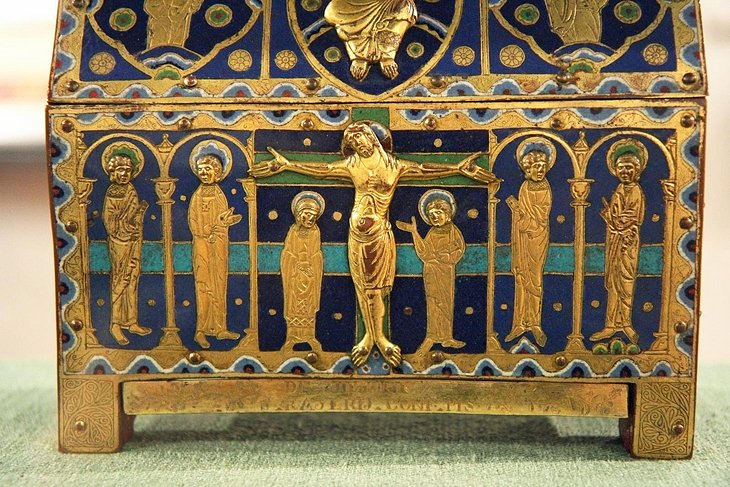
One of the best designed and curated museums in Tuscany is also one of the least-visited places on the Campo dei Miracoli, which is a shame because it adds enormously to an understanding of the art and craftsmanship of that era. And it has an added bonus for those who do explore it: a superb view of the Leaning Tower from the huge second-floor windows.
The cathedral's museum houses its considerable treasury, which includes priceless masterworks of silversmiths, rich embroideries, tombs, sculpture, and paintings. Many of the sculptures once decorated various buildings of the complex, but were brought indoors for protection many years ago - before they were subject to modern atmospheric pollution, so they are in such good condition that they seem to have been created yesterday instead of centuries ago.
The collections, which are well labeled and described in English, begin six centuries ago, with Islamic inlays of colored marble that once decorated the cathedral, reminders that Pisa's naval empire extended into the Middle East.
So many treasures will catch your eye, but don't miss the bronze griffin; the wooden crucifix by Borgognone; the Citharoedus David; the Limoges caskets; the works of Giovanni Pisano, most especially his Madonnas, the exquisite small ivory statue, and the crucifix known as the Crocifisso d'Elci.
You may recognize one Roman sculpture, a bust of Julius Caesar sculpted during or soon after his lifetime, and the image you've seen in most history books.
Address: Piazza dei Miracoli, Pisa
6. Murale Tuttomondo by Keith Haring
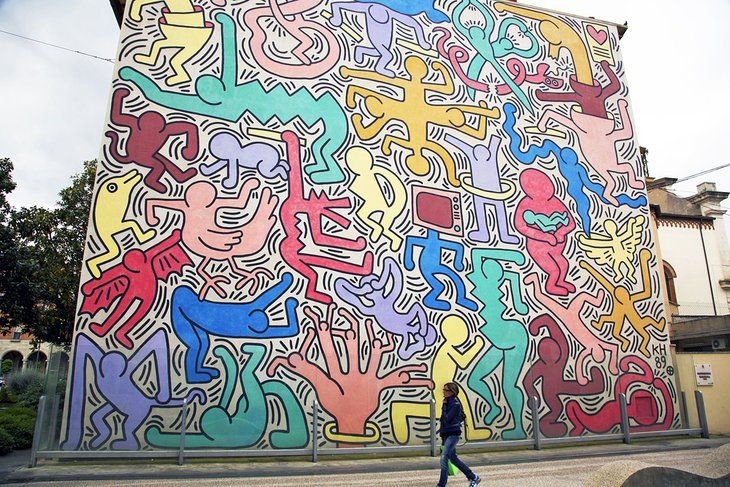
In 1989, after a chance encounter with a student from Pisa, artist Keith Haring was commissioned to paint a mural on the rear wall of Sant'Antonio Abate church. The resulting Tuttomondo (all the world) is one of the largest murals in Europe, at 180 square meters, and took Haring a week to complete.
Tuttomondo is one of only a few outdoor works created by Haring for permanent public display, and he later called it one of his most important. It was also to be one of his last. He completed only one other mural before his death in 1990 at age 31.
Thirty figures, painted in bright colors and in Haring's cartoon style, seem to tumble across the wall. Women, men, children, a dolphin, a bat, and other animals mix together in an exuberant dance. Haring's message of harmony and love between humans, animals, and nature is as relevant today as it was in 1989.
7. Arsenals & Museum of Ancient Ships
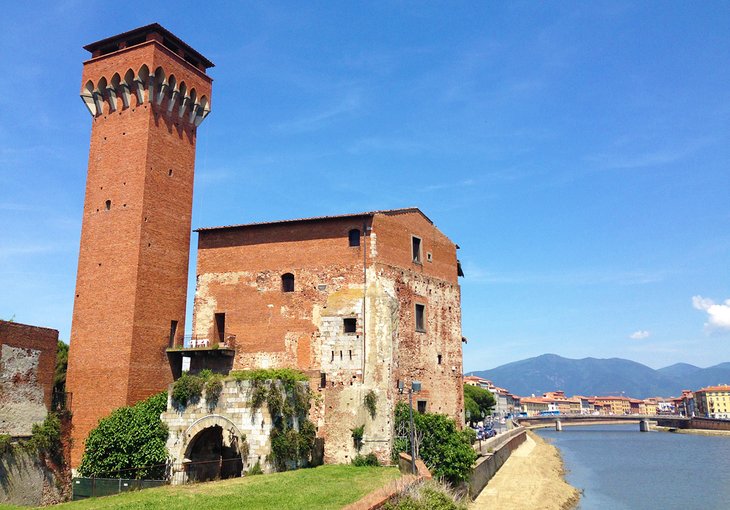
The Arsenals were built between 1548 and 1588 by Grand Duke Cosimo I de' Medici to strengthen his naval power and revive the glory days of Pisa's Maritime Republic. The large arcaded sheds were used to build 50-meter-long galleys, warships that were launched directly into the Arno.
The arsenals were built inside the Cittadella, which dates to 1160, but has only the San'Agnese tower still intact. The tall Guelfa Tower (which you can climb for sweeping views across Pisa and the Arno) was built in the early 1400s and rebuilt after World War II damage.
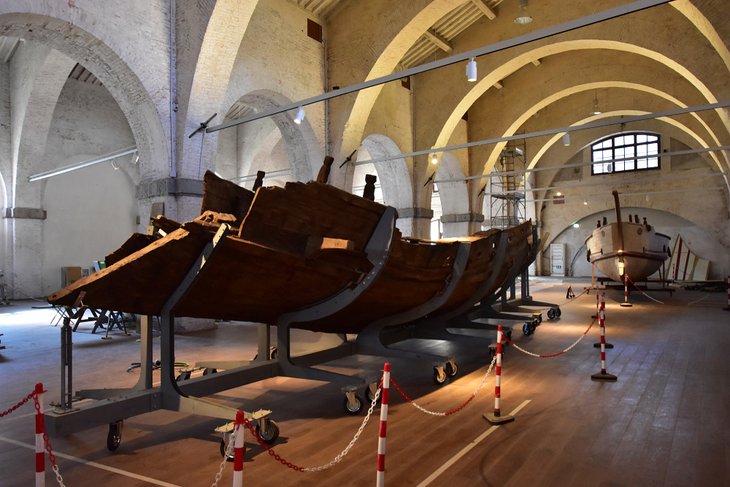
After 1543, the Cittadella was used as artillery barracks and later converted into stables for the Dragon knights, who protected Pisa from Barbary pirates. Today, the arsenal serves as a fitting home for the Museum of Ancient Ships, displaying the exceptional finds from excavations in 1998.
In that year, a construction project unearthed more than 30 ancient ships dating from between the 2nd century BC and the 5th century AD – from the Etruscans to the collapse of the Roman Empire. The grand rooms and aisles built for the Grand Duke's ships, now display the restored Roman ships and the artifacts found with them, telling of voyages, routes, daily life on board, and shipwrecks.
Address: Lungarno Ranieri Simonelli 16, Pisa
Official site: https://www.navidipisa.it/en/
8. Santa Maria della Spina
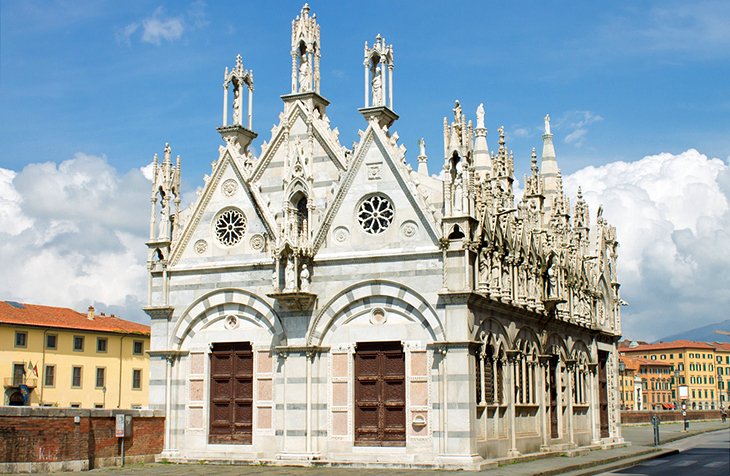
The Church of Santa Maria della Spina, on the left bank of the Arno, is perhaps the best known of Pisa's smaller churches and certainly one of its loveliest. Originally a small oratory sitting right on the river, it suffered severe foundation damage, and in 1871 it was pulled down stone by stone and rebuilt higher up.
The richly ornate Gothic church owes its name to its possession of a thorn (spina) from Christ's crown of thorns, brought to Pisa from the Holy Land. The west front has two doorways and three distinctive gables, each with a small rose window. On the south side of the church, a series of arches enclose doorways and windows, and higher up, a niche with figures of Christ and the Apostles.
The building is crowned by tabernacles containing statues, some of them now replaced by copies and the originals displayed in the Museo Nazionale. The original of the Madonna del Latte is also in the museum; the one inside the church is a replica.
Address: Lungarno Gambacorti, Pisa
9. Stroll along Borgo Stretto
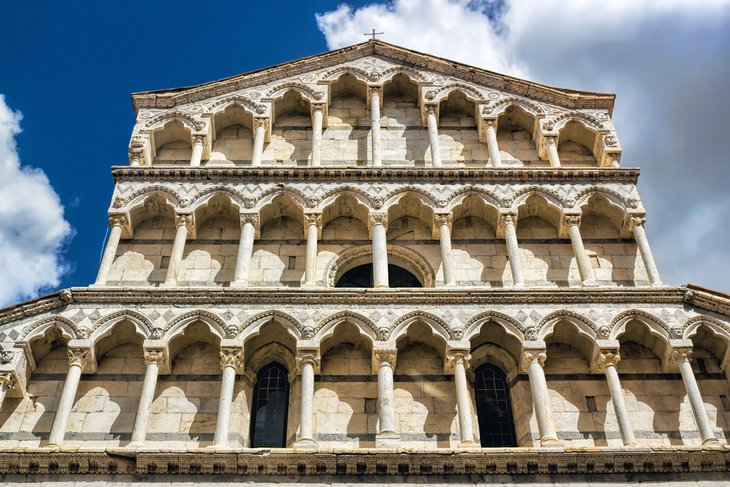
Between the rail station and the Piazza dei Miracoli, you'll find the narrow, atmospheric Borgo Stretto, lined by buildings from the 14th and 15th centuries. Arcades shelter its sides from the sun and rain, and small shops mix with name-brand stores, cafés, and sidewalk vendors.
Borgo Stretto is always busy, a favorite place for Pisans to stroll and shop. Look for Casa Bocca, at the corner of Borgo Stretto and via Mercanti; it's the house where Galileo was born.
10. Palazzo dei Cavalieri
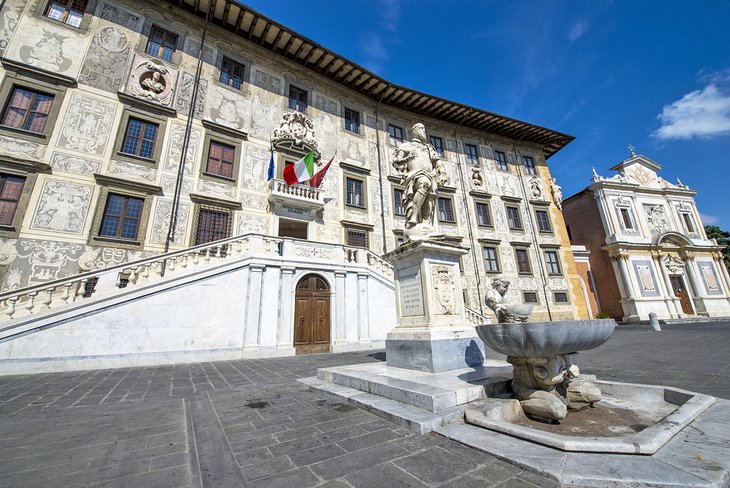
This palace in the Piazza dei Cavalieri (Knights' Square) is also known as the Palazzo della Carovana and was originally the Palazzo degli Anziani (Palace of the Elders). In 1562, architect Giorgio Vasari began rebuilding and enlarging it, creating the magnificent Palazzo dei Cavalieri, named after the training courses for knights (cavalieri) of the Order of St. Stephen, which were held here.
The most imposing and ornate building outside of the Piazza dei Miracoli, its facade is decorated with sgraffito ornament; coats of arms; and busts of six Medici Grand Dukes of Tuscany, from Cosimo I to Cosimo III. The grandeur is enhanced by the projecting roof and the handsome double staircase leading up to the entrance.
Since 1810, the palazzo has housed the Scuola Normale Superiore, an élite college of higher education founded by Napoleon. In front of the building is a statue of Cosimo I by Piero Francavilla. On the north side of the piazza is the Palazzo dell'Orológio, built in 1607 for the Order of St. Stephen and incorporating the remains of two early medieval tower houses.
Address: Piazza dei Cavalieri, Pisa
11. Palazzo Blu
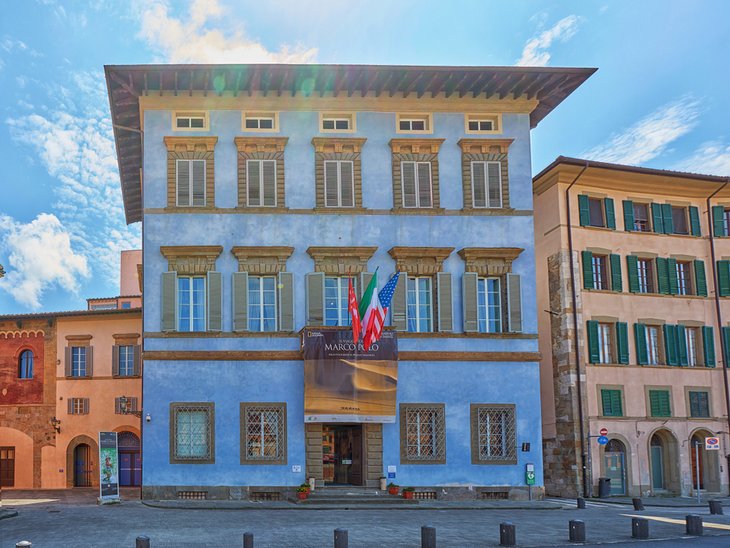
Palazzo Giuli Rosselmini Gualandi, more commonly called Palazzo Blu, houses rich permanent collections of paintings and other art, the works of Italian artists from the 16th to the 20th century. In addition, its collections include fine furniture and early coins.
Beyond these collections are a continuing series of special exhibitions that may cover anything from science to cinema, or may feature the works of a single artist, such as M.C. Escher or local favorite, the groundbreaking Italian modernist Amedeo Modigliani.
Address: Lungarno Gambacorti 9, Pisa
12. Basilica Romanica di San Piero a Grado
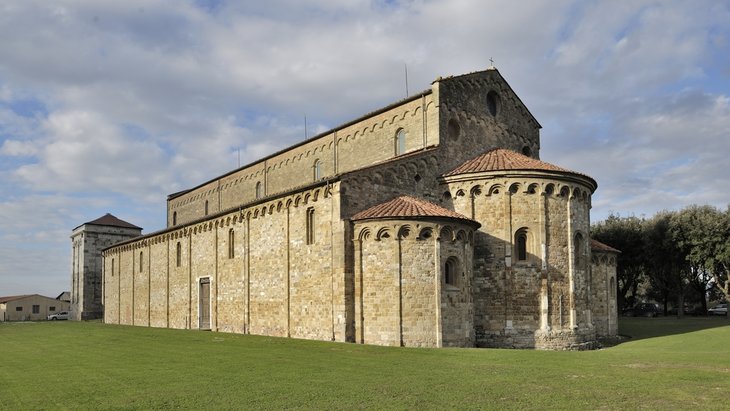
Away from the center of Pisa, on the road to its marina, stands the 10th-century basilica built at the old port of Pisa, at the spot where St. Peter is believed to have landed in Italy in 44 AD. The site is well inland today, but 2,000 years ago, the Mediterranean extended this far.
The church was constructed and modified over two centuries, and its interior is lined with frescoes, their colors still vibrant. At the back of the church, excavations reveal foundations of an earlier Paleo-Christian church and even earlier Roman buildings.
Address: Via Livornese, Pisa
13. Orto Botanico (Botanic Garden)
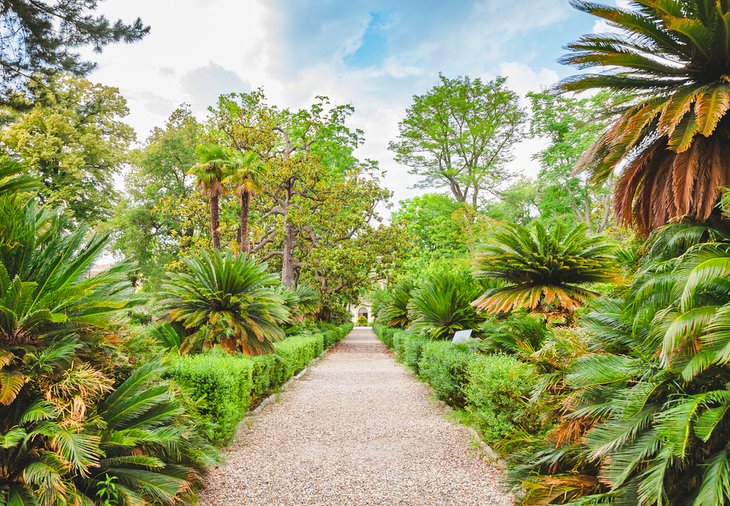
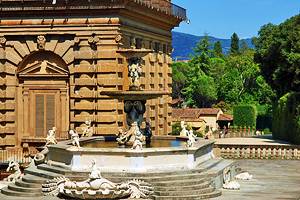
Also known as the Orto Botanico dell'Università di Pisa, Pisa's botanical garden was the first university botanical garden in Europe, founded by Cosimo I de'Medici in the mid-1500s. You can explore various environments and collections, both outdoors and in its several buildings, to find herb gardens, an arboretum of rare trees, water gardens, and greenhouses. One of these is Europe's first iron-framed glasshouse.
Be sure to see the old botany school dating from the late 1500s, with its façade decorated in seashells. After Pisa's almost overwhelming abundance of Renaissance artworks, this is a pleasant and restful place to visit in the middle of the city.
Address: Via Luca Ghini 5, Pisa
14. Santo Stefano dei Cavalieri
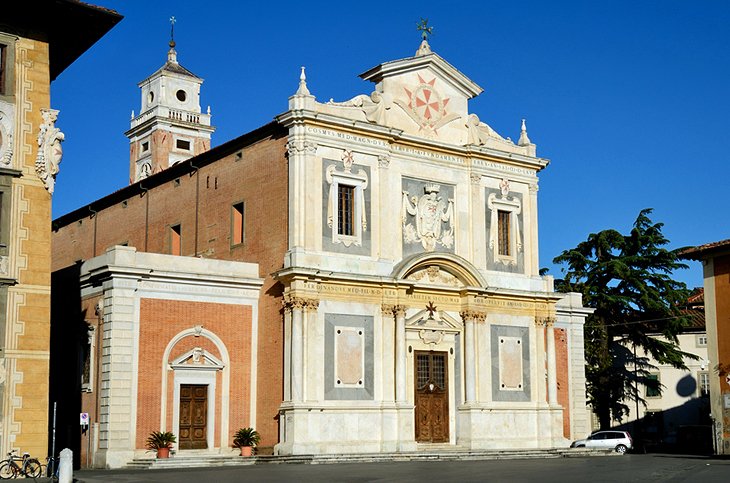
The Church of Santo Stéfano, like the palaces surrounding Piazza dei Cavalieri, was designed by Vasari. It was originally built in 1565-69, and in 1594-1606, a marble facade was added, designed by Giovanni de' Médici.
The two 17th-century side wings were originally changing-rooms for the knights of the Order of St. Stephen, who wore their ceremonial costume for services. These rooms were later incorporated into the church as aisles, but as they are linked with the nave only by two doorways on each side, the first impression inside is of an aisleless church.
In the panels of the coffered ceiling are paintings showing the history of the Order of St. Stephen, whose function was to defend the city against enemy raids. On the walls are trophies and captured enemy flags recalling Pisa's Turkish wars. Be sure to see the richly decorated high altar (1709), with the throne of the martyred Pope Stephen I (254-257) and the Baroque organ.
Address: Piazza dei Cavalieri, Pisa
15. Museo Nazionale di San Matteo (National Museum of San Matteo)
Beyond the blockbuster sights of the Campo dei Miracoli, Pisa offers a number of less well-known attractions and things to do. The former Benedictine Convent of San Matteo now houses Pisa's National Museum of San Matteo, featuring sculpture and pictures of the Tuscan schools from the 12th to the 15th centuries.
Particularly interesting are the sculptures from various Pisan churches brought here to preserve them from weather and environmental damage and replaced by copies. Look especially for the originals of statues by Giovanni Pisano from the baptistery and the famous Madonna del Latte (c. 1340) from the Church of Santa Maria della Spina.
Paintings by a number of 12th- and 13th-century artists include religious subjects, and you'll find excellent examples of illuminated books and manuscripts.
Address: Lungarno Mediceo, Piazza San Matteo 1, Pisa
16. Go to the Beach
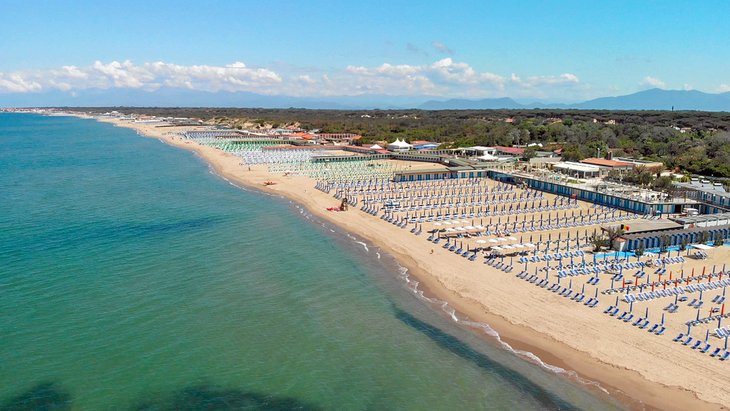
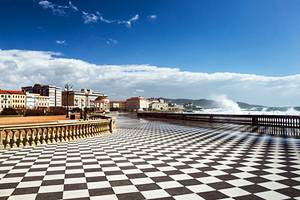
There is no escaping the fact that summers in Pisa are hot. A good way to cool off after sightseeing is to head to the shore. The Arno River flows into the Mediterranean Sea just to the west of central Pisa, and from the port south to Tirrenia, the coast is lined with a succession of sandy beaches.
These are lively, busy bands of sand defined by private beach clubs (stabilimento balneare), which for a daily fee provide beach loungers, umbrellas, and the use of changing tents, showers, and restrooms. Although there are occasional free areas of beach, they are small and crowded; to get the full Italian beach experience, you should use a stabilimento.
Where to Stay in Pisa for Sightseeing
We recommend these convenient hotels near the Leaning Tower of Pisa, Piazza dei Miracoli, and other top tourist attractions in Pisa:
- Bologna Hotel Pisa: This mid-priced hotel has an old-world feel and is close to shops and restaurants; the hotel offers free breakfast and an airport shuttle.
- NH Pisa: Conveniently located near the train station, NH Pisa offers amenities not usually found in mid-priced hotels, such as valet parking and soundproof rooms.
- Hotel Alessandro della Spina: This affordable three-star hotel has a friendly staff, spacious rooms, and an included breakfast.
- Helvetia: In a beautiful old building on a quiet street, this budget hotel has a whimsical decor.
Tips and Tours: How to Make the Most of Your Visit to Pisa
Getting to Pisa:
- Pisa is the arrival point for many travelers, as it has Tuscany's largest airport. But most visitors come to Pisa from Florence, less than an hour away by direct train. The Leaning Tower and surrounding attractions are about a 30-minute walk from the train station. An easy way to visit these sights is on a Pisa Half-Day Trip from Florence including Skip-the-Line Leaning Tower of Pisa Ticket, which has the added advantage of getting you directly to the Leaning Tower without having to wait in the long lines. A local guide can also add perspective to Pisa and its surroundings during the coach ride from Florence.
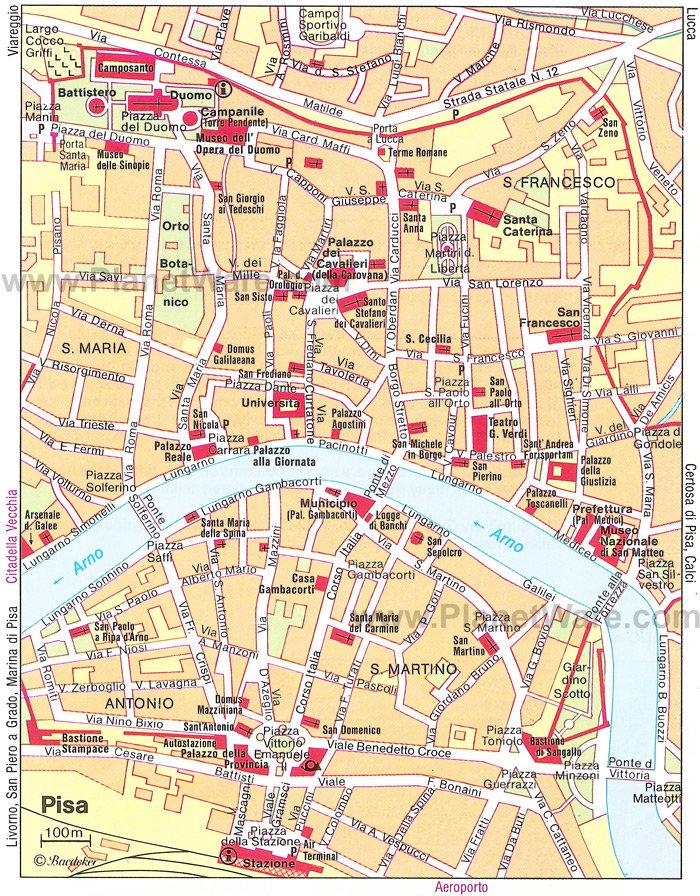
Map of Tourist Attractions & Things to Do in Pisa
Pisa, Italy - Climate Chart
| Average minimum and maximum temperatures for Pisa, Italy in °C | |||||||||||
| J | F | M | A | M | J | J | A | S | O | N | D |
| 11 2 | 12 3 | 15 5 | 18 7 | 22 11 | 26 14 | 29 17 | 29 17 | 26 14 | 21 11 | 16 6 | 12 3 |
| PlanetWare.com | |||||||||||
| Average monthly precipitation totals for Pisa, Italy in mm. | |||||||||||
| 74 | 69 | 76 | 79 | 61 | 43 | 23 | 56 | 89 | 119 | 122 | 86 |
| Average minimum and maximum temperatures for Pisa, Italy in °F | |||||||||||
| J | F | M | A | M | J | J | A | S | O | N | D |
| 51 35 | 54 37 | 58 40 | 64 45 | 71 50 | 78 57 | 84 61 | 83 62 | 78 57 | 70 51 | 59 43 | 52 37 |
| PlanetWare.com | |||||||||||
| Average monthly precipitation totals for Pisa, Italy in inches. | |||||||||||
| 2.9 | 2.7 | 3.0 | 3.1 | 2.4 | 1.7 | 0.9 | 2.2 | 3.5 | 4.7 | 4.8 | 3.4 |
More Things to See and Do near Pisa
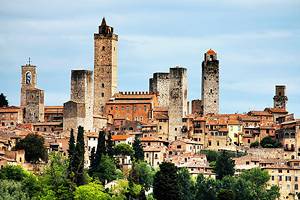
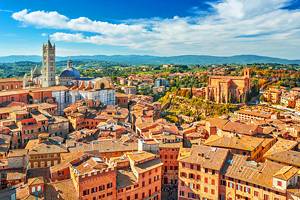
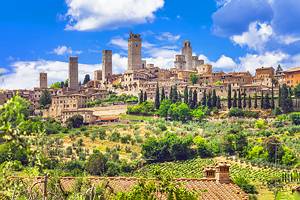
Places to Visit on Day Trips: Of the many possible day trips from Pisa, the lovely walled town of Lucca is the closest, a short train ride away. South of Pisa is Livorno and to the east is San Gimignano, one of the most beautiful hill towns in Tuscany.
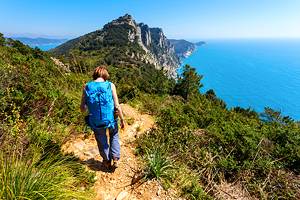
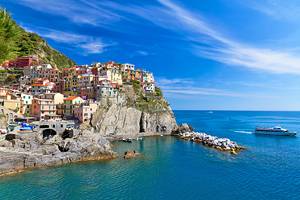
Where to Go from Pisa: Although there are no beaches in Pisa, Viareggio is only 15 minutes to the north and beyond it is Forte dei Marmi, along a coast with some of Italy's best beaches. For more active outdoor activity, continue north along the coast to hike the trail between the towns of the Cinque Terre, one of the top things to do in Italy.