17 Top-Rated Tourist Attractions in Philadelphia
Philadelphia is one of America's most important historical cities. At Independence Hall on July 4, 1776, the Declaration of Independence was adopted, and in September 1787, the Constitution was drafted. A century earlier, William Penn, a prominent Quaker and namesake of Pennsylvania, was a catalyst for the changes that transformed these British colonies into an independent nation.
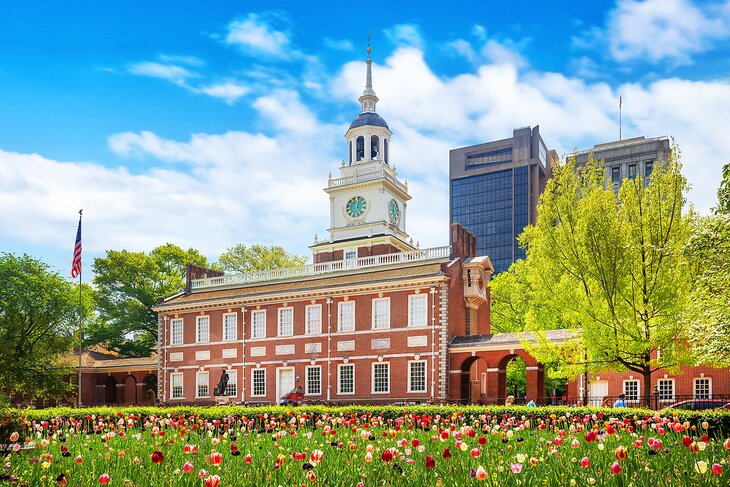
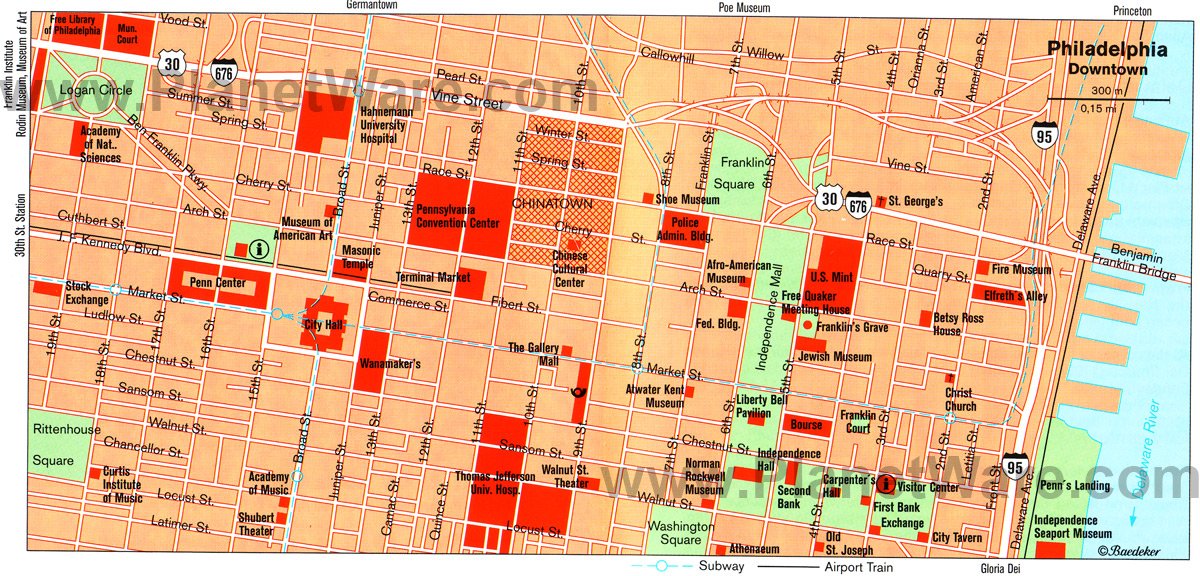
Today, modern office towers exist side-by-side with the narrow cobblestone streets of Independence Historic National Park, which is home to historic buildings and sights, including the Liberty Bell, Franklin Court, and Independence Hall. To the south lies Society Hill, the city's original residential area. Many of these eighteenth-century buildings have been handsomely restored. Similarly, Germantown in northwest Philadelphia, is another old residential section, first inhabited by Germans and the Dutch.
To the west, along the Schuylkill River, lies Fairmount Park, a vast belt of green containing numerous Federal-style mansions, as well as the Philadelphia Museum of Art and the Rodin Museum. Just south of that lies the museum district, including the Franklin Institute of Science Museum and the Academy of Natural Sciences.
If you're wondering where to start, begin with our list of top tourist attractions in Philadelphia.
- 1. Liberty Bell Pavilion
- 2. Independence Hall
- 3. Independence National Historical Park
- 4. Philadelphia Museum of Art and the "Rocky Steps"
- 5. Reading Terminal Market
- 6. The Barnes Foundation
- 7. Museum of the American Revolution
- 8. Philadelphia Zoo
- 9. Rodin Museum
- 10. The Franklin Institute Science Museum
- 11. Eastern State Penitentiary
- 12. Pennsylvania Academy of Fine Arts Museum
- 13. LOVE Park
- 14. Please Touch Museum
- 15. City Hall
- 16. Society Hill Historic District
- 17. Fairmount Park
- Where to Stay in Philadelphia for Sightseeing
- Tips and Tours: How to Make the Most of Your Visit to Philadelphia
- Map of Tourist Attractions in Philadelphia
1. Liberty Bell Pavilion
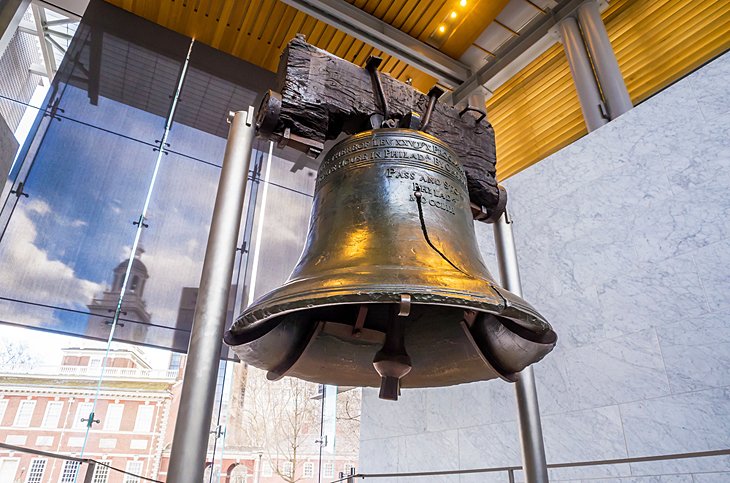
The liberty bell has long been a symbol of freedom and independence in the United States. It rang to mark the signing of the Constitution, but contrary to popular myth, the big crack came in 1846, when it tolled in observance of George Washington's birthday.
You'll learn this and other facts about the bell in the exhibits, and a film shows how abolitionists, suffragists, and other groups adopted the bell as a symbol of freedom. In the late 1800s, the bell went on tour around the country in an effort to conquer divisions left by the Civil War. The bell completed its journey in Philadelphia in 1915, where it has remained.
The Liberty Bell Pavilion is open without admission charge - one of several free things to do in Philadelphia.
Address: 143 South Third Street, Philadelphia, Pennsylvania
2. Independence Hall
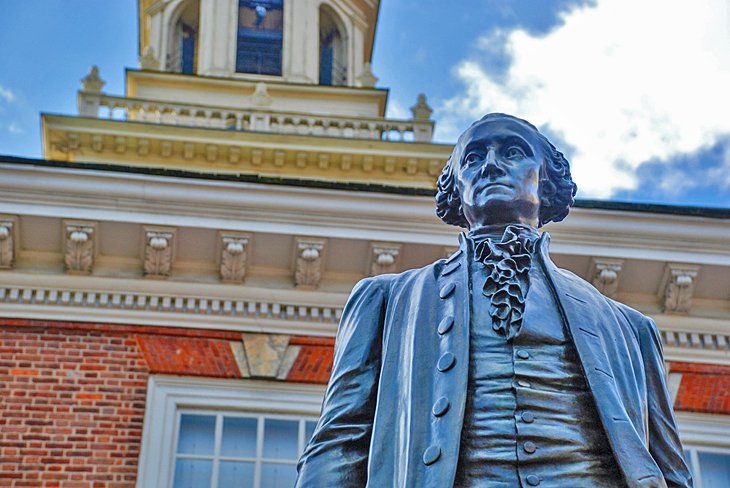
Independence Hall originally served as the State House of the Colony of Pennsylvania and is best known as the place where the Declaration of Independence was adopted by the Continental Congress on July 4, 1776. It was also where the Continental Congress met again 11 years later and wrote the United States Constitution.
The highlight is Assembly Hall, where the Second Continental Congress met behind closed doors to discuss independence from the British. This is where the Declaration of Independence was signed and where George Washington was chosen as Commander-in-Chief of the Continental Army.
Independence Hall sits across from the Liberty Bell Pavilion in the Independence National Historical Park. There is no entrance fee, but tickets ($1 reservation fee) are timed and limited, and all visitors should be prepared for security screening.
An advance booking is required from March through December. No bookings are required in January and February (except for President's Day and Martin Luther King Day long weekends). A visit after 5pm on any day does not require a reservation.
Free ESL services are available with advance request.
Address: 143 South Third Street, Philadelphia, Pennsylvania
3. Independence National Historical Park
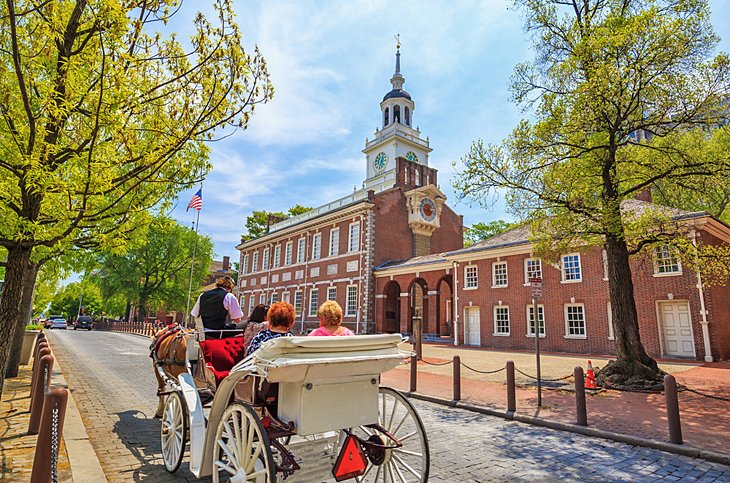
Independence National Historical Park is quite possibly America's most historic square mile. In addition to housing famous sites, such as Independence Hall and the Liberty Bell, many other important attractions line the cobbled streets of this old area.
Independence Hall has seen some of America's most important historical moments and hosted some of its most famous founders. It stood witness to the adoption of the Declaration of Independence on July 4, 1776, and the creation of the United States Constitution in 1787.
It is flanked by Congress Hall, where the first Congress of the United States met from 1790 to 1800 and George Washington and John Adams were elected President, and Old City Hall, which was never, in fact, the town hall but was the seat of the Supreme Court from 1791 to 1800.
To the north of Independence Hall extends the park-like Independence Mall, laid out in 1948. On its east side, at 55 North 5th Street, is the National Museum of American Jewish History. The park is also home to the Ben Franklin Museum, which has a collection of exhibits dedicated to celebrating this revolutionary inventor's many remarkable qualities. The Visitor Center off Dock Street is a good place to begin the day to get current information, tickets, and walking tour maps.
4. Philadelphia Museum of Art and the "Rocky Steps"
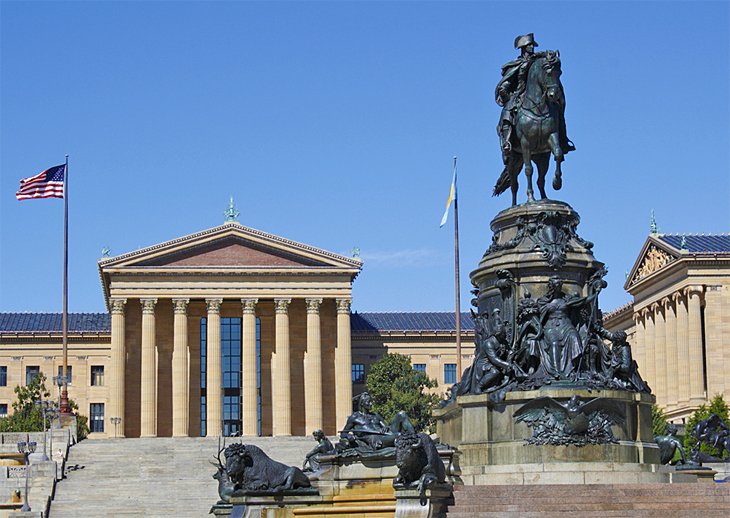
The Philadelphia Museum of Art contains one of the United States' largest collections of paintings and other artworks. Among the finest sections of the museum are the medieval galleries, which include pictures by Rogier van der Weyden and the van Eyck brothers.
In other rooms are Renaissance and Baroque works and art of the 18th and 19th centuries, including pictures by Van Gogh, Renoir, Toulouse-Lautrec, Manet, Cézanne, Monet, and Degas. A collection of 20th-century European art is represented by Picasso, Chagall, Matisse, Miró, Paul Klee, and other artists.
There is also American art by the Philadelphia artists Thomas Eakins, Charles Wilson Peale ("The Staircase Group", 1795), and many others. In addition, there are fine collections of Asian art, with porcelain, jade, and Oriental carpets.
The museum is housed in a Neoclassical building fronted by a broad set of stairs, which now - for many tourists - rival the collections as an attraction. Ever since they were featured in the classic American Rocky films, thousands of fans have flocked to the "Rocky Steps" each day to race to the top and strike a Rocky pose with the city as a backdrop.
Prior to striking your pose on the steps, be sure to swing by the actual Rocky statue located nearby. Study the exact arm and body position and then create your own version on the steps. You'll find the statue just off to the right of the steps in a grassy area.
Address: 2600 Benjamin Franklin Parkway, Philadelphia, Pennsylvania
5. Reading Terminal Market
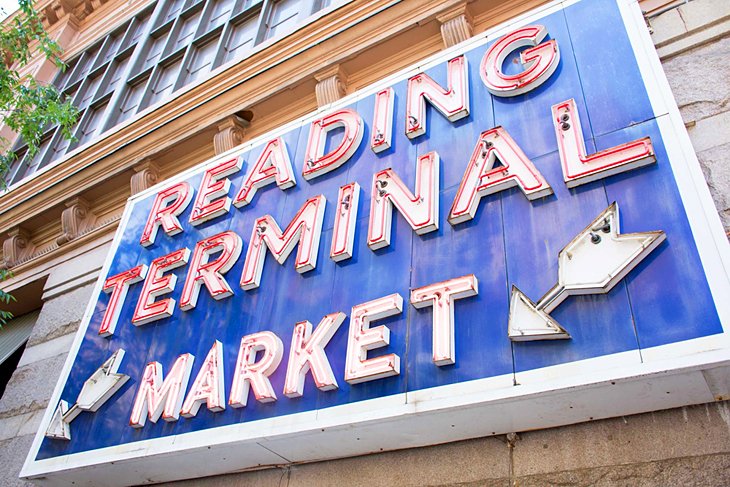
The Market at Reading Terminal has been a National Historic Landmark since 1995 and is a deeply rooted Philadelphia institution. It has been in operation since 1893, when the Reading Railroad Company built this space beneath their new station to accommodate the farmers and butchers who had been using the area for their open-air markets for decades.
The old market has undergone renovations, but it has retained its unique ambience and many of the structure's original features. Today, you will find more than 80 merchants, 75 of whom are small independent businesses. Both locals and tourists come to buy local produce; free-range meats; canned goods; fresh-baked Amish breads; and handmade crafts, including clothing, jewelry, and gifts. Several vendors specialize in traditional Pennsylvania Dutch foods.
Address: 51 North 12th Street, Philadelphia, Pennsylvania
6. The Barnes Foundation
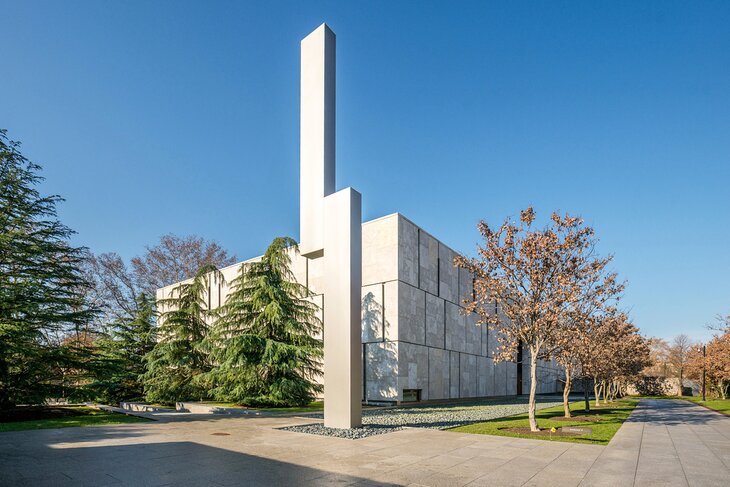
Established by Dr. Albert Barnes, the Barnes Foundation is an integral part of Philadelphia's Parkway museum district. It houses some of the world's biggest collections of French Impressionist and Post-Impressionist paintings, including the world's largest Renoir collection and more of Cézanne's works than there are in all of France. There are just short of 60 Matisse paintings, as well as numerous works by Degas, Manet, and Modigliani.
Additional collections include early modern artists, including Picasso, as well as a large collection of African sculptures. The museum welcomes guests free of charge on the first Sunday of the month for gallery viewings, activities, and family-friendly entertainment, while monthly on the first Friday, adults are invited to spend the evening exploring collections, attending lectures, and mingling with like-minded aficionados while enjoying live music and refreshments.
Address: 2025 Benjamin Franklin Parkway Philadelphia, Pennsylvania
7. Museum of the American Revolution
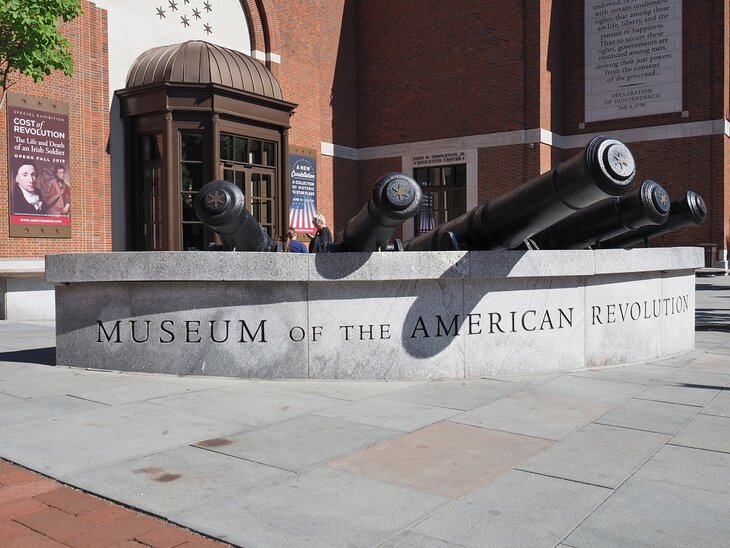
A must-see for any history buff, the Museum of the American Revolution is a fascinating trip back in time to the late 18th century to the conflict that helped form the United States. The museum has an excellent collection of artifacts from the time frame and does a good job of giving the visitor a taste of what life was like back then.
Thoughtfully laid out galleries that are interactive, engaging, and educational make understanding the cause of the Revolution easy. One of the highlights of a visit here is the original headquarters tent that George Washington used during the conflict.
The Museum of the American Revolution is one of Philadelphia's newest museums and is conveniently located near Independence Hall and the Liberty Bell.
Address: 101 S 3rd Street, Philadelphia, Pennsylvania
8. Philadelphia Zoo
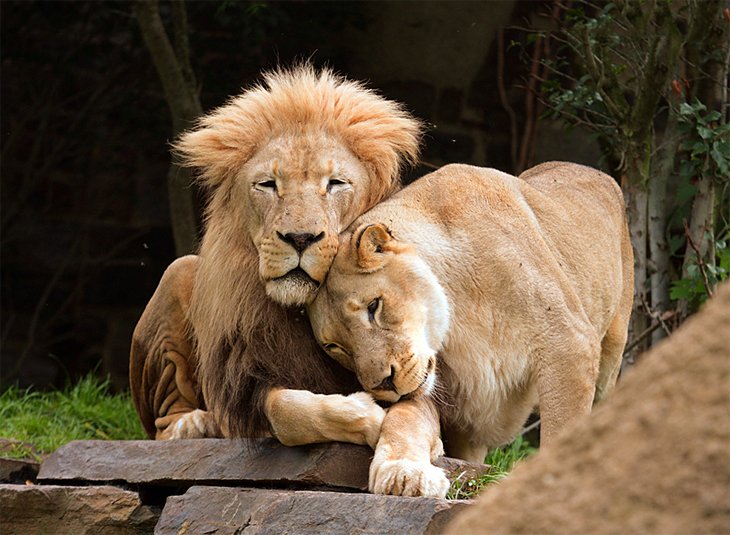
The Philadelphia Zoo is home to a wide range of animals from around the world and is active in wildlife conservation and rehabilitation efforts, focusing on educating visitors about the ways humans impact the earth's other residents.
One of its most remarkable habitats is Big Cat Falls, a spacious area where the world's largest cats can roam among plants and flowing waterfalls, as well as explore the entire park through a system of tunnels that wind above other habitats - including the human visitors. Another favorite with both kids and adults is the African Plains habitat, where you can meet some of the zoo's most impressive residents, including giraffes, hippos, and a white rhinoceros.
Outback Outpost is home to some of Australia's most fascinating wildlife, including red kangaroos and emus. Other habitats include Bear Country, which is home to species from Asia, South America, and North America, and Carnivore Kingdom, where you can meet dwarf mongooses and even the (vegetarian) red panda. There is also a reptile and amphibian house; an aviary; and Monkey Junction, which is home to two pairs of spider monkeys.
At the small mammal house, visitors can see the nocturnal residents as they go about their day, thanks to clever lighting that inverts their sleep cycle. The zoo also operates a primate reserve and a rare animal conservation center, where you can see some of the earth's most endangered animals, learn about issues affecting them, and find out how to help.
Address: 3400 West Girard Avenue, Philadelphia, Pennsylvania
9. Rodin Museum
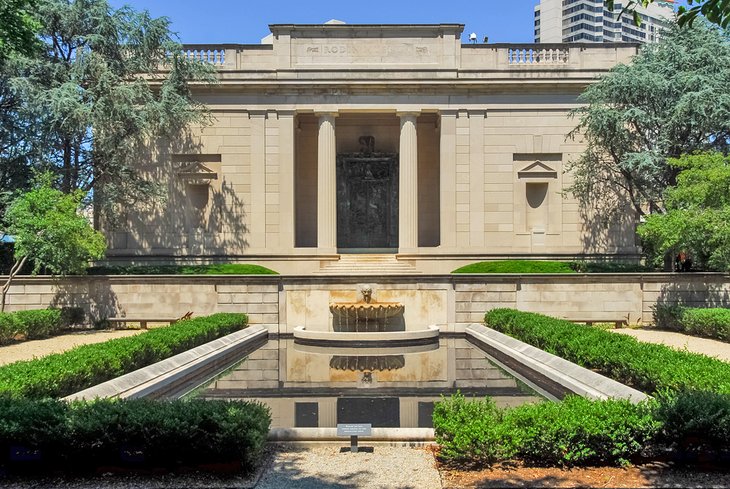
With close to 100 works by famous French sculptor Auguste Rodin, this museum contains one of the most extensive collections of his work outside France. The Rodin Museum includes plasters, bronzes, and marbles of some of Rodin's most famous masterpieces.
In the outdoor sculpture garden, visitors can view some of his best-known works, including The Thinker and Rodin's seminal work, The Gates of Hell. Rodin's career was remarkable for his unconventional training and his philosophy that sculpture should stay true to the natural form, and he is considered the father of modern sculpture.
Address: 2151 Benjamin Franklin Parkway, Philadelphia, Pennsylvania
10. The Franklin Institute Science Museum
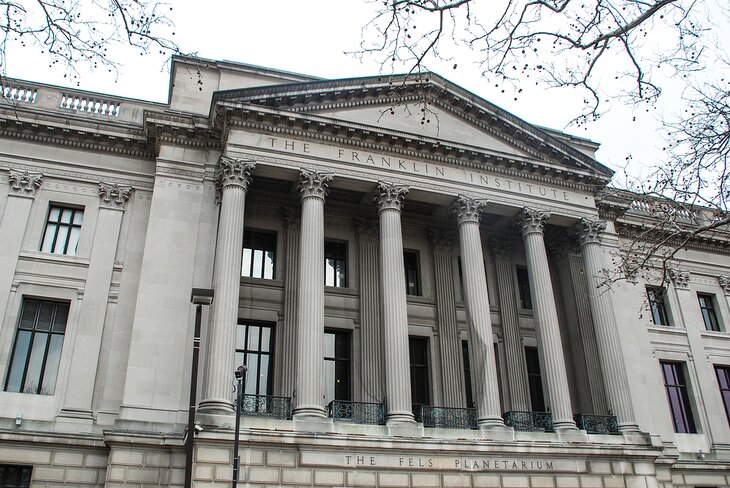
This creative museum is a tribute to scientist Benjamin Franklin, complete with a huge marble statue of a seated Franklin located in one of the large halls. The Franklin Institute Science Museum, which is in fact several museums under one roof, displays many of Franklin's own experiments.
It is particularly concerned with the physical bases of technology and offers visitors the opportunity to try their own experiments, in many fields - computers, information technology, space travel, astronomy, and oceanography. In addition to the museum, the center is also home to an IMAX Theater and the Fels Planetarium.
Address: 222 N 20th Street, Philadelphia, Pennsylvania
11. Eastern State Penitentiary
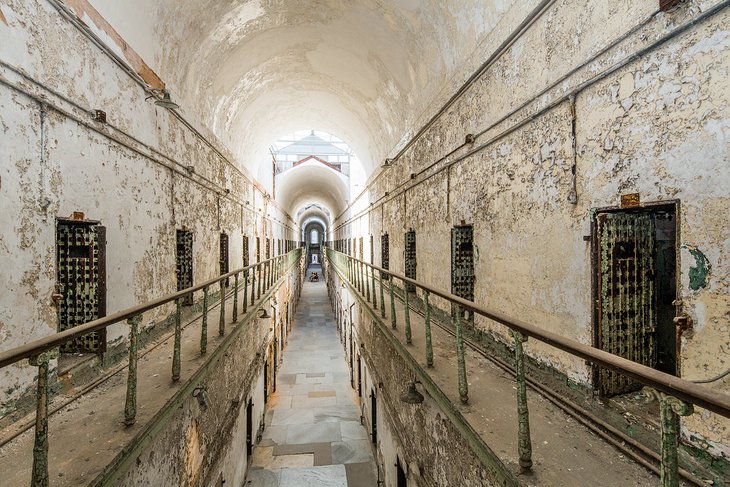
The Eastern State Penitentiary was built in 1829 with the aim of rehabilitating criminals through solitary confinement. At the time of its opening, it was considered the world's most expensive and high-tech prison. Willie Sutton and Al Capone were some of the prison's notable "guests," and visitors can see Capone's lavish cell as it was during his stay.
The prison closed in 1971, and today it is open to the public as a museum. Tours of the facility show many sections that remain much the same as they were during its operational years. Exhibits include an in-depth look at incarceration in the United States, how it compares to other countries, and the ever-increasing disproportionate imprisonment of minorities.
Address: 2027 Fairmount Avenue, Philadelphia, Pennsylvania
12. Pennsylvania Academy of Fine Arts Museum
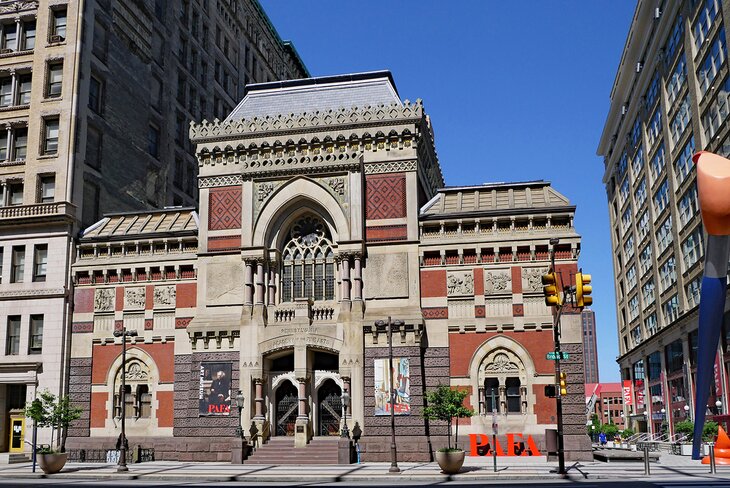
The Pennsylvania Academy of Fine Arts Museum features a collection of American Art from the 18th, 19th, and 20th centuries, including works by early American artists right through to Andy Warhol. It is housed in a National Historic Landmark building designed by American architects Frank Furness and George W. Hewitt.
The museum is part of the Fine Arts Academy, and its exhibits and archives are an important resource for the school. In addition to contemporary and historical art exhibitions, the museum features exhibits of work by the academy's students. The academy is the oldest of its kind in the United States.
Address: 118 North Broad Street, Philadelphia, Pennsylvania
13. LOVE Park
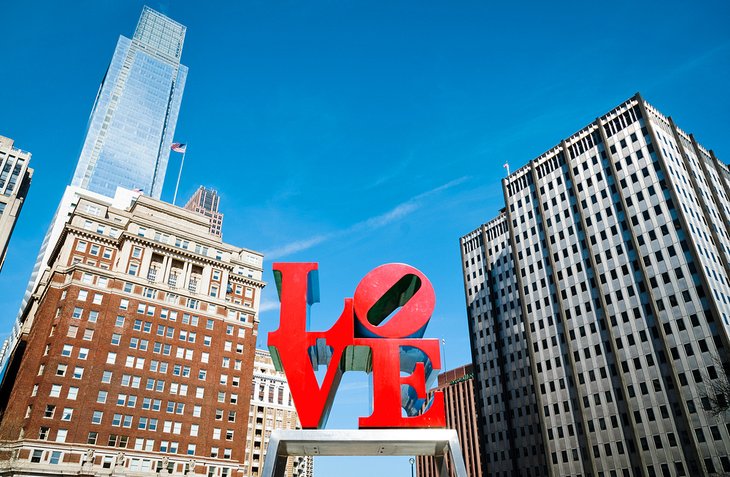
Philadelphia's favorite photo-op celebrates "the City of Brotherly Love" with Robert Indiana's iconic LOVE sculpture, installed in John F. Kennedy Plaza for America's Bicentennial celebration in 1976.
The plaza, now better known as LOVE Park, marks the entrance to Philadelphia's Museum Mile, the Benjamin Franklin Parkway, where you'll find the Barnes Foundation, The Franklin Institute, and the Philadelphia Museum of Art.
Combining green areas, trees, walking paths, benches, and open paved areas for festivals and events, LOVE Park is the scene of frequent pop-up events, including a Christmas village.
Address: 16th Street and JFK Boulevard, Philadelphia, Pennsylvania
14. Please Touch Museum
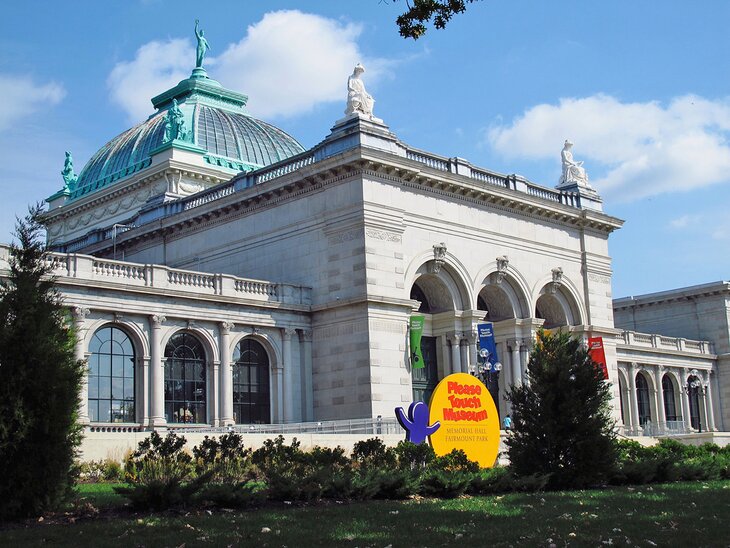
The Please Touch Museum is every child's dream — a place where they can "look with their hands" instead of just their eyes. This completely interactive museum encourages kids of all ages to learn through play, giving them the chance to explore history, fantasy worlds, space, and the big wide world around them.
Exhibits such as the kid-size city include costumes they can use to play the part while experimenting with different professions. As educational as it is fun, the River Adventures exhibit encourages children to learn about science and physics by using dams, waterwheels, levers, locks, and other water-manipulating equipment.
Kids can even explore the garden, where the museum's café grows its produce. Outdoors, you will also find a Dentzel Carousel, which is more than a century old, originally operated at the nearby Woodside Park and now fully restored to its former glory. An afternoon here is one of the favorite things to do for families in Philadelphia.
Address: Memorial Hall, Fairmount Park, 4231 Avenue of the Republic, Philadelphia, Pennsylvania
Address: Reservoir Drive, Philadelphia, Pennsylvania
15. City Hall
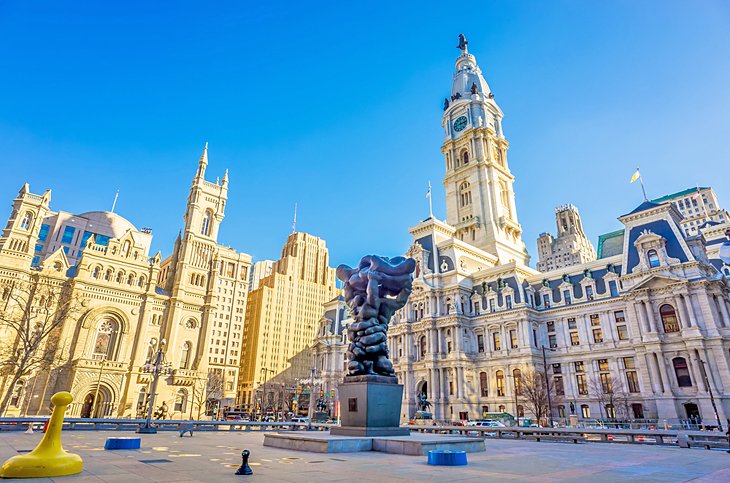
Philadelphia's City Hall is the United States' largest municipal building, with nearly 15 acres of floor space. Built on a foundation of solid granite, the building supports a 548-foot tower, which is the world's tallest masonry structure lacking a steel frame.
At the top of the tower sits a 27-ton statue of William Penn, and at his feet, an observation deck provides tourists with a view of the entire city, as well as the park below, which features a fountain, lawns, and a café. Tickets for the guided tour are required for both City Hall and the observation deck.
Address: 1401 John F Kennedy Blvd, Philadelphia, Pennsylvania
16. Society Hill Historic District
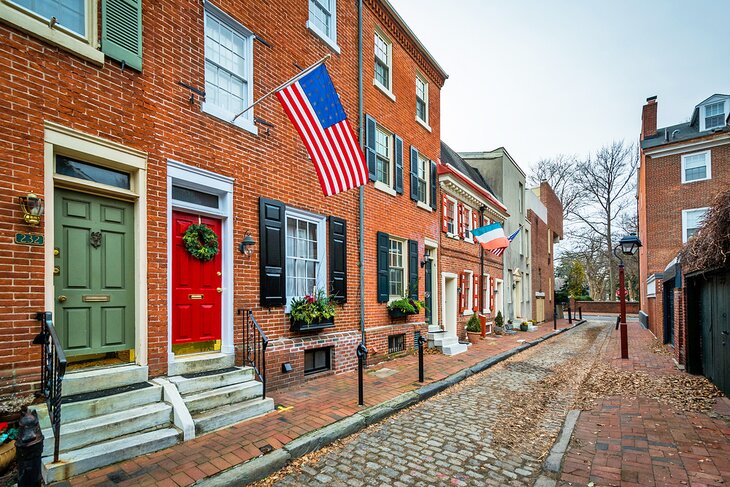
This interesting neighborhood, south of Walnut Street and east of Washington Square, contains a unique blend of 18th Century buildings, restored warehouses, new homes, colonial homes, and apartments. Some of these are occupied by galleries and other tourist-friendly retailers.
Attractions in and around this area include Washington Square, the Polish American Cultural Center, and Old St. Mary's Church, along with the Old Pine Street Presbyterian Church and the Historical Society of Pennsylvania Library.
In Washington Square, once the burial place of those who died in the fight for independence, is the Tomb of the Unknown Soldier of the Revolution, with an eternal flame. The Tomb of the Unknown Soldier is the only tomb in America erected to the memory of unknown Revolutionary War soldiers.
17. Fairmount Park
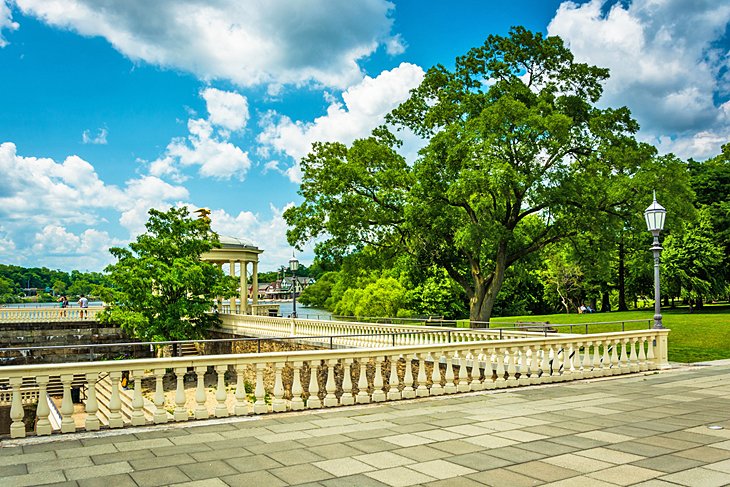
This lovely park along the Schuylkill River and Wissahickon Creek is home to the Philadelphia Zoo, the Rodin Museum, the Philadelphia Museum of Art, and the Shofuso Japanese House and garden, along with numerous other attractions and things to do. There are also gardens, ball fields, swimming pools, tennis courts, hiking paths, picnic areas, and playgrounds.
Shofuso, built in Japan in 1953 using traditional materials and tools, was brought to Philadelphia and placed with other Japanese structures that have been in the park since the 1876 Centennial Exposition. You can tour the house and Japanese gardens with a koi pond and island. In early July, the Tanabata Family Weekend includes family-friendly activities and traditional Japanese crafts.
Another attraction, at the edge of the 2,000-acre park, is the line of 15 historic boathouses along the Schuylkill River, home to local college rowing clubs. The park is a National Historic Landmark, and it is one of the nation's first parks created to serve as both a public green space and a watershed protection area.
Where to Stay in Philadelphia for Sightseeing
To appreciate this historic city and all of its treasures, it's best to stay right in the heart of it all, in the downtown's Old City. This is where many of the major attractions are located, including Independence National Historic Park. The hotels listed below are all highly-rated and conveniently located for sightseeing.
Luxury Hotels:
- One of the most highly-rated hotels in the city is the Hotel Monaco Philadelphia, by Kimpton. This is a boutique hotel in a restored building in the Old City, with a great location near Independence National Historic Park.
- Nearby, and overlooking the park, is the charming Renaissance Philadelphia Downtown Hotel. This hotel recently changed names — it was formerly known as the Franklin Hotel at Independence Park and operated under the Marriott brand.
- Near Rittenhouse Square is the Rittenhouse Hotel, a luxury property in a good location in the city center that prides itself on being family-friendly, with extras for children, and pet friendly.
Mid-Range Hotels:
- The Morris House Hotel is set in a 1787 mansion that is now a National Historic Landmark. This quaint boutique hotel, with large rooms and a lovely courtyard, is in an excellent location in the Old City
- A five-minute walk from LOVE Park and the City Hall, and even closer to the Reading Terminal Market, the elegantly appointed Canopy by Hilton Philadelphia Center City offers complimentary bikes to further explore the city.
- A little farther out from the Old City but still in a decent location and close to attractions is the Doubletree, by Hilton Hotel, Philadelphia Center City.
Budget Hotels:
- The Alexander Inn is a reasonably priced boutique hotel in the city center with large, comfortable rooms.
- Another good budget choice, within walking distance of some of the main tourist attractions, is the recently constructed Sleep Inn City Center.
- Also newly built and located in the charming Rittenhouse Square neighborhood, with its lively shopping and dining scene, Hyatt Centric Center City Philadelphia.
Tips and Tours: How to Make the Most of Your Visit to Philadelphia
Joining an organized tour is a great way to see all the highlights of Philadelphia without the hassle of navigating the busy city streets and finding a parking spot. Along the way, you'll learn stories about the city's history from an audio commentary or a professional guide, depending on the tour selected. Below are some sightseeing tours that guarantee the lowest price:
See the Sights:
- On the Philadelphia Hop-On Hop-Off City Tour, you can relax and see all the sights from an open-air double-decker bus. This convenient tour travels on a two-hour loop around the city encompassing 25 different attractions, including the Liberty Bell and Independence Hall, and you can hop on and off at your favorite stops. This pass gives you maximum flexibility to plan your itinerary, with courtesy shuttles from city center hotels and the option of a two- or three-day validity.
- If you prefer a more intimate, on-the-ground experience, consider the Philadelphia Segway Tour. You can choose between a five or 10-mile loop around the city, stopping to see sights such as the Philadelphia Museum of Art and the Italian Market. This small-group tour, with a maximum of six people, offers a more personalized experience and includes Segway training and photos.
Travel Back in Time:
- If you're a history buff, the Founding Fathers Tour of Philadelphia is a fun way to learn about the birthplace of American freedom on a walking tour around the city. Accompanied by an expert guide, this 2.5-hour tour helps you appreciate all the stories behind Philadelphia's top historical attractions and includes a visit to the Liberty Bell, Independence Hall, and other important landmarks, as well as admission fees and a refreshment.
Map of Tourist Attractions in Philadelphia