18 Top-Rated Tourist Attractions in Peru
Peru is a country of history, culture, beauty, and adventure, with a full spectrum of possibilities for travelers. The ancient Inca City of Machu Picchu is one of the highlights of any trip to South America, but there is much more to discover throughout Peru.
You can take a boat trip on the highest navigable lake in the world, look out over one of the deepest canyons in the world, try your luck sandboarding in the dunes, hike in the Andes, or fish for piranha in the Amazon. Other attractions and things to do in Peru include exploring the mysteries of the Nazca lines, walking through ancient ruins in the Sacred Valley, or experiencing modern Peru while wandering the streets of Lima.
The diversity of the landscape, the people, and the experiences here make Peru one of the most unique destinations on the continent. Find the best places to visit with our list of the top tourist attractions in Peru.
- 1. Machu Picchu
- 2. The Inca Trail
- 3. Cusco's Architectural Treasures
- 4. Lake Titicaca
- 5. Colca Canyon (Cañon del Colca)
- 6. Nazca Lines
- 7. The Sacred Valley
- 8. Ollantaytambo
- 9. Arequipa's Historical City Center
- 10. Puerto Maldonado and the Amazon
- 11. Lima's Historic Center
- 12. Ica and the Sand Dunes at Huacachina
- 13. Pisco and the Ballestas Islands (Islas Ballestas)
- 14. Sillustani
- 15. Barranco
- 16. Cordillera Blanca
- 17. Saqsaywaman
- 18. Salcantay
1. Machu Picchu
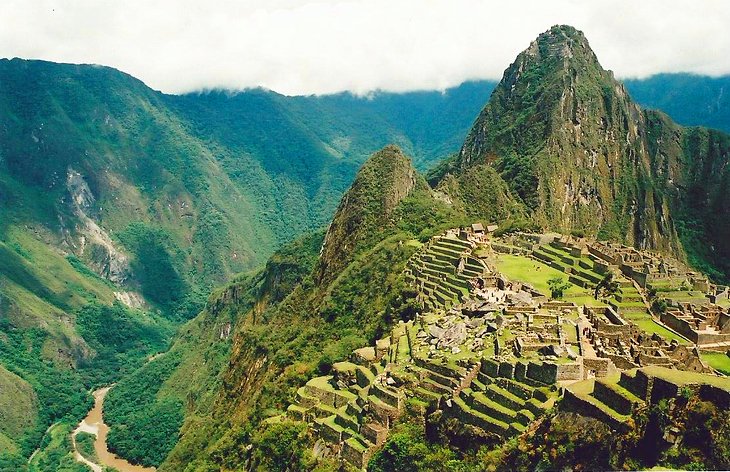
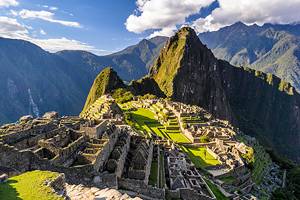
Perched high upon a ridge, 300 meters above the Urubamba River, the majestic Inca City of Machu Picchu is one of the most dramatic settings of a ruined city anywhere in the world. Almost as impressive as the ruins themselves is the spectacular backdrop of steep, lush, and often cloud-shrouded mountains.
Standing near the caretaker's hut, looking out over Machu Picchu, the jungle-covered mountains, and the river far below, you can imagine why the Incas chose this place to build their city.
Hiram Bingham came across Machu Picchu in 1911 and believed until his death that it was the "Lost City of the Incas," first documented by Spanish soldiers in the 1500s. However, historians believe the real lost city of the Incas was at Espíritu Pampa, a ruin Bingham knew of but discounted as being insignificant.
The journey is also part of the experience of visiting Machu Picchu, whether it's by hiking the Inca Trail or seeing the route by train. In either case, it's impossible not to be inspired by the scenery. Trains leave from Cusco, Ollantaytambo, or Urubamba to Aguas Calientes.
From Aguas Calientes, the town below Machu Picchu, a bus takes you up to Machu Picchu, about a 20-minute drive along a harrowing switchback road. It is possible to walk up this road to the site, but this is a long, uphill climb and not recommended.
The admission rules are that you must tour with a guide, you must follow a set tour route. You also have to enter the park at a designated time. Be aware that many websites say they sell tickets, but be sure to go to the official site.
The high season is June to August, but the two months on either side of this also see decent weather and can be a good time to visit with fewer crowds.
Read More: Best World Heritage Sites
2. The Inca Trail
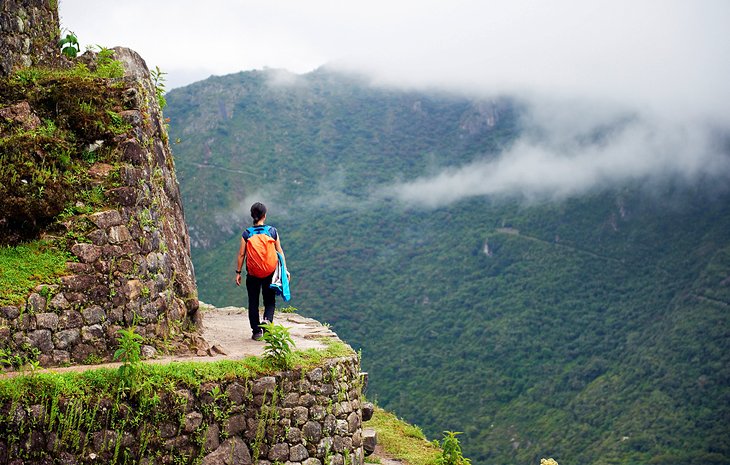
The famous Inca Trail is a four-day hike, which terminates at Machu Picchu, and is regarded by many as the highlight of their trip to Peru. This scenic trail is often more demanding than what many people are expecting, but it's also rewarding and one of the most popular things to do in Peru.
A couple of different starting points for the Inca Trail exist, but the traditional four-day hike begins at km 82 of the Cusco - Aguas Calientes rail line. From this point, the trail passes more than 30 Inca ruins and traverses through spectacular scenery. The most difficult portion of the trail is the second day of the hike, with a climb of 1,200 meters in elevation gain and two high passes.
The hike must be done with an agency, and reservations should be booked well in advance, particularly in the high season of June to August.
Some agencies offer a shorter version of the hike, which entails either the last two days or just the last day of the hike. There are campgrounds at intervals along the trail and one at the base of Machu Picchu.
Depending on the type of tour, hikers can either carry their own backpack or have it transported for them. The daily number of hikers and porters on the trail is strictly enforced.
3. Cusco's Architectural Treasures
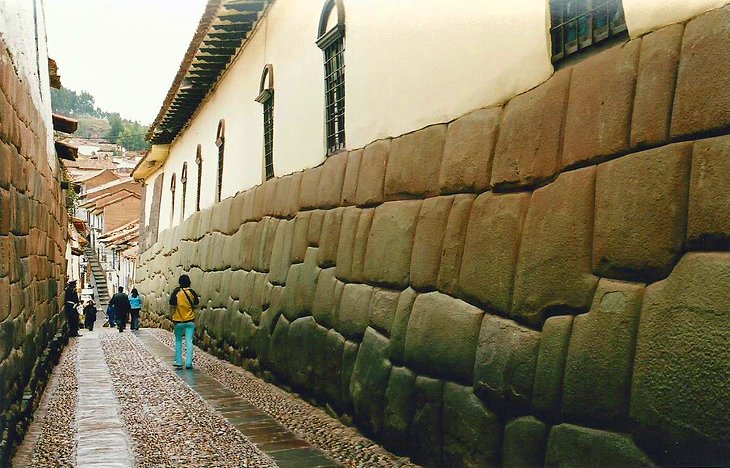
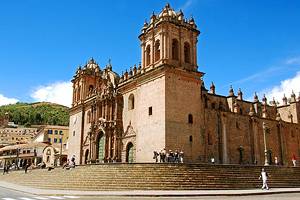
Walking through the streets of Cusco is like wandering through a museum, with history built upon history in this UNESCO World Heritage Site. Inca ruins have been used in the foundations of many of the lovely old colonial buildings lining the narrow roads, showcasing the city's long history.
The main square, Plaza de Armas, in the city center is home to the Cathedral and La Compania, two equally impressive structures. The square is also a great place to start a walking tour, grab a meal, or people watch during the day.
And while there are countless buildings and museums worth visiting, the church of Santo Domingo, resting on the ruins of the Inca site of Coricancha, is one of Cusco's must-see attractions.
- Read More: Top-Rated Tourist Attractions in Cusco
4. Lake Titicaca
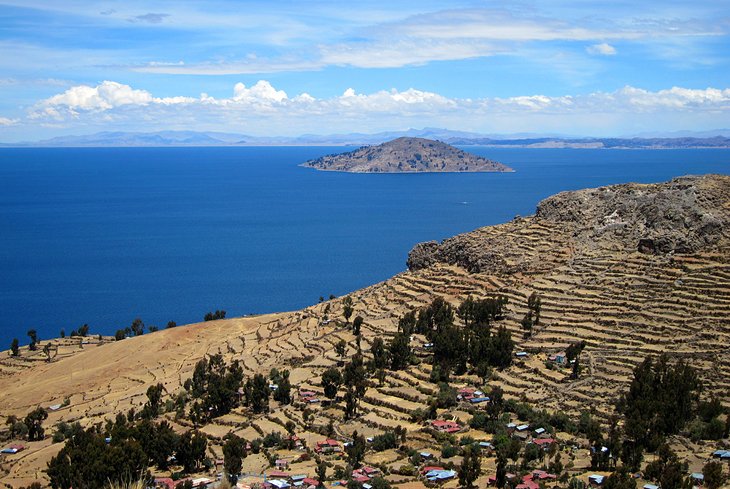
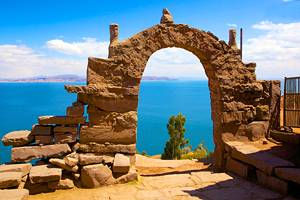
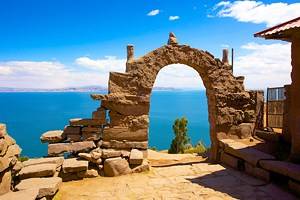
The sparkling blue water of Lake Titicaca is surrounded by rolling hills and traditional small villages. The lake area is a mix of beautiful scenery and culture that sets it apart from other regions of the country. Sitting at 3,820 meters above sea level, Lake Titicaca is known for being the highest navigable lake in the world.
A boat trip to the islands and surrounding villages is the best way to appreciate the lake. One of the main tourist attractions is the Uros Floating Islands (Islas Flotantes), which sustain small communities of Uros Indians. These are man-made islands constructed of reeds that have sustained a traditional way of life since the time of the Incas.
What you'll see on tours to these islands is designed for tourism, but it does offer a glimpse into a traditional way of life. The floating islands are only one very small part of Lake Titicaca's attraction, with the real charm lying in the small villages in the hills along the shores of Titicaca and on the main islands of Isla Taquile and Isla Amantani.
The main gateway to Lake Titicaca is the city of Puno, where you'll find hotels, restaurants, and travel agencies. There are trains and buses to Puno and flights in and out of the nearby city of Juliaca.
5. Colca Canyon (Cañon del Colca)
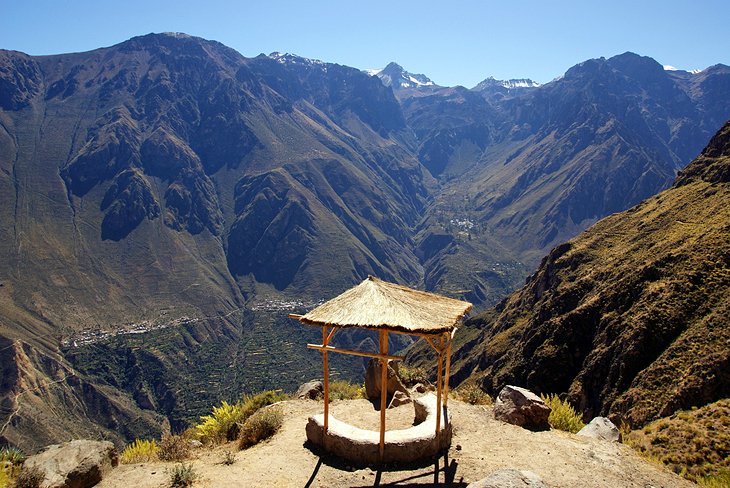
Although it was once thought to be the deepest canyon in the world, Colca Canyon (Cañon del Colca), twice as deep as the Grand Canyon, is the second deepest after nearby Cotahuasi Canyon. The canyon reaches a depth of 3,400 meters and is the result of a seismic fault between two volcanoes. At the base far below is a winding river.
The Colca Canyon area has been inhabited for thousands of years and was home to the Collagua, Cabana, and eventually the Inca peoples. Stone terracing along the canyon walls dates to AD 800 and is still in use today.
The canyon is about a four-hour drive from Arequipa. Day trips to the canyon are available from Arequipa but two or more days are recommended considering the driving time involved in accessing the canyon. Besides gazing out at the canyon, there are also hot springs, churches, villages, and Inca ruins to explore. Condors are also a big attraction in Colca Canyon as they soar past the cliff walls.
6. Nazca Lines
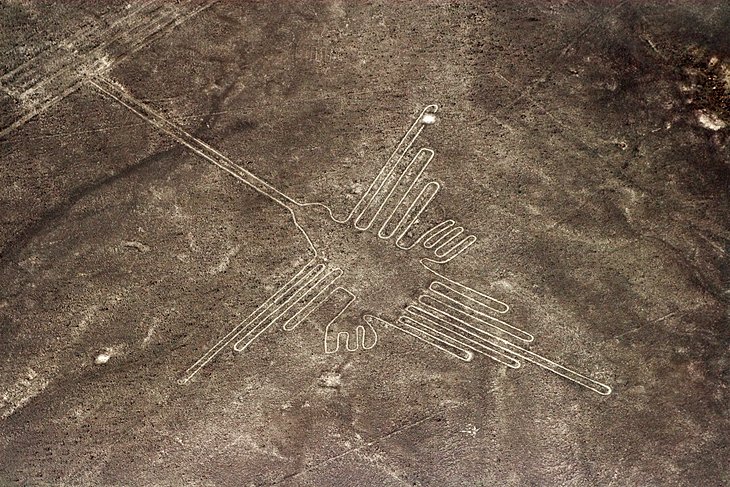
The mysterious Nazca lines are an unusual sight that will leave you with a sense of awe. These huge images on the desert floor were relatively undiscovered until planes flying over the area in the 1920s saw the lines from the air and realized they formed distinct patterns and images.
Until that time there was some recognition of the hillside drawings near Nazca and Paracas, which can be seen from ground level. However, the huge drawings on the flat desert floor are so large that it requires an aerial view to be appreciated.
From the air, it is possible to see 70 different plant and animal drawings as well as hundreds of lines and other geometrical shapes. Some of these lines stretch as long as 10 kilometers, and they are spread over hundreds of square kilometers. Most notable among the figures are a lizard measuring 180 meters long, a condor with a 130-meter wingspan, and several others that include a monkey, hummingbird, killer whale, and spider.
Although it is not known exactly who created the lines or how and why, theories hold that the lines were the product of the Paracas and Nazca cultures sometime between 900 BC and AD 600. Why they were created is the subject of much debate. Some of the theories put forward suggest the lines were a type of astronomical calendar for agriculture, an alien landing pad, a running track, walkways joining ceremonial sites, or part of a water cult.
The lines were created by removing the dark surface layer of stones and piling them at the sides of the lines, creating a contrast between the dark stones and the exposed lighter soil below. Flights can be booked in advance or on a walk-in, first-come first-serve basis.
Approximately four kilometers outside of Nazca are the Cantalloc Aqueducts. Built around AD 300 to 600, the aqueducts were designed to provide a year-round water source for the area. They conduct water from the mountain springs down to Nazca by means of underground canals. Some of the Cantalloc Aqueducts are still used by farmers in the area.
Also of interest in the area is the Cemetery of Chauchilla, which contains Nazca remains and mummies.
7. The Sacred Valley
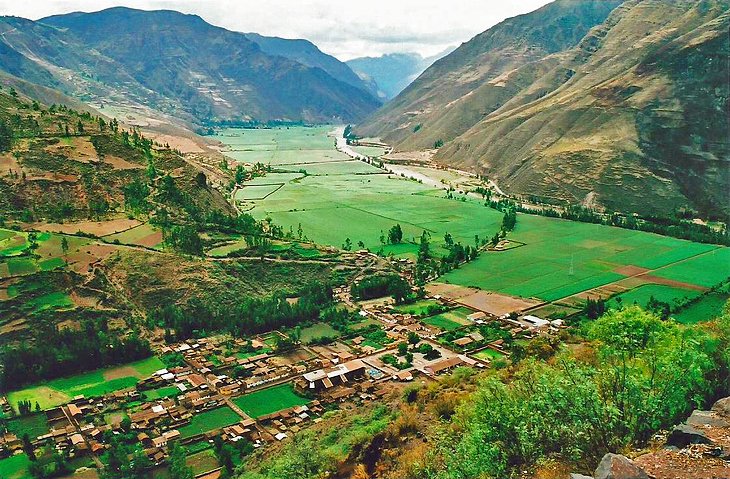
Less than an hour's drive north of Cusco is the beautiful Sacred Valley and the towns of Pisac, Urubamba, and Ollantaytambo. This fertile valley has many Inca ruins worth exploring but is also a peaceful area to spend some time wandering through markets or soaking up local culture.
Among the highlights in the valley are the Pisac Ruins and the Sunday Market in Pisac (smaller market days are held on Tuesdays and Thursdays). Here, you'll find an amazing selection of local handicrafts.
A little out of the way but worth the trip is the town of Moray with circular terracing used as an agricultural testing area by the Incas. You've probably seen photos of the perfectly circular terraces on social media sites and other tourist sites.
Researchers feel that this innovative style of farming was the Inca's version of a greenhouse. Different levels and different areas had warmer or cooler temperatures along with more or less sun. Moray is located near the small village of Maras and is at a gasp-inducing elevation of 11,500 feet.
While visiting Moray, be sure to stop in and see the salt mines at Salinas. These fascinating mines have been in use since the time of the Incas. The Salinas mines produce a sought-after pink color salt along with traditional white salt.
The intricate set up of the salt mines is the main attraction here. The high-saline-content water emerges from a spring at the top of the mine and is routed through a complex set of canals through square evaporation ponds.
An ideal place to snap a photo is from the top of the salt ponds, where you'll have the white salt ponds juxtaposed against the backdrop of the green valley in the distance.
8. Ollantaytambo
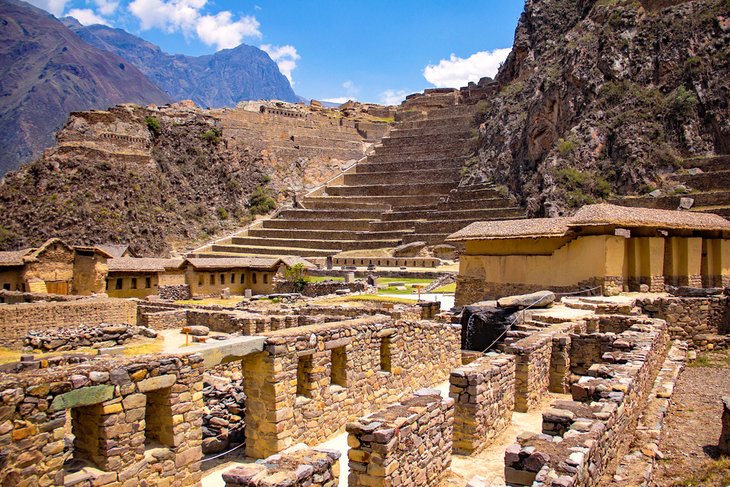
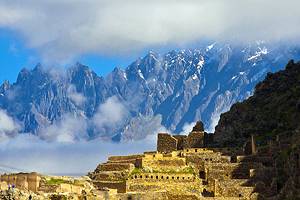
The ruins and fortress at the beautiful little town of Ollantaytambo should be on your list of places to see when visiting the Sacred Valley. The town is very walkable and fun to explore. Like Pisac, it's home to an excellent assortment of vendors selling handmade handicrafts.
It's a photogenic spot with two imposing Inca ruins towering over the village. Take a bit of time to wander up the hill and explore the ruins. Highlights include the impressive Wall of the Six Monoliths and the Bath of the Princess. Nearby are the Terraces of Pumatillis and the Pinkuylluna, an ancient storehouse.
9. Arequipa's Historical City Center
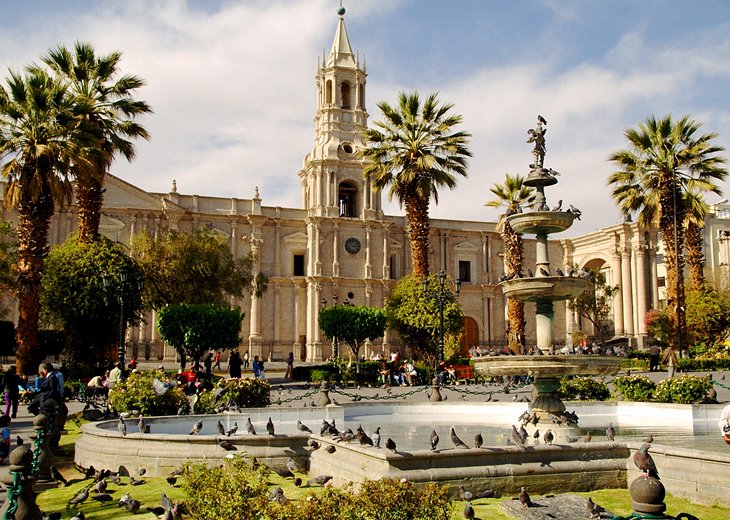
Arequipa, at more than 2,300 meters, is often regarded as Peru's most beautiful city. Set against a backdrop of snow-capped mountains, the city center is a designated UNESCO World Heritage Site. Arequipa's main claim to fame is the old architecture constructed of sillar stone, a volcanic rock that radiates a bright color in the sunlight. Most of the colonial buildings in the historic city center are made from this stone, giving rise to its nickname of the "white city."
Arequipa is also often a stopping-off point for those looking to visit the Colca Canyon (Cañon del Colca), which is about a four hour's drive from the city.
10. Puerto Maldonado and the Amazon
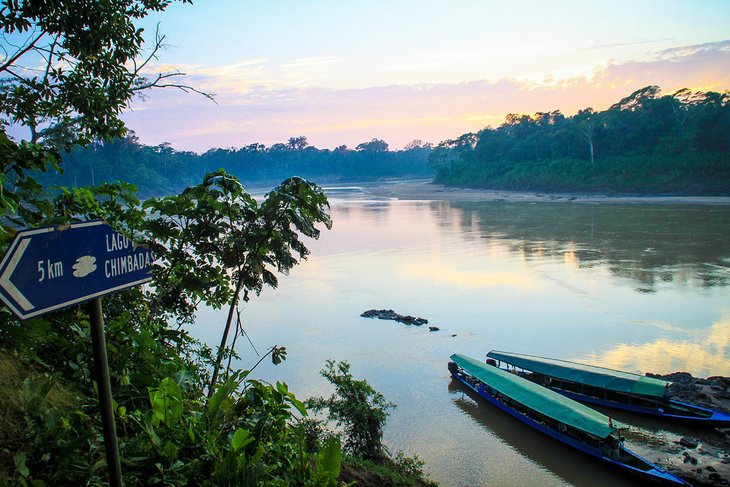
Just a half hour flight from Cusco, Puerto Maldonado is a key jumping-off point for tours of the Amazon. This is a completely different experience than what you will find in other parts of Peru, with hot humid jungle and a chance to see all kinds of unique wildlife. Caimans, capybara, monkeys, parrots, turtles, and piranhas are what you can expect to find in this part of the country.
The Reserva Nacional Tambopata and the Parque Nacional Bahuaja Sonene are the two main attractions, and they are well serviced by a number of jungle lodges. The Reserva Nacional Tambopata jungle lodges are approximately a one-hour boat ride from Puerto Maldonado. Parque Nacional Bahuaja Sonene is across the river from the Parque Nacional Madidi in Bolivia and takes about four hours to reach by boat. Tours typically range from a couple of days to week-long adventures.
11. Lima's Historic Center
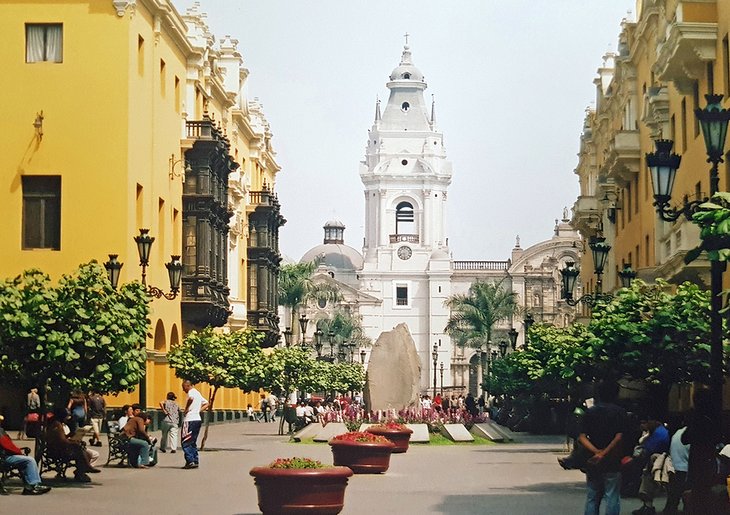
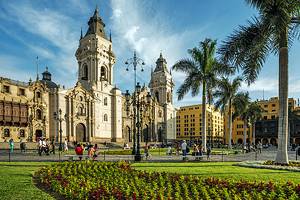
Lima's Historic Center is a UNESCO World Heritage Site. The city was founded in the 1500s and, although many of the original structures were destroyed, it still holds significant historical value and is a beautiful place to wander around.
One of the most pleasant places to visit in Lima is the main square, Plaza de Armas (Plaza Mayor), in the heart of the city's historic district. A majority of the structures were rebuilt following the devastating earthquake of 1746. The highlights around the Plaza de Armas are the cathedral on the east side and Government Palace (Palacio del Gobierno) on the north side. Also of interest are the Archbishop's Palace and the Casa del Oidor.
Leading off the square is the pedestrian street, Jiron de la Union, with shops, restaurants, and the historic Iglesia de La Merced.
- Read More: Top-Rated Tourist Attractions in Lima
12. Ica and the Sand Dunes at Huacachina
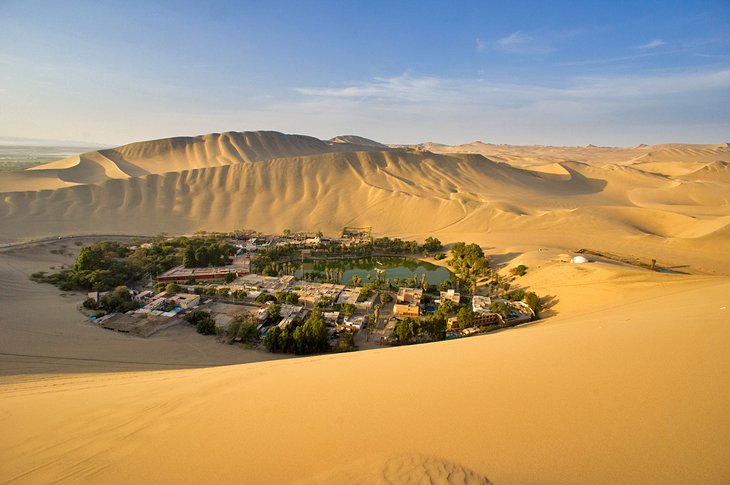
For the sporting type looking to try something a little different, the oasis resort of Huacachina on the outskirts of Ica has just the answer. This picture-perfect, palm-fringed resort town just west of Ica is situated around a lagoon surrounded by huge sand dunes, some of which reach 1,000 meters in height.
People come here to try out the sport of sandboarding. Similar to snowboarding, sandboarding involves surfing down the sand dunes on specially made sand-boards, which can be rented in the area. For the less coordinated, renting dune buggies is another great way to get out and enjoy the landscape.
Ica is slightly higher than the ocean and consequently is not affected by the usual coastal mist like other towns along this stretch. The town has a year-round sunny and dry climate, making it a good place to visit at any time.
13. Pisco and the Ballestas Islands (Islas Ballestas)
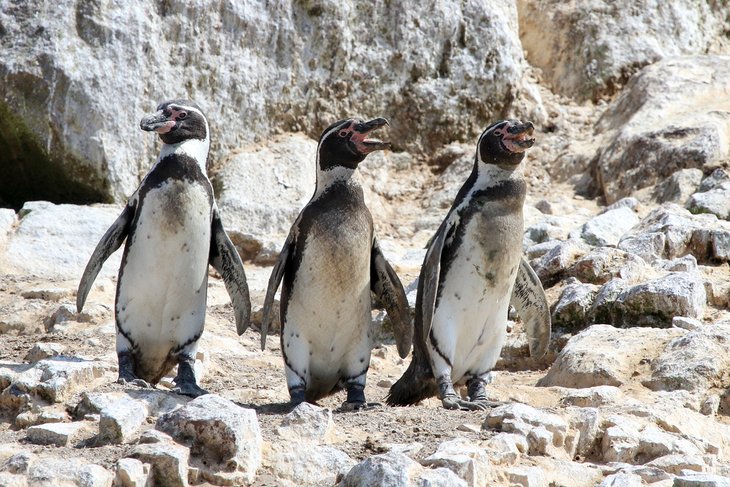
The main reason to come to Pisco, about 200 kilometers south of Lima, is to see the nearby Islas Ballestas and the Reserva Nacional de Paracas on the Paracas Peninsula. Almost directly west of Pisco, the Islas Ballestas, sometimes referred to as the "poor man's Galapagos," are home to hundreds of thousands of birds, large colonies of sea lions, pelicans, penguins, and dolphins.
Boat tours from Paracas and Pisco, which visit the islands daily, leave in the morning. The full tour takes you past the "Candelabra," a hillside geoglyph seen from the coast, and then spends a considerable amount of time boating around the islands watching for wildlife. This tour is generally a half-day trip, returning around noon.
The Paracas Peninsula, jutting out into the Pacific Ocean just south of Pisco, is home to the Reserva Nacional Paracas and the largest section of protected coastline in Peru. The shoreline of the Paracas Peninsula supports a huge variety of wildlife, with approximately 200 species of seabirds, two types of sea lions, a rare type of otter, and the endangered Humboldt penguins.
14. Sillustani
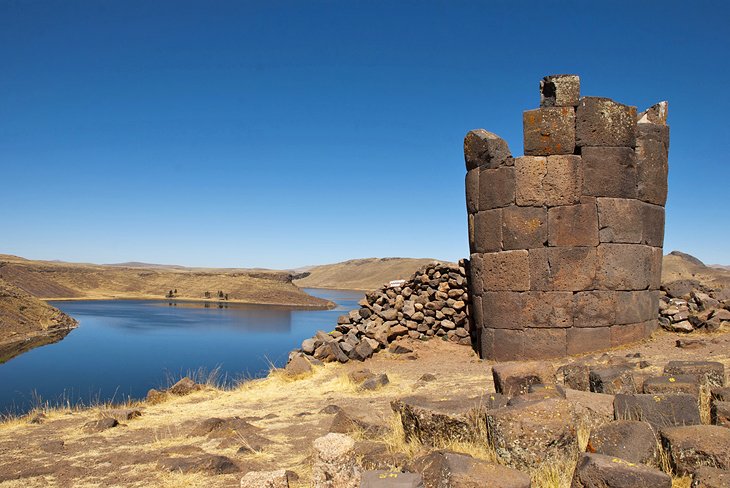
Sillustani, outside the city of Puno and not far from Lake Titicaca, is the site of some of the area's most impressive funerary towers (chullpas). Standing as high as 12 meters, these structures were built by the Colla people around AD 600 to bury their nobility. Entire families, along with food and personal possessions, were buried in these cylinders.
Most of the towers are set in a scenic area along the bank of Lake Umayo, just walk up a hill from the parking lot to the plateau above. The towers stand at the far end of the field with the lake behind. Below the parking lot is a small marshy lake where locals can be seen poling along in their boats, harvesting reeds.
15. Barranco
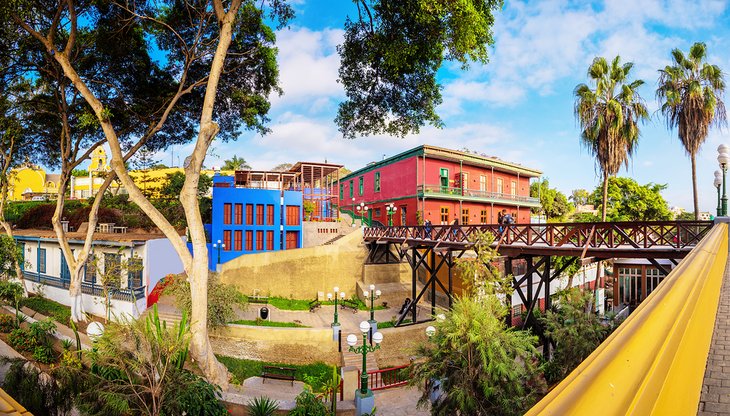
The quaint hillside district of Barranco, just south of Central Lima and Miraflores, is a charming area within easy commuting distance of downtown Lima. With unassuming colorful colonial architecture lining the narrow streets and hillside ocean views, the area offers a much more relaxed pace than the city.
The area has long been popular with artists and poets, giving it a Bohemian feel. This is a great place to wander in the afternoon or enjoy a meal, particularly at sunset, at one of the restaurants overlooking the ocean. Besides the atmosphere, the one main tourist attraction in Barranco is the Puente de Los Suspiros (Bridge of Sighs).
- Read More: Top-Rated Tourist Attractions in Lima
16. Cordillera Blanca
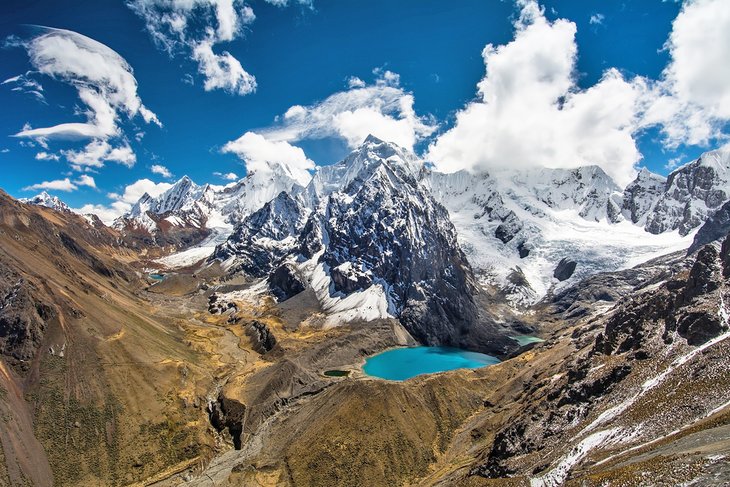
A stunning area of mountains and valleys, the Cordillera Blanca draws mountain climbers, hikers, and outdoor enthusiasts from around the world. The Cordillera Blanca is home to Peru's highest peak, Huascaran. Also located in the same area of the Andes are sixteen other mountains over 6,000 meters in height.
Getting here takes a bit of work, and you need to be well prepared if you are planning an excursion into the heart of this region. The weather is extremely changeable; it can be snowing one minute and then blazing hot the next.
Some of the most notable treks include the Santa Cruz, the Alpamayo, and the Rurec Shaqsha. The best time to visit is from April through to October.
17. Saqsaywaman
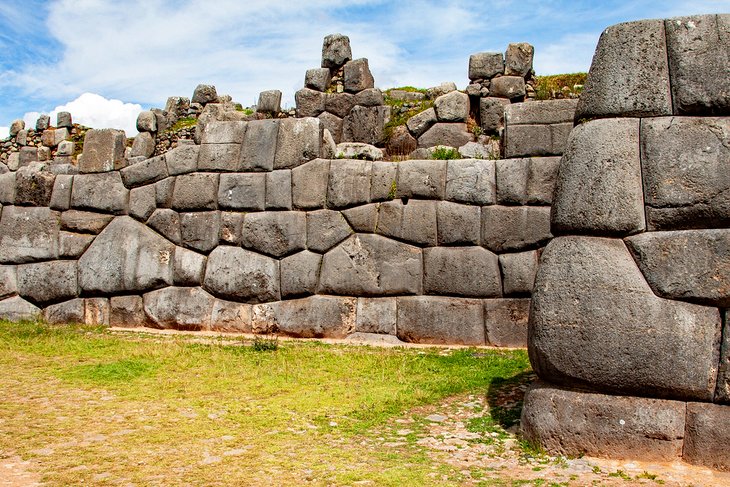
If you are staying in Cusco, an afternoon or day trip to nearby Saqsaywaman is definitely in order. This site with its towering monoliths of rock is located high above the city at a gasp-inducing altitude of 3,701 meters (12,142 feet).
The site is notable for the massive blocks that have been intricately fitted together without the use of mortar. It's due to this incredible feat of engineering that the fortress walls have been able to survive devastating earthquakes that have destroyed parts of nearby Cusco.
18. Salcantay
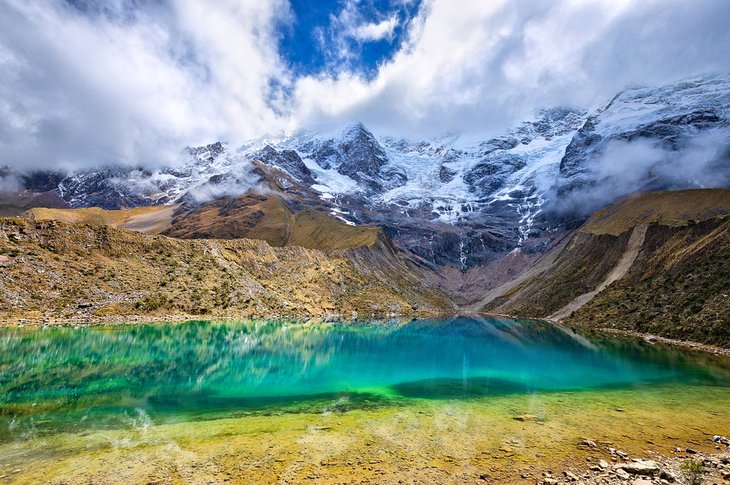
The spectacular mountain peak known as Salcantay is fast becoming a "go-to" hiking destination in Peru. Towering above the surrounding landscapes, the 20,574-foot-high peak is jaw-droppingly beautiful but fortunately not overrun with visitors.
The easiest way to see Salcantay is hike the Salcantay Trail – a 37-mile (60-kilometer) trek that ends at Machu Picchu. Along the way, you'll ascend to 15,190 feet (4,630 meters) above sea level at your highest point, an elevation sure to take your breath away. Don't despair, you can soothe all your sore muscles in the hot springs in Cocalmayo along the way.