Latin Quarter, Paris: 16 Top Attractions, Tours & Hotels
Atmospheric Parisian cafés, quirky bookshops, and stylish student hangouts exemplify the Latin Quarter's special Bohemian charm. The area's vibrant and soulful ambience make it one of the most interesting quarters of Paris to explore.
The Latin Quarter dates back to the Middle Ages, when the Université de Paris was founded in the 13th century. La Sorbonne college of the Université de Paris attracted scholars from all over Europe who learned and spoke Latin, explaining the quarter's name. There are still many higher education institutions in this historic academic quarter, including La Sorbonne and the Collège de France.
Roughly bounded by Boulevard Saint-Michel, Boulevard Saint-Germain-des-Prés, and the Seine River, the Latin Quarter overlaps with the city's 5th and 6th arrondissements in the Left Bank.
Most of the Latin Quarter is a medieval maze of winding, narrow streets and stone-paved alleyways, with a few quiet, hidden squares. Except for the Boulevard Saint-Michel, this quarter has a distinct old-world character.
Tourists will be rewarded by wandering and getting lost in the pedestrian lanes. Many hidden treasures are awaiting discovery, including ancient churches, picturesque riverside areas, and the ruins of a Roman amphitheater, as well as interesting locally owned boutiques and authentic French bistros.
The Latin Quarter is also appreciated for its cultural events and nightlife. The area is brimming with casual eateries, cinemas, museums, art galleries, and theaters. Favorite things to do in the area include dining on the Rue Mouffetard and shopping at the open-air bookshops along the Seine.
Learn about the best places to visit in this captivating area, with our list of the top attractions in the Latin Quarter.
- 1. Musée de Cluny (Musée National du Moyen-Âge)
- 2. Panthéon
- 3. Eglise Saint-Sevérin Saint-Nicolas
- 4. Boulevard Saint-Michel & Place Saint-Michel
- 5. Rue Mouffetard Restaurants
- 6. Atmospheric Medieval Alleyways & Pedestrian Streets
- 7. Bouquinistes & Bookshops
- 8. Dining by the Seine River
- 9. Eglise Saint-Étienne-du-Mont
- 10. Place de l'Odeon
- 11. Eglise Saint-Julien-le-Pauvre
- 12. Sorbonne Université
- 13. Jardin des Plantes & Musée National d'Histoire Naturelle
- 14. Arènes de Lutèce
- 15. Grande Mosquée de Paris
- 16. Musée National Eugène Delacroix
- Map of Latin Quarter, Paris: Top Attractions, Tours & Hotels
1. Musée de Cluny (Musée National du Moyen-Âge)
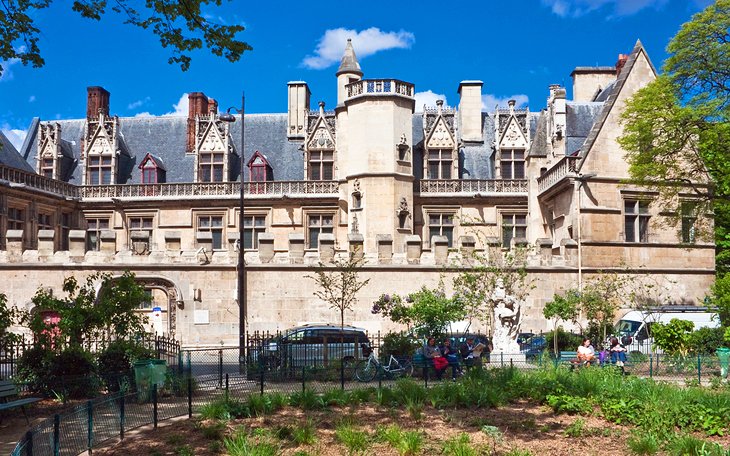
Discover the beauty and depth of medieval art at the Cluny Museum. This National Museum of the Middle Ages is housed in the 15th-century Hôtel des Abbés de Cluny, formerly the Paris town house for the Benedictine abbey of Cluny based in the Burgundy region.
The building happens to lie on the excavation site of an ancient Roman bath complex. One of the museum's rooms is in the ruins of the former Frigidarium (cold baths), which now displays Roman and Gallic sculptures of the 1st century AD.
The Cluny Museum is most renowned for its collection of medieval tapestries. The oldest of the tapestries is the Flemish Offrande du Coeur, a delicate declaration of love created in the 15th century.
The museum's greatest treasure is the Lady with the Unicorn (Dame à la Licorne) tapestry series. Made in the 15th and early 16th century, these exquisitely detailed tapestries were created in the "millefleurs" ("thousand flowers") style of the time. Intricate patterns of flowers are interwoven among birds, rabbits, monkeys, and friendly dogs.
The series of six tapestries represents an allegory of the five senses. However, the meaning of the sixth tapestry with the inscription "À mon seul désir" ("To my sole desire") is still a mystery to scholars.
Renovations Update: The Musée de Cluny is currently closed for renovations. The museum is scheduled to reopen in early 2022.
Address: 28 Rue du Sommerard 75005, Paris (Métro Cluny-La Sorbonne, Saint-Michel, or Odéon station)
Official site: https://www.musee-moyenage.fr/en/home.html
2. Panthéon
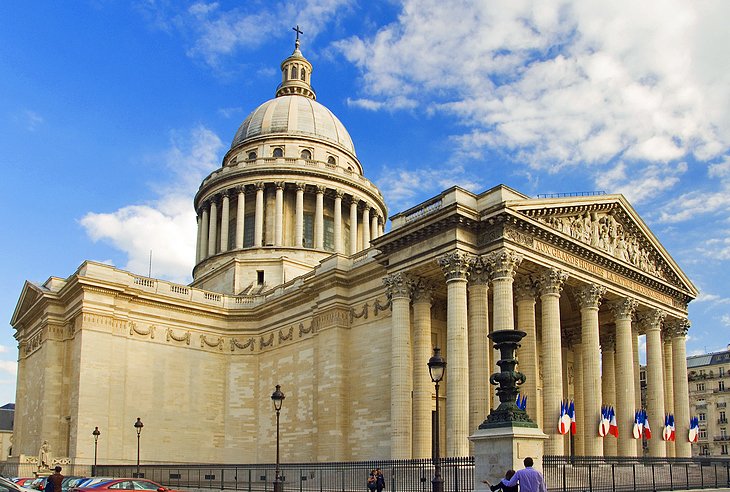
Presiding over the Latin Quarter from its slightly elevated perch on the Montagne Sainte-Geneviève (Saint-Genevieve hilltop), the Panthéon is a mausoleum that holds the tombs of France's most prominent citizens.
Above the porch featuring Corinthian columns, an inscription reads: "Aux Grands Hommes La Patrie Reconnaissante," which means "to the great men who are recognized by their country."
The celebrated architect Jacques-Germain Soufflot was commissioned by King Louis XV to build a grandiose church replacing the ruined abbey of Sainte Geneviève. Soufflot created a masterpiece of Neoclassical style, with its facade modeled after the ancient Pantheon in Rome and dome inspired by St. Paul's Cathedral in London.
The entire space of the Panthéon is devoted to remembering the accomplishments of France's most influential writers, scientists, politicians, and other historical figures. Foucault's pendulum, that proved the rotation of the earth, was demonstrated here in 1851 and still is on display. There are more than 70 illustrious men buried in the Panthéon's crypt. Among the famous names are the authors Victor Hugo and Emile Zola, as well as the philosophers Voltaire and Rousseau.
Since 1995, six of France's most esteemed female citizens have been buried in the Panthéon including Nobel Prize-winning physicist Marie Curie.
To admire views of the Paris cityscape, tourists can climb (200 steps) up to the Panthéon's dome. Open from April until October, the dome's colonnaded balcony provides breathtaking 360-degree panoramic outlooks. It's easy to spot the city's most important monuments, including Notre-Dame Cathedral, the Louvre, and the Eiffel Tower.
Address: Place du Panthéon, 75005 Paris (Métro: Luxembourg station)
3. Eglise Saint-Sevérin Saint-Nicolas
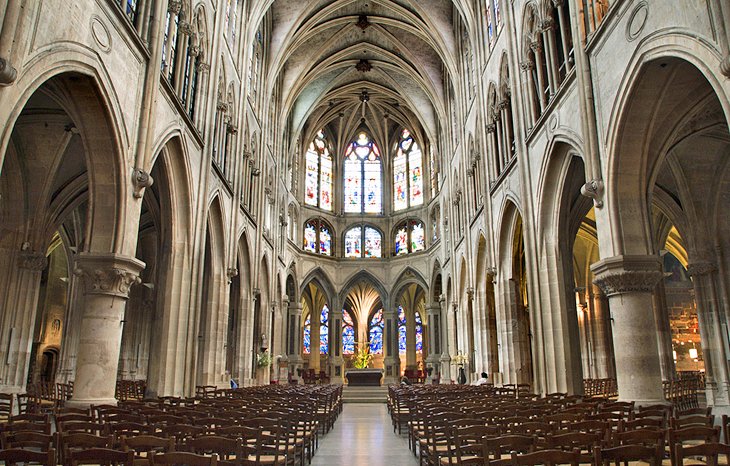
The Eglise Saint-Séverin Saint-Nicolas is one of the finest examples of Flamboyant Gothic architecture in Paris. With its dark sanctuary illuminated by candles, the church has a somber and spiritual ambience.
The architecture combines various styles, with a simple nave from the 13th-century and stained-glass windows dating from the 14th and 15th centuries. Other noteworthy details of the interior include the pillars with elaborately carved capitals and fanciful keystones.
The Church of Saint-Séverin Saint-Nicolas regularly hosts classical organ recitals open to the public. Many visitors enjoy attending a concert here and find that listening to the holy music adds to the experience.
Address: 3 Rue des Prêtes-Saint-Séverin, 75005 Paris (Métro: Saint-Michel, Cluny-La Sorbonne, or Maubert-Mutualité station)
4. Boulevard Saint-Michel & Place Saint-Michel
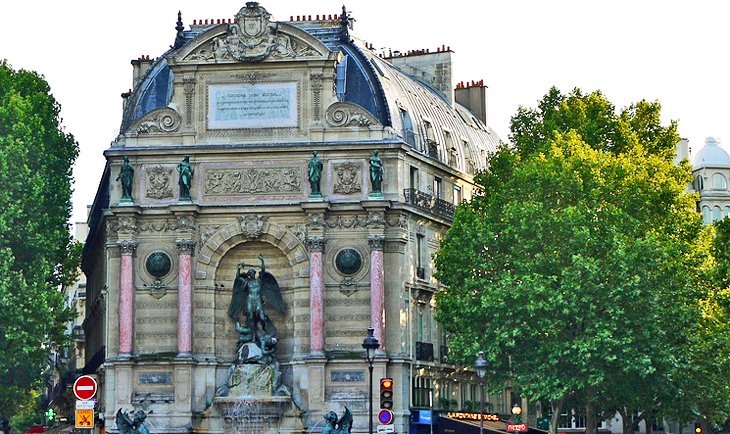
The busy main thoroughfare of Boulevard Saint-Michel and the bustling Place Saint-Michel bring modern energy to the Latin Quarter. In contrast to the narrow medieval streets that are tightly packed in most of the quarter, the Boulevard Saint-Michel is a wide modern avenue designed by Haussmann in the 19th century. The street is lined with artsy bookstores, clothing shops, busy cafés, and other student hangouts.
At the end of Boulevard Saint-Michel, a few steps away from the Seine River, is the Place Saint-Michel. This atmospheric public square is the real heart of the Latin Quarter. The square is crowded day and night with locals on the way to the Métro, students headed to class, and tourists arriving from the Métro station to explore the nearby sights.
The centerpiece of the Place Saint-Michel is the monumental Fontaine Saint-Michel. Commissioned by Haussmann under Napoleon III, this stunning fountain depicts the archangel Michael vanquishing the Devil. The allegorical image evokes the theme of good battling evil. In the local tradition, tourists may want to toss a coin into the fountain and make a wish.
Address: Boulevard Saint-Michel, 75005 Paris (Métro: Saint-Michel or Cluny-La Sorbonne)
5. Rue Mouffetard Restaurants
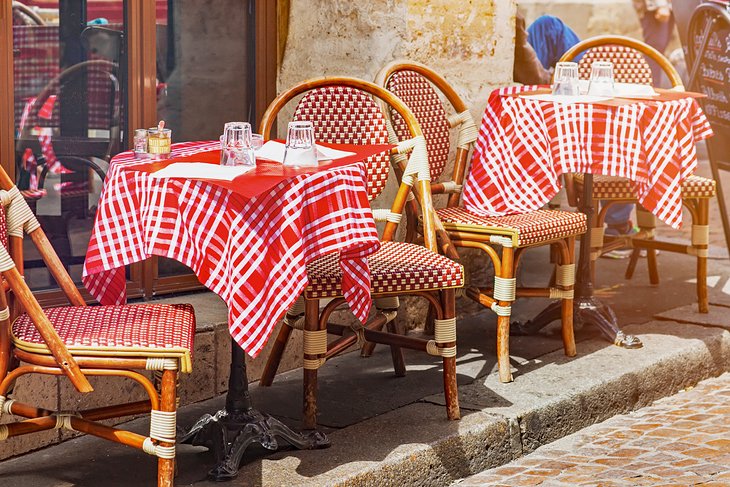
On the gently sloping Montagne Sainte-Geneviève hill, the Rue Mouffetard is one of the oldest and most atmospheric streets in Paris. Known simply as "La Mouffe," this narrow street is lined with historic shops, 16th to 18th-century houses, and quaint restaurants that are popular with students. The street is especially lively on weekend evenings when many street musicians come out to entertain diners.
Rue Mouffetard begins near the Panthéon and ends at the Place de la Contrescarpe, a pleasant square with many sidewalk cafés. One of Paris' most noteworthy market streets, the Rue Mouffetard is a bustling local grocery-shopping destination renowned for its selection of bakeries, cheese shops, and other specialty food stores. There are also traditional market stalls (only open in the mornings) stocked with an abundance of colorful fresh fruits and vegetables.
6. Atmospheric Medieval Alleyways & Pedestrian Streets
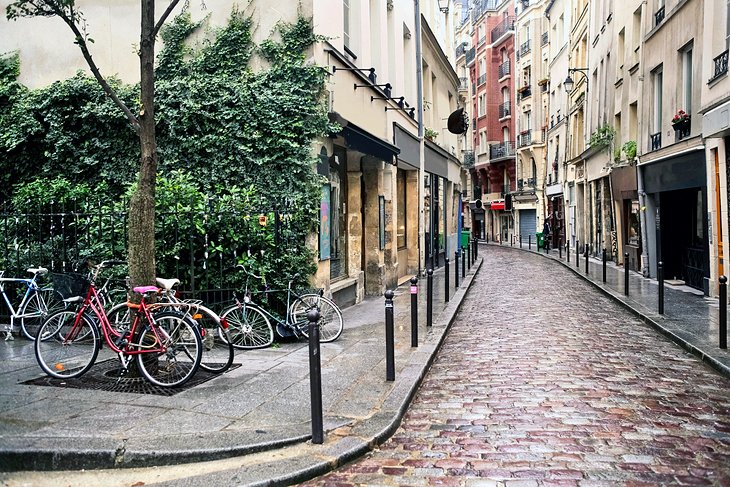
Getting lost in the Latin Quarter's labyrinth of stone-paved medieval streets is a must-do tourist experience. Wandering around the winding traffic-free thoroughfares offers a glimpse of what Paris was like before it was modernized by Haussmann in the 19th century.
The narrowest street is Rue du Chat Qui Pêche (Street of the Cat who Fishes), a cobblestone alleyway that runs from Rue de la Huchette to the Seine River and provides only enough space for pedestrians to walk single-file.
The Rue du Chat Qui Pêche runs into the Rue de la Huchette, a lively pedestrian-only street lined with small restaurants, take-out eateries, and ice-cream shops geared to tourists and students (but not gourmands). Taking a walk down this two-block stretch gives visitors a taste of the bustling Latin Quarter atmosphere.
On the Rue de la Huchette, the Caveau de la Huchette, appeals to jazz lovers (especially those who appreciate New Orleans jazz). Since 1947, this legendary jazz club has hosted performances by celebrated musicians. The venue continues to be a favorite spot for dancing and listening to jazz.
Other historic streets worth exploring in this area include the pedestrian-only Rue Saint-Sevérin (where the Eglise Saint-Sevérin is located), which has several quaint casual restaurants, and the Rue de la Harpe, a side street full of restaurants, many of which have sidewalk terraces for soaking up the street scene.
7. Bouquinistes & Bookshops
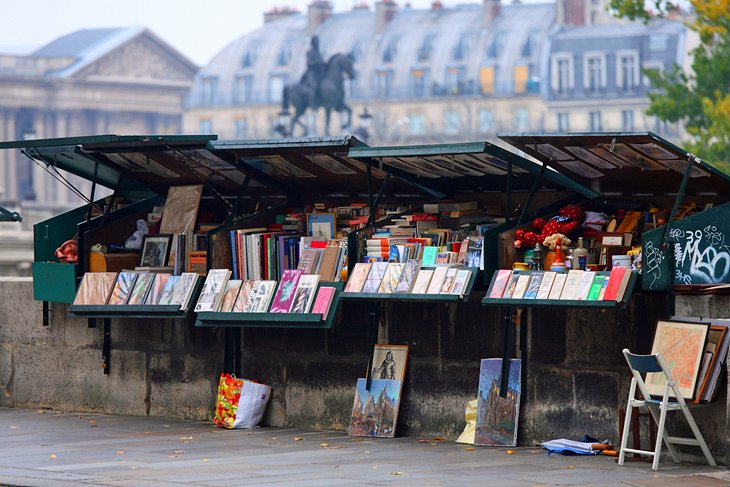
Riverside booksellers called Les Bouquinistes are a quintessential feature of the Latin Quarter. These open-air bookshops are found alongside the Seine, from the Quai de la Tournelle to the Quai Voltaire, and on the quays from the Pont Marie (bridge) to the Quai du Louvre. It would require a four-kilometer walk (circling the Seine) to see all the bookshops.
Les Bouquinistes comprise over 200 "book boxes" (run by independent booksellers) that are stocked with classic and modern literary works. In addition to used and new books, there are also postcards and posters for sale.
The Latin Quarter's ancient streets are also filled with many eclectic book stores including the English-language bookshop Shakespeare and Company at 37 Rue de la Bûcherie. Founded by American expatriate George Whitman in 1951, this legendary bookshop sells editions of everything from Shakespeare to James Joyce.
Shakespeare and Company is a well-known gathering place for writers and has a tradition of inviting young aspiring authors to lodge here, sleeping on cots in between the bookshelves. The shop hosts literary events such as book readings and discussions. In 2015, Shakespeare and Company opened a café next to the bookshop.
8. Dining by the Seine River
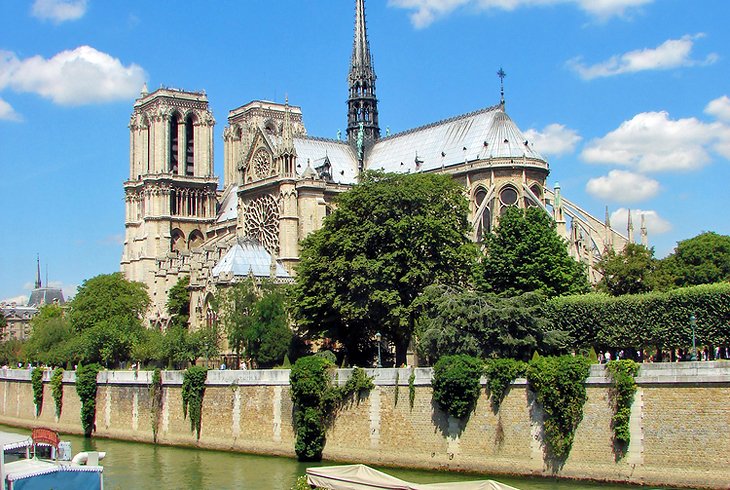
Dining at a péniche is one of the most memorable things to do in Paris. Dotted along the banks of the Seine River, péniches are charming little docked boats with inviting restaurants. These riverside barge restaurants offer a unique tourist experience that's often missed by tourists.
In the Latin Quarter at 3 Quai de Montebello, La Nouvelle Seine is an alluring péniche restaurant that offers gourmet cuisine, as well as theatrical entertainment. From the dining room, guest can admire superb views of the Notre-Dame Cathedral.
For a traditional French gastronomic experience, tourists can indulge in a meal at the Michelin-starred Tour d'Argent at 15 Quai de la Tournelle. The dining room dazzles guests with its spectacular views of the Seine River and the Notre-Dame Cathedral. This refined haute-cuisine restaurant is famous for its classic French cuisine, especially its signature roast duckling from Challans in the Loire Valley.
Address: La Nouvelle Seine, 3 Quai de Montebello; Tour d'Argent, 15 Quai de la Tournelle, 75005 Paris (Métro: Saint-Michel or Maubert-Mutualité station)
9. Eglise Saint-Étienne-du-Mont
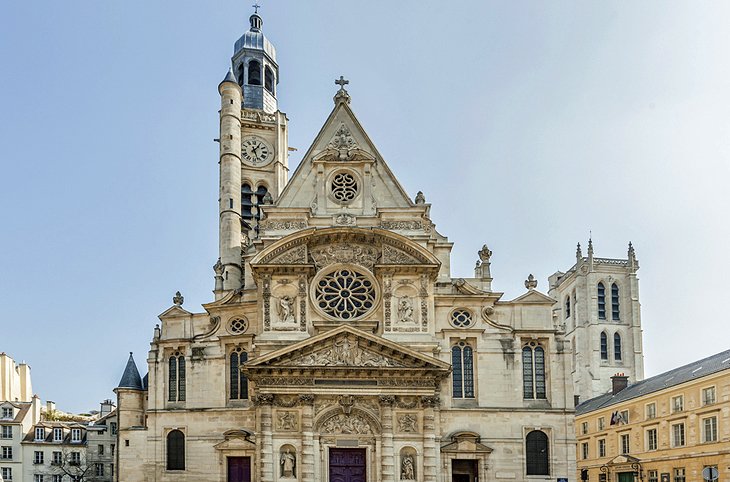
Classified as a Historical Monument, the Eglise Saint-Étienne-du-Mont was built in the 15th century from the Late Gothic period to the Renaissance. The architecture shows the evolution of styles. The nave of the church features stellar Gothic vaulting, while the round pillars were influenced by Renaissance design.
The church is famed for its rood-screen, which has a central marble section and a spiral staircase at each end. Also noteworthy are the 15th- to 16th-century stained-glass windows depicting scenes of the Apocalypse and the Parable of the Marriage Feast.
At the entrance to Our Lady Chapel are the epitaphs of the philosopher Blaise Pascal and the dramatist Jean Racine, who are buried in the church. The church is also said to contain a stone from the tomb of Saint Genevieve.
Located just steps behind the Panthéon, the Eglise Saint-Étienne-du-Mont is open for visits (free of charge) every day except Mondays. Guided tours are available. Mass is held here every day throughout the week and several times on Sundays.
Address: Place Sainte-Geneviève, 75005 Paris (Métro: Maubert-Mutualité or Cardinal Lemoine station)
10. Place de l'Odeon
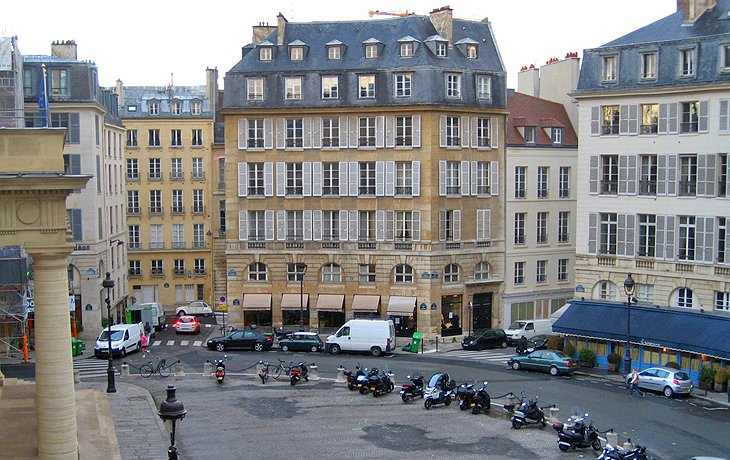
The Place de l'Odeon in the 6th arrondissement is an elegant square lined by lovely old Parisian buildings. The most important monument on the square is the Neoclassical Théâtre de l'Odéon. This exquisite 18th-century venue presents classic French theater performances, such as comedies by Molière and drama by Victor Hugo, as well as contemporary theater productions.
The square is also a favorite place for locals to socialize. On warm days, students like to linger on the arcaded patio and steps of the theater.
Tourists will enjoy exploring the charming side streets around the Place de l'Odeon to discover trendy boutiques and happening restaurants. For a change of scenery just a few steps away, the beautiful Jardin du Luxembourg is a perfect place to relax and enjoy a picnic lunch in the setting of a formal French garden. The closest Métro station is Odéon.
11. Eglise Saint-Julien-le-Pauvre
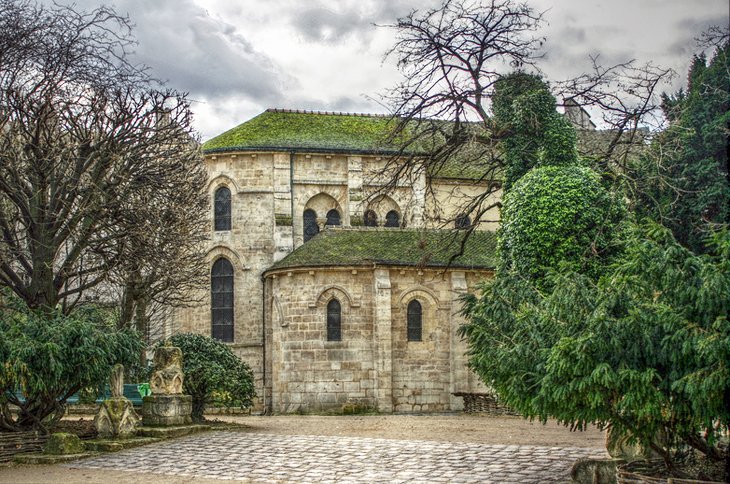
Next to the Square René Viviani park in the 5th arrondissement, the Eglise Saint-Julien-le-Pauvre is an interesting historic church built in High Gothic style between the 12th and mid-13th century.
In the 15th and 16th centuries, the Rector of the University was elected in this church, and its bell was rung to announce the beginning of lectures.
The interior of Saint-Julien-le-Pauvre Church is dominated by an icon-decorated screen installed in 1901. There is a lovely perspective of the church's silhouette from a spot on Rue Galande near the Eglise Saint-Sevérin.
The Eglise Saint-Julien-le-Pauvre provides a place of worship for the local Melkite Greek Catholic religious community.
Tourists should note that the church hosts classical music concerts throughout the year.
The church is a short walk away from the Place Saint-Michel and just steps away from the Shakespeare and Company bookshop.
Address: 79 Rue Galande, 75005 Paris (Métro: Saint-Michel, Cluny-La Sorbonne, or Maubert-Mutualité station)
12. Sorbonne Université
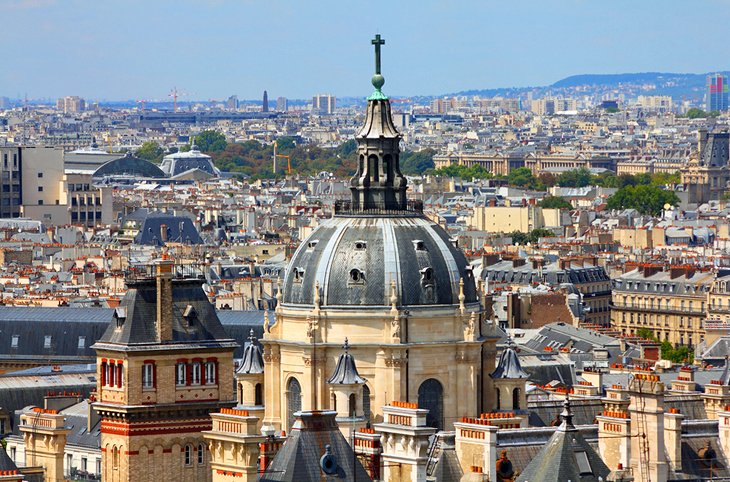
Known as "La Sorbonne," this ancient academic institution was founded in 1253 as a college for poor students of theology who could live and study at the school's expense. The college soon developed into a leading school of theology and during Napoleon's reign was given the status of a State university. Today, the university educates over 50,000 students every year.
Many of the Sorbonne University's lecture halls and libraries were built in the 17th century, commissioned by the Cardinal de Richelieu. The university embarked on another major building project in the 19th century, when the number of students was steadily increasing.
The entrance to the Sorbonne at 47 Rue des Ecoles, the Grand Hall features allegorical statues of Homer (representing the Arts) and Archimedes (representing the Sciences).
The main lecture hall, the Grand Amphithéâtre, has seating for 935, and above the podium is the celebrated mural by the Neoclassical painter Puvis de Chavannes, Le Bois Sacré (The Sacred Grove).
In the courtyard of the Sorbonne is a Baroque chapel built between 1635 and 1642 with a dome painted by Philippe de Champaigne.
Besides admiring the exterior of the Sorbonne buildings, visitors may take a guided tour to see the interior. Guided tours are offered a few times a month (two Wednesdays and one Saturday at 10:30am and 2:30pm) or by appointment for groups (on Mondays, Wednesdays, Thursdays, and Fridays). Reservations plus an entrance fee are required for guided tours.
Tourists may visit the Sorbonne, free of charge, during European Heritage Days in mid-September.
Address: 47 Rue des Ecoles, 75005 Paris (Métro: Cluny-La Sorbonne or Maubert-Mutualité station)
13. Jardin des Plantes & Musée National d'Histoire Naturelle
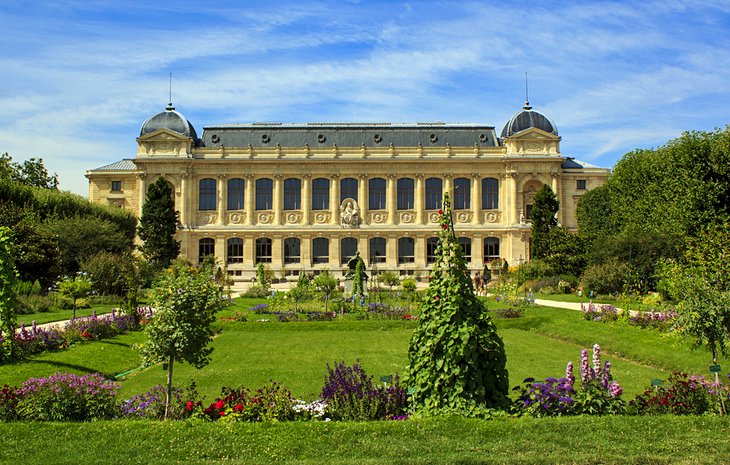
The Jardin des Plantes is a legacy of the Royal Garden of medicinal plants kept by King Louis XIII in the 17th century. This luxuriant green space is a tranquil spot to relax and escape to nature, right in the heart of Paris.
Within the 26-hectare Jardin des Plantes are 11 distinct gardens, as well as several greenhouses. Highlights include the romantic Jardin de Roses (Rose Garden; the Jardin des Pivoines (Peony Garden); the Jardin Alpin (Alpine Garden) featuring mountain plants; and the Jardin de l'École de Botanique (Garden of the School of Botany), with an exceptional variety of flowers and plants arranged in an educational manner to help viewers understand biodiversity.
Inside the gardens is the Musée National d'Histoire Naturelle, which offers a comprehensive view of the various fields of natural history including botany (with an extensive historical collection), mineralogy (with notable giant crystals), geology, anthropology, and paleontology.
Families with young children love the Ménagerie, a zoo found within a several-hectare woodland space of the Jardin des Plantes.
The Jardin des Plantes is open to the public every day, free of charge, from 7:30am until 8pm. The Ménagerie requires an entrance fee; tickets are available online.
Address: 57 Rue Cuvier 75005 Paris (Métro: Place Monge or Jussieu station)
Official site: https://www.jardindesplantesdeparis.fr/en
14. Arènes de Lutèce
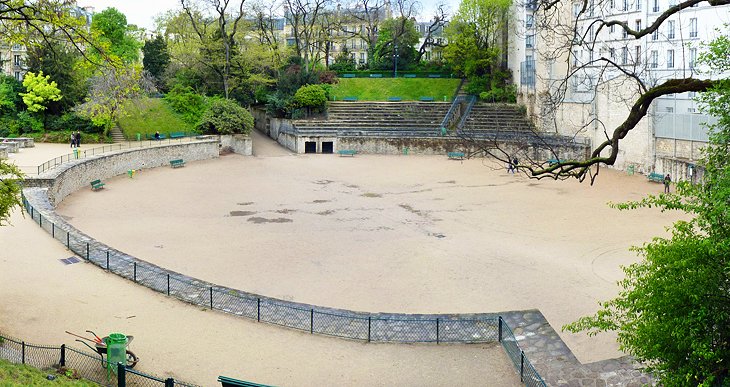
Tucked away in a leafy green space near the Jardin des Plantes, the Arènes de Lutèce are the remains of an ancient Roman amphitheater excavated in 1869. Wandering into this peaceful spot feels like discovering a secret treasure, which has been hidden for 2,000 years.
The Arènes de Lutèce was built around the 1st and 2nd century AD, but later during a barbarian incursion in 285, it was used as a quarry of stone for building defensive walls. Although the amphitheater had only 36 tiers of seating, it could accommodate an audience of up to 17,000, which was almost the entire population of the city during antiquity.
The ruins give an idea of the huge size of the original amphitheater, once used to stage gladiator and animal fights. The elliptical arena was 56 meters long by 48 meters across, roughly the same dimensions as the interior of the ancient Colosseum in Rome.
This amphitheater along with the Roman baths at the Musée de Cluny are the only vestiges of the ancient Roman city of Lutetia (which overlaps with today's Paris city center).
Today, locals use the Arènes de Lutèce as a park (it's surrounded by tall, leafy trees) and kids play soccer here. The site is open to the public for visits everyday (free of charge) from 8am until 6pm in the winter with later hours in the spring and summer.
Address: 49 Rue Monge, 75005 Paris (Métro: Cardinal Lemoine, Place Monge or Jussieu station)
15. Grande Mosquée de Paris
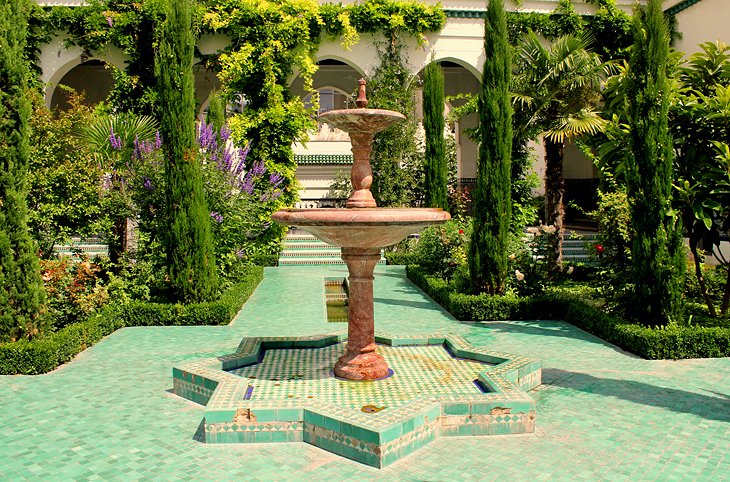
An oasis of Islamic culture right in the Latin Quarter, the Grande Mosquée de Paris is just a few steps away from the Jardin des Plantes. A relatively recent addition to the neighborhood, the Grand Mosque of Paris was built between 1922 and 1926. The mosque is frequented by the local Muslim community but also offers tourists a unique and exotic experience.
The interior of the Grand Mosque is a stunning masterpiece of Hispano-Moorish style. The prayer hall features magnificent carpets, and the hammam replicates the baths of North Africa with colorful mosaic tile decorations. Featuring delicately adorned archways, the courtyard with its emerald-tiled adornments was inspired by the Alhambra Palace in Granada.
The Grand Mosque is open to the public for visits every day except Fridays and Muslim holidays. Visitors may amble through the lush fountain-adorned garden and enjoy fresh mint tea at the salon de thé (tea salon) in the garden's courtyard, or savor a delicious meal of authentic Moroccan couscous at the Mosque's restaurant, Aux Portes de l'Orient.
It is also possible to visit the hammam to soak in the traditional Turkish-style hot and cold baths or to get a pampering massage. The hammam is only open to women.
Address: Entrance to Mosque: 2 Bis Place du Puits de l'Ermite; Tea Salon and Restaurant: 39 Rue Geoffroy-Saint-Hilaire 75005 Paris (Métro: Place Monge or Censier - Daubenton station)
16. Musée National Eugène Delacroix
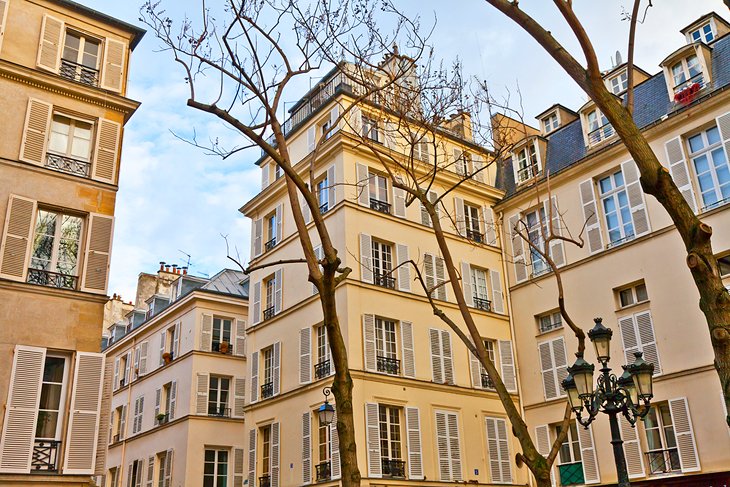
This excellent small museum celebrates the life and work of French Romantic painter, Eugène Delacroix. The museum is found at the border of the Latin Quarter and the Saint-Germain-des-Prés neighborhood on the handsome Place de Furstenberg, housed in the artist's former apartment. Delacroix chose this location as his residence because of its pleasant little garden, where he could build an art studio.
With a collection spanning Delacroix's career, the museum's exhibitions show the different themes that Delacroix depicted, as well as his artistic influences. The collection boasts numerous masterpieces. Highlights include the Mary Magdalene in the Desert painting exhibited at the Salon of 1845 and another religious composition titled Annonciation, painted in 1841.
Many of the other famous works by Delacroix are found in the Musée du Louvre across the Seine River in the 1st arrondissement.
Throughout the year, the Musée National Eugène Delacroix hosts exhibitions such as thematic assortments of paintings by Delacroix or on different aspects of the artist's persona and his creative process. The museum also suggests walking tours in Paris that allow visitors to discover more about the life and work of Eugène Delacroix.
Address: 6 Rue de Furstenberg, 75006 Paris (Métro: Saint-Germain-des-Prés or Mabillon station)
Official site: http://www.musee-delacroix.fr/en
Map of Latin Quarter, Paris: Top Attractions, Tours & Hotels
More Related Articles on PlanetWare.com
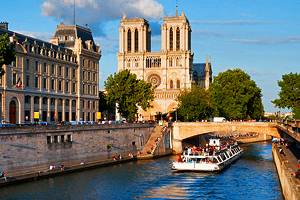
Must-See Landmarks Nearby: At the heart of Paris, the Latin Quarter is within walking distance of many must-see landmarks such as the fashionable Boulevard Saint-Germain-des-Prés with its legendary cafés and the glorious Notre-Dame Cathedral on the Île-de-la-Cité. Other amazing historic Paris churches are nearby: Saint-Chapelle also on the Île-de-la-Cité, the Eglise Saint-Louis en l'Île on the Île Saint-Louis, and the Eglise Saint-Sulpice in the 6th arrondissement.
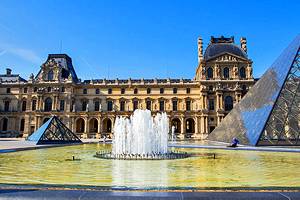
Museums near the Latin Quarter: To admire masterpieces of fine art, tourists need only take a short stroll across the Seine River where the Musée du Louvre displays a world-renowned collection. Other top museums in Paris are the Musée d'Orsay in the 7th arrondissement, a veritable temple of Impressionist art filled with gorgeous paintings by Monet, Renoir, Degas, Pissarro, and Cézanne; and steps away from the Musée d'Orsay in the 7th, the Musée Rodin with its wonderful tree-shaded sculpture garden.