16 Top-Rated Tourist Attractions in Palermo
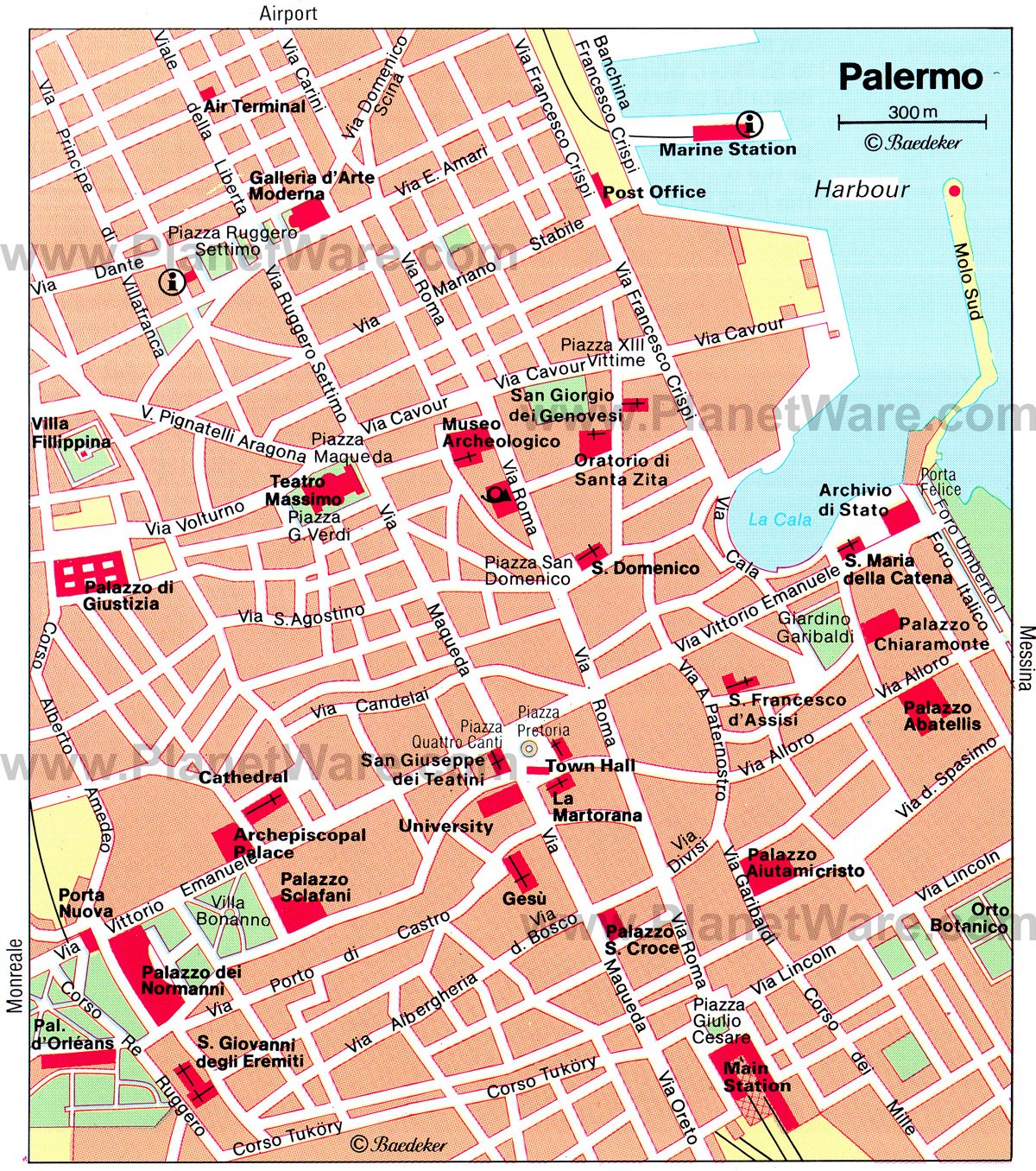
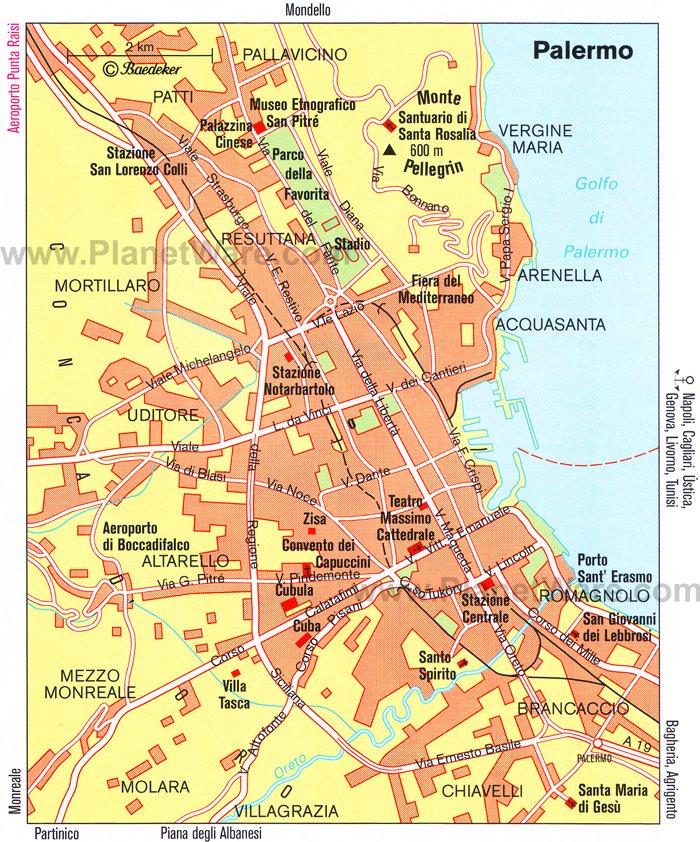
Palermo's oldest area borders Via Vittorio Emanuele, between the Norman palace and the cathedral, its two biggest tourist attractions. The city expanded to the harbor under the Arabs in the 9th to 11th centuries as capital of the Emirs of Sicily, a city of mosques and palaces equal to those in Baghdad and Cordoba.
The Normans captured the city in 1072, and in 1282, in the rebellion known as the "Sicilian Vespers," all the French were murdered or expelled by the House of Aragon, whose Spanish viceroys enlarged Palermo, laying out Via Maqueda and the Quattro Canti. You'll find places to visit in Palermo reflecting all three of these periods of occupation.
After Sicily became an autonomous region in 1946, Palermo's harbor was enlarged and its industry expanded, but Palermo remains the poorest of Italy's provincial capitals.
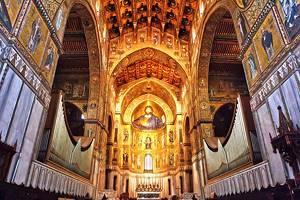
No trip to Palermo is complete without a visit to the magnificent Monreal Cathedral complex, the royal pantheon built by the Norman King William II, which survives today almost exactly as it was when built in the 1100s. Monreal is only 10 kilometers from the city and easy to reach by bus.
For ideas on the best things to see and do, refer to our list of the top tourist attractions in Palermo.
See also: Where to Stay in Palermo
- 1. Cattedrale (Cathedral)
- 2. Palazzo dei Normanni (Norman Palace)
- 3. Cappella Palatina
- 4. La Martorana
- 5. Antonino Salinas Regional Archeological Museum
- 6. Catacombe dei Cappuccini (Capuchin Catacombs)
- 7. See a Performance or Go Backstage at Teatro Massimo
- 8. Palazzo Abatellis and Galleria Regionale della Sicilia
- 9. Quattro Canti
- 10. San Giovanni degli Eremiti
- 11. San Cataldo
- 12. Santa Maria di Gesù
- 13. Santo Spirito (Chiesa del Vespro)
- 14. Palazzo Chiaramonte
- 15. Foro Umberto I and the Botanic Garden
- 16. Sample Traditional Sicilian Cuisine
- Where to Stay in Palermo for Sightseeing
- Palermo - Climate Chart
1. Cattedrale (Cathedral)
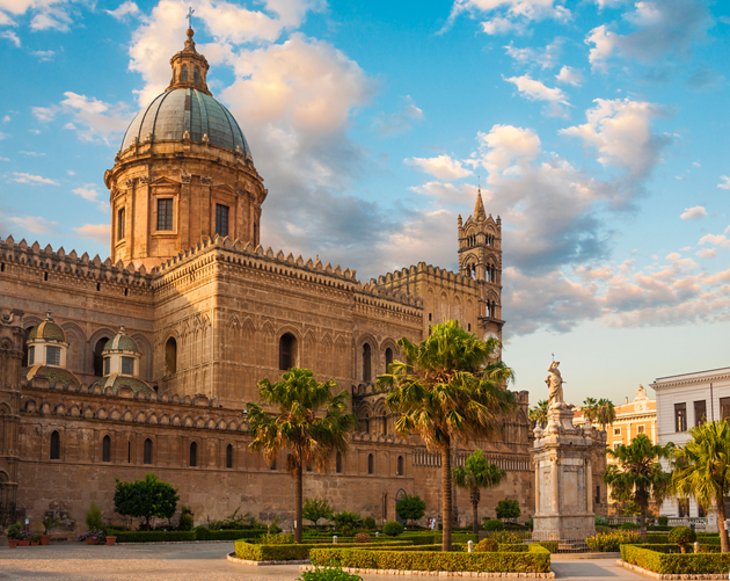
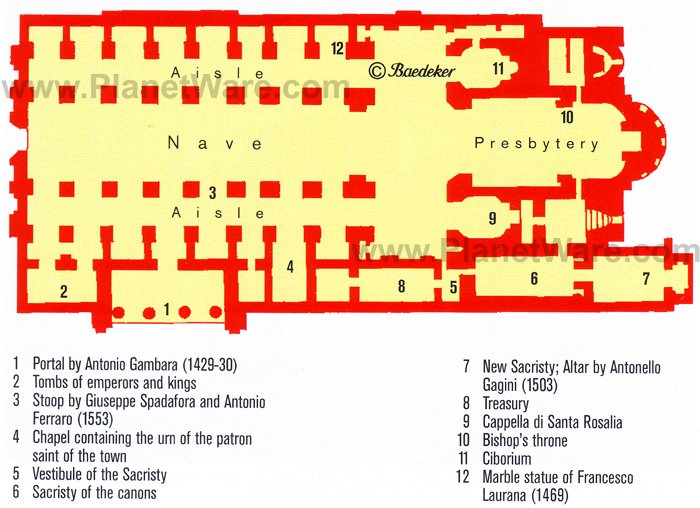
The east exterior of Palermo's cathedral retains the original Norman character: three apses, cross-over round arches, and curved parapets. The south side, overlooking the square, is memorable for its 1453 Gothic-Catalan portico through which you'll enter. One of its columns, with an early Arabic inscription, comes from a mosque.
The triangular pediment contains a carving, God the Father on His Throne, and above the doorway, a 13th-century mosaic of the Virgin Mary on a gold background. The bell-tower dates to the 12th century but was rebuilt in 1840. The Loggia dell'Incoronata to the left of the west front, where kings appeared following their coronation, was also built in the 12th century but altered in the 15th.
You enter into the right aisle, where the first two chapels contain the monumental tombs of the Norman-Hohenstaufen dynasty. The four sarcophagi are in purple Egyptian porphyry, previously permitted only for the tombs of Roman and Byzantine emperors.
At the left front is that of Frederick II, supported by four lions; the tympanum shows the Norman crown, and on the top are decorative panels of the Virgin Mary and Christ between symbols of the Apostles. You'll see copies of this in tombs of Sicilian nobility elsewhere on the island.
In a figural sarcophagus in the wall on the right is the tomb of Frederick's first wife, Constance of Aragon, who died in 1222. The sarcophagus was opened in 1781, and inside, grave objects were found that you can see in the cathedral treasury. The most outstanding of these is the almost priceless crown of Constance of Aragon, richly decorated with strings of pearls and precious stones. It is probably the same one with which Frederick II was crowned emperor by Pope Honorius III in 1220-he would have placed it in Constance's grave.
Address: Piazza della Cattedrale, Palermo
2. Palazzo dei Normanni (Norman Palace)
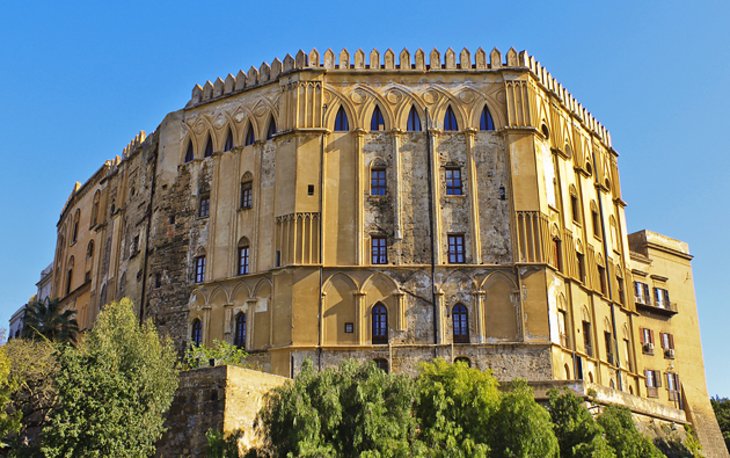
In the 9th century, the Arabs built a palace for their Emir, and under the Norman rulers and the Hohenstaufen Frederick II, the palace became even more splendid. It suffered a long period of neglect, until the Spanish viceroy renovated and extended it to use as his residence. Since 1947, the regional parliament of Sicily has sat here.
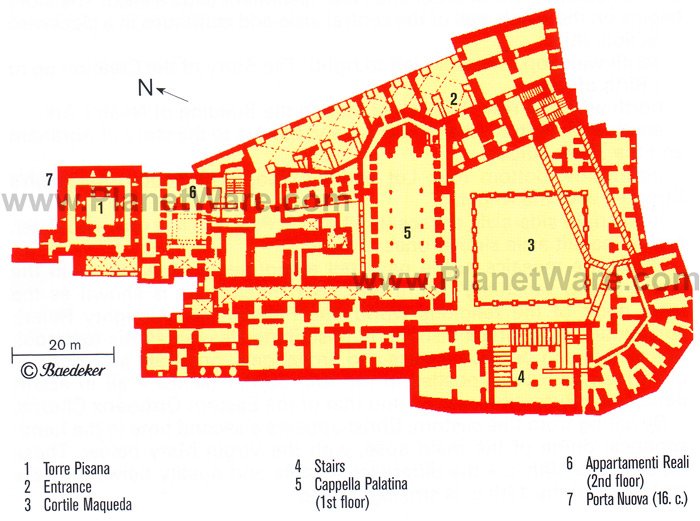
One prominent Norman structure remains on the northeast front, the high Torre Pisana with its neat square stone blocks and blind arcades of ogival arches. It is the last remaining of the original four towers; inside is a typical square hall, above which an observatory was built in 1791.
You enter into the Cortile Maqueda, a square courtyard that was constructed in 1600 surrounded by three stories of arcades with rounded arches. Steps lead to the core of the palace, the Cappella Palatina on the first floor and the Appartamenti Reali (Royal Apartments) on the second. Here, you'll see the Sala di Ercole (Hall of Hercules), where the Sicilian Parliament now sits, just as the Barons' Parliament did in the Middle Ages.
The Sala di Ruggiero is completely covered with mosaics showing hunting and animal scenes. To the west of the palace stands the Porta Nuova, the magnificent gateway built in 1535.
Address: Via Vittorio Emanuele, Palermo
3. Cappella Palatina
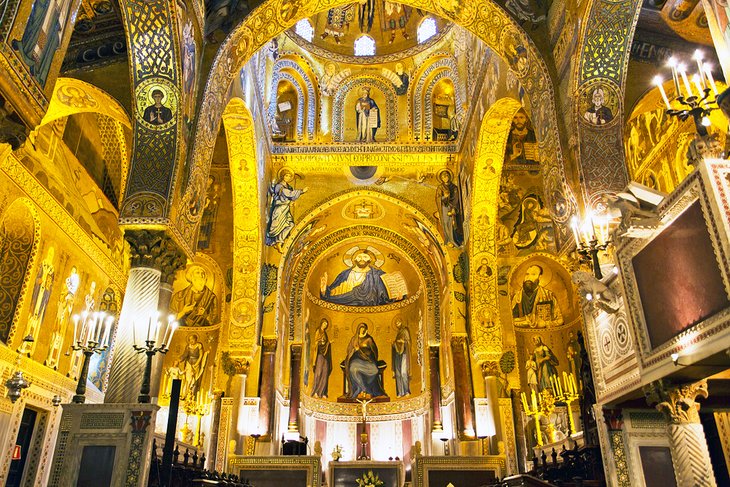
This court church of the Normans was consecrated in 1140; the mosaics in the chancel were probably completed in 1143, and those in the nave somewhat later. Around 1350, the mosaic on the west wall portraying Christ between Peter and Paul was added.
In spite of all the changes through the centuries, the interior has not lost the overall harmony between the Latin basilica, the Byzantine dome and mosaic decoration, and the Arabic stalactite ceiling. There is a mystical semi-darkness in this triple-aisled basilica, pierced only by a shimmer of gold. The wooden ceiling of the central aisle is decorated in the Arabic style, with stalactites painted with small scenes.
Notice at the western end, to the left of the entrance, an example of the Normans' reverence for royalty: the raised marble platform for the royal throne. The pulpit stands on carved pillars decorated with inlay work, and the lecterns are carved with the symbols of the Apostles Mark and John. A tall paschal candelabra is decorated in reliefs of flowers and figures, the center one showing Christ with King Roger II, the chapel's founder, kneeling before him.
But it is the mosaics covering all the internal walls for which the chapel is most famous. Those in the nave reflect Old Testament themes in the central aisle and New Testament themes in the side aisles, beginning with the story of the Creation on the top of the south wall of the central aisle and continuing clockwise to the top of the north wall, where you'll see scenes from the Fall of Man to the building of Noah's Ark.
The stories continue along the bottom of the south wall. In the side-aisles are scenes of Paul and Peter. While the mosaics in the nave tell a continuing story, those in the dome of the sanctuary center on Christ. These mosaics are 18th-century-the difference in style and quality between these and those of the 12th century is striking.
Address: Palazzo dei Normanni, Palermo
4. La Martorana
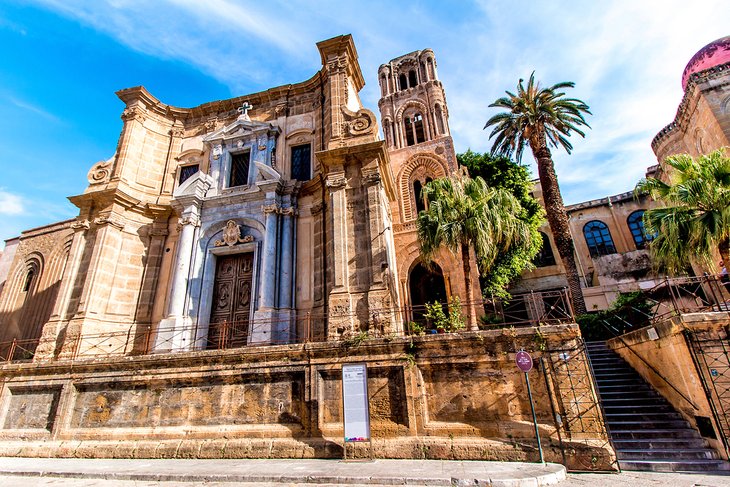
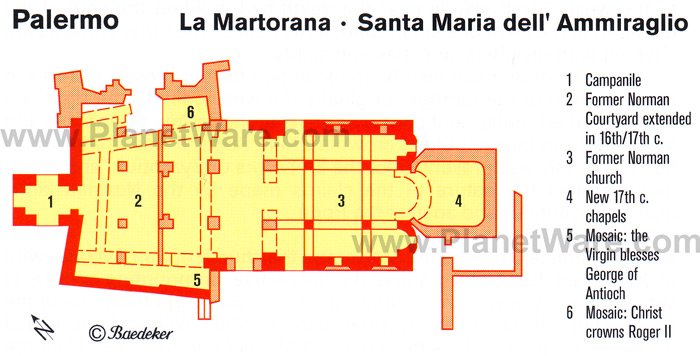
The church of Santa Maria dell'Ammiraglio, more commonly called La Martorana, is best known for its beautiful 12th-century mosaics. The Baroque front, added along with the bell tower after an earthquake in the 1720s, blocks the view of this Arabic-influenced church, but its basic architectural concept is Byzantine.
It was designed as a domed church with four arms of equal length and a chancel with three apses, the dominant style since mid-Byzantine times. But it has undergone considerable changes. In 1200, a narthex, vestibule, and bell-tower were added on the west side.
In 1435, King Alfonso of Aragon gave the church to the Benedictine nuns, and in the 17th century, the narthex and the open atrium were included in the main structure, accounting for its present irregular shape. Between 1683 and 1686 the central apse, together with its mosaics, was pulled down and replaced by a larger rectangular room. The nuns also had frescoes painted on the walls.
But through all this, the most valuable part has been preserved, the mosaics on a gold ground, the oldest of its kind in Sicily, from about 1150. The focal point is Christ the Pantocrator in the center with the Greek inscription, "I am the light of the world." He is surrounded by four angels and in the drum of the dome are prophets with the Apostles in the four corners.
The Triumphal Arch portrays the Annunciation, while in the side apses are Mary's parents; the birth of Christ and the death of Mary are pictured in the barrel vaulting. Two mosaics in the anteroom of the narthex show the founder and patron of the church, George of Antioquia, and Christ crowning King Roger II-a demonstration of the demands made by the Norman kings against Byzantium and against the Pope.
Address: Piazza Bellini, Palermo
5. Antonino Salinas Regional Archeological Museum
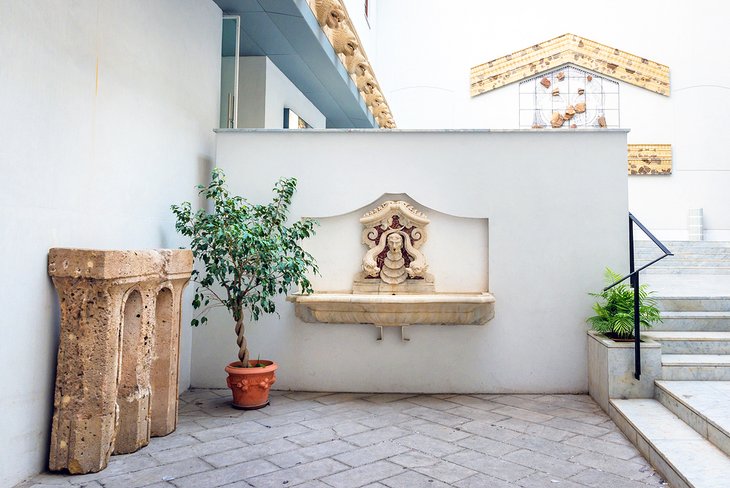
The incredible collection of antiquities in Palermo's Antonino Salinas Regional Archeological Museum (Museo Archeologico Regionale Antonino Salinas) is one of the finest in Italy and includes some world-famous finds. Even a list of the most outstanding highlights is long. Off the small 17th-century cloister are Egyptian and Phoenician items, including the Palermo Stone, the hieroglyphic inscription on which includes a list of Egyptian Pharaohs of the Ancient Empire (3238-2990 BC), and in the Great Cloister is a colossal second-century BC statue of Zeus.
Also on the ground floor are terra-cotta decoration from Temple C at Selinunte, and the unquestionably most important room, displaying primitive and classical sculptures from the temples at Selinunte.
The oldest pieces in the Selinunte Room are on the right: the four Salinas metopes (frieze panels) from about 575 BC, showing the Gods of Delphi (Artemis, Leto, Apollo), a sphinx, the Abduction of Europa, and Hercules and the Bull. On the left wall are three metopes portraying Apollo's four-horse chariot, Perseus slaying the Medusa, and Hercules and the Kerkopes.
The rear wall includes a reconstruction of parts of the Pronaos Frieze, an example of Selinunte art at its very best (470-460 BC), and in the center stands the bronze Ephebe of Selinunte, from about 470 BC. The most important Etruscan pieces from Chiusi are the gravestones with banqueting scenes and death-dances (530-480 BC) and a sixth-century BC statue of the god Canopus.
On the next floor, the pottery department contains terra-cotta votive statuettes from Selinunte, and bronzes of Etruscan, Greek, and Roman civilizations. Notice especially the Etruscan mirrors and the large Mercury staff. Here, too, are Greek marble sculptures with Attic grave-reliefs. Roman sculpture includes some major portraits, and there is a Late Roman mosaic from Lilybaeum showing the Four Seasons.
If you still have energy enough left for the third floor, you'll see prehistoric stone objects from the caves at Lévanzo and Addaura; Late Stone Age vessels from the Stentinello civilization; pieces from the Copper Age in western Sicily; and Greek ceramics including vases of Corinthian, Ionic, Spartan, Attic, Etruscan, and Italic origin. Wall decorations from a house in Solunto are worth seeing, as are floor-mosaics from Palermo and elsewhere.
Address: Via Bara all'Olivella 24, Palermo
6. Catacombe dei Cappuccini (Capuchin Catacombs)
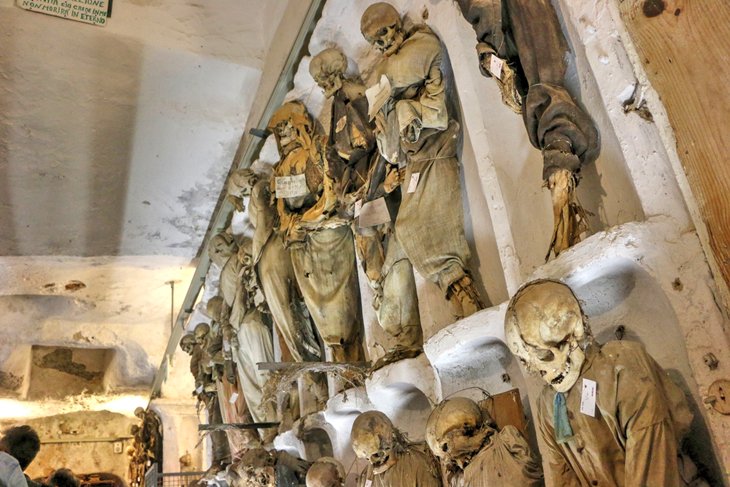
By far Palermo's most bizarre attraction, but one of its most popular, is the Capuchin Abbey, known for its Catacombs. These underground passages were hewn in the volcanic rock after 1599 and used as burial places right up to 1881. Inside, you'll be greeted by the macabre scene of about 8,000 mummified corpses, arranged by sex and status, lying in the passageways or hanging from the walls.
The clothes they wear may look newer, as until a few years ago the mummies were given regular changes of fresh clothes by their relatives. The bodies were first laid in the colatoio, a small, tightly closed drying-room, and after eight months, they were washed in vinegar, dressed, and placed in the niches in the walls or in open coffins.
Don't plan on taking pictures to amaze your friends, as photography is strictly prohibited inside.
Address: Piazza Cappuccini 1, Palermo
7. See a Performance or Go Backstage at Teatro Massimo
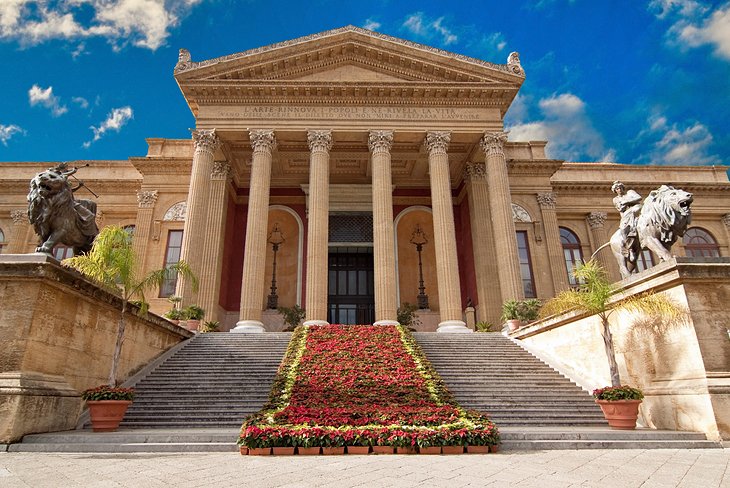
Overlooking the wide Piazza Verde, Teatro Massimo is Italy's largest opera house, and the third largest in Europe. The grandeur of its facade gives only a clue to the magnificence inside. Giovanni Battista Basile and his son Ernesto built this 3,200-seat theater between 1875 and 1897.
It was officially opened with a performance of Verdi's opera Falstaff, and very quickly became one of Sicily's – and Italy's – major opera houses. Along with a full season of opera performances, Teatro Massimo hosts recitals, ballet, and concerts under the baton of such noted conductors as Zubin Mehta.
Daily guided tours in English will take you into the sumptuous auditorium with tiers of boxes and a frescoed dome, but you can get an even closer look on a Backstage Tour with Le Vie dei Tesori. You will go onto the stage itself, to view the magnificent opera house as performers see it, then learn some of the backstage secrets as you view the sets, props, and costumes. You may also learn about the ghost of a nun, who reputedly haunts the opera house.
Address: Piazza G. Verdi, Palermo
8. Palazzo Abatellis and Galleria Regionale della Sicilia
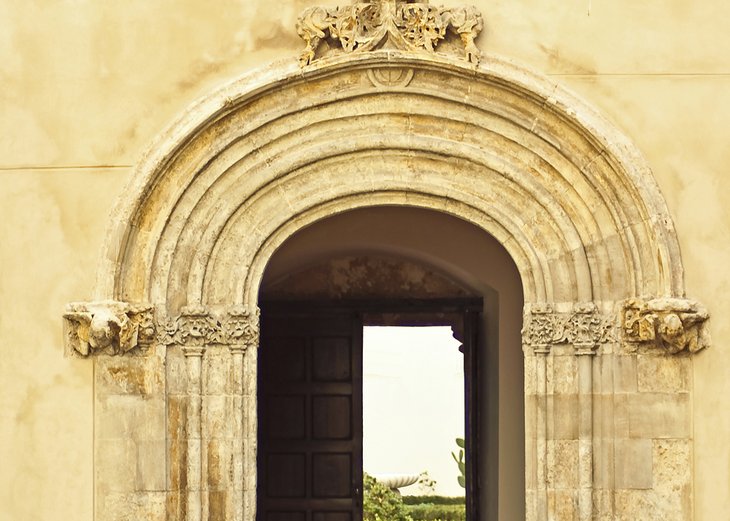
Palazzo Abatellis was built in Catalan Gothic style by Matteo Carnelivari in 1490, for Francesco Abatellis, a highly placed dignitary at the court of King Ferdinand of Spain. It served as a priory from the early 16th- to mid-19th centuries, and today contains the regional art gallery.
The square building has a highly decorated doorway and an inner courtyard with a two-story loggia on one side. The masterpiece of the paintings collection is in the old palace chapel, the large mural Triumph of Death, painted around 1400 by an unknown artist for the hospital in the Palazzo Scláfani.
Outstanding among the 15th-century Sicilian masters are works by Antonello da Messina: three plaques showing the church fathers Augustine, Gregory, and Hieronymus, but in particular, the 1474 Annunciation of Our Lady in portrait form. Works by Flemish masters include the 1510 Triptychon of Malvagna by Jan Gossaert.
Among the sculptures is the posthumous "ideal" portrait of Eleanor of Aragon by Francesco Laurana, from 1480, and Madonnas and sculptures by the Gagini family, including the head of a youth in colored marble by Antonello Gagini. Also worth noting are the woodcarvings, 13th- to 16th-century Moorish ceramics and parts of a wooden ceiling from the second half of the 14th century, removed from the Palazzo Chiaramonte.
Address: Via Alloro 4, Palermo
9. Quattro Canti
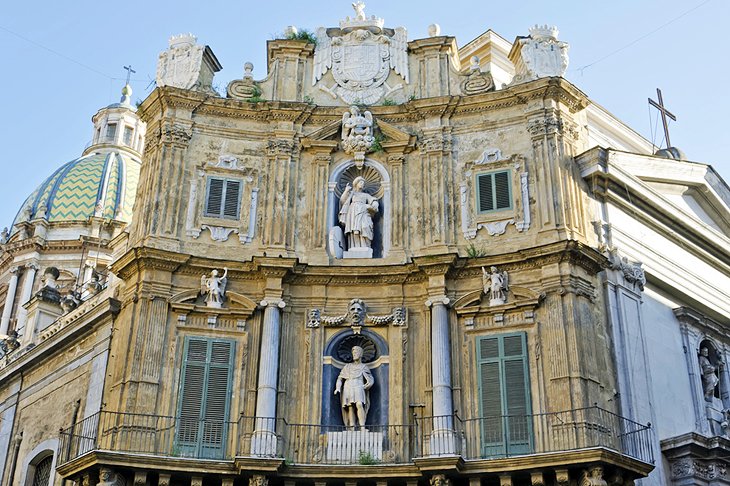
This open circular space was laid out between 1608 and 1620 by the Roman architect Giulio Lasso at the junction of the two major streets in Palermo at that time: Cassarò (now known as Vittorio Emanuele), which leads from the Norman Palace to the harbor, and Via Nuova, later re-named Maqueda after the Spanish viceroy.
Lasso designed this square with a concave frontage on each of the four corners. At ground level on each corner, he built a fountain, with sculptured figures on the three upper floors, accompanied by Classical Greek columns. It was long after 1620 before they were finished; consequently, above the sculptures symbolizing the Four Seasons, it was possible to insert statues of the four Spanish kings since 1516. On the uppermost floor are four female patron saints.
Hidden behind one of the concave corners is the church of San Giuseppe dei Teatini, a large basilica built between 1612 and 1645. You'll find the entrance on Via Vittorio Emanuele. Inside are the dome fresco Triumph of A. Andrea Avellino by Guglielmo Borreman (1724), paintings by Pietro Novelli, and late 18th-century stucco and marble decorations.
10. San Giovanni degli Eremiti
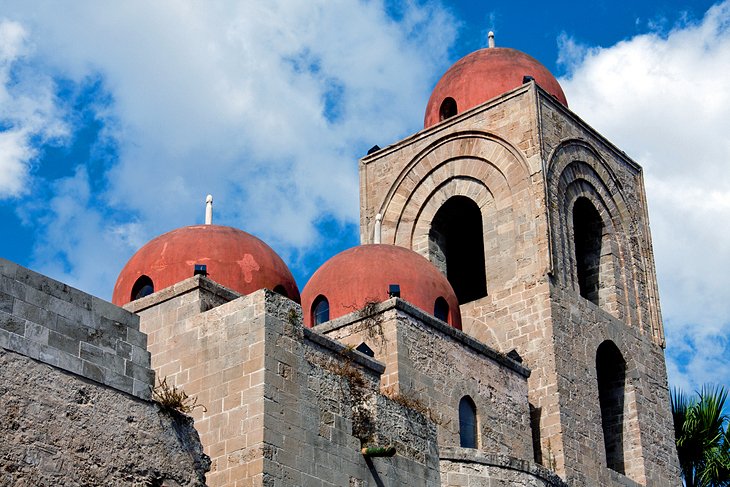
The cloisters of this former monastery are an idyllic place to relax, and perhaps consider the waves of different peoples who have occupied Palermo – and this spot. An Arabic mosque once stood here, and a hall with five arches still stands to the south of the Christian church.
From the sixth century, there was a Benedictine monastery, and the site was re-consecrated under the Normans. In 1132, Roger II built the square church topped by the five domes we see today, originally as a mourning chapel for court dignitaries.
The interior is severe and without much decoration, with geometric shapes and the hemispherical domes adding height to the simple rectangular church. The atmospheric cloisters, only partially preserved, have twin-pillared ogival arcades and the remains of an Arab well in the courtyard.
Address: Via dei Benedettini, I-90100 Palermo
11. San Cataldo
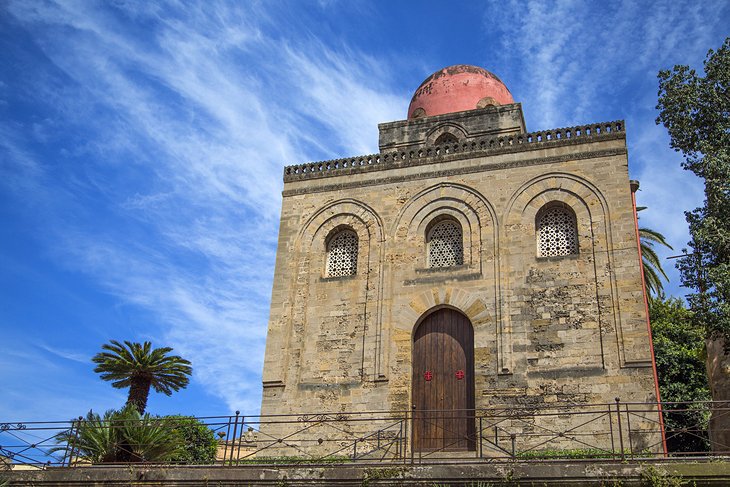
Built immediately next to the Martorana, the church of San Cataldo is distinctive with its bright red dome rising above the decorative cornice. When William I succeeded his father in 1154, he appointed Maio of Bari as Grand Admiral. Maio dedicated his church to a saint from his homeland, Bishop Cataldo of Trani, and chose the Latin ground plan, a triple-aisled basilica.
Its length is emphasized by three Arabic domes above the elevated central nave. Its Arabo-Norman character is also demonstrated by the cubic exterior with three windows on each side surrounded by blind arcades, and the finely carved ledge running around the upper edge.
The same strong, square-shaped masonry is seen inside as well. Apart from the beautifully ornamented inlay of the floor and the Corinthian capitals on the four ancient columns, the inside is entirely without decoration.
Address: Piazza Bellini, 1, Palermo
12. Santa Maria di Gesù
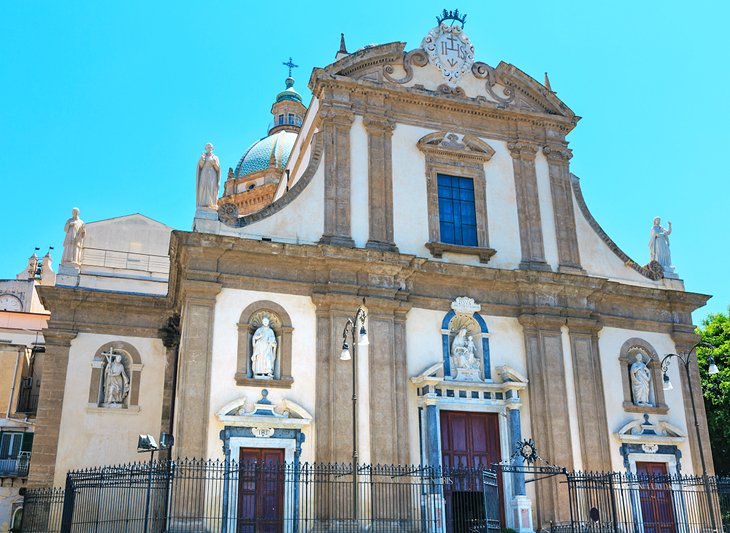
For perhaps the finest view of Palermo and the Conca d'Oro, especially if you can see it in the morning light, go to the former Minorite convent of Santa Maria di Gesù, on the lower slopes of Monte Grifone.
The beautiful original cloister in the priory has been preserved, and inside the church, you'll find the tomb of the founder, Bishop Beato Matteo del Gatto of Agrigento. A monk will guide you to the belvedere, where you can enjoy the fine view.
The adjoining cemetery is interesting as well, with imposing chapels and memorials to Palermo's wealthy families. Among those buried here is Judge Paolo Borsellino, who spent most of his professional life trying to overthrow the power of the Sicilian Mafia. He was killed in a car bombing in 1992.
A path from the cemetery leads up the hill to a 500-year-old cypress tree, thought to be the oldest in Italy. Tradition holds that it grew from a stick thrust into the ground by San Benedetto il Moro.
Address: Salita Belvedere 3, Palermo
13. Santo Spirito (Chiesa del Vespro)
The church of Santo Spirito is also known as the Chiesa del Vespro or Church of the Vespers, referring to a dark incident in Palermo's history. It was in front of this church that the Sicilian Vespers-when all the French in Palermo (and later in the whole of Sicily) were murdered or expelled by the Aragonese conquerors-began on March 31, 1282. It was this event that inspired Verdi to write his opera of the same name.
The church was built in 1173-78 as the oratorium of a Cistercian abbey outside the city walls at the time. Over the years, it was frequently altered, especially when the viceroy Domenico Caracciolo had the abbey pulled down in 1782 to make room for the new cemetery. It was not until 1882, the 600th anniversary of the Sicilian Vespers, that it was restored in its original form.
The north side is impressively colorful, as is the east side with the crossed arches of the three apses made from lava. You can see signs of earlier abbey-buildings in the south transept. The interior, with a tall chancel and two rows of round pillars supporting the Gothic arcades, reflects the strictness of the Cistercian Order.
14. Palazzo Chiaramonte
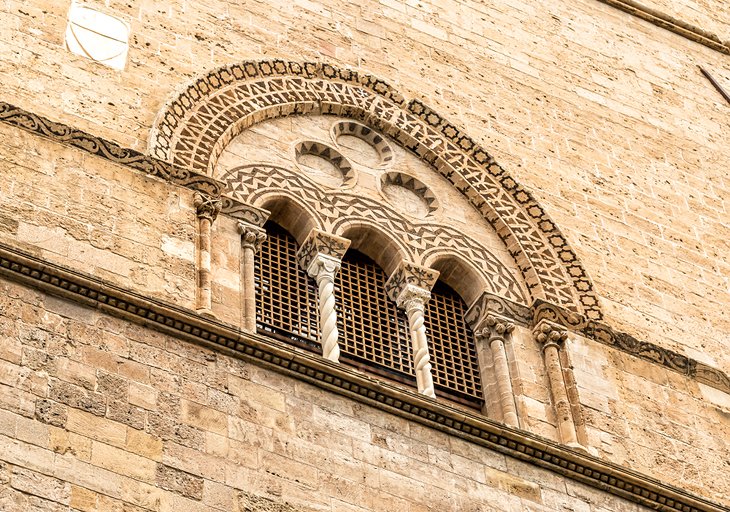
This palace was built by the powerful noble Chiaramonte family from Agrigento in the 14th century, when the family reached the height of its power. Work commenced in 1307 and continued until 1380, but the second floor was never completed. In 1396, Andrea Chiaramonte was publicly beheaded in front of his palace because he had rebelled against the king.
The palace served as the viceroy's residence between 1468 and 1517, as the seat of the Inquisition around 1600, and as a courthouse from 1799. The massive block building with four wings around a square inner courtyard is now a museum.
The first floor has some beautiful windows with pillared arcades; the 14th-century painted wooden ceiling of the Sala Magna (Great Hall), by Cecco di Naro, Simone da Corleone, and Pellegrino Darena, shows historical and legendary themes.
15. Foro Umberto I and the Botanic Garden
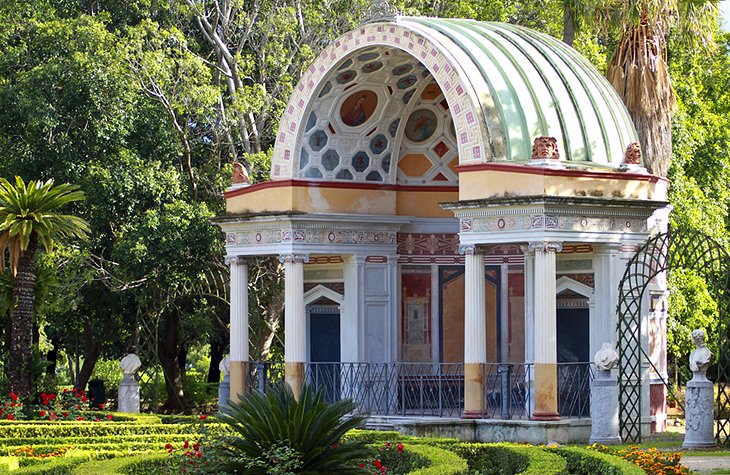
Along the seafront to the east and southeast of the Porta Felice extends the Foro Umberto I, a broad boulevard with magnificent views of the Bay of Palermo. On warm evenings, it seems as though half of Palermo is enjoying a stroll here. At the southern end of the Foro Umberto I is the beautiful Villa Giulia park, also known as La Flora, laid out in 1777.
On the west side of this, the Botanic Garden (Orto Botanico) has a magnificent variety of plants, including date and coconut palms, banana trees, and fine stands of bamboo and papyrus. The garden, one of the most important in Europe, covers 11 hectares, and between its beds and hot-houses contains more than 12,000 species of plants from all over the world.
16. Sample Traditional Sicilian Cuisine
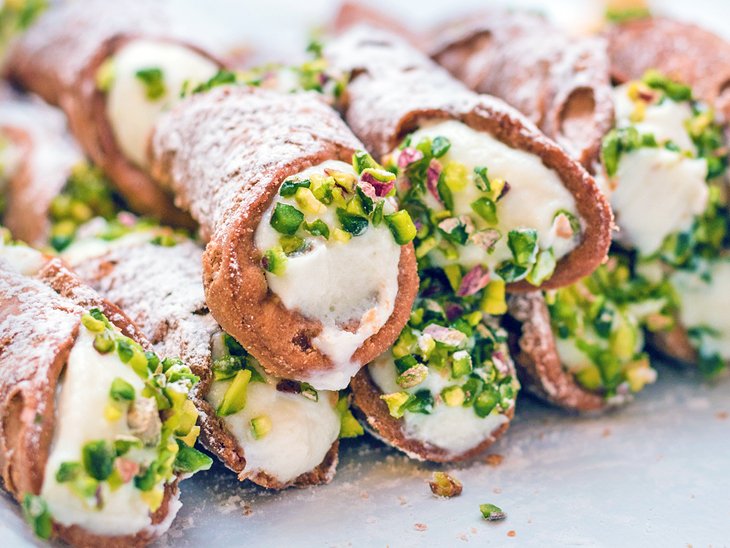
One of the most memorable things to do in Sicily is sampling this island's outstanding regional foods. Based on local products-a bounty of seafood, lemons, oranges, year-round fresh farm vegetables, pistachio nuts, almonds, olives, and locally made cheeses-the traditional dishes of Sicily are simple in their ingredients, but complex in their flavors. Whether you choose fine dining restaurants or humble little neighborhood trattorias, you'll be well fed.
Where to Stay in Palermo for Sightseeing
Luxury Hotels:
- For old-world elegance in a Neoclassical building furnished in antiques, choose the Grand Hotel Wagner, near the central attractions and an easy walk to old town and shopping. There's a fine-dining restaurant, a rooftop terrace, and spa and sauna.
- The 16-room boutique Alma Hotel is in the center of Palermo, and its spacious rooms are equipped with a desk, safe, minibar, kettle with tea selection, as well as extra pillows, slippers, and an amenity kit filled with bath and beauty products. The complimentary breakfast buffet is bountiful.
Mid-Range Hotels:
- Right in the historic center and surrounded by restaurants, the four-star Grand Hotel Piazza Borsa has a lovely glass-covered atrium with a fountain, as well as a spa with a hot tub and steam bath.
- In the historic center near Corso Vittorio Emanuele, Hotel Porta Felice has 30 rooms and three suites, as well as a full-service spa with a sauna, steam bath, and hydro-massage pool. Breakfast is served on the rooftop terrace.
Budget Hotels:
- Centrally located near the bus and cable car stations, Hotel Ariston is a short walk from restaurants and shopping. Rooms are equipped with coffee makers, and some have sea views. Breakfast is included in the rate.
- Although it's not as centrally located, Casena dei Colli makes up for that with its garden setting, surrounded by green space, a welcome oasis in a busy city. It is equidistant from the city center and the beautiful beach of Mondello, and offers free parking, a blessing for guests touring Sicily by car. The included breakfast has hot and cold dishes with an emphasis on local products.
Palermo - Climate Chart
| Average minimum and maximum temperatures for Palermo, Italy in °C | |||||||||||
| J | F | M | A | M | J | J | A | S | O | N | D |
| 15 10 | 15 10 | 16 11 | 18 13 | 22 16 | 25 20 | 28 23 | 29 24 | 27 22 | 23 18 | 19 14 | 16 12 |
| PlanetWare.com | |||||||||||
| Average monthly precipitation totals for Palermo, Italy in mm. | |||||||||||
| 71 | 66 | 58 | 43 | 25 | 13 | 5 | 13 | 41 | 99 | 94 | 81 |
| Average minimum and maximum temperatures for Palermo, Italy in °F | |||||||||||
| J | F | M | A | M | J | J | A | S | O | N | D |
| 59 50 | 59 50 | 61 52 | 65 55 | 71 61 | 77 68 | 83 73 | 84 75 | 80 71 | 73 64 | 67 58 | 61 53 |
| PlanetWare.com | |||||||||||
| Average monthly precipitation totals for Palermo, Italy in inches. | |||||||||||
| 2.8 | 2.6 | 2.3 | 1.7 | 1.0 | 0.5 | 0.2 | 0.5 | 1.6 | 3.9 | 3.7 | 3.2 |
More Related Articles on PlanetWare.com
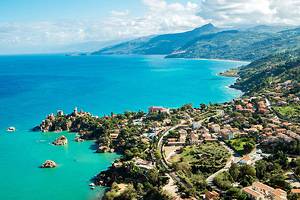
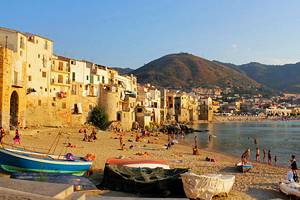
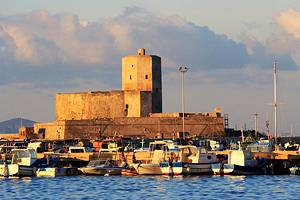
What to See near Palermo: Just a few kilometers from the city, you can explore one of Sicily's top attractions with our visitor's guide to Monreale Cathedral. Not far west of the capital is the historic port of Trapani, and the same distance to the east is the lively town of Cefalu, with a beach at its feet.
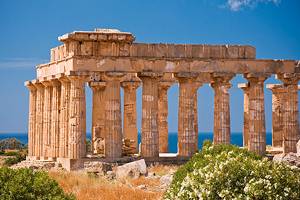
Discovering Sicily's Ancient Sites: While you're exploring the western end of the island, you can find an acropolis and eight Greek temples at Selinunte, an easy day trip from Trapani. On the southern coast, Agrigento achieved UNESCO status for its Valley of the Temples, and outstanding Greek and Roman theaters are among the tourist attractions of Syracuse.