Halawa Valley - Moaula Falls
Visitors who stay for longer than one day on Molokai should be prepared to accept the difficulties of a journey to Halawa Valley. The beauty of this unique landscape more than makes up for it.
The valley lies to the east of Molokai, no great distance from the west or from Kaunakakei, but the difficult and winding stretch at the end of road 450 makes the journey time to the valley longer than might be expected. Allow at least four hours for a return journey and longer if stops along the route are envisaged.
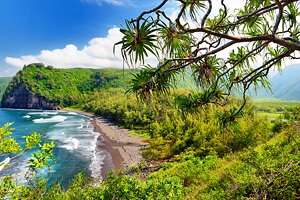
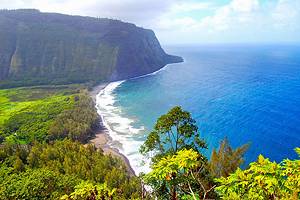
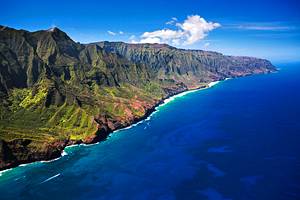
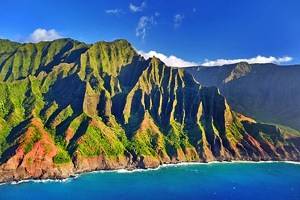
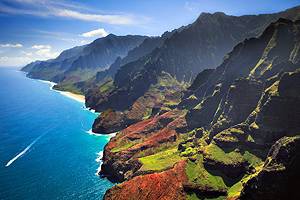
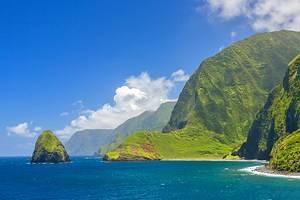
A vantage point along the route offers a good view of Halawa Valley and Halawa Bay. Molokai's first inhabitants probably settled in Halawa Valley (Halawa means "curve" in Hawaiian). Taro was extensively grown here on layered terraces until a particularly strong tsunamis (spring tide) in 1946 flooded the whole valley and deposited so much salt that plants would no longer flourish here. There are many traces of this earlier settlement, including the remains of two temples - Mana Heiau and Papa Heiau - on the valley slopes.
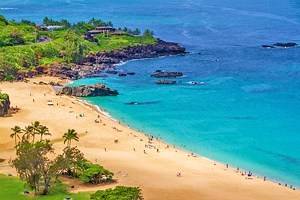
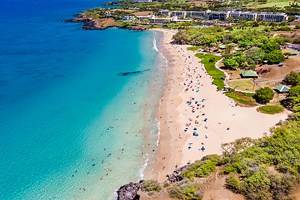
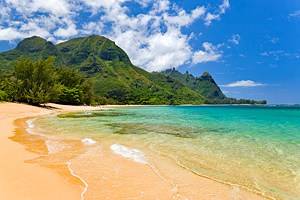
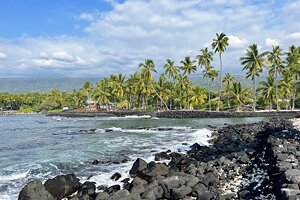
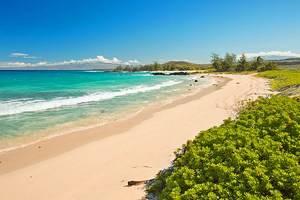
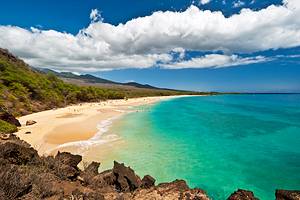
Halawa's beach is in a poor condition and particular care should be taken when swimming, especially in high waves.
Camping is allowed here, provided prior permission has been granted. Do not drink water from Halawa River, which has its source here.
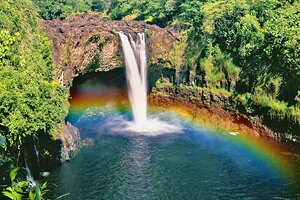
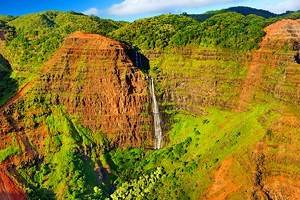
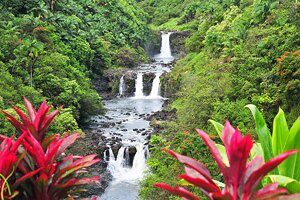
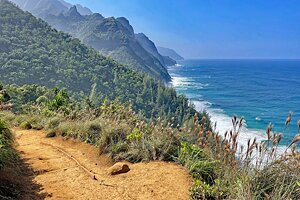
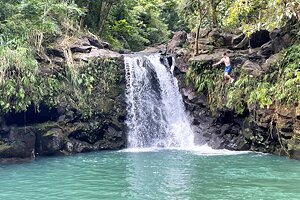
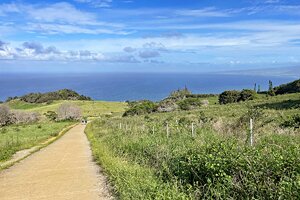
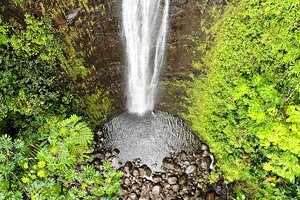
A poor 21/2 miles/4km-long path leads from here to Moaula Waterfall (246ft/75m). It is possible to bathe in the pool at the bottom of the waterfall.
After heavy rain, which occurs quite frequently in this part of the island, the path becomes impassable. Care must be taken to cross Halawa River at the correct point as the waterfall can only be reached from the right bank.
This is one of the loneliest places in the whole of Hawaii and this, in a certain way, is its very attraction.
The valley lies to the east of Molokai, no great distance from the west or from Kaunakakei, but the difficult and winding stretch at the end of road 450 makes the journey time to the valley longer than might be expected. Allow at least four hours for a return journey and longer if stops along the route are envisaged.
A vantage point along the route offers a good view of Halawa Valley and Halawa Bay. Molokai's first inhabitants probably settled in Halawa Valley (Halawa means "curve" in Hawaiian). Taro was extensively grown here on layered terraces until a particularly strong tsunamis (spring tide) in 1946 flooded the whole valley and deposited so much salt that plants would no longer flourish here. There are many traces of this earlier settlement, including the remains of two temples - Mana Heiau and Papa Heiau - on the valley slopes.
Halawa's beach is in a poor condition and particular care should be taken when swimming, especially in high waves.
Camping is allowed here, provided prior permission has been granted. Do not drink water from Halawa River, which has its source here.
A poor 21/2 miles/4km-long path leads from here to Moaula Waterfall (246ft/75m). It is possible to bathe in the pool at the bottom of the waterfall.
After heavy rain, which occurs quite frequently in this part of the island, the path becomes impassable. Care must be taken to cross Halawa River at the correct point as the waterfall can only be reached from the right bank.
This is one of the loneliest places in the whole of Hawaii and this, in a certain way, is its very attraction.
Hobbies & Activities category: Waterfall, cascades
Attractions Near Moaula Falls, Halawa Valley, Molokai
Hotels in Popular Hawaii Destinations