11 Top-Rated Tourist Attractions in Marseille
Author Lisa Alexander spent two years living in France and has traveled the country extensively.
With a busy harbor, vibrant urban energy, and a long list of things to do, Marseille appeals to visitors seeking an authentic tourist experience. This lively cosmopolitan city is France's oldest and the second largest after Paris.
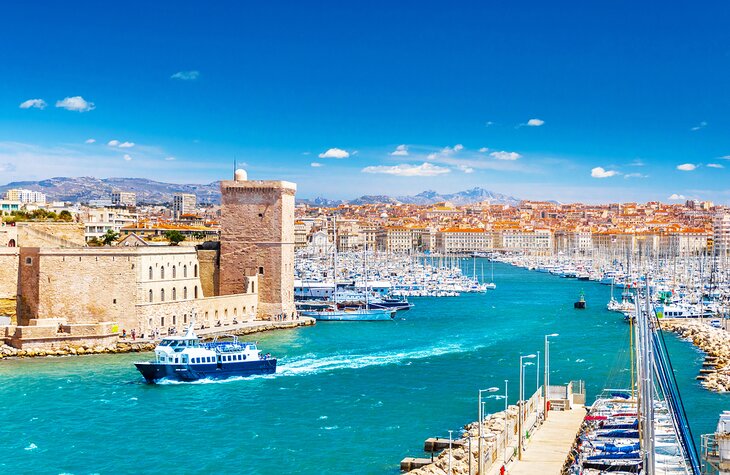
The city has a distinctly Mediterranean ambience, from its red-tile roofed houses to the fishing boats in its port. Everywhere in Marseille, visitors are close to the serene blue waters, whether walking along a charming old street with a view, or feeling the refreshing sea breeze.
The city's colorful, multiethnic heritage also makes Marseille a fascinating place to visit. Considered the bridge between Europe and North Africa, Marseille is home to a sizable immigrant population from Algeria. It's possible to find traditional Arab souks as easily as a classic French bouillabaisse.
Find out more about the top attractions and how to spend your time here with our list of the best things to do in Marseille.
- 1. Basilique Notre-Dame de la Garde
- 2. Abbaye Saint-Victor
- 3. Explore the Vieux Port
- 4. Wander through the Colorful Streets of Le Panier
- 5. Musée des Civilisations de l'Europe et de la Méditerranée
- 6. Enjoy Nature Walks and Scenic Boat Tours at Calanques National Park
- 7. Château d'If
- 8. Musée d'Histoire de Marseille
- 9. La Vieille Charité
- 10. Cathédrale de la Major
- 11. Musée Cantini
- Where to Stay in Marseille for Sightseeing
- Tips and Tours: How to Make the Most of Your Visit to Marseille
1. Basilique Notre-Dame de la Garde
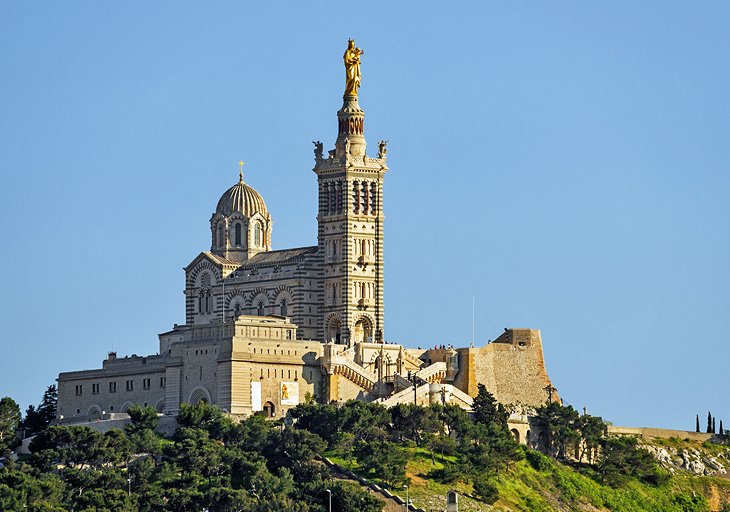
Perched on a hilltop above the harbor, this spectacular church is the most important landmark in Marseille. The site was used in ancient times as an observation point, and during the Middle Ages, was the location of a pilgrimage chapel.
Today, the Basilique Notre-Dame de la Garde is a beacon for the faithful, with an enormous gilded Madonna crowning the belfry. Built between 1853 and 1897, the church features an opulent Neo-Byzantine interior of light and dark marble arches supporting gilded mosaic cupolas. The lavish design has a mesmerizing effect.
After seeing the interior, visitors can spend time on the outdoor terrace that offers breathtaking views. The panoramas extend from the red-tile rooftops of Marseille's buildings to the Vieux Port (historic harbor), all the way to the Frioul Islands in the Mediterranean Sea.
Address: Rue Fort du Sanctuaire, Marseille
2. Abbaye Saint-Victor
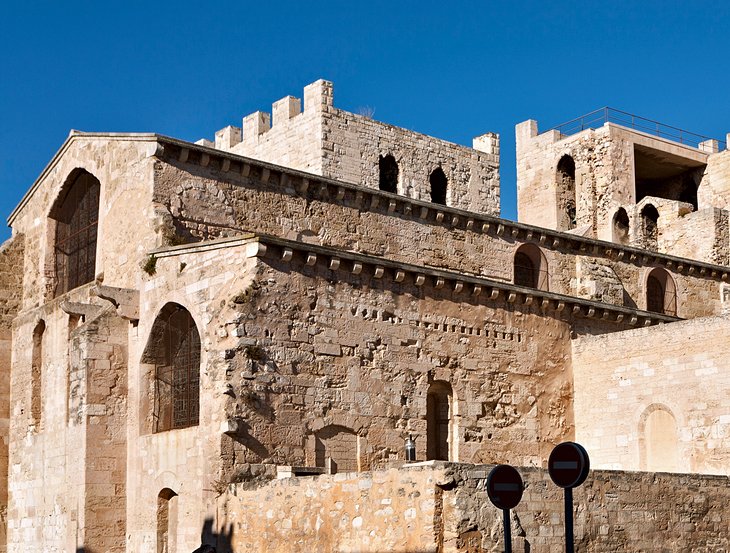
A short walk from the Vieux Port, the Abbaye Saint-Victor is another must-see tourist sight with splendid harbor views.
The Abbaye Saint-Victor was founded in the 5th century and incorporates the original basilica, which makes it one of the oldest buildings in Marseille that is still intact. The basilica, along with its crypt, is considered a gem of Early Christian architecture and art.
Most of the abbey was rebuilt in the 12th and 13th centuries during the Romanesque era. With its crenellated walls and towers, the foreboding exterior has the feel of a medieval fortress.
Inside, this 5th-century basilica reveals a simple and somber design, which gives it a special aura. The crypt houses a precious collection of sarcophagi from the 4th and 5th centuries, as well as the 11th-century tombstone of Abbot Isarnus. It is believed that the relics of Saint Victor are also buried in the basilica's crypt.
The Abbaye Saint-Victor is open for visits every day year-round.
Annually on Candlemas (February 2nd), pilgrims participate in a religious procession from the Vieux Port to the Abbaye Saint-Victor with a stop along the way at the Four des Navettes, an 18th-century bakery that makes the special boat-shaped biscuits of Marseille (Navettes de Marseille).
Address: 3 Rue de l'Abbaye, Marseille
3. Explore the Vieux Port
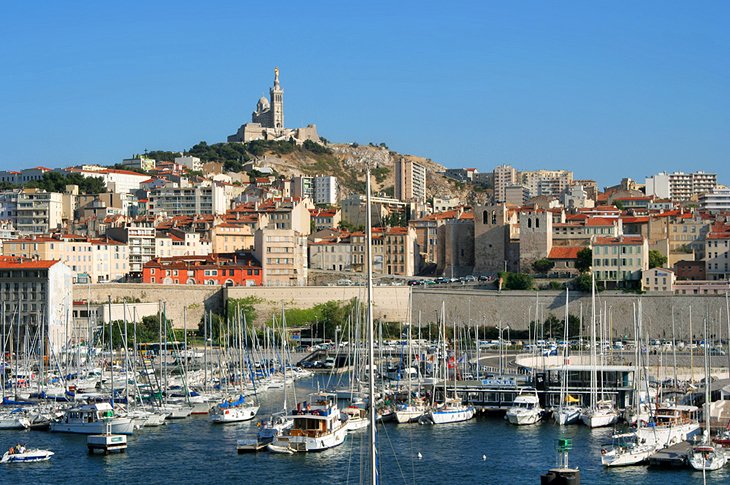
The Vieux Port represents the birthplace of Marseille. This is where the city began as a Greek port around 600 BCE. Surrounded by serene blue waters, the Old Port is located in the west of Marseille near La Canebière boulevard.
A stroll around this bustling harbor immerses visitors in the sights and sounds of a thriving Mediterranean port. The waterfront is a focal point for tourists, and many say it's one of the best places to visit in Marseille for authentic local cuisine. Seafood restaurants specialize in bouillabaisse, the flavorful seafood stew that is the city's signature dish.
On the east side of the harbor, the Quai des Belges hosts a fish market every morning. Once an important commercial port, the Vieux Port is now used primarily by fishing boats and sports craft.
The Old Port is also the launching point for the ferries that sail to two popular tourist destinations: the Château d'If and the Calanques near Cassis.
4. Wander through the Colorful Streets of Le Panier
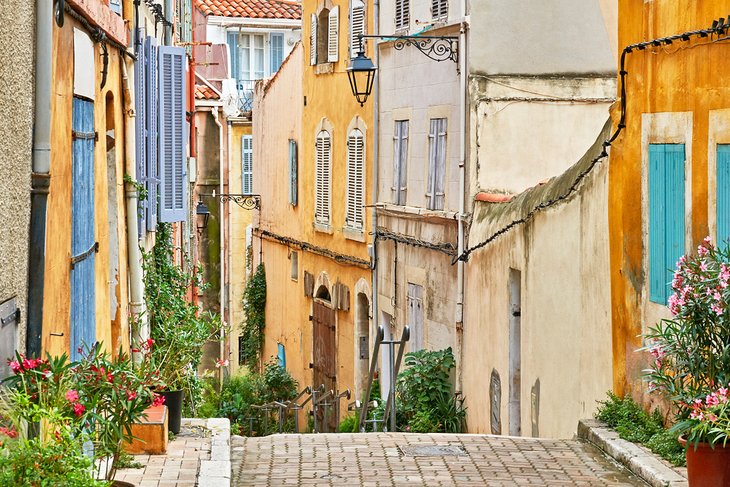
Splendidly situated on a hillside above the Vieux Port, this colorful neighborhood is the historic center and cultural heart of Marseille. Le Panier is Marseille's oldest quarter, inhabited since antiquity when the ancient Greeks settled here in 600 BCE.
With its steep, narrow winding streets and quaint pastel-painted buildings, this quarter offers a glimpse into the charming personality of Marseille. Once a working-class neighborhood, Le Panier is now a gentrified residential area, but the typical houses with shuttered windows and lines of laundry provide a glimpse of its old-fashioned character.
Visitors may begin a walking tour on the north side of the Vieux Port harbor basin at the Quai du Port and then walk up La Canebière, a vibrant boulevard that buzzes with activity.
Wandering through this atmospheric neighborhood leads to discoveries of local artisan boutiques, gourmet food shops, and art galleries. Le Panier also brims with inviting little restaurants that feature outdoor terrace seating. Many restaurants serve excellent fresh-caught seafood; others specialize in French, Italian, or authentic Algerian cuisine.
The quarter has several important monuments such as the Hôtel de Ville (Town Hall), which was built in the second half of the 17th century based on a Genoese architectural model.
Other landmarks include the Cathédrale de la Major and the Vieille Charité, a dormitory for the poor in the 17th and 18th centuries that now houses a museum of contemporary art.
5. Musée des Civilisations de l'Europe et de la Méditerranée
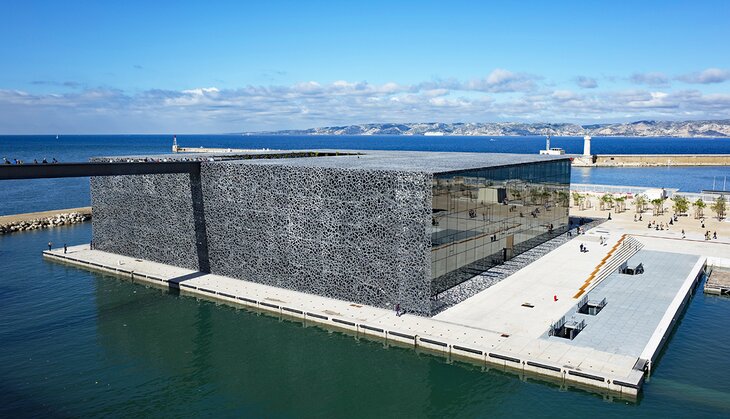
The Musée des Civilisations de l'Europe et de la Méditerranée, also known by its acronym Mucem, provides an in-depth look at civilizations of the Mediterranean Basin.
A stunning complex of three different sites, this expansive museum presents a wealth of exhibits in various disciplines: ethnography, art, history, and cuisine of Mediterranean cultures.
Covering this wide range of content, the museum's galleries display paintings, photographs, documents, antique furnishings, and everyday objects, as well as lectures and film screenings.
The newest part of the museum is a dazzling ultra-modern waterfront building (on the former J4 Pier) with outlooks onto the harbor and the Mediterranean Sea.
The J4 building displays the museum's most important permanent collections, as well as temporary exhibits, and also hosts cultural events. The J4 building contains the museum's main gift shop, which sells a wide range of books on topics related to European culture and history.
Gourmands will be happy to discover the dining options on the rooftop of the J4 building. With renowned chef Gérald Passedat at its helm, Le Môle Passedat (open for lunch and dinner) offers breathtaking sea views and traditional Mediterranean cuisine (including mezze) prepared from seasonal ingredients.
Also on the rooftop, the casual restaurant La Cuisine is open for lunch and dinner, and Le Café serves coffee, refreshments, and snacks.
An aerial footbridge connects the J4 Pier building with another section of the museum in the vaulted rooms of the Fort Saint-Jean, a 12th-century monument that played a role during the Crusades. The Fort Saint-Jean includes lush Mediterranean gardens and a ramparts path where visitors can admire sweeping panoramas of the Marseille cityscape, the Vieux Port, and the sea.
The third site, Le Centre de Conservation et de Ressources du Mucem, is located in the Belle de Mai quarter. This center provides a behind-the-scenes look into the work of the museum.
Address: 7 Promenade Robert Laffont (Esplanade du J4), Marseille
Official site: http://www.mucem.org/en
6. Enjoy Nature Walks and Scenic Boat Tours at Calanques National Park
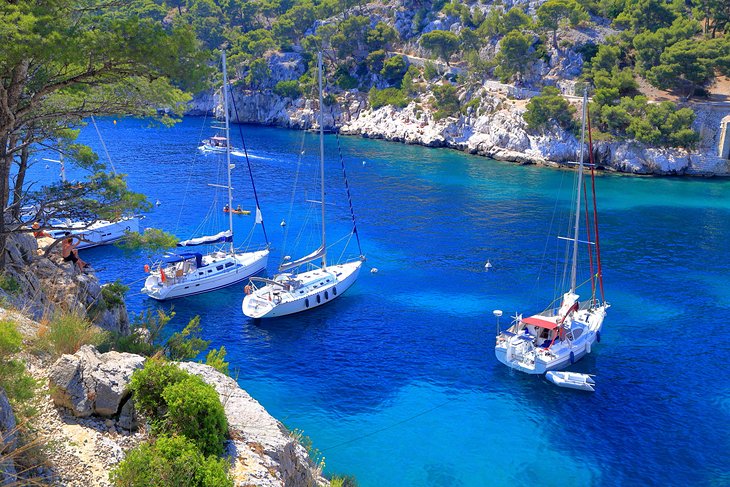
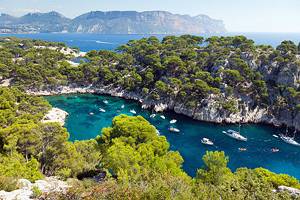
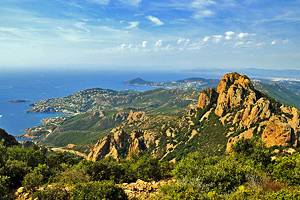
Between Marseille and the quaint fishing village of Cassis is the Parc National des Calanques, a splendid nature site where the Mediterranean meets the Massif des Calanques mountain range.
The landscape is distinguished by majestic limestone rock walls with fjord-like coves ("calanque" translates to "cove") filled with pools of saltwater in mesmerizing turquoise hues.
Outdoor sports enthusiasts will find many things to do at Calanques National Park, such as swimming, kayaking, rock climbing, and hiking. An excellent system of trails allows visitors to appreciate the pristine landscape and gorgeous coastal views.
For those who enjoy yachting and boat cruises, the fjords provide spectacular scenery on an idyllic journey through the tranquil maritime environment.
The largest calanques, Port-Miou, En-Vau, and Port-Pin, can be reached by car or by ferry from Marseille. It is also possible to take a guided boat tour or arrange a private boat trip.
7. Château d'If
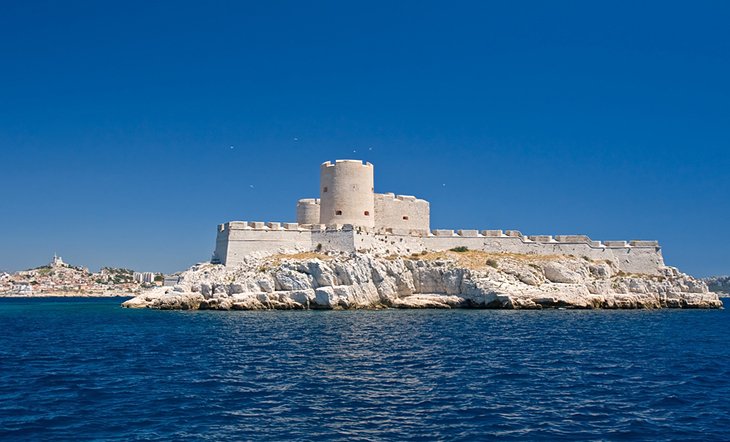
A short ferry ride away from the Vieux Port of Marseille, the Château d'If is located on the Île d'If in the Frioul Islands archipelago, a nature conservation area that includes the tiny islands of If, Pomègues, Ratonneau, and Tiboulen.
The spectacular scenery features protected coves, turquoise waters, pristine beaches, sandy creeks, and impressive limestone cliffs. Thanks to the Mediterranean sunshine, the light creates a serene shimmering effect on the water, and a microclimate allows rare floral species to thrive here.
In this beautiful natural setting, the Château d'If was built as a fortress by King François I in the 16th century. Soon after, the fortress was converted into a prison. The location is depicted in Alexandre Dumas' novel The Count of Monte Cristo.
Ferry boat service is also available from the Vieux Port in Marseille to the Île de Ratonneau, where tourists may sunbathe on the beach, go for a hike, or visit the 19th-century Fort de Ratonneau.
8. Musée d'Histoire de Marseille
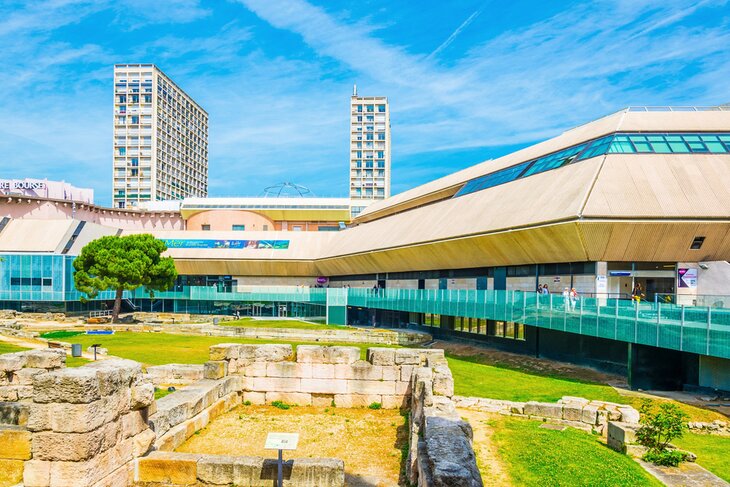
In Le Panier quarter, just a few steps away from the Vieux Port, the Musée d'Histoire de Marseille tells the story of Marseille from its Gallo-Greek origins through the Middle Ages to the present day. The museum offers an impressive collection of artifacts, covering 2,600 years of history.
The historical evolution of France's oldest city comes to life in this sleek modern museum's bright spacious rooms. The collections contain 4,000 items and hundreds of multimedia exhibits.
The museum also has a garden, the Jardin des Vestiges, which is actually the excavation site of the 3rd-century BCE port of Massalia (also spelled "Massilia").
Address: 2 Rue Henri-Barbusse, Marseille
9. La Vieille Charité
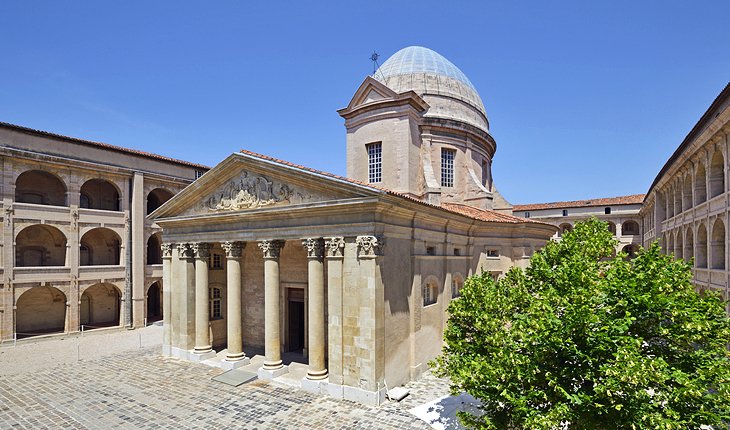
La Vieille Charité is located on the Place des Moulins that lies at the highest point in Le Panier.
The building was created in 1640 when the Town Council of Marseille decided to give impoverished residents decent accommodations, in compliance with a royal policy of "enclosing the poor."
In 1749, a three-floor public hospital with four wings was added to the building. There is a chapel at the center courtyard of the hospital complex. Built from 1679 to 1707, the chapel is a wonderful example of Italian Baroque architecture.
The facade of La Vieille Charité is more modern, dating from 1863. Upon close observation, visitors will notice the depiction of two pelicans feeding their young, to represent Charity looking after poor children.
Since 1986, La Vieille Charité building has been used to host scientific and cultural events and to house a museum, Le Centre de la Vieille Charité. This museum presents cultural events, ethnographic exhibits, and themed art expositions throughout the year.
Address: 2 Rue de la Charité, Marseille
10. Cathédrale de la Major
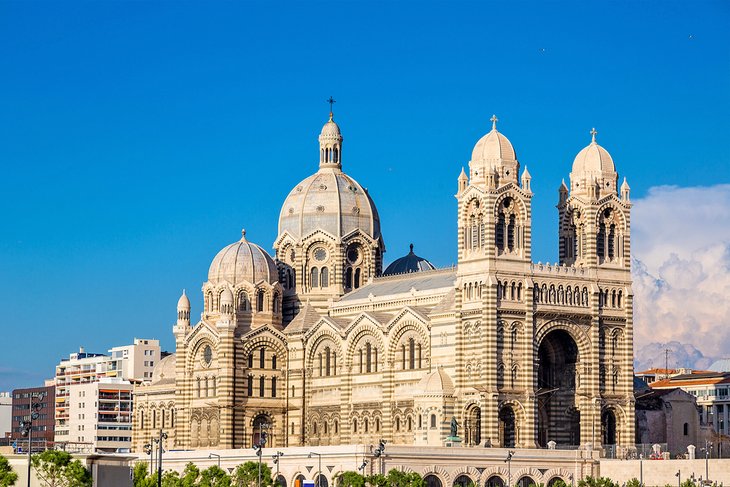
Near the northwest corner of Le Panier, the Cathédrale de la Major (Cathédrale Sainte-Marie-Majeure) stands majestically on an esplanade overlooking the waterfront. This ornate Neo-Byzantine cathedral seems to keep watch over the Old Port, with its soaring twin towers and 70-meter-high dome.
Louis-Napoléon Bonaparte commissioned the construction of this cathedral in 1852. Completed in 1893, the Cathédrale de la Major is the largest church (and the only cathedral) constructed in France during the 19th century.
Its dimensions (142 meters long by 20 meters high) are similar in scale to Saint Peter's Basilica in Rome. Classified as a Monument Historique, this cathedral incorporates an Early Christian baptistery that dates to the 5th century.
The lavish interior is richly decorated with Carrara marble and exquisite Venetian mosaics. An impressive assortment of statues is also found throughout the sanctuary.
At the foot of the cathedral is a plaza called "Les Voûtes," a popular gathering place filled with shops, restaurants, and cafés. Locals and tourists alike enjoy strolling through this happening area. In addition to the trendy scene, Les Voûtes also offers fabulous sea views.
Address: 10 Place de la Major, Marseille
11. Musée Cantini
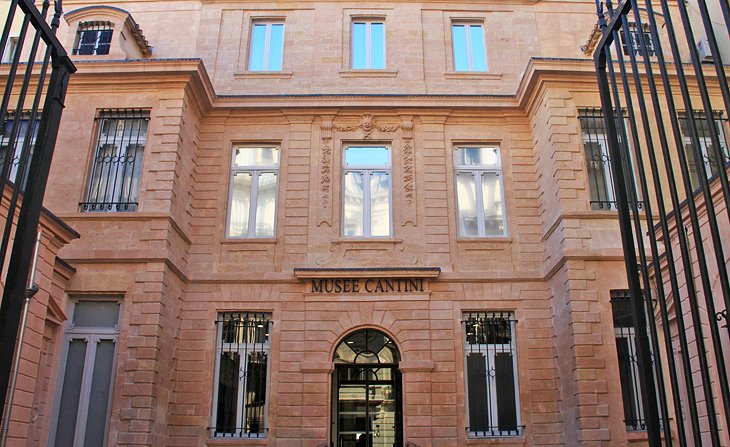
Art lovers will appreciate the superb collection of modern and contemporary art found at the Musée Cantini, displayed within a 17th-century hôtel particulier (mansion). The local art collector Jules Cantini bought this elegant house in 1888, and he bequeathed it to the city of Marseille in 1916.
The Musée Cantini boasts one of the country's most extensive assortments of modern art created between 1900 and 1960. Highlights of the collection include works by André Derain, Raoul Dufy, Wassily Kandinsky, Max Ernst, Joan Miró, and Pablo Picasso.
A short walk from the Musée Cantini is the Cours Belsunce, a wide esplanade designed in the 17th century as a place for residents to enjoy leisurely strolls.
Address: 19 Rue Grignan, Marseille
Where to Stay in Marseille for Sightseeing
Most major attractions in Marseille are close to the Vieux Port and in Le Panier, the colorful and historic neighborhood of steep, narrow streets that wind up the hillside above the west side of Vieux Port. In these two quarters of Marseille, you'll find these highly rated hotels:
Luxury Hotels:
- The Hôtel La Résidence du Vieux Port features exceptional views of the waterfront and the Basilique Notre-Dame de la Garde across the harbor. This four-star hotel has been recently redecorated in a retro 1950s style.
- The InterContinental Marseille - Hôtel Dieu occupies a Monument Historique perched on a hilltop in Le Panier. This five-star hotel has a chic brasserie with an outdoor terrace, a Michelin-starred gastronomic restaurant, room service, and an upscale spa with a sauna, two hammams, an indoor pool, and a fitness center.
- Overlooking the Vieux Port, the Sofitel Marseille Vieux Port is nestled in a picturesque location next to a spacious park and near the Abbaye Saint-Victor. The five-star property has a spa, hair salon, and several restaurants.
Mid-Range Hotels:
- The three-star Hôtel Escale Oceania Marseille is just steps away from the Vieux Port in the city center near many restaurants and shops. Stylish modern guest rooms feature large windows, private balconies, and Italian-style "rain" showers.
- Located right on the waterfront, the Radisson Blu Hotel Marseille Vieux Port offers great views of the Old Port along with four-star amenities. Guests love the outdoor swimming pool and sun terrace area, as well as the gourmet restaurant with pleasant outdoor patio that overlooks the marina.
- The bright, spacious guest rooms at the four-star Grand Hôtel Beauvau Marseille Vieux-Port - MGallery are decorated in cheerful Provençal style. The hotel is near the Vieux Port in the city center.
Budget Hotels:
- The two-star Hôtel Hermès is a short walk to Le Panier quarter and has a rooftop terrace overlooking the Vieux Port. The services (24-hour front desk and concierge) are better than expected for a budget hotel.
- Near the train station and a 20-minute walk from the city center, the ibis Marseille Centre Gare Saint Charles provides basic accommodations at an affordable price. This three-star hotel offers taxi service, parking, a breakfast buffet, and a restaurant with pleasant outdoor seating.
Tips and Tours: How to Make the Most of Your Visit to Marseille
- Sightseeing in and around Marseille: For the perfect combination of sightseeing and seaside scenery, consider the Provence, Marseille, and Cassis Sightseeing Tour. This half-day itinerary includes a tour of the historic landmarks in Marseille, a scenic drive along the Corniche des Crêtes, a stop in the Provençal fishing village of Cassis, and a 45-minute cruise through the Calanques National Park.
- Provence Day Trip: If you want to experience the best of Provence, the Provence Countryside Tour is a great way to do it. This full-day adventure takes you to explore Avignon, the "City of Popes;" the village of Châteauneuf-du-Pape, surrounded by vine-covered hills; and the fortified medieval town of Les Baux-de-Provence.
- Luberon Day Trip: Lavender fields, hilltop hamlets, and rugged mountain terrain are the highlights on the Perched Villages of the Luberon Day Trip. This full-day excursion begins with a scenic drive through the beautiful Luberon foothills to see several charming medieval villages (Roussillon, Lourmarin, and Gordes), and continues to the 12th-century Sénanque Abbey and the town of L'Isle-sur-la-Sorgue, known for its picturesque canals and wide selection of antique shops.
More Related Articles on PlanetWare.com
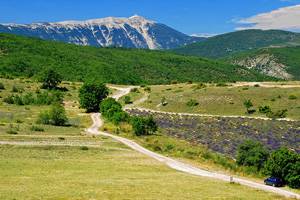
Exploring the Provence Region: Marseille is found in the heart of Provence, a favorite tourist destination in France. Many quaint hilltop towns and fishing villages, like Cassis, are easy day trips from Marseille. Also not to be missed are Aix-en-Provence (30 kilometers away) and Avignon (100 kilometers away).
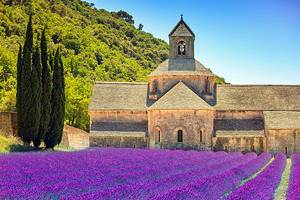
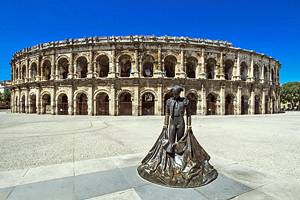
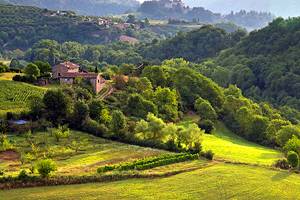
Traveling Off the Beaten Path: Slightly further afield (an hour's drive) is the unspoiled countryside of the Luberon region in Provence's Haut-Vaucluse, dotted with ancient abbeys and hilltop villages. About 120 kilometers away from Marseille, the historic town of Nîmes is well worth the journey to see its ancient Roman monuments and top-notch museums.
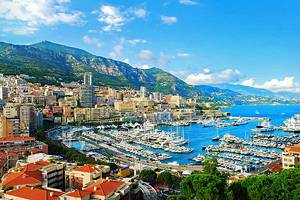
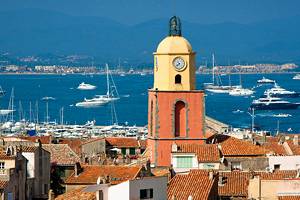
Seaside Scenery and Beach Resorts: Around Marseille, the coastline beckons with sunshine and beautiful Mediterranean scenery. The quintessential port town of Toulon is an hour's drive away, and the glamorous resort of Saint-Tropez, with its beautiful beaches, is a two-hour drive. Continuing along the Côte d'Azur are Cannes, Nice, and Monaco, famous for fancy beach clubs, upscale hotels, fine dining, and art museums.