14 Top-Rated Tourist Attractions in the Sea of Galilee Region
Forever entwined with the story of Jesus Christ, who carried out much of his ministry work in the area, the Sea of Galilee region is a beautiful place to visit, full of things to do and tourist attractions, from ancient archaeological remnants to drop-dead gorgeous scenery.
For Christians, of course, the best places to visit are the collection of churches around Tabgha, built over the sites where Jesus carried out his miracles. For other visitors, the placid lakeside scenery, hot pools, and hiking options in the surrounding hills provide enough reasons to spend some time here.
Find out what there is to do in the region with our list of the top tourist attractions in the Sea of Galilee Region.
See also: Where to Stay in the Sea of Galilee Region
- 1. Tiberias
- 2. Hamat-Tiberias Hot Springs
- 3. Bet Yerah
- 4. Arbel National Park
- 5. Kibbutz Ginosar
- 6. Church of the Multiplication of Loaves and Fishes
- 7. Church of the Primacy of St. Peter
- 8. Mount of Beatitudes
- 9. Capernaum
- 10. Greek Orthodox Church of the 12 Apostles
- 11. Bethsaida
- 12. Korazim
- 13. Yardenit
- 14. Degania
- History of the Sea of Galilee Region
- Where to Stay in the Sea of Galilee Region for Sightseeing
- Map of Tourist Attractions in the Sea of Galilee Region
1. Tiberias
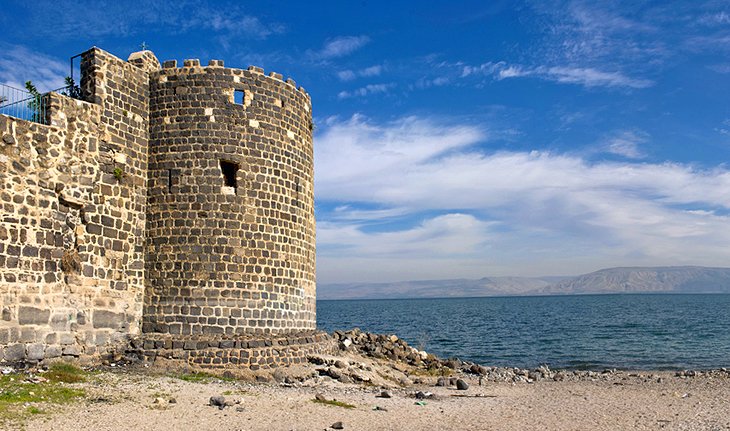
Sitting on the edge of the Sea of Galilee, Tiberias is the perfect base to explore this region.
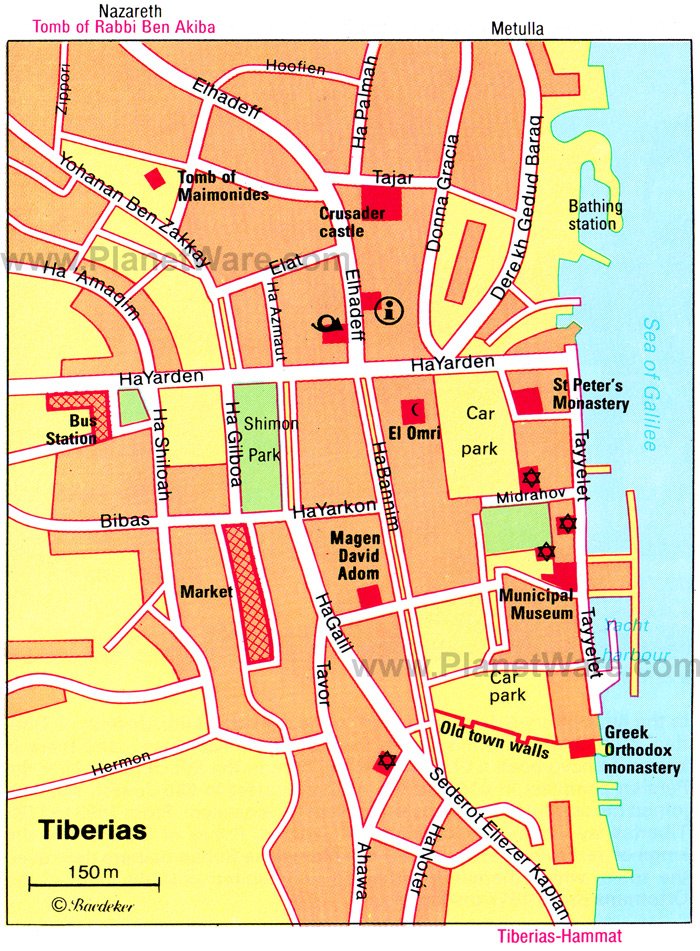
The waterside street, Yigal Alon Promenade, is home to most of the town's tourist attractions and is a great place for a lakeside stroll. Along this road, you'll find the 19th-century Church of St. Peter, built over the remains of a Crusader castle. There's a beautiful cloister inside, and the apse of the church is projected like the bow of a ship - a reference to Peter's fishing boat.
Just around the corner on HaYarden Street is the sculpture park known as the Open-Air Museum.
If you walk south along the promenade, you come to the Greek Orthodox Monastery, erected in 1862. If you head inland from the sea, Tiberias is home to a number of important Jewish tombs.
About 300 meters from the northern end of HaGalil Street is the tomb of the great philosopher and physician Maimonides (Rabbi Moses Ben Maimon, also known as Rambam).
Born in Córdoba in 1135, Maimonides left Spain because of religious persecution and went to Cairo to become Saladin's personal physician. While there, he also became the spiritual leader of the Jews in Egypt. As well as the tomb there is an excellent museum here dedicated to his life and work.
The tomb of Yohanan Ben Zakkai - who, after the destruction of Jerusalem in AD 70, founded a Jewish school in Yavne and transferred the seat of the Sanhedrin to that town - is also near here.
2. Hamat-Tiberias Hot Springs
Tiberias has been famed as a spa center since the Roman period, and its hot springs, two kilometers south from town, are as popular now as they were then.
Soaking in the various hot pools here, fed from the natural springs, are the perfect relaxing antidote to time spent on the road traveling.
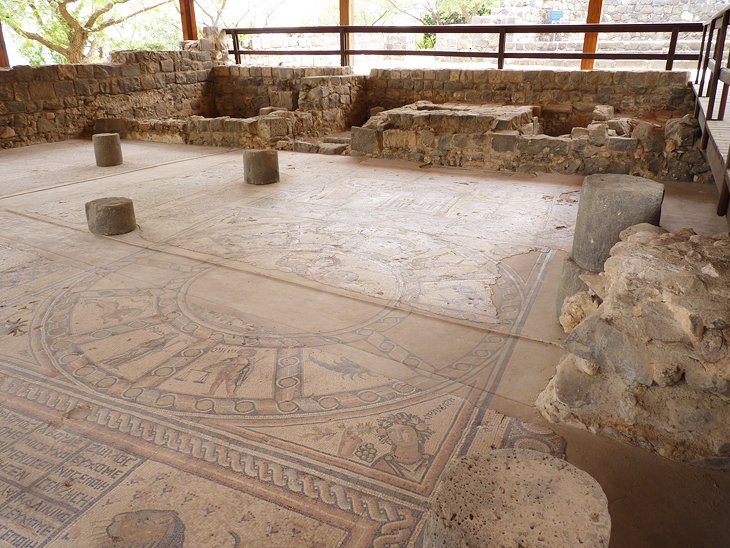
After you've had your dip, the Hamat-Tiberias hot springs area is also home to its own major tourist attraction. One of the best preserved ancient synagogue mosaic floors in the country was excavated here.
The synagogue dates from the 4th century, and the mosaic floor showcases the influence of both Hellenistic and Roman cultures on the local artists of this period, even when decorating religious buildings. In particular, note the central section of the mosaic, which depicts the sun god Helios surrounded by the signs of the zodiac.
Address: Hamat-Tiberias National Park
3. Bet Yerah
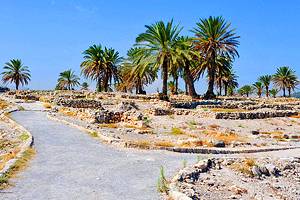
The archaeological site of Bet Yerah ("house of the moon," also known as Khirbet Kerak) is not mentioned in either Biblical or Egyptian records, but excavations here have uncovered evidence of a settlement dating from the Bronze Age right through to the period of Arab rule.
The site, 10 kilometers south of the Hamat-Tiberias hot springs, includes a jumble of remains dating from various eras. The best preserved remnants include a bath complex dating from the 4th or 5th century and a 3rd century Roman fort. There is also a Byzantine church and a three-aisled synagogue dating from the 5th century.
4. Arbel National Park
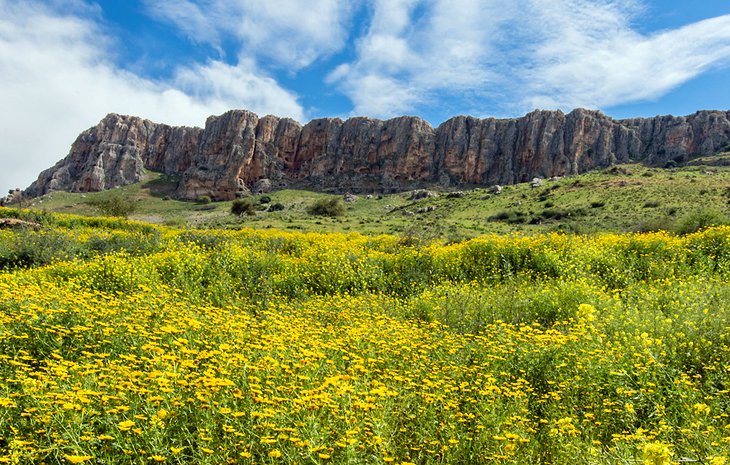
Arbel National Park is a wonderful place to put your hiking shoes on and hit the trail.
The major attraction here is the walk up to the Horns of Hittim - the scene of a decisive battle during the Crusader period. On July 4th, 1187, Saladin inflicted an annihilating defeat on the Crusaders here. The Latin kingdom founded 88 years before now lost its capital, Jerusalem, and much of its territory, and for the remaining 104 years of its existence, it was confined to a narrow coastal strip with its capital at Acre (Akko).
It is a half-hour walk to the top of the hill on a footpath running up from the main road. From the summit, where there are Bronze Age remains, are fine views of Eastern Galilee and the Sea of Galilee.
Location: 10 kilometers west of Tiberias
5. Kibbutz Ginosar
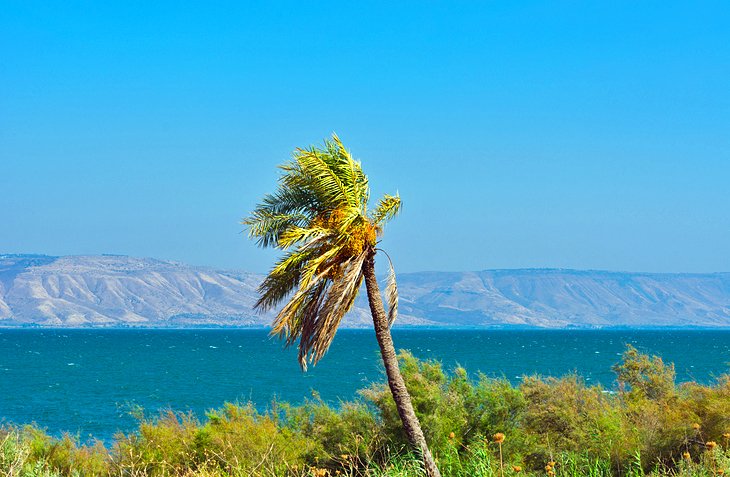
The principal attraction of this little kibbutz is the ancient fishing boat, now known as the Sea of Galilee Boat, displayed here in the Beit Yigal Allon Museum.
Discovered in 1986, buried in mud near the edge of the lake, the boat has been dated to between 70 BC and AD 90, meaning that it could have been in use during the time of Jesus.
The boat is 8.27 meters long and 2.3 meters wide and is made out of cedar wood.
Although there is absolutely no proof that the boat could have been used by Jesus or one of his disciples, many people have nicknamed it the Jesus Boat. Historically, the boat is extremely important for providing archaeologists with an example of 1st-century-AD boat design.
Location: 9.5 kilometers north of Tiberias
6. Church of the Multiplication of Loaves and Fishes
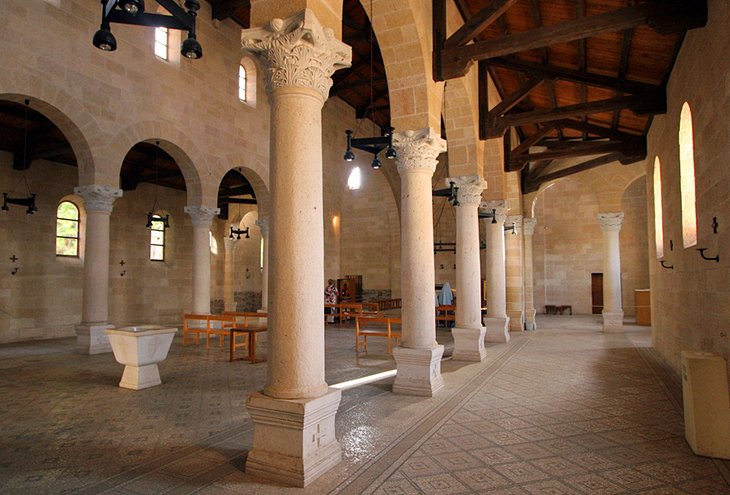
The Church of the Multiplication of Loaves and Fishes is built over the site where tradition states Christ stood during the miracle when he fed the 5,000 people.
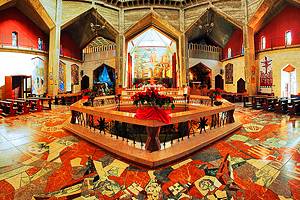
Built in 1982, designed by the Cologne architects Anton Goergen and Fritz Baumann, it stands over the site of an earlier Byzantine-era church and has preserved original elements of the older church within the interior.
The Byzantine period mosaics on the flooring are the church's most distinctive feature, depicting a variety of birds and floral designs. The most interesting mosaics are in the transepts.
The artist was evidently familiar with the Nile Delta and has depicted the flora and fauna of that region with flamingos, snakes, herons, ducks, lotus flowers, and reeds. The south transept also shows a Nilometer (a device used for measuring the level of the river).
The altar in the sanctuary is built over the stone on which Christ is said to have stood when the miracle was performed.
In front is the church's most famous mosaic, depicting a basket containing loaves and flanked by two fish.
7. Church of the Primacy of St. Peter
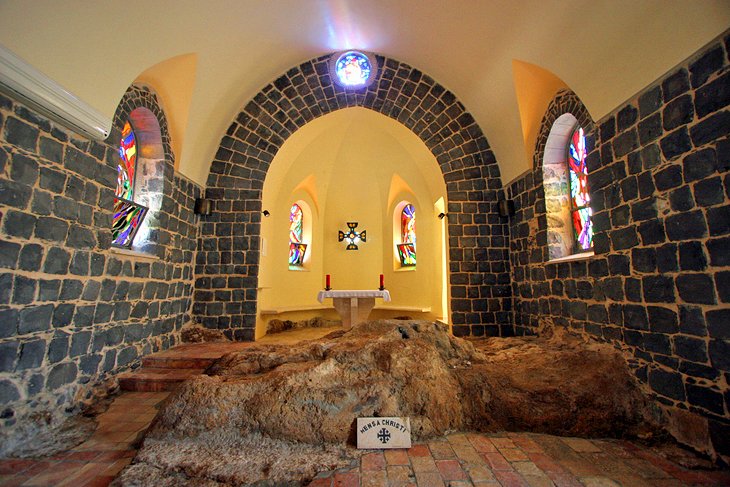
Just 200 meters farther along the road to Capernaum from the Church of the Multiplication of the Loaves and Fishes, a footpath runs down to the shores of the Sea of Galilee and the Church of the Primacy of St. Peter.
A chapel built here in the 4th century was destroyed in 1263, and the black basalt present-day church was built by the Franciscans in 1933.
The church commemorates the appearance of the risen Christ to his disciples on the shores of the lake, when he gave Peter primacy over the church.
The rock at the east end of the church is supposed to be the table at which Christ dined with his disciples.
On the south side of the church are rock-cut steps leading down to the lake that were described by the pilgrim Aetheria in about AD 400 as "the steps on which the Lord stood."
8. Mount of Beatitudes
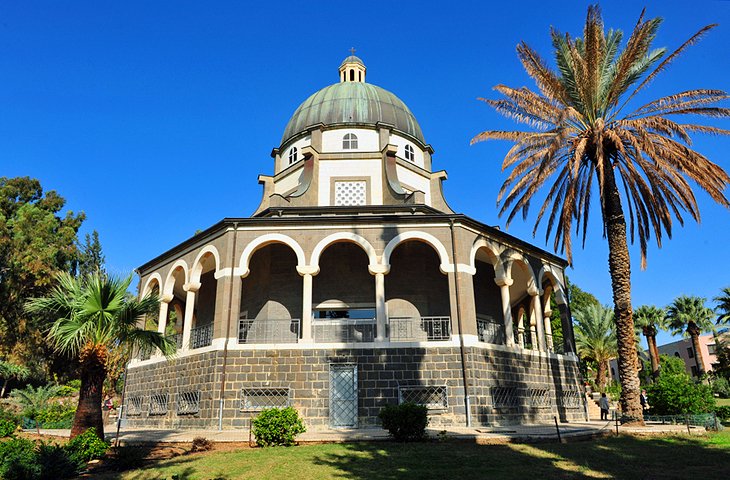
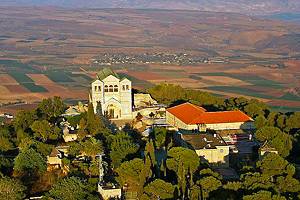
The Mount of Beatitudes is a major point of interest for all Christian visitors. Tradition states that it was here that Jesus delivered his famous Sermon on the Mount.
The Roman Catholic Church here (built in the 1930s) holds mass hourly between 8am and 3pm for the pilgrims who travel here.
The immaculately kept gardens are a wonderfully tranquil spot to take in the views over the Sea of Galilee, while inside the church itself is a lovely stained glass window depicting the Beatitudes.
9. Capernaum
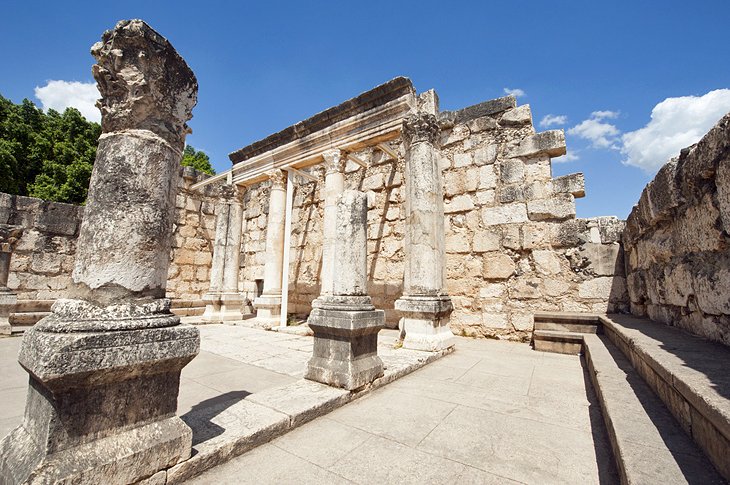
This archaeological site is believed to be the fishing village of Capernaum mentioned in the New Testament where Jesus lived, preached, and gathered the first of his disciples.
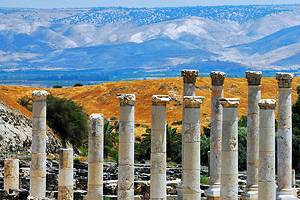
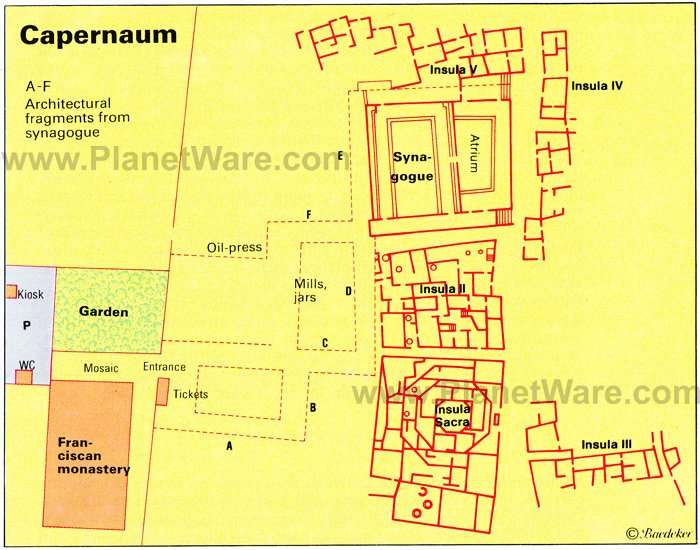
The beautiful remains of a fourth-century synagogue are the most prominent ruins here, while the modern church on the site is built over the remnants of a Byzantine church and the ruins of the House of St. Peter.
Archaeological work here has established that the site dates back to the 2nd century BC and was finally abandoned during the 11th century.
Location: 3 kilometers from Tabgha
10. Greek Orthodox Church of the 12 Apostles
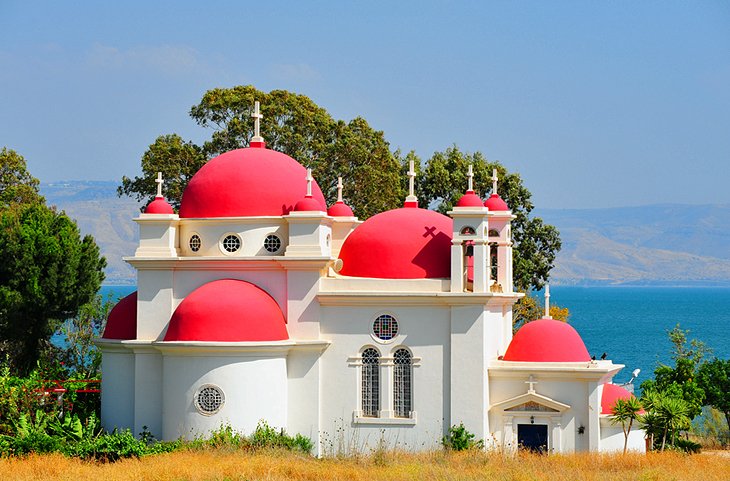
Well worth a visit, this beautiful and rather striking red-domed church is a major landmark along the Sea of Galilee.
It was built on the shore in 1925 by the Greek Orthodox Church and is well worth a visit for its interior of beautiful Byzantine-style frescoes painted in the late 1990s.
In particular, don't miss the vivid fresco depicting the Last Judgement that covers the church's back wall. The garden here is a shady spot to escape the heat of the midday sun.
Location: Capernaum, 3 kilometers from Tabgha
11. Bethsaida
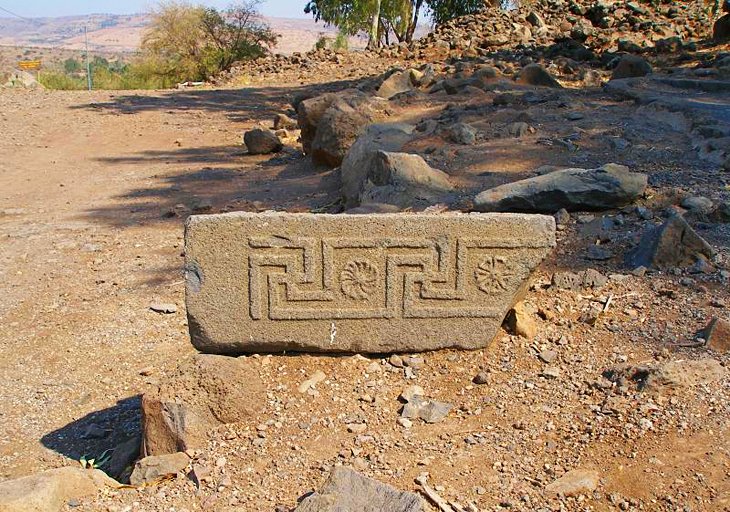
These basalt ruins are believed to be the remnants of the New Testament town of Bethsaida, where Jesus performed the miracle of walking on water, and they are also near the site where he fed the 5000 and cured a man of blindness.
As the ruins are mostly only foundations and low stone walls, it can be difficult to imagine what this once quite substantial town looked like. Information boards placed at strategic points around the excavations help visitors interpret the site.
Location: 23 kilometers northwest of Tiberias
12. Korazim
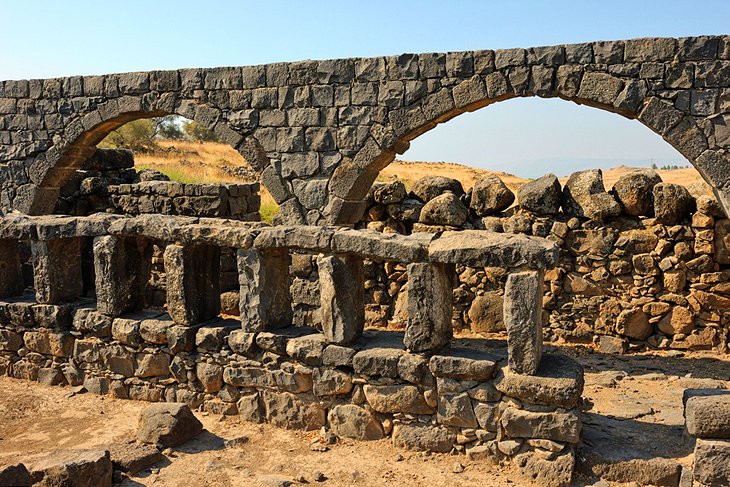
These atmospheric basalt ruins are the remains of another town from the time of Jesus.
The ruins sit on a hilltop on the Sea of Galilee's northern side. Archaeological work here dates the site back to the 1st century AD, although the ruins present today all date from the later Byzantine era.
The main highlight of a visit here is the 4th-century synagogue (where a horde of coins was found during excavation), which is home to beautiful carvings with Hellenistic influences.
Location: 29 kilometers north of Tiberias
13. Yardenit
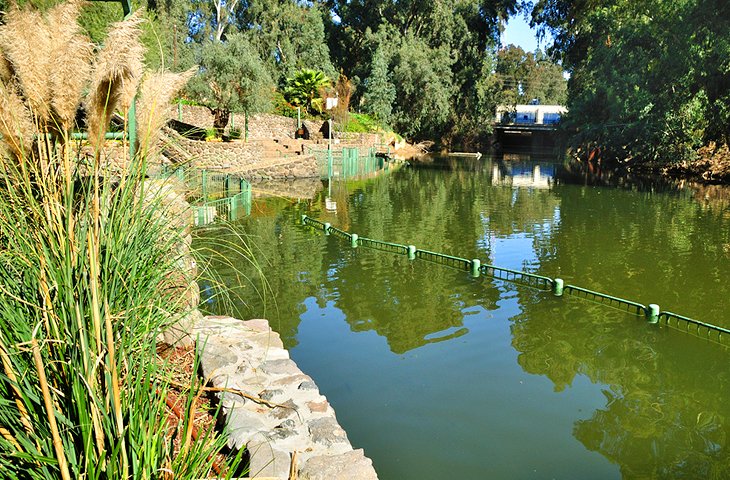
Near the headwaters of the Jordan River, Yardenit is a popular baptism spot for Christian pilgrims looking to dunk themselves in the famous waters of the Jordan.
The site is maintained and managed well, with 12 separate baptism pools built along the lush river bank to aid visitors who want to immerse themselves, as well as a wooden riverbank promenade for those who just want to experience the quiet tranquillity of the river.
There's also a restaurant on-site.
Location: 11 kilometers south of Tiberias
Official site: www.yardenit.com
14. Degania
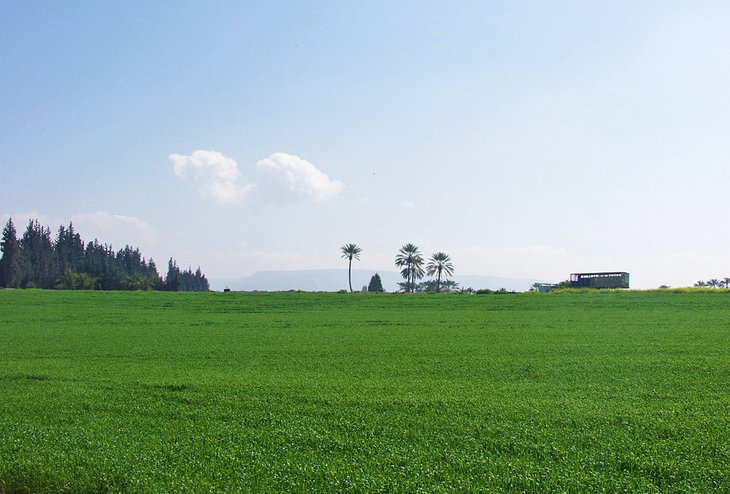
The kibbutz of Degania lies at the point where the Jordan River emerges from the Sea of Galilee.
This was the very first kibbutz, founded in 1909 by Russian immigrants, with the original kibbutz now known as Degania A, and its more recently-founded neighbor as Degania B.
At the main entrance to Degania A is a Syrian tank, which in 1948, advanced as far as the kibbutz, but was then knocked out by a Molotov cocktail.
Within the territory of the kibbutz is Gordon House (named after Aharon D. Gordon, one of the founders of the kibbutz), a research institute with an archaeological, natural history, and agricultural museum.
Location: 2 kilometers south of Bet Yerah
History of the Sea of Galilee Region
When the Israelites took possession of the Promised Land, the tribes of Naphtali, Zebulun, and Asher settled in Galilee (Joshua 19), where they were later joined by the tribe of Dan (Judges 18).
In the eighth century BC, the country was occupied by the Assyrians; later came Babylonians, Persians, and Greeks. After the Hasmonean conquest in 163 BC, non-Jews lived in the coastal plain and Jews in the upland regions.
When the Romans occupied Galilee, it was ruled, along with Judaea, by the Hasmonean ruler Hyrcanus II and then by Herod the Great. Thereafter, in the lifetime of Jesus, it belonged to the tetrarchy of Herod Antipas, who made Tiberias his capital, and then, until 44, to the kingdom of Herod Agrippa.
In AD 66, Galilee was a stronghold of the Jewish uprising against the Romans, and after the Bar Kochba rising (AD 135), it replaced Judaea as the center of Jewry; the towns of Bet Shearim, Sepphoris (Zippori), and Tiberias being of particular importance in this connection.
From the seventh century onwards, the Arab population of Galilee increased steadily. The first Jewish settlements of modern times were established at Rosh Pinna (1878) and Metulla, the most northerly village in Israel (1886). In 1948, Galilee became part of the newly founded state of Israel.
Where to Stay in the Sea of Galilee Region for Sightseeing
We recommend these convenient hotels and guesthouses in Tiberias near the sea:
- The Scots Hotel: This luxury boutique hotel is a former 19th-century Scottish hospital. If offers lake views, large rooms, and a full-service spa.
- Leonardo Plaza Hotel Tiberias: This is a great mid-range seafront resort with a lovely outdoor pool, kids' club, and comfortable beds.
- Ron Beach Hotel: For an affordable waterfront hotel, it's hard to beat this property, where you'll find a private beach, floor-to-ceiling windows, and inviting pool, and a children's playground.
- Villa Roca Tiberias: This budget-friendly bed-and-breakfast is in a central location and housed in a stone building.