14 Top-Rated Attractions & Things to Do in Amiens
For a small French city in the countryside, Amiens offers a surprising amount of culture. You'll find inspiring historic attractions, such as visiting France's largest cathedral and Europe's first skyscraper.
This city also has a sense of fun. You've got to love a place with circus performances and traditional puppet shows among its top things to do. Amiens embraces its quirky and creative side.
Famous author Jules Verne exemplifies the city's spirit of innovation. At the Maison de Jules Verne, check out the models of flying machines and naval ships, dreamed up by the city's most famous author.
Located in the heart of the Picardy region, Amiens is close enough to Paris that it could be a day trip destination. The drive takes approximately one hour and 45 minutes, while the train ride is just over an hour long.
You should also consider some short excursions from Amiens. Within a 30-minute drive are the WWI Battlefields of Somme and a park that reenacts scenes from prehistoric times.
There are so many reasons to visit Amiens in this picturesque region of northern France. Discover the best places to visit with our list of the top attractions and things to do in Amiens.
See also: Where to Stay in Amiens
- 1. Cathédrale Notre-Dame d'Amiens
- 2. Musée de Picardie
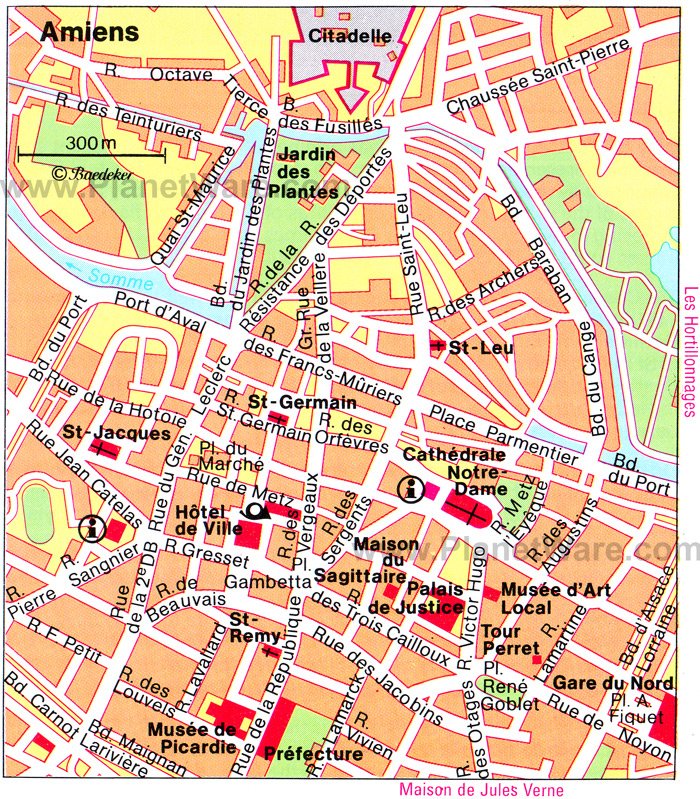
- 3. Quartier Saint-Leu
- 4. Les Hortillonnages (Marsh Gardens)
- 5. Maison de Jules Verne
- 6. Cirque Jules Verne
- 7. Tour Perret
- 8. Traditional Marionettes & Puppet Theater
- 9. Parc de Samara (Archaeology Park)
- 10. Battlefields of Somme and the WWI Remembrance Circuit
- 11. Medieval Town of Lucheux
- 12. Maison de la Culture d'Amiens
- 13. Abbaye Royale de Saint-Riquier
- 14. Abbatiale Saint-Pierre de Corbie
- Where to Stay in Amiens for Sightseeing
1. Cathédrale Notre-Dame d'Amiens
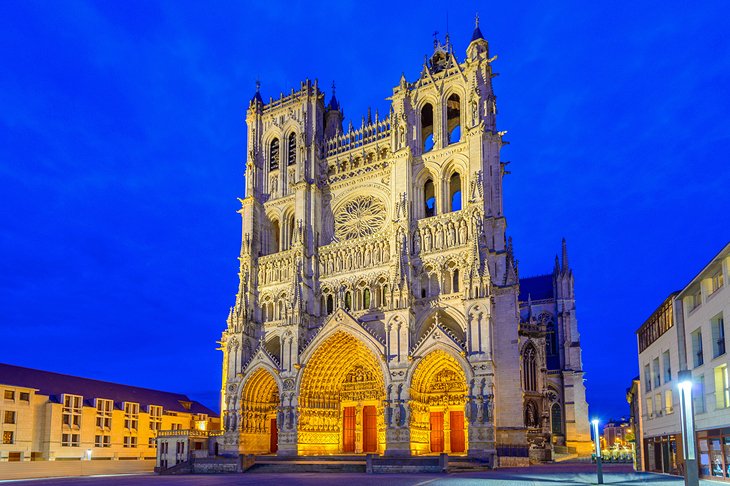
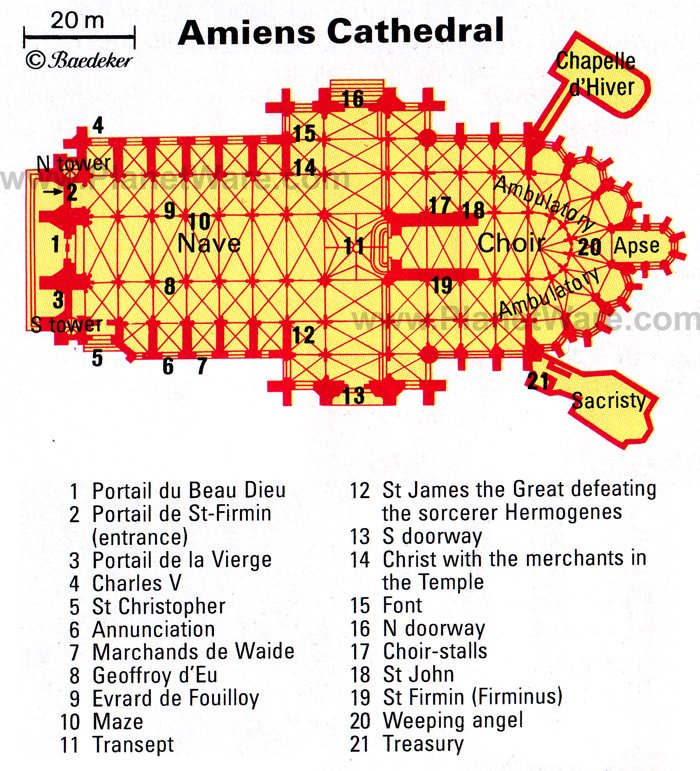
This UNESCO-listed cathedral is the world's largest Gothic church of the medieval era (and today is still the largest cathedral in France), based on its total surface area of 7,700 square meters. With a length of 145 meters, the Cathédrale Notre-Dame d'Amiens could fit a football field or the Notre-Dame de Paris twice. The immense size, harmony of architectural style, and intricate details are remarkable.
Built in 68 years (between 1220 to 1288), the construction was rapid for a medieval cathedral, which explains the unity of the design.
A notable aspect of Amiens' cathedral is the façade, which features three highly embellished doorways influenced by the west façade of Notre-Dame in Paris. The doorways are decorated with a profusion of 750 statues: Old and New Testament figures, apostles, prophets, and a figure of Christ in the attitude of blessing. In the tympanum is a depiction of the Last Judgment.
The cathedral's interior reaches over 42 meters in height and has 126 pillars, giving the sanctuary a breathtakingly immense feel. An innovative structure of ribbed vaults and flying buttresses allowed for more surface area of stained-glass windows, creating an ethereal effect. You will be awestruck by the grandiose, bright, and airy space.
Behind the high altar is the tomb adorned with the famous weeping angel, and a venerated relic (of John the Baptist) is found in the left-hand transept. Be sure to take a look at the 16th-century choir stalls, embellished with carvings of more than 3,650 figures.
The North Tower provides access to a viewing platform, via a staircase of 307 steps. The climb is rewarded with spectacular city panoramas.
During the Middle Ages, the cathedral's exterior was vibrantly painted. Every night during summer (mid-July through mid-September) and at Christmastime (November 24th through December 31st), the 50-minute "Chroma" show projects dazzling lights and designs onto the cathedral's façade. Some scenes depict the sculpted figures in bright medieval colors.
Address: 30 Place Notre-Dame, Amiens
2. Musée de Picardie
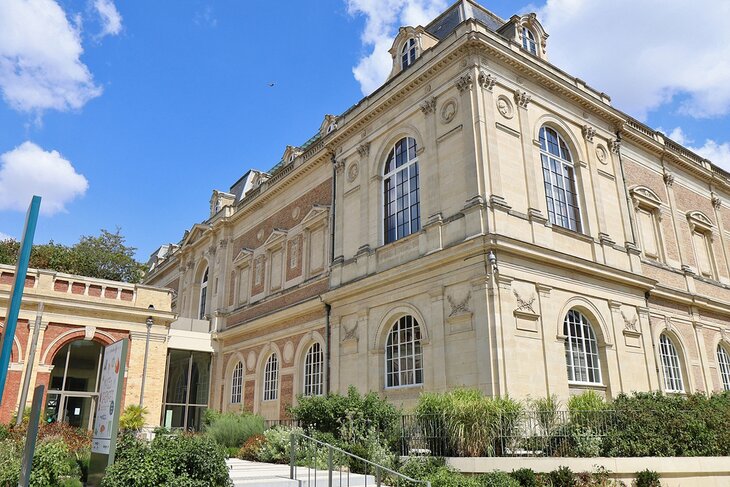
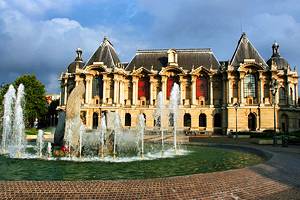
The Musée de Picardie was modeled after the Louvre and is considered one of the top museums outside of Paris. This museum of fine arts boasts an extensive collection, which brings together archaeological finds, medieval art, sculptures, and European paintings.
Highlights are the sculpture collection, including stellar pieces such as the Buste d'Anatole France by Bourdelle, and the paintings collection, with masterpieces by El Greco, Tiepolo, Corot, Fragonard, and Courbet, as well as works by famous artists of the 21st century such as Picasso and Miró.
Address: 2 Rue Puvis de Chavannes, Amiens
3. Quartier Saint-Leu
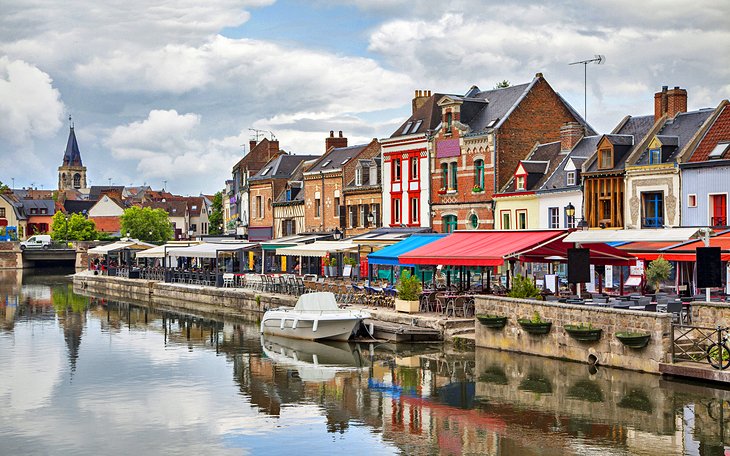
Quartier Saint-Leu, the medieval district of Amiens, exudes historic charm. You will feel transported back in time while wandering through the jumble of narrow cobblestone lanes. Along the way, discover quaint half-timbered houses and colorful waterfront buildings.
This lively quarter also has a trendy and happening ambience, making it one of the town's most popular places to visit. The neighborhood is packed with restaurants, cafés, art galleries, bookshops, antique stores, and small locally owned boutiques. The best way to take in the ambience is at one of the outdoor cafés (many have views of the Notre-Dame Cathedral).
At the center of the quarter is the Eglise Saint-Leu, an interesting Late Gothic church with a timber roof. A short walk away from the Saint-Leu Church is the Quai Bélu, a convivial area along the Somme River brimming with riverside restaurants. Many establishments have outdoor terraces for alfresco dining at the water's edge.
The Quartier Saint-Leu extends from the Notre-Dame Cathedral to the Port d'Aval harbor on the Somme River. A scenic path alongside the Somme River lends itself to pleasant strolls. Reminiscent of Venice, the district is traversed by canals and can be toured by boat.
On Saturday mornings, the Place Parmentier across from the Quai Bélu hosts the Marché sur l'Eau, an open-air market supplied by Amiens' hortillons, the gardeners who grow fresh vegetables, fruits, and flowers at Les Hortillonnages.
4. Les Hortillonnages (Marsh Gardens)
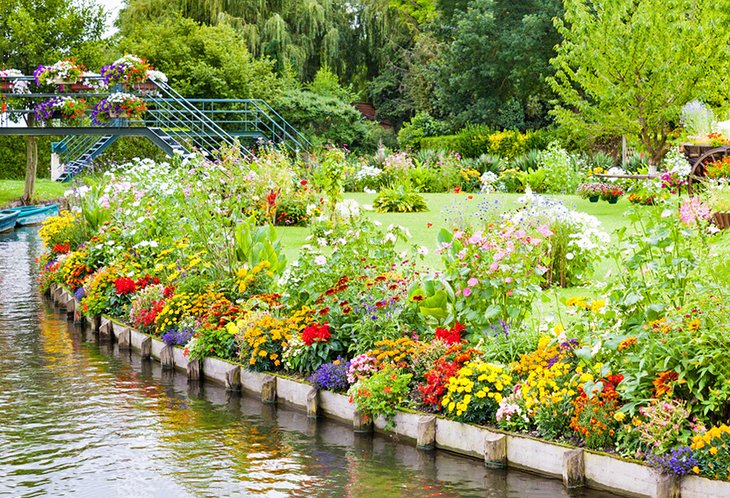
What fun it is to visit Les Hortillonnages! These charming marsh gardens can only be accessed by boat. The 300-hectare Les Hortillonnages are found on swampy islands within Amiens' 65-kilometer network of canals.
Since the Middle Ages, these floating gardens have been cultivated by "hortillons" (gardeners) who used special boats (barques à cornet) to transport fresh fruits and vegetables to market. The barques à cornet resemble Venetian gondolas; their shape is designed to allow berthing without damaging the banks.
If you'd like to experience the waterways of Les Hortillonnages, guided boat tours (with commentary in French) are available from April to October. You can also rent a canoe or kayak (for the day or half-day) and paddle around at your own pace.
On the third Sunday in June, the Marché sur l'Eau Traditionnel reenacts a 19th-century water market. The hortillons dress in old-fashioned costumes while rowing down the Somme River in their barque à cornet boats and selling fresh produce from the dock.
The Festival International de Jardins – Hortillonnages Amiens takes place here on weekends, from the end of May through mid-October. This festival features an amazing showcase of art installations, presented on Les Hortillonnages islands and even within shallow areas of the canals.
Address: 54 Boulevard Beauvillé, Amiens
5. Maison de Jules Verne
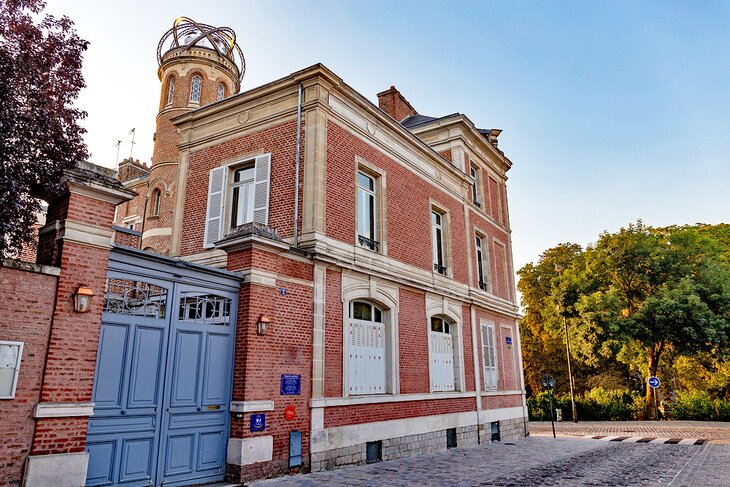
Jules Verne wrote one of the most famous French novels ever published: Around the World in 80 Days. This novel has been translated more often than any other French work of literature.
The imaginative genius of the author is on display throughout the Maison de Jules Verne, where the author and his wife lived from 1882 to 1900. At this stately 19th-century mansion in a small study, Jules Verne penned his novel Extraordinary Voyages. Another room displays the desk where, in 1869, Jules Verne started to write Twenty-Thousand Leagues under the Sea.
In Verne's library, you can peruse his favorite books, including works by Shakespeare, Cooper, Dickens, Walter Scott, and Edgar Allan Poe.
The Maison de Jules Verne also features an Observation Tower and a collection of flying machines, which were created by Jules Verne and predated the invention of planes.
Address: 2 Rue Charles Dubois, Amiens
6. Cirque Jules Verne
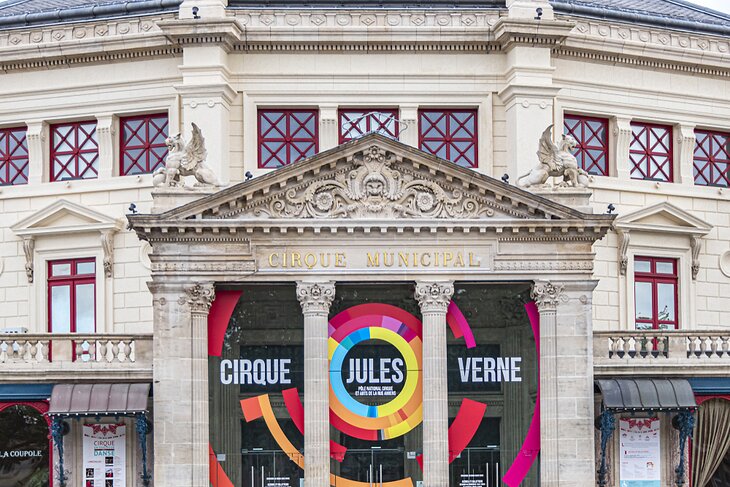
Amiens has a tradition of circus arts, and since 1889, fantastic spectacles have entertained the public at the Cirque Jules Verne. Inaugurated by Jules Verne himself, the Cirque Jules Verne houses the National Center of Circus and Street Arts (Pôle National Cirque et Arts de la Rue).
The facility includes an auditorium for staging circus shows and an Ecole du Cirque (Circus School), which trains thousands of circus students. The circus auditorium provides seating for 3,000 people yet still offers a warm, intimate atmosphere.
For a truly memorable experience, attend a show at the Cirque Jules Verne. The saison cirque (season of events) includes circus acts such as juggling, acrobatics, and clowns, as well as musical, dance, and theater performances.
Address: Place Longueville, Amiens
7. Tour Perret
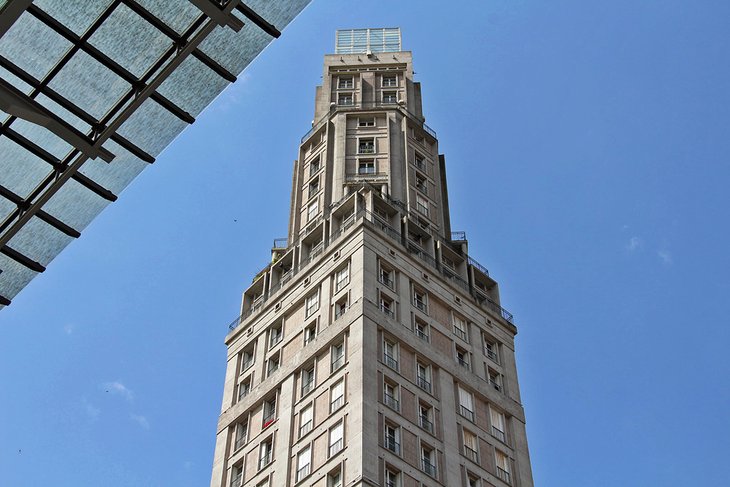
Among the most iconic sights in Amiens, the Tour Perret (built in 1942) was one of Europe's first skyscrapers. The tower reaches more than 100 meters in height, soaring almost as high as the spire on the Cathedral Notre-Dame. Together, the modern Perret Tower and the ancient cathedral create a distinctive skyline.
The Perret Tower is illuminated daily after nightfall with colorful lighting effects that mark the hours.
Address: 13 Place Alphonse Fiquet, Amiens
8. Traditional Marionettes & Puppet Theater
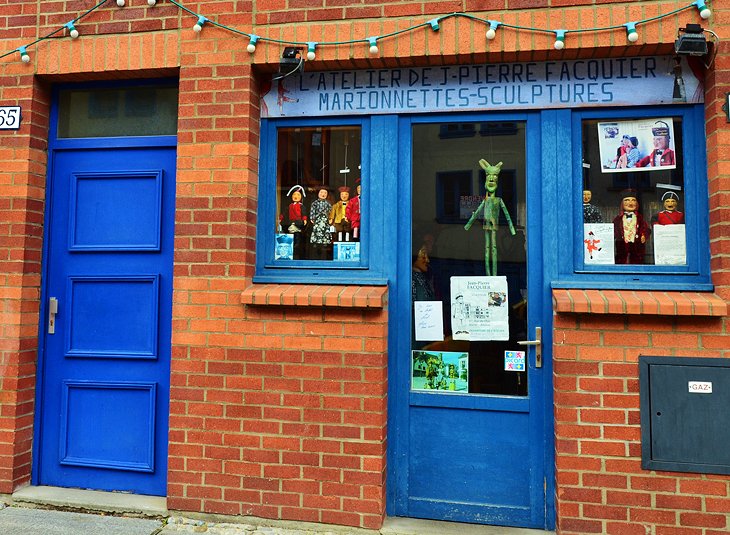
Puppet shows are a beloved custom in the Picardy region, and the centuries-old tradition is still alive and well in Amiens. Local artisans create all kinds of whimsical marionettes to represent various characters.
A typical puppet show features a farcical storyline with elements of buffoonery, designed to make audiences laugh. The shows are geared toward children, but adults also find them amusing.
The Théâtre de Marionnettes de Chés Cabotans d'Amiens has staged classic puppet shows since 1933. The theater performs puppet shows (in French) mostly for children three years and older. A few of the shows are designed for little ones between six months and three years old.
9. Parc de Samara (Archaeology Park)
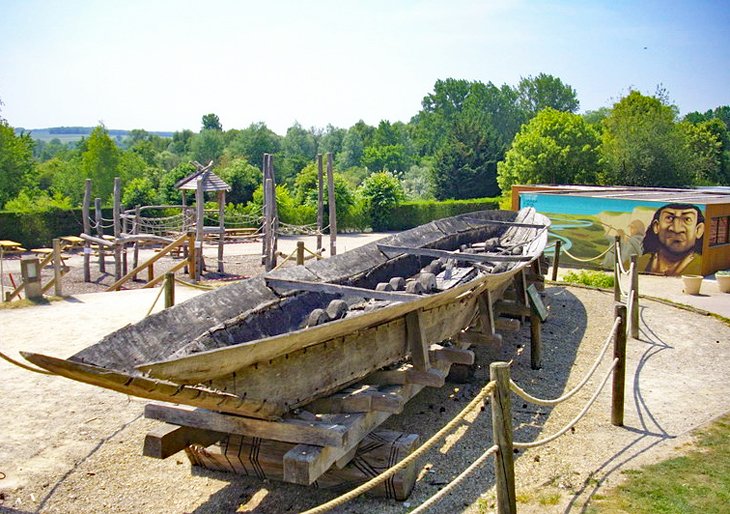
Take a short drive from Amiens' city center and leave behind the 21st century at the Parc de Samara. This unique archaeology park takes you on a 600,000-year voyage back in time to the world of prehistory.
You will learn about our prehistoric ancestors through demonstrations of daily activities and reconstructions of ancient dwellings. The park staff presents workshops, such as how to create fire, cut a flint, make pottery, and weave a basket, using techniques of prehistoric man.
A boutique sells books, games, activity kits, and other items on the themes of nature and archaeology. Tourists can take home reproductions of prehistoric tools, pottery, and jewelry.
An interesting dining option, the park's restaurant, Le Bistro de César, serves Gallo-Roman cuisine based on recipes attributed to Marcus Gavius Apicius, a gastronome of the 1st century CE who threw extravagant dinner parties for Roman emperors.
An easy day trip from Amiens (just a 14-kilometer drive), Samara Park is sure to offer a fascinating educational experience.
Address: Rue d'Amiens, La Chaussée-Tirancourt, 80310
10. Battlefields of Somme and the WWI Remembrance Circuit
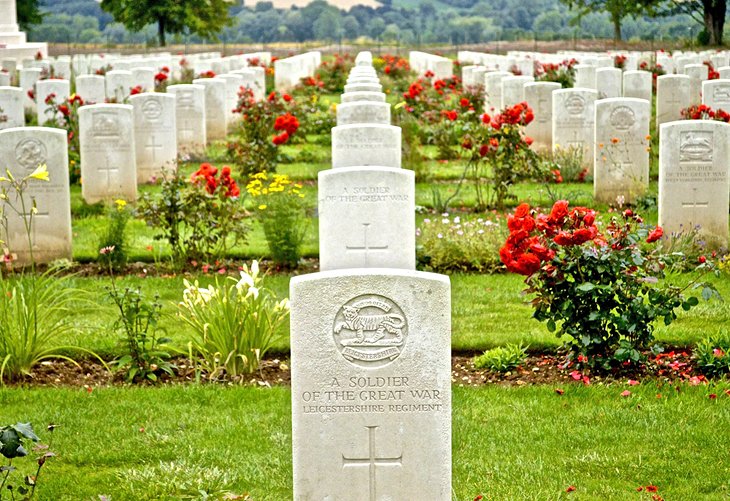
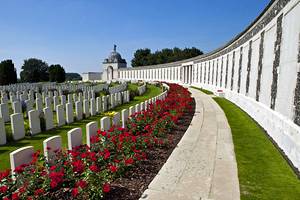
Many WWI battles were fought in the Vallée de la Somme near Amiens. The landscape is still marked with shell holes and the remnant of trenches. Cemeteries attest to the depth of the casualties during the Battle of the Somme in 1916 (July through November).
The Remembrance Circuit is a trail of sites that commemorates the area's WWI history. This 25-kilometer trail runs from Albert to Péronne, with several memorials and museums along the way. Red poppies (the symbol of sacrifice) bloom in profusion along the Remembrance Circuit.
From Amiens, it makes sense to begin a driving tour of the Remembrance Circuit in Albert, which is 30 kilometers away. Albert is also easily accessible by train from Amiens.
In Albert, the Musée Somme 1916 is housed in an underground passage (dating to the 13th century) that was used as an air-raid bomb shelter during the First World War. This evocative museum educates visitors about the historical context of WWI and provides insights into the everyday life of soldiers who fought in the trenches during the Battle of the Somme.
If you're starting out in Albert, the Remembrance Circuit concludes 25 kilometers away in Péronne. Amiens is about 50 kilometers away, less than a one-hour drive from Péronne.
In the Château de Péronne, the Historial de la Grande Guerre (Museum of the Great War) provides an overview of World War One history, chronicles the details of trench warfare, and displays WWI artifacts.
Guided tours of the Somme Valley battlefield sites are available from several companies including Somme Memory Tours, The Battlefields Experience, Chemins d'Histoire, The Western Front Revisited, Les Alouettes Battlefield Tours, Somme-r-Ballade, and Terres de Mémoire.
Read More: Top Normandy D-Day Beaches and Memorials
11. Medieval Town of Lucheux
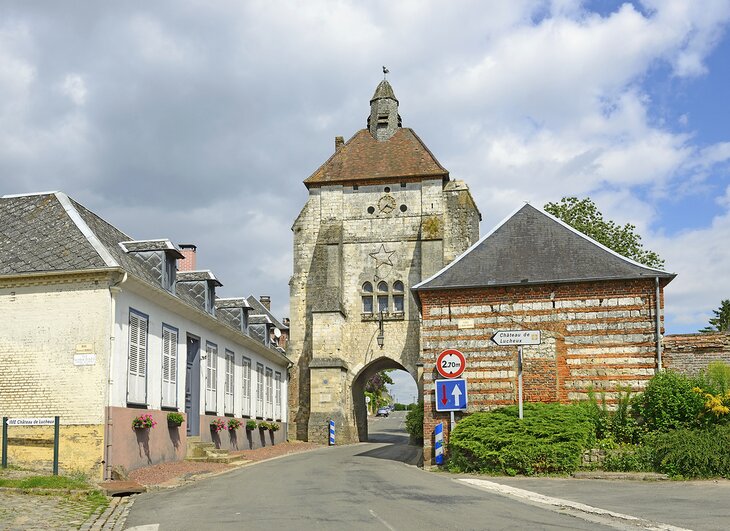
It's worth taking a day trip to the ancient city of Lucheux, just 37 kilometers away (about a 45-minute drive). Steeped in history, the city boasts three important monuments from the medieval era: a 12th- to 13th-century château fortified with imposing towers and ramparts, a Romanesque church featuring exquisite 12th-century capitals, and a UNESCO-listed belfry that dates to the 13th century.
12. Maison de la Culture d'Amiens
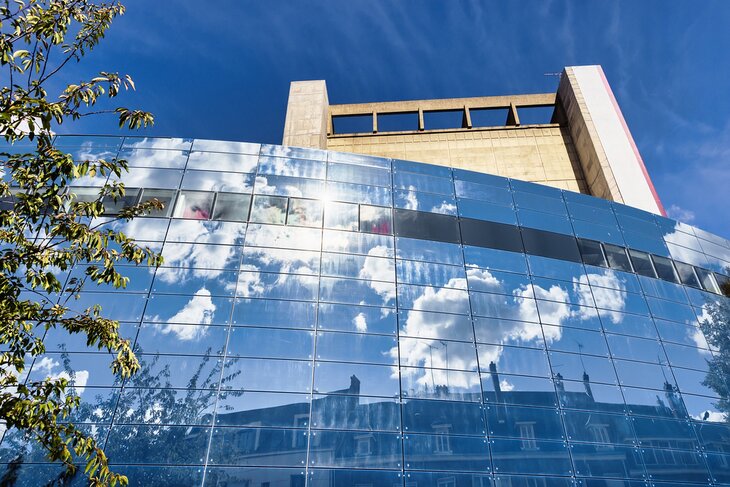
With an exciting calendar of events, this exceptional venue is the place to go in Amiens to catch a cinema screening; music concert; and theater, dance, or circus performance. The Maison de la Culture d'Amiens also hosts temporary art expositions throughout the year.
Address: 2 Place Léon Gontier, Amiens
13. Abbaye Royale de Saint-Riquier
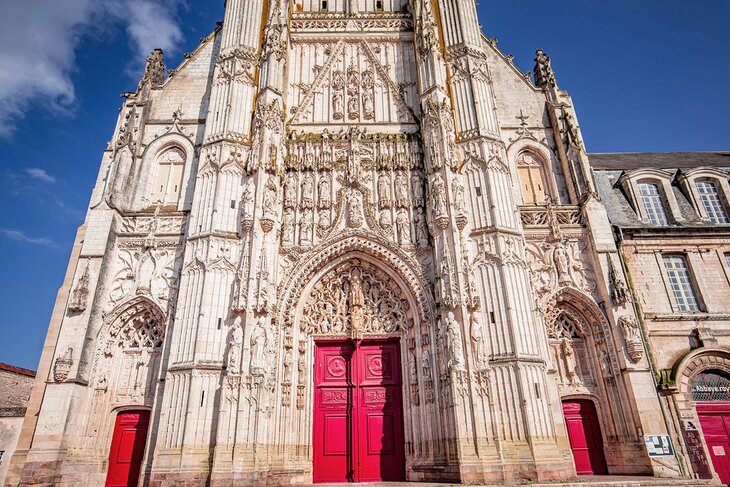
The Abbaye Royale de Saint-Riquier nestles in the bucolic landscape outside Amiens, about 40 kilometers away (a 40-minute drive). This historic abbey merits the detour because of its splendid setting, beautiful Gothic architecture, and top-notch cultural attractions.
The abbey was founded in 625, but the present monument dates from the 12th century, with many of the buildings constructed in the 17th century. The abbey's library was one of Europe's largest and most important collections of manuscripts until the 13th century.
Today, the Abbaye de Saint-Riquier hosts the annual Festival de Saint-Riquier, a prestigious festival of classical, jazz, pop, rap, and traditional world music. The festival holds some performances at the Flamboyant Gothic Abbatiale (Abbey Church), which is classified as a Monument Historique.
Other cultural attractions at the Abbaye de Saint-Riquier include art exhibits created in collaboration with the Centre Pompidou in Paris. The abbey also features gorgeous gardens, with walkways, wooded areas, and manicured grounds.
The abbey's gardens and cultural exhibits are open to the public. During the high season (April through September), you may visit Monday through Saturday from 10am until 12pm and 2pm until 6pm. In the low season (October through March), the abbey gardens are open Monday through Friday from 9am until 12pm and from 2pm until 5pm. The Abbey Church (Abbatiale) is only open to the public during the high season.
Address: Place de l'Eglise, 80135 Saint-Riquier
14. Abbatiale Saint-Pierre de Corbie
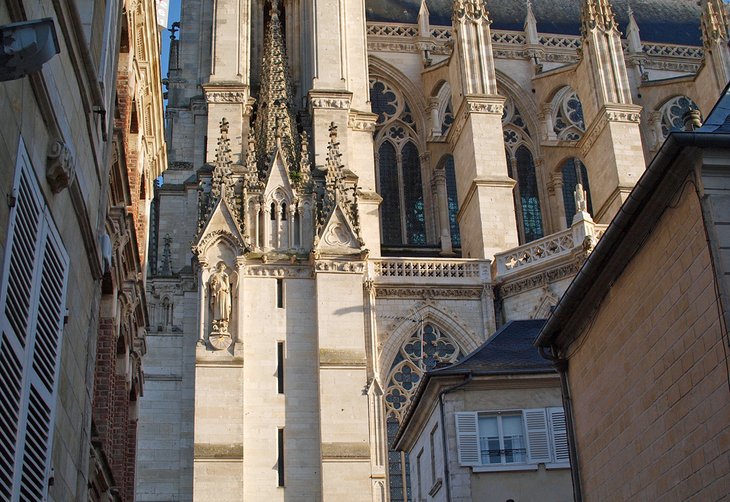
The town of Corbie is a worthwhile day trip destination because of its historic abbey, the Abbatiale Saint-Pierre de Corbie. This church exemplifies ornate High Gothic architecture with its awe-inspiring façade and two towers, which soar to 55 meters. The vaulted nave is 36 meters long and has a solemn air of spirituality.
Founded in 657, the church belonged to the Benedictine abbey of Corbie, a powerful order that influenced much of Europe. The church is a listed Monument Historique and possesses many treasures, including precious relics of Saint Peter and exquisite statues.
The Abbatiale Saint-Pierre de Corbie is about 17 kilometers from Amiens.
Address: Rue Charles de Gaulle, Corbie
Where to Stay in Amiens for Sightseeing
Less touristy than many other French towns yet brimming with local culture and vitality, Amiens is an interesting place to spend a few nights. It's also a good base for those who want to explore the Picardy region and nearby Nord-Pas du Calais of northern France and perhaps continue on a travel itinerary in the neighboring Normandy region. A convenient area to stay is the centre-ville (city center) of Amiens, because most of the top attractions are within walking distance.
Luxury Hotels:
- An upscale hotel in the centre-ville is the four-star Mercure Amiens Cathédrale Hotel, a short walk away (just 50 meters) from the Notre-Dame Cathedral. The location is convenient for tourists because of the wide choice of restaurants, cafés, and shops nearby. The hotel's guest rooms are decorated in a cheerful contemporary style and include coffee machines. Some of the "classic" guest rooms have stunning outlooks of the cathedral.
- Au Jardin Sur l'Eau is an inviting bed-and-breakfast hotel tucked away on an islet of the Somme River, a protected nature site with flourishing orchards and vegetable gardens. It's about a 10-minute drive to the Quartier Saint-Leu. Guest rooms feature fine bed linens and stylish contemporary decor and do not have televisions, to encourage relaxation. The breakfast includes fresh baguettes from a local bakery, organic yogurt, and seasonal fruit grown on the property. Guests may borrow bicycles or canoes.
Mid-Range Hotels:
- For great value in the centre-ville, just steps away from the Notre-Dame Cathedral, tourists can choose the Hôtel le Prieuré. This three-star hotel provides guests with small but nicely decorated rooms, with Wi-Fi, in an attractive, renovated 17th-century building. Guests have the option to purchase a continental breakfast buffet. One consideration for travelers with limited mobility is that this hotel has steep stairs and does not have an elevator.
- La Chambre d'Amiens offers sleek contemporary-style accommodations and a wide range of amenities, including Wi-Fi, parking, bicycle rentals, and a continental breakfast (for an additional charge). This three-star hotel is located just outside the centre-ville (but close enough to walk), near the Gare Saint-Roch (train station) and the Maison de la Culture.
- In an attractive 19th-century townhouse, the Grand Hôtel de l'Univers is well situated in the centre-ville, within walking distance of the cathedral and Quartier Saint-Leu. This three-star hotel features spacious soundproofed rooms with tasteful decor, modern amenities (Wi-Fi and flat-screen televisions), and city views. The hotel serves a continental breakfast buffet that includes pastries, juice, coffee, fresh fruit, and eggs.
Budget Hotels:
- Budget-conscious travelers will appreciate the amenities at the ibis Styles Amiens Centre Hotel in the centre-ville, within walking distance of the cathedral. This three-star hotel offers simple contemporary-style rooms in a sleek ultra-modern building. The hotel provides 24-hour front desk service and free Wi-Fi access. A buffet-style breakfast is included.
- For those who want to stay within the centre-ville, the B&B Hotel Amiens Centre Cathédrale provides basic no-frills accommodations in a great location near the cathedral. This modern three-star hotel has Wi-Fi access, a restaurant, a snack bar, and parking for an additional fee. The hotel offers various breakfast choices, which guests may purchase.
- One of the best values in Amiens is found at the ibis budget Amiens Centre Gare, near the train station but still within walking distance of the centre-ville and the cathedral. This basic two-star hotel has double, twin, and triple rooms with free Wi-Fi access. Breakfast options are available for an additional charge.
More Related Articles on PlanetWare.com
Country Villages and Castles: Amiens was the capital of the historic Picardy province, which overlaps with the modern-day region known as Nord-Pas-de-Calais. This area is largely industrial but has retained some of its pastoral landscape along with picturesque old villages and walled towns.
About a two-hour drive north of Amiens are two lovely towns that delight tourists: Bergues and Boulogne-sur-Mer. Each offer an enchanting escape to a medieval world of winding cobblestone streets, ensconced within ancient ramparts.
Within a 90-minute drive of Amiens (and an easy day trip from Paris) is a remarkable château, surrounded by dense forest, in the little country town of Chantilly. The Domaine de Chantilly is renowned for its lush parkland, lavish reception rooms, and superb art collection.
Exploring the Normandy Region: Among the top attractions in Normandy are the seaside resorts: fashionable Dieppe (90 minutes away), the sandy shores of Trouville-sur-Mer (2-hour drive), and glamorous Deauville (2-hour drive). For those more interested in history and culture, Honfleur (2-hour drive), one of the most charming towns in Europe, and Rouen (90-minute drive) with its marvelous Gothic cathedral, are must-see stops.
French Flanders and Belgium: North of Amiens is the historic province of French Flanders, within the present-day Nord-Pas-de-Calais region that borders Belgium. Once the capital of Flanders, Lille, is a thriving modern city with elegant Flemish Baroque buildings and an exceptional fine arts museum. Approximately a two-hour drive from Amiens are the battlefields of Flanders in the town of Ypres, as well as the old city of Ghent, which has an ancient fortress and atmospheric medieval center.