14 Top-Rated Attractions & Places to Visit in Lorraine
Elegant historic cities and peaceful bucolic scenery await visitors to this undiscovered region in eastern France. Outside of the industrial cities, Lorraine is an idyllic pastoral landscape of prairies, forests, rolling hills, lakes, rivers, and mineral springs.
Beautiful nature sites, vacation retreats in the Vosges Mountains, and Belle Epoque spa resorts create the perfect setting for a relaxing holiday.
For those who appreciate art and culture, the architectural treasures and museums of Nancy, Bar-le-Duc, and Sarrebourg are not to be missed. History buffs will also find plenty to discover in the old citadel towns of Metz, Toul, and Verdun.
Plan your trip to this scenic region with our list of the best places to visit and things to do in Lorraine.
See also: Where to Stay in Lorraine
1. Nancy
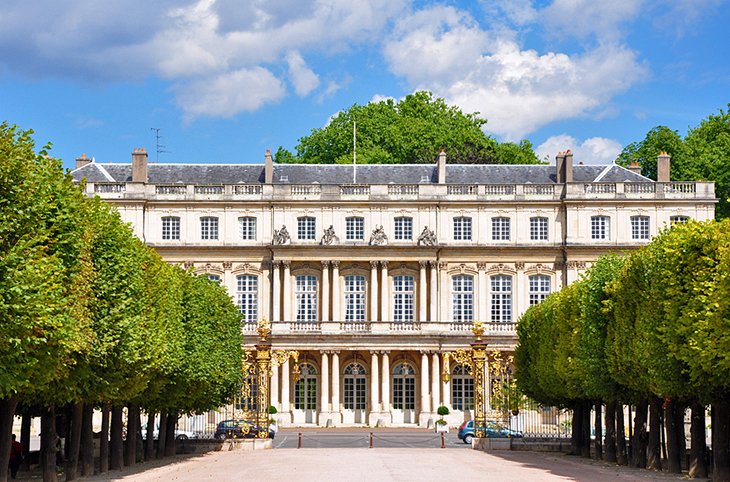
The old capital of Lorraine, Nancy is renowned for its magnificent 18th-century Baroque architecture. One of Europe's most exquisite squares, the UNESCO-listed Place Stanislas is lined with impressive palaces featuring ornate balconies.
Another way to appreciate the city's cultural heritage is by visiting the museums. The Musée des Beaux-Arts has a prestigious collection of European paintings from the 14th to 20th centuries. The Palais des Ducs de Lorraine houses the Musée Lorrain's collection of archaeological, art, and historical objects.
In the early 20th century, the Art Nouveau movement flourished in Nancy. The Musée de l'Ecole de Nancy displays Art Nouveau ceramics, glass, furniture, and jewelry.
2. Metz
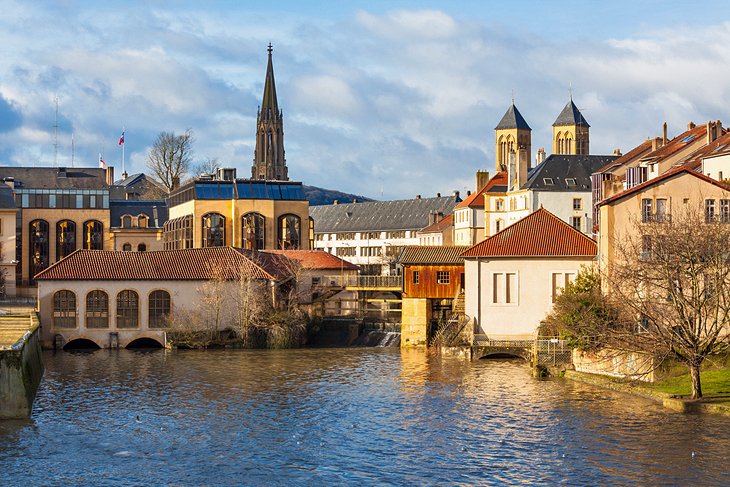
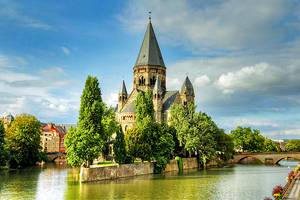
Visitors marvel over the variety of cultural attractions in Metz, while delighting in the city's old-world ambience. The Colline Sainte-Croix quarter is an enchanting cluster of cobblestone streets, narrow lanes, pleasant shaded squares, and handsome historic houses.
Tourists are sure to be dazzled by the Cathédrale Saint-Etienne. The immense Gothic cathedral is known as "la Lanterne du Bon Dieu" ("The Lantern of God") because it has 6,500-square meters of brilliant stained-glass windows that illuminate the sanctuary. Three windows by Marc Chagall decorate the North transept.
The city's finest museum is the Musée de La Cour d'Or, which displays a collection of archaeology, medieval art, everyday objects, and fine arts. Highlights include paintings by Eugène Delacroix, Jean-Baptiste-Camille Corot, and Gustave Moreau.
3. Toul
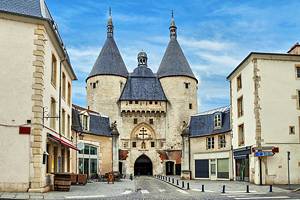
Because of its strategic location, Toul was fortified in the 17th century. Defensive walls with four gates (including the Porte de Metz designed by Vauban) still surround the town.
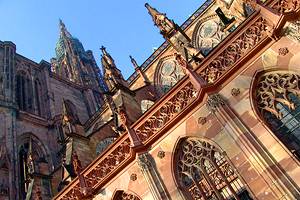
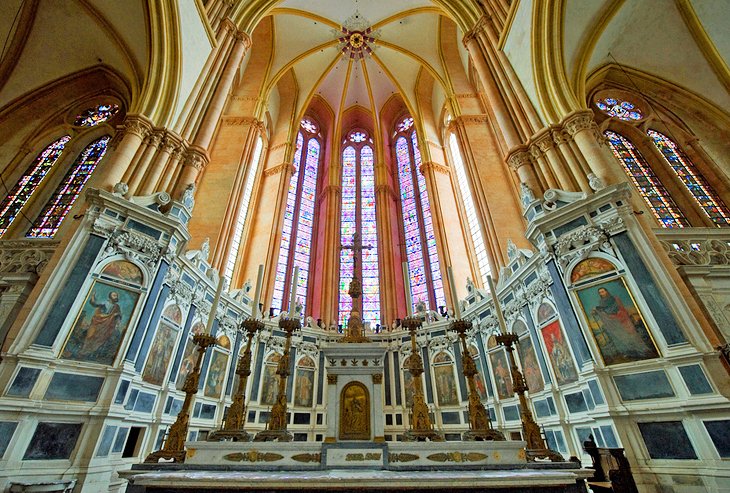
An equally important religious heritage is revealed at the Cathédrale Saint-Etienne. This splendid Gothic cathedral features a facade with detailed decor resembling lacework. The cathedral's cloister (dating to the 13th and 14th centuries) is among the largest in France.
Also not-to-be-missed, the Eglise Saint-Gengoult has one of the most beautiful 16th-century Flamboyant Gothic cloisters in existence. The church also features distinctive 13th-century stained-glass windows.
On the Rue Général-Gengoult, there are a number of historic houses dating back to the medieval era, such as the Hôtel des Chevaliers de Malte (which belonged to the Knights of Malta).
4. Verdun
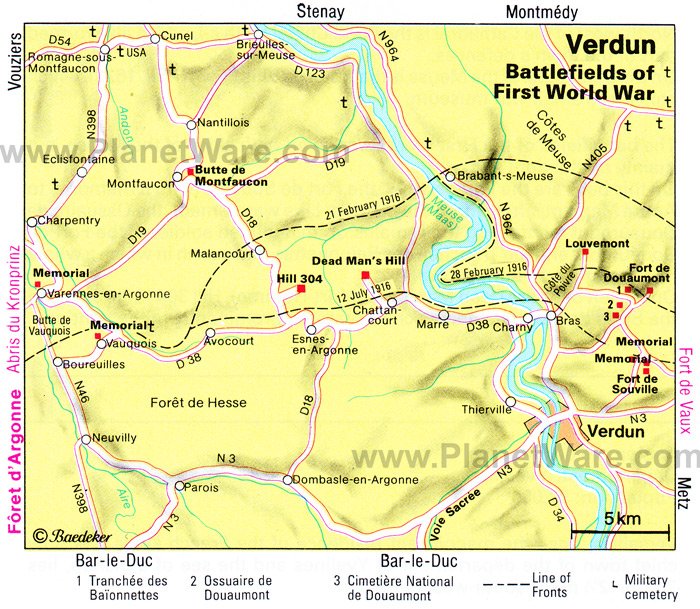
Verdun has endured a turbulent past. The medieval walled town defended itself from invaders with an impressive system of ramparts (remnants include the 12th-century Porte Châtel and the 14th-century Porte Chaussée).
Verdun played an important role during the Franco-Prussian War (a sculpture by Rodin at the Frères Boulhaut Promenade commemorates the battle of 1870), as well as during the First World War (most notably, the famous Battle of Verdun in 1916).
Those interested in the history can learn more at the Citadelle Souterraine de Verdun, a subterranean citadel used during the First World War as a departure point for soldiers and a place of shelter. The citadel is now a museum that gives visitors an insight into WWI soldiers' everyday life. There are also audio-visual presentations about the Battle of Verdun.
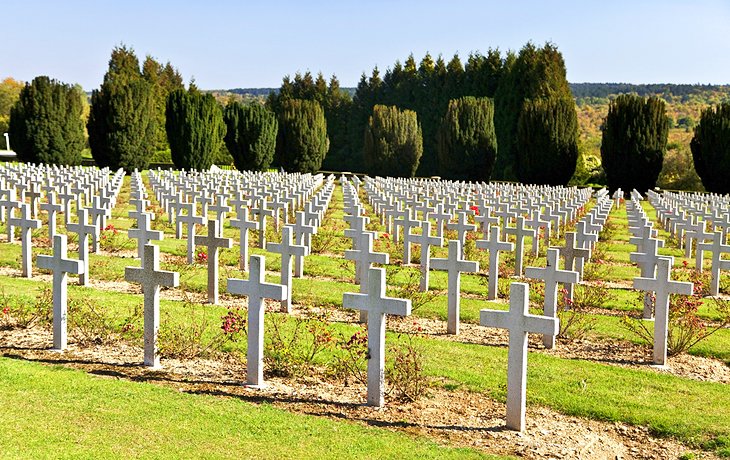
In the hills outside of Verdun are the sites of WWI battlefields, where the marks of shells are still visible. The Battle of Verdun, one of the most brutal battles of the First World War, took place here from February to December of 1916.
Standing amid the historic battlefields is the Mémorial de Verdun Champ de Bataille, a memorial that was originally created by survivors of the Battle of Verdun to honor their fallen comrades. From 2013 to 2015, the memorial was renovated in contemporary style.
The Mémorial de Verdun has a museum that displays over 2,000 items found at the battlefields, including equipment, weapons, and everyday objects, as well as archives of old newspapers, propaganda materials, posters, photo albums, and military records.
5. Bar-le-Duc
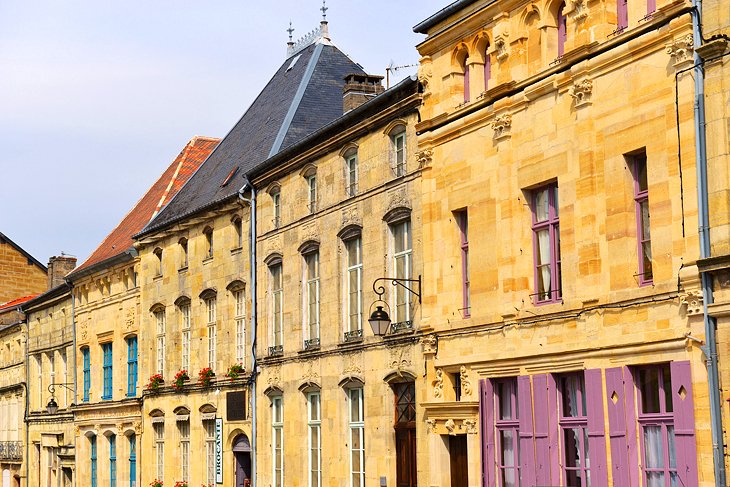
Brimming with cultural attractions, Bar-le-Duc is renowned for its annual Renaissance Festival, which takes place the first weekend in July. This historical capital of the Duchy of Bar is classified as a Ville d'Art et d'Histoire (City of Art and History).
Perched on a hilltop, the Ville Haute (Upper Town) boasts important landmarks from the medieval and Renaissance eras, including the Flamboyant Gothic Eglise Saint-Etienne and the 16th-century Château des Ducs de Bar, a registered Historic Monument that was once the residence of the Dukes of Bar and Lorraine.
The château now houses the Musée Barrois, a museum that was modeled after the Louvre in Paris. The museum houses a wide range of collections, from fine arts and decorative arts to archaeology and ethnography. Sculptures of the 19th and 20th century are scattered throughout the museum's garden, a delightful place to take a leisurely stroll.
In the Ville Basse (Lower Town) are more modern monuments, such as the Eglise Saint-Jean, which exemplifies a blend of Neo-Gothic, Neo-Romanesque and Neo-Byzantine architectural styles.
6. Gérardmer
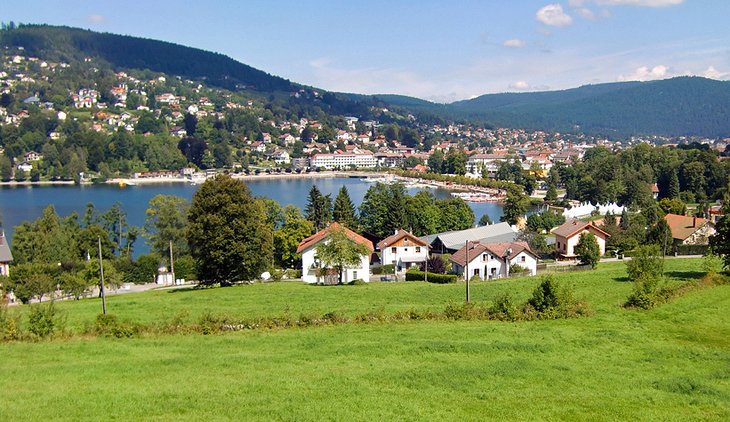
The popular holiday resort of Gérardmer enjoys a picturesque setting in the lake district of the Vosges Mountains. Gérardmer's pristine alpine setting and excellent tourist facilities attract nature lovers and outdoor sports enthusiasts throughout the year.
During summer, the Lac de Gérardmer is a bustling scene of water sports such as sailing and canoeing. The area also has well-groomed walking, hiking, mountain biking, and horseback riding trails. The Station de Trail provides detailed trail maps.
In winter, Gérardmer is a destination for downhill and cross-country skiing. In the surrounding area nearby are the lakes of Longemer and Retournemer.
7. Sarrebourg
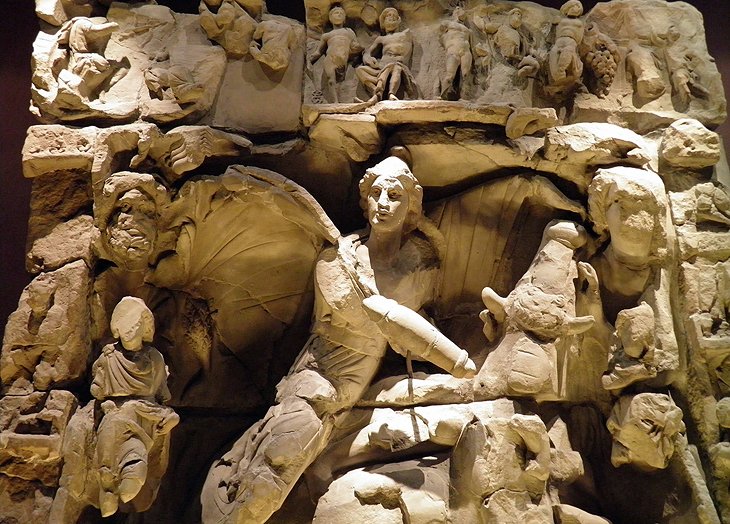
Sarrebourg is tucked away in the Vosges Mountains by the Sarre River. This historic town boasts a remarkable 13th-century chapel, the Chapelle des Cordeliers.
Spectacular stained-glass windows by Marc Chagall adorn the chapel. The most famous work by Chagall is a masterpiece titled La Paix (Peace) that illuminates the choir.
Visitors will also enjoy the chapel's educational content about the life and work of Marc Chagall, as well as the Jardin de Chagall. This leafy sheltered garden features art installations and hidden spaces where visitors can listen to audio excerpts of interviews with Chagall.
Another exceptional cultural attraction is the Musée du Pays de Sarrebourg, which has an excellent collection of archeological finds from the surrounding area. There's also an exhibit of porcelains and faïences and an area devoted to Marc Chagall which displays La Paix tapestry.
8. Vittel
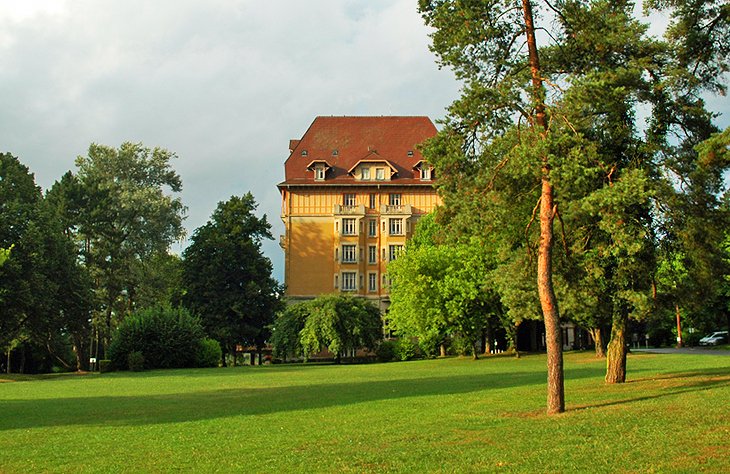
This historic spa town is ideal for a rejuvenating vacation. Lush gardens and parks give the town a tranquil ambience.
An expansive green space, the Parc Thermal, surrounds the renowned Vittel Spa. This modern facility offers pampering spa treatments, Jacuzzis, spaces for relaxation, and thermal hydrotherapy treatments that soothe muscles and promote well-being.
The town's mineral waters have long been appreciated for their health benefits. In the 1st century AD, the ancient Roman general Vitellius discovered the healing properties of the local waters. During the Belle Epoque era, the thermal waters were rediscovered, and many elegant hotels were built in Vittel to accommodate the influx of visitors.
In the 1880s, celebrated architect Charles Garnier designed elegant thermal bath facilities and the prestigious Grand Hotel (today part of Club Med Vittel Le Parc - France). By the early 20th century, Vittel became an international spa resort.
For upscale overnight accommodations, visitors can stay at the Club Med Vittel Le Parc or the Club Med Vittel Ermitage, which features an Art Deco facade, a Roaring Twenties-inspired lounge, and an 18-hole golf course. Travelers can also choose affordable hotels such as the contemporary-style Hotel Mercure Vittel, which has four stars, and Le Chalet Vitellius, which offers basic guest rooms.
About a 45-minute-drive away from Vittel is another famous spa town, Bains-les-Bains, which has thermal springs that have been used since Roman times.
9. Saint-Mihiel
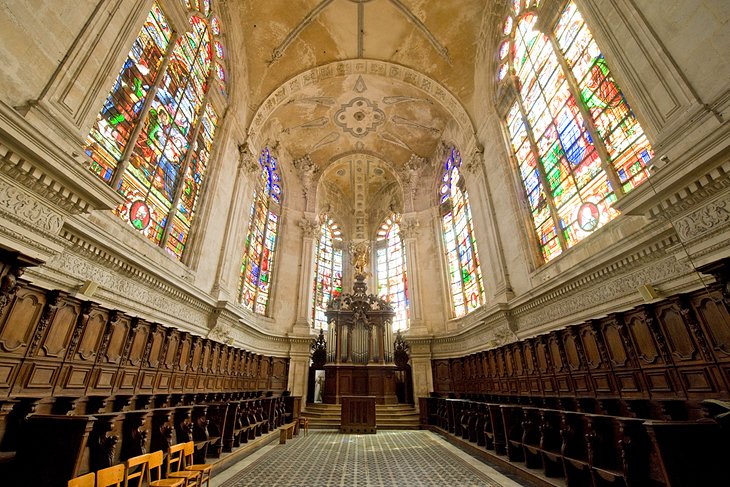
The sculptor Ligier Richier (c.1500-1567) was born in Saint-Mihiel, and some of his works can be seen in the local churches. One of Richier's finest works, the Pâmoison de la Vierge (the "Virgin Fainting"), is in the 12th-century Eglise Saint-Michel.
Another Richier masterpiece of sculpture, the Entombment, is in the Eglise Saint-Etienne. The church is also renowned for its vibrant stained-glass windows.
For more insight into the town's artistic and religious heritage, tourists should visit the Musée d'Art Sacré (Museum of Sacred Art) in the former Saint-Mihiel Abbey. The museum presents artworks and liturgical objects dating from the medieval era to the 20th-century.
10. Château de Lunéville
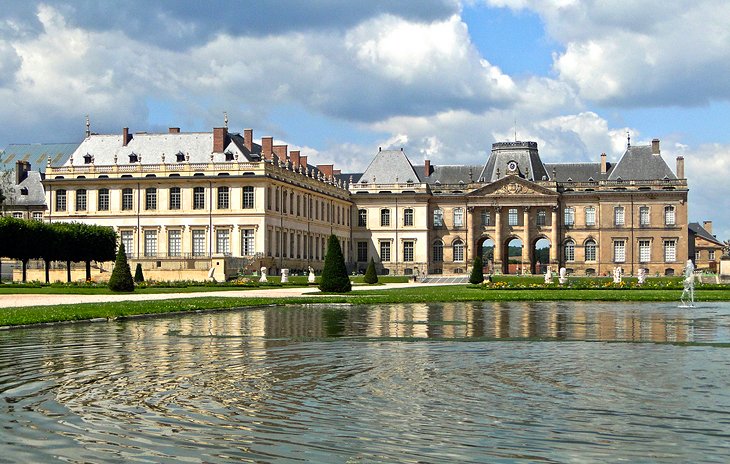
The Château de Lunéville is known as the "Petit Versailles Lorrain" because it resembles the Palace of Versailles. In fact, the castle was created by architect Germain Boffrand, a pupil of the renowned architect Jules Hardouin-Mansart who designed the Château de Versailles.
Constructed between 1701 and 1723, the Château de Lunéville became the official residence of the Dukes of Lorraine in the 18th century. During that era, the château was a gathering place for dozens of courtiers and had a service staff of several hundred people.
The estate features expansive grounds with Jardins à la Française (Formal French Gardens) and a Parc des Bosquets (Groves). The Formal French Gardens are manicured with symmetrical flower beds, decorative pools, fountains, and perfectly manicured hedges.
Tourists may visit the Château de Lunéville year-round (every day except Tuesdays). Guided tours are available.
11. Épinal
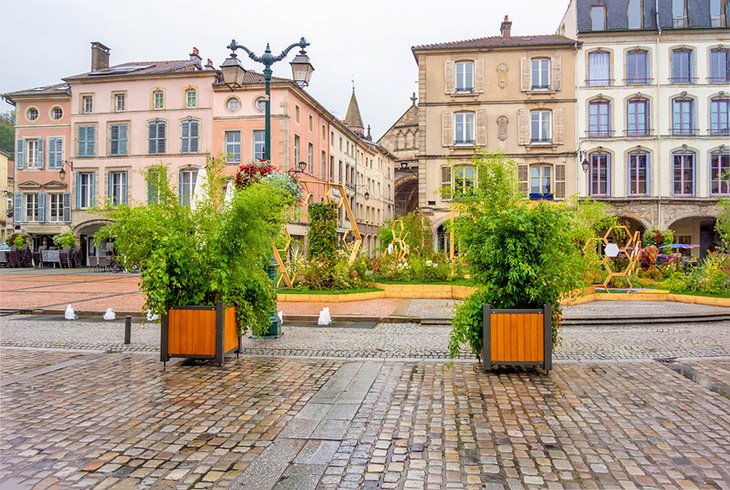
Épinal is nestled in the foothills of the Vosges Mountains, surrounded by forests. The city's historic center, the atmospheric Vieille Ville (Old Town) graces the right bank of the Moselle River, while the New Town is found on the left bank of the river.
Dominating the city is the medieval Fortress Châtel-sur-Moselle, which crowns a hilltop and is surrounded by a 26-hectare landscaped park that includes a medieval garden. Although the 11th-century fortress is in ruins, tourists may visit the park and take a guided tour of the building's moat and underground galleries, or dine at a restaurant with superb views.
The town's claim to fame is a special type of colorful illustrations known as "images d'Épinal" originally created in the late 18th century. Examples of these images can be seen at the Musée de l'Image (42 Quai de Dogneville), which displays a collection of over 100,000 "images d'Épinal."
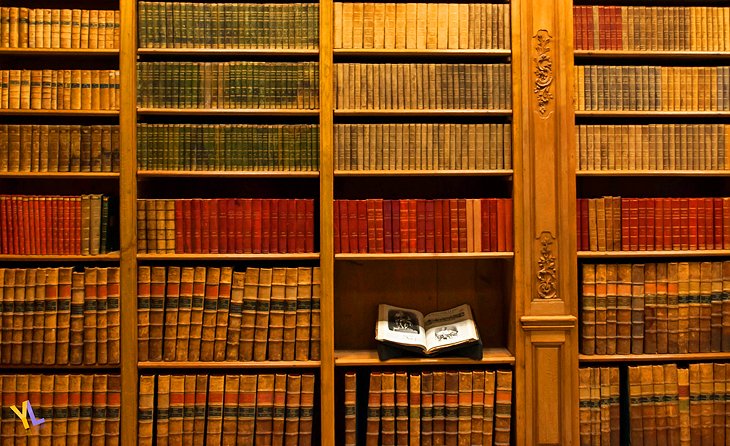
At the same location (42 Bis Quai de Dogneville) is a printing house found in 1796, the Maison Images d'Epinal, which has a boutique that sells wallpaper, stationary, murals, and other artworks that replicate vintage prints.
A must-see sight is the Basilique Saint-Maurice, a jewel of Romanesque architecture. The church was built in the 11th century and renovated in the 13th century. An early Gothic addition, the nave is a grandiose sanctuary that has a serene spiritual ambience.
Outside of Épinal in Dinozé, the Epinal American Cemetery contains over 5,000 graves of soldiers who lost their lives during World War Two.
Also near Épinal are many hiking trails and peaceful lakes.
12. Thillot
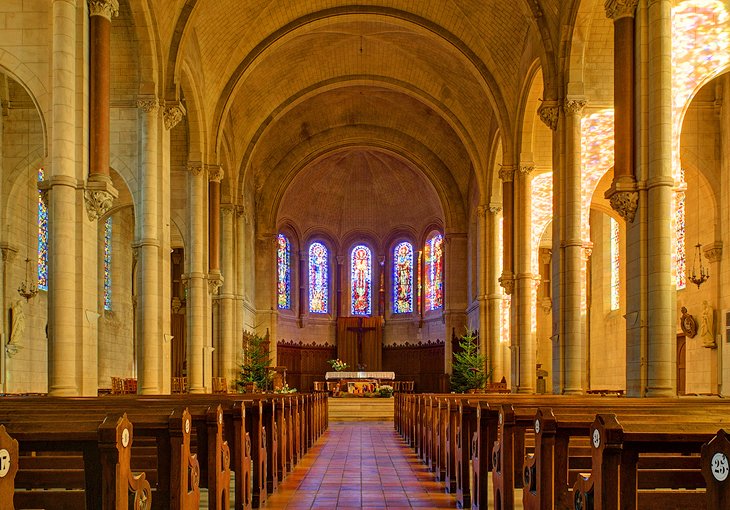
The small town of Thillot is nestled in a picturesque location along the Moselle River, surrounded by the rolling hills and forests of the Vosges Mountains. In the town, the Eglise Saint-Jean-Baptiste is worth visiting to see its serene interior and exquisite stained-glass windows.
The area is a popular vacation destination year-round. Ideal for summer and winter holidays, Thillot is close to hiking trails and ski resorts.
13. Parc Regional de Lorraine
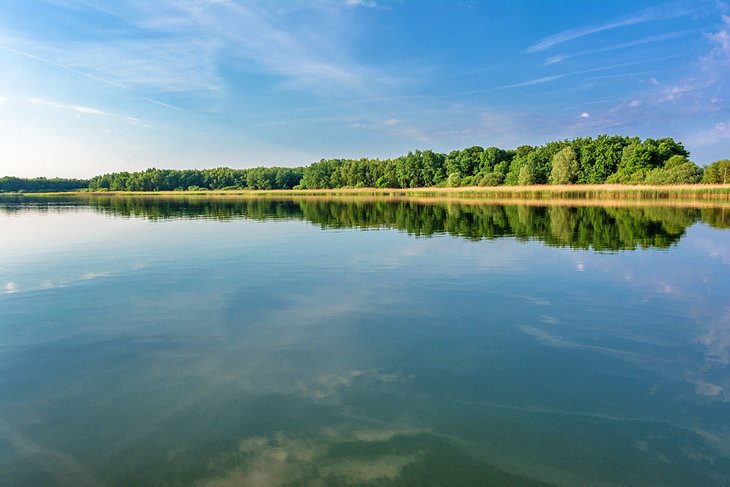
This pristine nature reserve encompasses forests, lakes, grasslands, farms, orchards, and prairies that bloom with wildflowers. The park has a variety of scenic trails, allowing visitors to choose from easy walks to more challenging hikes.
The Lorraine Naturel Regional Park has an astronomical observatory (in Viéville-sous-les-Côtes), the Observatoire des Côtes de Meuse. The observatory contains one of the largest telescopes in Europe and hosts evening stargazing sessions.
The park is also home to 288 bird species. Bird lovers can take advantage of 10 bird-watching areas and five trails that traverse different bird habitats, including wetlands, grasslands, and salt marshes.
14. Phalsbourg
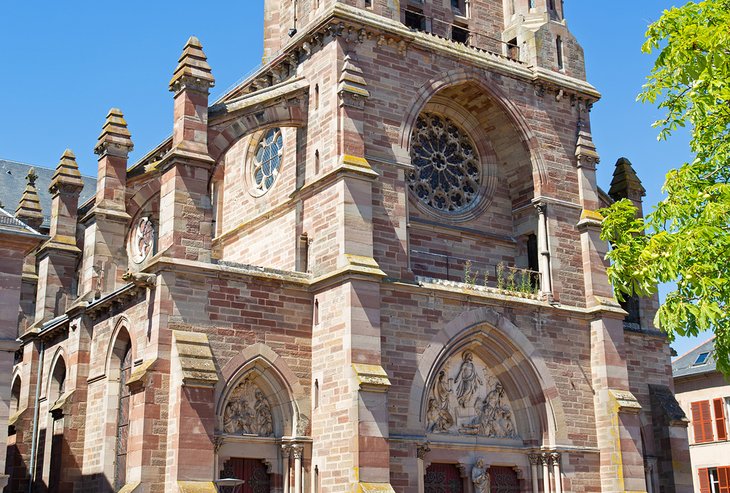
Phalsbourg was built around 1570 as a fortified town and was an important stronghold in the Duchy of Lorraine. The town fell to France in 1662, and its defenses were considerably strengthened by renowned military engineer Vauban in 1680.
The remains of the fortifications created by Vauban include the Porte de France and Porte d'Allemagne. These defensive city gates are registered as Historic Monuments.
A museum of the town's history is found at the Hôtel de Ville (Town Hall). The museum displays collections of military history, folk costumes, and literature.
Phalsbourg has a strong Catholic heritage and previously was home to a small Jewish community. The town's Neo-Gothic Catholic church was rebuilt after the Siege of 1870, and the synagogue dates to 1857.
Nearby is the Parc Naturel Régional des Vosges du Nord, a great place for hiking and nature walks.
Where to Stay in Lorraine for Sightseeing
We recommend these highly rated Lorraine hotels in charming towns like Nancy, Metz, and Verdun:
- Hotel La Citadelle Metz - MGallery: This four-star luxury hotel in a renovated 16th-century military building features contemporary room decor and a gastronomic restaurant with one Michelin star.
- Hôtel De Montaulbain is a three-star hotel in the historic center of Verdun. It offers family-friendly accommodations with a cozy lounge and modern amenities.
- Maison de Myon: This mid-range bed-and-breakfast hotel in an 18th-century mansion sits on a quiet street near the Place Stanislas in Nancy. It offers bright modern rooms and a sunny interior courtyard.
- ibis budget Nancy Centre is a two-star budget hotel near the historic center of Nancy (a 15-minute walk to Place Stanislas), with minimalist contemporary decor and a 24-hour front reception desk.