23 Top-Rated Attractions & Places to Visit in Normandy
With its beautiful, varied scenery and rich history, Normandy has much to offer visitors. This distinctive region in northern France boasts a gorgeous countryside, coastline, and woodlands, as well as impressive castles, splendid churches, and picturesque ancient towns such as Rouen.
One of France's most emblematic tourist sights, Mont Saint-Michel, and the summertime seaside resorts of Honfleur and Deauville, are among the top attractions of the region.
Along the Channel coast, dramatic limestone cliffs drop off into the ocean, while Lower Normandy is characterized by verdant, peaceful valleys. An idyllic pastoral area known as the "Suisse Normande" ("Norman Switzerland") attracts nature lovers and outdoor sports enthusiasts.
For WWII history buffs, visiting Normandy is essential. During the Second World War, Normandy was heavily affected by the German Occupation and was the site of Allied landings in 1944. Tourists can visit the military cemeteries; memorial museums; and the D-Day landing beaches, including Omaha Beach and Arromanches Beach.
From beach resorts and fishing villages to medieval towns and Gothic castles, this region offers countless things to do and appeals to all types of travelers. Plan your vacation with our list of the best attractions and places to visit in Normandy.
- 1. Mont Saint-Michel
- 2. Rouen
- 3. Honfleur
- 4. Caen Memorial Museum
- 5. Bayeux and the Bayeux Tapestry
- 6. Omaha D-Day Landing Beach and Museum
- 7. Deauville
- 8. Giverny: Monet's House & Gardens
- 9. Fécamp
- 10. Étretat
- 11. Suisse Normande (Norman Switzerland)
- 12. Château de Fontaine-Henry
- 13. Château de Caen
- 14. Memorial Museum of the Battle of Normandy in Bayeux
- 15. Arromanches D-Day Museum
- 16. Dieppe
- 17. Evreux
- 18. Trouville
- 19. Le Havre
- 20. Le Bec-Hellouin
- 21. Jumièges
- 22. Barfleur
- 23. Côte Fleurie
- Map of Attractions & Places to Visit in Normandy
1. Mont Saint-Michel
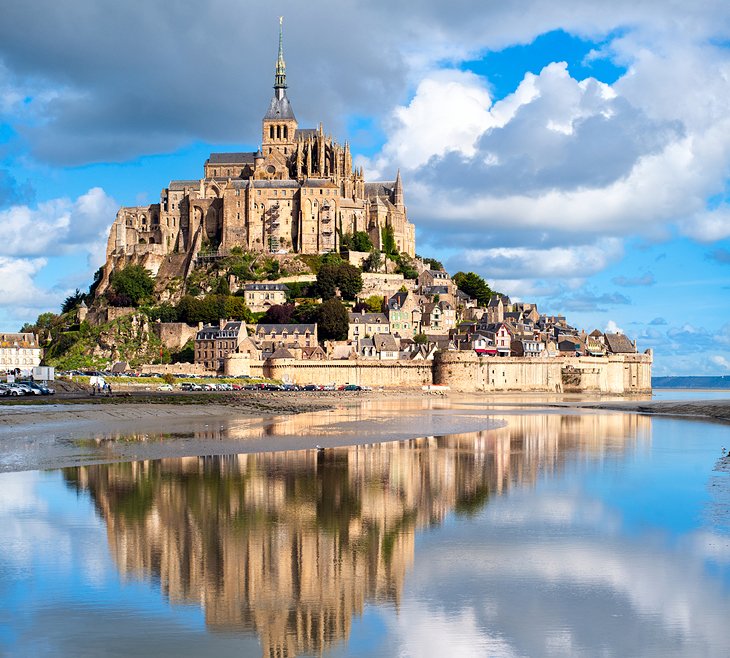
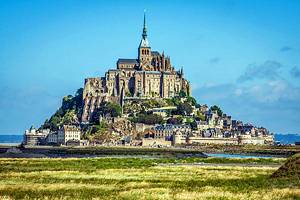
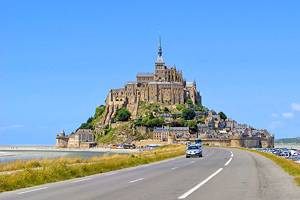
An important medieval pilgrimage destination, Mont Saint-Michel is a UNESCO World Heritage Site. Both the Abbey of Saint-Michel and the Bay of Saint-Michel are protected under this designation.
Soaring more than 100 meters above the sea, the Abbey of Saint-Michel has a mythical quality. The awe-inspiring Gothic spires seem to reach towards heaven as the site beckons pilgrims to cross the foreboding Bay of Saint-Michel.
During low tide, it's possible to complete a "traditional crossing" (a pilgrimage by foot) to reach Mont Saint-Michel. Accredited licensed guides are available to accompany pilgrims across the bay. During high tide, Mont Saint-Michel becomes an island only accessible by one road.
One of the highlights of a visit to Mont Saint-Michel is the Abbey Church, reached by climbing a 200-meter pedestrian path and then 350 steps to the highest point of Mont Saint-Michel. Built in the 13th century, the Abbey Church has a serene Romanesque sanctuary and a glorious Gothic choir.
The "Escalier de Dentelle" (staircase) leads from the Abbey Church up to a terrace, which affords breathtaking panoramic views of the sea.
Mont Saint-Michel is one of the most-visited tourist attractions in France and ranks among the top day trips from Paris. For travelers based in Paris, the easiest way to see Mont Saint-Michel is by taking an organized tour, but there are other options. Some of the best ways to get to Mont Saint-Michel include driving and taking the bus or the train.
2. Rouen
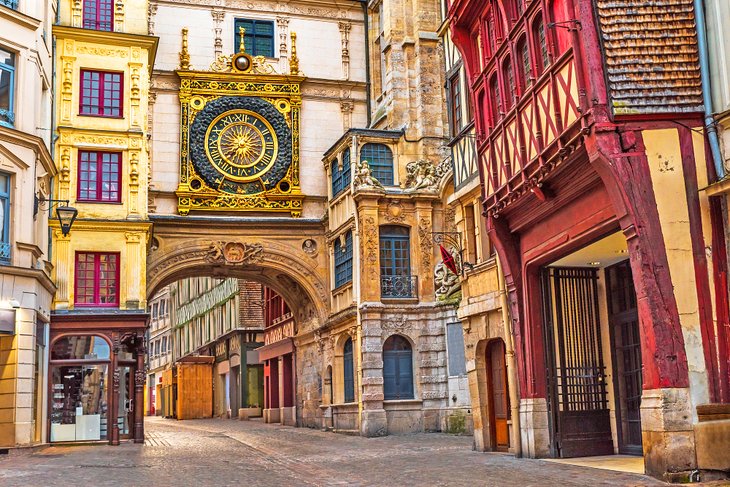
Wandering around the old town of Rouen, visitors will enjoy the historical ambience found in the winding cobblestone lanes, which are lined with maisons à colombages (half-timbered houses). Gothic churches are found at every turn, and many are gems of medieval architectural achievement.
The town's impressive Cathédrale Notre-Dame was depicted by Claude Monet in a series of paintings that show the intricate details of the cathedral's facade at different times of day. Another iconic monument in Rouen is the Gros-Horloge clock tower in the center of town.
Among the top attractions of Rouen is the Musée des Beaux-Arts, which ranks among France's most outstanding museums of fine arts. The collection includes masterpieces of European painting, with an especially noteworthy assortment of Impressionist works.
Rouen is also well known as the location where Joan of Arc was brought to trial. Tourists can see the tower where this courageous young woman stood before her judges and the spot where she was burned at the stake. She later became a saint, and now there is a contemporary church (the Eglise Jeanne d'Arc) dedicated to her invincible spirit, on the site where she was martyred.
3. Honfleur
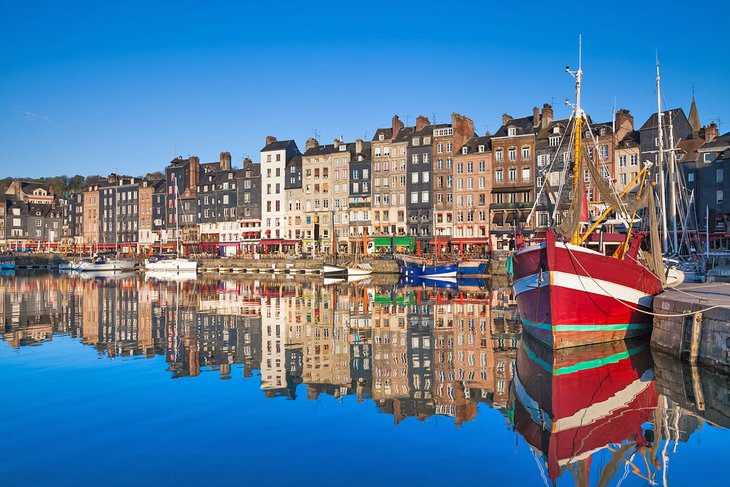
With its picturesque old harbor on the Seine estuary, Honfleur is one of the most charming towns in Europe. About 25 kilometers away from Le Havre, the town has atmospheric cobblestone streets, old stone buildings, and half-timbered houses.
This historic seafaring port was where travelers embarked on voyages to Canada in the 16th century. On the north side of the harbor is the 16th-century Lieutenancy Building, the old governor's house, built on the remains of the town's ancient walls.
One of Honfleur's most noteworthy attractions, the Musée de la Marine (Maritime Museum), is housed in the former Eglise Saint-Etienne, which dates back to the 14th century. The Maritime Museum tells the history of seafaring, fishing, and shipbuilding in Honfleur.
The Musée Eugène Boudin (Rue de l'Homme de Bois) is a must-see attraction for lovers of Impressionist art. Boudin's paintings and drawings represent nearly half of the collection; the rest includes pieces by other Impressionist artists such as Gustave Courbet, Eugène Isabey, and Paul Huet who painted scenes of the Normandy coastline.
The Musée Eugène Boudin also has an annex devoted to religious art, located in the freestanding belfry of the Eglise Sainte-Catherine. An interesting tourist attraction in itself, this Late Gothic church was built by local shipwrights after the Hundred Years' War.
4. Caen Memorial Museum
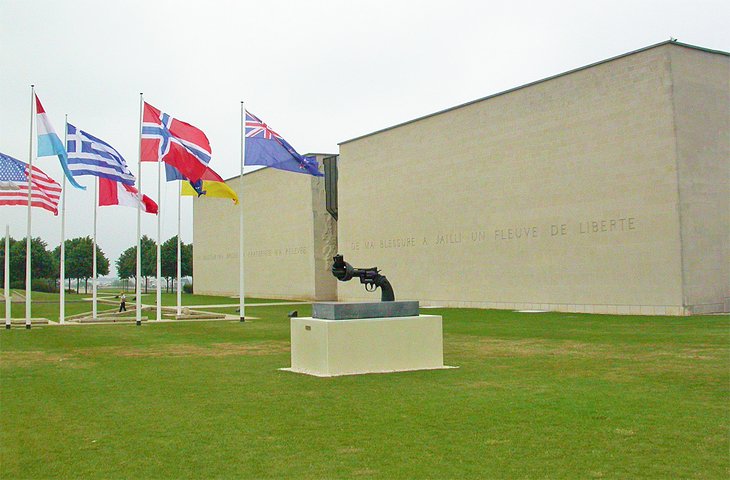
In Lower Normandy near the English Channel, Caen played a critical role during the Nazi Occupation of World War Two. Caen is an excellent starting point for a tour of the Normandy D-Day Beaches and Memorials.
Three-quarters of the town was destroyed during the Allied landings in June and July of 1944 (although its historic churches survived almost entirely unscathed).
Created as a tribute to Caen's suffering during the war, the Mémorial de Caen (Caen Memorial museum) tells the story of the Second World War, the D-Day Landings, and the Battle of Normandy.
Beneath the Caen Memorial museum is the site of General Richter's Headquarters, which was a command post during the German Occupation.
The Mémorial de Caen is also the Centre for History and Peace in Normandy, which aims to educate the public and promote the concept of reconciliation. The center hosts events such as temporary art exhibits and a Human Rights Competition.
Address: Esplanade Général Eisenhower, Caen
Official site: http://normandy.memorial-caen.com
5. Bayeux and the Bayeux Tapestry
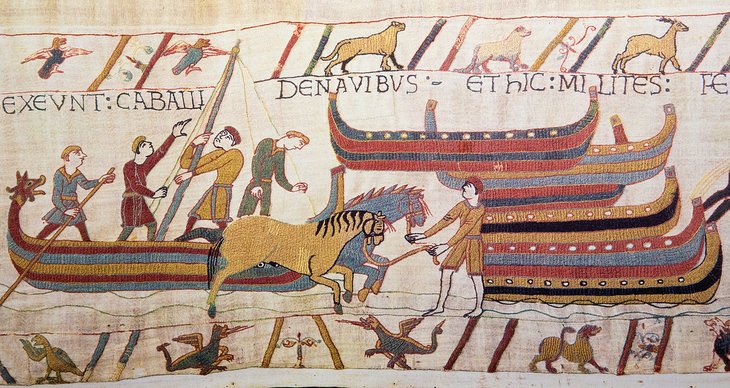
The town of Bayeux is best known for the Bayeux Tapestry, on display at the Bayeux Museum (13 bis Rue de Nesmond). An 11th-century masterpiece of medieval art, the Bayeux Tapestry is actually a work of embroidery, woven from wool yarn in 10 different shades.
The 70-meter-long Bayeux Tapestry depicts the story of the conquest of England in 1066 by the Duke of Normandy (known as "William the Conqueror"), through the Battle of Hastings. The Bayeux Tapestry is also called the Toile de la Conquête (Cloth of Conquest) and the Tapisserie de la Reine Mathilde (Queen Matilda's Tapestry, in reference to William's wife).
Because of its cultural value as an artifact of historical documentation, the Bayeux Tapestry has been inscribed with a UNESCO "Mémoire du Monde" designation. Rendered in exquisite detail, the Bayeux Tapestry depicts 58 different scenes (in a format similar to a comic strip) in incredible detail, including 623 figures, 759 animals, and 37 buildings and ships, along with a running commentary in Latin.
Visitors should also take time to discover the old town of Bayeux, an enchanting medieval world of half-timbered houses, elegant mansions, and stately townhouses.
At the center of the old town is the well-preserved Cathédrale Notre-Dame, one of the finest examples of a Norman Gothic church. The cathedral was built over several centuries (from the 11th century to the 15th century), and as a result, blends Romanesque with Gothic architectural elements, including Early Gothic and Flamboyant Gothic styles.
6. Omaha D-Day Landing Beach and Museum
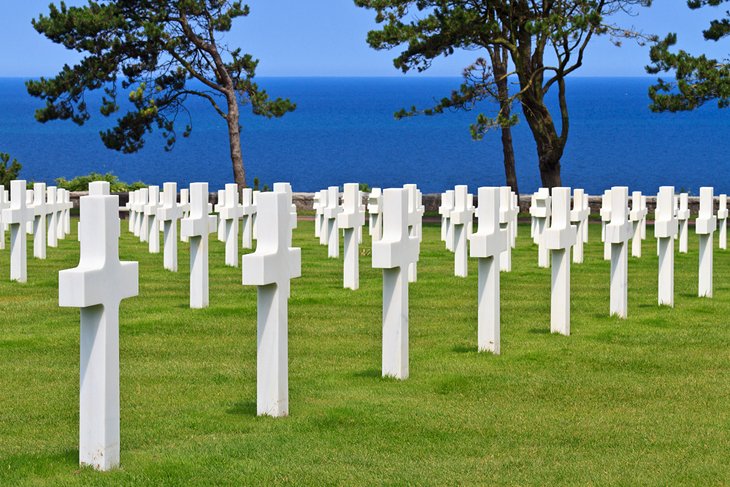
Omaha Beach extends for more than 10 kilometers between Port-en-Bessin past Vierville-sur-Mer and Colleville-sur-Mer to the mouth of the Vire River, a dramatic coastline along the English Channel made difficult to access by the sheer cliffs that rise 30 meters above the sea.
The largest and most famous of the five Normandy D-Day Landing Beaches, Omaha Beach is where the American 1st and 29th Infantry Divisions landed, along with other U.S., British, French, and Canadian troops on June 6th, 1944, which marked the beginning of Operation Overlord (also known as the "Battle of Normandy").
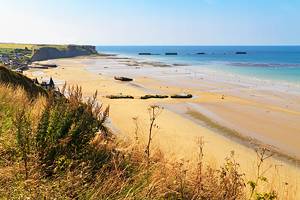
Visiting this site provides a chilling impression of the deadly battle, one of the bloodiest scenes of fighting during the D-Day Invasion, that took place here. Remnants of German bunkers and military piers can still be seen along the cliff-fringed coastline.
The American Cemetery in Colleville-sur-Mer overlooks Omaha Beach. The cemetery contains more than 9,000 perfectly aligned gravestones, which makes it the biggest American cemetery in Normandy.
Near Omaha Beach and the American Cemetery is the Overlord Museum, which chronicles the history of the Allied landings and the liberation of Paris. The museum's collection includes war vehicles, tanks, and guns, as well as soldiers' personal items.
Address: Overlord Museum, Rond-point d'accès du Cimetière Américain, Lotissement Omaha Center, Colleville-sur-Mer
Official site: www.overlordmuseum.com
7. Deauville
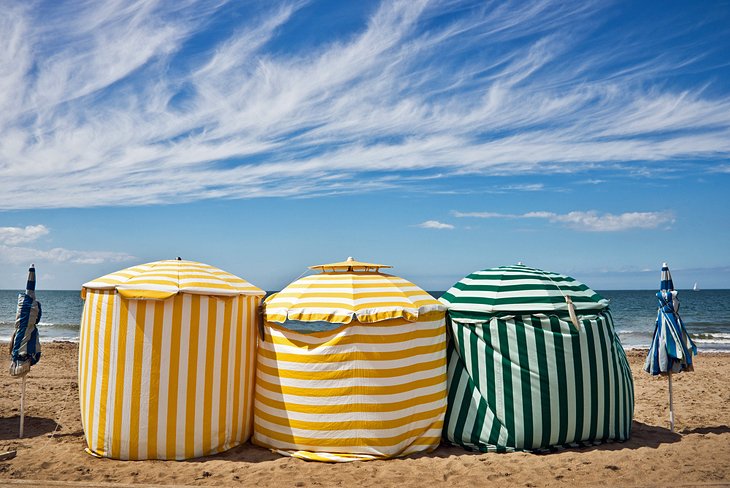
Since the 19th century, Deauville has been a premier seaside resort in Normandy. This glamorous vacation spot is still considered one of the top beach destinations in France.
The seafront features two kilometers of sandy shoreline and a promenade (boardwalk) for seaside strolls. Lifeguards are on duty daily during the high season (July and August).
Fitting of a glamorous beach destination, amenities abound, including places to rent parasols, lounge chairs, and old-fashioned striped cabanas.
Holiday-goers can take a break from sunbathing at the beach to browse the stylish boutiques, get a spa treatment, or dine at one of the many gourmet restaurants. Other things to do include sailing, golfing, and attending equestrian competitions.
Deauville lives up to its reputation as an internationally renowned resort with its array of prestigious events, including the International Polo Championship, held at Deauville's modern nine-hectare equestrian complex, and the Deauville American Film Festival.
8. Giverny: Monet's House & Gardens
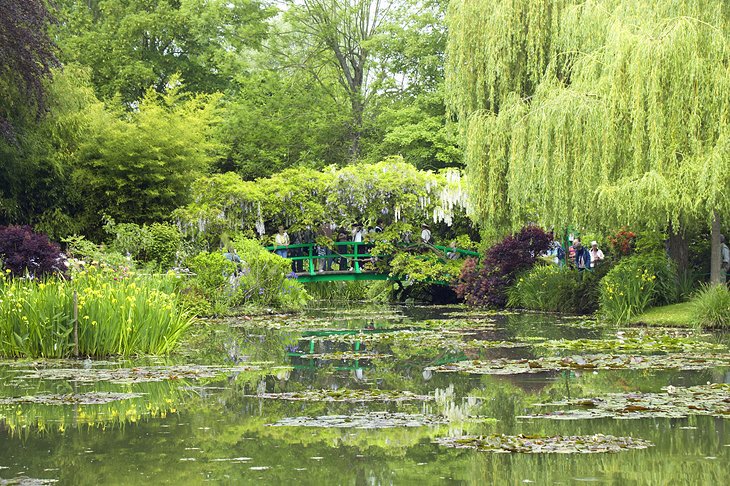
For lovers of Impressionist art, Monet's House & Gardens is an exciting place to visit, because the lush flowering property inspired so many of the artist's paintings. Claude Monet and his family settled at this charming location in Giverny (one hours' drive from Rouen) in 1883, and the artist spent the rest of his life here.
In front of the house is Le Clos Normand garden, which was created by Claude Monet. From springtime through autumn, this garden blooms with a profusion of colorful blossoms, including daffodils, pansies, tulips, irises, peonies, daisies, roses, poppies, hollyhocks, and dahlias, planted in a natural way so that they look like wildflowers.
On the other side of the property is Le Jardin d'Eau (Water Garden) featuring a Japanese bridge and waterlily pond fringed with weeping willow trees. The water garden was depicted in Monet's Water Lilies series of paintings. Monet devoted many years to painting different aspects of this garden, capturing its beauty in his delicate brushstrokes.
In the town of Giverny, the Musée des Impressionnismes Giverny (99 Rue Claude Monet) presents over 200 Impressionist paintings, as well as temporary exhibitions. The Impression Museum is surrounded by a meadow and also has a lovely garden with landscaping reminiscent of Monet's Garden.
Nearby in the town of Vernon (about a 10-minute drive), the Musée de Vernon showcases several masterpieces painted by Monet, along with works by other Impressionist artists (who belonged to the Giverny colony of painters).
Address: Monet's House & Gardens, Rue Claude Monet, Giverny
Official site: http://giverny.org/gardens/fcm/visitgb.htm
9. Fécamp
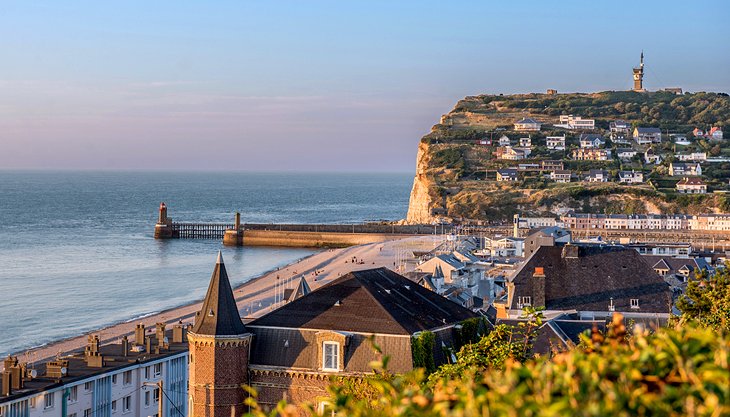
A favorite beach vacation destination on the Côte d'Albâtre, Fécamp is one of the best places to visit in Normandy for a relaxing holiday break. Established in 1832, Fécamp was one of France's first seaside resorts, known for attracting a high-society crowd. Today, sunbathers and socialites alike enjoy the refreshing ocean scenery.
Apart from the fishing harbor, the main tourist attraction here is the old abbey church of Sainte-Trinité, originally built in the 12th and 13th centuries. The interior is remarkably spacious with an exquisite choir and Renaissance altar.
The medieval pilgrimage chapel, Notre-Dame-du-Salut, stands on a steep chalk cliff to the north of town.
The writer Guy de Maupassant was born in Normandy and spent his early years in Fécamp, and some of his stories are set in the town.
About 11 kilometers away is the village of Valmont with an ancient castle and the ruins of a 12th-century abbey.
10. Étretat
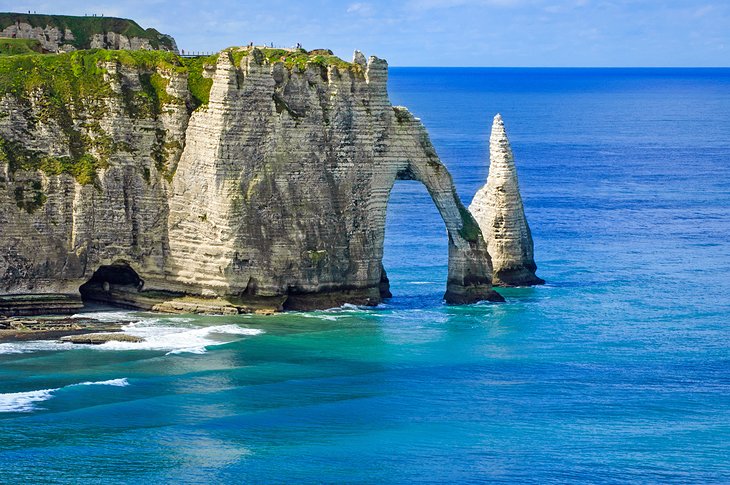
The seaside resort of Étretat is nestled at the foot of white limestone cliffs on Normandy's Côte d'Albâtre coastline. The cliffs reach 90 meters in height. From the viewpoint on top of the cliffs, the panoramic vistas are sensational.
The scenery of Étretat appealed to Claude Monet who spent a winter here in 1868. During his stay, Monet captured the dramatic landscapes and glistening waterfront in his paintings.
The beaches of Étretat delight sunbathers during the summer, and the ocean is a source of livelihood for fishermen who catch fresh seafood that is widely used in the local cuisine.
Étretat also has many attractive Belle Epoque villas, the most well-known is the Villa Orphée. The Villa La Guillette was built for the author Guy de Maupassant.
11. Suisse Normande (Norman Switzerland)
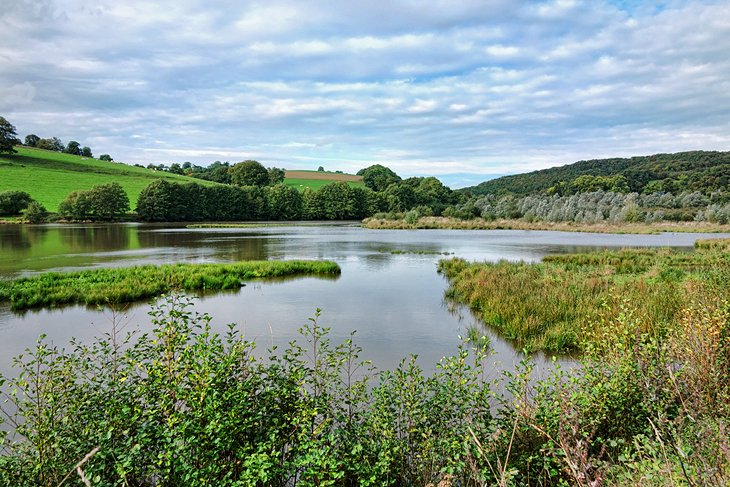
The name of Suisse Normande (Norman Switzerland) is given to the stretch of countryside in the Orne Valley of Lower Normandy, extending between Thury-Harcourt (south of Caen) in the north, Flers-de-l'Orne in the south, and Falaise in the east.
An idyllic piece of rural landscape, the Suisse Normande is characterized by its gently rolling hills, densely wooded forests, wide open space, steep gorges, and pristine lakes. The winding river, rocky bluffs along its banks, and the intricate patchwork of hedges give the scenery a particular charm.
The most striking features are the Rocher d'Oëtre, in the hilliest part of the area, and the superb view from above the gorges of the Rouvre River. Other scenic areas include the Vère and Noireau valleys and the stretch of the Orne Valley between Thury-Harcourt and Pont-d'Ouilly.
This area includes two regional parks: the Parc Naturel Régional Normandie-Maine and the Parc Naturel Régional du Perche; both have well-maintained trails for nature walks and hikes. The Naturel Régional Normandie-Maine also offers opportunities to go canoeing or kayaking.
12. Château de Fontaine-Henry
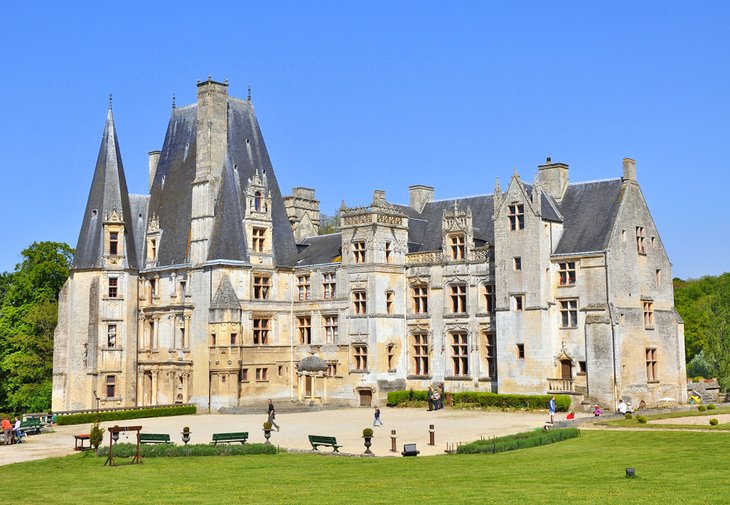
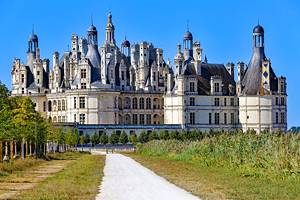
The most spectacular château in Normandy, the Château de Fontaine-Henry enjoys a peaceful setting in the lush Mue Valley of Lower Normandy (about 14 kilometers from Caen). The château was built in the beginning of the 13th century and is classified as a Historical Monument.
The Château de Fontaine-Henry has been privately owned for generations, by an aristocratic family that traces their ancestry to the year 1200. The current owner, the Marquis d'Oilliamson, on occasion leads guided tours of the château.
This remarkable château is a notable example of Gothic and Renaissance architecture with an imposing stone facade. The lavish interior is filled with gorgeous furniture and exceptional paintings, including works by Titian, Correggio, Rubens, Mignard, and Rigaud. There is also a separate 13th-century chapel, which was renovated in the 16th century.
Surrounded by forests, the château has an expansive parkland with walking paths and traditional games for visitors to enjoy. Within the park are three distinct gardens: the Jardin Notre-Dame, a medieval garden planted with vegetables and medicinal herbs; the Hortus Conclusus, an enclosed garden designed for religious meditation and spiritual reflection; and the Gerbe du Parnasse, a garden with a theme of Greek mythology.
Tourists may visit the Château de Fontaine-Henry on guided tours, available mid-April through mid-September. Tours are available in French and English, and printed content about the tour is available in English, Dutch, German, Spanish, and Russian.
Address: Place du Château, Fontaine-Henry
13. Château de Caen
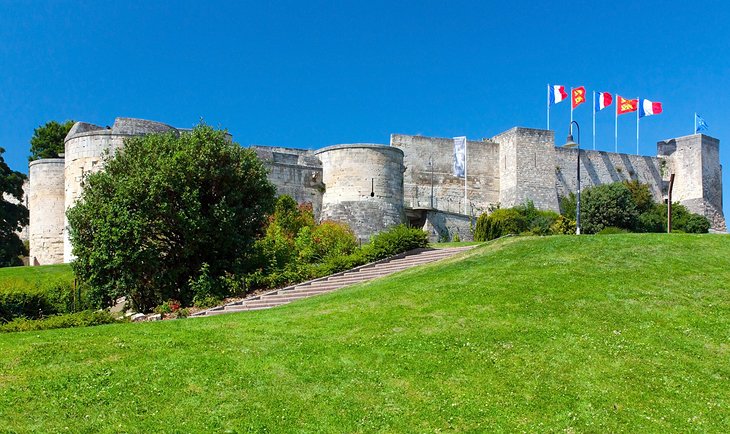
Guillaume le Conquérant (William the Conqueror) built this castle in 1060 when he was the King of England. The Château de Caen is one of the largest medieval monuments in Europe and a quintessential symbol of Caen's heritage.
During the Middle Ages, the château was a royal fortress, and it later served as an English stronghold during the Hundred Years' War and as army barracks for an infantry regiment during the Second World War.
The ramparts of the Château de Caen are among the largest castle fortifications in Europe. The northern rampart of the castle has been restored; from this viewpoint, visitors can admire panoramas of the Caen cityscape.
Rooms within the ramparts house the Musée de Normandie, a museum focused on the Normandy region's culture and history, including the history of the castle.
The château also displays the collection of the Musée des Beaux-Arts de Caen, which has an outstanding assortment of 16th- and 17th-century European paintings. The museum's treasures include masterpieces by Poussin, Rubens, Veronese, and Brueghel, as well as Impressionist paintings by Monet, Boudin, Corot, and Courbet.
The Château de Caen has a café, picnic area, and outdoor games on the grounds.
Address: Château de Caen, 14000 Caen
14. Memorial Museum of the Battle of Normandy in Bayeux
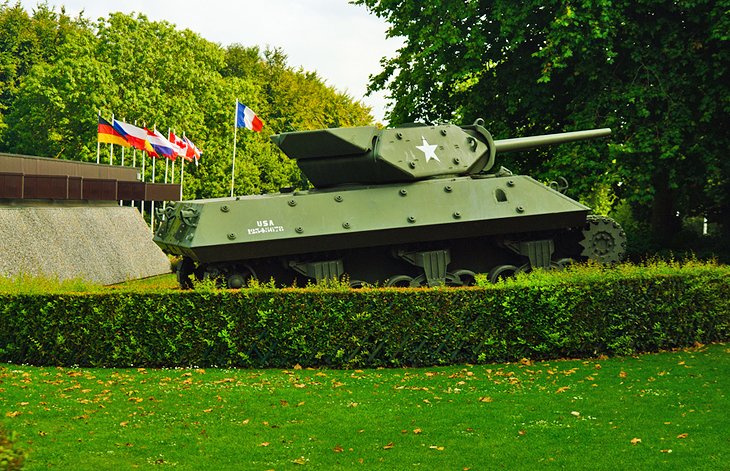
Bayeux has a British World War II cemetery as well as the Memorial Museum of the Battle of Normandy. This museum explains Normandy's involvement during the Second World War by outlining an overview of the wartime events.
With 2,300-square-meters of exhibition space, the museum does an outstanding job of recounting the Normandy Campaign, from the advancement of the Allied troops to D-Day on June 6th, 1944 and the liberation of Paris on August 25th, 1944.
The museum has an auditorium that shows the film Normandy '44, Decisive Victory in the West, based on archival documents. Created by a World War II historian, the film explains the major operations involved in the Battle of Normandy.
The museum also displays military equipment used during fighting on the Landing beaches, such as bulldozers, jeeps, and guns. The main aim of the museum is to share World War II history with the public and to serve as a place of remembrance, while honoring the memory of fallen civilians and soldiers.
Address: Boulevard Fabian Ware, Bayeux
15. Arromanches D-Day Museum
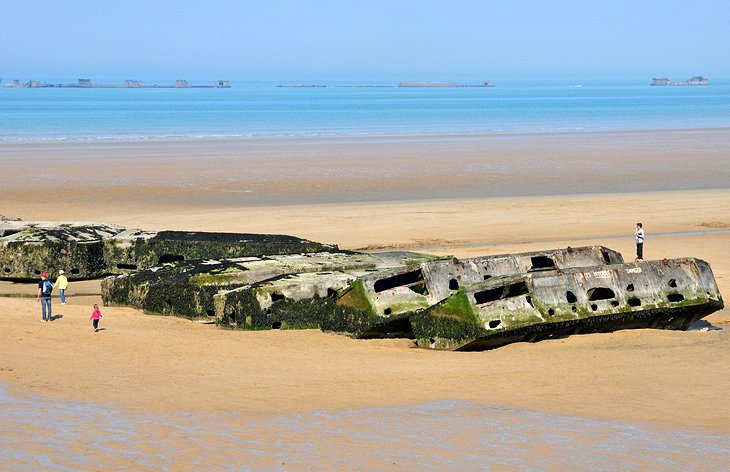
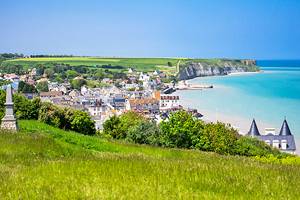
Near Omaha Beach, the D-Day landing beach (Gold Beach) of Arromanches was successfully captured by the British 50th Northumberland Division on June 6th, 1944 in a surprise offensive.
Because Arromanches does not have a natural harbor, the Allied forces had installed artificial harbors, known as the Mulberry Harbors. The Arromanches D-Day Museum overlooks the beach, close to the spot where one of the harbors was constructed. Remnants of the artificial harbor can still be seen on the sandy shore and in the waters near Arromanches.
The Musée du Débarquement (Arromanches D-Day Museum) illustrates the remarkable logistics and technical aspects of "Operation Mulberry," which involved the building of the Mulberry Harbors. Exhibits describe the logistics required to create and use the Mulberry Harbors, while working models demonstrate how the artificial ports operated.
Visitors can also watch a documentary film featuring World War II archival footage. Near the museum are many cafés and shops on the bustling Place du 6 Juin square.
Address: Place du 6 Juin, Arromanches
16. Dieppe
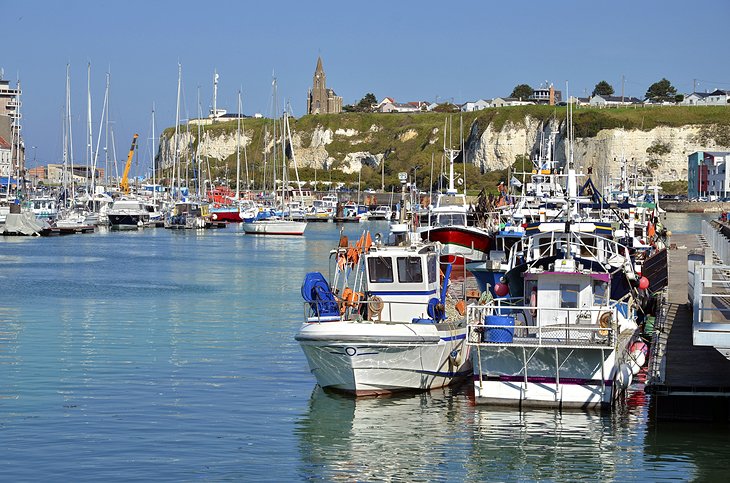
Historically a seafaring port, Dieppe became France's most stylish seaside resort in 1924 when the Duchesse de Berry came here to enjoy the ocean's fresh air and health benefits. The Duchess transformed the town (by having a ballroom and theater built) and made it a glamorous beach destination.
Today, visitors still come to enjoy Dieppe's beautiful broad seafront, an expansive space that includes a pebbly beach, promenade, children's playground, miniature golf course, and facilities for fishing and sailing. Unique to Dieppe, the seafront includes well-manicured lawns, where the International Kite Festival takes place every two years in September.
Above the beach, in a craggy cliff town, is the Château de Dieppe. This 14th-century castle contains the Musée de Dieppe, a multidisciplinary museum with an excellent assortment of European paintings from the 15th-century to the present day. Highlights include French Impressionist paintings, such as works by Pierre-Auguste Renoir, Camille Pissarro, and Eugène Boudin.
Northwest of the castle, the Boulevard de la Mer offers stunning sea views. In the center of the town is the pleasant Place du Puits-Salé and nearby are many cafés and pastry shops.
Dieppe has two important churches: the Baroque Eglise Saint-Rémy, built in the 16th and 17th centuries, and the Eglise Saint-Jacques, a striking Gothic church with ornately sculpted doorways and a richly decorated interior.
With today's recreational ambience, it's hard to imagine that Dieppe was the site of a tragic WWII event. On August 19th, 1942, the Allied forces (mainly Canadian) attempted a Raid on Dieppe, but the offensive was met by the German army with unexpectedly strong reinforcements. Over 900 Canadian soldiers were killed. Memorials in Dieppe honor the Canadian troops who perished during the Raid on Dieppe in 1942.
17. Evreux
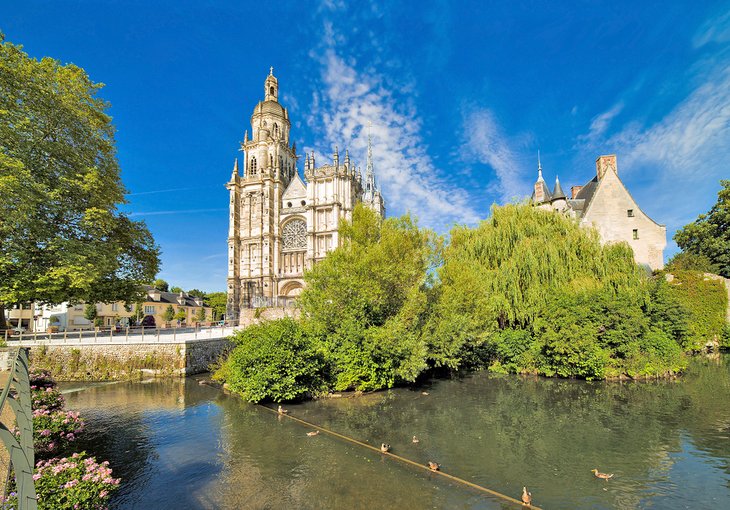
About a one-hour drive south of Rouen, the town of Evreux is worth a detour. The main tourist attraction is the Cathédrale Notre-Dame built in the 10th century. The cathedral's monumental nave still has Romanesque-era arches, although it was rebuilt in the 13th century in Gothic style. Illuminating the sanctuary are 70 splendid stained-glass windows, created between the 13th and 16th centuries and considered masterpieces.
Evreux also has a noteworthy 15th-century Palais Episcopal, which now houses the Musée d'Art, Histoire et Archéologie displaying a diverse collection of ancient artifacts; historical objects; and European paintings from the 17th, 18th, and 19th centuries.
Other noteworthy sites in Evreux include the Tour de l'Horloge (Clock Tower), which dates from 1490, and the former Abbaye de Saint-Taurin (abbey church), which contains the 13th-century reliquary of Saint Taurin, an exemplary piece of goldsmith's work.
18. Trouville
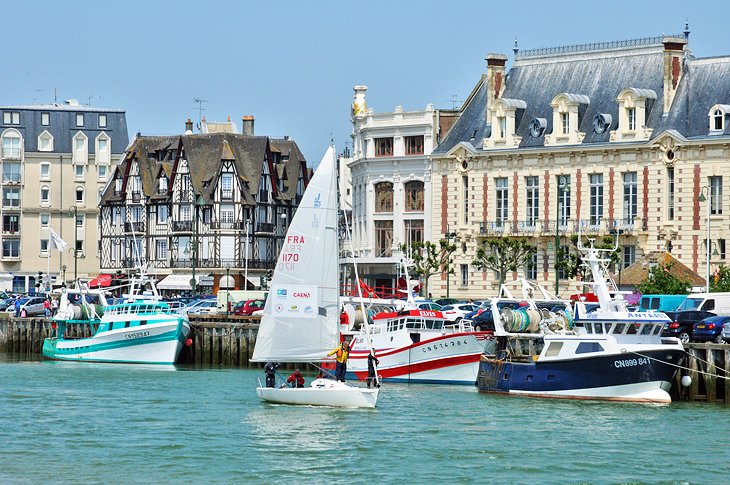
Although less upscale than the neighboring "Parisian Riviera" resort of Deauville (just two kilometers away), Trouville has a similar ambience. Like Deauville, Trouville was a fashionable seaside resort in the 19th century.
Trouville's broad sandy beach was once known as the "Queen of Beaches" and still attracts many visitors. Another tourist draw is the boating harbor for recreational sailing.
One highly recommended excursion from Trouville is a drive along the Corniche Normande, which skirts the coast high above the sea. This scenic drive offers extensive views all the way to Honfleur.
19. Le Havre
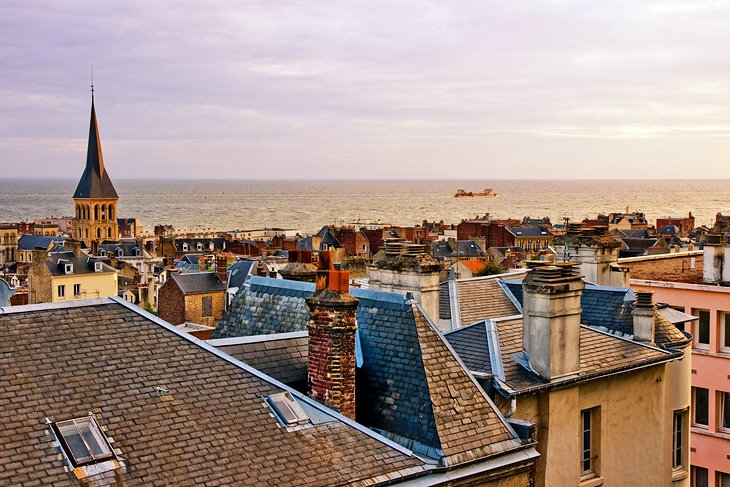
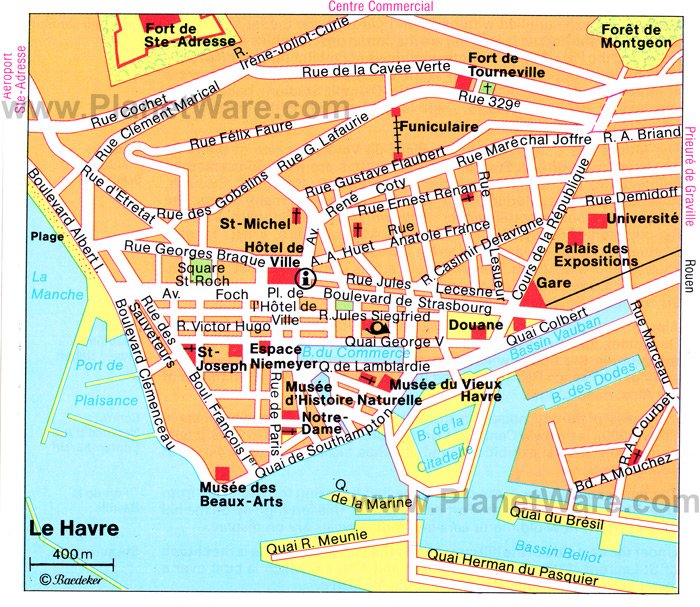
Built around the estuary of the Seine River, Le Havre is France's largest port after Marseilles. The town is surrounded by serene natural scenery: an expansive pebble beach and an attractive marina.
The setting appealed to Claude Monet. In 1872, he captured the landscape of Le Havre in his famous painting Impression, Soleil Levant (Impression, Sunrise) which is considered the first piece of Impressionist art.
Le Havre suffered much damage during the Second World War and was almost completely rebuilt with many buildings designed by the architect Auguste Perret. The modern city center offers interesting examples of 20th-century architecture, such as the Place de l'Hôtel-de-Ville with its functional tower blocks.
20. Le Bec-Hellouin
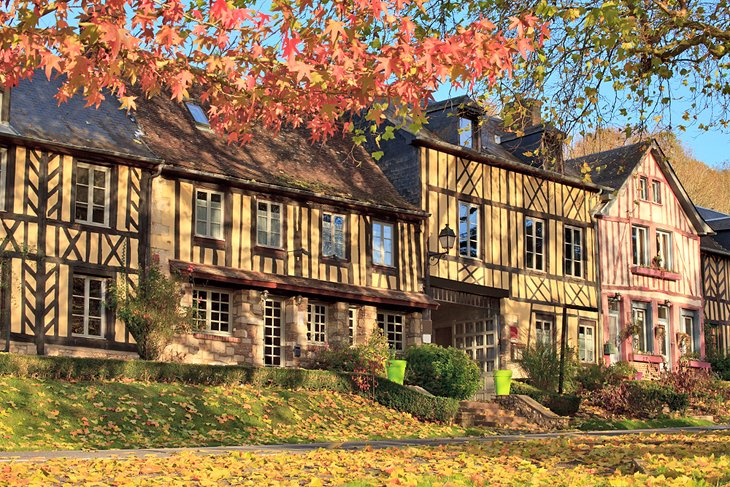
One of the prettiest of the villages that dot Normandy's rural landscape, Le Bec-Hellouin is listed as one of the Plus Beaux Villages de France (Most Beautiful Villages of France). This little country village is tucked away in a peaceful valley and has plenty of open green space with leafy trees.
Brimming with old-world charm, Le Bec-Hellouin has quaint flower-bedecked half-timbered houses clustered around an old church, the Eglise Saint-André. Tourists will also appreciate the village's selection of small inviting hotels and casual restaurants.
The village is renowned for its abbey, the Abbaye Notre-Dame du Bec founded in the 11th century and classified as a Historical Monument. Although the abbey was badly damaged in 1417 during the Hundred Years' War, the 15th-century Saint-Nicolas Tower remains intact. The main buildings exemplify Regency architecture, with unostentatious facades and harmonious classical proportions.
The Abbaye Notre-Dame du Bec is still a working monastery run by a community of Benedictine monks. Besides fulfilling their religious obligations, the monks produce handcrafted ceramics and provide guided sightseeing tours of the abbey.
Guided tours are available every day except Tuesdays. The grounds and the Eglise Abbatiale (Abbey Church) of the Abbaye Notre-Dame du Bec are open to the public, free of charge, every day except Tuesdays.
21. Jumièges
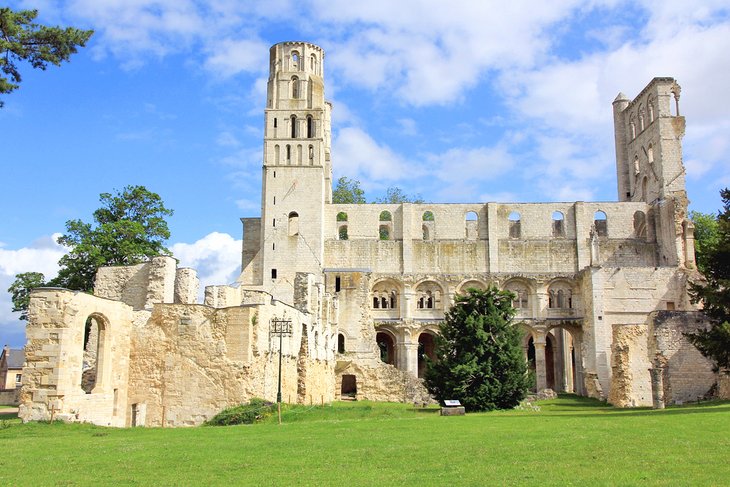
Another historic abbey is found 35 kilometers from Le Bec-Hellouin in Jumièges. Built in the 11th century, the Abbaye de Jumièges became an unsurpassed center of learning under the rule of William the Conqueror. In the 13th century, the church was enhanced in marvelous Gothic style, reflecting the grandeur of the abbey and its immense wealth.
Unfortunately, the abbey was mostly destroyed during the Hundred Years' War. However, the ruins reveal the prestigious past of a building that was once the most magnificent religious monument in Normandy.
22. Barfleur
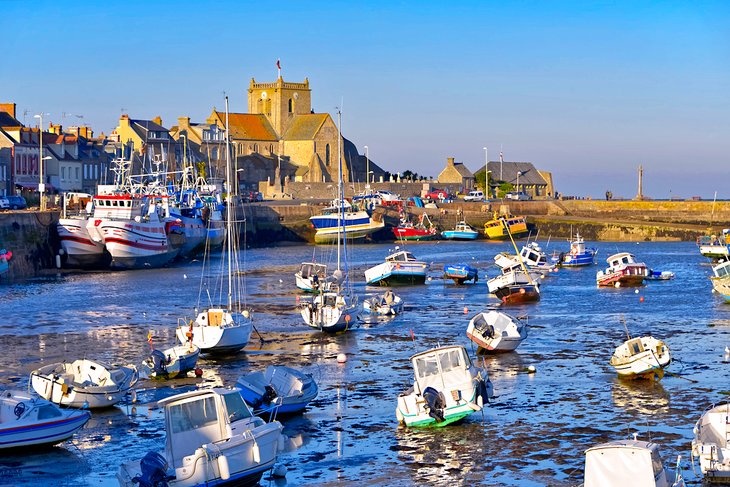
Barfleur is a characteristic Norman fishing village with handsome granite-stone houses lined up along the harbor. The town's picture-perfect quality has earned it a place among the Plus Beaux Villages de France.
During the time of William the Conqueror, Barfleur was a principal seafaring port for the Anglo-Norman kingdom because of its advantageous position on the English Channel. Today, Barfleur still has a busy fishing harbor, with small boats unloading fresh catches daily at the quays. The town's traditional seafood restaurants offer a chance to sample the tempting local cuisine.
With nearby beaches and coastal paths for taking nature walks, Barfleur is a popular destination for seaside getaways.
23. Côte Fleurie
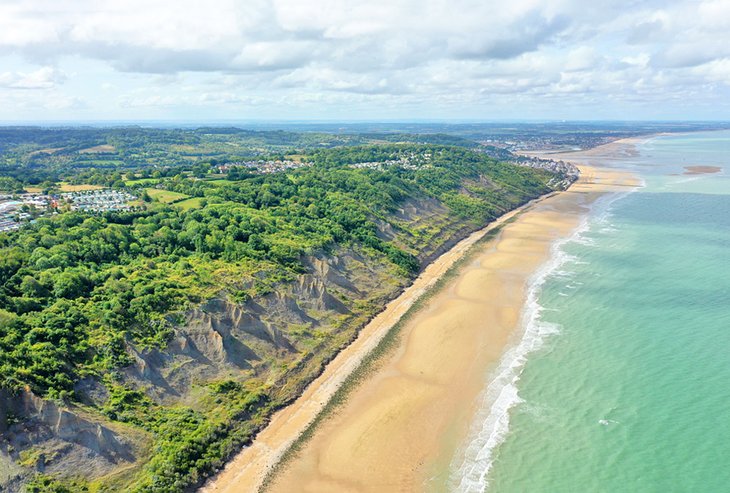
Normandy is prized for its gorgeous coastline, particularly the stretch known as the Côte Fleurie, which extends from Honfleur for about 45 kilometers to Merville-Franceville.
The name "Coast of Flowers" hints at its natural splendor. This bucolic landscape features meadows and apple orchards, alongside the coastline of dramatic cliffs and fine-sand beaches.
One especially scenic driving route is the portion from the Deauville to Cabourg (20 kilometers).