10 Best Museums in Florence, Italy
As you might expect, the museums in Florence have among their collections the world's finest assemblage of Italian art of the Renaissance period, between about 1300 and 1500. After all, the Renaissance was born in Florence, forever changing the direction of Western art, and its greatest artists thrived under the patronage of the Medici and other wealthy families.
So as you discover the highlights of these collections, expect to see plenty of Donatello, Ghiberti, della Robbia, and Botticelli, as well as two of the most famous of all Michelangelo's sculptures. But Florence's great art museums are not limited to the Florentine Renaissance; look for works by the great Venetians, Tintoretto, and Titian, as well as one of Raphael's finest portraits and paintings by Rembrandt, Velasquez, and Van Dyck.
Paintings and sculptures are not all you'll find: look in Florence's museums for treasures as diverse as Egyptian mummies, historic fashions, an ancient chariot, and the Medici's jewelry.
In addition to the museums listed here, among Florence's tourist attractions are smaller specialized museums, ranging from a fascinating display of intricate mosaic art (Museo Opificio delle Pietre Dure) to those celebrating the designs of fashion giants Gucci and Ferragamo.
Along with the palaces that house formal art galleries - the Uffizi and Pitti Palace - the city's palaces are furnished in priceless art, and its churches often have museums of their own. This multitude of museums makes Florence one of the top places for art lovers to visit in Italy. Explore your options with our list of the top museums in Florence.
- 1. Uffizi Gallery
- 2. Galleria dell'Accademia (Academy Gallery)
- 3. Galleria Palatina
- 4. Bargello Palace National Museum
- 5. Museo dell'Opera di Santa Maria del Fiore (Cathedral Museum)
- 6. Museo Archeologico (Archeological Museum)
- 7. Bardini Museum
- 8. Casa Buonarroti (Michelangelo House)
- 9. Museo Galileo
- 10. Spedale degli Innocenti (Hospital of the Innocents)
- Map of Museums in Florence, Italy
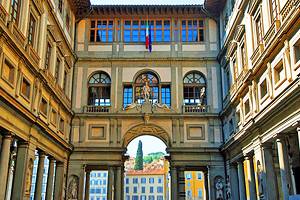
1. Uffizi Gallery
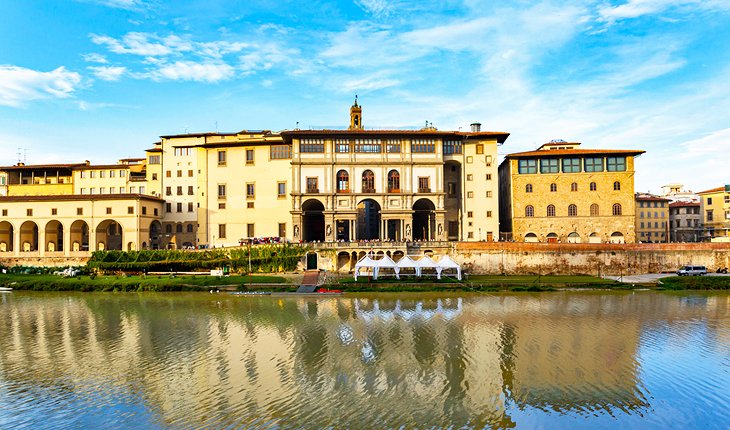
Conveniently arranged by periods, the Uffizi Gallery for all its size (it ranks as one of Europe's largest art museums) is a good way to get an overview of the tremendous changes the Renaissance brought in the way artists perceived and portrayed the world.
This chronological arrangement allows you to quickly sense the change of styles from the static, flat Byzantine representations of other-worldly madonnas and saints to more realistic and human portrayals, as well as works that include portraits, allegorical themes, even landscapes mixed with religious subjects. Seeing several contemporary artists' works together gives you the context for the Uffizi's famous block-busters, like Botticelli's Birth of Venus.
Because of its popularity, Uffizi tickets are timed. You can order these tickets ahead or you can take a Skip the Line: Florence Accademia and Uffizi Gallery Tour that takes you right past the lines at both of these attractions and assures that you will see the highlights and learn about their significance from an expert guide.
Because the Uffizi is currently undergoing renovations and adding new galleries, some of the artworks may have been moved, so be sure to get a current gallery plan.
2. Galleria dell'Accademia (Academy Gallery)
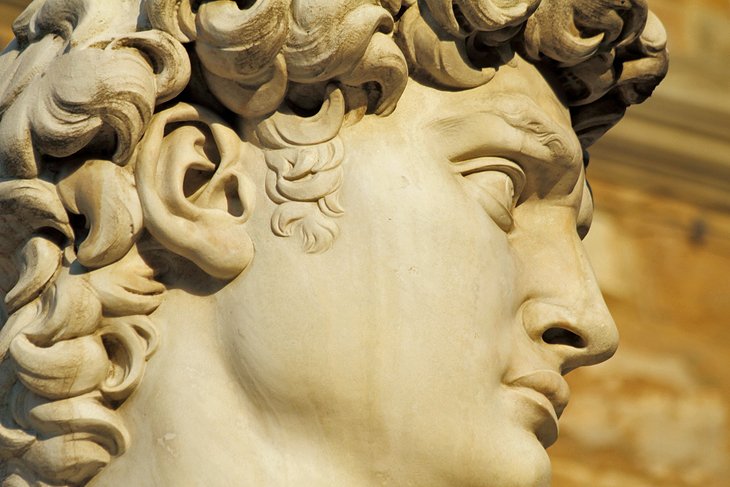
Founded in 1784 as a school for artists, the Accademia today holds an outstanding collection of works by Michelangelo. It is one of these, his David, that makes this museum well worth the long lines, even though copies of the sculpture seem to be everywhere in the city. Beyond Michelangelo, the other galleries contain important works of Florentine artists from the 13th to the 16th centuries.
The Accademia is the one place where you can follow Michelangelo's creative process as a sculptor. In the Galleria del David, you'll find the four unfinished figures of the slaves that Michelangelo planned for the tomb of Pope Julius II in Rome. He worked on six statues between 1519 and 1536 but never completed them (the other two are in the Louvre in Paris).
Also unfinished is the figure of St. Matthew, sculpted by Michelangelo in 1505 to 1506 and intended as one of 12 apostles for Santa Maria del Fiore Cathedral in Florence. You may notice that the block of marble is flatter than those of the slaves - the statue was intended to stand against a wall and be viewed only from the front.
Michelangelo's David was brought to the Accademia in 1873 from its original setting in the Piazza della Signoria to protect him from the weather, and after an attack in 1991, placed behind glass. Begun when Michelangelo was 26, David was so perfect in its noble posture and expression, combining the tension of the coming battle with tranquility, that it was praised even by his contemporaries. David became the symbol of the irrepressible spirit of liberty in Florence.
Highlights of the 15th-century works in the Sale Fiorentine are the Adimari Chest, with a grand wedding procession on the front, and a Madonna by Sandro Botticelli, from around 1470. The Sale Bizantine houses the oldest works of the collection, dating from the 13th and 14th centuries, including the important Crucifixion scene by Pacino di Bonaguida, Tree of Life (ca. 1310).
You can be sure of seeing Michelangelo's David and the other great works without wasting hours in the long ticket lines with a Skip the Line: Florence Accademia and Uffizi Gallery Tour that combines these popular attractions and takes you right past the lines. Once inside, you can go straight to the most important works in each and learn about them from your guide.
Address: Via Ricasoli 58, Florence
3. Galleria Palatina
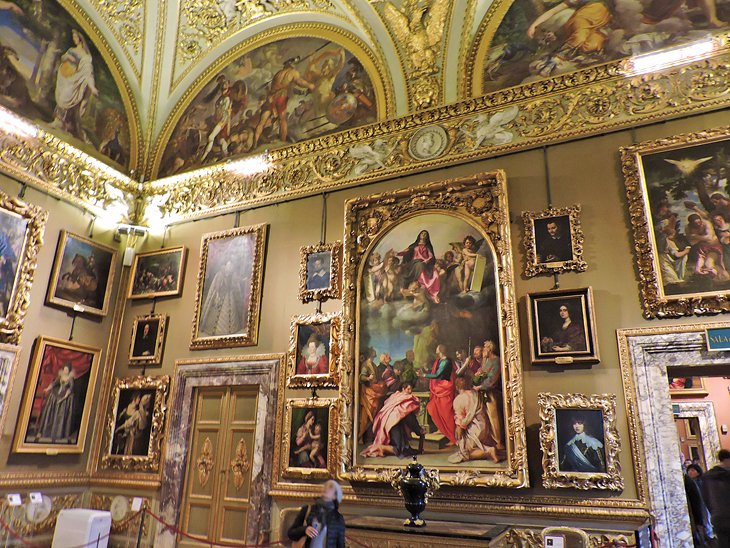
It's not just the multiple works of Italian masters such as Titian, Tintoretto, Botticelli, Rubens, and Raphael that put the Palatine Gallery on the art map, or even the combination of these with works by Van Dyck and Velasquez.
Three other collections in the Pitti Palace include the Galleria d'Arte Moderna (Gallery of Modern Art); the Museum of Costume and Fashion; and the treasury, filled with gold and silver jewelry and other Medici treasures. Paintings and sculptures in the Galleria Palatina are not placed in chronological order but are displayed as part of the decor of the sumptuously decorated rooms.
Recover from the sensual overload of all this art by strolling through the adjoining Boboli Gardens and savoring the views across the city below, one of the favorite things to do in Florence.
4. Bargello Palace National Museum
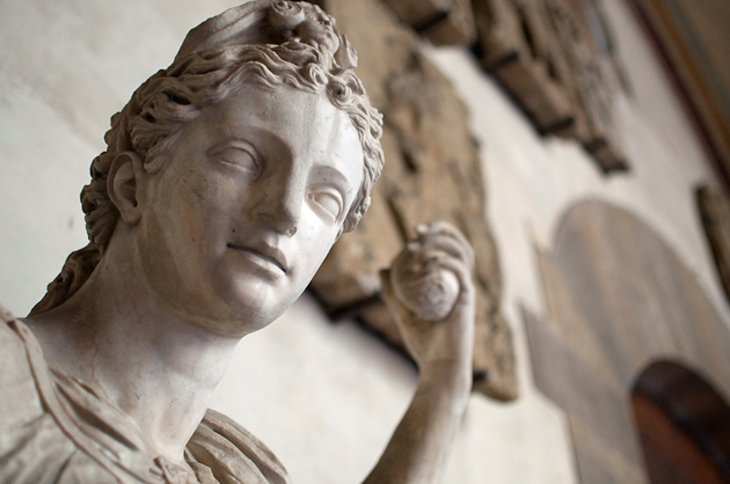
Begun in 1859, Italy's first national museum outside the Vatican contains important works by 14th- to 16th-century Tuscan artists, particularly Donatello, the della Robbias, and Michelangelo. Four of his masterpieces are the focus of the rooms off the courtyard: a marble Brutus (ca. 1540); a relief of Madonna and Child with the young John the Baptist, a tondo carved about 1504; David (ca. 1531), also known as Little Apollo; and Michelangelo's first large sculpture Drunken Bacchus, (1497-1499).
Here, too, you'll see Benvenuto Cellini's model of Perseus, his marble statue Narcissus, and his small bronze sculptures. As you climb the stairs notice the bronze animals from a Medici villa.
The large 14th-century hall at the top shows works of Donatello, among them his St. George (1416), an early marble David, a later bronze one made in 1430, and St. John as a Child. Be sure to look for Brunelleschi's and Ghiberti's models for the competition for the north portal of the baptistery. Along with a room of ivory carvings, there's a collection of majolica and a room filled with enamels and gold work, for which Florence was famous in the Renaissance.
The top floor has one of the museum's highlights: two rooms of glazed terra-cotta by Andrea and Giovanni della Robbia. Along with the works of several masters, what distinguishes the Bargello is its attention to decorative arts and three-dimensional art.
Address: Via del Proconsolo 4, Florence
5. Museo dell'Opera di Santa Maria del Fiore (Cathedral Museum)
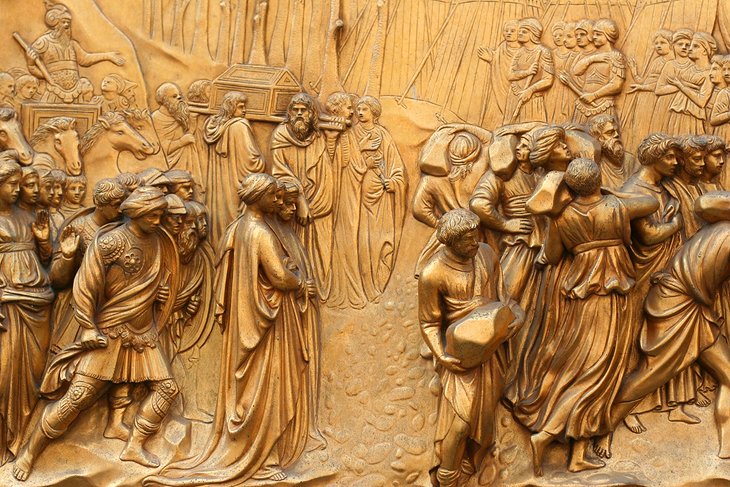
Priceless works of art given to Florence's cathedral are housed in the adjoining museum, along with originals of the more vulnerable works, such as Ghiberti's bronze door panels, brought indoors for safekeeping.
Some of the city's greatest masterpieces are here: Michelangelo's last Pietà, early-15th-century marble galleries by Luca della Robbia and Donatello, his St. John the Baptist and Mary Magdalene, silk and gold needlework, and the silver altar of the baptistery. Although the themes here are almost entirely religious, the different media and craftsmanship give the collection tremendous variety.
6. Museo Archeologico (Archeological Museum)
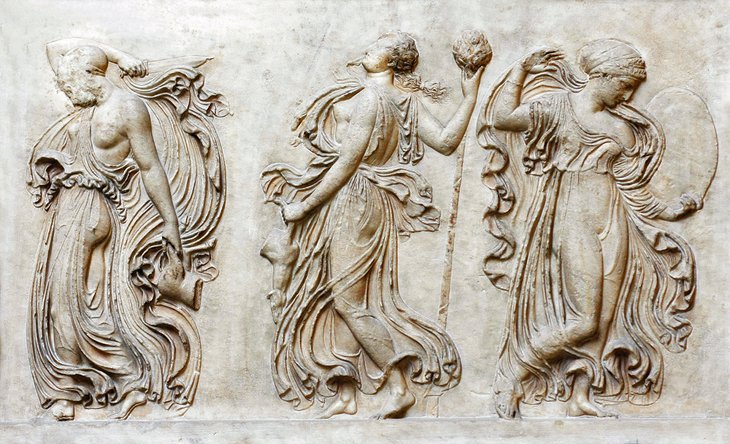
The most important archeological museum in northern Italy was based on the extensive collections of Etruscan artifacts made by the Medici family. Other Medici and later collections added Egyptian, Greek, and Roman antiquities. Although the entire museum is filled with treasures, it is the Etruscan exhibits that really shine, highlighted by one of the finest known examples of Etruscan art, the bronze Chimera of Arezzo.
This creature with the body of a lion, the head of a ram, and a serpent's tail was found in 1553 and immediately snapped up by Medici Duke Cosimo I. It is shown along with ancient pieces that include the Minerva of Arezzo, other bronzes, the Ramta Uzenai marble sarcophagus from Tarquinia, decorated pottery, and Etruscan paintings.
Along with the Etruscan works are Greek and Roman bronzes, the most important of which are the Greek Idolino from the fifth century BC and the Horse's Head, a Greek bronze from the Roman period. Other museum highlights are Etruscan and medieval coins, as well as gold and silver work.
The Egyptian collection includes statues, ceramics, reliefs, sarcophagi, mummies, and utensils from various Egyptian dynasties, including a very well-preserved wooden chariot from the time of Ramses I, 14th-century BC.
Address: Piazza SS Annunziata, Florence
7. Bardini Museum
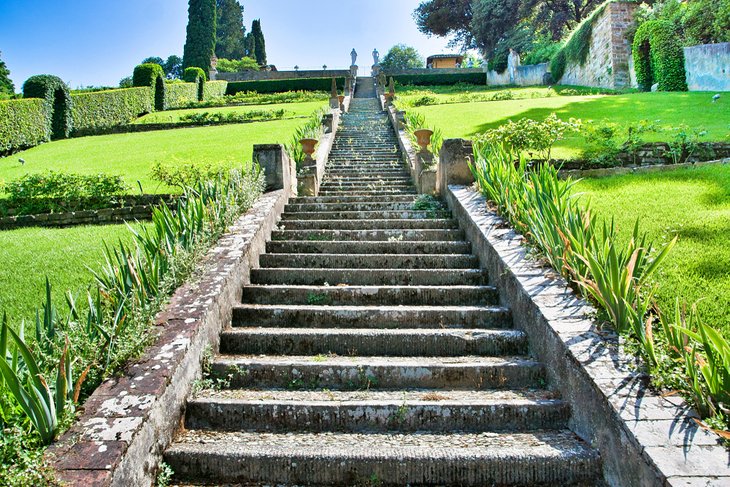
One of the most unusual museums in Florence was the private collection of artist and antiquarian Stefano Bardini. In the 1880s, Bardini bought several buildings, including a 13th-century church and 13th-century Palazzo Mozzi. Using these as a base, he created and decorated a building using medieval and Renaissance doors, windows, fireplaces, staircases, stonework, carved moldings, and coffered ceilings from palaces and churches that were being demolished.
The resulting villa, set above the city in a lovely sloping garden, was the showcase for his collections of priceless art and antiquities from various periods. A few of the highlights from among the more than 3,600 objects are works by Donatello, the Della Robbia brothers, Tintoretto, and a series of drawings by Tiepolo. Examples of 15th- to 17th-century Venetian and Tuscan woodwork are outstanding, as are the collections of musical instruments, ceramics, and antique furniture.
These are displayed among the sculptures, paintings, Roman sarcophagi, tapestries, 15th-century stuccoes, and polychrome wooden sculptures. It comes as a surprise to those tourists who have rubbed the shining nose of the bronze boar under the loggia of the Mercato Nuovo, known as the "Porcellino" to discover that it is a copy. The original is at Bardini Museum.
Address: Via dei Renai 37, Florence
8. Casa Buonarroti (Michelangelo House)
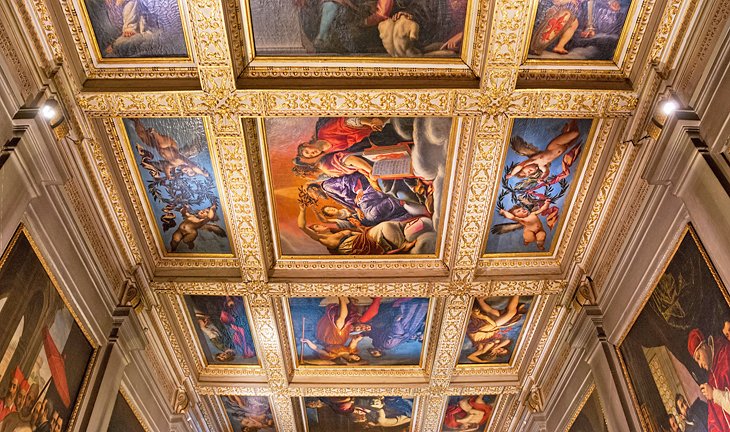
Once owned but not occupied by Michelangelo, this 16th-century house was made into a museum of Michelangelo's works and times by his heirs. Michelangelo Buonarroti the Younger, a highly cultured man of letters, conceived the idea of converting this house into a memorial and museum, and spared no expense in hiring the finest artists of the age to decorate it.
It contains Michelangelo's bas relief sculptures of Madonna della Scala -his earliest work, completed at the age of 16 - and his Battle of the Centaurs and Lapiths, sculpted when he was 17. The collection also includes the wooden model for the façade of San Lorenzo and more than 200 of his drawings and sketches, which are displayed on a rotating basis.
Address: Via Ghibellina 70, Florence
9. Museo Galileo
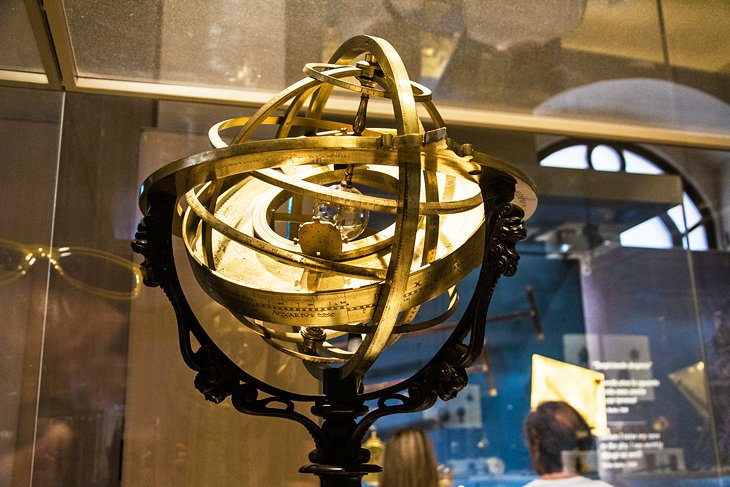
In Renaissance Florence, science was an art, and to the Medici and other Humanists, the two were inextricably entwined. You may agree when you see the artistry of some of the early scientific instruments gathered in this fascinating museum. You'll find globes, telescopes, meridians, sundials, and instruments for navigation.
Eleven rooms are filled with the Medici collections of astrolabes, compasses, armillary spheres, and other instruments that are the work of the Renaissance's finest metal smiths and woodcarvers. A highlight is the collection of Galileo's own original instruments.
Address: Piazza dei Giudici 1, Florence
Official site: https://www.museogalileo.it/en/
10. Spedale degli Innocenti (Hospital of the Innocents)
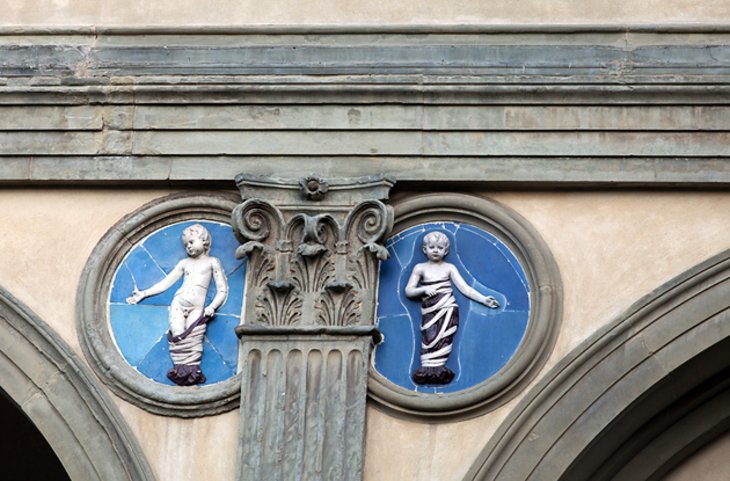
The Hospital of the Innocents was among the first Renaissance buildings in Florence. It was designed by architect Filippo Brunelleschi, who built the dome of the cathedral, as a foundling hospital. Until 1875, mothers who wanted to leave their new-born babes anonymously in the care of the orphanage could put them in the "ruota," a revolving wooden cylinder at the end of the portico.
The Spedale is famous for its loggia, an arcade of columns with frescoes under the arches and in the lunettes above the doors, but even better known for the ten glazed terra-cotta medallions of infants in swaddling clothes created by Andrea della Robbia around 1463. Although the collections also include other frescoes and masterpieces by several Renaissance artists, including Adoration of the Magi by Ghirlandaio and Madonna and Child by Botticelli, those galleries are not always open.
Address: Piazza SS Annunziata, Florence
Map of Museums in Florence, Italy
More Related Articles on PlanetWare.com
Discovering Florence: Look for more of the city's Renaissance and earlier treasures with the suggestions in our helpful guides on the top churches of Florence and the top-rated palaces in Florence. For an overview of the city's offerings, refer to our Top-Rated Tourist Attractions in Florence.
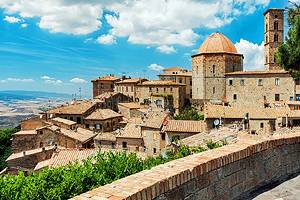
Exploring Tuscany: Florence holds enough to keep you busy for an entire vacation, and it is surrounded by even more of the top-rated tourist attractions in Tuscany. Within easy reach are the beautiful medieval hill town of Cortona and the Tuscan and Roman sites of Volterra.