22 Top-Rated Day Trips from Budapest
While not one of Europe's largest countries – it has a population of just under 10 million citizens – Hungary has one of the continent's highest densities of historic sites and tourist attractions. Add to this the fact that the country has stunningly beautiful scenery, and you'll not be surprised to learn that Hungary is increasing in popularity as a European tourist destination.
Given the central location of Budapest, as well as its idyllic position on the banks of the mighty Danube River, this always bustling capital is the perfect place from which to venture out and explore Hungary as part of a fun day trip.
Across this friendly country, you'll find countless cities, towns, and villages to explore. Not only have they successfully preserved their historic roots, but they also reflect a tremendous variety of influences, from the Romans to the Ottoman Empire. And all of them are worth visiting. Whether you are enjoying a family day trip or, if traveling a little further afield, planning an overnight stay in one of Hungary's many unique accommodation choices, you'll not be disappointed.
Whatever your choice, be sure to make full use of our list of the top day trips from Budapest, Hungary.
- 1. Eger's Baroque Heritage
- 2. The Danube Bend and Vác
- 3. The Royal Palace of Gödöllo
- 4. Nagytétény Castle and the Museum of Applied Arts
- 5. The Hungarian Open Air Museum
- 6. Aggtelek National Park and the Baradla Cave
- 7. Pécs and its Picturesque Precincts
- 8. Szentendre's Slavic Influences
- 9. Gyor: Hungary's Baroque City
- 10. Esterházy Palace, Fertod
- 11. Kecskemét and the Puszta Great Plains
- 12. Székesfehérvár's Royal Basilica
- 13. The Castle of Diósgyor
- 14. Historic Castle Hill - Esztergom
- 15. Hortobágy National Park and the Puszta
- 16. The Medieval Reformed Church of Nyírbátor
- 17. Pannonhalma Archabbey
- 18. The Savaria Museum in Szombathely
- 19. Koszeg and the Church of St. James
- 20. Nádasdy Castle and Museum in Sárvár
- 21. Castle Quarter, Veszprém
- 22. St. George's Church in Ják
- Map of Day Trips from Budapest
1. Eger's Baroque Heritage
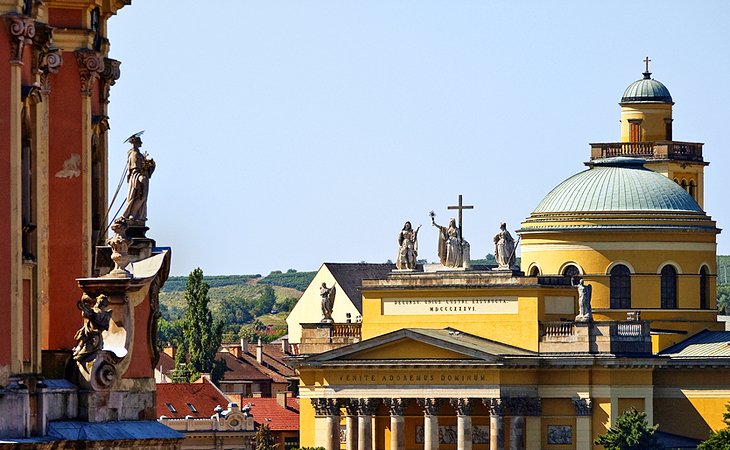
The town of Eger, located 140 kilometers east of Budapest on the southern slopes of the Bükk Mountains, is undoubtedly one of the most beautiful small towns in Europe. Boasting 17 Baroque churches, thermal baths, and a Turkish minaret, this well-preserved historic town makes a great day trip destination from Budapest.
Highlights include the lovely Eger Cathedral (Egri főszékesegyház). Also known as Cathedral Basilica of St. John the Apostle, this beautiful structure was built in 1837 in classical style, featuring twin towers and a wide stairway leading to its portico. Superb views over the Old Town can be enjoyed, too.
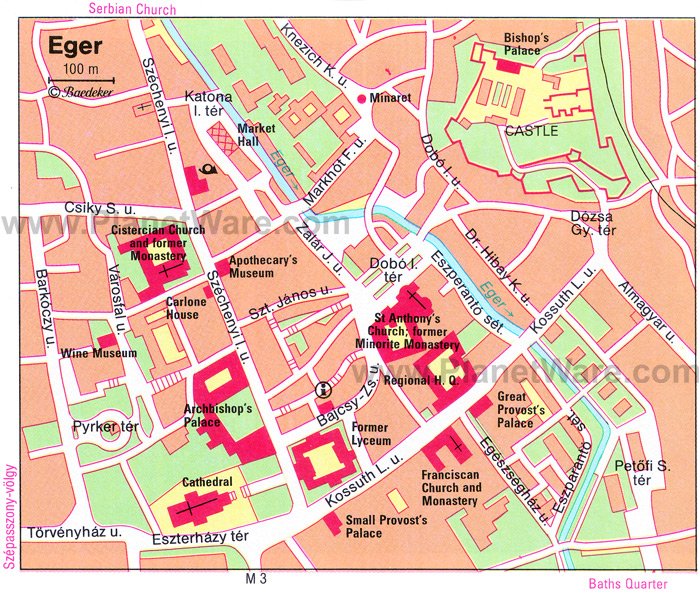
Other fun things to do in Eger include visiting the István Dobó Castle Museum, as well as the Baroque Lyceum. The latter is notable for its 53-meter-tall tower and revolving dome with more fine views.
Be sure to also explore the narrow lanes of the Old Town. It's here you'll also find the large central market place and the impressive church of St. Anthony, built in 1773.
Finally, no sightseeing visit would be complete without visiting medieval Eger Castle (Egri vár). Built in the 11th century, it was expanded numerous times over the ages, and is a delight to explore.
2. The Danube Bend and Vác
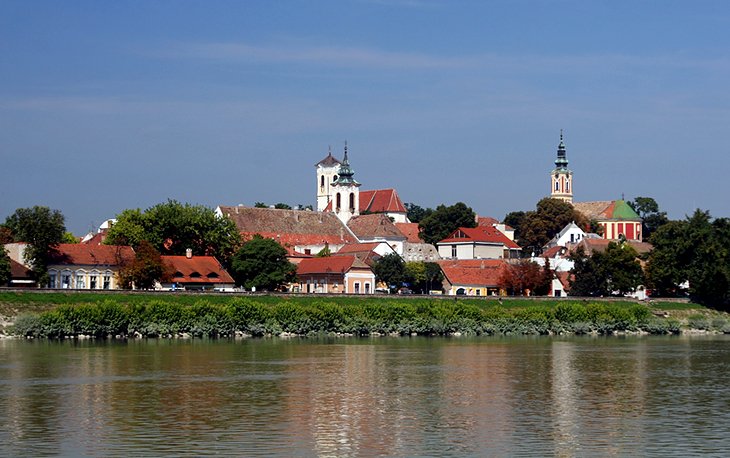
Between Esztergom and Szentendre in western Hungary, the Danube River makes a sharp turn south before flowing through Budapest. The historic town of Vác, situated in the middle of the bend on the left bank, is just 34 kilometers north of Budapest and has retained the charm of an attractive little Baroque town.
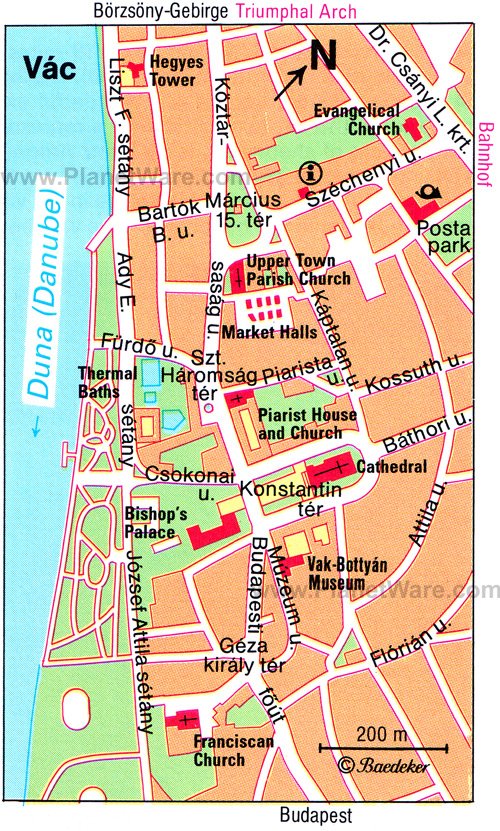
You can also admire great views of the town's silhouette, with its characteristic church towers, from a river cruise or from Danube Island, accessible from Vác by car ferry. The town's historic center is in fact dominated by its huge cathedral, the Assumption Cathedral. Also notable here is Március 15 tér (March 15th Square) to the north, lined by fine old merchant homes.
The road from Budapest crosses a twin-arched, 18th-century bridge that spans the Gombás River, and is worth a visit for its fine statues. Other landmarks easily explored on foot are the 1745 Piarist Church of St. Anna, with its narrow towers and pointed spires, and the Baroque triple-naved Franciscan church, built using stone from the medieval cathedral.
3. The Royal Palace of Gödöllo
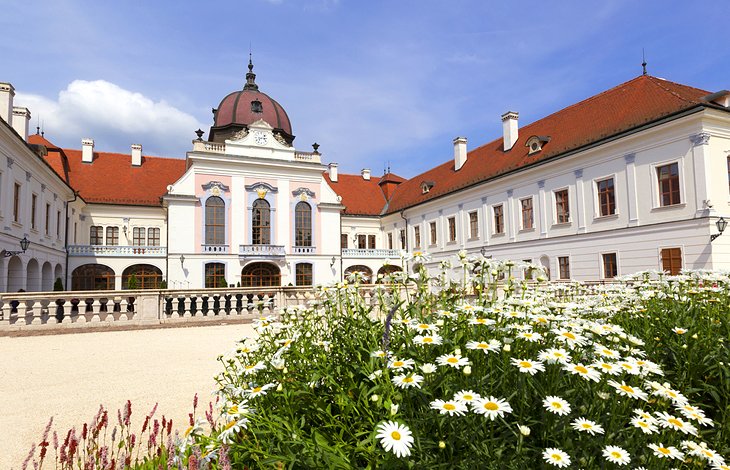
Located only 30 kilometers northeast of Budapest stands one of Europe's largest Baroque palaces: the Royal Palace of Gödöllo. The favorite summer retreat of Austro-Hungarian Emperor Franz Joseph and his wife Queen Elisabeth (known as "Sisi"), this spectacular 250-year-old structure is a masterpiece of Hungarian Baroque architecture.
The palace was in fact originally built in the 1700s as the estate of the Grassalkovich counts, and was later owned by the Hapsburg monarchs. A variety of guided tour options are available that include its extensive park, gardens, and royal stables. A variety of fun programming is also available for families traveling with children.
Address: Gödöllo, Grassalkovich-kastély 5852, 2100 Hungary
Official site: https://kiralyikastely.hu/main-page.html
4. Nagytétény Castle and the Museum of Applied Arts
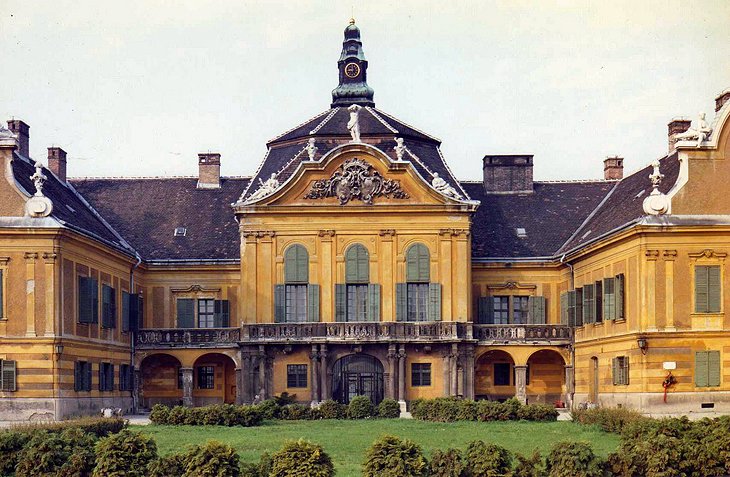
Nagytétény, the most southerly district of Budapest and just a few minutes away via car or public transit, is set on the Buda side of the Danube in a largely agricultural region once favored by the Romans. Here, you'll find the lovely old Baroque Nagytétény Castle, built in the 18th century on the remains of a 15th-century palace.
After extensive damage, it was rebuilt after WWII and now houses the Furniture Museum of Budapest's Museum of Applied Arts. Of particular interest are its many fine examples of German and Hungarian furniture from the 15th to 19th centuries, along with a collection of stoves, artwork, china, and Roman artifacts.
Address: Budapest, Kastélypark u. 11, 1225 Hungary
Official site: www.imm.hu/en/contents/239,Nagytétényi+Kastély
5. The Hungarian Open Air Museum
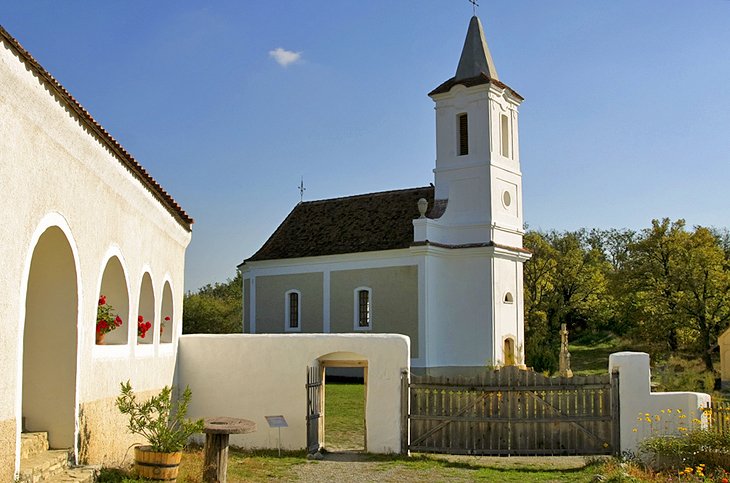
The Hungarian Open Air Museum (Szentendrei Skanzen Village Museum) is located just 23 kilometers from Budapest and faithfully recreates the rural architecture and lifestyle of 10 different 18th-century Hungarian settlements. Buildings typical of the region are scattered throughout the gently rolling landscape and linked by pathways.
In addition to visiting the quaint houses, you'll see various working quarters, including old mills, stables, barns, a forge, and a weaver's workshop. There's also a village church. Guided tours are available, as are fun programs and things to do for kids, including the chance to ride on the historic Skanzen train.
Address: Szentendre, Sztaravodai út 75, 2000, Hungary
Official site: http://skanzen.hu/en
6. Aggtelek National Park and the Baradla Cave
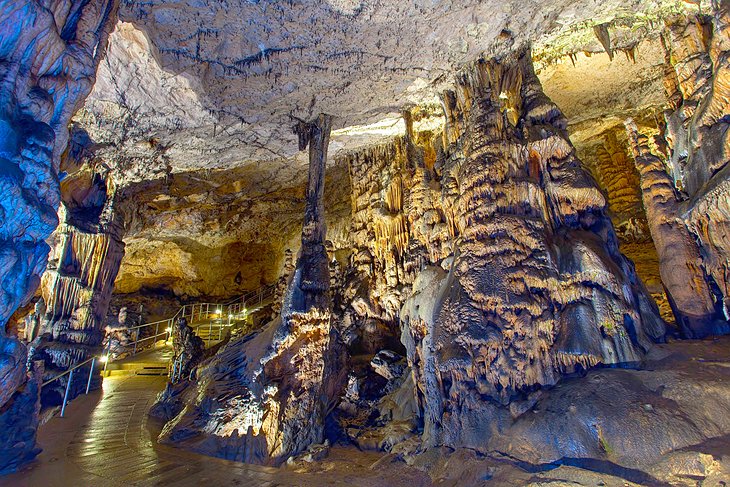
Covering a vast area of nearly 200 square kilometers, much of it protected as a UNESCO World Heritage Site, Aggtelek National Park (Aggteleki Nemzeti Park) sits astride the Slovak-Hungarian border. A travel time of just 2.5 hours by car from Budapest makes it one of the country's most popular (and easy) day trips.
In addition to its unique flora and fauna, the park is famous for an excellent network of marked paths attracting walkers from across Europe. The chief attraction here, however, is the Baradla Cave.
Over 25 kilometers long and extending into Slovakia, it's one of the largest and most impressive stalactite caves anywhere on the continent. The main tunnel stretches seven kilometers, with several wide passages formed over thousands of years as rain and melting snow penetrated cracks in the limestone.
The water dripping through the chalk has carved bizarre shapes, with stalactites hanging from the roof like giant icicles, and stalagmites in all colors of the rainbow rising up from the floor. A variety of English language guided cave tours are available, some of which can be organized to include travel from Budapest.
Address: Aggtelek National Park Directorate, H-3758 Jósvafo, Tengerszem oldal. 1, Hungary
Official site: https://anp.hu/en/
7. Pécs and its Picturesque Precincts
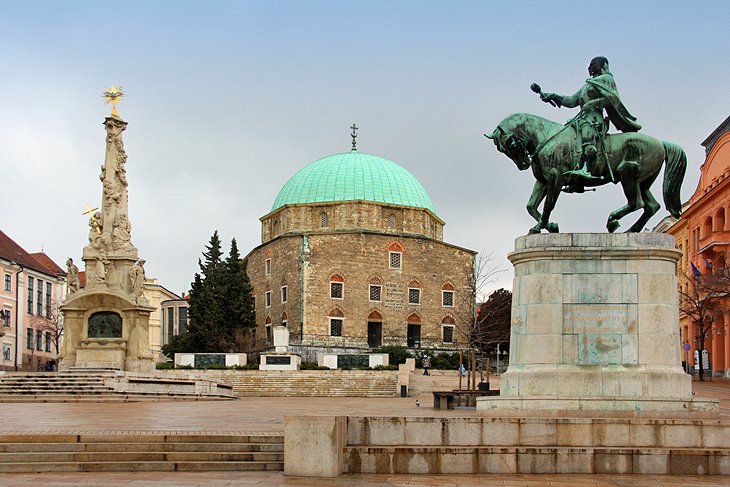
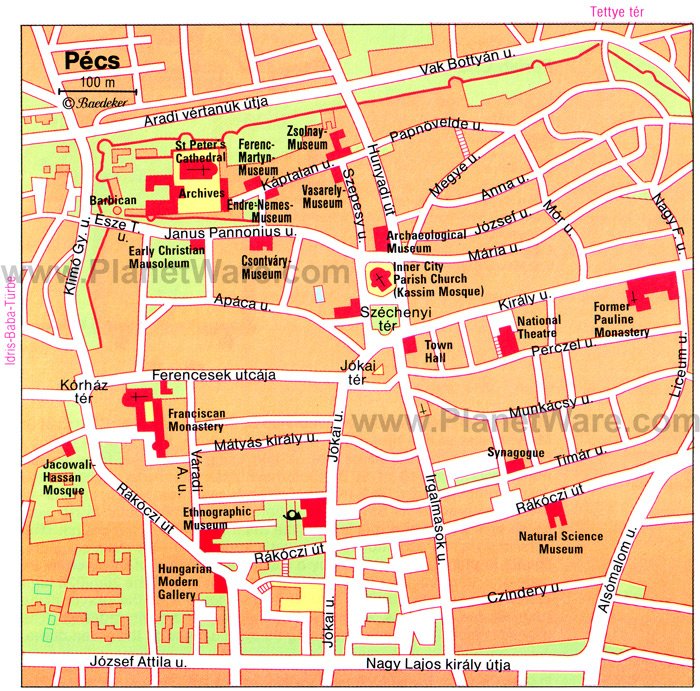
Pécs, a small town just a two-hour drive south of Budapest, is one of the most popular day trips for tourists due to its mild climate and location on the slopes of the Mecsek Mountains. Its many first-rate historical and cultural attractions range from Early Christian burial chambers to Turkish mosques, along with numerous well-preserved medieval buildings and contemporary art galleries.
The most popular points of interest in the fortified Old Town are the Cathedral Precincts surrounding the lovely Pécs Cathedral (Sts. Peter and Paul's Cathedral Basilica). Built between the 11th and 12th centuries along with many later alterations, the church also served as a mosque during the Turkish occupation.
Below the cathedral square and in the courtyards of the old houses are graves dating from the 3rd and 4th centuries. These are considered to be the most important surviving examples of Early Christian culture in Hungary. Be sure to explore Szénchenyi tér, a lovely medieval market place in the heart of the Old Town.
8. Szentendre's Slavic Influences
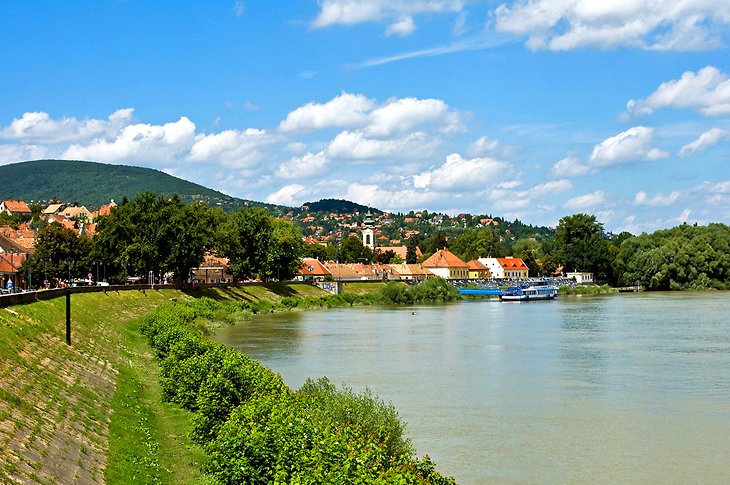
Szentendre, a small town perched on the hilly right bank of the Danube, 20 kilometers north of Budapest, is one of the most popular getaways for people from the capital.
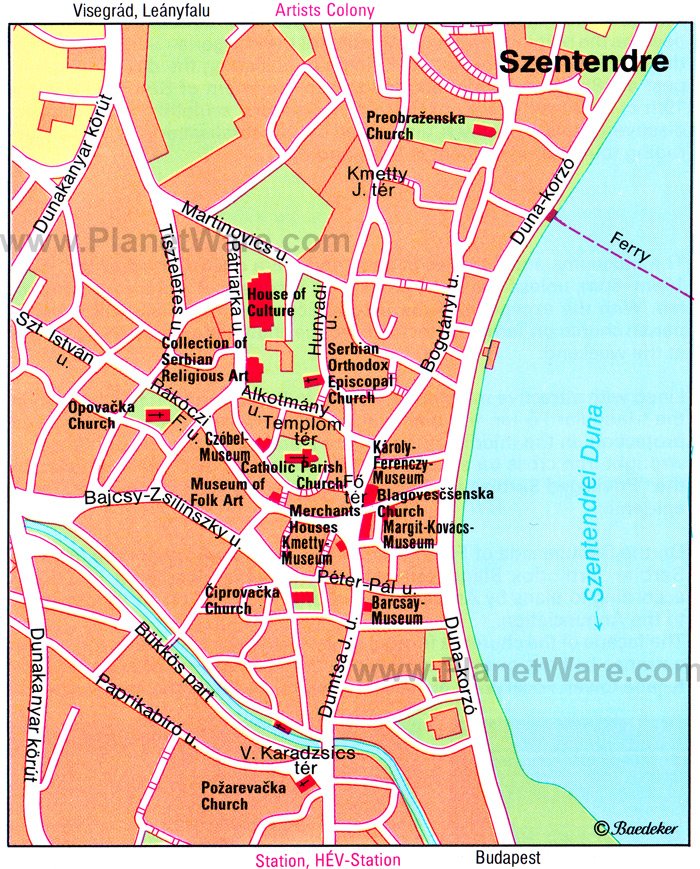
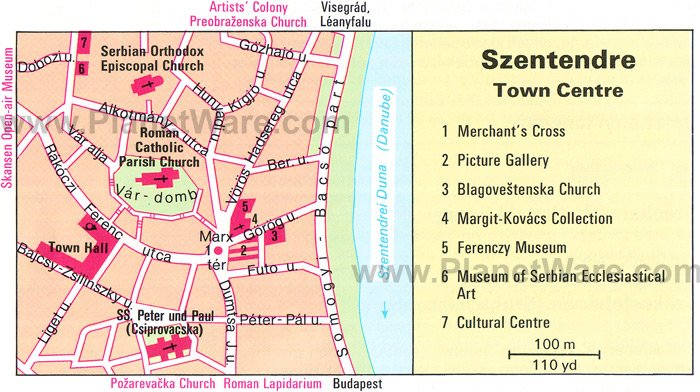
Highlights include Blagoveshchensk Church, a Serbian Orthodox place of worship built in 1752. The doorway is a focal point, with its Baroque curved balcony and a fresco above the side entrance depicting the Emperor Constantine and his mother Helena with the cross of Christ.
Visitors can also admire Fo tér, the main square. Notable features include the Merchants' Cross built following a plague, and the lovely old Church Square with architectural influences from the Catholic Croats of Dalmatia who settled around the church. Another must see is the nearby Hungarian Open Air Museum, a popular tourist attraction for those wanting to learn more about the country's rich history, culture, and traditions.
9. Gyor: Hungary's Baroque City
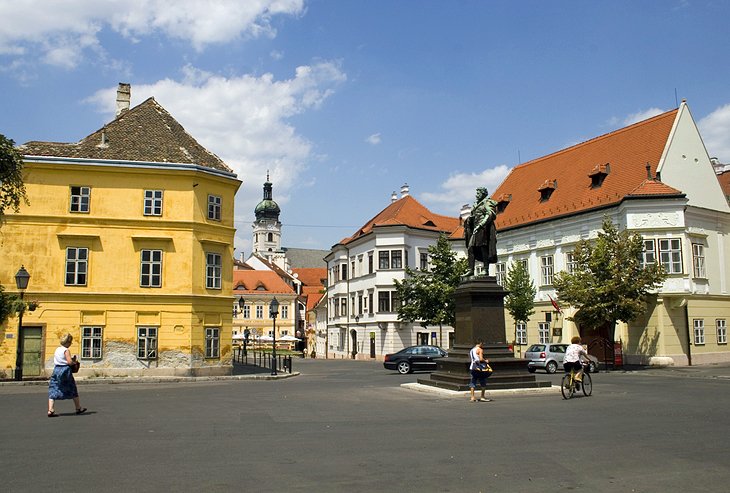
Gyor, 123 kilometers west of Budapest, sits at the confluence of the Mosoni-Duna (Danube), Rába, and Rábca rivers, in the middle of what's known as the Little Hungarian Plain. The Old Town, including Cathedral Chapter Hill and the Royal Town, is one of the most beautiful Renaissance and Baroque townscapes in Hungary and includes 170 listed buildings and monuments.
The town's most famous feature is its Vienna Gate Square (Bécsi kapu). It's a much-photographed spot, consisting of a lovely Baroque square surrounded by well-preserved 17th- and 18th-century homes. Also worth seeing is the impressive Carmelite Church.
Other fun things to do in Gyor include visiting the Bishop's Castle, with its museum and 14th-century tower and later residence of Bishop Kálmán (his coat-of-arms still adorns its front). Look also for the 11th-century Gyor Cathedral, the Cathedral Basilica of the Assumption of Our Lady, as well as the eight-meter Ark of the Covenant Monument built at the request of Emperor Charles III and depicting two angels holding the Ark of the Covenant.
Other highlights include the famous Iron Cockerel atop the bank of the Mosoni Danube, famous as the town's emblem; and Széchenyi tér, the 17th-century Hungarian Old People's Home still in use today.
10. Esterházy Palace, Fertod
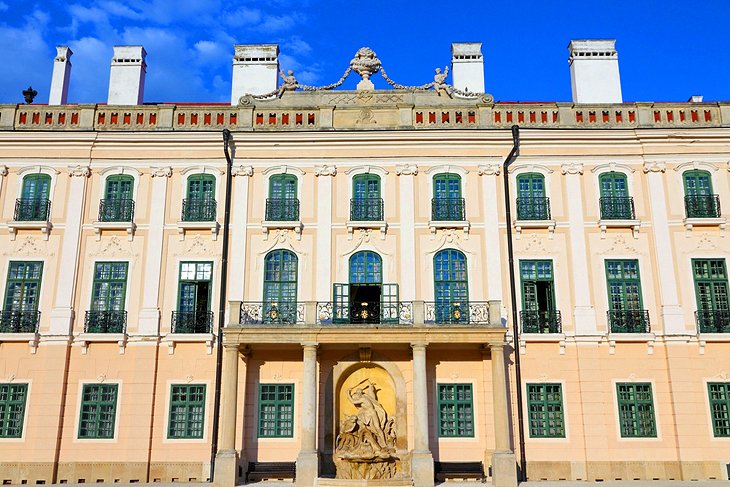
Fertod, 180 kilometers west of Budapest near the borders with Austria and Slovakia, is where you'll find Esterházy Palace (Esterházy-kastély). The largest and most beautiful mansion in Hungary, it's often called the Hungarian Versailles.
This stunning Rococo residence was built between 1760 and 1767 and is an impressive estate with a magnificent wrought-iron gate and courtyard fountains. Other notable features include its splendid two-story side wings linked to the main building, which is dominated by a central tower.
A highlight of a visit is the spectacular view from the garden balcony overlooking the estate's remaining parkland. Inside, the Chinese Salon, the Green Salon and the Maria Theresia Chamber are all decorated with fine Rococo furniture and fireplaces. One of the estate's most famous guests was composer Joseph Haydn, who spent much time here as a court musician for the Eszterházy family.
Address: Fertod-Eszterháza, Joseph Haydn utca 2, 9431, Hungary
Official site: https://esterhazy.at/en
11. Kecskemét and the Puszta Great Plains
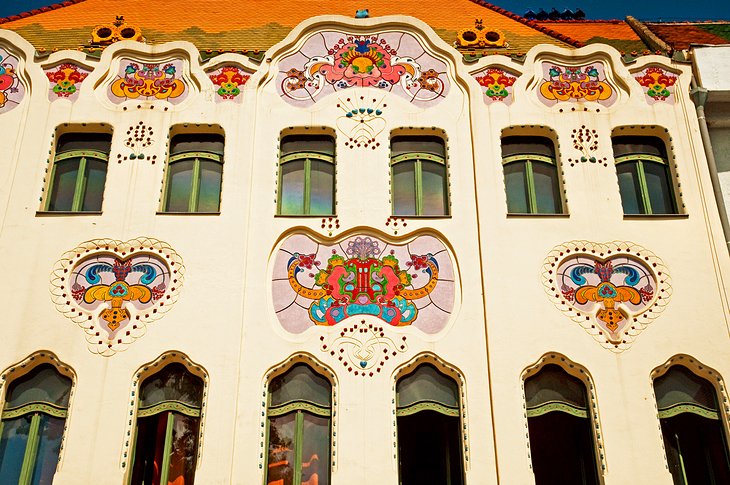
Hungary's southern Great Plains region is a scenic land of rivers and lakes, wheat fields, and grassland marked by rustic farms. At the heart of it is the small city of Kecskemét, known for its colorful Art Nouveau architecture.
After a scenic ride to Kecskemét and some sightseeing of its landmarks, continue onwards to the town of Lajosmizse. Some of the things to do here include watching Puszta horsemen perform in a show, or take a carriage ride through the Puszta, also known as the Pannonian Steppe. Both towns are easily accessible from Budapest by train.
12. Székesfehérvár's Royal Basilica
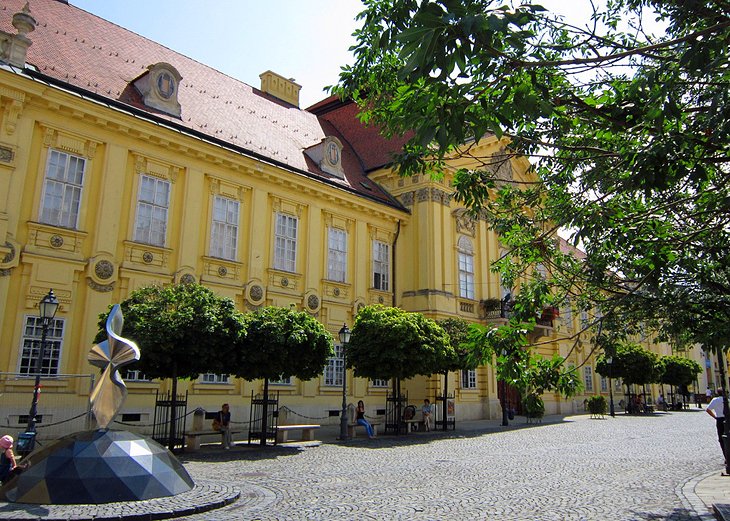
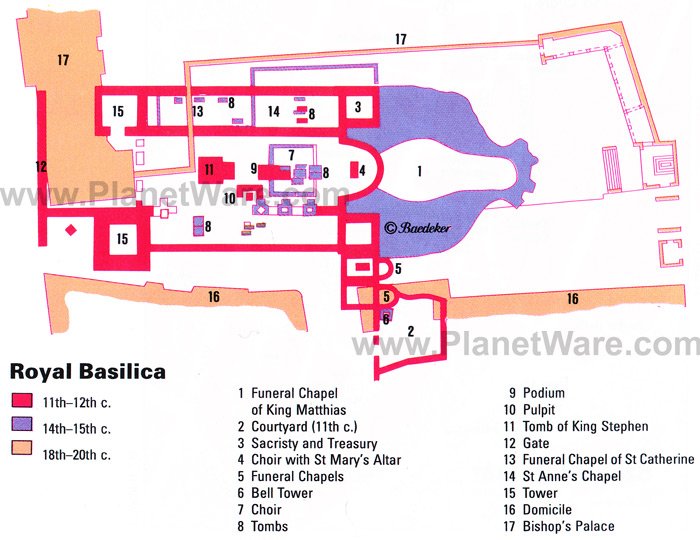
Few towns are as closely linked with the beginnings of the Hungarian monarchy as Székesfehérvár, which also possesses the former sepulchral and coronation church of the Hungarian kings. Situated between the foothills of the Bakony Forest and the Velencei Mountains and just 45 minutes southwest of Budapest, Székesfehérvár is an easy day trip that has a well-preserved inner town.
Popular points of interest include Városház tér and the Bishop's Palace, the Town Hall and Hiemer House, all built between the late 17th and 18th century. Another must-see is the Romanesque Royal Basilica, a triple-naved church with a semicircular apse, founded by King Stephen in the 11th century and rebuilt several times since.
13. The Castle of Diósgyor
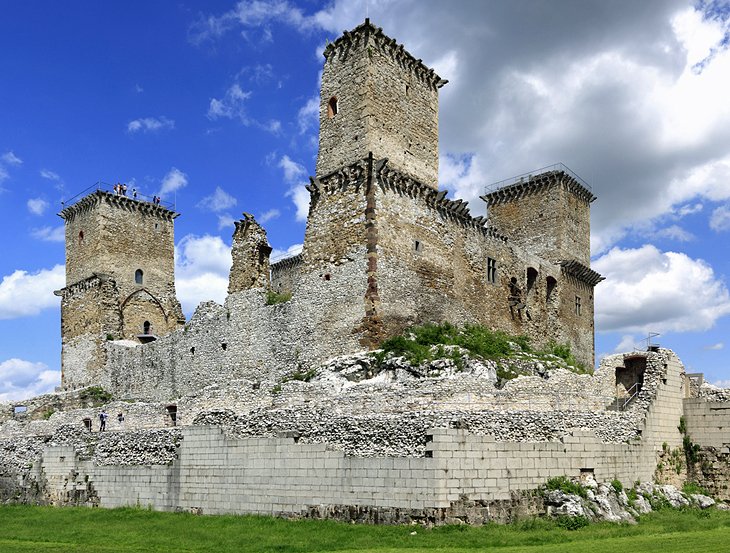
It's believed the invading Magyars erected the first fortress on the site of the present Diósgyor Castle. Located near Miskolc, 180 kilometers northeast of Budapest, this impressive fortress was built in 1340 and modeled on the castles found in southern Italy, it's flanked by four towers and protected by an outer ring of fortifications.
Although now largely ruins, the outer foundations have been uncovered, and parts of the inner fortifications reconstructed. Visitors can, however, be impressed by the size of the great Knights' Hall in the north wing and the castle chapel in the east wing.
Three of the four corner towers have been reconstructed, and in the southwest tower, the Late Gothic vaulting of the corner room has been rebuilt. Some of the stone-masonry and other castle finds are on display in the castle museum in the northeast bastion. Open-air events are held in the castle courtyard during the summer months.
Editor's note: Be sure to check the attraction's website, below, for restrictions due to a major renovation program currently underway here.
Address: 3534 Miskolc, Vár St 24, Hungary
Official site: https://diosgyorivar.hu/en
14. Historic Castle Hill - Esztergom
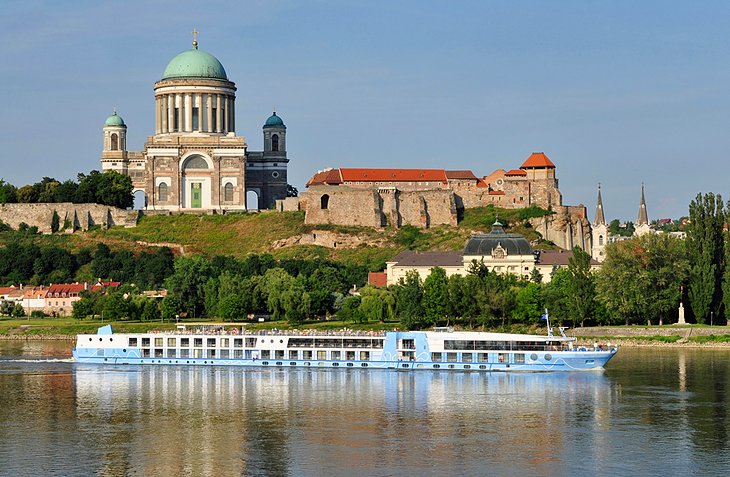
Esztergom is one of the oldest towns in Hungary and lies only 46 kilometers northwest of Budapest where the Danube breaks through the Hungarian Central Uplands. It's an area that's easily accessible from the capital either by car or public transit, and makes for a perfect day trip from the capital.
Highlights of the town's historic Castle Hill area, Várhegy, adjacent to the Danube include the ruins of the 10th-century Hungarian Royal Palace; the imposing cathedral, the Basilica of Esztergom, with its entrance marked by two tall towers and several Corinthian Columns; and the adjacent Christian Museum (Keresztény Múzeum) with its collection of works of Hungarian Italian Renaissance artists.
If visiting Esztergom by car, be sure to venture into the Pilis Mountains. Located in the loop formed by the Danube Bend, this chain of mountains, an official nature reserve, is well known for its caves and fossils. Add to the mix its mountain slopes covered mainly in forests of beech and oak with steep and picturesque chalk cliffs, and it's a popular area to explore on foot.
15. Hortobágy National Park and the Puszta
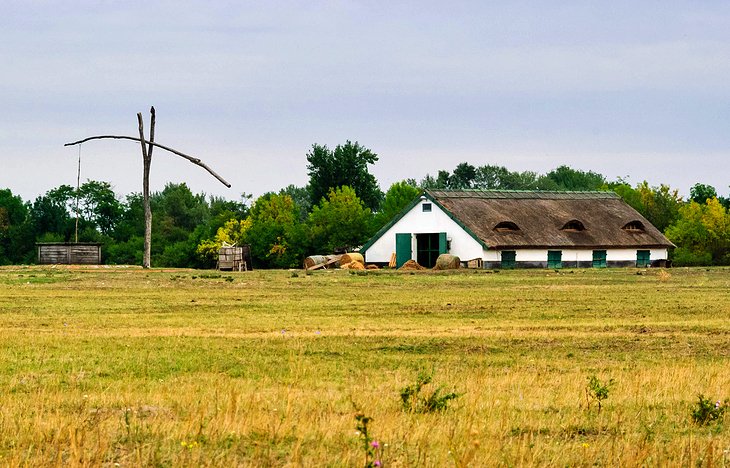
Situated between the Tisza River and the eastern Hungarian town of Debrecen stretches the Hortobágy, or Puszta, a lowland prairie of grass-covered steppes and pasture famous for its cattle, sheep, and horses.
Much of the area has been preserved in the Hortobágy National Park in order to safeguard its unique and varied fauna and flora. Covering an area of 800 square kilometers, it also preserves the traditional farming methods employed here since the 14th century. As a result, it's the perfect place for a driving tour and to explore the area's many small villages and towns.
It's also very popular among bird-watchers, who travel from afar just to see migrant birds such as various species of heron, spoonbills, white geese, reed-warblers, waders, rare black storks, falcons, and eagles. A variety of domesticated animals are also unique to the area, including the Hungarian Steppe cattle, long-horned sheep, the nonius horse, and the komondor and puli dogs so beloved by the shepherds.
Official site: www.hnp.hu/en
16. The Medieval Reformed Church of Nyírbátor
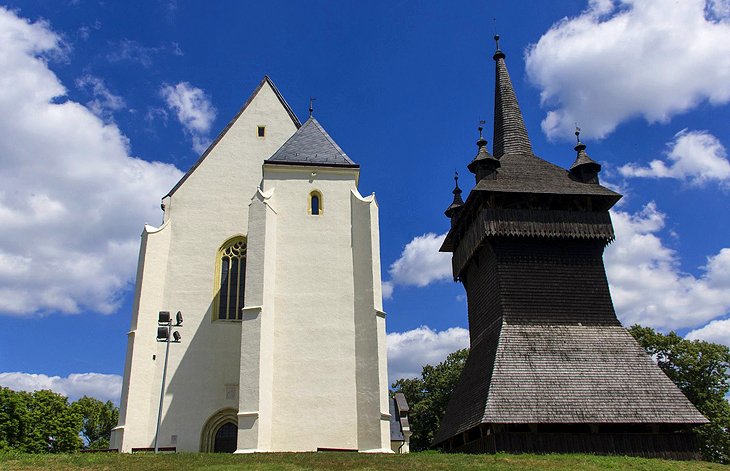
In the Middle Ages, this rural town 260 kilometers east of Budapest on the Romanian border once belonged to the Báthori family-princes from Transylvania who become great feudal lords. As a result, Nyírbátor boasts two magnificent medieval churches of which St. George's Church, now the Reformed Church, is one of the major late Gothic Hungarian edifices.
The Báthori coat-of-arms can still be seen above the west door, with a projecting tower at the side, while the main Renaissance-style door is on the south side. Inside, the eye is immediately drawn to the filigree reticular vaulting. The tomb in the choir is that of the writer István Báthori, who died in 1605, and the founder of the church is interred under a marble gravestone in the crypt.
Address: Nyírbátor, Egyház u. 1, 4300 Hungary
Official site: http://nyirbator.reformatus.hu/about-us/
17. Pannonhalma Archabbey
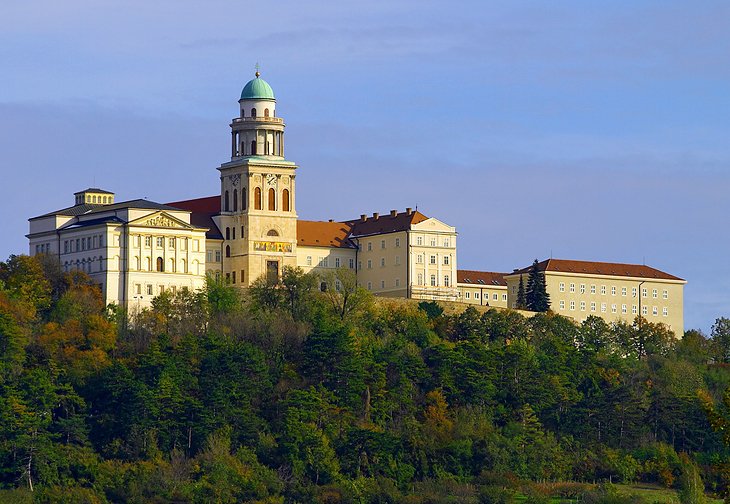
Visitors travel to Pannonhalma largely to see the famous Abbey of St. Martin, also known as the Territorial Abbey of Pannonhalma. The focal point of the Benedictine order in Hungary, many monks still live here, and since 1997, the monastery-together with the Lady Chapel, the Calvary, and the surrounding cultural region-has been on the list of World Cultural Heritage Sites.
This huge complex sits on a high point of land known as the Mount of St. Martin (Márton-hegy) and can trace its roots as far back as the 10th century. It's also a very popular destination for cultural programming, including jazz festivals and organ recitals. For those looking for a fascinating place to stay, accommodation packages are available.
Address: 9090 Pannonhalma, Vár 1, Hungary
18. The Savaria Museum in Szombathely
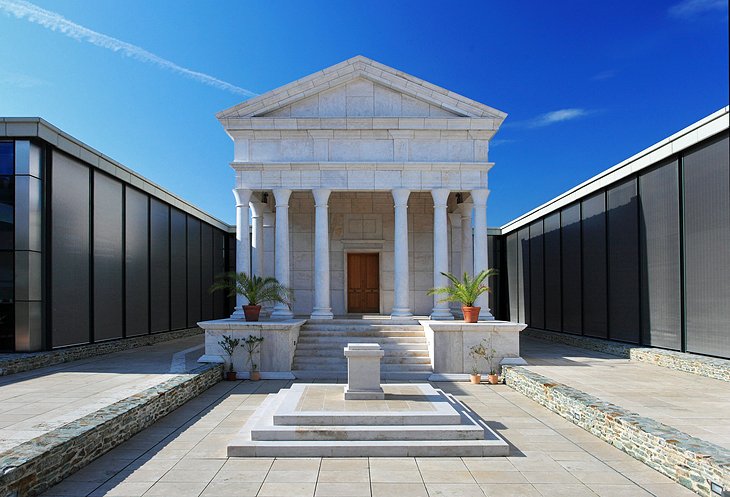
Szombathely, about 220 kilometers from Budapest on the eastern edge of the Alps, is home to the excellent Savaria Museum (Savaria Megyei Hatóköru Városi Múzeum) with its outstanding collection of Roman antiquities. The lapidarium in the basement is of particular note and contains statues and mosaics from Savaria, as well as ornaments from the church in Ják.
On the upper floor are extensive exhibitions of archaeology and the natural history of the Szombathely region. Afterwards, be sure to explore the area around the Iseum, a reconstruction of the ancient Roman temple that once existed in the city. The museum features a variety of fun programs for kids, along with a gift shop and restaurant.
Address: Kisfaludy Sándor utca 9, Szombathely, Vas 9700, Hungary
19. Koszeg and the Church of St. James
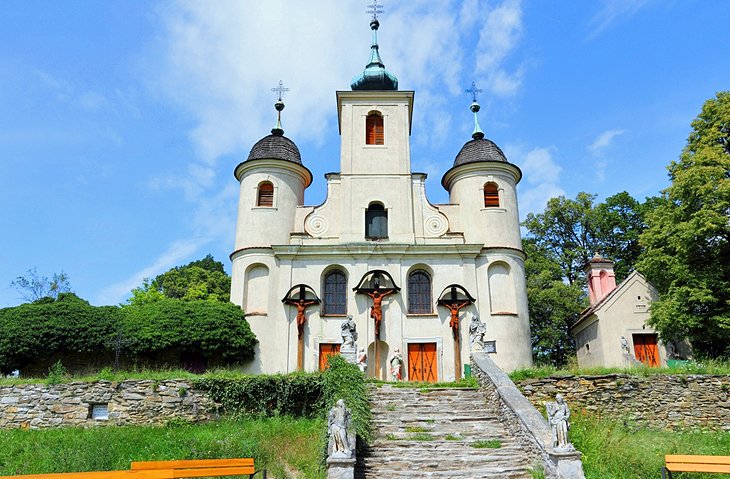
The most important historical building in Koszeg, 220 kilometers west of Budapest, is the Church of St. James. It was built in Late Gothic style in 1407 using the remains of a Romanesque Minorite church.
The front of the church and its furnishings were redesigned in Baroque fashion in 1758, while the tower is 15th century. The interior of the triple-aisled edifice is Gothic, and the keystone of the groin vault in front of the choir bears the arms of the founder, Miklós Garai.
Along the south side of the choir are niche-seats with pointed arches, and a Gothic Madonna and Infant Jesus above the tabernacle date from around 1500. Also Gothic are the wall paintings on the end wall of the south side-aisle depicting the Magi, an outsize St. Christopher and a protective Madonna.
The heart of the Old Town, the well-proportioned Jurisics Square containing the Town Hall, two churches and medieval town houses with characteristic enclosed gables, is also worth a visit.
Address: Koszeg, Jurisics tér 1, 9730 Hungary
20. Nádasdy Castle and Museum in Sárvár
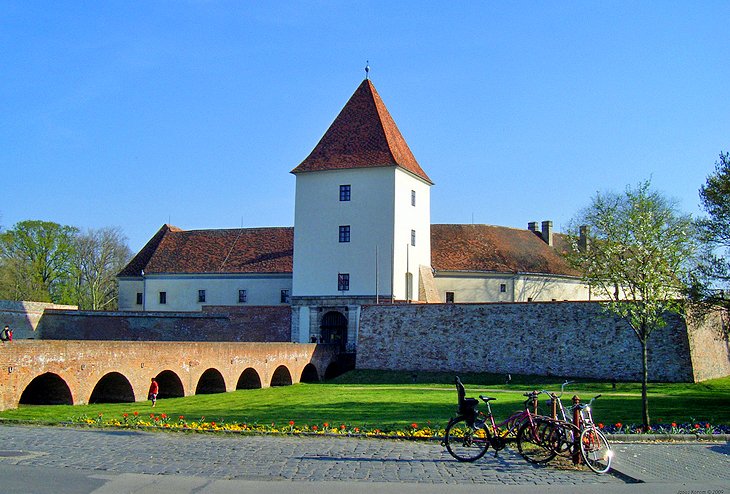
Built on the site of a 12th-century fortress, Nádasdy Castle was named after the wealthy family that owned it for centuries. It was designed in a pentagonal Renaissance style.
Located in Sárvár, about 200 kilometers west of Budapest, its Renaissance tower has been preserved in its original style of 1598. Inside is an impressive palatial room with stucco-framed frescoes decorating its walls.
The ceiling paintings portray the Nádasdys as commanders in the Turkish wars, and on the walls are scenes from the Old Testament. The allegorical paintings in the tower room offer a continuation of the frescos from the palatial room. Also of interest is the Ferenc Nádasdy Museum devoted to the history of the family, regional folk art, and the town's history.
Address: Sárvár, Várkerület u. 1, 9600 Hungary
21. Castle Quarter, Veszprém
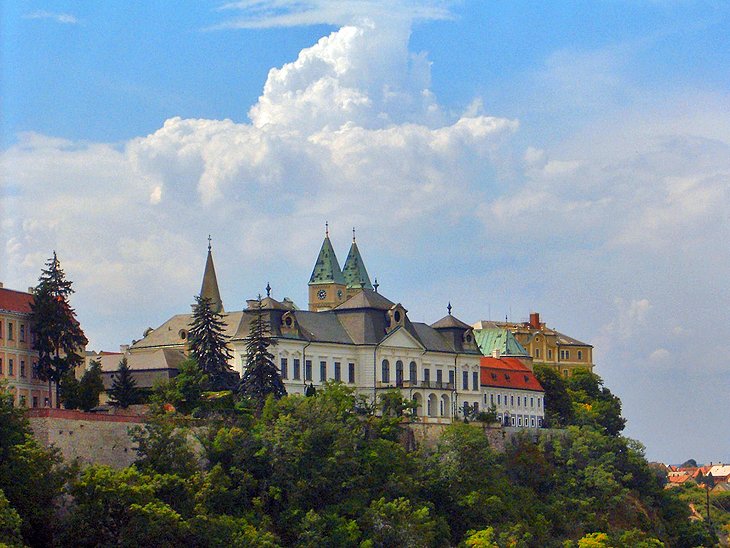
The walled castle quarter of Veszprém, 120 kilometers west of Budapest, is best known as Várnegyed by locals. This historic area includes a number of historic attractions worth visiting. One highlight is the Neo-Romanesque Heroes' Gate, erected in 1936 on the site of the former medieval gate, and home to a small museum chronicling the history of Várnegyed.
Another highlight is Gisela Chapel. Built in 1230, it served as a private chapel to the bishop as well as the queens who resided here, and its small interior contains fine cross-ribbed vaulting with original paintings and notable keystones. On the north wall, original frescos were exposed during its restoration depicting six apostles and ghostly floating figures suggesting Byzantine influence.
St. Michael's Cathedral is also worth seeing. Built on the foundations of a bishop's church founded by King Stephen and first documented in 1001.
22. St. George's Church in Ják
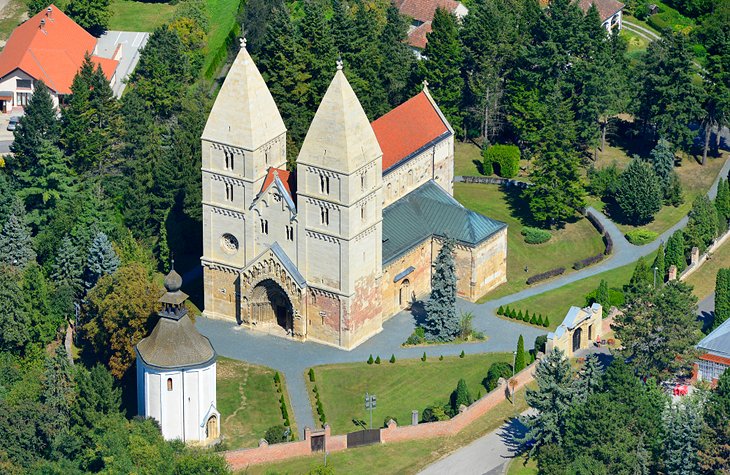
The village of Ják, 230 kilometers west of Budapest, is a treat for those interested in art and church architecture. One of Hungary's outstanding Romanesque churches, the impressive St. George's Church has a history dating back to the early 1200s, and although extensively restored in the late 19th century, elements of the past can still be seen.
Opposite the west front of the church, on a quartered ground plan, stands the small, two-story St. James' Chapel built in 1260. The rounded decorations on the double-windows of the upper floor complement the motifs on the windows of the abbey church, and the relief on the tympanum above the south door depicts the Lamb of God between two dragons. The interior furnishings of the chapel are Rococo, and the mid-18th-century altar is also of note.