12 Top-Rated Day Trips from Beijing
While there are more than enough wonderful sightseeing opportunities in Beijing to keep even the most active traveler busy, it's well worth embarking on a day trip or two to explore some of the top attractions and popular things to do outside the city. In addition to easily accessible transit options (most routes provide English language instructions), numerous tour operators offer a tremendous variety of excursions from downtown Beijing.
Among the most popular day trips are the Beijing portion of the Great Wall of China at Badaling Pass, and the beautiful grounds and temples of the aptly named Fragrant Hills Park. Another potential Beijing day trip includes the ancient Ming Dynasty tombs and the site where the famous prehistoric Peking Man was discovered.
Make the most of your China travel itinerary with our list of the top-rated day trips from Beijing.
- 1. Badaling Pass and the Great Wall of China at Mutianyu
- 2. The Summer Palace
- 3. Fragrant Hills Park
- 4. The Ming Dynasty Tombs
- 5. The Zhoukoudian Peking Man Museum
- 6. The Marco Polo Bridge
- 7. The Eastern Qing Tombs
- 8. The Terracotta Warriors, Xi'an
- 9. Shilinxia Glass Viewing Platform
- 10. The Tanzhe Temple
- 11. Gouya Natural Scenic Area
- 12. The Western Qing Tombs
- Map of Day Trips from Beijing
1. Badaling Pass and the Great Wall of China at Mutianyu
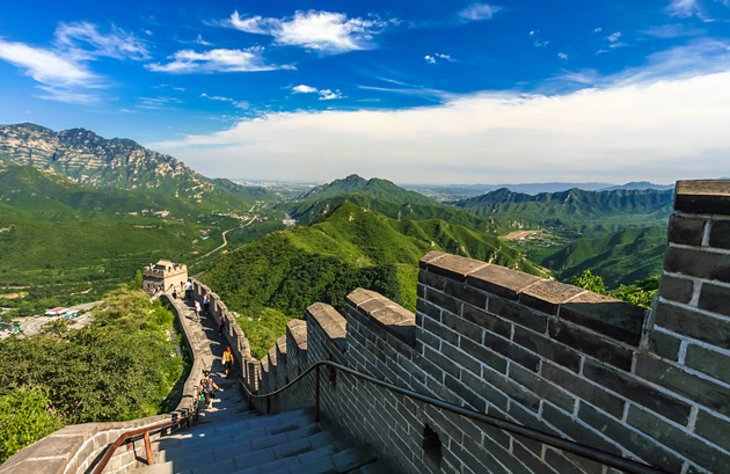
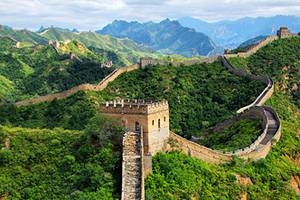
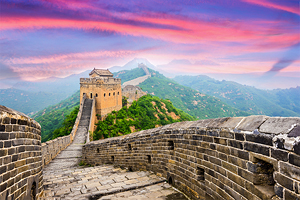
By far the most visited section of the Great Wall of China (Wànlǐ Chángchéng) is located near Badaling Pass (Bādálǐng Chángchéng), about 80 kilometers northwest of Beijing. Built during the early 1500s and fully restored in 1957, this section of the wall stands between seven and eight meters high and up to six meters wide, deep enough for 10 men or five horses to stand side by side.
Features of note on this brick-clad section are the continuous parapets and a number of large battlements towering over the exposed land below. It's an impressive sight that's well worth the hilly climb (a cable-car lift is available to the wall itself). Another section approachable from Beijing lies 130 kilometers away in the town of Gubeikou, built on Mounts Panlong and Wohu and offering magnificent views over the surrounding countryside.
An easy way to see one of the best-preserved sections of this incredible feat of engineering is on a Great Wall of China at Badaling and Ming Tombs Day Tour. Accompanied by an expert guide, this full-day tour gives you the opportunity to scale the wall's north or south face, explore excavated sites at the Ming Tombs, and shop at the Longdi Jade Factory.
2. The Summer Palace
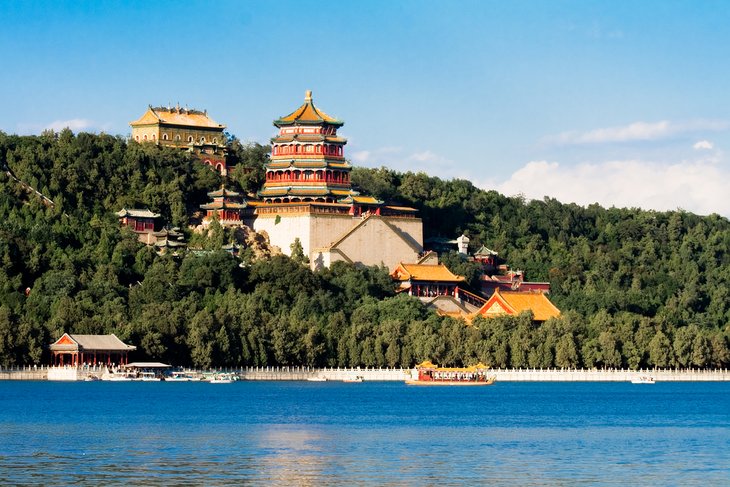
Covering an area of 716 acres, the magnificent Summer Palace (Yíhé Yuán) is located about 15 kilometers outside Beijing. It was laid out in 1153, with its lake added in the 14th century after the site became the Imperial Gardens.
Highlights of this beautiful complex include the Hall of Well-being and Longevity (Renshou Dian) on the east bank of the lake, with its throne and audience chambers; the Great Theatre, built in 1891 with a three-story stage house; and the Hall of Happiness and Longevity (Leshou Tang Hall) on the north bank of the lake, with its connecting courtyard filled with tropical plants and curious rare stones.
Also worth seeing is the famous Marble Ship (Shifang), a subtle reminder that the empress used funds intended to modernize the Imperial Fleet to instead renovate her private residence.
A great way to enjoy this spectacular historic attraction is to combine it with another UNESCO World Heritage site on the all-inclusive Mutianyu Great Wall and Summer Palace private day tour. You'll find fewer crowds at this section of the iconic wall, and the tour includes an English-language guide, admissions, and pickup and drop-off at your hotel. (Tip: You'll be doing plenty of walking, so wear good walking shoes.
Address: 9 Xinjiangongmen Rd, Haidian District, China
3. Fragrant Hills Park
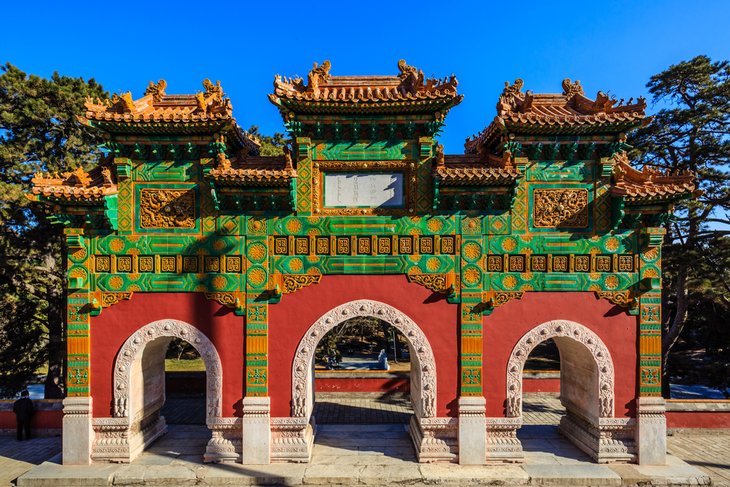
Beautiful Fragrant Hills Park (Xiāngshān Gōngyuán) rises steeply in the Western Mountains some 25 kilometers to the northwest of Beijing. The park takes its name from its peak, said to be reminiscent of traditional Chinese incense burners and often covered by clouds that look, from a distance, like smoke (the literal translation of its name is "Incense-burner Mountain").
The park is particularly popular in summer for its cool mountain air, and in autumn when this former imperial hunting preserve bursts into color as the leaves change. Alternatively, try to plan your visit for the region's spring, which is a little later than elsewhere given its elevation. At this magical time of year, you'll be rewarded with magnificent displays of fragrant flowers and trees in blossom.
Highlights include Spectacle Lake, consisting of two lakes connected by a quaint footbridge, which, from a distance, gives it the appearance of a pair of spectacles. Another highlight is the Temple of Light (Zhao Miao). One of numerous temples in the park, it was built in 1780 for the Panchen Lama in Tibetan style and notable for its archway bearing inscriptions in Manchurian and Tibetan.
Also worth visiting is the small, tile-covered Liuli Ta Pagoda, each of its seven stories housing numerous little bronze bells that chime pleasantly when the wind blows. For those with the energy, a path known locally as Gujianchou - literally translated as "Even the Devil is Afraid" - leads to the peak and is worth the climb for its great views over the park and its surroundings.
Address: 40 Maimai Street, Maimai, Haidian District, Beijing
4. The Ming Dynasty Tombs
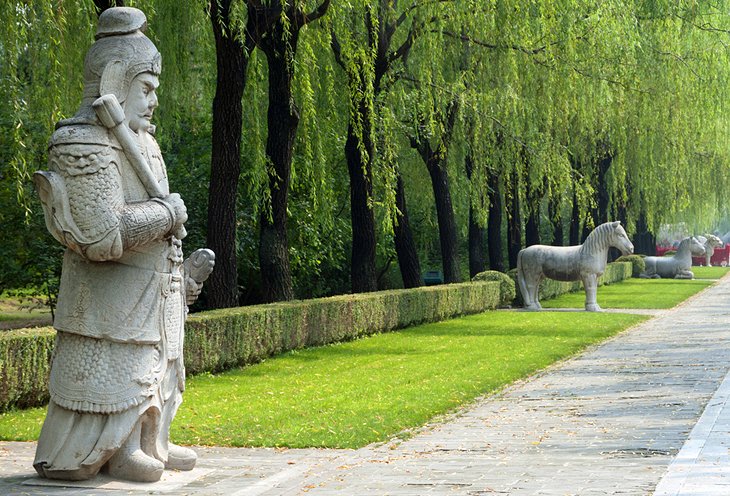
Just 50 kilometers north of Beijing are the splendid Ming Dynasty Tombs (Míng Shísān Líng), also known as the Thirteen Tombs of the Ming Dynasty. This huge site in a picturesque valley of the Tianshoushan Hills measures some 40 square kilometers and is the monumental graveyard of the Ming Dynasty. It contains the tombs of 13 of the dynasty's 16 emperors, together with their empresses and concubines.
Specially chosen for its sheltered location - not just from wind, but against evil spirits from the north - the site was in use between 1409 and 1644 and is notable for the sacrificial halls and pavilions adjacent to each burial mound, some now open to the public. Also of note is the splendid Dingling tomb erected for Emperor Wanli and his two wives in 1590 which includes an underground palace made entirely of white marble.
A great day trip option is to combine a visit to the Ming Tombs with a tour of the Badaling Pass and the Great Wall of China. The Ming Tombs portion of this guided tour includes a visit to the magnificent Chang Ling Tomb, perhaps the most impressive of the burial grounds, along with its impressive excavated courtyards. Other highlights include the Path of Souls (Shen Dao) reached through the marble Gate of Honor (Shi Paifang) erected in 1540, and leading to the Avenue of Stone Statues, built in 1435 and lined with 12 pairs of animals and six pairs of humans.
Address: 212 Provincial Road, Changping District, China
5. The Zhoukoudian Peking Man Museum
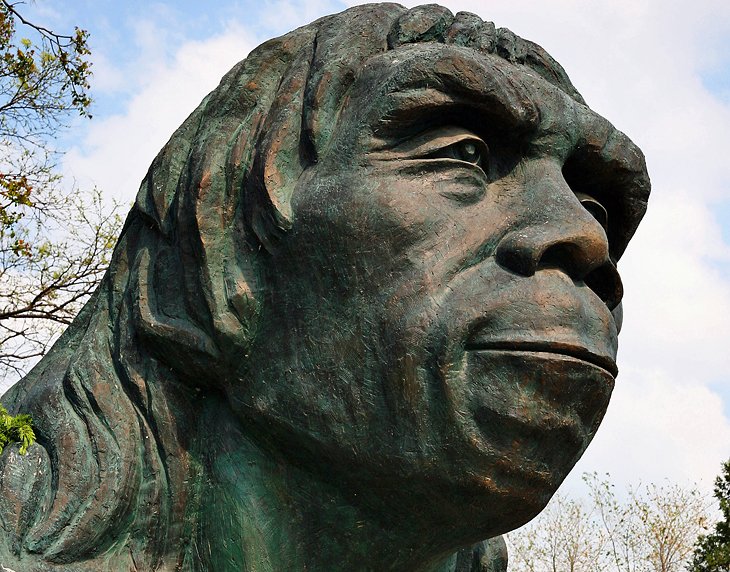
A World Heritage site and just 43 kilometers southwest of Beijing, the prehistoric village near Zhoukoudian has attracted interest from archaeologists for decades thanks to its extensive finds proving our ancient ancestors settled here around 500,000 years ago. Long before this connection was made, local laborers found fossils in chalk quarries, which they believed belonged to long-extinct dragons - hence the mountain's name of Dragon Bone Mountain (Longgushan).
These finds, along with the first complete preserved skull of Peking Man (Homo erectus pekinensis), are now housed in the fascinating Zhoukoudian Peking Man Museum. Other artifacts on display include ancient human thigh bones, collar bones, shin bones, skulls, and teeth, along with ashes, stones, and bones showing clear signs of burning, suggesting that Peking man knew how to make fire.
It's a fascinating site to visit and includes excellent displays of these rare finds, along with fossils from other parts of the country demonstrating the evolution of man and the life of Peking Man. A gift and souvenir shop is located on-site.
Location: Fangshan District, Beijing
6. The Marco Polo Bridge
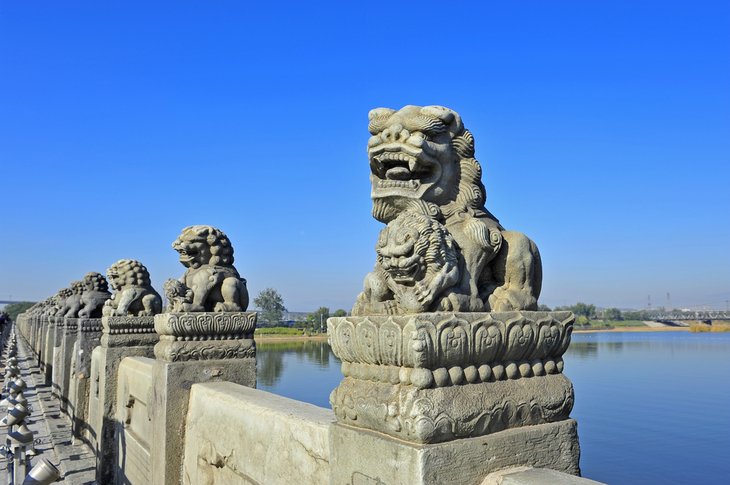
The famous Marco Polo Bridge was erected between 1189 and 1192 by Emperor Shizong and got its name after the famous explorer who crossed it in 1276. The explorer later referred to the bridge as Pulisangin in his work, Millions, a rough transliteration of the name Sanggan, the upper reaches of the river Yongding over which this bridge runs (Puli is possibly taken from the Persian word "pul" or bridge).
Despite devastating floods and war - it was here on July 7th, 1937, that Japanese artillery attacked Chinese troops, starting the Sino-Japanese War - the bridge has survived largely intact, a testament to its design and construction. Some 235 meters long and eight meters wide, the bridge is supported by 11 arches and is notable for its 280 side columns decorated with lion sculptures in the balustrades. Also of note, at its eastern end, is a massive stele with an inscription by Emperor Kangxi that reads: "Morning moonlight over the Lugou bridge."
Although just eight kilometers southwest of Beijing and accessible by public transport, the bridge can be visited by private tours. These will save you time and enhance the experience, especially if combined with another top attraction such as the Peking Man Museum.
Location: Fengtai District, China
7. The Eastern Qing Tombs
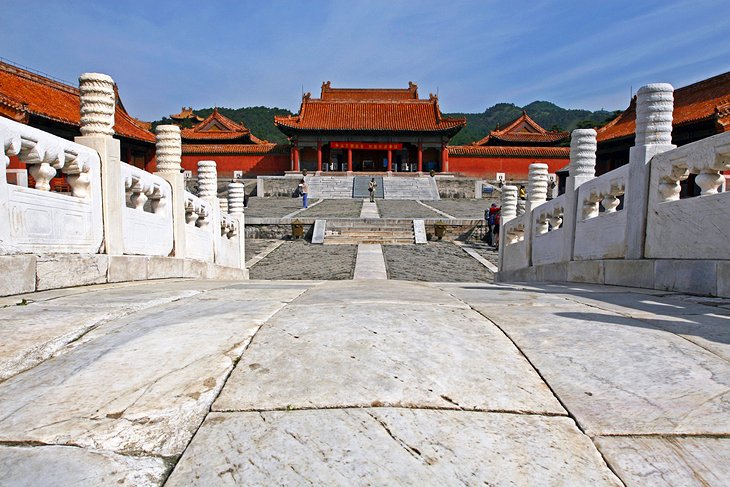
Zunhua, a small city 100 kilometers east of Beijing, is part of an area that forms the burial place of the leaders of the Qing Dynasty from 1644 to 1911. In its 14 tombs - regarded by many as even better than the nearer Ming Dynasty Tombs - are the remains of five Qing emperors, 15 empresses, 136 concubines, and five princesses (the last burials took place in 1908).
Construction of the first imperial tomb began in 1663 and took several years to complete. Like those that came after, it was built underground, like the ones in the Ming Necropolis, with a number of memorial buildings standing in front of each. As in the Ming Necropolis, a spirit alley with stone figures forms the access for all tombs, each consisting of a gate, a sacrificial hall, and a burial mound with a stele pavilion and underground burial chamber.
Other highlights include the architecturally splendid Cixi tomb, worth seeing for its high relief on an enormous stone tablet with its portrayal of a phoenix and a dragon. A variety of tour options are available.
Location: Malanyuzhen, Zunhua, Tangshan, Hebei
8. The Terracotta Warriors, Xi'an
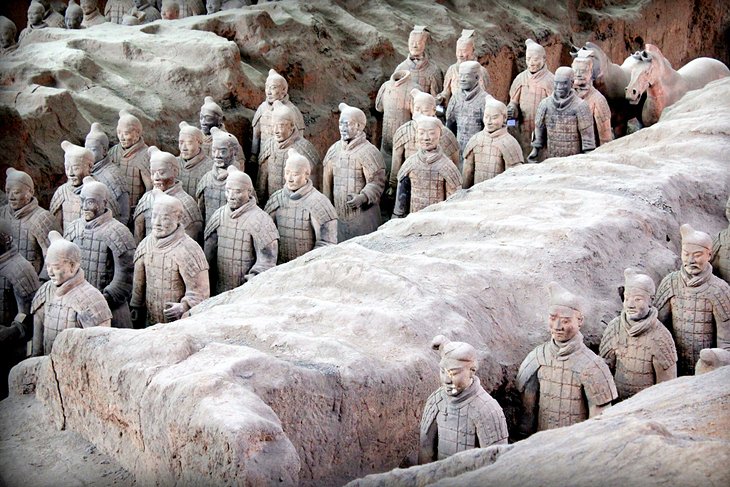
A must-do day trip - albeit one requiring a 90-minute internal flight from Beijing - is a visit to the spectacular Terracotta Army in Xi'an. One of the country's most iconic historic attractions, this spectacular collection - officially known as Emperor Qinshihuang's Mausoleum Site Museum - dates back to 210 BC and consists of more than 8,000 life-size figures of men, horses, and even chariots. The visitor center does a great job of showcasing the site's history and its cultural significance.
This vast sculpture army was created to protect China's first emperor, Qin Shi Huang, in the afterlife. It can be enjoyed as part of an exploration of what is now a sprawling museum site that includes informative displays and exhibits detailing the area's unique history.
A great option for tourists based in Beijing is the Xi'an in one day by air with terracotta warriors tour, which includes your flight from Beijing, a private guided tour of the terracotta warriors site and museum, as well as highlights of Xi'an, including its old city walls and the Muslim Quarter (admissions are also included).
Address: Lintong District, Xi'an, Shaanxi, China
9. Shilinxia Glass Viewing Platform
A popular day trip from Beijing, the spectacular Shilinxia Glass Platform is one of the country's newest (it opened in 2016) and most impressive attractions. Located just 70 kilometers from downtown Beijing in the heart of the beautiful Shilinxia Scenic Area - a beautiful 12 kilometer stretch of gorge - this massive glass sightseeing platform looks not unlike something out of a Star Trek movie.
You'll be rewarded with incredible views over a deep gorge some 400 meters beneath your feet (quite literally). Highlights of a visit include taking a trip to the bottom of the gorge by cable car, where you can follow a variety of well-groomed nature trails.
10. The Tanzhe Temple
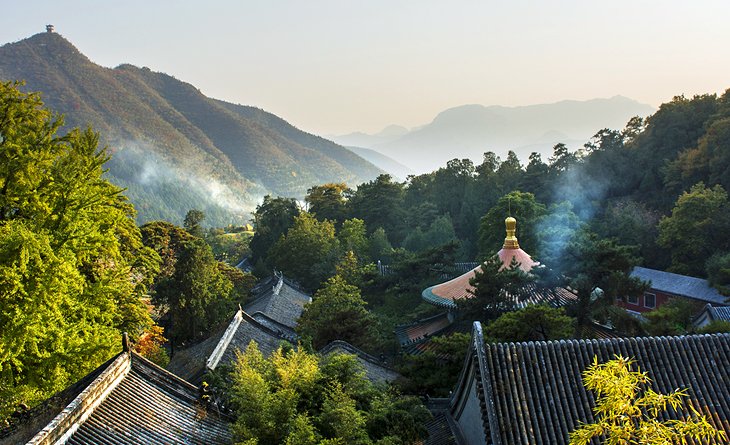
The Tanzhe Temple (Tán Zhè Sì) - the Temple of the Pool and Zhe Tree - is just 34 kilometers west of Beijing and makes for a pleasant day trip due to its splendid old architecture and beautiful mountain setting. Dating from the 3rd century when its foundations were laid, the temple's name derives from the words "tan," taken from the word "Longtan" (dragon pond), and "zhe" from "Zheshu" after the trees that grow on the mountain and were once used for silkworm breeding.
Entering through the Gate of Honor (Pailou), visitors take a path lined with pines to the Mountain Gate (Shanmen) and the Hall of the Kings of Heaven (Tianwang Dian), the sumptuous Hall of the Great Hero (Daxiong Baodian) and the Vairocana Pavilion (Pilu Ge) with its superb views.
Other highlights include the Imperial Apartments and the living quarters of the head of the monastery, as well as a well-known spring and the Avalokiteshvar Hall with its stone tablet on which Kublai Khan's daughter apparently knelt every day in penance for her father's sins.
11. Gouya Natural Scenic Area
Some of the most stunning scenery within an easy day trip from Beijing is in the Gouya Natural Scenic Area just 40 kilometers from the city center. You'll be rewarded for your efforts by the spectacular sight of the Gouya Rocks, three steeply rising peaks, the highest of which, Ziji Peak, rises more than 1,650 meters.
It's a popular area for hikes, as well as pleasant strolls and includes numerous valleys, steep cliffs and gorges, mountain streams, and springs, most of which are accessible by trails leading to many ancient temples dating back to the 14th century. A variety of activities are often included with tour packages depending on your preferences, with popular options including rafting and fishing.
Location: Hangping District, Beijing, China
12. The Western Qing Tombs
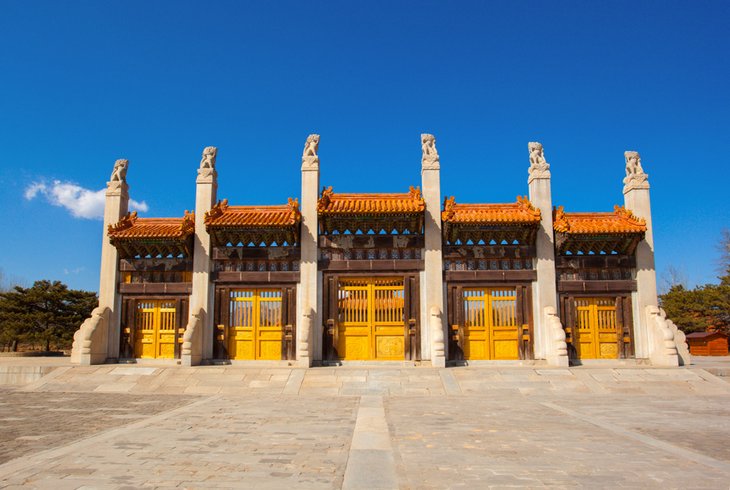
The second necropolis of the Manchu Emperors - the Western Qing Tombs - is 120 kilometers southwest of Beijing and, although somewhat smaller than the Eastern Qing Tombs, it is equally impressive. Buried in its 14 tombs are four emperors and 72 family members including wives, concubines, sons, and daughters, separated from their relations in the Eastern Qing Tombs due to a law stipulating that fathers and sons couldn't be buried in the same graveyard.
Each of the 14 mausoleums - the first was constructed in 1737, with the last interment taking place in 1913 - and the accompanying temple buildings reflect the very strict rules of the feudal hierarchy, ensuring that the tombs of the emperors and empresses (identified by their red roofs) were larger than those of the concubines and princesses (the latter have green roofs).
Location: Yi County, Hebei Province