18 Top-Rated Tourist Attractions in Chicago
Chicago, the "Windy City" as it is often called, lies along the shores of Lake Michigan. Known for its vibrant arts scene, numerous cultural attractions, excellent shopping, and interesting architecture, this city attracts visitors from the US and around the globe.
Chicago enjoys a worldwide reputation as a focal point of 20th-century architecture and art, with architects such as Louis Sullivan and Frank Lloyd Wright, and artists like Picasso, Mirõ, Dubuffet, and Chagall leaving their mark.
The city also has much to offer in the sporting sphere, too, with the Chicago Bears in American football, the Chicago White Sox and Cubs in baseball, and the Chicago Bulls in basketball.
Last, but not least, are the beautiful beaches that stretch along the waterfront, attracting throngs of sun seekers in the summer.
Deciding when to visit Chicago may depend on your interests, particularly if you are coming for sports or cultural events, but spring until fall is the best time for weather.
For a complete look at places to visit, see our list of the top attractions and things to do in Chicago.
- 1. Visit the Art Institute of Chicago
- 2. Walk through Millennium Park
- 3. Stroll around Navy Pier
- 4. Reach for the Stars at Adler Planetarium
- 5. Museum of Science and Industry
- 6. See the View from the Willis Tower SkyDeck
- 7. Watch the Water Show at Buckingham Fountain
- 8. 360 Chicago
- 9. Field Museum of Natural History
- 10. Michigan Avenue and the Magnificent Mile
- 11. Take a Tour or See a Game at Wrigley Field
- 12. Lincoln Park
- 13. Shedd Aquarium
- 14. Lincoln Park Zoo
- 15. Chicago Riverwalk and Lakefront Trail
- 16. Oriental Institute Museum
- 17. The Rookery Building
- 18. Enjoy a Show in Style at the Chicago Theater
- Where to Stay in Chicago for Sightseeing
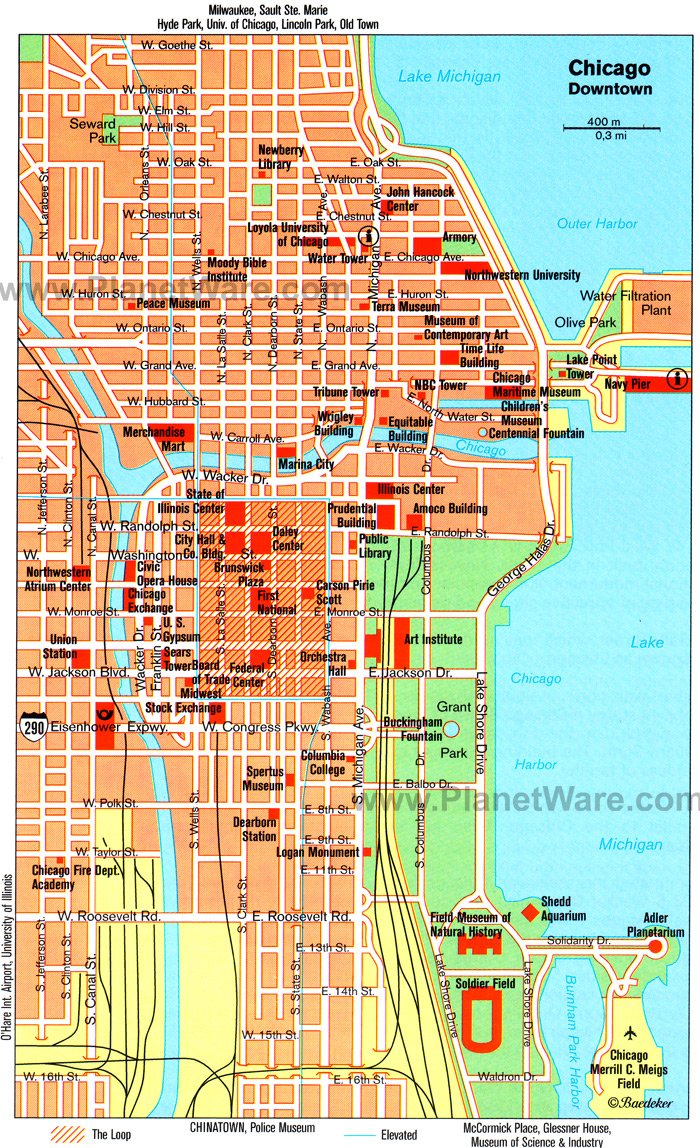
- Map of Tourist Attractions in Chicago
- Best Time of Year to Visit Chicago
1. Visit the Art Institute of Chicago

The Art Institute of Chicago is a world class museum with hundreds of thousands of artworks. The diverse collection spans thousands of years and includes pieces from a variety of media including painting, prints, photography, sculpture, decorative arts, textiles, architectural drawings and more.
The Institute is known for its collection of impressionist and post-Impressionist paintings including Georges Seurat's 1884 A Sunday Afternoon on La Grande Jatte, Renoir's 1879 Acrobats at the Cirque Fernando, and numerous paintings by Claude Monet.
The main building, designed by Shepley, Rutan, and Coolidge in beaux-arts style, was built for the 1893 World's Columbian Exposition. Several other buildings have been added on over the years and today the complex measures 400,000 square feet.
Address: 111 South Michigan Avenue, Chicago, Illinois
Official site: http://www.artic.edu/
2. Walk through Millennium Park
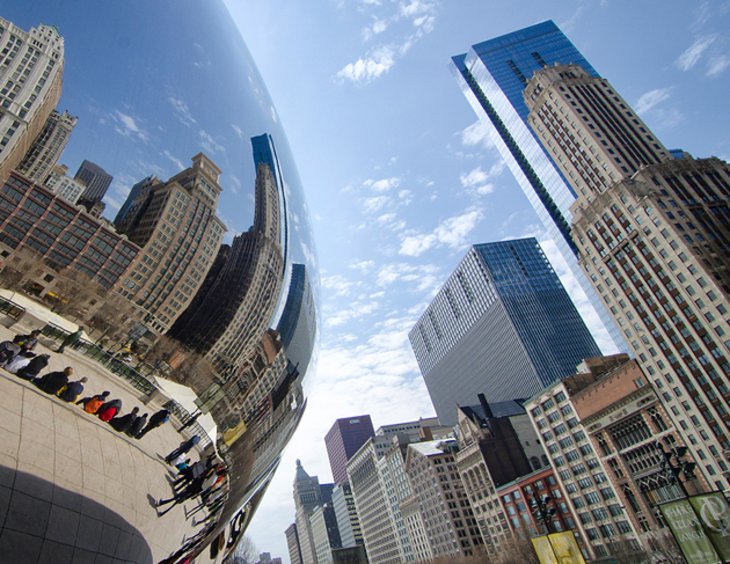
Millennium Park is part of the larger Grant Park, located in downtown Chicago bordered by Michigan Avenue to the west, Columbus Drive to the east, Randolph Street to the north, and Monroe Street to the south. Its centerpiece is a 110-ton sculpture name Cloud Gate, which has a polished, mirror-like stainless steel surface that was inspired by liquid mercury. It reflects the surroundings, including buildings, the sky, and the tourists who walk through its central arch.
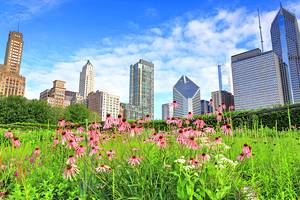
Another top attraction in Millennium Park is Crown Fountain, a fascinating modern interpretation of the ancient gargoyle that gives the appearance of water flowing from the mouths of projected images of Chicago citizens. Other popular things to do here include seeing a performance at the Jay Pritzker Pavilion, an outdoor concert venue, and visiting Lurie Garden, which is open to the public at no cost year-round.
Located close to many of the major attractions, as well as great shopping, this area of the city is a convenient place to base yourself.
Address: 201 East Randolph Street, Chicago, Illinois
Official site: http://www.cityofchicago.org/city/en/depts/dca/supp_info/millennium_park.html
3. Stroll around Navy Pier
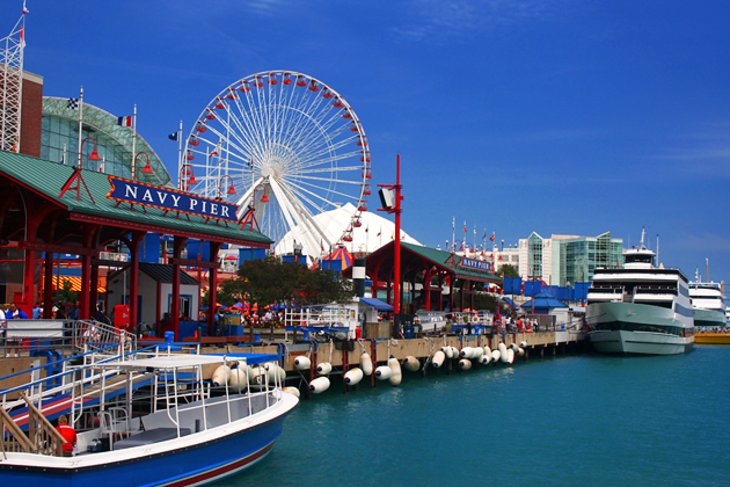
The Navy Pier originally opened in 1916 as an amusement area and shipping facility but is now one of Chicago's most popular tourist attractions. Today, the Navy Pier is made up of 50 acres of gardens, attractions, shops, restaurants, concert venues, and parks. There is a 150-foot Ferris wheel and an historic carousel in Navy Pier Park.
Visitors can also watch a film at the 3D Imax Theater, watch actors perform the classics at the Chicago Shakespeare Theater, or visit Crystal Gardens, a one-acre, six-story, indoor botanical garden. Also located here is the Chicago Children's Museum. The Pier hosts year-round festivities, including the Chicago Festival in August. Cruise ships leave from here on various sightseeing excursions.
Address: 600 East Grand Avenue, Chicago, Illinois
Official site: www.navypier.org
4. Reach for the Stars at Adler Planetarium
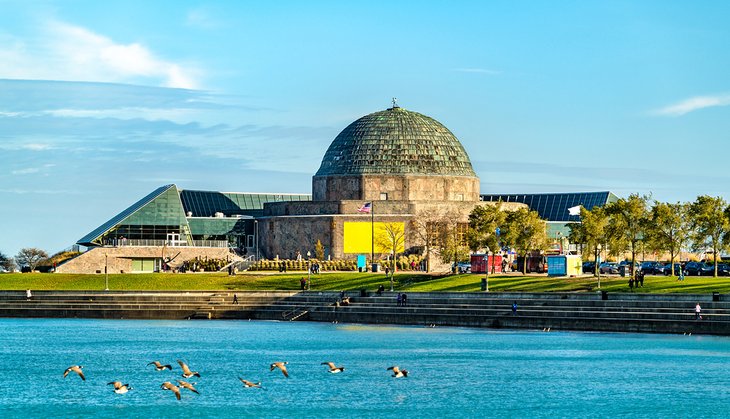
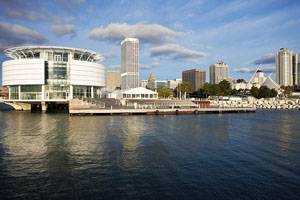
The Adler Planetarium is leaps and bounds beyond the ones most kids get to visit on school trips, and all ages will appreciate the shows and comprehensive exhibits it has to offer. The Adler prides itself in being the first planetarium in the Western Hemisphere, built in 1930 on the shore of Lake Michigan.
The planetarium is home to two dome theaters, which offer a variety of shows, including exploration of Chicago's night sky, the solar system, and the moon. There is also an extensive array of exhibits that explore topics including life on other worlds, meteors and meteorites, space exploration, the history of the scientific discipline, and even the history of astrology.
There are also several exhibits dedicated to the accomplishments of marginalized groups including female, Latinx, and LGBTQ+ astronomers. Of note is an excellent exhibit that looks at the importance of Islamic astronomers' contributions and how their studies affected the faith and the world. In addition, there are collections of artifacts from astronomers past, including many antique and ancient sundials, as well as telescopes.
While visiting, be sure to leave enough time for the Skyline Walk along the perimeter, the best place to get photos of the city skyline short of a boat cruise.
Address: 1300 S. DuSable Lake Shore Drive, Chicago, Illinois
Official site: www.adlerplanetarium.org
5. Museum of Science and Industry
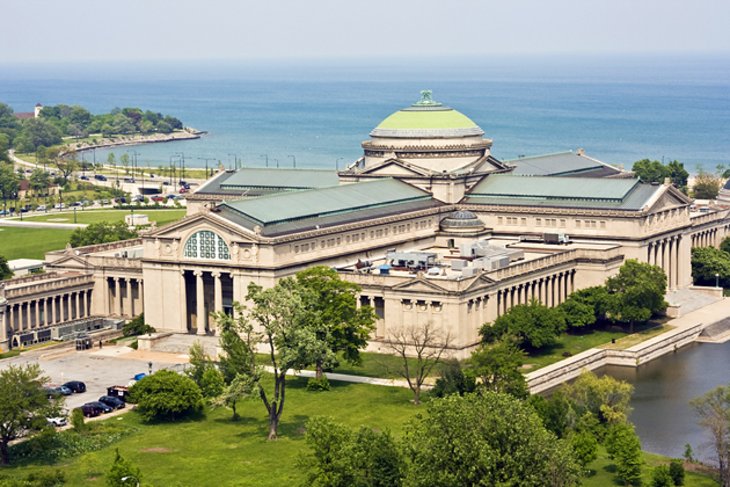
At the north end of Jackson Park is the Museum of Science and Industry, founded in 1933, and arguably the most impressive museum in Chicago. It is devoted to the application of natural laws in technological and industrial development.
The museum is thought to be the first in the U.S. to incorporate the idea of "hands-on" exhibits. Visitors are encouraged to interact with hundreds of exhibits. The MSI features permanent and changing exhibits, as well as an OMNIMAX theater.
Address: 5700 South Lake Shore Drive, Chicago, Illinois
Official site: http://www.msichicago.org/
6. See the View from the Willis Tower SkyDeck
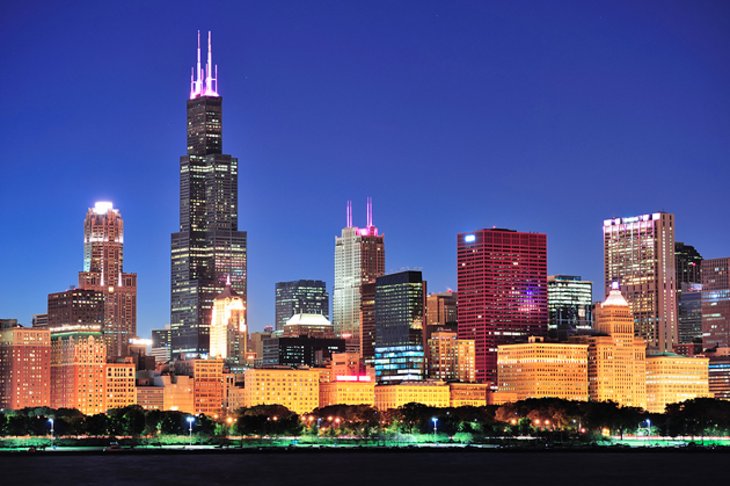
Until 1996, when the Petronas Towers were built in Kuala Lumpur, the 110 story Sears Tower, now Willis Tower, was the world's tallest office block. While there are now several taller buildings, the view from here is incredible. On a clear day you can see 40 to 50 miles over four states, and gain a bird's eye view of Chicago's impressive architecture.
The Willis Tower took three years to build and was opened to the public in 1974. The building is 1,453 feet tall with an observation area, called the SkyDeck, on the 103rd floor, 1,353 feet above the ground. A glass box with a glass floor, known as the Ledge, juts out from the SkyDeck, where visitors can stand and look directly down at the city below.
Address: 233 South Wacker Drive, Chicago, Illinois
Official site: https://theskydeck.com/
7. Watch the Water Show at Buckingham Fountain
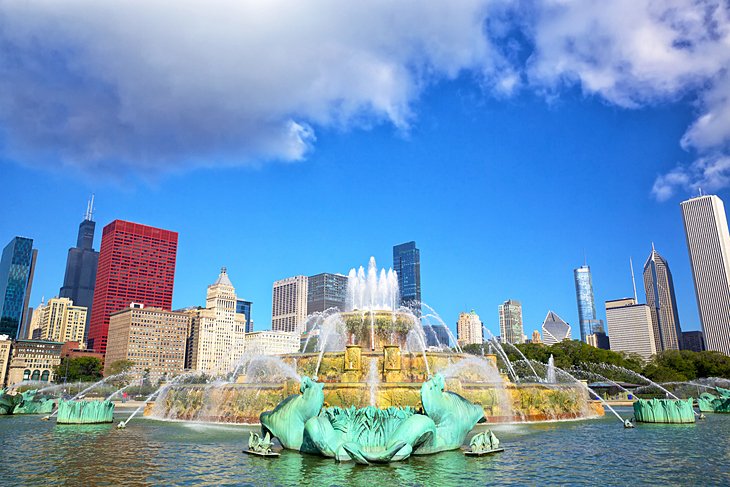
Built in 1927 as a donation from the family, the Clarence Buckingham Memorial Fountain is one of the largest in the world. Designed in the period's iconic Art Deco style, the central fountain is surrounded by four seahorses that represent Lake Michigan's four bordering states. From 8am to 11pm, the fountain bursts to life hourly, shooting 15,000 gallons of water through nearly 200 nozzles each minute to create an impressive display.
After dusk, the water show is accompanied by lights, a must-see if you are in the neighborhood in the evening. The fountain is the central focal point of Grant Park, Chicago's expansive public space that contains many attractions and smaller parks like Millennium Park, comparable to Central Park, one of the top attractions in New York City.
One of the park's main tourist sites is Museum Campus, home to The Field Museum of Natural History, the Art Institute of Chicago, the Adler Planetarium, and Shedd Aquarium. Grant Park is also home to several gardens and recreational facilities, and hosts events, including music and food festivals.
8. 360 Chicago
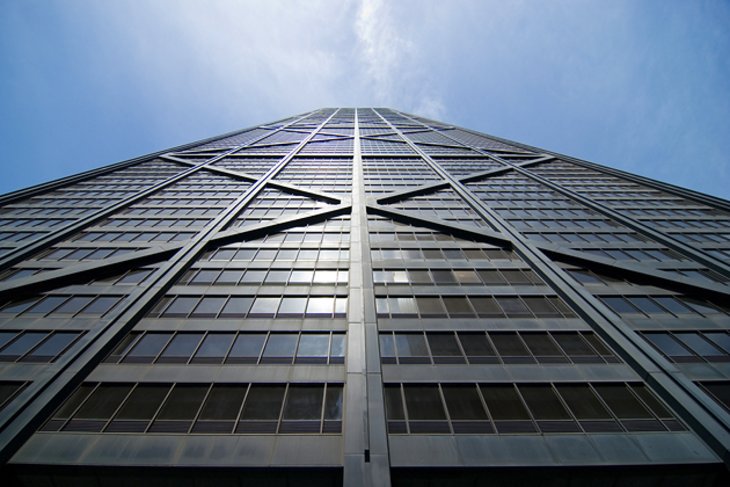
Located in the John Hancock Center office building, 360 Chicago is an observation deck on the 94th floor of the John Hancock Building, easy to recognize by its dark metallic looking exterior and cross-braced steel design, which runs up the outside of the building. The large glass-walled observation deck has views that look out over Chicago's skyline and beyond.
More adventurous tourists will love the deck's newest feature, "Tilt," which gives visitors a unique view from more than 1,000 feet above the Magnificent Mile as they are tipped outward at an angle to look straight down from the glass enclosure.
The rest of the building contains a variety of shops, offices, and apartments, as well as a multimedia exhibit located on the first floor that includes information about the city of Chicago and the construction of the John Hancock Building.
Address: 875 North Michigan Avenue, Chicago, Illinois
Official site: http://www.360chicago.com/
9. Field Museum of Natural History
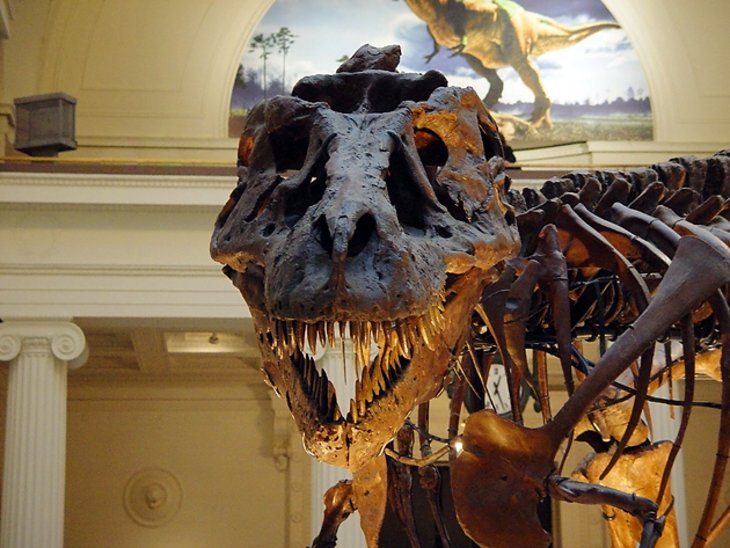
Originally called the Columbian Museum of Chicago, the Field Museum of Natural History was founded in 1893 to showcase the biological and anthropological collections gathered for the World Columbian Exposition. The name changed in 1905 to honor Marshall Field, the department store owner, art patron, and major benefactor of the museum.
The permanent collection features approximately 20 million artifacts and specimens covering a variety of disciplines including geology, botany, zoology and anthropology. Of special note are the permanent displays on Ancient Egypt and the cultures of North, Central and South America and "Sue," the world's largest, most complete Tyrannosaurus rex skeleton. Special rotating exhibits take place on a regular basis throughout the year.
Address: 1400 South Lake Shore Drive, Chicago, Illinois
Official site: http://fieldmuseum.org/
10. Michigan Avenue and the Magnificent Mile
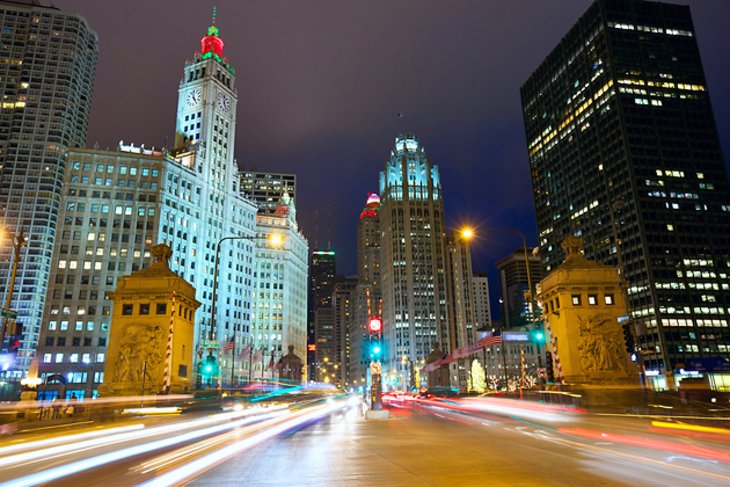
Michigan Avenue is probably one of the most attractive boulevards in America. The city's famous Magnificent Mile is a section of Michigan Avenue north of the Chicago River, with numerous galleries, boutiques, and luxury shops.
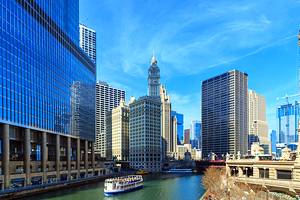
Some of the attractions along here include the John Hancock Center, the Wrigley Building, and the Tribune Tower. Michigan Avenue splits between North and South designations at Madison Street. This district is also known for its theaters, which host touring plays, musicals, and comedy acts.
Official site: http://www.themagnificentmile.com/
11. Take a Tour or See a Game at Wrigley Field
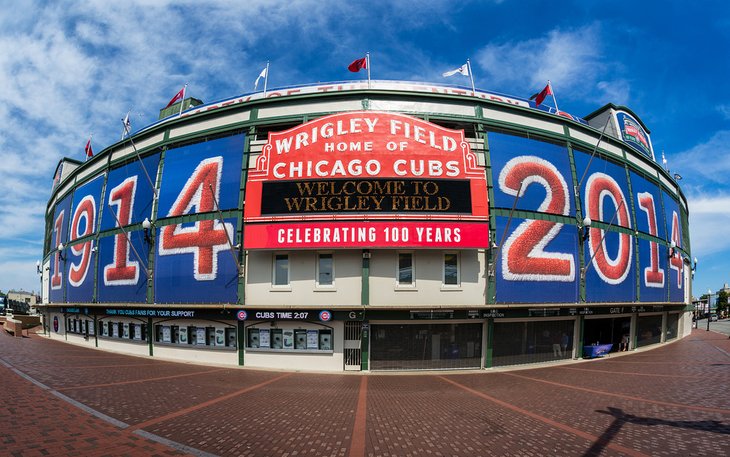
Wrigley Field, home to the Chicago Cubs, was built in 1914 and is the second-oldest Major League Baseball park in the US, second only to Fenway Park in Boston. The park has seen some legendary moments in baseball history, including the 1917 no-hitter pitching duel between the Cubs' Jim Vaughn and the Reds' Fred Toney, and Babe Ruth's "called shot" during game three of the 1932 World Series.
Ballpark tours are conducted in-season, when you can visit the press box and field, as well as the dugouts if there is no game that day.
Official site: http://chicago.cubs.mlb.com/chc/ballpark/
12. Lincoln Park
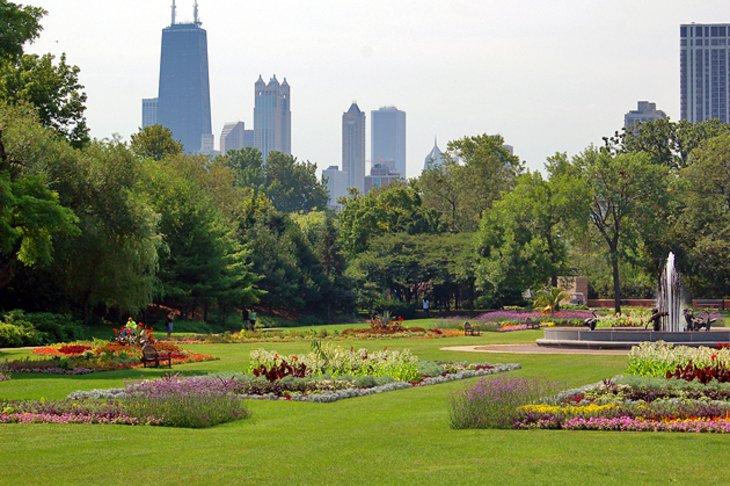
Lincoln Park is a six-mile stretch of green space along the edge of Lake Michigan, and Chicago's biggest park. This popular park is home to the lovely Lincoln Park Conservatory and the Lincoln Park Zoo, one of the oldest zoos in the country. Also located here are the Peggy Notebaert Nature Museum, and the Chicago History Museum.
For those who simply want to enjoy the outdoor space there are playing fields, bike trails, jogging paths, and beaches. Visitors can see a number of significant statues and pieces of public art within the park grounds including Augustus Saint Gaudens' Standing Statue of Lincoln (1887).
13. Shedd Aquarium
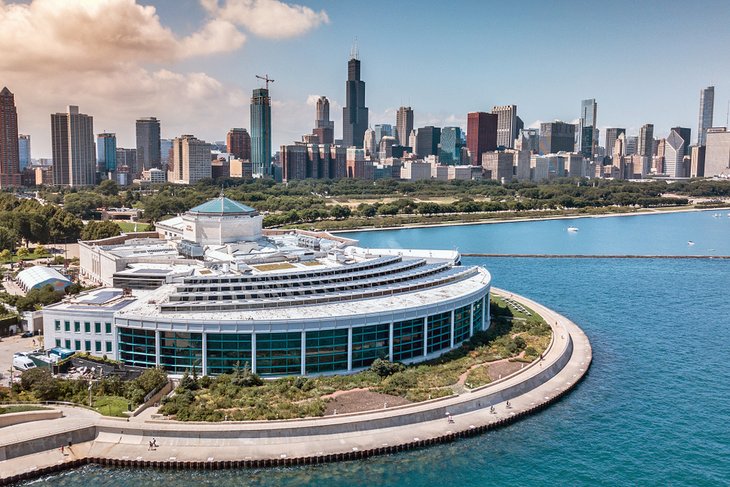
If Lake Michigan has you wondering what sort of aquatic life exists just offshore from downtown Chicago, swing by the Shedd Aquarium. Inside are exhibits that cover aquatic regions of the world, from the Arctic to the Caribbean.
If you are visiting with young children, one of the must do's is the Polar Play Zone. Here, children can slip into their favorite animal costume, take a make-believe trip in a submarine, and touch sea stars. Another popular place for children of all ages is the Stingray touch tank. This massive tank is full of curious stingrays who love to be petted and touched.
Address: 1200 S DuSable Lake Shore Drive, Chicago, Illinois
Official site: www.sheddaquarium.org
14. Lincoln Park Zoo
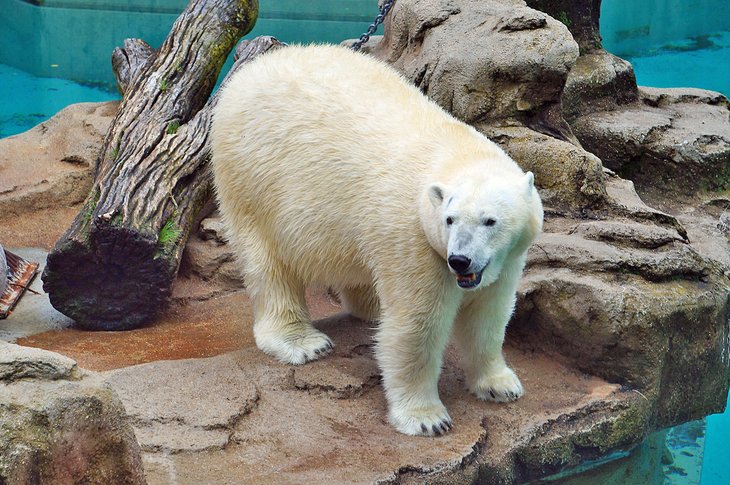
Another fun thing for families to do in Chicago is a trip to the Lincoln Park Zoo. The zoo is home to over 200 species from around the world. Sixteen different exhibits showcase the wonderful animals that we share this world with. Some of the most entertaining animals include penguins, otters, and seals. For a truly fascinating experience, stop by the Regenstein Center for African Apes.
The zoo is not just about animals, in fact it's one of the best places in Chicago to see amazing floral displays. Each year, the gardening crew tends to over 2,000 individual plants across 1,200 species.
Address: 2001 N Clark Street, Chicago. Illinois
Official site: www.lpzoo.org
15. Chicago Riverwalk and Lakefront Trail
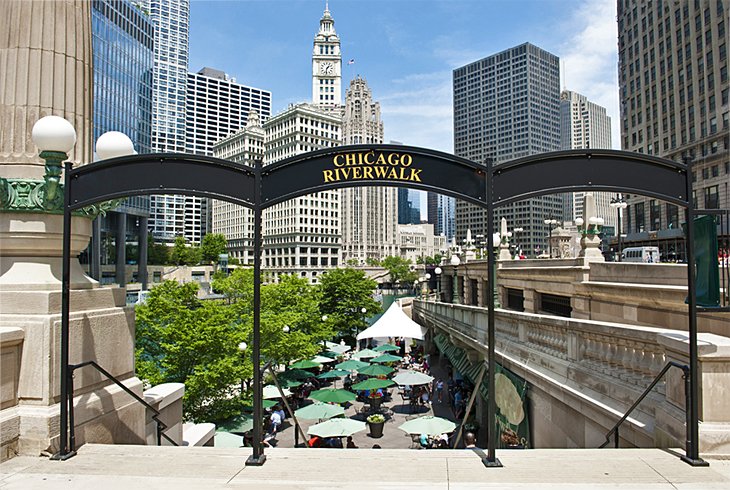
The Chicago River runs through the heart of the city, parallel to the lakeshore, and is known for its large number of movable bridges. In just two miles, there are 18 bridges, each with the ability to allow large boats to pass.
The McCormick Bridgehouse & Chicago River Museum treats tourists to an up-close look at the mechanisms of one of the city's most famous bridges, where you can actually watch the gears work as it moves.
The Riverwalk is home to many dining options and hosts special events throughout the year, and you can also find several river tours and cruises that depart from the Riverwalk.
The fully-paved Lakefront Trail offers beautiful views of the city skyline and Lake Michigan, stretching 18 miles from 71st Street on the South Side to Ardmore Street on the North Side. It is open to pedestrians and people-powered wheels, and is lined by parks, gardens, and recreation areas, as well as beaches. Many of the city's top attractions are located along the trail, including Navy Pier, Lincoln Park, and Soldier Field.
Official site: www.chicagoriverwalk.us
16. Oriental Institute Museum
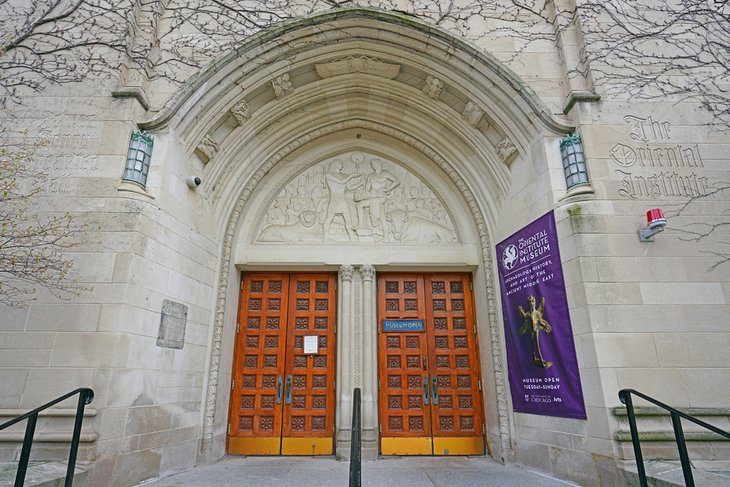
The Oriental Institute Museum, located on the University of Chicago campus, is dedicated to the archeology and art of the Near East, including antiquities from excavations in Egypt, Sudan, Nubia, Iraq, Turkey, Israel, and the ancient site of Megiddo.
Among the permanent exhibits are the Mesopotamian Gallery, which features objects from between 100,000 BC and the 7th century AD, and two Egyptian Galleries, which include artifacts that range from everyday objects to mummification relics.
Address: 1155 East 58th Street, Chicago, Illinois
Official site: http://oi.uchicago.edu/museum-exhibits
17. The Rookery Building
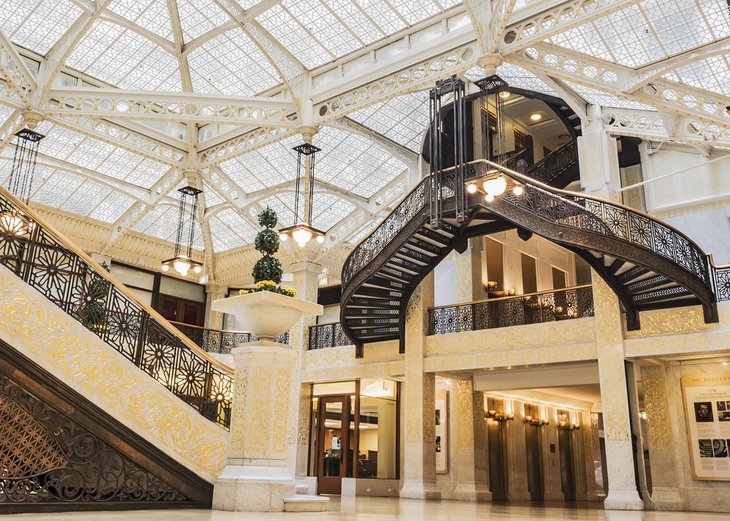
The Rookery Building was designed by architects Daniel Burnham and John Root in 1888, but the interior lobby and patio were remodeled by Frank Lloyd Wright in 1907. This 12-story building has a Roman Revival and Queen Anne-style façade, but it is the central light court and the ornamental ironwork of the elegant staircases that are the true gem of the building.
The Rookery, named for the large number of pigeons that frequented the building, is listed on the Register of National Historic Places. The Frank Lloyd Wright Trust conducts tours of the building, as well as other sites, like the Robie House in Hyde Park and the Bach House.
Address: 209 South LaSalle Street, Chicago, Illinois
Official site: http://therookerybuilding.com/
18. Enjoy a Show in Style at the Chicago Theater
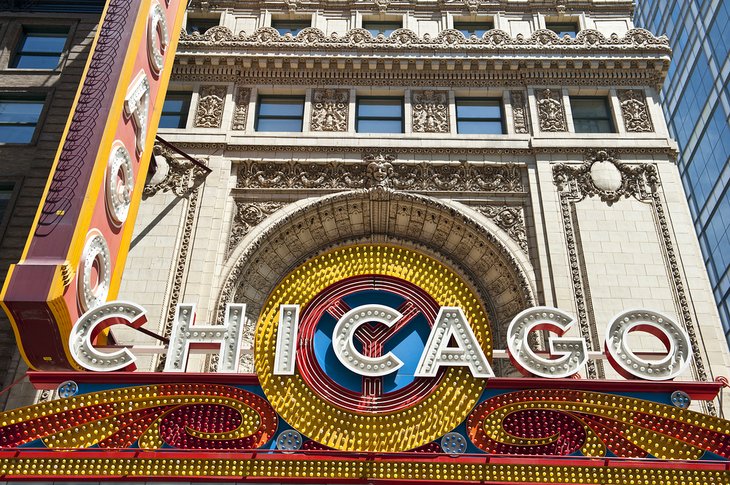
Between the theater's unmistakable sign and its stunning façade, it's impossible to miss this stunning Chicago landmark. Built in 1921, the front of the building was designed after the Arc de Triomphe in Paris, featuring stained glass and an ornate neon sign.
The interior features French Baroque architecture inspired by the palace at Versailles. Visitors will find a grand lobby with ornate details and a sweeping staircase before entering the immense theater that is seven stories high. Even if you don't have time to check out a show, be sure to pop in or schedule a tour to get a closer look.
The theater now hosts a variety of stage performances by major entertainers, from comedians to musicians. If you prefer a more intimate venue, check out The Second City on North Wells Street for nightly live comedy shows. This stage has seen many famous comedy performances, from the early careers of Tina Fey, Bill Murray, Steve Carrell, and many others.
Address: 175 N. State Street, Chicago, Illinois
Official site: www.msg.com/the-chicago-theatre
Where to Stay in Chicago for Sightseeing
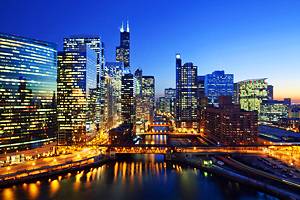
The best sightseeing, shopping, and dining and the most interesting architecture are found in Chicago's city center, and this is where most visitors will want to stay. The city center encompasses the famous Magnificent Mile and areas of the waterfront, which are particularly popular in summer.
Map of Tourist Attractions in Chicago
Best Time of Year to Visit Chicago
| Average minimum and maximum temperatures for Chicago, IL in °C | |||||||||||
| J | F | M | A | M | J | J | A | S | O | N | D |
| 0 -8 | 3 -4 | 8 0 | 15 6 | 21 11 | 27 16 | 29 19 | 28 18 | 24 14 | 18 8 | 9 2 | 3 -4 |
| PlanetWare.com | |||||||||||
| Average monthly precipitation totals for Chicago, IL in mm. | |||||||||||
| 55 | 45 | 77 | 93 | 94 | 109 | 94 | 98 | 82 | 69 | 84 | 67 |
| Average minimum and maximum temperatures for Chicago, IL in °F | |||||||||||
| J | F | M | A | M | J | J | A | S | O | N | D |
| 32 18 | 38 24 | 47 32 | 59 42 | 70 51 | 80 61 | 84 66 | 83 65 | 76 57 | 64 46 | 49 35 | 37 24 |
| PlanetWare.com | |||||||||||
| Average monthly precipitation totals for Chicago, IL in inches. | |||||||||||
| 2.2 | 1.8 | 3.0 | 3.7 | 3.7 | 4.3 | 3.7 | 3.9 | 3.2 | 2.7 | 3.3 | 2.6 |
The best time of the year to visit Chicago is between April and October during the shoulder season and the high-tourist summer season, when the selection of things to do is the most abundant.
During the busy summer tourist season, Chicago can be quite warm, especially in the concrete jungle of downtown. June, July, and August have the most festivals and convention activity, and that is when the Navy Pier is buzzing.
The summer crowds are big, so you may experience wait times on the observation decks at the Willis Tower and TILT, which tips you over the Magnificent Mile at 1,000 feet in the air. Be aware that the high tourist season also comes with higher prices at Chicago's most popular hotels.
The shoulder seasons of April and May are great times to visit, too, in the small window between spring and summer. September and October are also good times to go to Chicago, as temperatures become milder. The weather is still pleasantly warm, and many of the outdoor activities are still in full swing.
These are the best times to visit for moderate temperatures, especially for activities like strolling through downtown to the stores along the Magnificent Mile and snapping a selfie at the Bean in Millennium Park, one of the top tourist attractions in Illinois. The bonus to a shoulder season visit is that hotel rooms will be less expensive than in the summer months.
Spring: Spring is a beautiful time to visit Chicago, when the flowers and gardens are in full bloom and the city is awakening after the cold winter. Activity at the parks and lakefront is picking up, with walkers and bicyclists. Spring weather in Chicago is mild, with low humidity and comfortable daytime temperatures, from in the 50s Fahrenheit in March to the 70s by late May. These are perfect temperatures for walking around downtown and enjoying outdoor activities.
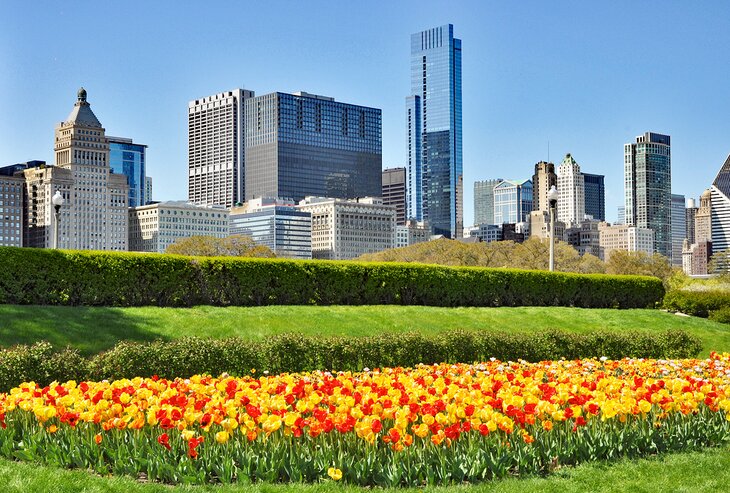
While springtime weather in Chicago is comfortable, it is also unpredictable—rain showers are likely, so pack a poncho or umbrella. The spring months have fewer crowds and lower prices, with the exception of mid-March when spring break tourists and St. Patrick's Day revelers flock to the city.
Summer: Summertime in Chicago is busy, and it is one of the most exciting times to visit. It is also hot and humid in Chicago in the summer. That is easy to remedy with an iced tea at one of the many open-patio restaurants and rooftop terraces. Summer temperatures range from the high 70s to the mid-90s Fahrenheit and feel even warmer with the humidity. You can also get storms in the summer, with June being the wettest month in Chicago.
Summer is the most popular time to visit Chicago, so expect large crowds everywhere, high prices for hotels, and long lines and wait times at restaurants. If you like being where the action is, summer is the best time to go to experience the festivals, outdoor music, and events. Some things, like the free fireworks at Navy Pier twice a week, you can only enjoy during the summer months. Availability is tough to come by in peak season, so it is best to book your Chicago resort or hotel far in advance if you plan on a summer getaway.
Fall: If your vacation goal is comfort and being able to maximize your time then the fall is the best time to go. The city is still active, and attractions and outdoor activities are still buzzing, but the temperatures start to drop, making it nice to walk around or sit in the stands at a Chicago White Sox baseball game. Daytime temperatures in the fall average in the 60s and 70s Fahrenheit. Restaurant patios are still open this time of year but with fewer crowds and without the summer vacationers competing for space.
Some attractions, like Lincoln Park Zoo and Navy Pier, may have reduced hours later in the fall season, but you can still enjoy the outdoor venues, city parks, and the lakefront. This is also a great time of year to experience the many cultural activities in Chicago with live theater and comedy performances and special exhibits at places like the Art Institute of Chicago.
Winter: While winters in Chicago can be brutal there are unique experiences during the colder months that can make for a fun vacation, especially around the holidays. Chicago winter weather usually means lake-effect snow up to 37 inches and average daytime temperatures below freezing. If you do not mind the cold weather then a few layers of winter clothing and a heavy coat will have you prepared to explore Chicago easily.
Winter in Chicago means indoor museums, theater, and shopping. The holiday displays in the store windows and festive lighting throughout the city creates a nice ambience that you can only experience during the winter. Since this is the low tourist season, you will find cheaper hotel rates and airfares. Keep in mind that the weather frequently causes flight delays in and out of Chicago in the winter, so it is best to pad your agenda with extra travel time.