14 Top-Rated Day Trips from Vancouver
Within easy reach of Vancouver are some of British Columbia's most interesting and beautiful destinations.
Quaint island towns and the provincial capital of Victoria are just a ferry ride away.
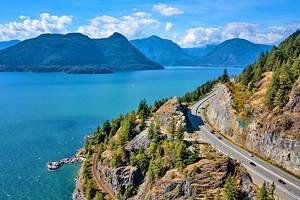
A drive up the famous Sea-to-Sky-Highway leads past Squamish and up to the renowned ski resort of Whistler, one of the venues of the 2010 Winter Olympic Games.
Inland, towards the Fraser Valley, are Bridal Veil Falls; Fort Langley National Historic Site; and Harrison Hot Springs, known for its hot pools, beach, and small-town atmosphere.
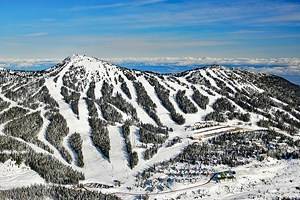
For those who want to venture over the border to the USA, Mount Baker is a short drive away, with hiking in summer and skiing in winter.
For ideas on how to plan your day of adventure, see our list of the best day trips from Vancouver.
- 1. Whistler
- 2. Victoria
- 3. Squamish
- 4. Harrison Hot Springs
- 5. Salt Spring Island
- 6. Mount Baker, Washington
- 7. Fort Langley National Historic Site
- 8. Bridal Falls and Bridal Veil Falls Provincial Park
- 9. Britannia Mining Museum
- 10. Hell's Gate Airtram
- 11. Capilano Suspension Bridge Park
- 12. Shannon Falls Provincial Park
- 13. Cultus Lake
- 14. Steveston Village
- Map of Day Trips from Vancouver
1. Whistler
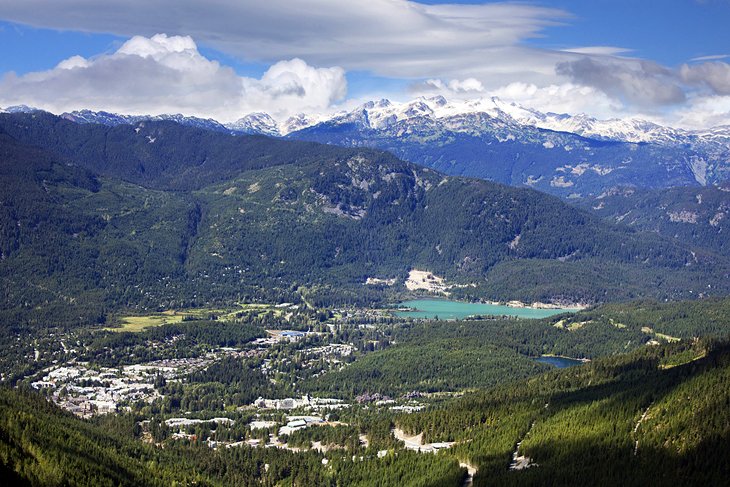
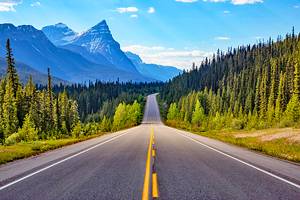
The scenic drive along the Sea-to-Sky Highway (Highway 99) is enough to make a day trip to Whistler worthwhile. The views out over Howe Sound and the mountain scenery all along this stretch of highway are outstanding. Be sure to stop in at the stunning 355-meter-high Shannon Falls along the way.
At the end of the drive is the famous ski resort town of Whistler; a year-round destination with golf, skiing, hiking, shopping, and dining. In the summer, this is a wonderful place to wander the streets, go for a hike, mountain bike, or play a round of golf. Take a trip up to the top of the mountains and ride across the Peak-2-Peak gondola for incredible views. If you are lucky, you'll be able to ride in the glass-bottomed car.
In winter, the town has a completely different feel, snow-covered streets are full of skiers looking to hit the slopes of Whistler and Blackcomb Mountains. This is one of Canada's top ski resorts.
Without traffic, the drive time to Whistler is about an hour and a half, but heavy traffic, particularly around the bridges in Vancouver, can add time to the trip. For an easy and relaxing day, take the Whistler Small-Group Day Trip from Vancouver tour. You'll see all the highlights along the way and have the afternoon (four hours) to entertain yourself in Whistler.
2. Victoria
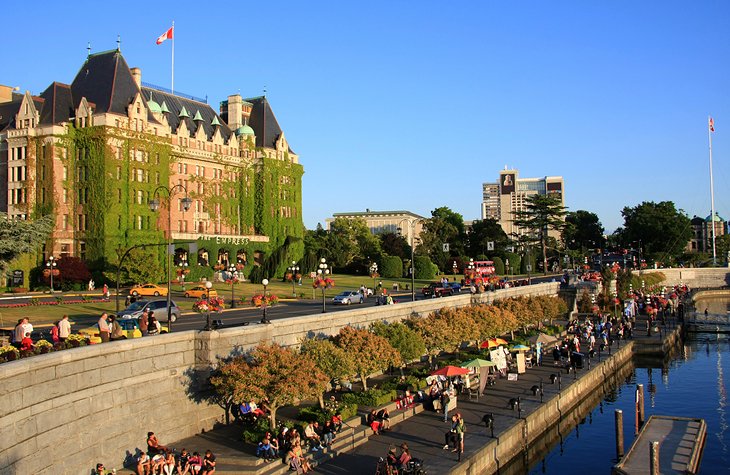
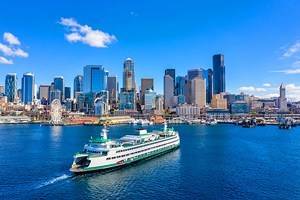
The ferry ride to Victoria passes by some of British Columbia's most spectacular coastal scenery. This quaint seaside city, with its compact city center, is the perfect place to explore on foot.
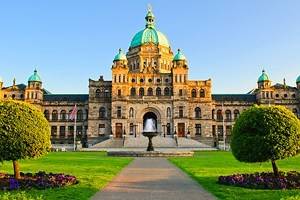
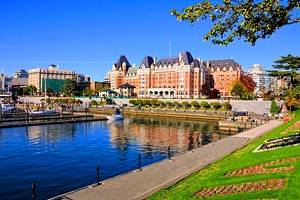
The waterfront, graced by the historic Empress Hotel, famous for its afternoon tea service. You can stroll along the Inner Harbour to see street performers, relax on a park bench, or admire the city's parliament buildings.
One of the top things to do just outside the city, is the stunning Butchart Gardens. Set in what was once an old quarry, this is a year-round attraction, with particularly fabulous displays from early spring until late fall. Victoria is also home to the Royal British Columbia Museum, one of Canada's finest museums of natural and cultural history.
You can walk on or take your car on the ferry to Victoria. During peak times, and particularly around holidays, the ferries fill up. Plan ahead and book your sailing online.
Cascading waterfalls, spectacular views, and historical sites greet you on the hiking trails around Victoria. Most are within 30 minutes of downtown Victoria.
A tour from Vancouver takes all the guesswork out of a trip to Victoria, you'll get all the highlights without the hassle. A lower cost bus option is the Small-Group Victoria and Butchart Gardens Day Trip from Vancouver. This full day tour travels both ways by ferry.
For a more spectacular trip, consider Vancouver to Victoria by Seaplane and Ferry tour. You'll get both a bird's-eye view of the incredible Gulf Islands and also the sea level experience on the ferry on the way back.
Read More:
3. Squamish
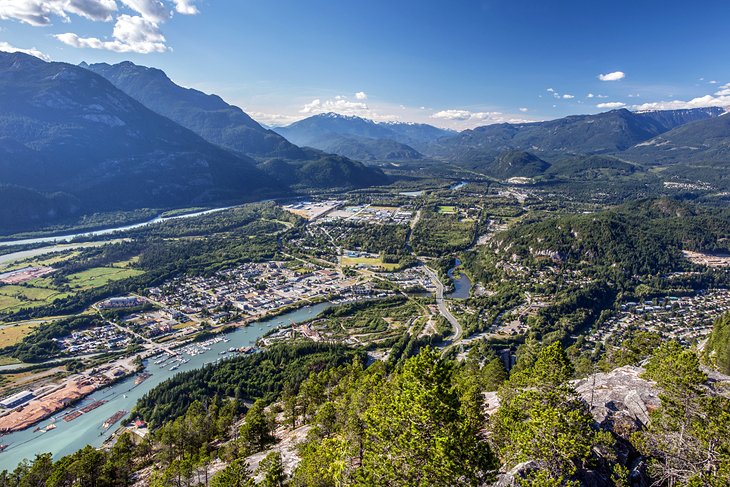
On the drive from Vancouver to Whistler, along the Sea-to-Sky Highway, Squamish is an easy and fun day trip from Vancouver that is often overlooked by travelers.
About a one-hour drive from Vancouver, this town is picturesquely set at the far end of Howe Sound. While it was once a forestry and mining town, it has gradually developed into a popular tourist destination.
One of the area's most popular new additions is the scenic Sea-to-Sky Gondola. The views from the beautiful Summit Lodge down Howe Sound and up towards Mount Habrich, Sky Pilot, and Goat Ridge are jaw dropping. At the top of the ride, don't miss the Sky Pilot Suspension Bridge.
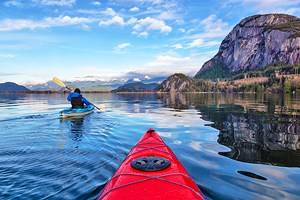
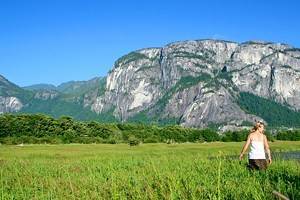
Outdoor recreation rules the day in this town, and rock climbers flock here to climb the sheer cliff walls. The giant granite monolith known as Stawamus Chief mountain is an incredible site and one of the main climbing areas in this region. Great hiking trails, mountain biking trails, and campgrounds, provide endless opportunities to get out into nature. Squamish has eight provincial parks within easy driving distance.
Shannon Falls, just two kilometers south of Squamish, is also worth a stop. This is the third highest waterfall in BC, dropping 335 meters, and the easy access makes it very popular. Short hiking trails in the area run through the forest right to the base of the falls. Bring a rain jacket; this is a wet spot due to the spray. You'll also be able to see the falls from the Sea-to-Sky Gondola.
- Read More: Things to Do in Squamish
4. Harrison Hot Springs
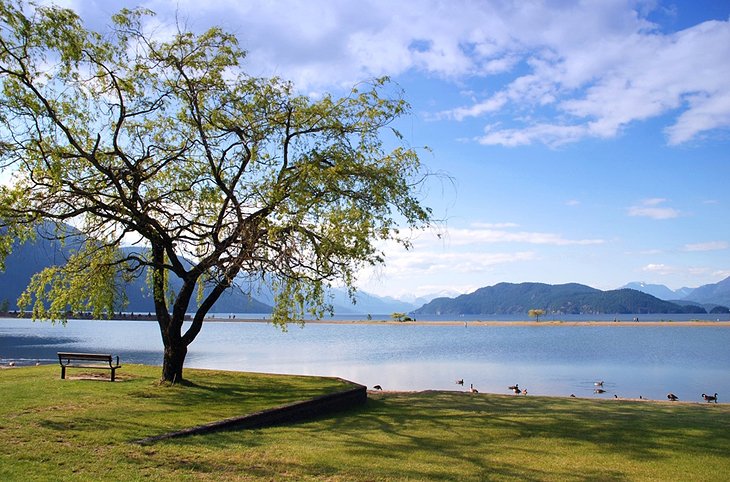
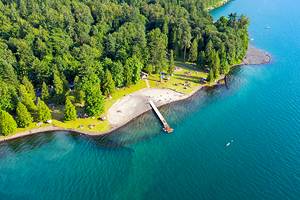
Just over 90 minutes from Vancouver, the small town of Harrison Hot Springs is a great escape from the city. Nestled between forest-covered mountains on the shores of beautiful Harrison Lake, this resort town, known for its hot springs, has much to offer day trippers. Activities available including golf, hiking, mountain biking, boat tours, fishing, and more.
Plan your visit for the summer months. The beautiful beach that runs all along the town's waterfront has a spectacular view out to the islands and mountains across Harrison Lake.
For a soak in the soothing spring-fed water, you'll have to check into the Harrison Hot Springs Resort & Spa; the public pools are currently closed.
5. Salt Spring Island
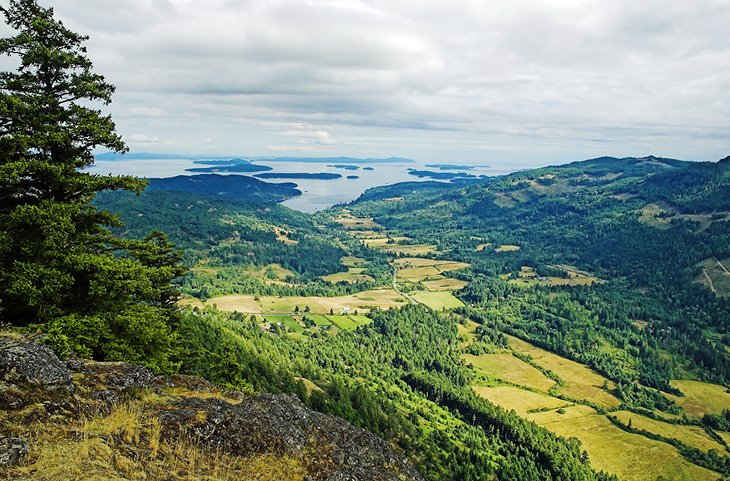
A trip to Salt Spring Island on a sunny day is a perfect getaway from Vancouver. Ferries leave Vancouver from Tsawwassen and land at Long Harbour on Salt Spring Island about 1.5 hours later.
The ride across the Straight of Georgia and through Active Pass is truly spectacular. The best option for day trips is to catch a non-stop ferry if possible, and reservations are strongly recommended.
Salt Spring is a quirky island, with small farms and artists' studios spread around the island. You can stop in at some of these family-run farms to sample and buy cheese and other specialty items, or pop into a studio to see an artist at work.
A popular way to get around the island is to rent a bicycle. Splurge on an e-bike – Salt Spring Island is hilly!
The main town is Ganges, a pleasant waterfront community, with restaurants, shops, and galleries. On Saturdays, during the summer months, Ganges hosts a popular market, where locals sell their crafts and other goods.
6. Mount Baker, Washington
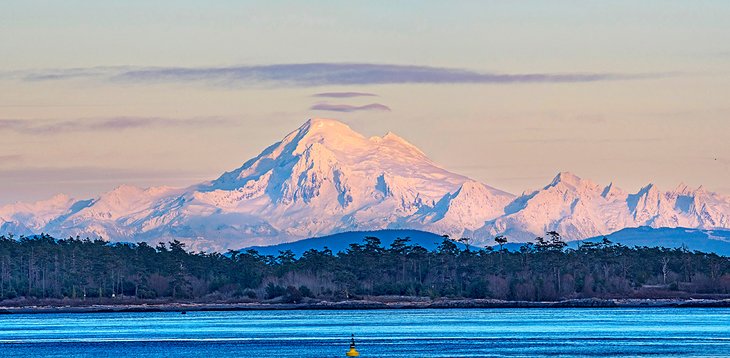
On clear days in Vancouver, you can see the glimmering snowcapped peak of Washington State's Mount Baker off in the distance. Despite its obvious presence, few people think to make the day trip to explore the mountain up close. Those who do will find quaint towns on the approach, nearby hiking trails in the summer, and great skiing in the winter.
Numerous hikes in the Mt. Baker-Snoqualmie National Forest surrounding Mt. Baker offer access to gorgeous mountain scenery. Well-maintained hiking trails generally follow the ridge lines below the slumbering volcano. The views up towards the peak and the glaciers are stunning.
In winter, Mt. Baker receives incredible amounts of snow, typically ranging from 50 to 65 feet. In 1998/99 the mountain set the record for the most snowfall in a single season in the USA with a total of 1,140 inches, almost 95 feet. It's one of the best ski resorts in Washington.
The drive from Vancouver takes under 2.5 hours. However, drive times can vary depending on wait times at the Canada-US border, check the border wait times online before setting out.
7. Fort Langley National Historic Site
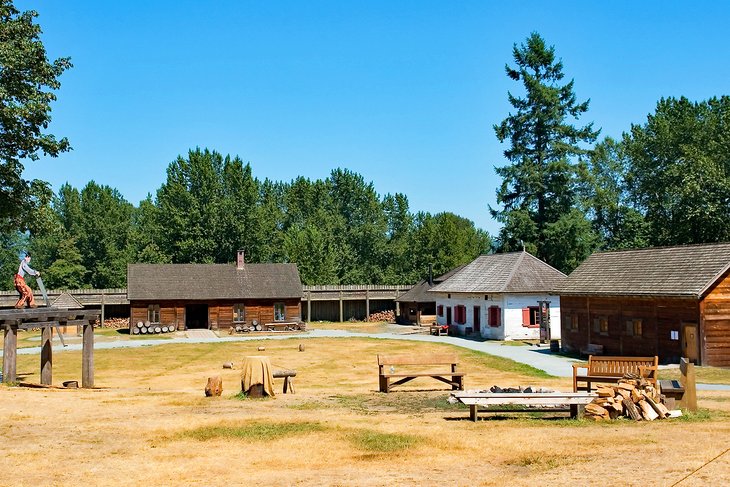
About an hour's drive east of Vancouver is the old Hudson's Bay Company fur trading post of Fort Langley, established in 1827. The fort was the site of much activity in the 1800s, from the fur traders to the Fraser River gold rush in 1857, and the establishment of the colony of British Columbia.
Today at the site, you'll be able to explore the history of the fort, see the 1800's come to life with interpreters and demonstrations, and try their luck panning for gold. The fort is open year-round and is a popular family attraction.
After visiting the fort, pop into Langley for a bite to eat, to do some shopping, or to check out a few local museums.
8. Bridal Falls and Bridal Veil Falls Provincial Park
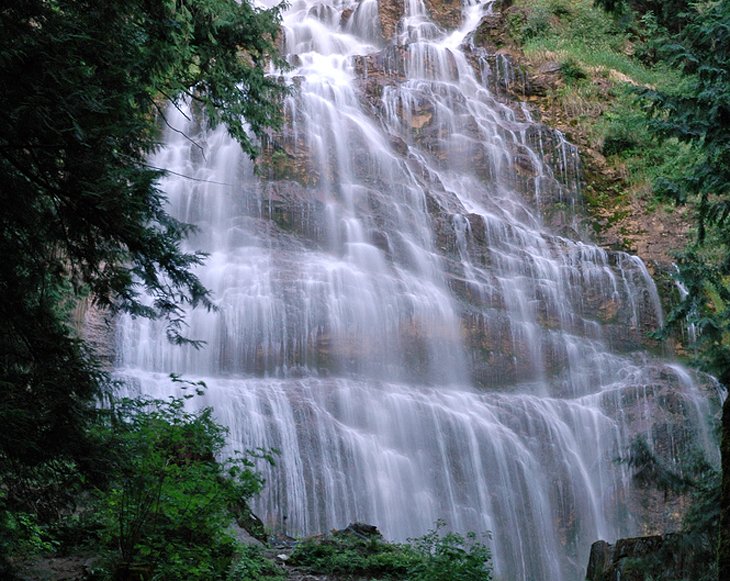
The town of Bridal Falls lies east of Chilliwack, about an-hour-and-a-half drive from Vancouver. The most famous site in the area is the 60-meter-high Bridal Veil Falls, in the provincial park of the same name.
This is a day-use area, where you can enjoy a picnic and walk to the base of the falls. In winter, if the temperature plunges, the falls turn to ice and take on a completely different appearance.
Also worth checking out, depending on the time of year, are the 32-acre Minter Gardens, the Bridal Falls Waterpark. More trails and bird watching opportunities found in the Cheam Lake Wetlands Regional Park.
9. Britannia Mining Museum
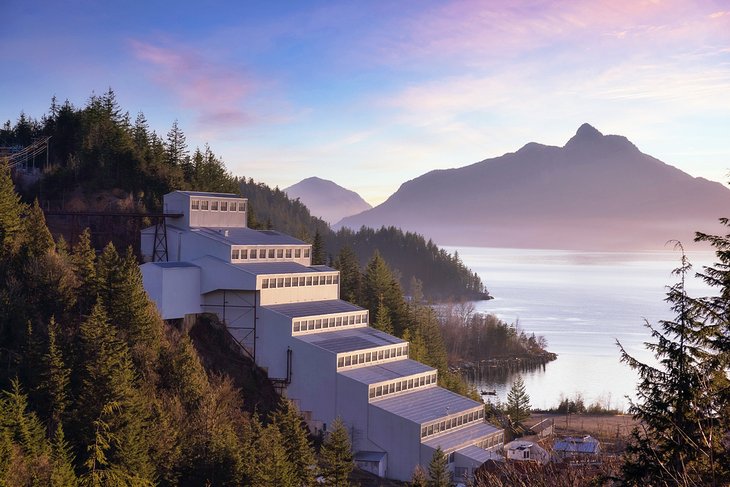
Just off the Sea-to-Sky-Highway, about 45 minutes from Vancouver, is the Britannia Mining Museum, a National Historic Site of Canada.
This tiered, 20-story building has been an impossible-to-miss landmark along the highway for decades, but between 2005 and 2010, the building underwent massive restoration work and changed its name from the BC Museum of Mining to the Britannia Mining Museum.
The museum is the site of the former Britannia Mine. You can see some of the original equipment from the early 20th century, pan for gold, or take an underground tour. The museum has recently added what they describe as an "immersive live-action experience." The movie along with the sound track played over 30 speakers is full of fun special effects.
10. Hell's Gate Airtram
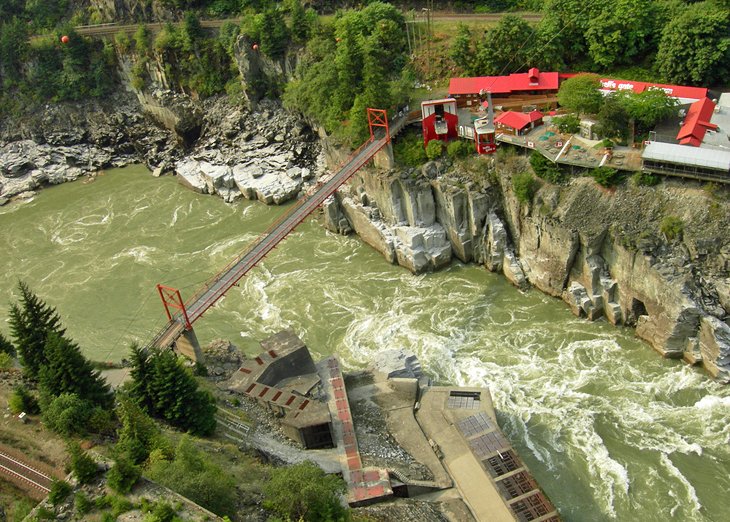
From spring until fall, the Hell's Gate Airtram takes you out over the raging waters of the Fraser River in a tram connecting both sides of the canyon.
Hell's Gate is uniquely located at a narrowing in the Fraser River, where the fast-flowing water is forced through a section only 33 meters wide, creating a churning spectacle of white water. The aerial tram covers a distance of 152 meters, dropping you on the opposite side of the river. On this side there is a restaurant, gift shop, an area for gold panning, and an information center.
If you are brave enough, walk across the swaying suspension bridge that crosses the roaring river below. The drive to Hell's Gate from Vancouver is very scenic and part of the attraction of this day trip, which takes between 2.5 and three hours each way.
11. Capilano Suspension Bridge Park
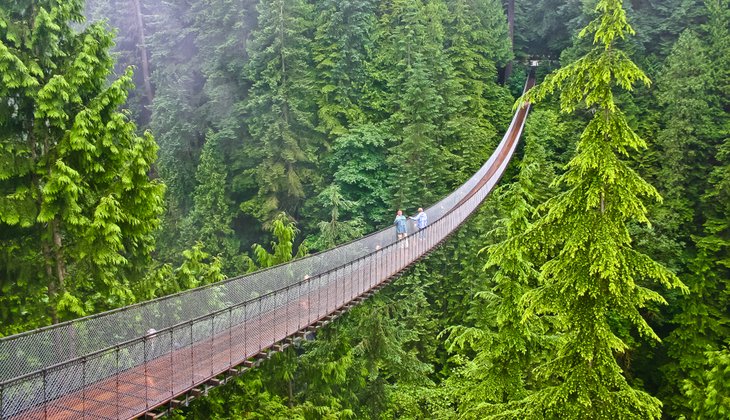
The Capilano Suspension Bridge was first built in 1889 and over the years has evolved into the exhilarating tourist attraction it is today. You can walk 137 meters on a swaying platform, 70 meters above the river below.
Millions have made the somewhat scary crossing to the other side, with a steady pace and a tight grip on the rope. The park also has a tree top walk among 1,300-year-old trees, a cliff walk with a glass floor, and an extensive collection of totem poles.
Capilano Suspension Bridge Park is an easy trip from downtown Vancouver if you have your own car. If not, or if you don't want to deal with traffic, a tour is a good option. Tours take in other sights along Vancouver's North Shore, including a ride up the gondola at Grouse Mountain. Consider the 6.5-hour North Shore Day Trip from Vancouver: Capilano Suspension Bridge & Grouse Mtn.
12. Shannon Falls Provincial Park
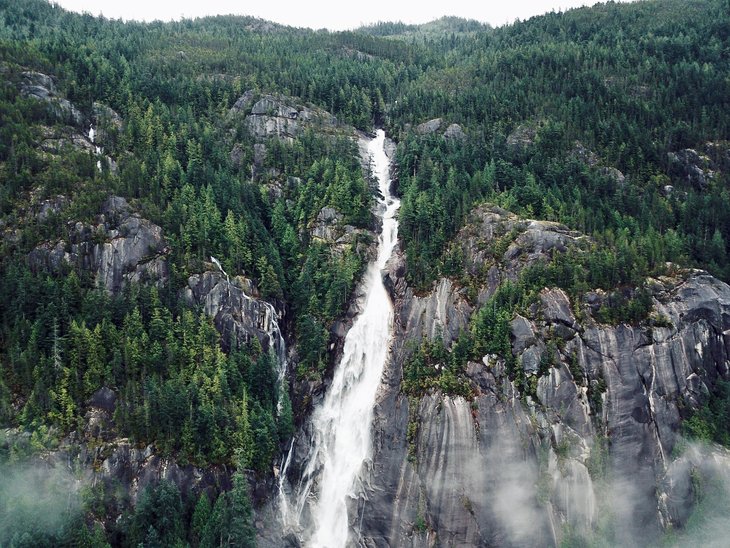
Almost halfway between Vancouver and Whistler lies Shannon Falls Provincial Park. Be sure to pull off the highway and stretch your legs with a short stroll to the base of these 335-meter falls.
Plunging off a near vertical cliff, these scenic falls are a result of meltwater from Mount Habrich and Mount Sky Pilot. An easy 350-meter long, fairly level walking trail winds its way through towering old-growth pine trees and emerges at the base of the falls. You'll hear the roar of the falls before you see them.
Picnic tables are available along with restrooms; a small concessionaire sells drinks and snacks.
13. Cultus Lake
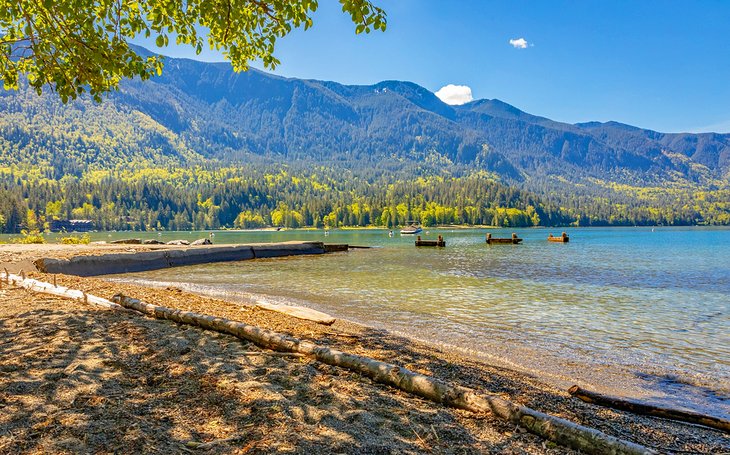
Cultus Lake, one of the best lakes in British Columbia, is the perfect place to take the family for a day on the water. The lake is only 1.5 hours from Vancouver, making it an easy place to visit before the familiar refrain from the backseat of "Are we there yet?" kicks into full gear.
Wide beaches with shallow water and designated swimming areas make cooling off an easy task. If you'd like to get out on the water, be sure to bring your stand up paddleboard, canoe, or kayak. Or, if you prefer something a bit more action packed, trailer the boat or Jet Ski, and launch at one of the public boat ramps. You'll find lots of room to race around on this large lake.
An alternative to the beach is the Cultus Lake Adventure Park, an action-packed place full of waterslides and thrill rides.
After your day at the lake, swing by the delightful city of Chilliwack for a bite to eat on the way home.
14. Steveston Village
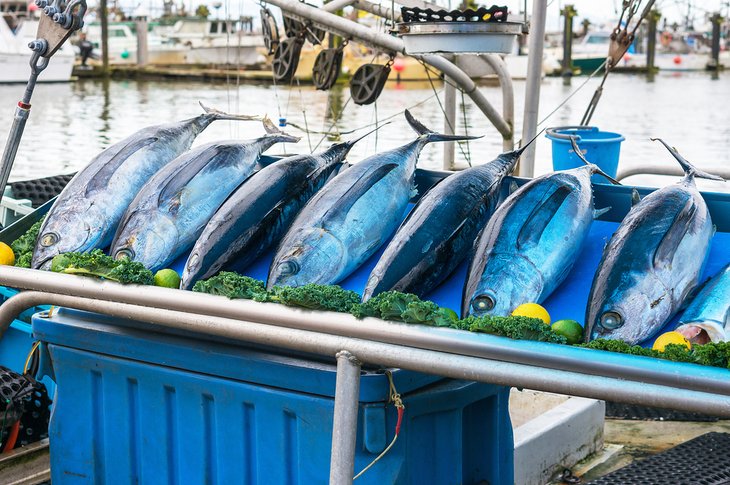
This small village is an ideal place to see the mighty Fraser River and the Pacific Ocean. Steveston is a top destination in Richmond and an easy day trip from Vancouver if you don't have a car. The prime waterfront location is perfect for strolling, shopping, and catching up with friends.
Foodies come here to feast on the fresh seafood served up at the local restaurants, many of which have lovely patios, ensuring you'll get your fair share of people watching.
Planning a dinner party? Steveston has a lively commercial dock area where you can purchase fresh seafood right off the boats that will be sure to impress.
The area is very picturesque, with old buildings painted in lively colors, and makes for wonderful photos, especially when the sun shines.