15 Top-Rated Tourist Attractions of Budapest's Castle Hill
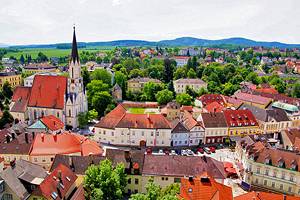
Castle Hill is a large limestone plateau located on the west bank of the Danube in Buda's Old Town area. Here, you'll find many of Budapest's most important historic sites and tourist attractions. Settlement here dates as far back as the Stone Age, resulting in an interesting mix of important medieval ruins and architectural highlights from the last few centuries.
Today, the most prominent building is Buda Castle. This huge palatial structure dominates the hill's Castle District (Varnegyed) and offers some of the best views over the beautiful Danube and the architecture of Pest on the other side.
Like much of Budapest, it's a great area to explore after nightfall, when it's lit up in spectacular fashion. And for adventurous night owls, the castle courtyards remain open 24 hours a day, offering tourists an opportunity to enjoy one of the top free things to do in the city: explore its endless cobbled streets and alleyways on foot.
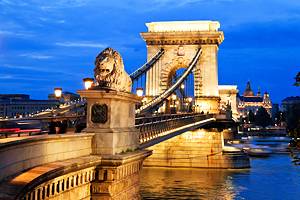
Be sure to also take a trip on the fully restored historic Castle Funicular Railway. This must-do attraction departs from the Buda end of the famous Széchenyi Chain Bridge and deposits travelers in the heart of the Castle District.
For even more great ideas of the best things to do, be sure to refer often to our list of the top tourist attractions of the spectacular UNESCO World Heritage-listed Castle Hill in Budapest, Hungary.
See also: Where to Stay near Budapest's Castle Hill
- 1. Buda Castle
- 2. Hungarian National Gallery
- 3. Budapest History Museum
- 4. Fisherman's Bastion
- 5. Matthias Church: The Church of Our Lady
- 6. Trinity Square
- 7. Museum of Military History
- 8. Andrew Hess Square
- 9. Gentlemen's Street (Uri Utca)
- 10. The Labyrinth: The Caves beneath Castle Hill
- 11. Hospital in the Rock Nuclear Bunker Museum
- 12. The Rock Chapel
- 13. The House of Houdini
- 14. Széchenyi National Library
- 15. Museum of Music History
- Where to Stay near Budapest's Castle Hill for Sightseeing
- Tips and Tours: How to Make the Most of Your Visit to Budapest's Castle Hill
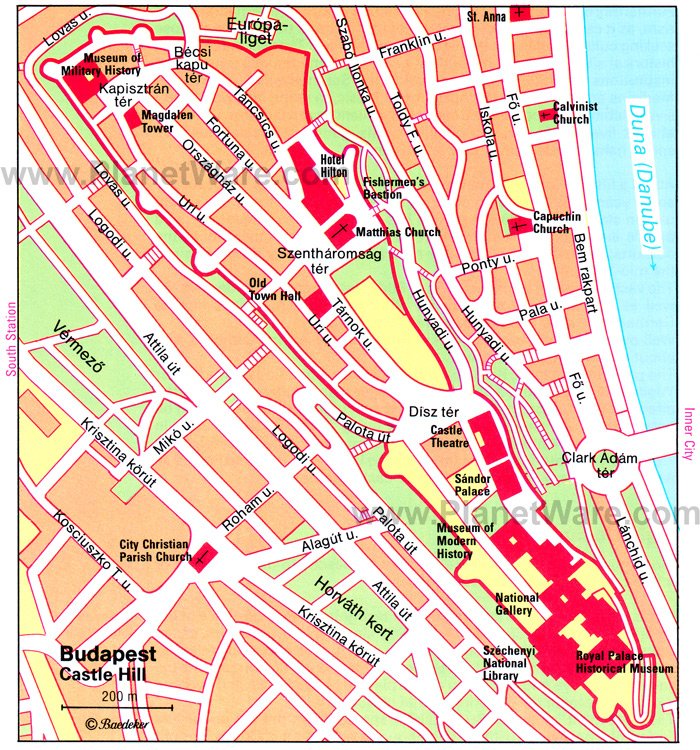
- Map of Tourist Attractions of Budapest's Castle Hill
- Budapest's Castle Hill - Climate Chart
1. Buda Castle
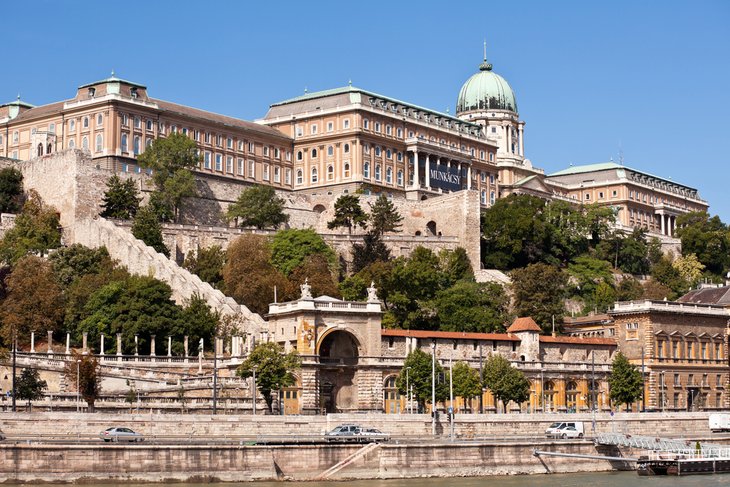
Built in the 13th century, the first castle was located on the south spur of Castle Hill to provide protection from attacks by Mongols and Tartars. The current incarnation of Buda Castle (Budavári Palota), also sometimes called the Castle Palace, is a massive 18th-century, Neo-Baroque-style structure of more than 200 rooms. These are arranged in a symmetrical layout around the 62-meter-high central dome facing the Danube.
The castle was badly damaged in WWII, but much of the exterior has since been fully restored. Although the interior was stripped and destroyed during the war, parts are open to the public, and these contain its museums and galleries: the Hungarian National Gallery, the Budapest History Museum, and the Széchenyi National Library.
Be sure to explore the old Mace Tower (Buzogánytorony). Part of the castle's south wall, this medieval fortification was built in the 1300s and saw action in numerous conflicts, most notably against the Ottoman empire in the late 17th century and the closing months of WWII.
Outside the castle walls, a number of Turkish tombstones can still be seen, while in front of the domed building, facing the Danube, stands a bronze equestrian statue. It represents Prince Eugene of Savoy, a hero for having opposed the Turks.
This entire historic landmark is now a UNESCO World Heritage Site and can be explored either on your own or as part of an informative walking tour. And for a memorable souvenir of your visit, be sure to stop at the impressive Matthias Fountain (Mátyás kútja), one of Castle Hill's most photographed points of interest, for a selfie or group photo.
Address: 1014 Budapest, Szent György tér 2
Official site: http://budacastlebudapest.com/
2. Hungarian National Gallery
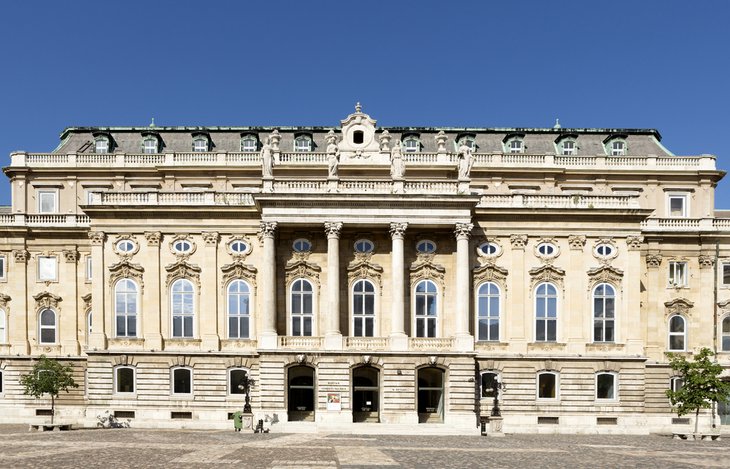
The Hungarian National Gallery (Magyar Nemzeti Galéria) is housed in the main wing of Buda Castle facing the Danube. A cross-section of Hungarian sculpture and painting is on display, ranging from the time of the Magyar invasion through the Gothic, Renaissance, and Baroque periods, right up to the richly productive 19th and 20th centuries.
Sculptures and panel paintings from the medieval and Renaissance periods are of particular interest, as are the gallery's large collections of late Baroque works. There are also impressive collections of 19th-century paintings, as well as sculptures by Bálint Kiss, Mór Than, László Pál, Mihály Munkácsy, Alajos Stróbl, and György Zala.
The equally impressive collections of 20th-century paintings include works by Béla Czóbel, József Egry, and József Rippl-Rónai. Guided tours of the gallery's permanent collections, as well as temporary exhibits, can be booked through their website and are highly rated. Check their site for unique programs, including kids' events and a highly recommended monthly late opening.
Also worth a visit is the Koller Gallery, Hungary's oldest private gallery. Situated in an attractive old home, the focal point is an exhibit dedicated to famed Hungarian artist Amerigo Tot.
Address: 1014 Budapest, Szent György tér 2
Official site: https://en.mng.hu
3. Budapest History Museum
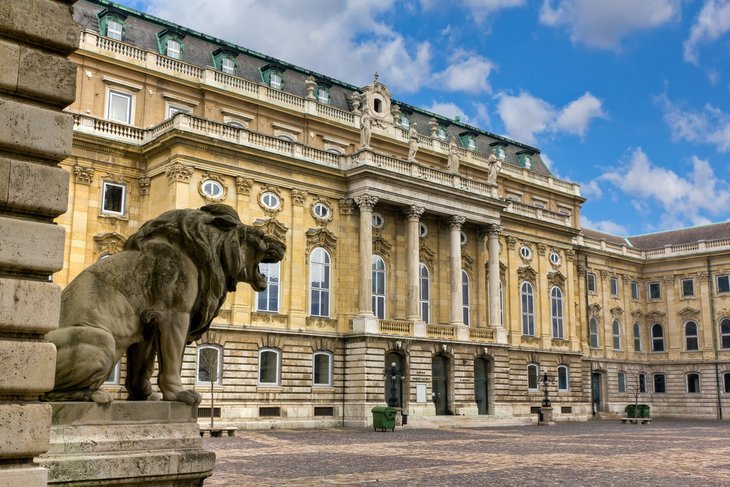
Occupying the south wing of Buda Castle, the four floors of the Budapest History Museum (Budapesti Történeti Múzeum) are filled with artifacts and exhibits relating to Hungary's long and rich history. Highlights include rare documents, ceramics, wrought-iron work, textiles, household utensils, and other objects that give a picture of life as it once was in the independent towns of Óbuda, Buda, and Pest up to their unification in 1872.
In the Renaissance Room, a painting shows Matthias Corvinus and Beatrice of Aragon, his second wife, while the Gothic Room's fine sculptures date from between 1370 and 1420 (they were discovered during excavation work in 1974).
The Royal Chapel contains a beautiful 15th-century triptych and Gothic sculptures. Other highlights include a restored section of the medieval castle and the rib-vaulted Gothic Hall.
Address: 1014 Budapest, Szent György tér 2
4. Fisherman's Bastion
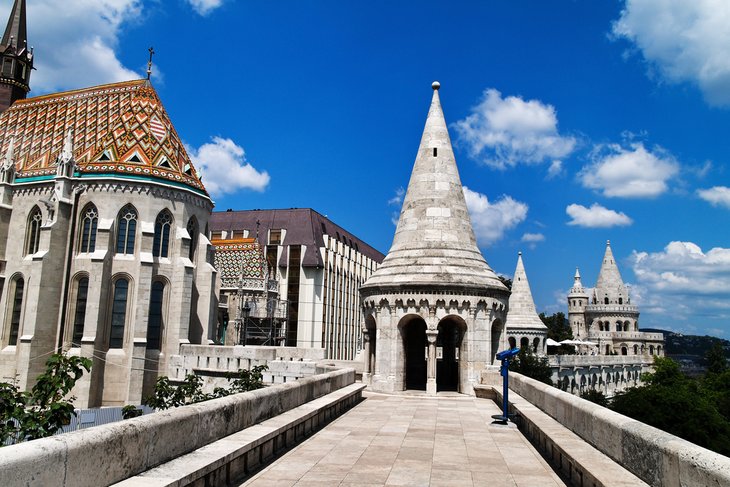
Behind the Matthias Church, at the exact spot where the local fishermen's guild built their defence installations in the Middle Ages, is the spectacular Fisherman's Bastion (Halászbástya). Built between 1895 and 1902, its seven towers, colonnades, and embrasures were designed in Neo-Romanesque style by Frigyes Schulek. From here, you'll find some of the best views over the city and the Danube.
In the north courtyard of the bastion stand two statues of the monks Julianus and Gellért (Károly Antal, 1937), while in the south courtyard stands a bronze equestrian statue of St. Stephen (Szent István), the first King of Hungary (A. Stróbl, 1906). The plinth includes four lions, and the reliefs on the sides depict scenes from Stephen's life.
If arriving at lunch or later in the day, a good restaurant offering great views over the Danube is located close by. A visit to Fisherman's Bastion in winter is also a fun thing to do, and resembles a scene right out of a greeting card.
Address: 1014 Budapest, Szentháromság tér 5
Official site: www.fishermansbastion.com
5. Matthias Church: The Church of Our Lady
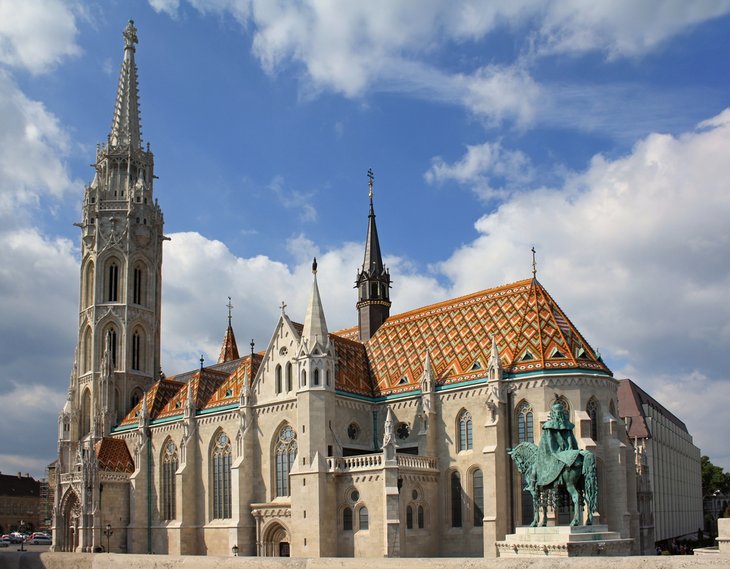
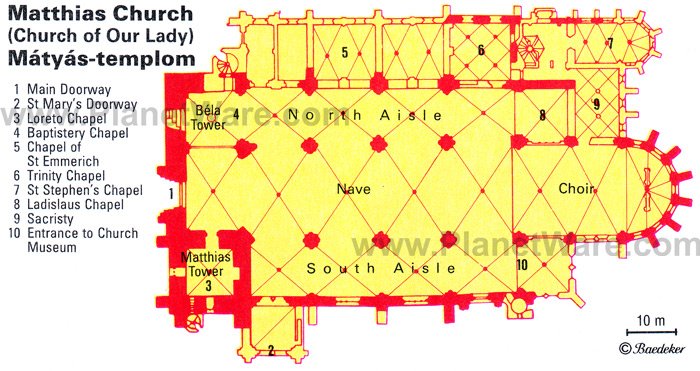
A prominent sight in Budapest, Matthias Church (Mátyás-templom)-also known as The Church of Our Lady-was built on the site of an 11th-century church and was completed in 1269. Reflecting a distinctly Baroque style, this Roman Catholic Church served as a mosque during the Turkish reign.
The church's side aisles were extended and given polygonal ends in the 14th century, when the magnificent south doorway with its relief depicting the Death of Mary was added. In 1309, Charles Robert of Anjou was crowned King Charles I of Hungary here.
Under King Matthias, after whom the church is named, side-chapels were added, together with an oratory for the royal family and a new south tower bearing the arms of Matthias Corvinus, dated 1470. In 1867, Emperor Franz Joseph I of Austria and his consort Elisabeth were crowned rulers of Hungary here (Franz Liszt composed the famous coronation mass for the occasion).
Visitors are welcome to visit the church, as well as its tower (admission required). It's an especially memorable place to visit during its regular classical music and choir events, and at Christmas. A gift shop is located on-site.
Address: 1014 Budapest, Szentháromság tér 2
Official site: https://matyas-templom.hu/home
6. Trinity Square
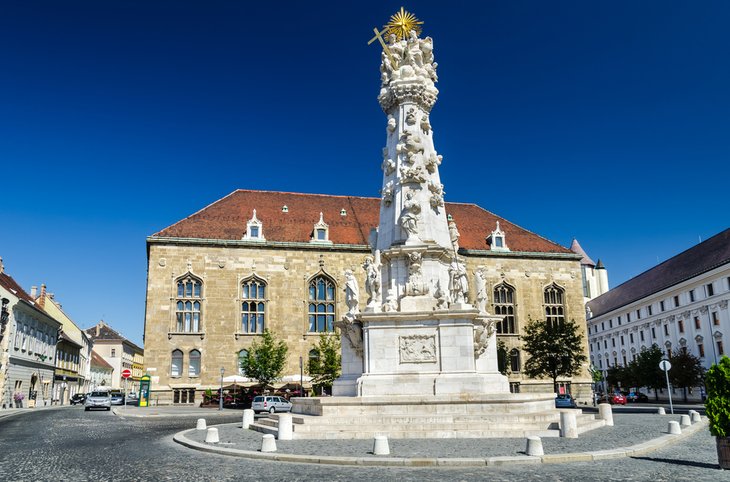
The central square on Castle Hill is Trinity Square (Szentháromság tér). One of its most interesting features, apart from beautiful Matthias Church, is a large Baroque plague column-the Holy Trinity Statue-designed by Barbier and Ungleich in 1714. Such "Holy Trinity" columns were common across Europe at that time, erected in the belief they would help ward away the deadly plague that had killed so many people during previous centuries.
Several other noteworthy buildings are grouped around the square, including the old Town Hall of Buda, a magnificent building erected at the end of the 17th century from plans by Italian architect Ceresola. The oriel balcony, small towers, courtyard, and staircase are of particular architectural interest, and below the east oriel window you can see Pallas Athene, by Carlo Adami (1795).
Another landmark is the House of the Hungarian Culture Foundation, which is worth a stop inside to see its beautiful interior.
7. Museum of Military History
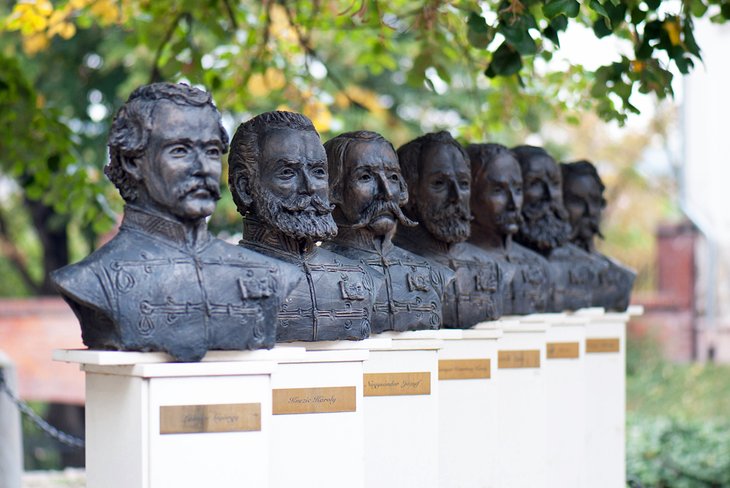
Located within Buda Castle, the Museum of Military History (Hadtorteneti Muzeum) is a treasure trove of military history, vintage weapons, historic uniforms, flags, and artwork. Given the country's long history and location, Hungary's military were often heavily involved (and greatly influenced) by most of the major European wars over the centuries, as well as numerous local conflicts.
Set in the former castle barracks dating from the 1830s, this fascinating museum does an excellent job of telling the stories of the people involved in these conflicts since medieval times. While there's an obvious focus on the Hungarian perspective, in particular relating to the country's 19th-century war of independence from Austria, the displays relating to the country's Soviet occupation in the 1950s and onwards are especially interesting.
Afterwards, be sure to visit the museum's memorial park for its statues of Hungarian military leaders and its superb views over the River Danube. Guided tours are available.
Address: 1014 Budapest, Kapisztrán tér 2-4
Official site: https://militaria.hu/en
8. Andrew Hess Square
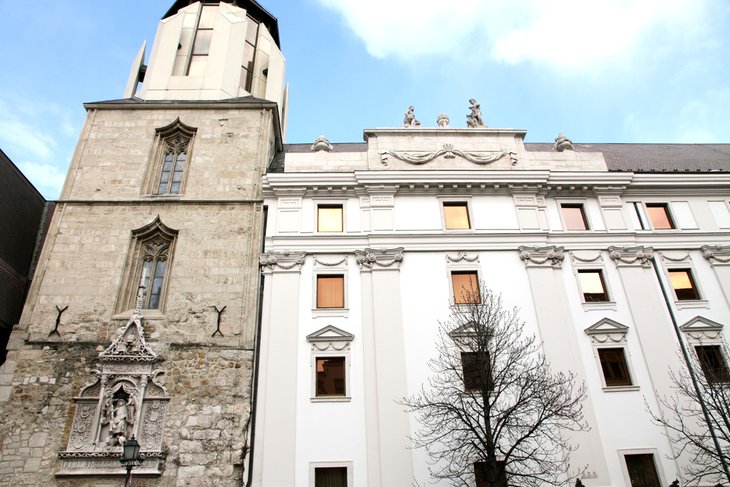
Named after the first printer of books in Buda, Andrew Jess (circa 1473), this lovely old square is well worth exploring. Highlights include medieval remains cleverly incorporated into the architecture of the highly modern Budapest Hilton.
Among these important medieval structures is St. Nicholas Tower (Miklós torony), a relic of the Late Gothic Church of St. Nicholas of the Dominicans, who had a monastery here. The monument to Pope Innocent XI was the work of J Damko (1936).
Behind the monument is the architectural complex known as "Vörös sün" (the Red Hedgehog). The complex dates from the 17th and 18th century and was later remodeled in Classical style.
9. Gentlemen's Street (Uri Utca)
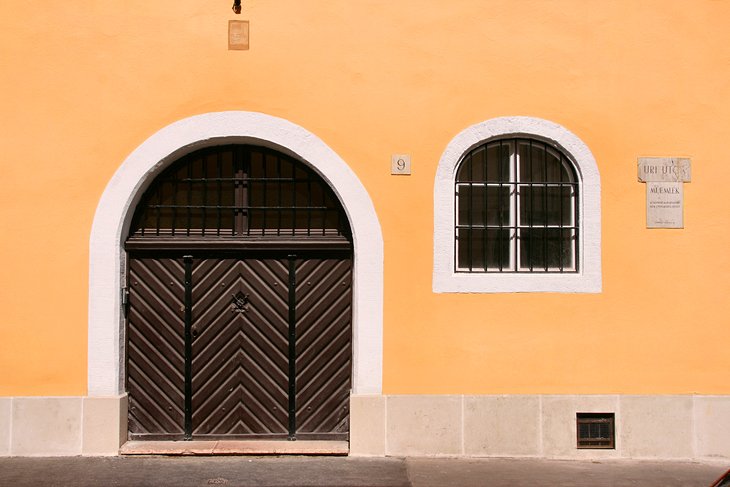
Splendid examples of Romanesque, Gothic, and Baroque architecture line Castle Hill's popular Gentlemen's Street (Uri utca), a one-kilometer-long stretch of cobblestone lined with numerous boutique shops and galleries, restaurants, and cafés.
Must-see points of interest here include No 40, where you can see a superb example of fine vaulting and the sedilia (stone seats for clergy) from a church, the elegant Gothic gateway located No 6, and the attractive old Archbishop's palace at No 63.
Also worth taking a look at is the 13th-century Church of Saint Mary Magdalene located at the top end of Uri utca. Although now mostly ruins-only the church tower remains intact-the church's colorful past, including hosting the coronation of Emperor Francis I in 1792, is featured in a small but interesting exhibit.
A little farther along the street is the Museum of Telephones (Telefónia Múzeum), with its fascinating displays of old phones and related communications paraphernalia.
10. The Labyrinth: The Caves beneath Castle Hill
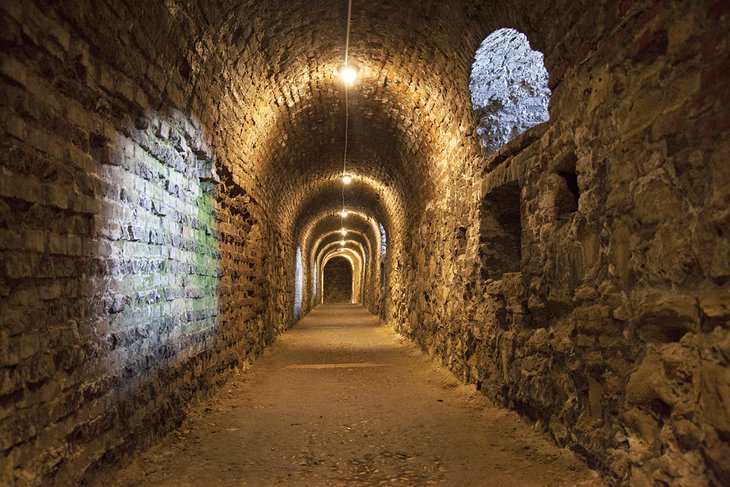
Underneath Castle Hill and accessed via an entrance off Uri Utca is a vast and complex system of natural caves and passages that have been carved between them throughout their long history of human use, which dates back to prehistoric times.
Puzzling remains, enigmatic stone monuments, and the general spookiness of this subterranean world have combined to inspire legends that mix with the known history. The Turks began the connecting passageways, and three Turkish tombstones dating from as early as the 14th century remain from their occupation.
In the 15th century, it was a prison reputed to have housed the infamous Vlad Tepes, better known as Count Dracula. Tours of this six-mile underground world are available, taking in the exhibits on these and other famous caves of the world, as well as historical information on the various uses they have served through the centuries.
Address: Úri 9, Budapest
Official site: http://labirintus.eu/en/
11. Hospital in the Rock Nuclear Bunker Museum
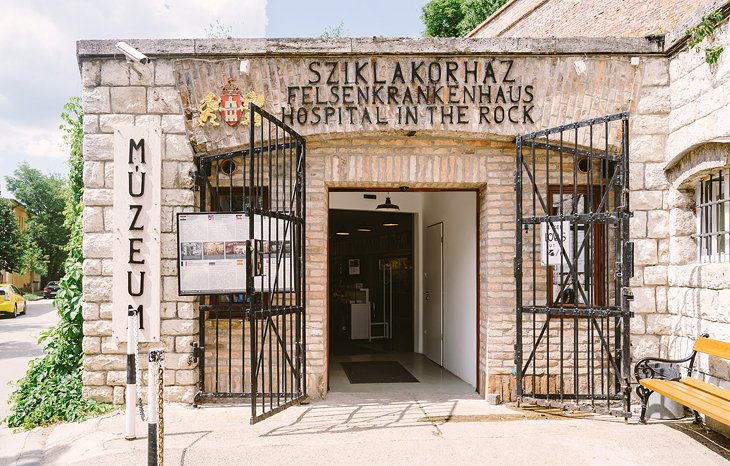
During World War II, Castle Hill's caves and passageways were fortified and used as an air raid shelter and emergency hospital, housing at the time one of the most advanced surgical theaters in the world. Later, during the Cold War, the hospital was further fortified to protect it from chemical and nuclear contamination.
Both the hospital and the nuclear bunker, known as the Hospital in the Rock (Sziklakorhaz), are now open as a fascinating museum and are well worth checking out.
Inside the subterranean facility are two exhibitions opened in 2016, one detailing the Siege of Budapest during World War II and showing the lifesaving efforts here during that emergency. The other explores the devastation caused by nuclear weapons. Both can be enjoyed as part of an interactive English language guided tour.
Address: Lovas út 4, Budapest
Official site: www.sziklakorhaz.eu/en
12. The Rock Chapel
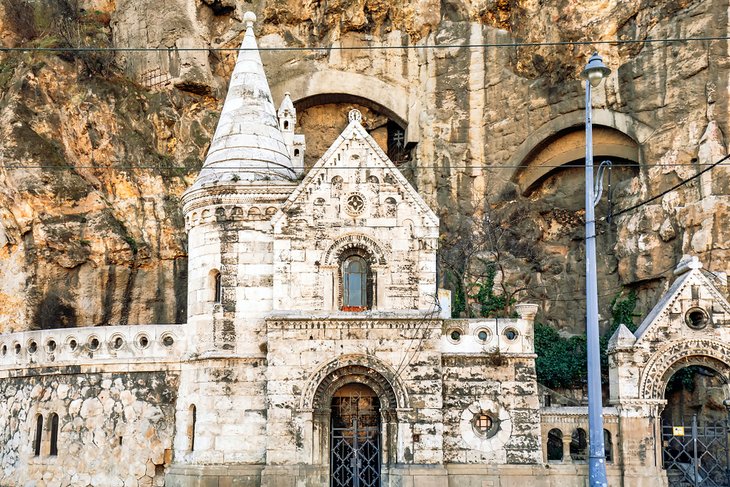
If there's time in your Castle Hill itinerary, and you're inclined to learn a little more about Budapest's rich history – including the castle and its surrounds – head to the old Rock Chapel just behind Matthias Church.
Here, in addition to having the chance to see the city's most unique place of worship, you'll find 3D past, a unique 3D Hungary History Show. This first-rate cinema experience provides a great overview of the history of the country and its people. An English language audioguide is available with your admission.
Address: 1114 Budapest, Szent Gellért rkp. 1
Official site: https://sziklatemplom.hu/eng/
13. The House of Houdini
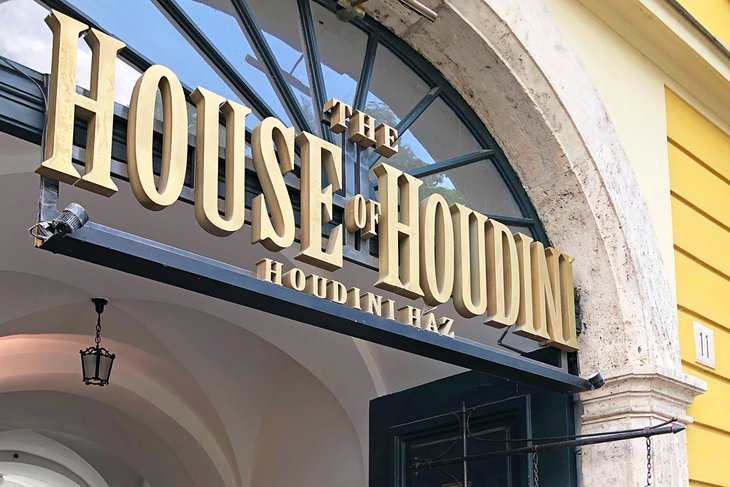
A fun thing to do for fans of the great escape artist Harry Houdini is the House of Houdini on Dísz Square. Although he made his name in the early 1900s in the US, the world-famous magician and escapologist was born in Budapest, a fact that's celebrated in this fascinating interactive museum, opened in 2016.
Exhibits feature a large collection of Houdini magic-related paraphernalia and personal artifacts, including handcuffs and props from some of his movies, and movies made about him. A highlight of a visit is the chance to see one of the museum's resident magician's put on a show in the facility's theatre. English language guided tours are available.
Address: Dísz tér 11, 1014, Budapest
Official site: www.houseofhoudinibudapest.com
14. Széchenyi National Library
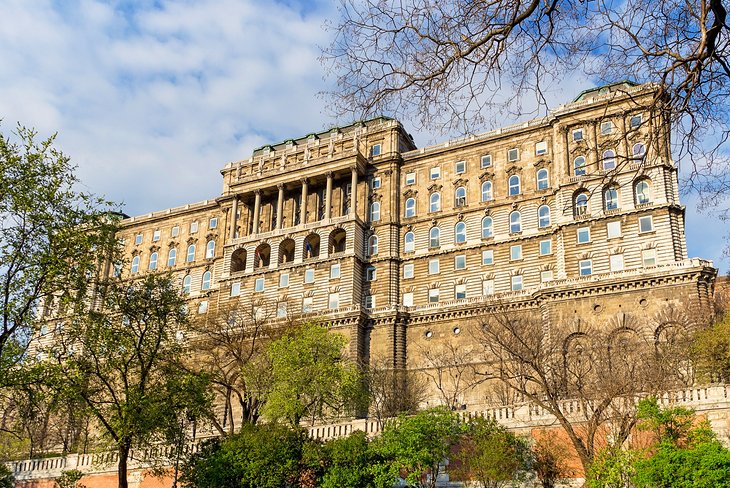
The huge Széchenyi National Library (Országos Széchényi Könyvtár) has been housed in the southwest wing of Buda Castle since 1985. Founded by Count Ferenc Széchenyi in 1802, this superb facility now serves as the country's national library.
Inside are more than six million documents, with an emphasis on important Hungarian manuscripts and maps. The highlight of the collection is the famous Budapest Manuscripts, some of the oldest known medieval illustrated scripts. A bookshop and café are located on-site.
Just a few minutes' walk from the library, and running parallel with the Danube, is the delightful Castle Garden Bazaar (Várkert Bazár). It's a great place for a stroll or, thanks to its spectacular river views, to simply find a quiet bench or piece of grass and watch the boat traffic float by. The attractive Neo-Renaissance architecture has been completely renovated, as have the many old halls, theaters, and gardens, some of which are now home to cafés and restaurants.
Address: 014 Budapest, Szent György tér 4-5-6
Official site: www.oszk.hu/en
15. Museum of Music History
The interactive exhibits at the excellent Museum of Music History (Magyar Tudományos Akadémia Zenetudományi Intézet – Zenetörténeti Múzeum) – also often referred to as the Institute for Musicology - consist of more than 1,000 musical instruments from the 18th to 20th centuries. Displays include rare violins plus folk, military band instruments, and numerous traditional musical instruments and related artifacts.
Informative guided tours of the facility are available and often include a short concert afterwards. The museum also offers a first-rate program of recitals and concerts, with a focus on Hungarian music, ranging from folk music, gypsy music, and popular composers such as Liszt and Bartók.
Address: Táncsics Mihály utca 7, Budapest H-1014
Official site: http://zti.hu/index.php/en/museum
Where to Stay near Budapest's Castle Hill for Sightseeing
We recommend you look into the quality accommodations and hotel deals available at these charming hotels, each located just a short hop from Budapest's magnificent Castle Hill district.
Luxury Hotels:
- The Aria Hotel Budapest by Library Hotel Collection is a five-star luxury hotel featuring an excellent rooftop lounge, complimentary refreshments and snacks throughout your stay, along with wonderful spa treatments, an indoor pool, and a hot tub.
- The relatively new four-star Prestige Hotel Budapest offers elegant ornate furnishings, plush bedding, an award-winning restaurant, plus a sauna and hot tub for guests to enjoy, all just a short walk away from the city's top attractions.
- The InterContinental Budapest is another good choice, particularly for its location opposite the famous Chain bridge, along with its spacious rooms and suites with views over the Danube and Castle hill.
Mid-Range Hotels:
- Leading our selection of notable mid-range accommodations, Hotel Moments Budapest features stylish décor and a modern bistro, and offers guests a tasty complimentary breakfast.
- Also worth checking availability for is the historic Danubius Hotel Astoria City Center, just a short walk from the city's Hungarian National Museum and boasting classy rooms and good rates.
- And check out the trendy D8 Hotel, a modern affair featuring bright rooms and suites, a huge lobby, and a great casual restaurant.
Budget Hotels:
- Our favorite budget hotels include the Ibis Budapest City budget hotel, which ranks highly for its friendly staff, good value, and sleek furnishings.
- Other good cheap hotels in Budapest that offer good quality rooms include the modern Star Inn Hotel Budapest Centrum, close to the Budapest Opera House and featuring great buffet breakfasts, and Six Inn Hotel Budapest, popular for its great central location and bright décor and hip vibe.
Tips and Tours: How to Make the Most of Your Visit to Budapest's Castle Hill
- Walking Tours: The Castle District is part of a great three-hour small group Budapest City Walking Tour, led by an English-speaking guide, that takes in the main sights across the city, plus a stop for coffee and Hungarian pastries. Castle Hill is the sole focus of the 2.5-hour Budapest Castle District Walk with Matthias Church Entry, led by a private guide and including the attraction's most important things to do. Along the way, you'll see preserved medieval streets plus some fascinating places tourists normally miss, all of it enlivened by local history, folklore, and legends.
- For Your Comfort: Wear good walking shoes. Castle Hill covers a large area with uneven cobblestones underfoot. If you tour the caves, you'll want a light jacket or sweater even on a warm day.
- Festival: On August 20, the Hungarian national holiday, Budapest Castle is the prime viewpoint for the evening's mammoth fireworks display. During the day, the hill is alive with the Festival of Crafts, food stalls, and music.
Map of Tourist Attractions of Budapest's Castle Hill
Budapest's Castle Hill - Climate Chart
| Average minimum and maximum temperatures for Budapest, Hungary in °C | |||||||||||
| J | F | M | A | M | J | J | A | S | O | N | D |
| 2 -3 | 5 -1 | 11 3 | 17 7 | 22 12 | 25 15 | 27 16 | 27 16 | 23 13 | 16 8 | 9 3 | 4 -1 |
| PlanetWare.com | |||||||||||
| Average monthly precipitation totals for Budapest, Hungary in mm. | |||||||||||
| 41 | 38 | 33 | 41 | 61 | 69 | 46 | 56 | 38 | 33 | 58 | 48 |
| Average minimum and maximum temperatures for Budapest, Hungary in °F | |||||||||||
| J | F | M | A | M | J | J | A | S | O | N | D |
| 35 27 | 41 31 | 51 37 | 62 45 | 71 53 | 77 58 | 80 61 | 80 60 | 72 54 | 61 46 | 47 37 | 38 31 |
| PlanetWare.com | |||||||||||
| Average monthly precipitation totals for Budapest, Hungary in inches. | |||||||||||
| 1.6 | 1.5 | 1.3 | 1.6 | 2.4 | 2.7 | 1.8 | 2.2 | 1.5 | 1.3 | 2.3 | 1.9 |
More Related Articles on PlanetWare.com
Hungary Vacation Ideas: If there's time in your Hungary travel itinerary, be sure to allow time to explore the many attractions and things to do surrounding Budapest. Highlights include the spectacular Baroque town of Eger, as well as the beautiful Danube Bend and the historic town of Vác. Other great Hungary attractions include the popular resort town of Tihany, on Lake Balaton, and the spectacular Caves of Lillafüred.