17 Top-Rated Attractions & Places to Visit in Bruges
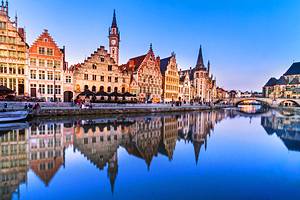
Gorgeous Bruges is a tourist's dream. This is Belgium's most perfectly preserved medieval town, and its jaw-dropping, beautiful architecture attracts more than two million visitors every year.
If you're short of time on your Belgium travels, Bruges should be your number one stop. With its wealth of interesting old buildings and its canals, it's the best place to visit in the country for anyone interested in Belgium's history.
Tourists taking a walk through the narrow streets or a boat trip on the canals fall immediately under its spell, charmed by the atmosphere of, what is for many, the most delightful of all the cities of Flanders (the Dutch-speaking northern part of Belgium).
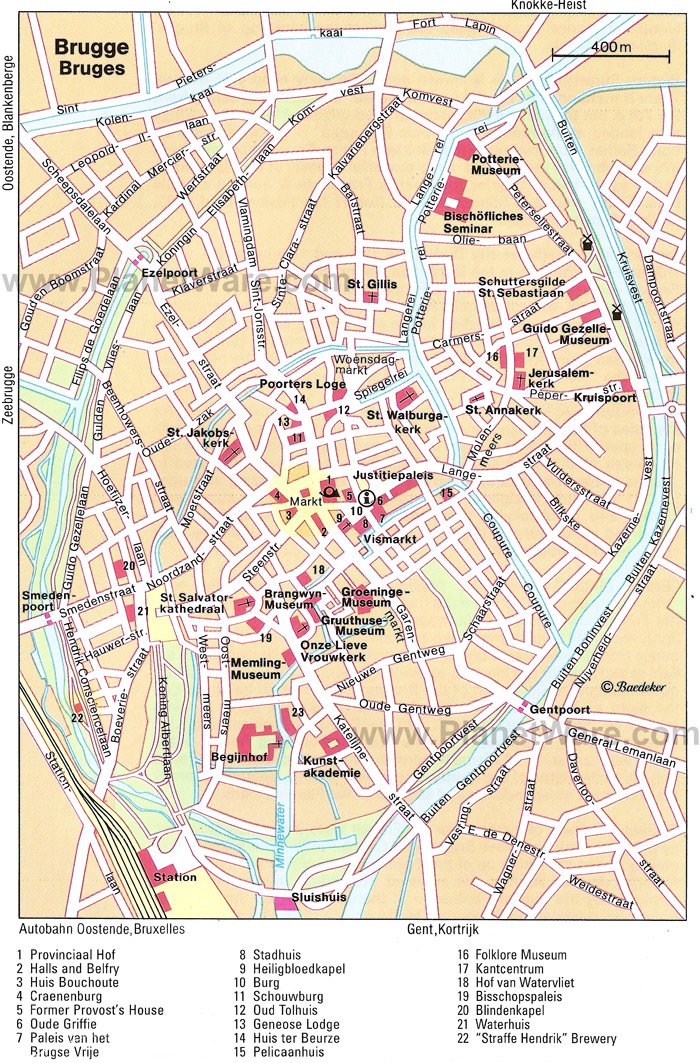
Because the center of Bruges is comparatively small, even those with only a day to spend sightseeing can expect to take away a good idea of all the major attractions. Essential viewing should definitely include at least the main square with the belfry, Burg Square with the Basilica of the Holy Blood, and a trip on the canals.
Plan your sightseeing in this magical city with our list of the top attractions and things to do in Bruges.
See also: Where to Stay in Bruges
- 1. Climb to the Top of the Belfry (Belfort van Brugge)
- 2. Visit the Basilica of the Holy Blood
- 3. Sightsee at the Markt
- 4. Cruise the Canals
- 5. Tour the Town Hall
- 6. View the Liberty of Bruges
- 7. See the Art inside the Groeninge Museum
- 8. Photograph the Famed St. Boniface Bridge
- 9. Admire the Church of Our Lady
- 10. Visit Sint-Jansspitaal (Old Saint John's Hospital)
- 11. Explore the Minnewater Area & the Béguinage
- 12. Tour the Museums in the Dijver Mansions
- 13. Visit the Sint-Salvatorskathedraal
- 14. Admire the Interior of Sint-Jacobskerk
- 15. View the Stained Glass of Jeruzalemkerk
- 16. Stroll to the Canal-Side Windmills
- 17. Day Trip to Flanders
- Where to Stay in Bruges for Sightseeing
1. Climb to the Top of the Belfry (Belfort van Brugge)
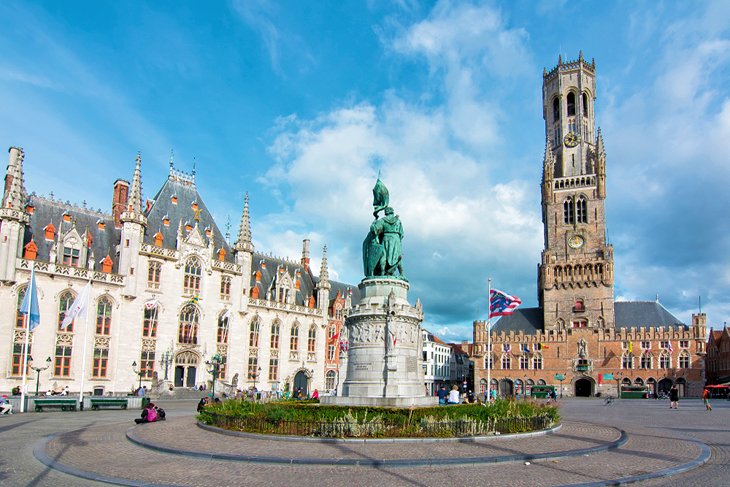
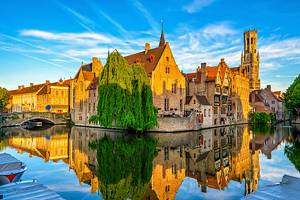
The south side of Bruges' Markt (the main square) is dominated by the Halle with the belfry –Bruges' most distinctive landmark – soaring above it.
The Halle was begun in 1248 and twice enlarged, first in the 14th century and then again in the 16th century, and once functioned as the city's main market place. The building encloses a picturesque courtyard, and the balcony above the entrance was once used by the city fathers to promulgate their statutes to the populace assembled beneath.
The 83-meter-high belfry is one of the finest bell towers in Belgium and is entered from the Halle's inner courtyard. Construction of the bell tower began in 1282, and the crowning octagonal upper section was finally completed in 1482. Today, a carillon of 47 bells still hang in the tower. For the best view over Bruges, you can climb the 366 steps up to the top of the tower.
On the way up, the old Treasure Room, where civic documents are kept behind wrought-iron grills, can be visited on the second floor.
Official site: https://www.museabrugge.be/en
2. Visit the Basilica of the Holy Blood
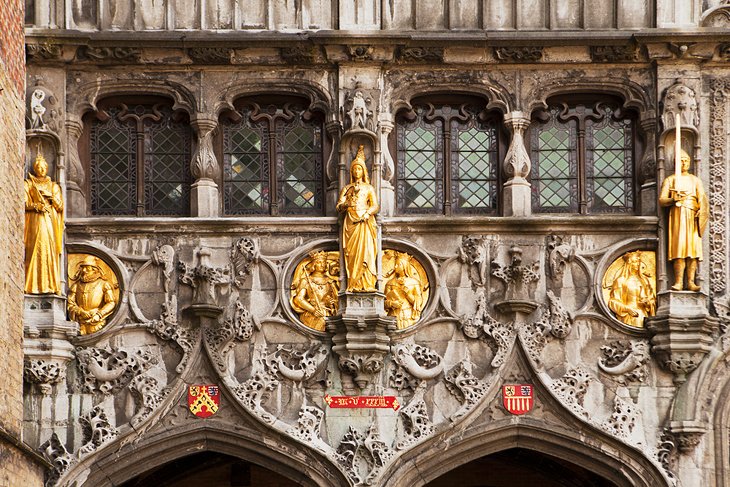
The Basilica of the Holy Blood (Heilig-Bloedbasiliek) presides over the central plaza known as the Burg or Burg Square.
The church is famous for the crystal vial kept inside that is reputed to contain a drop of Christ's blood brought back from the Holy Land by Dietrich of Alsace in 1149 on his return from the Second Crusade. Each year in May, this sacred relic is carried through the streets of Bruges in the Procession of the Holy Blood.
The facade of the basilica, with its three Flamboyant-style arches and gilded statues, was erected between 1529 and 1534. The basilica itself consists of a Romanesque lower chapel and a late Gothic upper chapel, which houses relics of St. Basil brought from Palestine by Robert II, Count of Flanders.
An elegant spiral staircase leads to the upper chapel (built in 1480), where every Friday the vial containing the Holy Blood is brought out and shown to the faithful.
3. Sightsee at the Markt
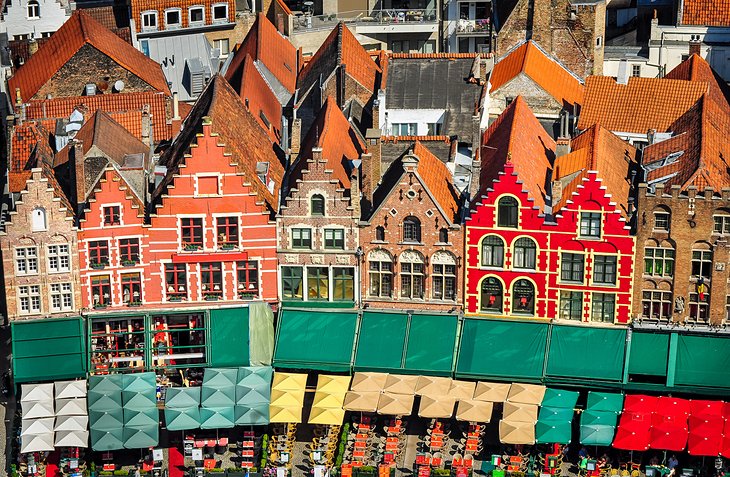
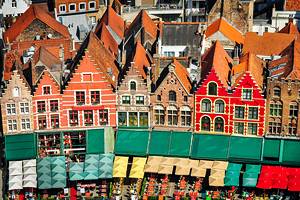
At the very heart of the city is the Markt, Bruges' bustling main square, surrounded on all sides by fine buildings from a variety of different periods.
The eastern side is dominated by the Neo-Gothic Provinciaal Hof building, which dates from 1887 and is the seat of the West-Vlaanderen provincial government. On the western side, occupying the left-hand corner, is the attractive brick 15th-century Huis Bouchoute.
On the opposite corner stands the Craenenburg where, in 1488, at the instigation of Ghent, the burghers of Bruges kept the future Habsburg Emperor Maximilian imprisoned for 11 weeks. He was freed only after agreeing to respect the authority of the ruling Regency Council and to order the withdrawal of all foreign troops.
The best way to admire all this architectural finery is to join the throngs of visitors and locals at one of the Markt's many cafés and sit for a while soaking up the historic splendor around you.
4. Cruise the Canals
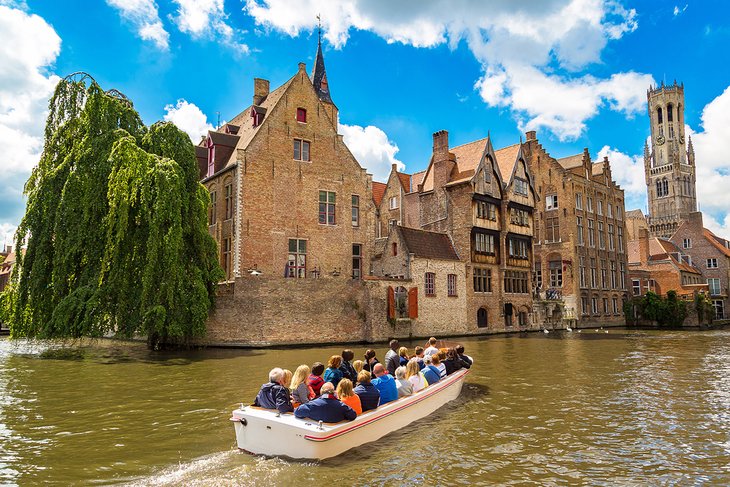
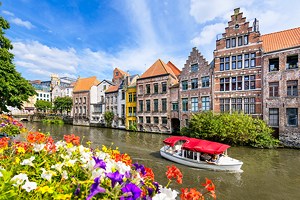
For the most relaxing sightseeing experience in Bruges, the top thing to do is hop aboard one of the tourist cruise boats. The boat cruise route runs right through the heart of Bruges between the Beginjhof (Beguinage) and Jan van Eyck Square, with great views of the canal-side architecture all the way.
Boat trips run every half hour between 10am and 6pm daily between March and mid-November. If you're traveling during the depths of winter, check with your Bruges accommodation, as the schedule changes according to the weather, but expect far fewer trips. The boats are uncovered but do provide umbrellas for passengers when it is raining.
There are five different companies offering boat trips, from five separate jetties all in the central city, but all offer exactly the same route, boat type, and ticket price, so you don't need to choose between them.
Tickets can't be booked in advance; just turn up at the jetty and buy your ticket there. Note that in high summer, the boat trips are extremely popular. Plan to hop aboard the first cruise of the day, when fewer day-trippers are about.
5. Tour the Town Hall
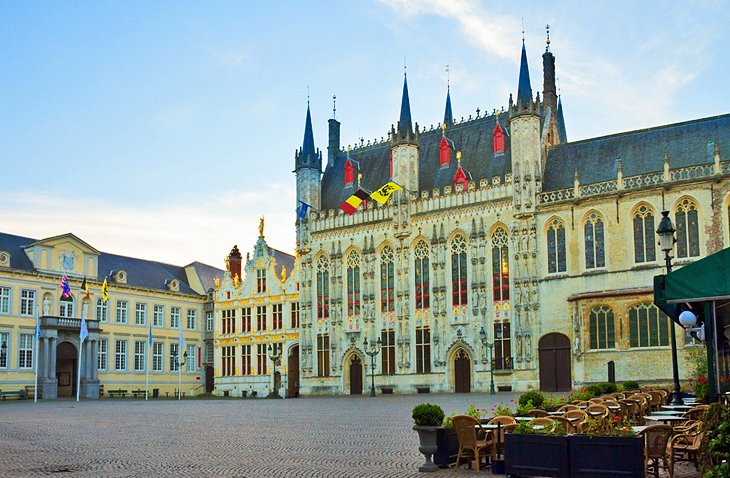
On the southeast side of the Burg is Bruges' Town Hall (Stadhuis), one of the oldest in Belgium, having been constructed between 1376 and 1420.
The facade of the delicate Gothic building displays the strong vertical emphasis characteristic of the style, with soaring pilasters, three of which end in octagonal turrets, separated by tall Gothic arched windows. Statues of the counts of Flanders from Baldwin Iron Arm onwards fill the 49 niches.
Inside, don't miss the great Gothic Hall on the first floor with its beautiful timber vaulting, which dates from 1402, and its murals recording events in the town's history by A and J de Vriendt (1895-1900).
Address: Burg 12, central Bruges
6. View the Liberty of Bruges
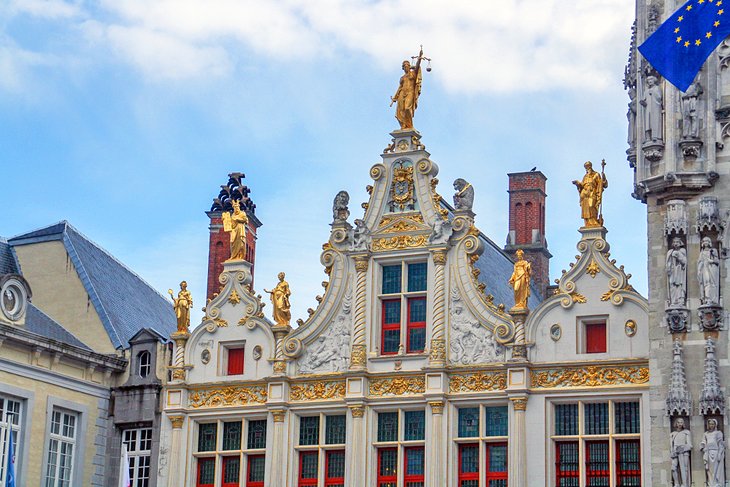
On the east side of Burg Square, the Bruges Tourist Office occupies part of what was, up until 1984, the Law Courts, built between 1722 and 1727 on the site of the former Liberty of Bruges (Paleis van het Brugse Vrije) from where independent magistrates exercised jurisdiction over the region.
Some fragments of the older building have survived, including the pretty 16th-century facade overlooking the canal at the rear.
One or two of the more historic rooms inside are now the Brugse Vrije Museum and can be admired by visitors.
Of particular interest is the Schepenzaal (lay magistrates' court), where you can see the famous chimneypiece designed by the painter Lanceloot Blondeel in 1529 and executed in black marble and oak by Guyot de Beaugrant. This magnificent piece of Renaissance craftsmanship has an alabaster frieze above depicting the story of Susanna and the Elders with carved oak figures of the Emperor Charles V and his parents, Ferdinand and Isabella of Castille, Mary of Burgundy, and Maximilian.
Address: Burg, central Bruges
Official site: https://www.museabrugge.be/en
7. See the Art inside the Groeninge Museum
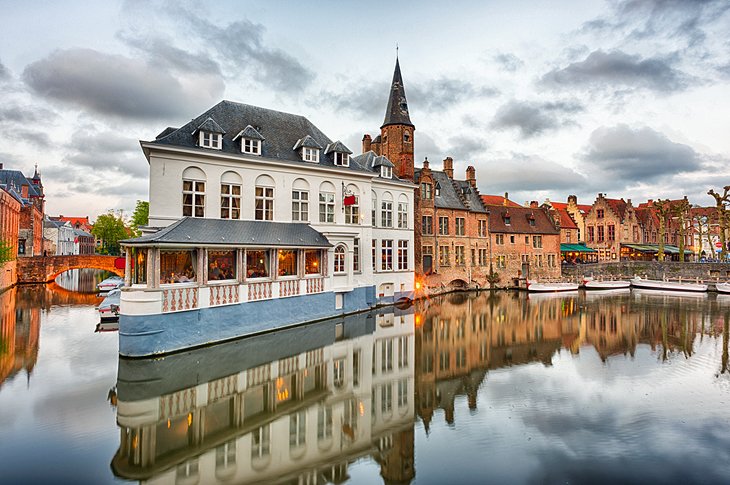
Head to the Dijver Canal to visit the Groeninge Museum (Stedelijk Museum voor Schone Kunst), which holds Bruges' best collection of art.
In addition to its excellent endowment of Old Flemish paintings, the museum also incorporates a gallery of modern art and a superb collection of views of old Bruges. However, the first five rooms of the museum are the ones most likely to claim your attention, as they contain quite exceptional paintings by Old Flemish masters.
In Room 1 hang two major works by Jan van Eyck: Madonna and the donor, Canon van der Paele (1436) and the portrait of Margaret van Eyck, the artist's wife, painted when she was 33 years of age (1439).
In Room 3 are panels illustrating the legend of St. Ursula and a portrait of Luis Gruuthuse, both famous works by unknown Bruges masters, and the Last Judgment by Hieronymus Bosch is among the paintings in Room 5.
Address: Dijver 12, central Bruges
Official site: https://www.museabrugge.be/en
8. Photograph the Famed St. Boniface Bridge
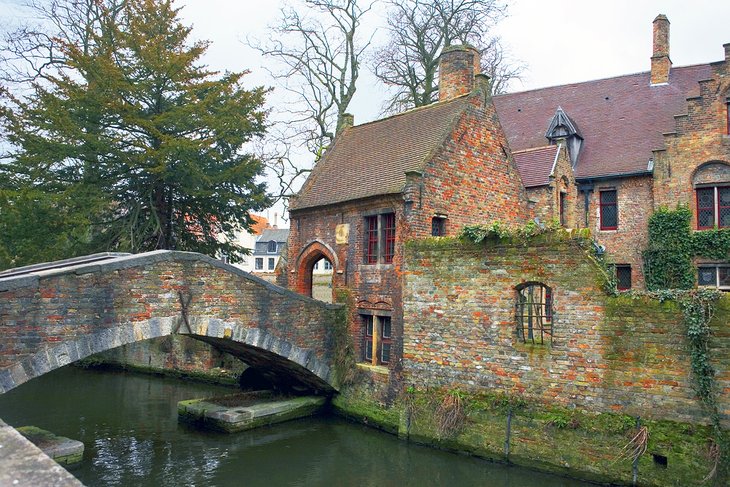
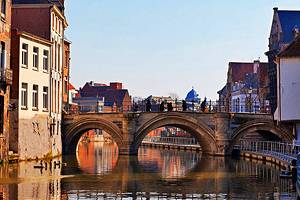
One of Bruges' most popular photography spots, St. Boniface Bridge (Bonifaciusbrug) is a narrow brick pedestrian bridge crossing the canal right between the Church of Our Lady and the Groeninge Museum.
Although the bridge is modest in stature and also one of the youngest bridges in the city – built in the early 20th century – it's famous because its position along the canal provides bridge-crossers with some of the city's most tranquil canal views, as well as great photos of the Church of Our Lady.
In high summer, do expect a bit of a line for photos at this spot. The best way to avoid that is to get here early in the morning, when far fewer people are about.
9. Admire the Church of Our Lady
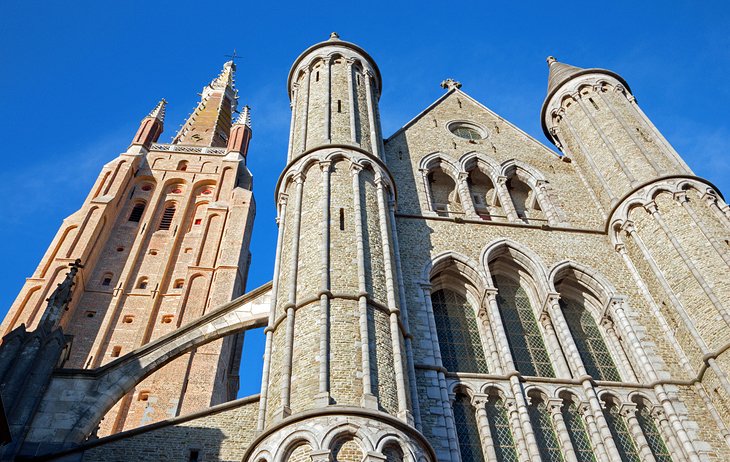
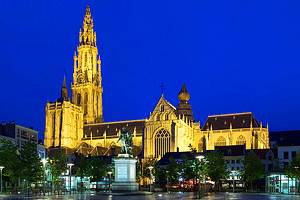
The 112-meter-high spire of the Church of Our Lady (Onze Lieve Vrouwekerk) is the tallest in Belgium. Work began on the nave and aisles around 1230, the outermost aisles and chapels being added in the 14th and 15th centuries.
The church holds a wealth of art treasures, among which is a sublime sculpture by Michelangelo, Virgin and Child (1503-04). The sculpture stands on the altar of the chapel at the end of the south aisle.
The Calvary on the high altar is by Bernaert van Orley, the triptych Adoration of the Shepherds is by Pieter Pourbus, and the Transfiguration of Christ is by Gerard David.
Location: Dijver, central Bruges
Official site: https://www.museabrugge.be/en
10. Visit Sint-Jansspitaal (Old Saint John's Hospital)
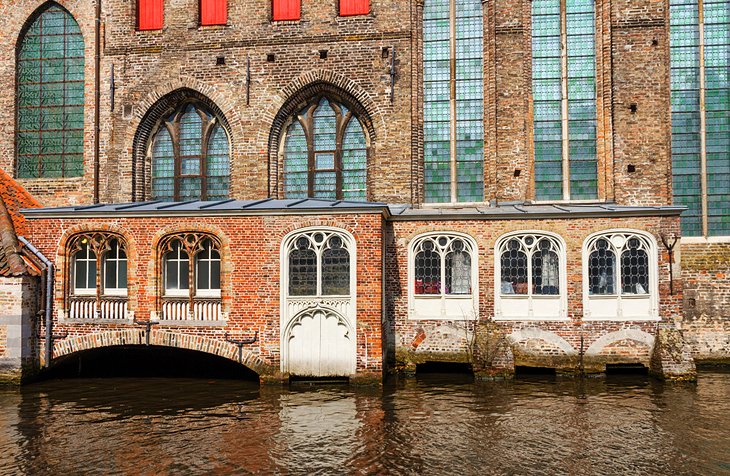
Immediately opposite the west door of the Church of Our Lady stands the oldest building in Bruges, the Sint-Jansspitaal (St. John's Hospital), founded in the 12th century. The tympanum, over the bricked up gate to the left of the Mariastraat entrance, is embellished with reliefs showing the Virgin, which bears the date 1270.
Inside the ancient building, in what were once wards, an exhibition of documents and surgical instruments charts the hospital's history. The old dispensary adjacent to the wards has also been preserved.
Also within the walls of the old hospital is the Memling Museum, a small collection of the works of Hans Memling (ca. 1430-94).
Outstanding among these is the Reliquary of St Ursala (1489), recognized as one of the master's most important works. Scarcely less famous is the Mystic Marriage of St. Catherine, painted for the so-called St. John altar.
South of Sint-Jansspitaal is the street of Walstraat, rimmed by tiny, exceptionally pretty, gabled 16th- and 17th-century houses in which lace-makers still practice their craft.
Address: Katelijnestraat, central Bruges
Official site: https://www.museabrugge.be/en
11. Explore the Minnewater Area & the Béguinage
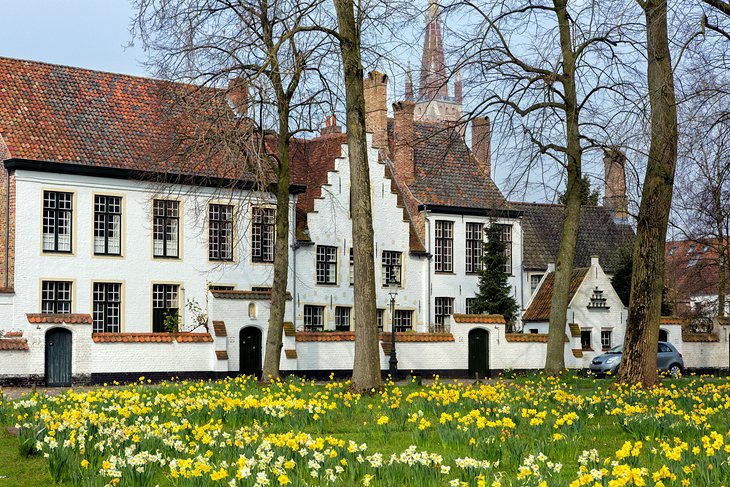
In medieval times, Minnewater (the "Lake of Love"), on the far side of Wijngaardplein, was part of Bruges' busy outer harbor. Nowadays, only the Gothic Lock House (sluishuis) at the north end provides a clue to its far-from-tranquil past.
Standing by the Lock House is a lovely view of the bridge over to Bruges' Béguinage (Prinselijk Begijnhof ten Wijngaerde) with its white 17th-century houses grouped around a grassy, tree-shaded court.
It was founded in 1245 by Margaret of Constantinople, and today is the home of Benedictine nuns.
Between the entrance gate and church (founded 1245, restored 1605), one of the former béguine houses has been turned into the Begijnhof Museum, which offers a fascinating insight into life in the béguinage.
Address: Wijngaardplein, Bruges
12. Tour the Museums in the Dijver Mansions
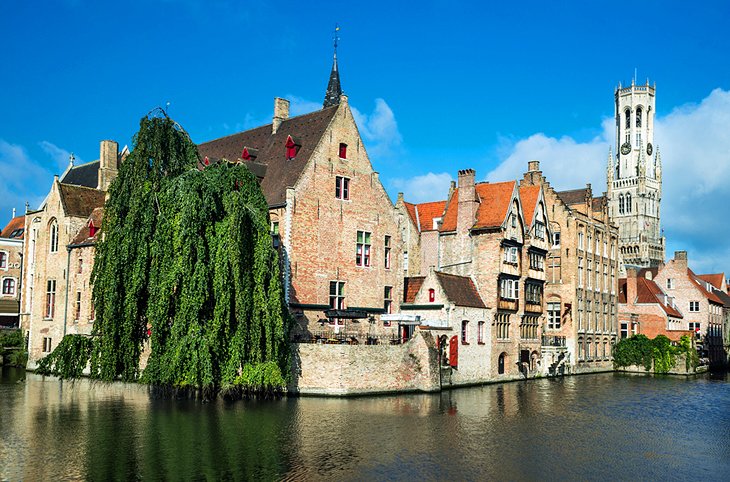
On the left, at the far end of the Dijver Canal, stands an attractive ensemble of 15th-century buildings comprising what was once the Heren van Gruuthuse mansion. Here in 1471, the fugitive English king Edward IV took shelter. The original "heren" were merchants with a monopoly on the trade in dried herbs (gruut).
Part of the mansion is now home to the exceptional Gruuthuse Museum, which holds a superb collection of antiques and applied art occupying 22 rooms.
Particularly eye-catching are the lacework, carvings, tapestries, and weaponry, also the delightfully restored and completely authentic old Flemish kitchen and the dispensary.
The Brangwyn Museum, in the 18th-century Arentshuis next door to the Gruuthusemuseum, has porcelains, pewter ware, ceramics, mother-of-pearl ware, and a charming collection of views of old Bruges as well as an exhibition of paintings and drawings by the Bruges-born English artist Frank Brangwyn (1867-1956).
13. Visit the Sint-Salvatorskathedraal
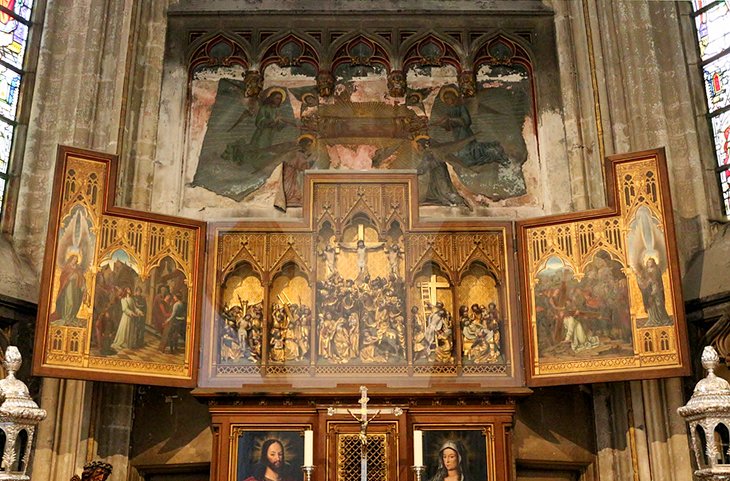
From the Church of Our Lady, take the short street of Heilige Geeststraat to the Sint-Salvatorskathedraal, the oldest parish church in Bruges and a cathedral since 1834. Originally founded in the 10th century, most parts of the present building date from the 12th and 13th centuries.
The fortress-like 99-meter-high west tower was constructed in several phases, the lower Romanesque portion between 1116 and 1227 and the brick section between 1183 and 1228.
Over the centuries, the cathedral has survived four fires as well as the iconoclastic fury.
The 101-meter-long interior contains some noteworthy furnishings. Especially outstanding are the Baroque rood-screen with a figure of God the Father by Artus Quellin the Younger, the 15th-century choir stalls embellished with the coats of arms of Knights of the Golden Fleece and, above the stalls, Brussels tapestries made in 1731.
Just off the right transept is the cathedral museum which holds some priceless art treasures.
To get to Bruges' Markt from here, take the Steenstraat with its row of typical Bruges gable gildehuizen that have made it renowned as one of the city's prettiest streets.
Address: Heilige Geeststraat, central Bruges
14. Admire the Interior of Sint-Jacobskerk
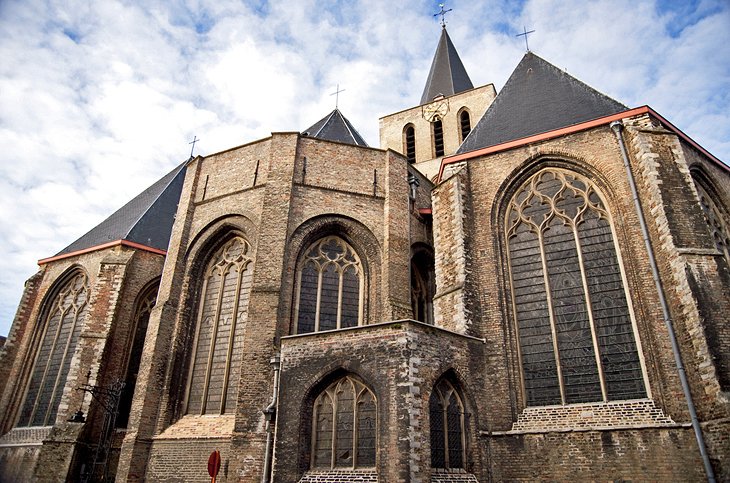
From the northwest corner of the Markt, Sint-Jacobstraat continues beyond the Eiermarkt to the Gothic Sint-Jacobskerk, passing on its way the 18th-century Musical Academy on the left and the Boterhuis (a cultural center) on the right.
Gifts from the dukes of Burgundy, whose palace was nearby, transformed the 13th- to 15th-century church from its relatively modest beginnings to its present size.
The richly ornamented interior contains a number of fine 16th- to 18th-century paintings by local artists, as well as some interesting tombs. Among the latter, to the right of the choir, is the twin-tiered tomb of Ferry de Gros (a treasurer of the Order of the Golden Fleece who died in 1544).
Address: Sint-Jacobstraat, central Bruges
15. View the Stained Glass of Jeruzalemkerk
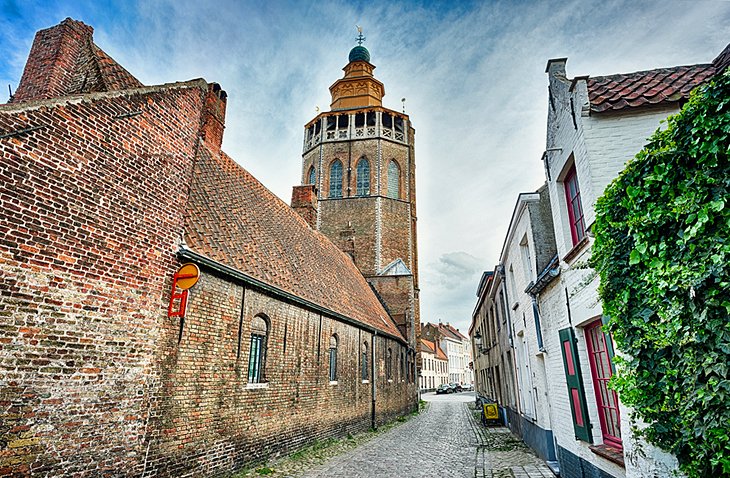
The Late Gothic church of Jeruzalemkerk dates from 1428 and was modeled on the Church of the Holy Sepulchre in Jerusalem.
The Adorne family, who built the church, had made a Holy Land pilgrimage and built this church upon their return.
Visitors should note the exceedingly fine stained-glass window work of the church, which dates from the 15th and 16th centuries and should also make sure they see the copy of Christ's tomb (a replica of the one in the Holy Sepulchre) while here.
On the exterior, the Jeruzalemkerk is most noted for its tower, which is distinctly different from other church spires in Belgium because of its oriental influences.
Address: Peperstraat, Bruges
16. Stroll to the Canal-Side Windmills
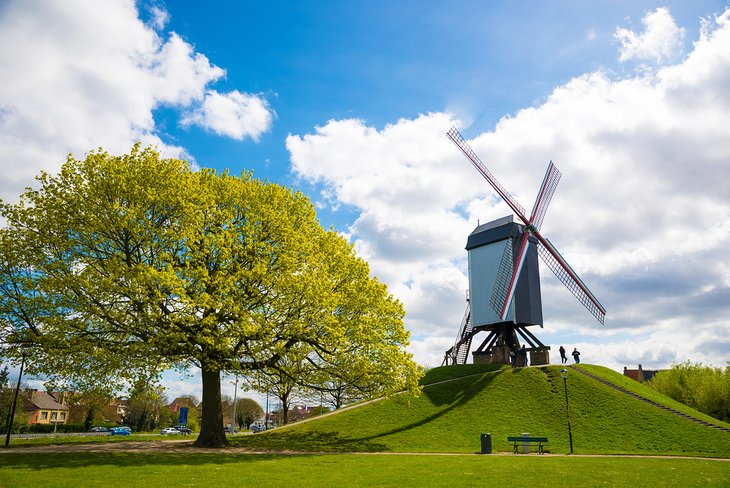
One of the nicest walks in Bruges is to stroll from the central city out to the windmills that dot Kruisvest Park, which traces the line of the old eastern ramparts of the city.
Windmills originally sat atop the ramparts in the 13th century, though the surviving windmills today, sitting on the summits of the lawn-covered rampart remnants, are much younger.
The four windmills here are still used to grind grain, and at Sint-Janshuismolen (Sin-Janshuis Windmill) from late spring to early fall, you can watch this process. At all of them, you can climb up the stairs of the grassy hummocks to see the windmills up close and enjoy great views over the grass-covered ramparts area.
17. Day Trip to Flanders
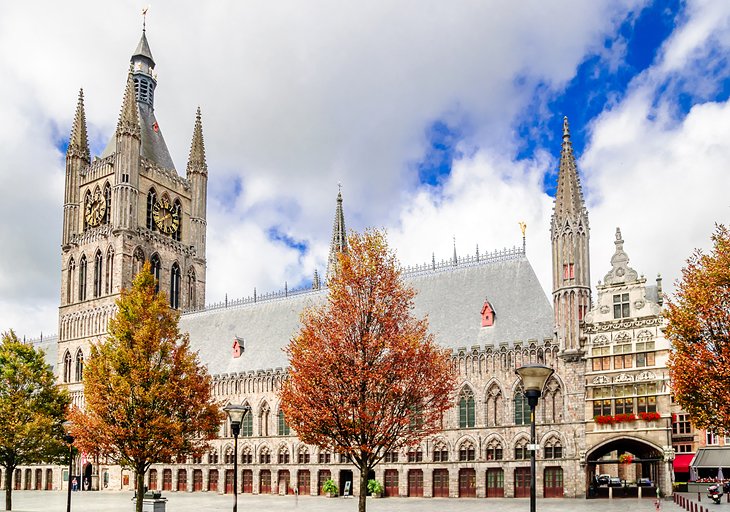
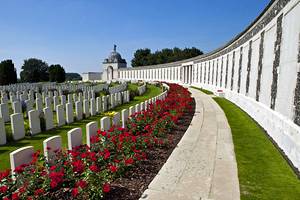
Military history buffs staying in Bruges can easily take a day trip to the Flanders battlefields and memorials.
The town of Ypres is less than an hour away by car, and is home to many of the area's most important World War I sites, including the Menin Gate and Rijselpoort (also known as Lilletor), several war cemeteries and monuments, as well as the expansive battlefields.
Ypres also has several beautiful churches and a lovely old square, Groke Markt, with the 13th-century Lakenhalle (cloth hall), which is home to the important In Flanders Fields Museum.
Where to Stay in Bruges for Sightseeing
Bruges' medieval town center is easy to explore on foot, and the best place to stay is within walking distance of the Markt, the city's main square, dominated by the massive Halle and its famous belfry. Other easy-to-get-to attractions from your old town accommodations include the Burg, home to the Basilica of the Holy Blood, and the city's many wonderful old canals. The following hotels are highly-recommended:
Luxury Hotels:
- Minutes away from the Markt, Hotel Prinsenhof Bruges is beautifully furnished throughout and is a tourist favorite for its intimacy and quiet rooms, some with canal views.
- Popular for its pampering, Hotel Heritage - Relais & Chateaux spoils guests in its large, sumptuously decorated rooms with treats such as chocolates (Belgian, of course) and fresh, fluffy robes.
- For those wanting to stay in one of the city's older buildings, try the Relais Bourgondisch Cruyce - Luxe Worldwide Hotel with its medieval exterior, antique furniture, and oak beamed-rooms overlooking a canal.
Mid-Range Hotels:
- On the banks of a canal and close to the Markt, the family-run Hotel Ter Duinen is popular with tourists wanting a true taste of old Belgium, with its beamed rooms and traditional décor.
- Beautifully decorated and intimate, the eco-friendly Hotel Fevery offers canal-view rooms (some with balconies) and the kind of comfort usually only found in luxury hotels.
- Equally charming, Adornes offers free bike rentals in addition to its beautiful, oak-beamed rooms.
Budget Hotels:
- Popular for its charming courtyard and casual atmosphere, Canalview Hotel Ter Reien offers reasonably sized rooms with modern décor.
- Also worth looking at are Hotel de Goezeput, in a well-preserved 18th-century building with exposed beams and cozy rooms, and the charming Hotel Van Eyck, with a number of rooms large enough for families.
More Related Articles on PlanetWare.com
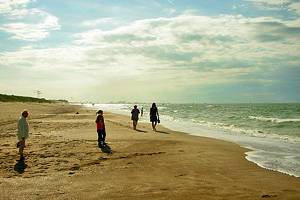
Day Trips from Bruges: This beautiful city makes an excellent "home base" for excursions, and there are plenty of options for those looking for day trips from Bruges, including the upscale Knokke-Heist beach resorts and the Zwin Nature Park. Anyone who loves Bruges will want to spend some time in nearby Ghent, a lovely city with a range of architecture comparable to Bruges, but it's far less crowded.
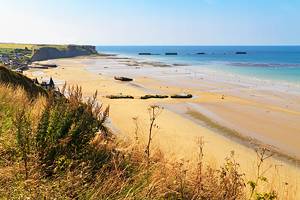
Historic Sites of Normandy: Just across the border in France are some of the most significant sites in World War II history in Normandy. Among these are numerous museums, cemeteries, and battlefields, as well as the Normandy D-Day memorials and beaches that are synonymous with the region.
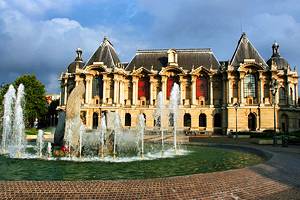
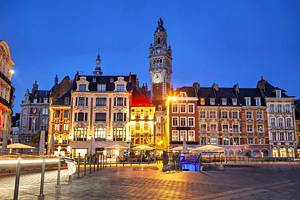
French Flanders: Heavily influenced by Flemish culture, the city of Lille is a wonderful mixture of France and Belgium. Here, you can find cuisine that highlights the best of both worlds, beautiful architecture including Gothic churches and Baroque public buildings, and an astounding number of impressive museums.