23 Top-Rated Tourist Attractions in Boston
Perhaps no other city in America holds as much history of the colonial and Revolutionary War era as Boston. It's not surprising then that its main sites have become a pilgrimage trail for Americans and for others who hope to get a sense of that history.
But more than that, the Freedom Trail is a good introduction to today's city, connecting or passing close to some of its best loved tourist attractions. Boston is easy to navigate on foot, as its major sights are relatively close, and America's first subway system, the T, connects its important neighborhoods.
Across the Charles River, a watery summer recreation area whose Boston shore is reserved as the Esplanade park, is Cambridge. Although a separate and independent city, for tourist purposes, Cambridge is part of Boston and connected by the same transit system.
Here, you'll find two of America's most prestigious and important universities, Harvard and the Massachusetts Institute of Technology (MIT). These and the many other universities and colleges in the area help keep Boston a youthful and vibrant place to be, with a lively cultural scene. With all the music, theater, and entertainment options, plus its abundance of restaurants, you'll never be at a loss for things to do in Boston at night.
Maybe because I've lived there and know its sometimes puzzling web of downtown streets, I find Boston a thoroughly comfortable city to visit; despite its tall buildings, its compact neighborhoods make it seem more like a cluster of small towns. Join me in a tour of my favorite city, and discover the best things to do, with this handy guide to the top attractions in Boston.
- 1. Walk the Freedom Trail
- 2. See a Game or Take a Tour of Fenway Park
- 3. Faneuil Hall
- 4. Boston Common and Public Garden: Ride the Swan Boats
- 5. Museum of Fine Arts Boston
- 6. Isabella Stewart Gardner Museum
- 7. USS Constitution and Bunker Hill (Boston National Historic Park)
- 8. Museum of Science
- 9. Harvard Square and Harvard Art Museums
- 10. Old North Church and Boston's North End
- 11. Boston Tea Party Ships & Museum
- 12. New England Aquarium
- 13. Harvard Museums and the Glass Flowers
- 14. Newbury Street & Back Bay
- 15. Boston Public Library and Copley Square
- 16. Boston Harbor and Whale Watching Cruises
- 17. John F. Kennedy Presidential Library and Museum
- 18. Beacon Hill and the Black Heritage Trail
- 19. Boston HarborWalk and Christopher Columbus Waterfront Park
- 20. Rose Fitzgerald Kennedy Greenway
- 21. Boston Pops and Boston Symphony Orchestra
- 22. Arnold Arboretum
- 23. Massachusetts Institute of Technology
- Where to Stay in Boston for Sightseeing
- Tips and Tours: How to Make the Most of Your Visit to Boston
- Best Time to Visit Boston, MA
1. Walk the Freedom Trail
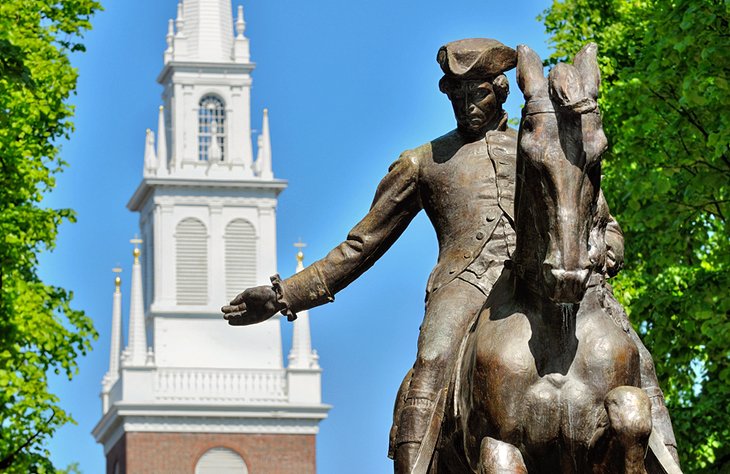
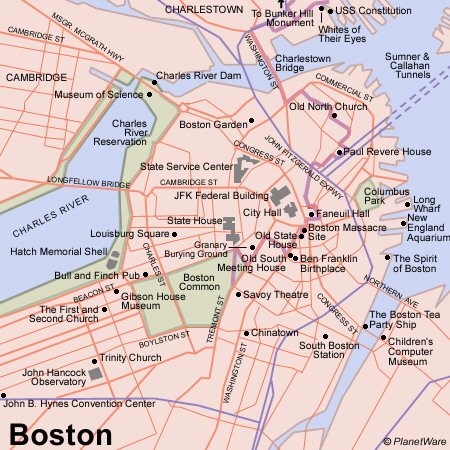
The three-mile Freedom Trail leads you past – and into – 16 of the city's principal historic monuments and sites. It's easy to follow, by the line of red bricks in the sidewalk and by footprints at street crossings. Begin by picking up brochures on the attractions at the Visitor Center in the Boston Common before heading to the State House.
The trail will take you to Old Granary Burying Ground (where Paul Revere, Samuel Adams, and John Hancock are buried), King's Chapel Burying Ground (Boston's oldest cemetery with the graves of Governor John Winthrop and two Mayflower passengers), Old South Meeting House (where the ringing speeches of patriots spawned the Boston Tea Party), and the Old State House. This is Boston's oldest public building and the site of the Boston Massacre.
The Freedom Trail continues through Boston's North End, past the Paul Revere House and Old North Church, and ends across the bridge in Charlestown with the 54-gun frigate USS Constitution and the 220-foot granite Bunker Hill Monument. With all these attractions and places to see, it's no wonder the Freedom Trail is one of the best walking trails around Boston.
2. See a Game or Take a Tour of Fenway Park
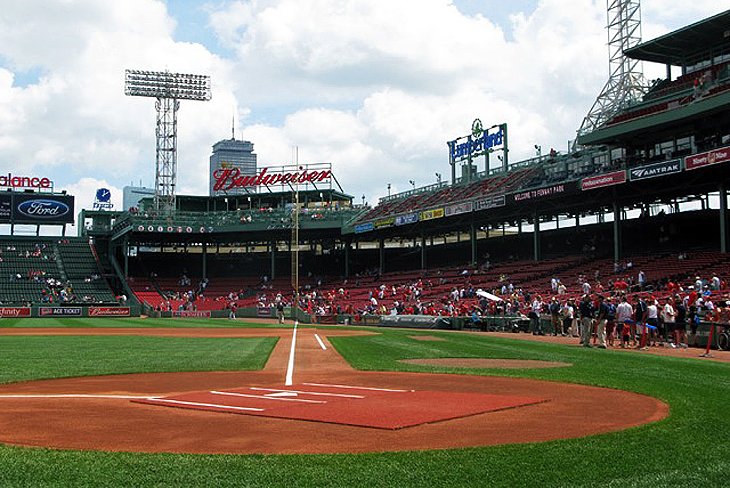
Known as "America's Most Beloved Ballpark," Fenway Park is one of the most fabled sports complexes in the country, and even if, like me, you're not a sports fan, a tour of it is both fun and interesting. And sitting inside, surrounded by cheering fans and singing "Sweet Caroline" is a quintessential Boston experience.
The home of the Boston Red Sox looks much the same as it did when it opened on April 20, 1912. One of its most recognizable features is the Green Monster, the 37-foot green wall in left field, and the park still maintains some of the remnants of "old time" baseball such as the hand-operated scoreboard.
Fenway Park also has the lowest seating capacity in the Major Leagues holding only 33,871 spectators (a fact that makes tickets exceedingly scarce).
Author's Tip: If you manage to get tickets, don't even think about driving to a game. Park outside the center and take any MBTA Green Line train (except one labeled Heath St.) to Kenmore Square and follow the crowd on the short walk to the stadium.
Address: 4 Yawkey Way, Boston, Massachusetts
3. Faneuil Hall
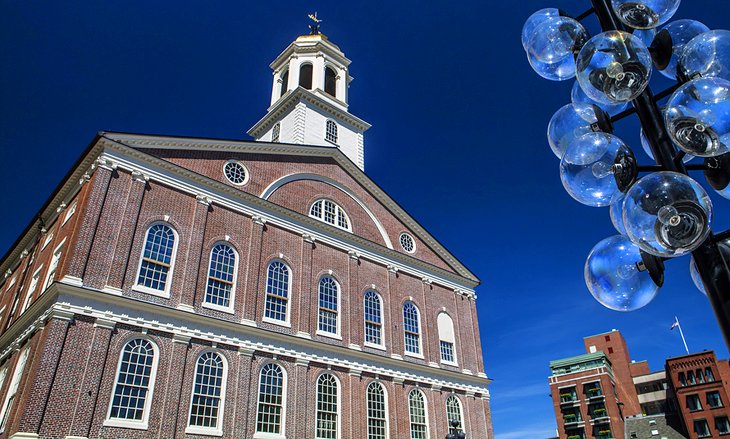
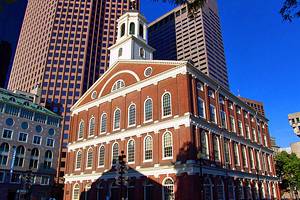
Known as the "cradle of liberty," Faneuil Hall was built in 1740-42 by Huguenot merchant Peter Faneuil as a market hall and presented to the city on condition that it should always be open to the public.
The ground floor is still occupied by market stalls; on the upper floor is a council chamber, which in the 18th and 19th centuries was the meeting place of revolutionaries and later, of abolitionists. On its fourth floor is the Ancient and Honorable Artillery Museum, with weaponry, uniforms, and paintings of significant battles.
The adjoining Faneuil Hall Marketplace includes three long halls (Quincy Market, North Market, and South Market), dating from the early 19th century, now occupied by a lively assortment of shops, restaurants, and exhibitions.
In good weather, I love the block-party atmosphere here, with street performers and buskers putting on shows in the square around the market, and in any weather I never tire of browsing through the shops selling jewelry, clothing, gifts, and souvenirs. You can never have too many Red Sox caps, or you can get a coffee mug inscribed with a Boston/English dictionary. It might come in wicked handy talking with locals.
The food stalls in Quincy Market are some of the most popular places to eat lunch in Boston. My favorites are Fisherman's Net and the family-run Boston Chowdah for seafood, and West End Srollers for panini sandwiches I can walk around with as I browse. Ethnicities from Hispanic to Asian Fusion are represented, and Boston Halal is opening in 2023.
Address: Faneuil Hall Square, Boston, Massachusetts
4. Boston Common and Public Garden: Ride the Swan Boats
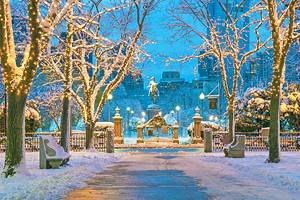
In the heart of the city is Boston Common, America's oldest park and the start of the Freedom Trail. In this large green space, which is much used by locals year-round, are various monuments and the Central Burying Ground of 1756.
You can rent skates to use on the Frog Pond from November through mid-March, enjoy the spring blossoms and fall foliage colors reflecting in its surface, and in summer, watch youngsters splash about in the wading pool.
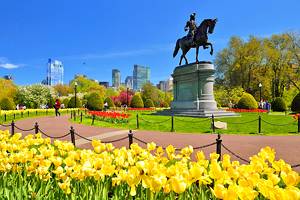
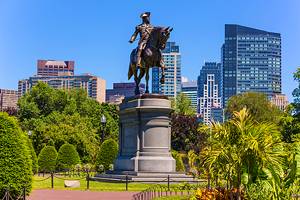
Adjoining it on the west side of Charles Street, is the 24-acre Public Garden, America's oldest botanical garden. Along with the Victorian-style monuments and statues, including an equestrian statue of George Washington, are the popular modern bronzes of a family of ducks immortalized in Robert McCloskey's children's book Make Way for the Ducklings.
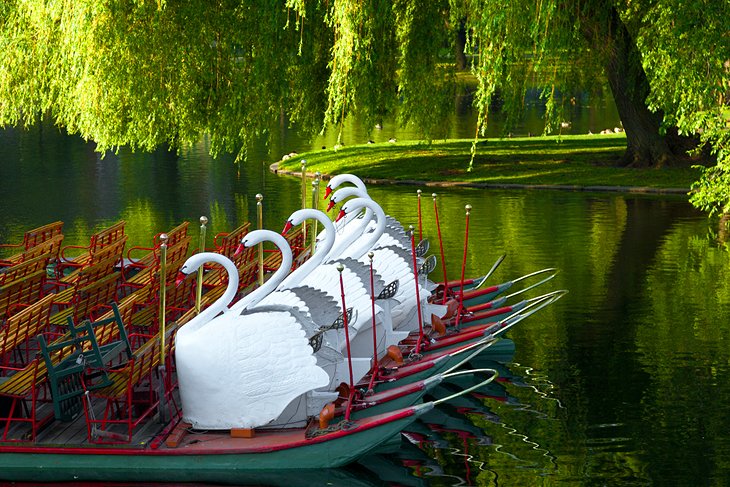
Joining the ducklings to give the Public Garden its whimsical air is one of Boston's most iconic experiences for all ages: riding around the lake in the garden's center on the famous Swan Boats, first launched in the 1870s.
Generations of children have ridden these and returned with their own children and grandchildren (I know this because I'm in one of those families). If you're in Boston with kids, take them for a ride here, and start your own multi-generational tradition.
Address: Public Garden, Boston, Massachusetts
5. Museum of Fine Arts Boston
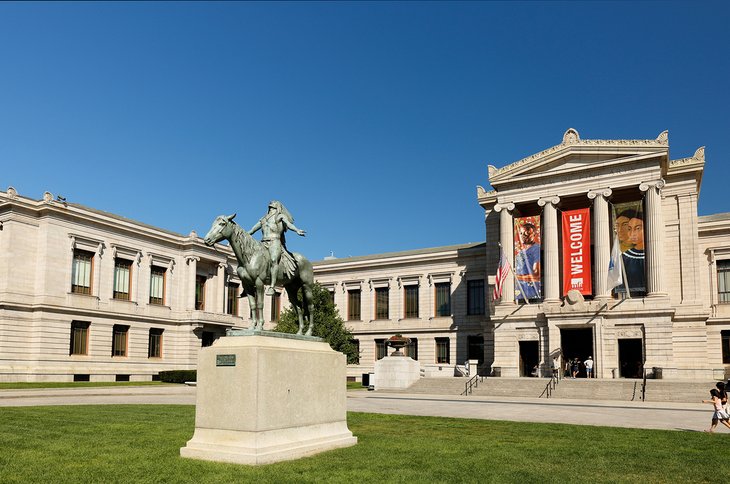
One of the leading art museums in the country, the Boston Museum of Fine Arts excels in its collections of Impressionist paintings, ancient Egyptian treasures, Asian and Persian fine arts, and works from ancient Greece and the Middle East.
Its crowning achievement is the construction of an entire American Wing to house, integrated in chronological order, outstanding collections of American paintings, furniture, decorative arts, folk art, silver, glassware, and design dating from pre-Columbian arts to the Art Deco and Modernist eras. To see all these works of art shown in context with other creative accomplishments of their time is an exciting journey through the world of American creativity, one I never tire of taking.
Highlights elsewhere include a 12th-century lacquered-wood sculpture of a Buddhist Bodhisattva and Korean painted screens, the ivory and gold statue of the Minoan Snake Goddess from 1500 BC, and a statue of the Egyptian pharaoh Mycerinus and his queen from 2548-2530 BC.
For me, in addition to the American Wing, the museum's highlight is the group of 35 paintings by Claude Monet, one of the largest collections outside of France. These are exhibited in good company, alongside works of Gaugin, Renoir, and Degas.
To see and appreciate all the museum's galleries and collections could take a full day, but the mind can only absorb as much as the feet can endure. So unless you are a devoted art enthusiast, plan from two hours to half a day here and concentrate on those sections that interest you most.
The museum is about a 1½-mile walk from Copley Square and other neighborhoods for sightseeing; an easier way to get there is on the MBTA Green Line. Take a car marked Heath St. from Copley or Park St. stations.
Address: 465 Huntington Avenue, Boston, Massachusetts
6. Isabella Stewart Gardner Museum
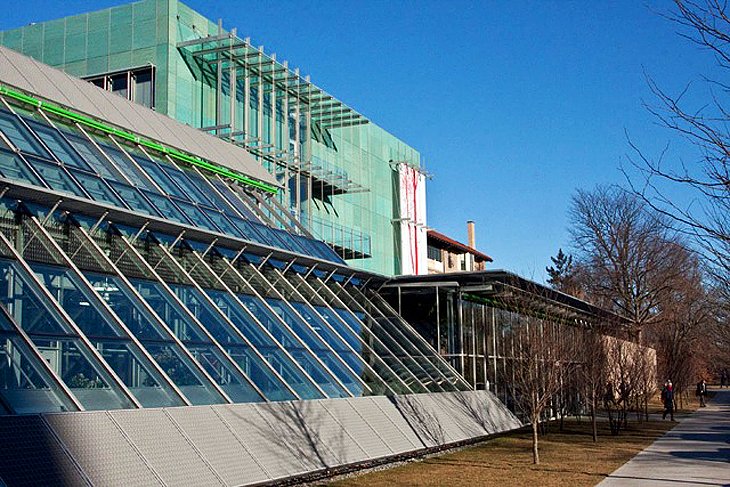
Set in a building its eccentric creator modeled after a 15th-century Venetian palace, the Isabella Stewart Gardner Museum displays its collections in rooms surrounding a four-story central courtyard filled with flowering plants and fountains.
The priceless 2,500-piece collection of paintings, sculptures, furniture, tapestries, decorative arts, books, and manuscripts reflect the personal tastes and considerable expertise of Mrs. Gardner herself, whose own flamboyance further adds to the charm of the museum.
Behind the palazzo, a 70,000-square-foot glass-clad building designed by Italian architect Renzo Piano creates new viewpoints for the original palazzo and stunning spaces for music and visual arts, allowing the museum to showcase exceptional contemporary works and artists. Rather than clash or compete with the original building, Piano's wing simply provides a new glass through which to view Mrs. Gardner's palazzo.
From almost anywhere in the new building are uninterrupted prospects of the palace and gardens through transparent walls. After you tour the museum, stroll through the Fens, a long green space, where you'll find a beautiful rose garden in bloom from June through October.
Author's Tip: The Gardner is only a few steps from the Museum of Fine Arts, making it tempting to combine them in one day. But unless art is your passion, it's best to see them on different days, so you can appreciate each. Visiting the Gardner is to immerse yourself not just in art, but in the 15th- and 16th-century artistic world of Renaissance Italy.
Address: 280 The Fenway, Boston, Massachusetts
7. USS Constitution and Bunker Hill (Boston National Historic Park)
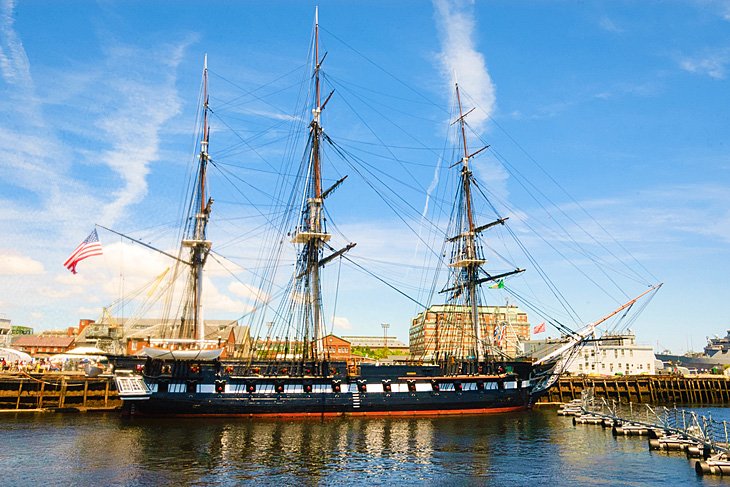
Nicknamed Old Ironsides, USS Constitution is the oldest commissioned ship in the United States Navy, and is still commanded and crewed by Navy personnel. The ship is open to visitors, who can go below desks and hear about the ship's construction and action at sea.
Across the pier, the USS Constitution Museum provides historical context through interactive exhibits that illustrate life aboard a naval vessel two centuries ago. Another ship you can tour here is the Cassin Young, a World War II destroyer.
Charlestown Navy Yard is part of the Boston National Historical Park, and it's a short walk to the Bunker Hill Monument and Museum, also in the park. The 221-foot-tall granite monument marks the hilltop site of the earthen fort built by New England soldiers prior to the Battle of Bunker Hill, the first pitched battle of the American Revolution.
Address: Building 22, Charlestown Navy Yard, Charlestown, Massachusetts
8. Museum of Science
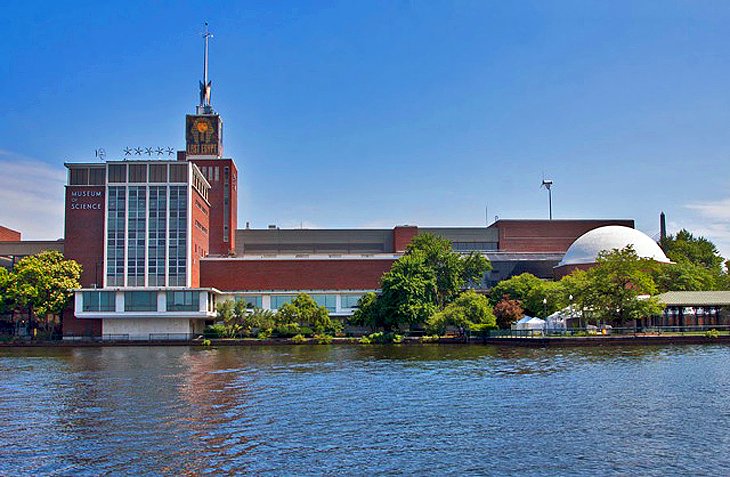
Exhibits in the extensive Museum of Science encourage learning through hands-on exploration of science and technology, but the museum is not just for children. Physics, biology, chemistry, ecology, zoology, astronomy, computers, and more are explored in more than 700 permanent, hands-on exhibits that are enhanced by stage presentations and interpreters. I find it every bit as engaging as my children do, and can easily spend a whole day here.
Highlights are a 65-million-year-old fossil discovered in the Dakota Badlands, an electricity dome with continuing programs, the Butterfly Garden where you can walk among free-flying butterflies in a conservatory filled with exotic plants, a live animal center, a chance to join local meteorologists to learn weather forecasting, and ComputerPlace, where you can operate a robot and explore how your computer stores information. The planetarium presents daily laser and star shows, and the Mugar Omni Theater has a five-story domed screen.
Author's Tip: Save money on a family day at the museum by bringing your own lunch. You are welcome to enjoy it in the Atrium, on the front plaza, or at picnic tables behind the museum. No snacking in the exhibit areas, though.
Address: Science Park, Boston, Massachusetts
9. Harvard Square and Harvard Art Museums
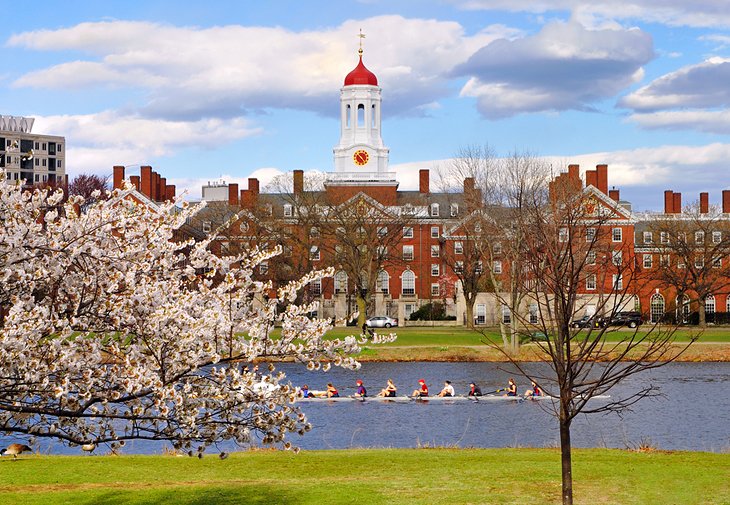
Harvard University, founded in 1636, is the oldest institution of higher learning in the United States and is widely considered one of the world's leading academic centers. Go to the Harvard Information Center to take a spirited and entertaining free walking tour of the campus guided by a student who will share history, Harvard lore, and personal perspective. Or you can download a tour from their website.
Harvard Yard sits right in Harvard Square, a lively hub for students, "townies," and visitors, filled with shops, bookstores, and allegedly more places to buy ice cream than any other U.S. city.
Adjoining Harvard Yard is the Renzo Piano-designed home of the Harvard Art Museums, including three formerly separate collections, each of which ranked high as major U.S. art museums. Few universities have such enviable collections. Fogg Art Museum concentrates on Italian early-Renaissance art, the Busch-Reisinger on Expressionist art of central and northern Europe, with Bauhaus objects and paintings by Kandinsky and Klee.
Another important feature of the museums is one of the world's best collections of Chinese jade, as well as Chinese bronzes, Japanese prints, Indian art, and Greco-Roman antiquities, especially vases and sculptures.
If you're as bookish as I am, don't miss browsing in The Harvard Bookstore, just across Massachusetts Ave. from The Yard. Not associated with the University, this indy store has been a fixture in this same spot since 1932.
If you're looking for Harvard insignia souvenirs, the place to go is the Harvard Coop, across the square.
Address: 32 Quincy Street, Cambridge, Massachusetts
10. Old North Church and Boston's North End
Boston's lively Italian neighborhood, known as the North End, is one of Boston's oldest, where the silversmith and activist leader Paul Revere lived at the time of the American Revolution. The Paul Revere House, which he bought in 1770 and lived in when he made his famous ride, is the only patriot's home on the Freedom Trail, and is open to tour.
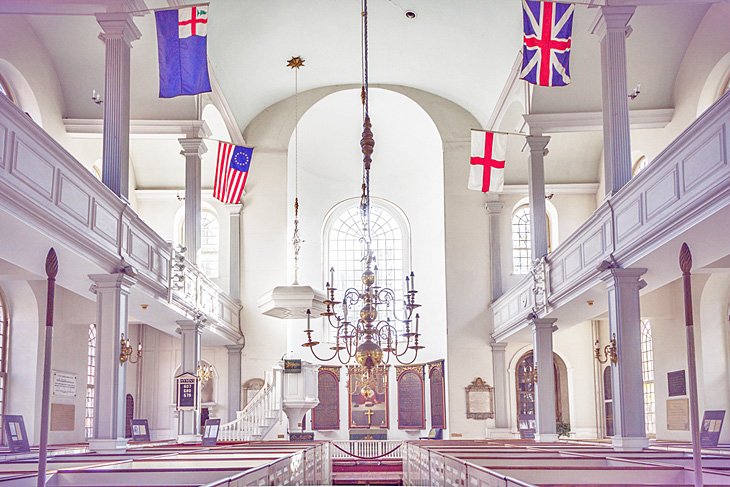
You can climb to the tower of Old North Church, where lanterns were hung in April 1775 to alert Paul Revere that British troops were headed to Lexington to arrest the patriot leaders and confiscate the munitions supplies. The beautiful white interior of the church still retains its historic box pews.
The North End is a favorite spot for tourists for reasons that go well beyond its important historic sights. Although it has changed a bit over the years since it was filled with newly arrived immigrants from Italy, it retains its Italian character and lively flair.
You'll find Italian restaurants; cafes; bakeries; and shops fragrant with aromas of cured olives, fresh-roasted coffee, and Italian cheeses. For my family, Modern Pastry on Hanover St. is a required stop, for cannoli and pignoli cookies.
You'll also find the North Bennet Street School, where skills such as bookbinding, cabinet and furniture making, carpentry, silver and gold work, and violin making are taught. Their gallery shop is like a museum of fine craftsmanship and a good place to shop for one-of-a-kind gifts.
11. Boston Tea Party Ships & Museum
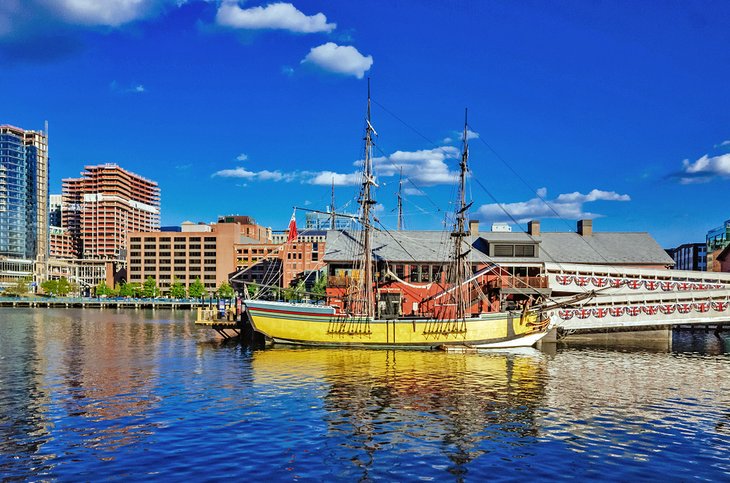
On the night of December 16, 1773, more than a year before the first battle of the American Revolution, angry Bostonians protesting a tax on goods shipped to the colonies, stormed ships from England and threw the tea into the harbor at this site. With full-scale replicas of the original ships from which the Sons of Liberty dumped tea overboard, the Boston Tea Party Ships & Museum offers tours with a participatory reenactment of that event.
Costumed historical interpreters lead visitors through that historic night, through interactive exhibits, films, and multi-sensory experiences. Of course, everyone gets to dump tea into the harbor. In the museum, you'll see the only known tea chest from that ill-fated cargo.
This is more a history-as-entertainment attraction than a living history museum. But kids are drawn into the fun as they learn about shipboard life and American history, so it's no wonder this is one of the favorite things to do for families in Boston.
Address: 306 Congress Street, Boston, Massachusetts
12. New England Aquarium

Overlooking the waterfront, the New England Aquarium features more than 20,000 fish and aquatic animals representing over 550 species. A man-made Caribbean coral reef houses a large variety of tropical fish and underwater life including sharks, turtles, and moray eels. The Edge of the Sea touch tank allows visitors to handle small invertebrates like crabs, starfish, and urchins.
Outside the aquarium, visitors can watch harbor seals play, perform, and live in their enclosed habitat. The New England Aquarium also sponsors educational programs and whale-watching tours outside of Boston Harbor, and the adjacent IMAX Theater shows 40-minute films on nature subjects.
To be sure of admission at this popular family attraction, reserve timed entry tickets in advance. Nearby parking is expensive, but it's easy to get here by public transit; the aquarium has its own stop on the MBTA's Blue Line.
Address: Central Wharf, Boston, Massachusetts
13. Harvard Museums and the Glass Flowers
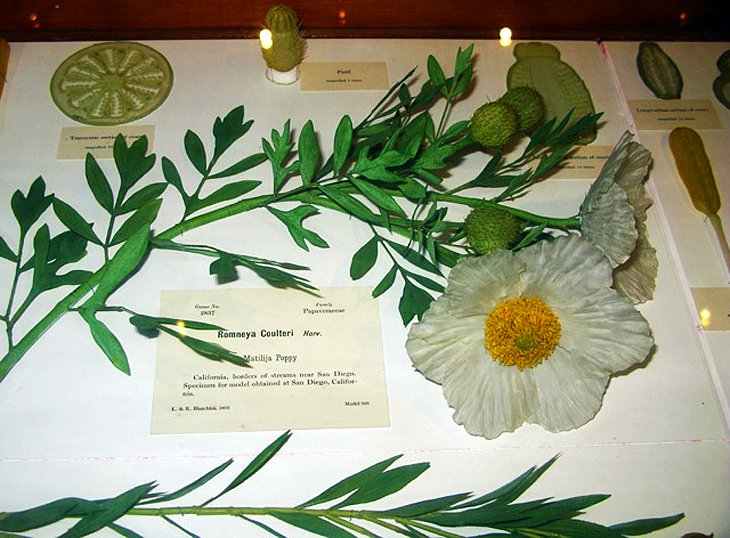
Although the four Harvard Museums that make up this complex contain treasures such as the artifacts brought back by Lewis and Clark, for most people, the highlight is the more than 3,000 models of 830 species of flowers and plants, some with insects, and all so realistic that you will have trouble believing they are made of glass. I marvel at these anew, each time I see them.
Created between 1887 and 1936 by German artisans Leopold and Rudolf Blaschka, the flowers are unique in the world, and their secret process has never been replicated. These are part of Harvard's massive research collections, shown under one roof in the Peabody Museum of Archeology and Ethnology, the Mineralogical Museum, the Museum of Comparative Zoology, and the Botanical Museum.
Particularly strong in Native American exhibits, the Peabody shows artifacts and art interpreted as part of a living culture, even when that culture has vanished. You can admire some of the finest examples of Native American arts from many periods and tribes, and also see how these changed as Europeans provided a new market for their goods.
Those who like the Victorian "Cabinet of Curiosities" feel of old traditional museums will love the Pacific Islands balcony - it's like stepping back a century. The Museum of Comparative Zoology, founded by Louis Agassiz in 1859, contains an extensive collection of fossils, including a 25,000-year-old mastodon. The mineralogy collections include a dazzling display of rough and cut gemstones, a world-renowned meteorite collection, rocks, ores, and minerals from around the world.
Address: 26 Oxford Street, Cambridge, Massachusetts
14. Newbury Street & Back Bay
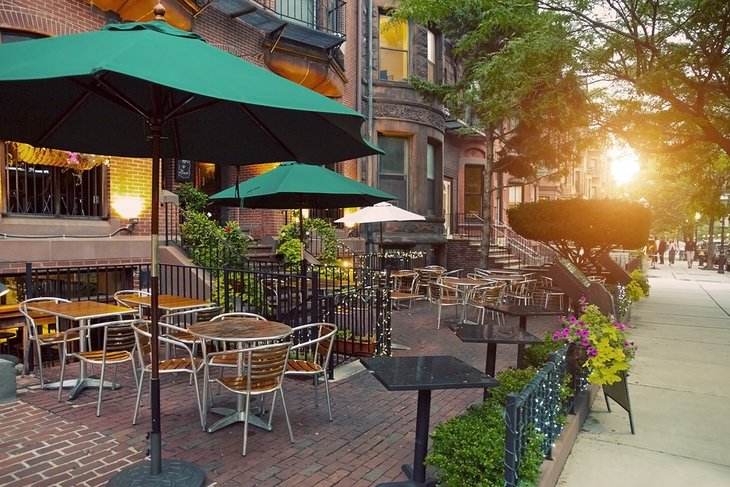
Both atmospheric and fashionable, Boston's Back Bay (it was once under water, before a hill was leveled to fill it in) is the heart of the 19th-century city, home of the "Proper Bostonian" of legend. Streets of sedate Brownstone and brick townhouses line the grid of streets between the Public Garden and the Fenway, bounded on the north by Storrow Drive and the Charles River Esplanade.
Stroll its tree-lined streets, especially Newbury Street, to find an almost European atmosphere of small (mostly trendy) shops and boutiques, art galleries, and cafés and restaurants that spill out into sidewalk terraces. Architecture throughout the neighborhood is eclectic, with some fine examples of ornamental terra-cotta and brickwork.
I love walking through Back Bay residential streets at any time of year – in the spring when Magnolias bloom in the tiny front yards, in the winter when the wrought-iron fences sketch patterns against the snow, and in the fall when fallen leaves crunch underfoot.
15. Boston Public Library and Copley Square
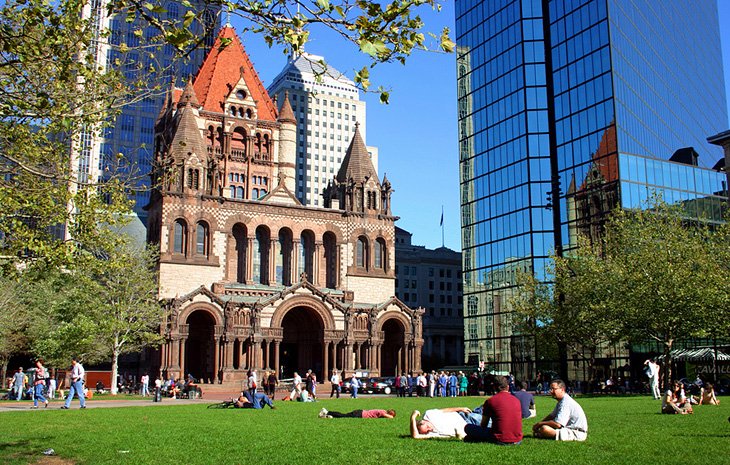
The main square of the Back Bay area is surrounded by both old and ultra-modern buildings. One side is formed by the Boston Public Library, founded in 1848 as the first publicly funded lending library in the country. Architect Charles Follen McKim designed the present building in 1895.
Go inside to see the library's Renaissance Revival architecture and murals by John Singer Sargent and Edwin Abbey. Granite medallions over the entrance arches are the work of the pre-eminent American sculptor Augustus Saint-Gaudens. The three sets of bronze doors in the vestibule were created by Daniel Chester French. Regular Art and Architecture Tours are among the several free things to do in Boston.
Author's Tip: Boston's best-kept secret may be the elegant afternoon teas served in the tearoom overlooking the beautiful Italianate Courtyard of the Boston Public Library. Crisp white linens and silver-edged crystal set the stage for proper tea sandwiches, scones, and trays of dainty sweets.
Facing the library, across a grassy lawn, where you can enjoy a picnic lunch with neighborhood office workers, is Trinity Church, a red sandstone building designed by architect Henry Hobson Richardson in his distinctive style, known as Richardson Romanesque. Trinity is widely considered to be his finest work. The murals, frescoes, and painted decorations inside are by John La Farge and much of the fine stained glass is by Edward Burne-Jones and William Morris.
On a third side of the square is the venerable Boston institution, the Fairmont Copley Plaza; these three buildings, backed by the sheer glass wall of a skyscraper, create a stunning cityscape. A block down Boylston Street, look for the finish line of the Boston Marathon, run each April on Patriot's Day.
Just beyond is the Prudential Center, a 32-acre complex of apartments, shops, restaurants, and a 52-story tower. On its 50th floor, you can visit the Skywalk observation deck for 360-degree views of Boston and its surroundings.
Address: 700 Boylston Street, At Copley Square, Boston, Massachusetts
16. Boston Harbor and Whale Watching Cruises
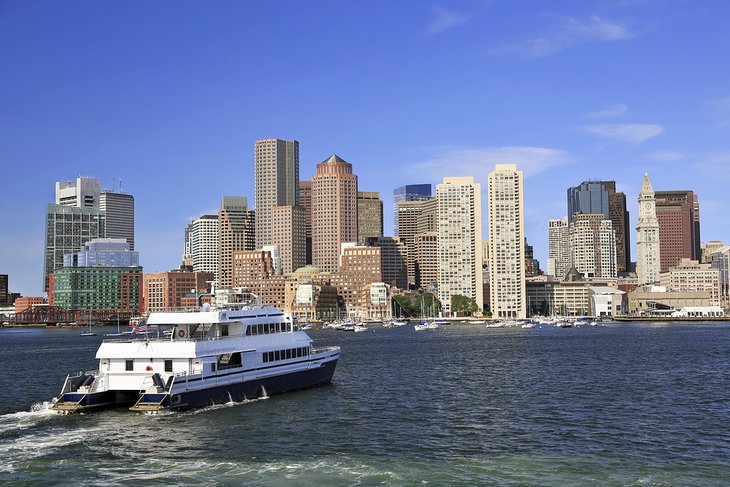
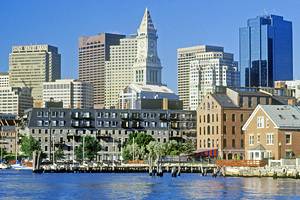
At Rowes Wharf, you can board the Odyssey to cruise through Boston Harbor, from Castle Island to George's Island, then east to the Boston Light on Little Brewster Island, and back north to Charlestown Naval Yard before returning to the wharf.
You can enjoy lunch, dinner, or Sunday brunch as you savor the views of the Boston skyline from the water. The skyline is especially beautiful at night when you can take a starlight or full moon cruise.
You can travel outside the confines of Boston Harbor on Boston Whale Watching Cruises, for a chance to see humpback and fin whales, as well as dolphins and porpoises, in the wild. This three-hour, naturalist-led tours are very popular and claim to have whale sightings on every trip.
17. John F. Kennedy Presidential Library and Museum
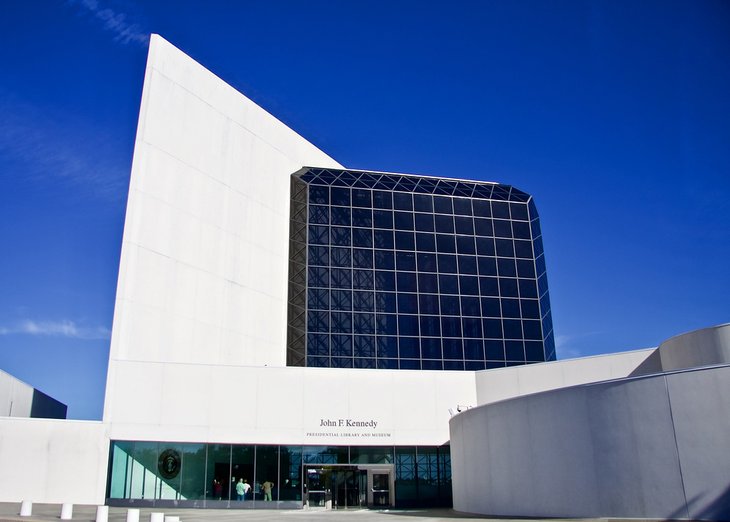
Dedicated to the memory of the 35th U.S. President, the John F. Kennedy Presidential Library and Museum is the official national memorial to JFK, designed by noted architect I.M. Pei and opened in 1979. The museum, which stands on the shore south of the city, features three theaters, personal memorabilia, photographs, and historical exhibits that document the life of JFK and his presidency.
Exhibits cover the presidential campaign trail, the Oval Office, First Lady Jacqueline Bouvier Kennedy, and the Kennedy family. Interactive experiences here include the free and family-friendly Highlights tours and the Hands-on Cart programs, which include the PT-109 story and a closer look at the Race for Space.
Address: Columbia Point, Boston
18. Beacon Hill and the Black Heritage Trail
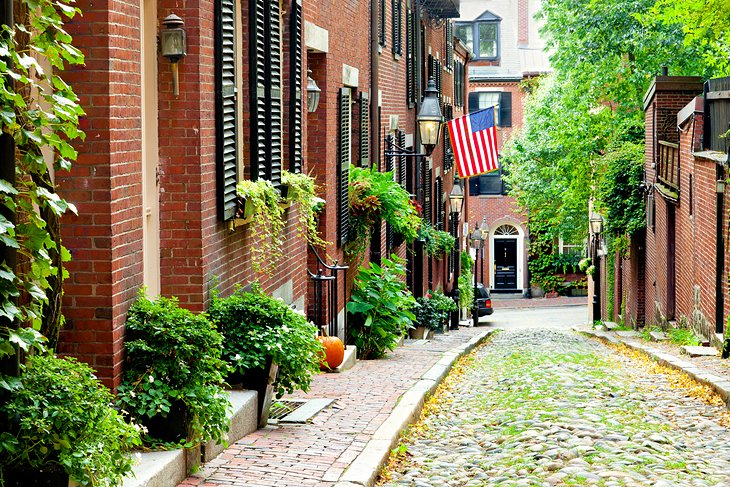
One of Boston's most beautiful neighborhoods and right in the center of the city, the south side of Beacon Hill has traditionally been the home of Boston's "old money" families, known locally as "Brahmins." Well-kept brick homes in Federal and Greek Revival styles line its tree-shaded streets, and at its heart is Louisburg Square, where homes face onto a leafy private park. Author Louisa May Alcott lived here from 1880 to 1888.
The Nichols House Museum, a Federal-style home by Boston architect Charles Bulfinch, shows how Beacon Hill's upper-class residents lived and is filled with collections of 16th- to 19th-century furnishings and decorative arts. At the western foot of Beacon Hill, Charles Street is lined with boutiques and shops that have traditionally catered to the neighborhood and are popular with visitors as well. Beyond Charles Street, facing the Public Garden, The Bull and Finch, established in 1969, inspired the popular television program, Cheers.
Restaurants and cafes come and go quickly along classy Charles St, but one that has maintained its elegant ambiance and traditional Tuscan country menu is Toscano, where you can dine on melt-in-the-mouth veal scaloppini or a simple four-cheese pizza.
The north side of Beacon Hill is far more modest and has been home to immigrants, including a sizable African American community, since the early 19th century. National Park Service Rangers offer free guided tours of the Black Heritage Trail from April through November and you can follow the trail on a self-guided tour year-round.
The Boston African American National Historic Site includes 15 pre-Civil War homes, businesses, schools, and churches that give a picture of Boston's 19th-century African American community. The Museum of Afro-American History operates the African Meeting House, the country's oldest (1806) church built by and for Black Americans and now restored to its 1854 appearance.
The 1834 Abiel Smith School was the first public grammar school for African American children. Displays at both include artifacts, films, art, and sculpture related to the black experience in Boston and New England.
19. Boston HarborWalk and Christopher Columbus Waterfront Park
The Boston waterfront has seen many changes since its early beginnings as a colonial shipping port. After a period of decline for much of the 20th century, new life was breathed into the area in the mid-1970s with an ambitious redevelopment plan.
Today, this interesting mix of residential and commercial space is connected by HarborWalk, an attractive walkway along the waterfront, with parks, public art, benches, cafés, interpretive signs, and access to several means of exploring the harbor by cruise boat, ferry, or water taxi. A shuttle boat also runs to the Charlestown Navy Yard.
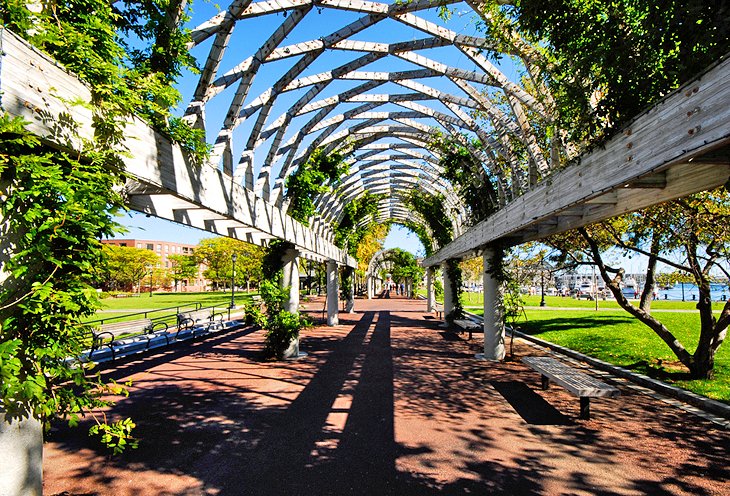
Although it extends from Charlestown to South Boston – and will expand considerably farther – the part you won't want to miss goes from the North End through the wisteria-draped pergola of Christopher Columbus Waterfront Park, past Commercial Wharf, India Wharf, and Long Wharf, and by Rowes Wharf before curving along the harbor into the vibrant Seaport District to the Institute of Contemporary Art, an art museum dramatically cantilevered above the water.
20. Rose Fitzgerald Kennedy Greenway
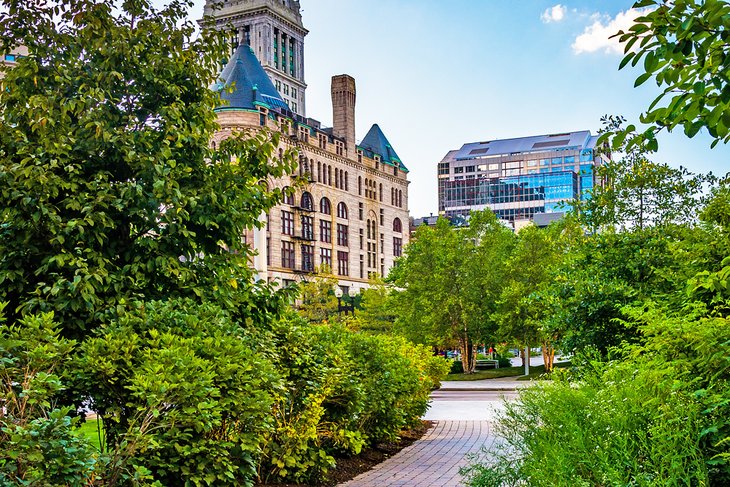
One of the newest of Boston's many public parks and green spaces, the Rose Fitzgerald Kennedy Greenway fills the swath of downtown Boston left bare by the removal of the elevated Central Artery.
Nearly 1.5 miles of parks and gardens connect several diverse neighborhoods, including the financial district, the North End, Chinatown and Faneuil Hall Market, all just a few steps from the linear park.
Public art, gardens, benches, a farmers' market, food trucks, and playgrounds enliven the park, along with a fanciful carousel of whimsical animals, where children can ride on rabbits, a butterfly, turtle, lobster, or a grasshopper. All 36 creatures on the Greenway Carousel were inspired by drawings made by Boston school children. The carousel is specially designed to be accessible to adults and youth with disabilities.
21. Boston Pops and Boston Symphony Orchestra
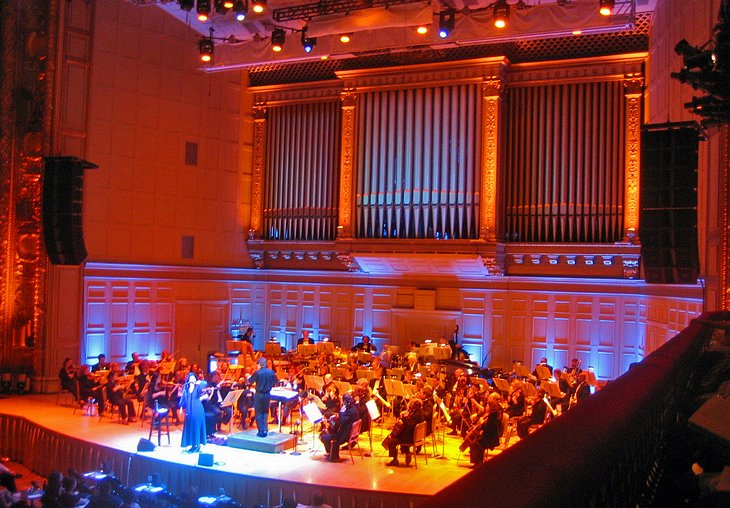
The Boston Symphony Orchestra gave its inaugural concert in 1881, and its first at Symphony Hall, one of the world's most acoustically perfect concert halls, when it opened in 1900. Over more than a century of history, its conductors have included greats such as Pierre Monteux, Serge Koussevitzky, Charles Munch, Seiji Ozawa, and James Levine.
In addition to its regular symphony season, the hall is home to the Boston Pops Orchestra, which sets an international standard for performances of lighter music. For many visitors, the highlight of a trip is a Pops concert, either in Symphony Hall or at the Hatch Memorial Shell, an Art Deco outdoor music shell on the riverside Esplanade that has become a Boston landmark.
The shell hosts a regular program of concerts and other special events, and is especially famous for the Boston Pop's yearly performance of Tchaikovsky's 1812 Overture on July 4th. Audiences sit on the lawn in front of the shell with views of Cambridge, Back Bay, and Beacon Hill, and the Pops orchestra is accompanied by real cannon fire and ringing Boston church bells.
Following the concert is a spectacular fireworks display over the river; both are televised all over New England. When I lived on River St, a block from the Esplanade, I took my lawn chair and a book to a grassy spot near the Shell at 10 am to get the best spot; now you'll have to wait until noon to stake your claim.
You can go behind the scenes on a tour of Symphony Hall where you'll hear the history and traditions of the Boston Symphony Orchestra, its musicians and conductors.
Address: 301 Massachusetts Avenue, Boston, Massachusetts
22. Arnold Arboretum
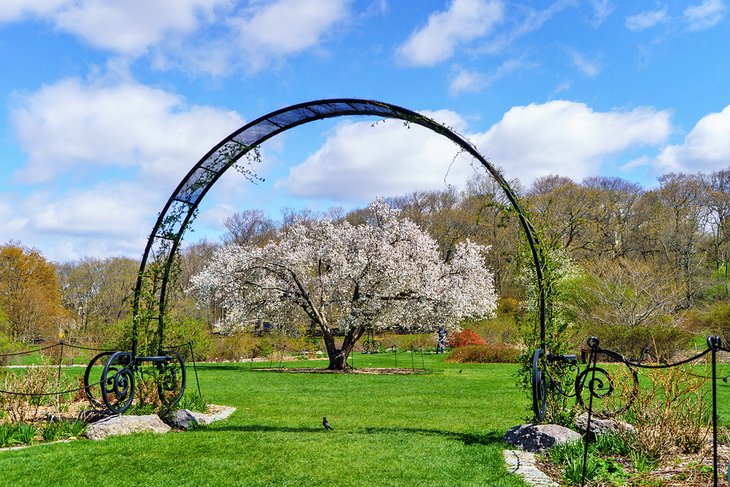
A "museum of trees," the Arnold Arboretum is especially colorful in the fall, when the maples are ablaze in reds and yellows, and in the spring, when cherry trees, lilacs, or magnolias are in full bloom. But the Arnold Arboretum is beautiful all 12 months of the year. When the trails through its 281 acres are covered in snow, they are popular places to snowshoe and cross-country ski.
A National Historic Landmark, designed by landscape architect Frederick Law Olmstead, the Arboretum is maintained by Harvard University, which uses it as a teaching laboratory. Along with a wide variety of trees, shrubs, vines, and perennial flowering plants, are exceptional collections of lilacs, azaleas, and rhododendrons; the Bonsai & Penjing Collection is also a highlight.
The Explorers Garden, occupying a small microclimate within the grounds, is home to two of the world's largest Franklin trees, a species now extinct in the wild. Docent-led tours range from quarter-mile introductions suitable for all abilities to a 90-minute Keeper's Tour.
Address: 125 Arborway, Boston, Massachusetts
23. Massachusetts Institute of Technology
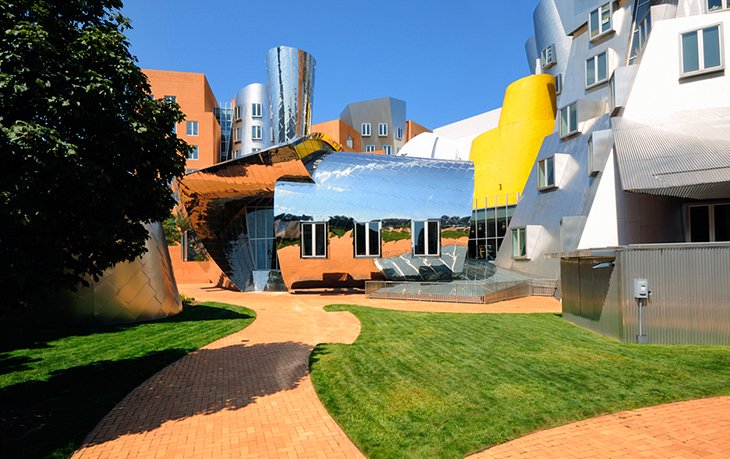
The 150-acre MIT campus is of special interest to fans of modern and postmodern architecture, a living museum of works by noted architects including Alvar Aalto, Eduardo Catalano, I. M. Pei, Frank Gehry, and Eero Saarinen.
In addition, the campus displays hundreds of sculptures and art installations that you can see with the help of a self-guided walking tour map, by artists such as Pablo Picasso, Henry Moore, Alexander Calder, Jacques Lipchitz, and Auguste Rodin. In the Hart Nautical Gallery are ship models, and the Compton Gallery shows contemporary art.
Address: 77 Massachusetts Avenue, Cambridge, Massachusetts
Official site: www.mit.edu
Where to Stay in Boston for Sightseeing
Most of Boston's major tourist attractions are relatively close to the downtown area and Boston Common, where the Freedom Trail begins. Beacon Hill, Copley Square, and the Waterfront/North End are all within easy reach of these highly-rated hotels in Boston.
Luxury Hotels:
- These hotels are in Boston's most prestigious - and convenient - locations: Copley Square and Beacon Hill. Fairmont Copley Plaza is the Grand Dame of Boston hotels, an elegant and gracious landmark property overlooking Copley Square and minutes from the Public Garden's Swan Boats.
- The intimate Lenox Hotel is known for personal attention in the heart of Back Bay, adjacent to Prudential Center and Copley Square, close to museums and Newbury Street shopping.
- XV Beacon crowns historic and fashionable Beacon Hill, next to the State House and overlooking Boston Common.
Mid-Range Hotels:
- Boston's waterfront extends from the North End Italian neighborhood to the newly blossoming Seaport area, handy to harbor cruises, seafood dining, museums, and historic sites. Boston Marriott Long Wharf overlooks Boston Harbor, close to the New England Aquarium and North End attractions.
- Seaport Boston Hotel guests enjoy sweeping views across Boston Harbor and the downtown skyline, excellent service, and a no-tipping policy in the hotel and its restaurants.
- In a skillfully repurposed brick factory building, Residence Inn Boston Downtown Seaport is steps from the Boston Children's Museum and downtown attractions.
Budget Hotels:
- Even Boston's budget-friendly options are conveniently close to the center. The Revolution Hotel, in the chic South End restaurant and arts neighborhood, has double, triple, and quad rooms, some with shared dorm-style bathrooms.
- Especially handy to sports and entertainment events at TD Garden, Hotel Indigo Boston Garden is an easy walk to the North End and Quincy Market.
- Across the street from the TD Boston Garden, and within walking distance of the North End, citizenM Boston North Station has tech-savvy, soundproof rooms.
Tips and Tours: How to Make the Most of Your Visit to Boston
Sightseeing:
- For first-time visitors to Boston, the best way to see the attractions and get acquainted with the city layout is to take a Hop-on Hop-off Trolley Tour. This tour stops at all the major tourist attractions and gives you the freedom to stop where you want and see the city at your own pace.
Day Trip to Martha's Vineyard:
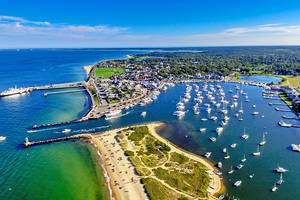
- Explore more of the Bay State with a 12-hour Day Trip to Martha's Vineyard, traveling by bus through Cape Cod to Falmouth, before boarding the scenic cruise to the beautiful island of Martha's Vineyard. Here, you'll have six hours to explore the island on your own, or you can add a guided bus tour to see Gay Head Light and the historic village of Edgartown.
Day Trip to Newport:
- See the famous summer palaces of Belle Epoch society on the Boston to Newport Small-Group Day Trip with Breakers & Marble House Admission. On an 11-hour small group tour of "America's First Resort" you'll visit the two most famous mansions, as well as Cliff Walk, Ocean Drive, and St. Mary's Church, where Jack and Jacky Kennedy were married.
Best Time to Visit Boston, MA
| Average minimum and maximum temperatures for Boston, MA in °C | |||||||||||
| J | F | M | A | M | J | J | A | S | O | N | D |
| 2 -6 | 4 -4 | 8 -1 | 13 5 | 19 10 | 25 15 | 28 18 | 27 18 | 23 14 | 17 8 | 11 3 | 6 -2 |
| PlanetWare.com | |||||||||||
| Average monthly precipitation totals for Boston, MA in mm. | |||||||||||
| 100 | 84 | 98 | 91 | 82 | 82 | 78 | 86 | 88 | 96 | 101 | 95 |
| Average monthly snowfall totals for Boston, MA in cm. | |||||||||||
| 30 | 31 | 18 | 3 | 0 | 0 | 0 | 0 | 0 | 0 | 3 | 21 |
| Average minimum and maximum temperatures for Boston, MA in °F | |||||||||||
| J | F | M | A | M | J | J | A | S | O | N | D |
| 36 22 | 39 24 | 46 31 | 56 41 | 67 50 | 77 59 | 82 65 | 80 64 | 73 57 | 62 46 | 52 38 | 42 28 |
| PlanetWare.com | |||||||||||
| Average monthly precipitation totals for Boston, MA in inches. | |||||||||||
| 3.9 | 3.3 | 3.9 | 3.6 | 3.2 | 3.2 | 3.1 | 3.4 | 3.5 | 3.8 | 4.0 | 3.7 |
| Average monthly snowfall totals for Boston, MA in inches. | |||||||||||
| 12 | 12 | 6.9 | 1.1 | 0 | 0 | 0 | 0 | 0 | 0 | 1.3 | 8.1 |
If you're looking for a seamless vacation packed with fun adventures and ideal weather conditions, the best time of year to go to Boston is during the late spring and early fall. This is technically Boston's high season.
From May through the end of June, things are starting to warm up nicely. You're looking at highs in the upper 60s to high 70s and more comfortable lows in the 50s. Not too hot nor too cold, these temps are perfect for wandering the streets all day. Still, you'll want to pack layers to be sure you're prepared for the fluctuating temperatures.
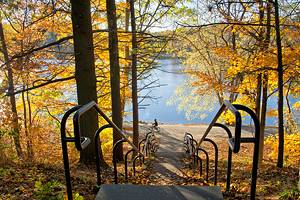
The months of September and October also present visitors with optimal highs in the mid-60s (October) to high 70s (September). Lows range between high 40s to high 50s. Again, you'll likely need layers. At this time, you'll witness an impressive sight: vibrant red, orange, and yellow hues envelop the city in the form of fall foliage, especially towards the end of October, rewarding photographers with picture-perfect backdrops.
Boston hotels will be more expensive during this time, and you can expect to see larger crowds of tourists, but overall, late spring and early fall are the best times to visit Boston. Since many of the city's best attractions are outside (i.e. the Freedom Trail and Fenway Park), you're guaranteed an enjoyable visit that allows you to visit the city's most popular points of interest with ease. Plus, you'll be able to ride a Swan Boat in Boston Common. This "ride" is closed during the cold winter months.