Tourist Attractions in Bermuda
Ideally located in the middle of the Atlantic Ocean, a short plane ride away from major northeastern cities in the United States, Bermuda is a picture-perfect getaway with many attractions and things to do.
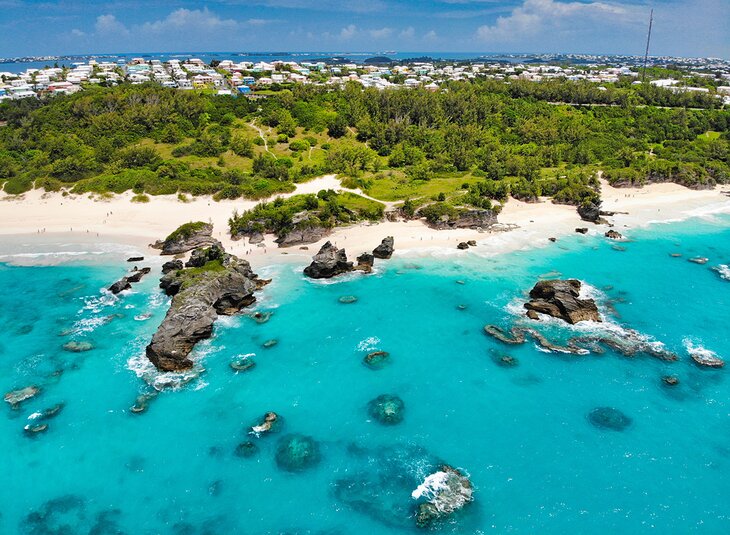
From stunning caves and gorgeous pink-sand beaches to quaint towns and historical museums dedicated to its seafaring history, this British territory makes for a fascinating island vacation.
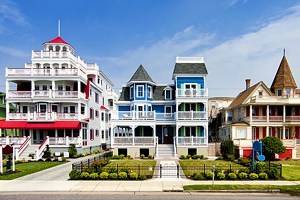
A sense of cheerfulness comes over you as you step off the plane or a cruise ship onto the shores of Bermuda. Pastel pink and yellow-colored houses with white roofs, calm turquoise waters, friendly people, and year-round pleasant weather are just a few aspects of Bermuda that make your stay all the more pleasant and have you wanting to return.
With top-notch resorts in its capital city of Hamilton and the island's most celebrated stretch of shoreline in Southampton, your experience is elevated even further. If you get tired of sunbathing next to infinity pools and getting pampered at exclusive spas, there's no shortage of golfing and water activities.
Find more places to visit on your vacation with our list of the top tourist attractions in Bermuda.
Horseshoe Bay Beach
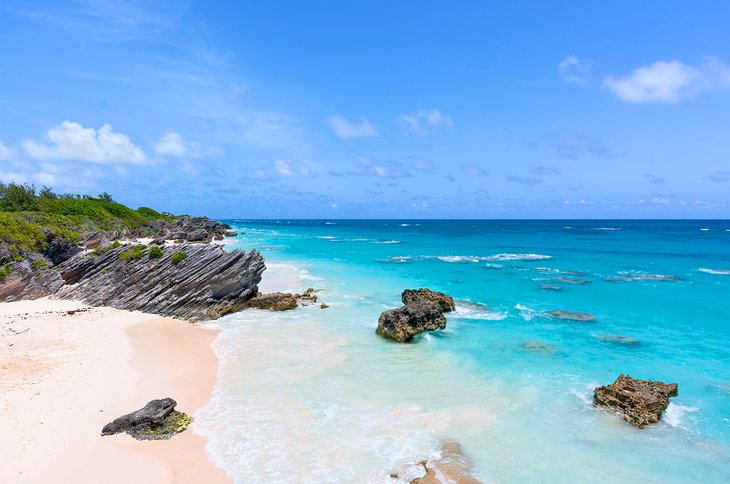
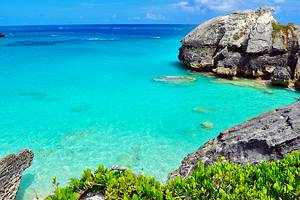
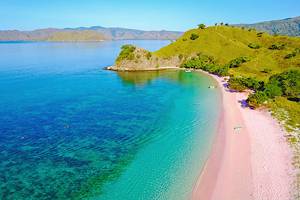
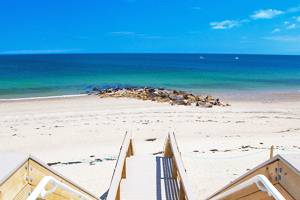
Arguably one of the best beaches in the world is in Bermuda's Southampton Parish on the South Shore. Horseshoe Bay Beach, a crescent-shaped blush-pink-sand beach set against dramatic rock formations, attracts scores of travelers.
During peak season from May through September, expect to find this beach crowded, and lifeguards patrolling the area. Go early in the morning during high season to avoid sunbathers and swimmers. Resorts on other parts of the island have beach clubs nearby with shuttles transporting guests.
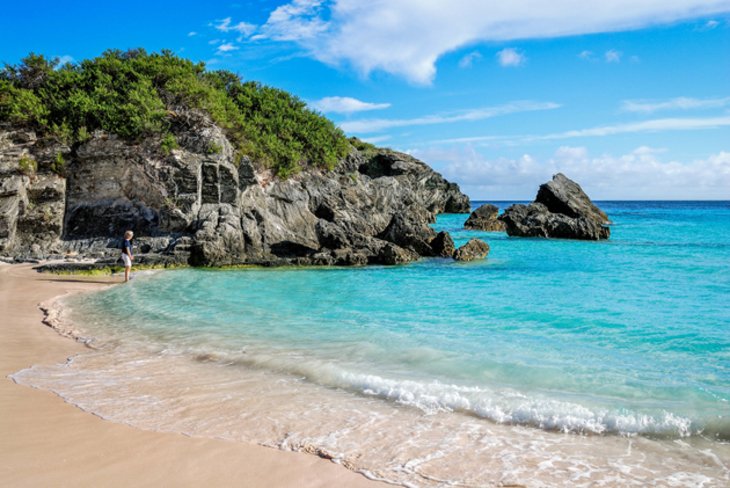
Changing rooms and equipment rentals are available along the coast. Kids will love building sandcastles, boogie boarding, and playing volleyball. For families with small children, the nearby Port Royal Cove has shallow calm waters. Beach trails connect to adjacent beaches at Chaplins Bay, Stonehole Bay, Jobsons Cove, and Warwick Long Bay.
Location: Southampton Parish (West End)
Hamilton
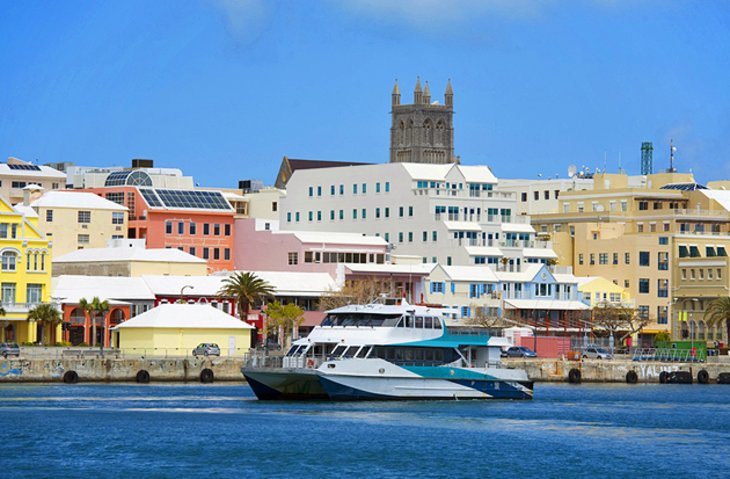
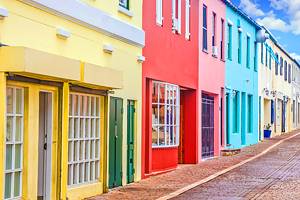
Bermuda's capital defines the island, with a cosmopolitan and energetic vibe. It stands out, with historical buildings and picturesque streets lined with colorful houses overlooking the harbor. This cultural and commercial heartbeat of the island features excellent dining, shopping, and many museums and galleries.
The waterfront Front Street is the busiest area of the city, often frequented by visitors from smaller cruise ships and island-hopping ferries and tour boats. During the summer, the street turns lively on Wednesdays for the weekly Harbor Nights festival, featuring Gombey dancers and street food, plenty of family fun, and local artisans showcasing their work from 7pm to 10pm.
Hamilton also features buildings dating from the 1800s, like the Anglican Cathedral of the Most Holy Trinity, St. Andrew's Presbyterian Church, St. Paul's Church, and the Bermuda Capital Building. The Bermuda House of Assembly, the oldest Parliament in the Western Hemisphere, held its first session in 1620.
Bermuda's City Hall and Arts Center, located in central Hamilton, houses the Bermuda National Gallery, which exhibits art and artifacts from Bermuda, Africa, and Europe. It also serves as the home of the Earl Cameron Theater (formerly City Hall Theatre), which puts on concerts, plays, and dance shows.
St. George
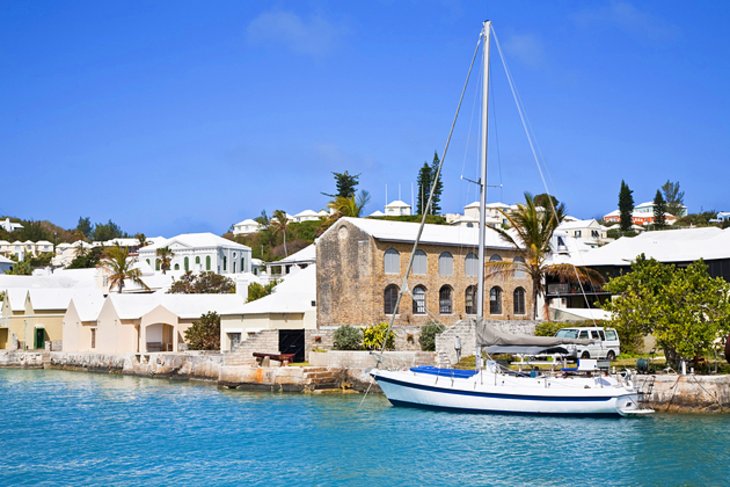
On the East End of the island, wander the cobblestoned streets past taffy-colored stone buildings in the oldest English settlement of the New World. Declared a UNESCO World Heritage Site, St. George represents the site of the first settlers who arrived beginning in 1612.
Dig into Bermuda's history at some of its museums, including Bermuda National Museum Trust, St. George Historical Society Museum, Bermudian Heritage Museum, and Tucker House Museum.
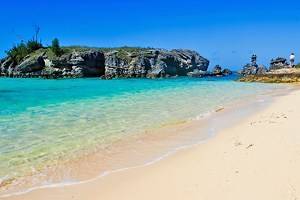
St. George's most popular highlight is Tobacco Bay Beach. Named for the wild tobacco that was found when the early settlers arrived, Tobacco beach no longer has any nicotine plants growing, but provides a quintessential Bermuda beach experience.
It's best known for its limestone rock formations and shallow, clear waters, ideal for snorkeling and swimming. You can rent snorkeling equipment, stand up paddleboards, kayaks, and kiddie floats at kiosks on the beach.
St. Peter's Church
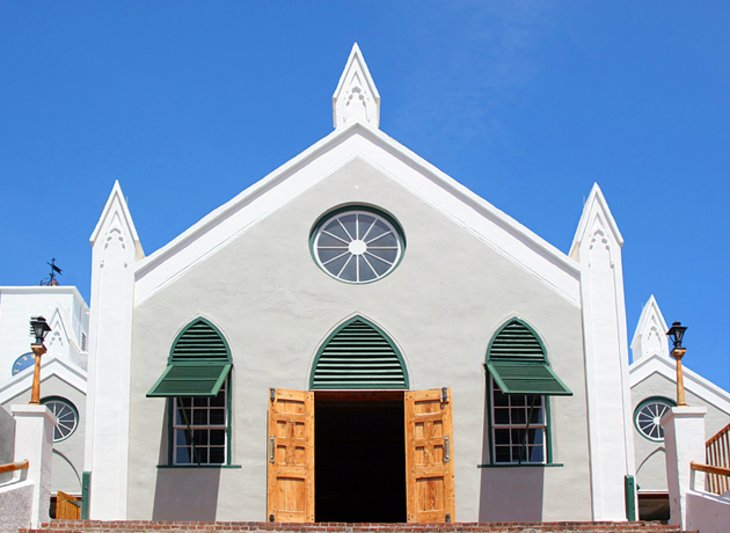
St. Peter's Church, built in 1612, is the oldest Anglican church in continuous use in the Western Hemisphere and is part of the UNESCO World Heritage Site in the town of St. George. The simple yet graceful architecture of the building showcases design styles from the 17th century and improvements made over the years.
The hand-carved altar, composed of red cedar, is one of the oldest pieces of woodwork on Bermuda. Inside, visitors can find an 18th-century throne salvaged from a shipwreck and communion silver from the 1600s.
The church has two historic cemeteries, segregated for white and black Bermudians dating back more than 300 years. The western extension of the church is now a stop on the African Diaspora Heritage Trail, which retraces the rich heritage and culture of Bermudians of African ancestry.
Address: Duke of York Street, St. George
St. George's Island Forts
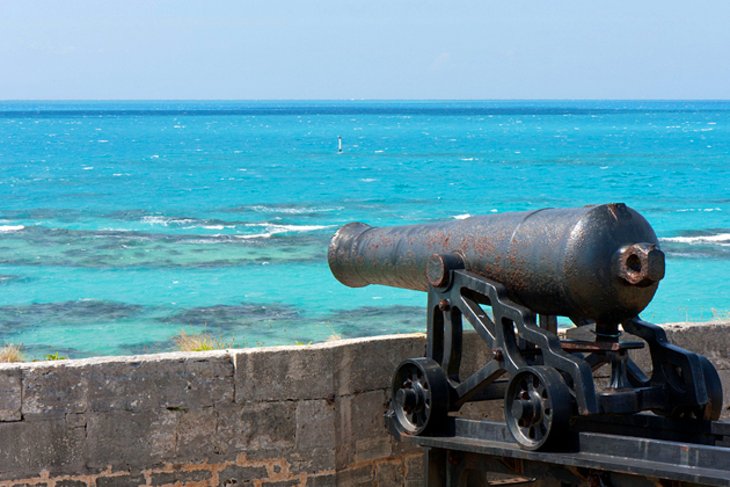
Bermuda's rich seafaring history unfolds in its various forts and museums. A series of forts protected Bermuda, especially in St. George.
The impressive, fully restored Fort St. Catherine on the northeastern tip of St. George houses a museum exhibiting a gallery of dioramas depicting Bermuda's rich history. It has a collection of firearms and replicas of the Crown Jewels of Great Britain.
Gates Fort, constructed in the 1620s, is a small battery located at the end of the Cut Road in St. George offering incredible views of the Atlantic. Nearby, Alexandra Battery, dating from 1840, is above a famous beach, Building Bay Beach, known for its vibrant sea glass.
Royal Naval Dockyard
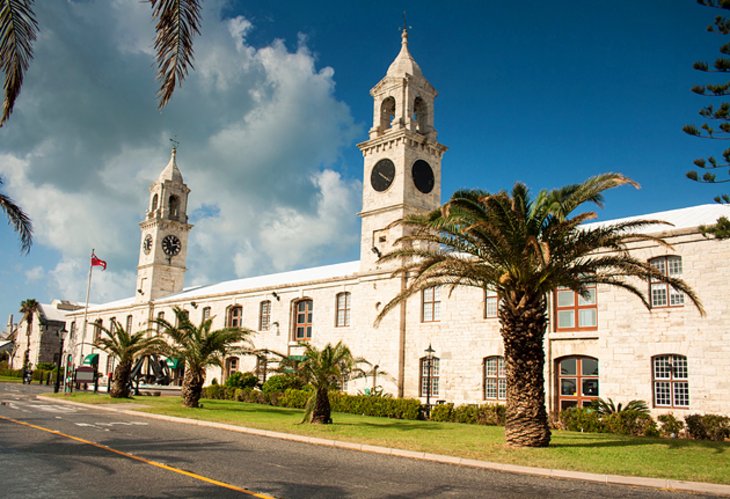
The Royal Naval Dockyard at the tip of the western end of Sandy's Parish is home to a major cruise ship port and contains an array of experiences, including shopping, dining, craft studios, and entertainment, all housed in naval buildings from the 18th century.
This former Royal Navy stronghold is also home to the well-curated National Bermuda Museum set within the body of the fort.
The Bermuda Clocktower Mall, located in a former British warehouse with iconic twin-clock towers, is an impressive shopping center. You can also shop for handicrafts at the Bermuda Craft Market in the Cooperage Building and admire local art at the Bermuda Arts Center.
The Dockyard also houses the Museum Playground and Playhouse and Dolphin Quest educational program for kids. Visitors can also head to the nearby Snorkel Park Beach to enjoy a white sandy beach, restaurant and bar, and water sports.
Make sure to allocate at least a day to experience all that the Royal Naval Dockyard has to offer.
Address: 5 Freeport Drive, Sandys MA 01
National Museum of Bermuda
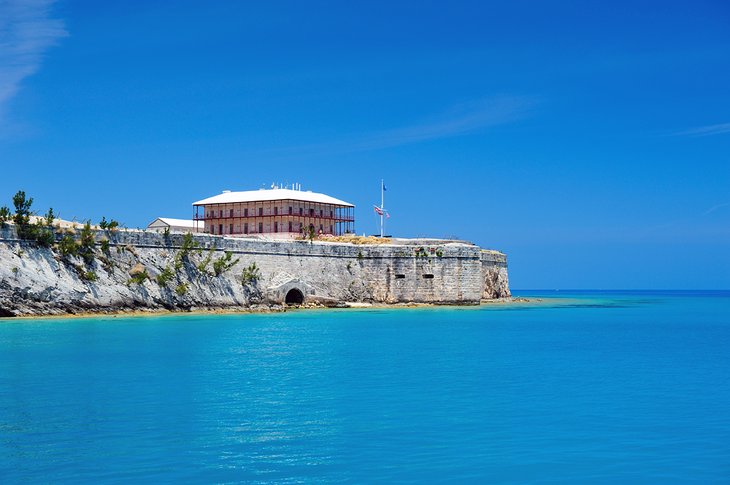
Set within the fort in The Keep at the Royal Naval Dockyard and encompassing the beautifully restored 19th-century Commissioner's House, the National Museum of Bermuda has a mighty collection of artifacts and exhibits that delve into Bermuda's maritime history.
Built to guard the entire naval base, the fort features seven bastions and ramparts. Visitors can learn about shipwrecks, battles, and more in eight historic exhibit buildings.
The Commissioner's house, the oldest cast iron frame residential building in the Western Hemisphere, transports you back in time with authentic period furniture and exhibits on the island's military past. Don't miss the incredible Hall of History mural, created by the Bermudian artist Graham Foster, that takes up all four walls of a room in the house.
Grab a bite to eat and enjoy it on the wraparound veranda, taking in the panoramic views of the island and the Atlantic ocean. The best part? The adorable sheep grazing the grounds.
Address: 1 The Keep, Royal Naval Dockyard
Gibb's Hill Lighthouse
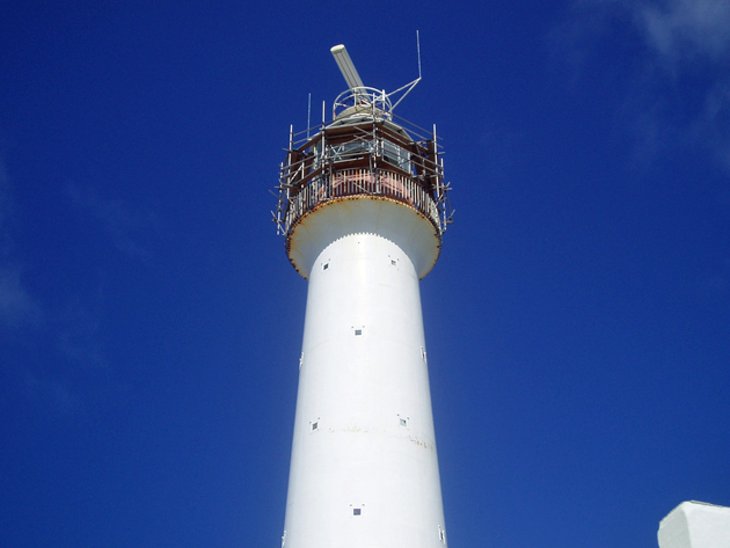
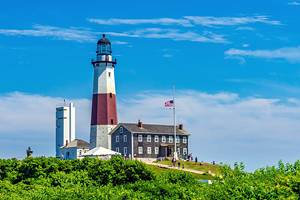
For quintessential Bermuda views, climb the 185 steps to the top of Gibbs Hill Lighthouse. This 117-foot lighthouse, built in 1846, is one of only two cast-iron lighthouses and is the oldest of its kind in the world.
Overlooking the South Shore, the lighthouse offers views of the beaches, the City of Hamilton, and the Royal Naval Dockyard. In the spring, you can even catch sight of migrating humpback whales.
Grab lunch at The Dining Room at the bottom, which serves standard fare like pizzas, sandwiches, pastas, and seafood. The lighthouse and gift shop are open daily year-round except for February, during which they are closed entirely.
Address: Lighthouse Road, between South Shore and Middle Roads, Gibbs Hill
Crystal and Fantasy Caves
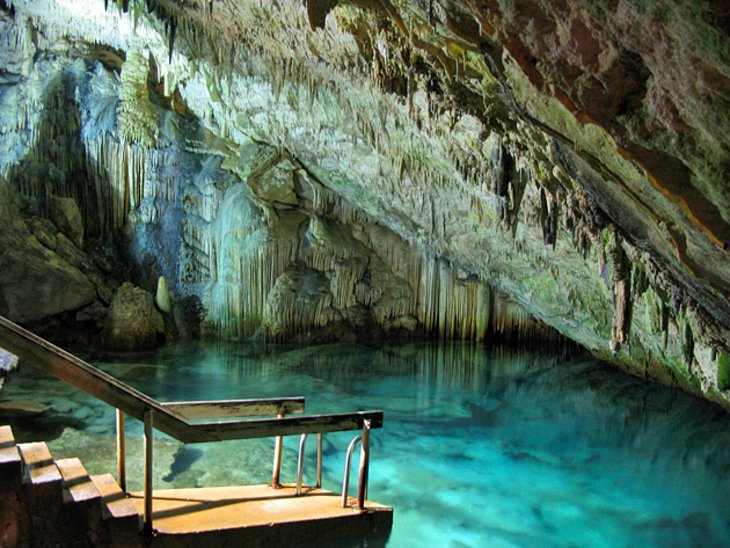
As far as tourist attractions go, Crystal and Fantasy Caves in Bermuda are at the top for good reason. Here, you can access the island's stunning caves, where you can walk on floating pontoons overlooking crystal-clear, azure waters of the subterranean pools, all lit up with a state-of-the art lighting system to bring out their natural beauty.
Admire incredible rock formations of the soaring stalagmites rising from deep within the lake and limestone icicles dripping from the ceiling like frozen waterfalls as you make your way through the caves. Informative guides share details about the history and geology of the caves, which are thought to be formed during the Pleistocene Ice Age 1.6 million years ago.
If you are looking to tie the knot at a unique destination, look no further than these incredible caves for their wedding event site. Take pictures against the beautiful backdrop of turquoise waters and dramatic stalactites. Candle lights and florals add an air of romantic décor, and a sitting area gives visitors a place to toast after the ceremony.
Address: 8 Crystal Caves Road, Hamilton Parish
The Bermuda Aquarium, Museum, and Zoo
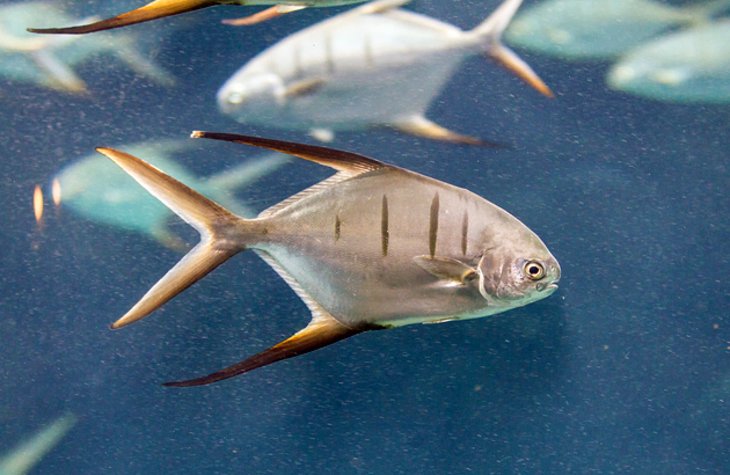
A 140,000-gallon fish tank greets visitors at the Bermuda Aquarium, which also has a museum and a zoo, all located in the quaint Flatts Village on the North Shore.
The aquarium has several large tanks housing 200 species of fish and coral reefs found in the waters surrounding the island. It also has outdoor turtle and seal exhibits, which give visitors a chance to witness feedings several times a day.
The zoo houses 300 reptiles, birds, and mammals from islands around the world, in settings mimicking their natural habitat. In the Madagascar section, expect to find some curious lemurs sitting or jumping on boulders. You'll also find areas dedicated to the animal life from the Galapagos islands, flocks of flamingos, and tortoises.
The aquarium offers whale-watching cruises during the spring (March through May) to witness migrating humpback whales from the RV Endurance. This 45-passenger boat is also available for charters and tours of Nonsuch Island. The smaller Callista provides tours of Harrington Sound from May through September and also offers snorkeling excursions that include all equipment.
Within the property is the Natural History Museum, which has exhibits on the ecology and geology of Bermuda along with displays on the wildlife from the archipelago. It features several interactive and kid-friendly things to do, a playground, and a sandbox.
Address: 40 N. Shore Road, Flatts Village
Wreck Diving
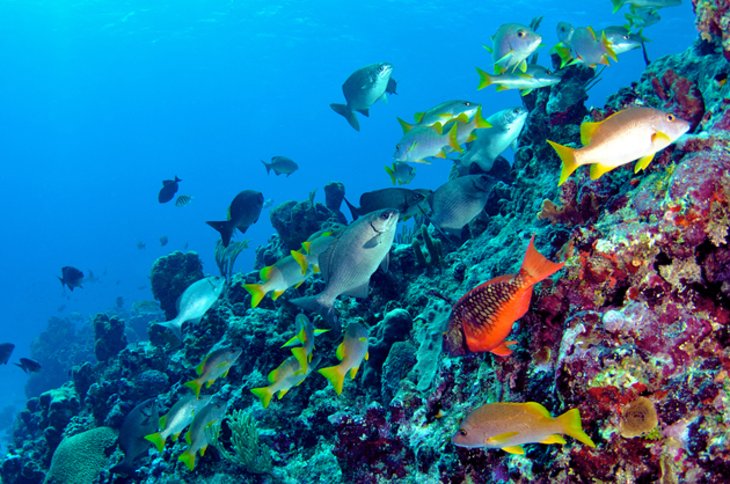
Over the centuries, many ships met their demise along the archipelago's treacherous reefs, which extend for miles on the western and northern sides. This led to Bermuda being called the "Wreck Capital of the Atlantic."
These reefs, though dangerous to seafarers centuries ago, now offer some of the best wreck diving in the Atlantic. Divers can explore sunken vessels dating from the 1600s to late 1990s, some of which lie in less than 30 feet of water (making it accessible to snorkelers as well).
Cristóbal Colón, a 499-foot-long luxury Spanish liner that sunk in 1936, is the largest known shipwreck in Bermuda and is one of its most famous dive sites, giving divers hours of underwater exploration due to its sheer size and plethora of marine life.
Laden with beautiful coral, the Irsto (Aristo), a 250-foot-long Norwegian freighter that sank in 1937, offers another wonder for divers to experience the underwater world around Bermuda.
Bermuda Railway Trail
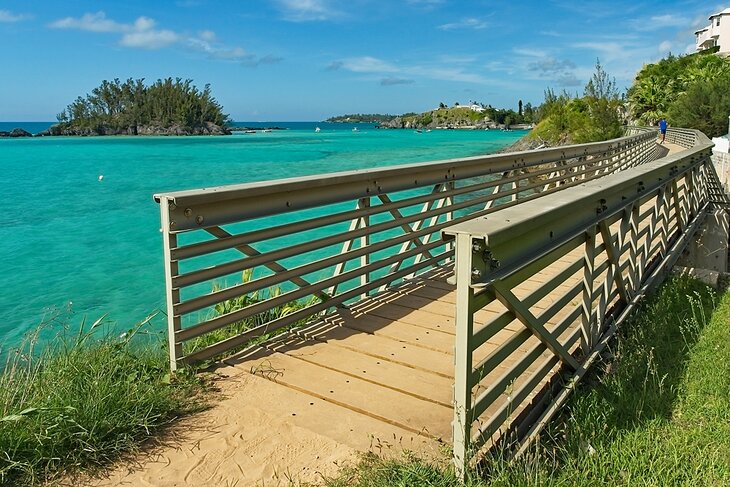
Spanning the entire length of the island, the Bermuda Railway Trail is a 29-kilometer-long path that winds across beaches, dunes, and cliffs as part of the Bermuda Rail Trail National Park.
Bermuda's only train, known as "Rattle and Shake," operated from 1931 to 1948, leaving its tracks behind. It ran from St. George's Station in the east to Somerset Station in the west. This abandoned trail became a thoroughfare for walkers and bikers and became a national park in 1986.
The trail ranges between one mile and 3.75 miles long over nine sections along the island and offers an off-the-beaten-path adventure. Visitors can start at either end, or hop on the trail at any point, taking breaks to stop by one of Bermuda's beaches for a refreshing dip in the ocean, sunbathing, or fishing.
Along the path, you will find the beautiful Lover's Lake Nature Reserve, located within Ferry Point Park at the eastern end of Bermuda in St. George's Parish.
Masterworks Museum of Bermuda Art
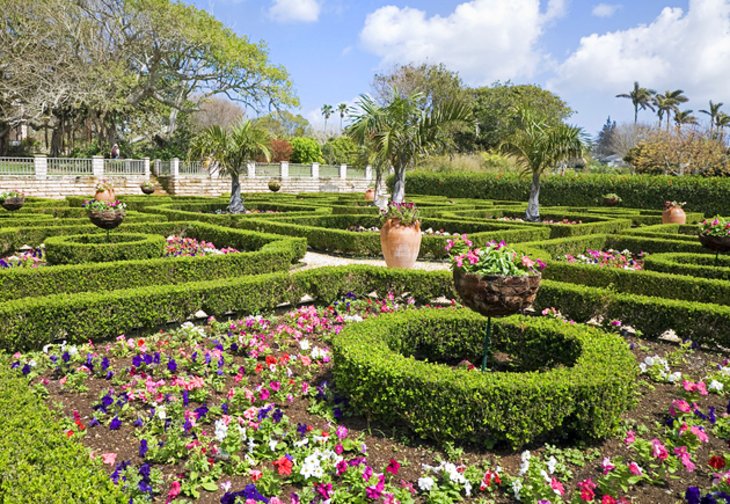
Set in the Botanical Gardens, the Masterworks Museum of Bermuda Art showcases a collection of more than 1,500 pieces of Bermuda-inspired art dating from the 1700s to the present day. The museum has a permanent exhibit collection featuring works by Georgia O'Keeffe, Winslow Homer, Charles Demuth, Jack Bush, and Albert Gleizes. It rotates exhibits of contemporary Bermuda artists.
Most of the Bermuda Collection has landscapes of the island and reflects the culture and people that call it home. The museum features two main galleries, a gift shop selling locally made arts and crafts, and Homer's café (named after Winslow Homer).
Address: 183 South Road, Paget, DV04
Spittal Pond Nature Reserve
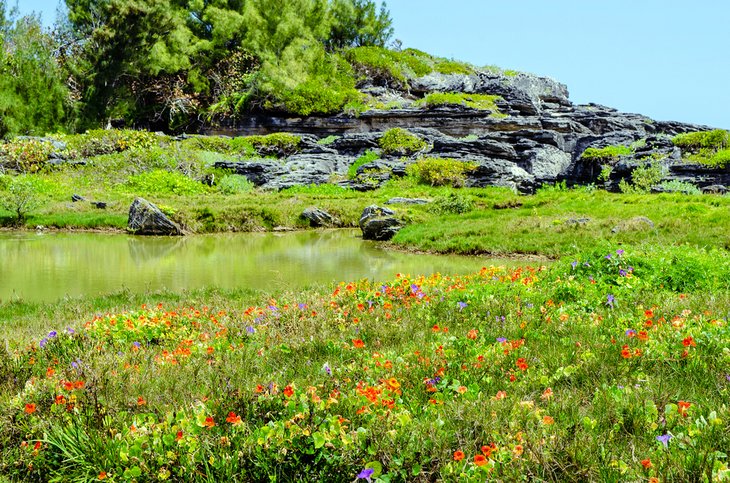
Spittal Pond Nature Reserve is Bermuda's largest protected area, with well-marked trails winding through forested areas with stunning coastal views. Spread over 64 acres, the reserve offers bird-watching and wildlife viewing.
Witness wildlife such as the colorful Sally Lightfoot Crab, Bermuda skink (one of the rarest lizards in the world), and buckeye butterflies. Birders may spot several species of waterfowl; black and white warblers; American redstarts; northern waterthrush; and white-eyed vireos, a songbird known as the "Chick-of-the-Village."
The reserve is also the location of the original Portuguese Rock, carved in 1543 by a shipwrecked Portuguese sailor. Migrating humpback whales can often be spotted from Portuguese Rock during March and April. Don't miss "the Checkerboard," an unusual marine limestone formation on the rocky shores of the reserve.
Address: South Road, Smith's Parish
Bermuda Underwater Exploration Institute (BUEI)
If you've ever wondered if there was any truth to the Bermuda Triangle, you can find out at the Bermuda Underwater Exploration Institute (BUEI). Located in Hamilton, the museum houses artifacts and interactive exhibits on understanding our oceans, especially the one surrounding Bermuda.
The highlight of the museum's simulated dive experience-takes you 1,200 feet below the surface to experience diving among marine life. The Treasure Room features valuables (coral-encrusted coins, gold crosses, and more) recovered from 300 wrecks by diving legend Teddy Tucker.
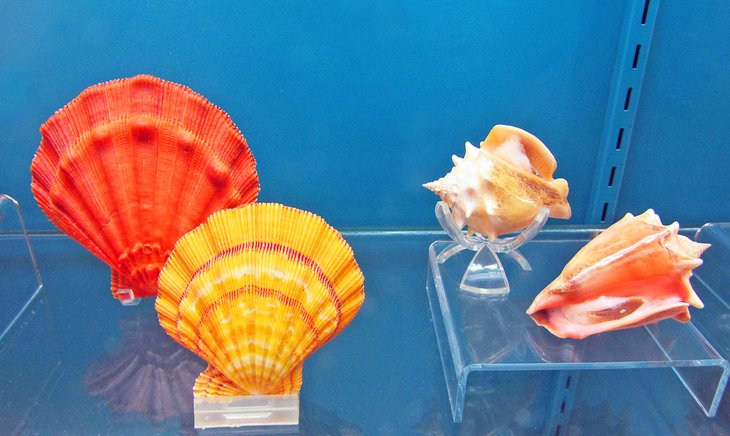
You'll also find a striking collection of over 1,200 seashells, a state-of-the-art Living with the Ocean exhibit featuring Google Earth images that take you beneath the waves to see reefs around the planet, and an exhibit dedicated to dispelling myths about the Bermuda Triangle.
Address: 40 Crow Ln, Pembroke
Cooper's Island Nature Reserve
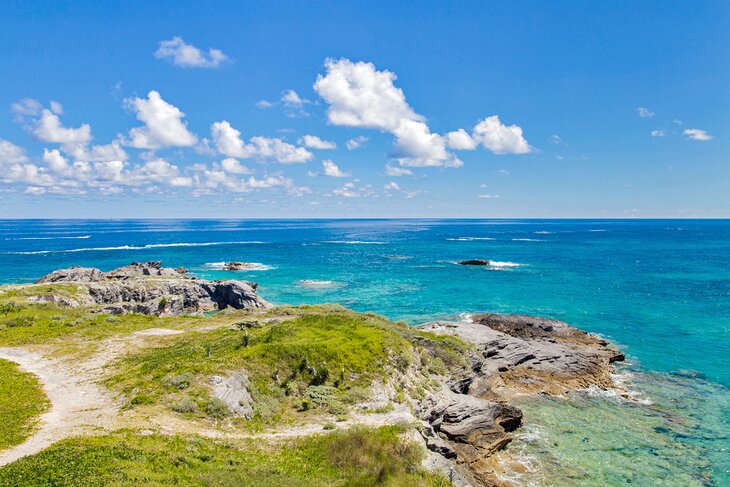
Cooper's Island Nature Reserve is a great place to visit if you want to have unparalleled views of both land and sea. Its most distinguished feature is the Wildlife Observation Tower, a former NASA tracking station that has been converted into a viewing platform that provides nearly 360 degrees of unhindered views.
The tower is an excellent place to catch sight of native birds like the tropic longtail and the Bermuda petrel, but most tourists watch beyond the shore for glimpses of large ocean life. During March, April, and May, this is an ideal vantage point for spotting humpback whales as they migrate north for the summer. No matter what time of year you visit, it's also a prime dolphin-watching spot.
Map of Tourist Attractions in Bermuda
Best Time to Visit Bermuda
| Average minimum and maximum temperatures for Hamilton, Bermuda in °C | |||||||||||
| J | F | M | A | M | J | J | A | S | O | N | D |
| 21 16 | 20 16 | 21 16 | 22 17 | 24 20 | 27 23 | 29 25 | 30 26 | 29 24 | 27 22 | 24 19 | 21 17 |
| PlanetWare.com | |||||||||||
| Average monthly precipitation totals for Hamilton, Bermuda in mm. | |||||||||||
| 125 | 112 | 109 | 89 | 79 | 130 | 117 | 130 | 127 | 168 | 104 | 114 |
| Average minimum and maximum temperatures for Hamilton, Bermuda in °F | |||||||||||
| J | F | M | A | M | J | J | A | S | O | N | D |
| 69 61 | 68 60 | 69 60 | 71 63 | 75 68 | 81 73 | 85 77 | 86 78 | 84 76 | 80 72 | 75 67 | 70 63 |
| PlanetWare.com | |||||||||||
| Average monthly precipitation totals for Hamilton, Bermuda in inches. | |||||||||||
| 4.9 | 4.4 | 4.3 | 3.5 | 3.1 | 5.1 | 4.6 | 5.1 | 5.0 | 6.6 | 4.1 | 4.5 |
Anytime between May and September is the best time to visit Bermuda, where you will be greeted with temperatures in the 70s and 80s Fahrenheit (20s Celsius) and warm waters perfect for swimming and snorkeling. Most of the tour operators start offering more boat tours and snorkeling and diving expeditions.
During the peak season, the prices for hotels and tours are high and beaches are crowded, so book early and hit the beaches early to avoid crowds. Luckily, there are quite a number of beaches to choose from, on the South Shore, St. George's Parish, and Somerset Village. Visitors can also go diving to explore sunken shipwrecks and learn about the island's seafaring history at historical museums.
Cricket lovers can catch the Bermuda Cup Match, a two-day summer event happening at the end of July (Thursday and Friday before the first Monday in August). As one of the biggest events on the island, it attracts scores of residents and tourists to the heated match between two arch-rivals, St. George's and Somerset. This annual event coincides with Emancipation Day (August 1st), the day in 1843 when slavery finally became abolished in the British Empire. Enjoy concerts, beach parties, and delicious local food.
You can also head to Raft Up in Mangrove Bay during the summer months to watch or join hundreds of vessels joined together and compete to stay afloat for the biggest party on the water.
If you want to experience relatively crowd-free streets and beaches, visit Bermuda in the spring. From March through May, the weather is mild, around the 60s and 70s Fahrenheit (15 to 20 degrees Celsius), and you can still walk the beaches without a jacket.
Though the water may be a little chilly for most swimmers, you will find plenty of things to do, from guided cave walks and hiking to golfing and museum hopping. Take an afternoon to hike or bike the Railway Trail, an 18-mile-long (29-kilometer) scenic path built on former train tracks.
The annual Bermuda International Film Festival is the highlight in March, featuring films and new talent from around the world. On Good Friday, don't miss the spectacle of colorful locally made kites that are flying over Horseshoe Bay Beach, making one of Bermuda's most beautiful places to photograph even prettier.
Sailing aficionados should head to Bermuda at the end of April to witness sailors from around the world competing in the Bermuda International Invitational Race Week.