14 Top-Rated Tourist Attractions in Belize
Belize brims with natural beauty. In addition to the world's second largest barrier reef, this destination is home to dense jungles with howler monkeys and jaguars, mountain pine forests, palm-fringed beaches, bonefish flats, rivers, caves, and coral atolls rimmed by fish-rich reefs. It's an eco-tourist's paradise.
But nature is just one of the attractions that draw tourists to Belize. The country is peppered with fascinating ancient sites, like Lamanai Archaeological Reserve, Xunantunich, and Altun Ha.
You can also fill your itinerary with adventure activities, like rappelling down the Black Hole Drop or wading through water-filled chambers in Actun Tunichil Muknal Cave, which has an ancient Mayan sacrificial site.
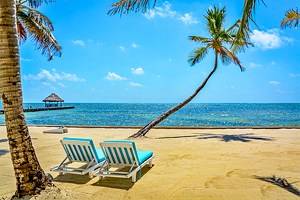
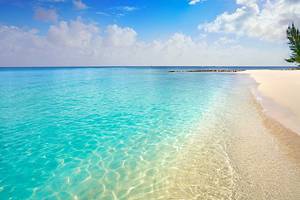
Soak up the sun on the beautiful beaches on Ambergris Caye and Caye Caulker—pretty islands that look like a postcard come to life. With so many things to do in Belize, this is a destination you'll find yourself longing for a return visit even before your first one is over.
Choose your own adventure with our list of the top attractions in Belize.
- 1. Ambergris Caye & Hol Chan Marine Reserve
- 2. Lighthouse Reef Atoll and the Blue Hole
- 3. Placencia Peninsula
- 4. Turneffe Islands Atoll
- 5. Cockscomb Basin Wildlife Sanctuary & Jaguar Preserve
- 6. Caye Caulker
- 7. Lamanai Archaeological Reserve
- 8. Mountain Pine Ridge Forest Reserve
- 9. The Cayo District's Archaeological Sites
- 10. The Belize Zoo
- 11. Altun Ha Archaeological Site
- 12. Caracol Natural Monument Reservation
- 13. Belize City
- 14. Belize Botanic Gardens
- Best Time to Visit Belize
1. Ambergris Caye & Hol Chan Marine Reserve
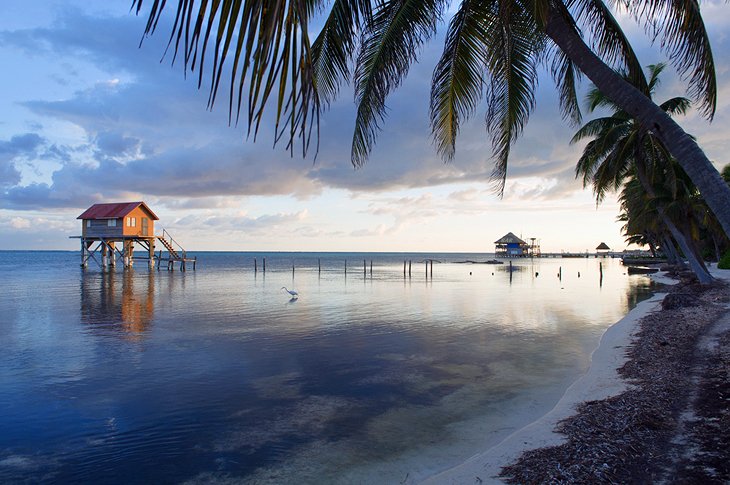
Just off the tip of the Yucatán Peninsula, laid-back Ambergris Caye is the largest of Belize's 400-plus cayes and a hot spot for tourists.
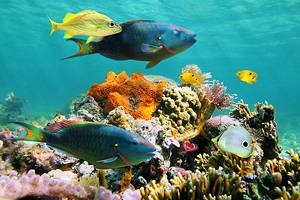
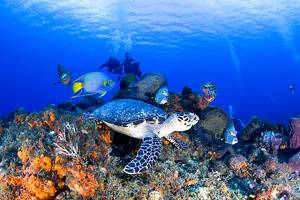
If diving and snorkeling are on your things to do list, head off the coast here to the Hol Chan Marine Reserve. It's named after the Mayan for "little cut" and is one of seven reserves within the Belize Barrier Reef system, which is the second largest in the world after Australia's Great Barrier Reef.
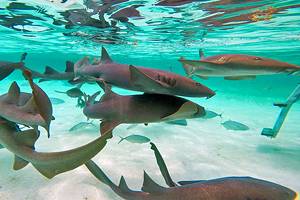
Top attractions in the reserve include a cut in the reef with steep coral walls; Cat's Eye, a crescent-shaped sinkhole; and Shark Ray Alley, where divers can enjoy close encounters with nurse sharks and southern stingrays.
The island's main town is the fishing village of San Pedro, a colorful jumble of clapboard houses, stray dogs, and clucking chickens. Besides water sports and beach basking, popular things to do in San Pedro include dining at the cute cafés and touring the Belize Chocolate Company.
Golf carts and bicycles are the most popular modes of transport, although these days an increasing number of cars and trucks zip along the sandy streets.
Fishing is fantastic here. Saltwater fly fishing enthusiasts come to Ambergris Caye to cast their lines for bonefish, tarpon, permit, snook, and barracuda.
2. Lighthouse Reef Atoll and the Blue Hole
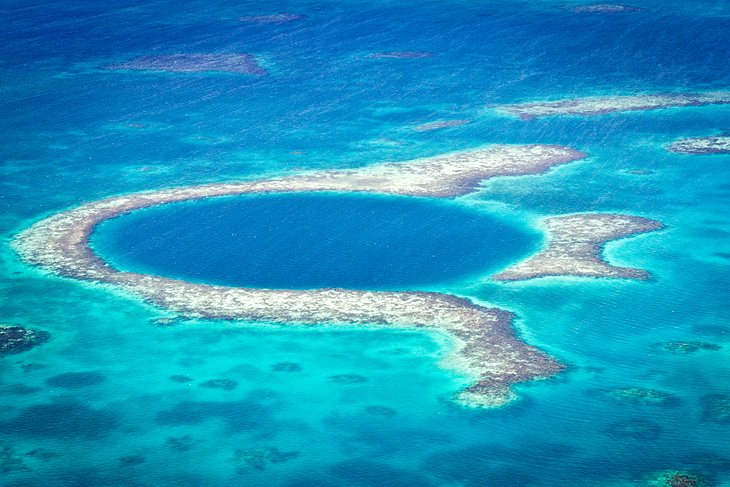
The farthest from shore of Belize's three atolls, Lighthouse Reef Atoll is nirvana for nature lovers and divers. Six cays surround a turquoise lagoon, with gleaming white-sand beaches, coconut palms, and fascinating coral formations.
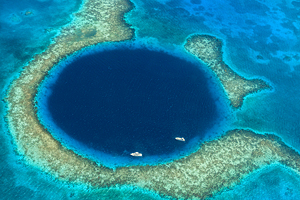
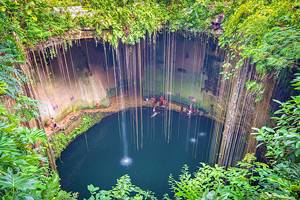
The top place to visit here is the famous Great Blue Hole, a UNESCO World Heritage Site and Natural Monument. The giant marine sinkhole is so large, it can be seen from outer space. Plunge in to see bizarre limestone stalactites protruding from the steep walls, and if you're lucky, the resident school of reef sharks. You can also take a helicopter tour to see the natural wonder from above.
Half Moon Caye is the most visited cay of the atoll. Also a World Heritage Site, the Half Moon Caye Natural Monument shelters a colony of about 4,000 red-footed boobies and many other species of birds. Nature trails lead to observation platforms with great views of nesting boobies and frigate birds.
You can explore the Half Moon Caye's lighthouse and relax on the beautiful beaches. Divers also love the excellent wall dives and abundant marine life around the island.
3. Placencia Peninsula
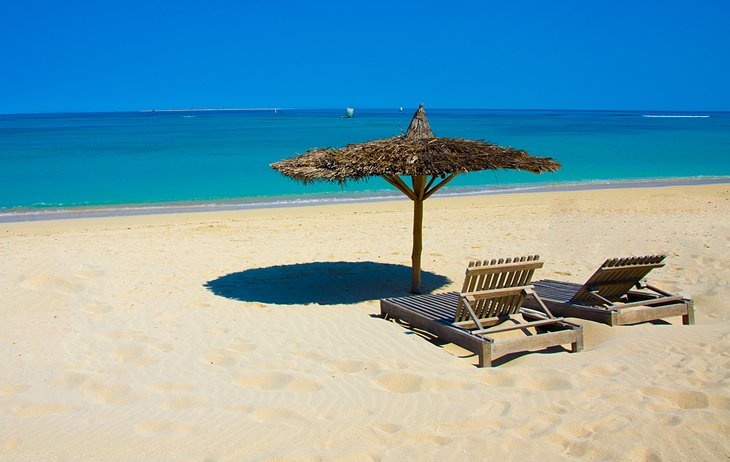
Snuggled on the end of a 26-kilometer sandy peninsula, Placencia is a popular fishing village and beach resort. Travelers come here to bask on some of the best beaches in Belize, eat fresh seafood at the excellent restaurants, fish, kayak the lagoon, and dive and snorkel in the Silk Cayes Marine Reserve.
In the village, brightly colored clapboard houses raised on stilts line the narrow concrete path where fishermen used to transport fish in wheelbarrows.
Near Placencia, Laughing Bird Caye National Park is another protected area of the Belize Barrier Reef Reserve System. Swimming, snorkeling, sea kayaking, and diving are popular things to do here.
The traditional Garifuna village of Seine Bight is also located on the Placencia Peninsula and offers a glimpse into Amerindian and African heritage. The community often hosts celebrations filled with traditional dancing and drumming in this town.
From Placencia, you can organize a cruise through the mangroves on the Monkey River to see birds, howler monkeys, and crocodiles.
4. Turneffe Islands Atoll
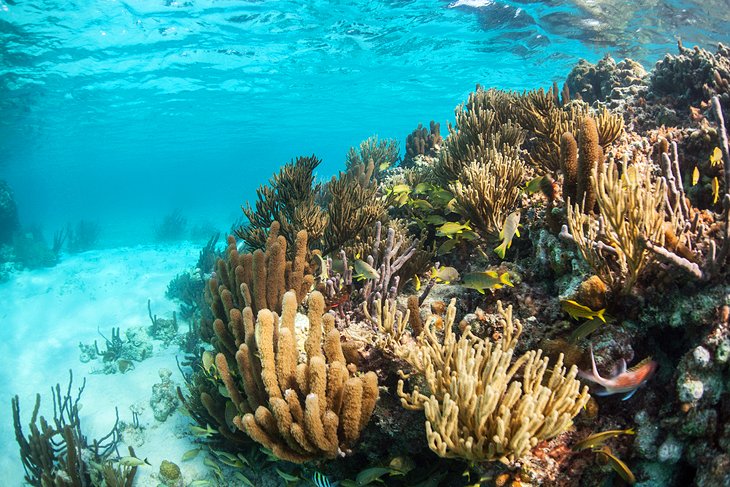
A paradise for divers and anglers, Turneffe Islands Atoll encompasses more than 200 mangrove islands surrounding a lagoon. It is one of three atoll reefs in Belize's waters.
Seascapes here range from crystalline flats to creeks and lagoons. Corals shimmer in the clear waters, and the atoll is a nursery for many different marine species, including grouper, snapper, and trunkfish.
Fishing: The atoll is also home to the famed bonefish, which lures saltwater fly fishing enthusiasts from around the world. In particular, the vast flats on the eastern side of the atoll are ideal for casting a fly line or snorkeling in the shallows.
Diving: Divers will find some excellent wall and current dives around the atoll, and the varied marine life includes eagle rays, nurse sharks, dolphins, conch, and turtles.
Lodging: Most of the resorts in the atoll are specialized diving and fishing lodges. And if you're wondering where to stay in Belize specifically for these sports, Turneffe Flats is a popular option. You can also pop over for a day trip from Belize City, Ambergris Caye, and Caye Caulker.
5. Cockscomb Basin Wildlife Sanctuary & Jaguar Preserve
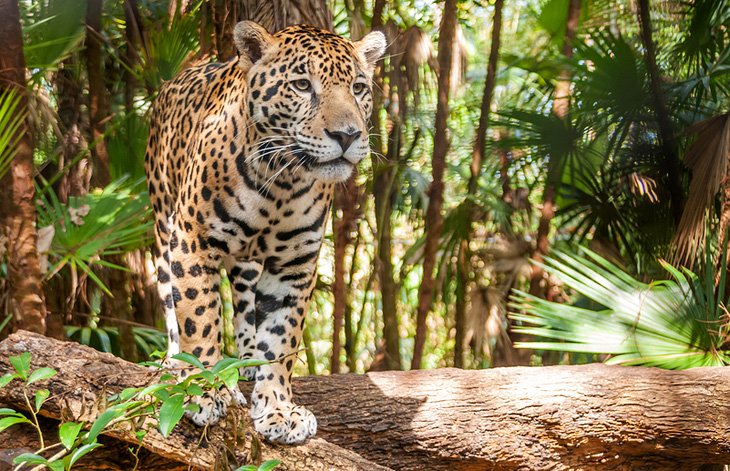
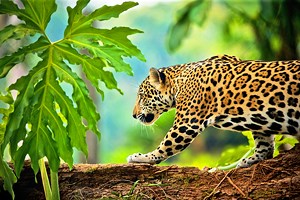
Cockscomb Wildlife Sanctuary is a haven for nature buffs. The mountainous tropical forest here protects an impressive array of wildlife, including jaguars, ocelots, pumas, anteaters, tapirs, monkeys, and snakes, although sightings of the cats are rare.
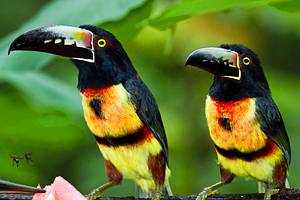
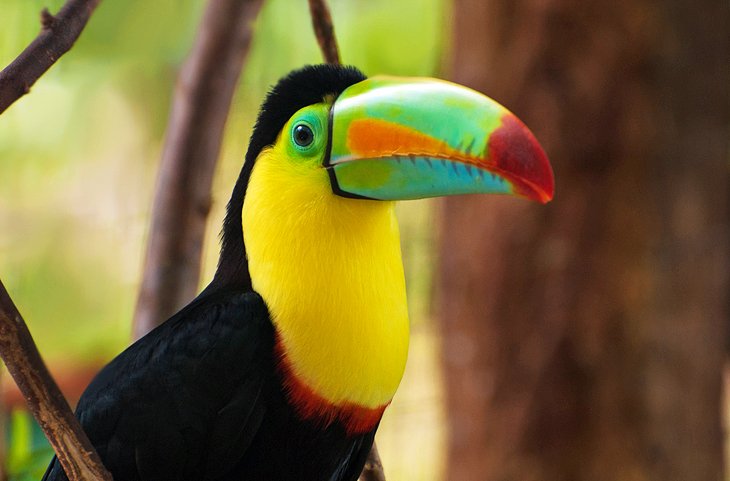
Birders will also love it here. The preserve has recorded sightings of more than 300 avian species, including toucans and scarlet macaws.
Walking Trails: The best way to explore the sanctuary is on the extensive web of trails. The Waterfall Trail is one of the most popular, with a cascade and swimming hole. Ben's Bluff Trail is more challenging but offers rewarding views of the basin. Tiger Fern Trail, a rigorous hike, leads to a beautiful double waterfall. Guided tours are also available. Be sure to wear protective clothing and take plenty of water.
Insider's tip: Save time to stop at the Che'il Chocolate Factory and farm near the entrance to the park before or after your visit. You can take a tour of this organic cacao farm, make your own chocolate, and stock up on some scrumptious treats.
6. Caye Caulker
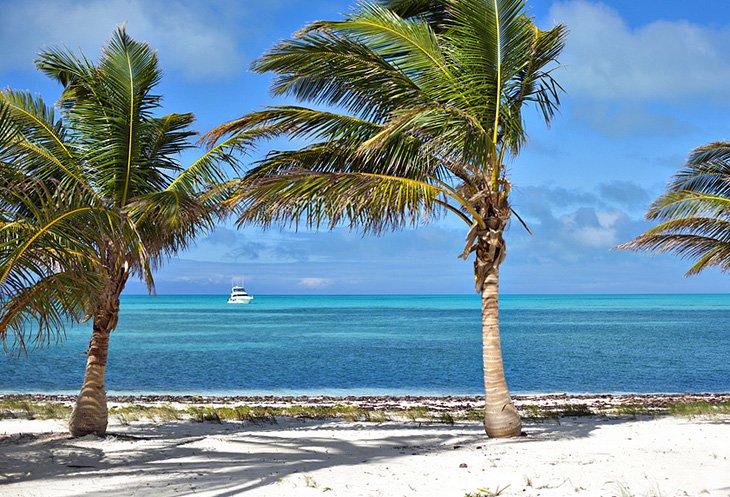
Packed with personality, Caye Caulker is popular with backpackers, budget travelers, and anyone who loves a laid-back atmosphere. Golf carts and bikes are the main mode of transport for sightseeing along the sandy streets, where sleepy dogs get right of way, and locals turn up the volume on reggae tunes.
Caye Caulker lies about 24 kilometers south of Ambergris Caye, and the accommodations here tend to be more rustic and affordable. Many visitors stay at one of the island's friendly guesthouses.
In 1961, Hurricane Hattie divided the island in two, creating an area called the Split, which is now a small public beach. The area north of the Split is quieter and less developed. Tourists come here to completely chill out.
Don't expect picture-perfect, soft-sand beaches. Turtle grass shallows fringe much of the shoreline, but you can usually find a decent splotch of white sand, dotted with mangroves and coconut palms, for sunbathing. Most visitors head out to the barrier reef for swimming, diving, and snorkeling.
Other popular things to do include kayaking, birding, and strolling along the nature trails in the Caye Caulker Mini-Reserve.
7. Lamanai Archaeological Reserve
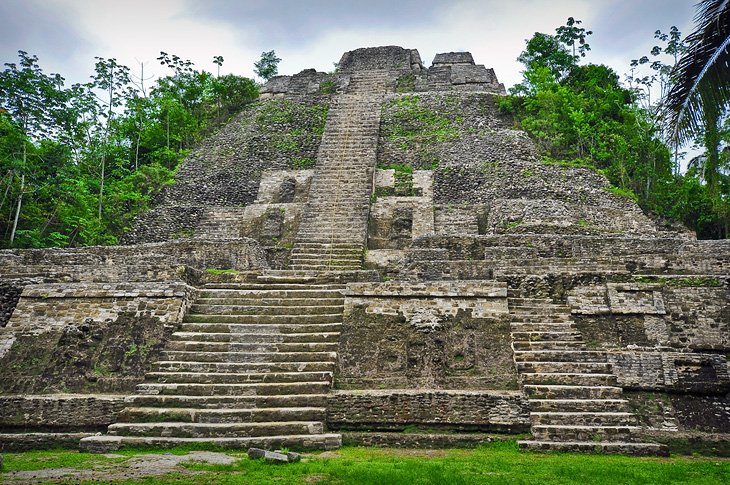
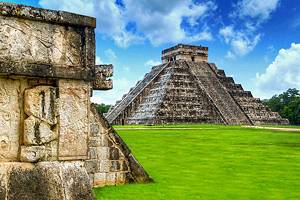
Nestled in lush jungle on the banks of the New River, Lamanai is the most famous archaeological site in northern Belize and one of its largest ceremonial centers.
Lamanai means "Submerged Crocodile" in one of the Mayan languages, and images of crocodiles have been found on the excavated buildings, pottery, and figurines.
Traveling to the site is an adventure in itself. An hour boat ride up the New River provides frequent wildlife sightings, and the dense jungle lends a wild feel to these ruins, which are still not completely excavated.
Lamanai was occupied the longest of any Mayan site. In the 16th century, the Spanish found a thriving community here, and the ruined churches reveal attempts to convert the Maya. The archaeological site features more than 900 structures, as well as a museum with exhibits of pottery, obsidian, figurines, and jade jewelry.
Highlights include the Mask Temple; Temple of the Jaguar; and the High Temple, which visitors can climb for panoramic jungle views.
8. Mountain Pine Ridge Forest Reserve
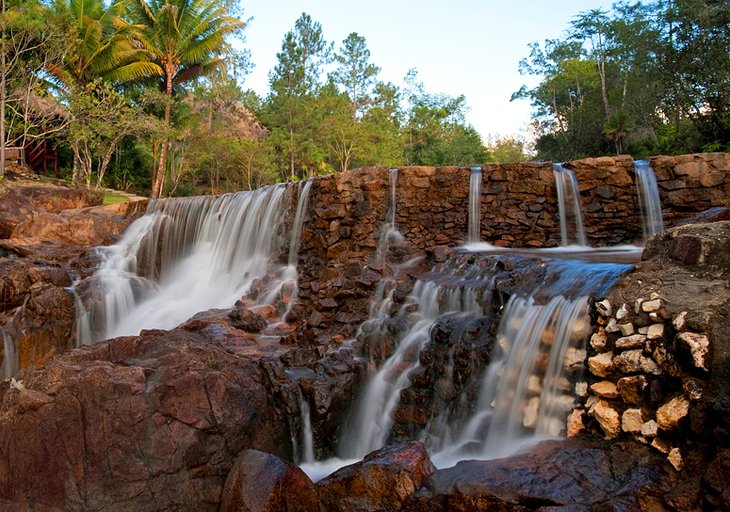
The Mountain Pine Ridge Forest Reserve offers a soothing contrast to the tropical humidity of the coast. The higher elevation here keeps daytime temperatures cool and offers a welcome respite from mosquitoes.
Hiking among the pine forests is one of the top free things to do in Belize. You can explore gushing rivers, waterfalls, pools, and caves, although in recent years, the pine beetle has devastated many of the trees.
One of the top attractions in the reserve is the Rio Frio Cave, once used by the Maya as burial grounds. Step inside to see stalactite formations, freshwater pools, and waterfalls.
At the Five Sisters Falls, five cascades spill into a beautiful pool. For a refreshing dip head to Rio On Pools, where small waterfalls connect a series of pools carved from granite boulders. The slabs of rock are great for basking in the sun after a swim.
Also called Hidden Falls, Thousand Foot Falls are surrounded by hiking trails. You can enjoy beautiful views of the area from the observation platform here.
9. The Cayo District's Archaeological Sites
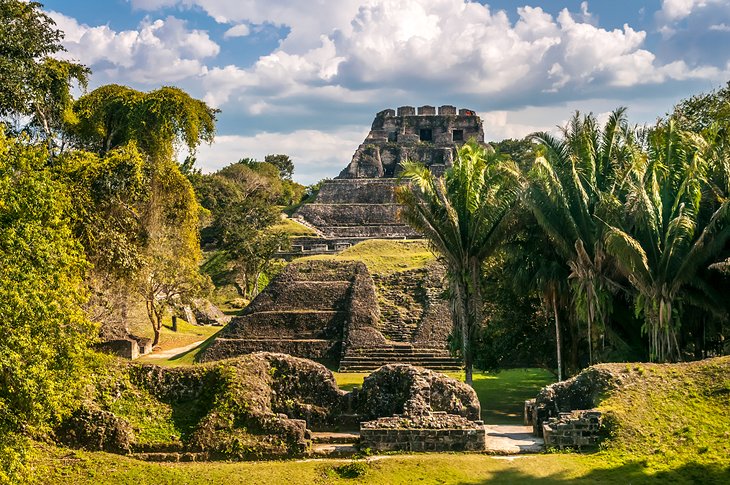
The lush Cayo District in Western Belize is home to some of Belize's top archaeological sites. Xunantunich, perched on a limestone ridge overlooking the Mopan River, is one of the most famous ancient attractions.
El Pilar is one of the largest archaeological sites in Belize, but little of its history is known, since excavation only began in 1993. You can explore the ruins and surrounding jungle on the vast network of nature trails. This place hasn't yet drawn the attention of most tourists, so you may have the place to yourself.
Close to the town of San Ignacio, the popular Cahal Pech Archaeological Site is relatively small and includes an excellent museum. It has more than 30 structures to explore.
Cave Tours: Looking for a subterranean adventure? Sign up for a tour of Che Chem Ha Cave and the Actun Tunichil Muknal Cave, which shelters skeletal remains and Mayan pottery vessels. At Barton Creek Cave, adventure seekers can canoe or tube-float along a river that flows through the cave for about one and a half kilometers.
Other highlights in the region include the Chaa Creek Nature Reserve and the Green Iguana Conservation Project, where you can touch and learn about these distinctive creatures.
Where to Stay: Lying in a valley between the Mopal and Macal Rivers, San Ignacio is a great base for exploring the tourist attractions of the Cayo District. It's also a launching point for adventures into the beautiful Mountain Pine Ridge Reserve.
10. The Belize Zoo
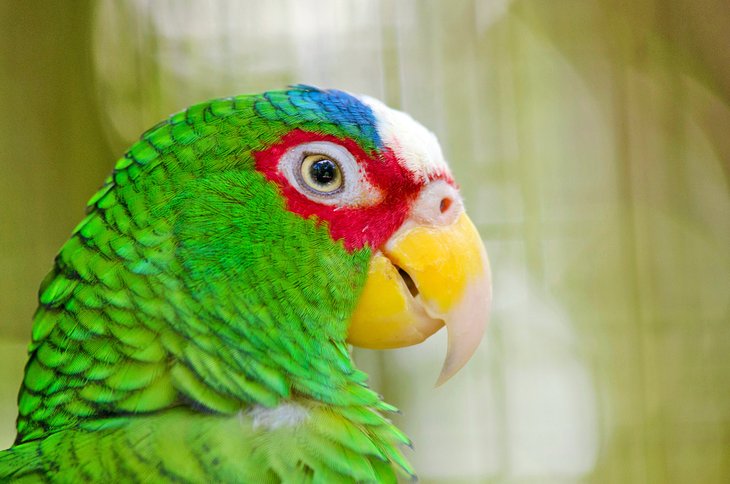
Want to see some of Belize's most interesting wildlife in one quick trip? Plan a visit to the Belize Zoo. Started in 1983 as a home for wild animals used in documentary films, this popular attraction emphasizes conservation and education.
This is a great place to visit to see more than 45 different native species in natural surroundings, most of which are rescue animals. Tapirs, toucans, howler monkeys, and the always entertaining spider monkeys are among the native residents, and big cat lovers can see all five of Belize's wildcats, including jaguars.
This is a great place to begin your Belize sightseeing and meet some of the country's fascinating wildlife. It's also one of the most popular day trips from Belize City.
11. Altun Ha Archaeological Site
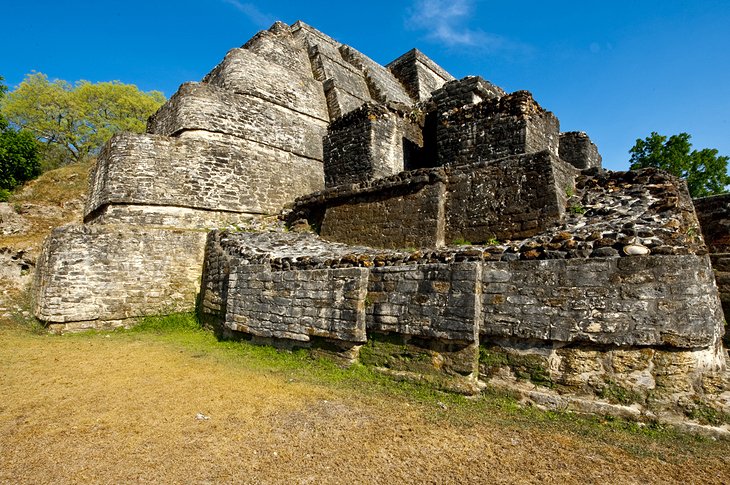
Altun Ha is one of Belize's most famous ruins and is easily accessible from Belize City. Mayan for "Rockstone Pond" or "Water of the Rock," Altun Ha was an important trading post and ceremonial site, as well as an agricultural center.
You can explore 13 structures and two main plazas at the site. The Temple of the Masonry Altars, dating from the early 7th century, is the largest of the temple-pyramids and the most significant structure. Climb to its top for beautiful 360-degree vistas.
Excavation of the Temple of the Green Tomb uncovered the crypt of a Mayan priest-king, and many of the accompanying artifacts remain intact, including pottery, pearls, jade pendants, and stingray spines used in Mayan bloodletting rites.
A famous discovery at Altun Ha is the Jade Head. This sculpted mask of the Mayan Sun God is the largest carved jade object found in the Mayan area.
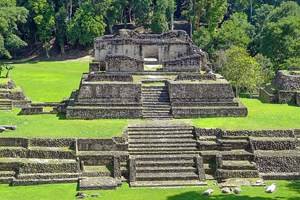
Another interesting feature is the 43-meter-high Caana (Sky Palace) pyramid, Caracol's tallest structure. It's also the tallest human-made structure in all of Belize and offers breathtaking vistas of the site and surrounding jungle from the top.
12. Caracol Natural Monument Reservation
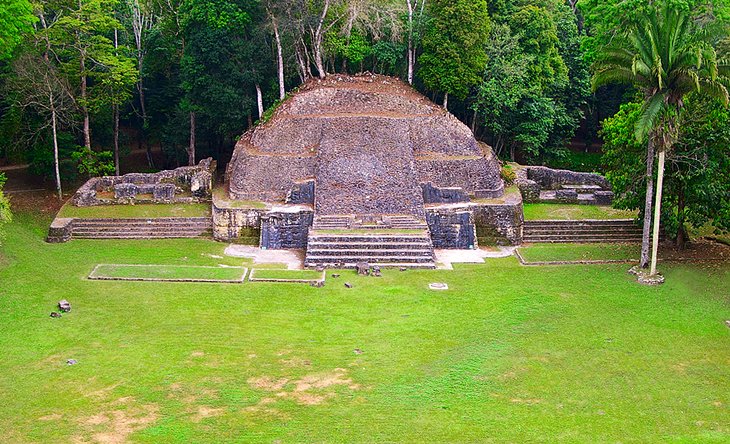
On the Vaca Plateau, 152 meters above sea level, Caracol is one of the largest archaeological sites in Belize.
The ruins of this Mayan city are tucked deep in the jungles of the Chiquibul National Park, near the Guatemalan border.
It's interesting to note that Caracol was once larger than Belize City and supported twice its population. The warriors of Caracol were known for their military victories, defeating both the powerful cities of Tikal and Naranjo. Today, visitors can see the carved altar stone depicting these victories.
Although Caracol was abandoned by its human inhabitants centuries ago, the ruins teem with wildlife. Cats, howler monkeys, and many birds are found in the forest here, and toucans often inhabit the pyramids.
Beyond Caracol, a series of limestone karst caves are believed to be the largest of their kind in the Western Hemisphere.
13. Belize City
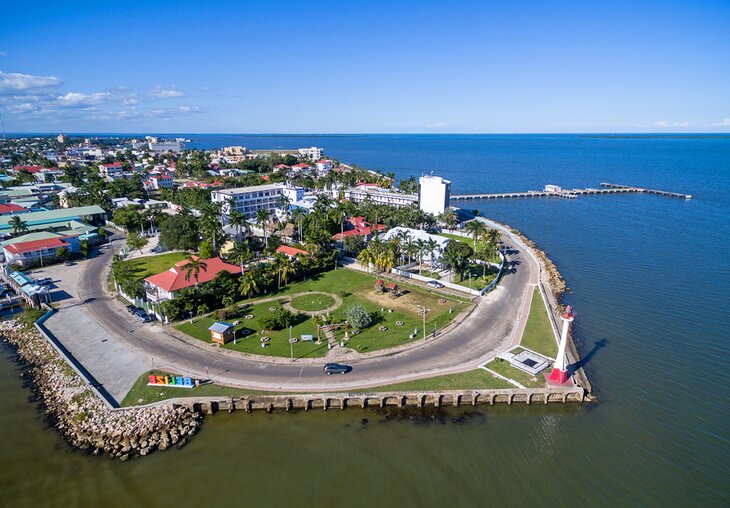
Once a Mayan fishing village, Belize City was the country's capital until 1970 after Hurricane Hattie wreaked havoc. Today, it's Belize's largest city and commercial center; a busy port, which welcomes cruise ships; and the country's main gateway.
Ramshackle Victorian buildings jostle along the narrow streets in town, but despite its gritty exterior, the city has a fascinating past featuring Mayans, colonial days, hurricanes, and fires. To learn more, visit the Museum of Belize, housed in a former prison.
Another one of the popular tourist attractions in Belize City is the Old Belize, a museum, beach, and marina all rolled into one. The attraction also has a great restaurant known for its authentic Belizean cuisine.
Built in 1923, the Belize Swing Bridge connects the south and north sides of the city and is the world's only manually operated bridge of its kind.
A short drive from the city, you can explore the Altun Ha Archaeological Site and the excellent Belize Zoo.
Since the city sits at the mouth of the Belize River, on the Caribbean coast, anglers will find excellent fishing opportunities a few minute's drive from the center of town.
14. Belize Botanic Gardens
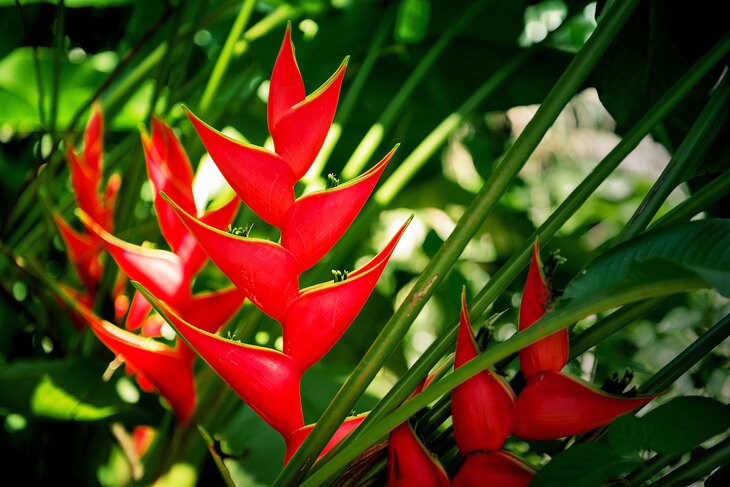
Nestled within the Cayo District, Belize Botanic Gardens treats tourists to 45 acres of floral biodiversity. It's the largest botanic garden in the country. Its star attraction is its orchid house, where you can see more than 120 of Belize's splendid orchids.
Another interesting feature is the Maya Medicine Trail, a rainforest path flanked by plants believed to have healing properties. Guides can teach you the ways the ancient Maya used these plants for everything from construction materials and clothes to food and medicine.
Don't miss the Bullet Tree, which the Maya used to create shields and defend themselves against the bullets from Spanish invaders. You can learn more about these ancient people at the Maya House at the beginning of the trail.
Other things to do at the Belize Botanic Gardens include seeing native and exotic palms, sampling fresh fruit picked from the orchard, and climbing up the 35-foot-high Fire Lookout Tower for a panoramic view of the scenery.
Tourists are welcome to explore on their own or hop on a 90-minute guided tour, available from 8am to 2pm.
Best Time to Visit Belize
| Average minimum and maximum temperatures for Belize City, Belize in °C | |||||||||||
| J | F | M | A | M | J | J | A | S | O | N | D |
| 27 21 | 27 22 | 28 23 | 29 24 | 31 26 | 31 26 | 30 26 | 30 26 | 30 25 | 29 24 | 28 23 | 27 22 |
| PlanetWare.com | |||||||||||
| Average monthly precipitation totals for Belize City, Belize in mm. | |||||||||||
| 114 | 66 | 48 | 43 | 102 | 218 | 206 | 178 | 241 | 254 | 178 | 170 |
| Average minimum and maximum temperatures for Belize City, Belize in °F | |||||||||||
| J | F | M | A | M | J | J | A | S | O | N | D |
| 80 70 | 80 71 | 83 74 | 85 76 | 87 79 | 87 79 | 86 79 | 86 78 | 86 77 | 84 75 | 82 73 | 80 71 |
| PlanetWare.com | |||||||||||
| Average monthly precipitation totals for Belize City, Belize in inches. | |||||||||||
| 4.5 | 2.6 | 1.9 | 1.7 | 4.0 | 8.6 | 8.1 | 7.0 | 9.5 | 10 | 7.0 | 6.7 |
The best time of year to visit Belize is during the dry season, which typically starts in late November or early December and runs through May. This season gives tourists the best weather to take advantage of Belize's beautiful nature, from the inland jungles to the pristine coastline.
Throughout the year, Belize boasts an average temperature of about 27-29 degrees Celsius. The destination's dry season happens to be slightly cooler than other times of the year, although by no means is it cold. Tourists can expect daytime highs to range from 28 to 32 degrees Celsius, with nighttime temperatures falling no lower than 20 degrees Celsius, from November through April.
This type of weather lends itself well to exploring Belize's remarkable Maya ruins, such as the Caracol archeological park and Xunantunich, as well as the beaches around Placencia. It's also a great time of year to go diving in Belize.
While significantly less rainy than the wet season, Belize's dry season does come with the occasional shower. The country is in the tropics, after all! Tourists should expect relatively frequent rainfalls in the earlier part of the dry season. It rains an average of 13 days in Belize in November, dropping to 11 days on average during both December and January.
The rain subsides as the dry season continues, with an average of six rainy days in February and just four days of rain in both March and April. It rains about six days on average each May – the last official month before Belize's sopping wet season begins.
Despite the vacation-friendly weather, Belize's dry season does come with a downside: crowds. December and March compete for the highest numbers of visitors to Belize, with each month approaching some 55,000 tourist arrivals in typical years. That number pushes even higher when you count the 130,000-plus cruise passengers who usually spend the day in Belize City at some point during the months of January, December, and March.
If you want to make the most of the great weather but avoid some of the busiest months for tourists, plan your trip to Belize in November or May. Tourism drops about 30 to 40 percent from peak levels during these months. The further you venture away from the main tourist hot spots of Belize City, Ambergris Caye, Cayo District, and Placencia, the less crowded it gets.
This is a great time of year to go off the beaten path in Belize – watching traditional dance performances (and learning the local moves) in Dangriga, sampling ocean fare at Punta Gorda's fish market, or exploring the ancient Maya city of Lubaantun.