20 Top-Rated Tourist Attractions in Barcelona
Catalonia's vibrant capital, Barcelona is a stunning seaside city that flaunts her beauty and sunny lifestyle. Gorgeous scenery, breathtaking architecture, and superb cultural attractions make for an alluring destination. Of course, the balmy Mediterranean climate adds to the charm.
Barcelona has an atmospheric medieval quarter, the Barri Gòtic, with an almost magical old-world ambience, but it's even more famous for its Modernist architecture. Antoni Gaudí left a lasting mark on Barcelona with his avant-garde Surrealist buildings; several are UNESCO-listed.
After all the sightseeing, you'll want to simply relax and soak up the city's joyous vibe. Enjoy strolling down La Rambla, where the locals hang out; sunbathing at the sandy beaches near the harbor; and lingering over leisurely meals on outdoor terraces.
One of the best ways to discover Barcelona is by wandering aimlessly and stumbling upon hidden side streets with small cafés or stopping to relax at peaceful town squares, where street musicians strum melodies on Spanish guitars. Delightful surprises abound at every turn.
Learn about the best places to visit and things to do with our list of the top attractions in Barcelona.
- 1. Basílica de la Sagrada Família
- 2. Barri Gòtic (Gothic Quarter)
- 3. Casa Milà (La Pedrera)
- 4. La Rambla: Barcelona's Social Hub
- 5. Bogatell Beach
- 6. Palau de la Música Catalana (Palace of Catalan Music)
- 7. Catedral de la Santa Cruz y Santa Eulalia
- 8. Parc Güell: Gaudí's Surrealist Park
- 9. Casa Batlló
- 10. Museu Picasso de Barcelona
- 11. La Barceloneta
- 12. Plaça del Rei
- 13. Camp Nou
- 14. Magic Fountain of Montjuïc
- 15. Scenic Views and Art Museums in Montjuïc
- 16. Reial Monestir de Santa Maria de Pedralbes
- 17. Mercat de la Boqueria
- 18. Fundació Joan Miró
- 19. Parc del Laberint
- 20. Quadrat d'Or
- Where to Stay in Barcelona for Sightseeing
- Tips and Tours: How to Make the Most of Your Visit to Barcelona
1. Basílica de la Sagrada Família
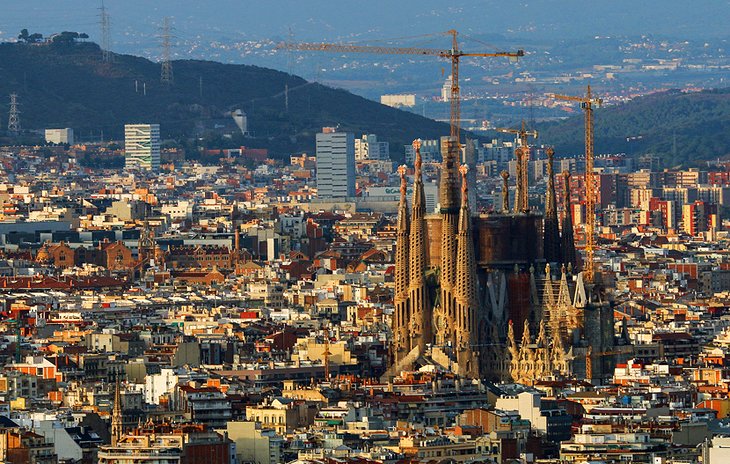
The Basílica de la Sagrada Família stands in the northern part of the city, dominating its surroundings with its 18 spindly towers soaring high above all the other buildings. One of Europe's most unconventional churches, this amazing monument is designated as a UNESCO World Heritage Site.
The renowned Catalan architect of modern times, Antoni Gaudí was commissioned in 1883 to design this Basilica as a neo-Gothic church. But instead of following the plans, he created a signature example of his famous surrealistic Art Nouveau architecture. He had no firm ideas in mind, preferring to alter and add to the plans as work progressed.
Although Gaudí had originally forecast between 10 and fifteen years, the church was never completed during his lifetime. Since 1926, several other architects have continued work on the Basilica based on Gaudí's plans. In 2010, the main nave was completed, and the Basilica was consecrated by Pope Benedict XVI (although construction is still ongoing and expected to be completed by 2026).
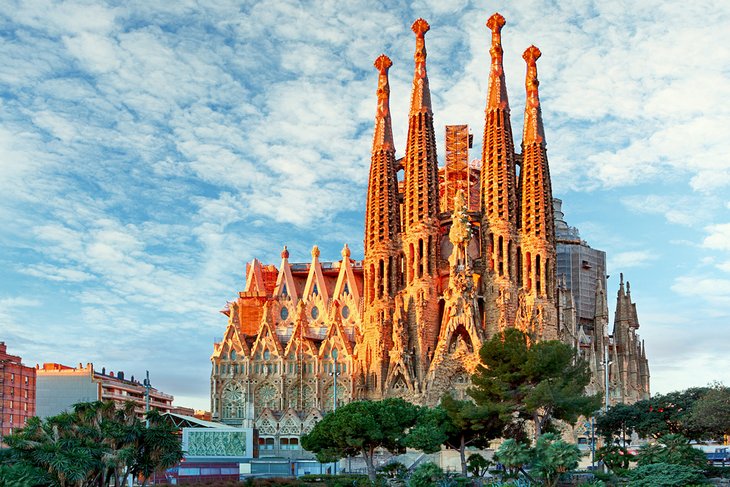
Visitors are first struck by the lavish exterior with its expressive Nativity facade depicting the birth of Jesus, and the evocative Passion facade that illustrates the suffering, death, and resurrection of Jesus.
Even though the Basilica is unfinished, tourists may visit the interior to admire the awe-inspiring sacred space and its dazzling artworks. The main nave of the sanctuary is an immense space of 90 meters long by 60 meters high. The ceiling sparkles with opulent decorative details, and colorful stained-glass windows allow ethereal light to flow in.
The apse features an unusual Crucifix rendered as a canopy with lanterns. The overall effect is jaw-dropping. Gaudí best captured the essence of his architectural masterpiece when he described it as "a work that is in the hands of God and the will of the people."
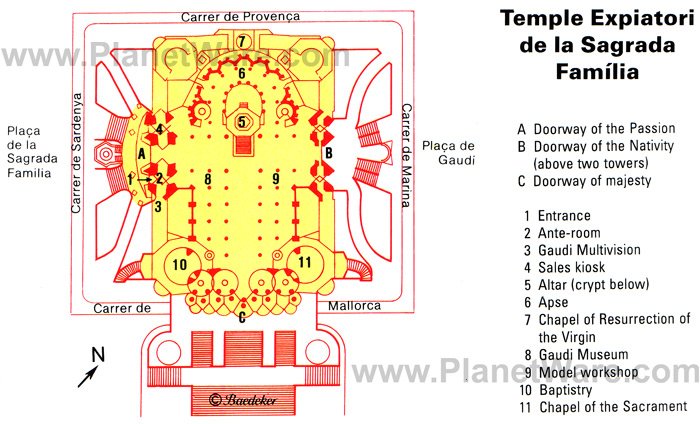
The Basilica of the Sacred Family is also known in Spanish by its official name: Temple Expiatori de la Sagrada Família.
Address: 401 Carrer de Mallorca, Barcelona
2. Barri Gòtic (Gothic Quarter)
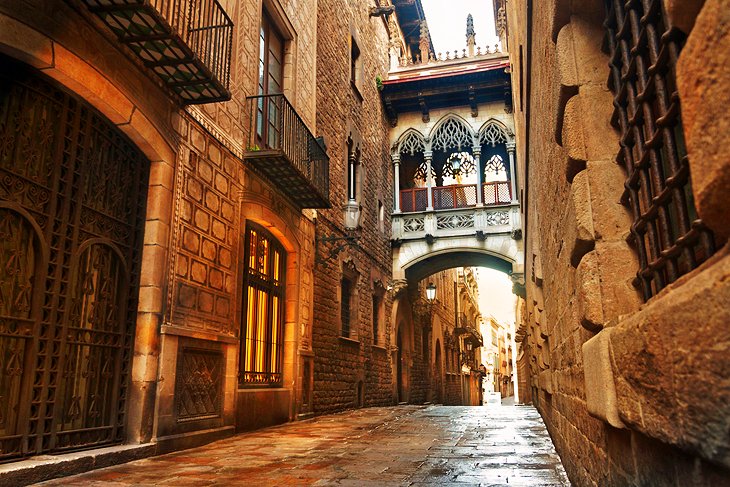
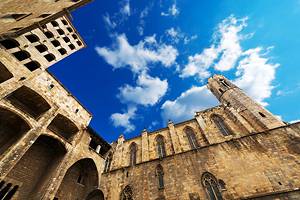
For 2,000 years, the Gothic Quarter has been the spiritual and secular center of the city. Relics of ancient Roman buildings are still found here, but the Middle Ages are best represented by the historic monuments packed into this quarter.
Mainly built between the 13th and 15th centuries, the Catedral de la Santa Cruz y Santa Eulalia is the heart of the Gothic Quarter. Surrounding the cathedral is a maze of cobblestone streets and alleyways.
Tourists will enjoy wandering the narrow pedestrian lanes, and stopping to discover the neighborhood's quaint boutiques and restaurants. By getting lost here, visitors become immersed in the magical ambience of a traffic-free medieval world.
Picturesque squares are enlivened by the sounds of people chatting and laughing or the strumming of Spanish classical guitar. Children often play a pickup game of soccer in the Gothic Quarter's hidden corners, and local residents socialize at the sidewalk terraces of cafés that are tucked away in courtyards.
3. Casa Milà (La Pedrera)
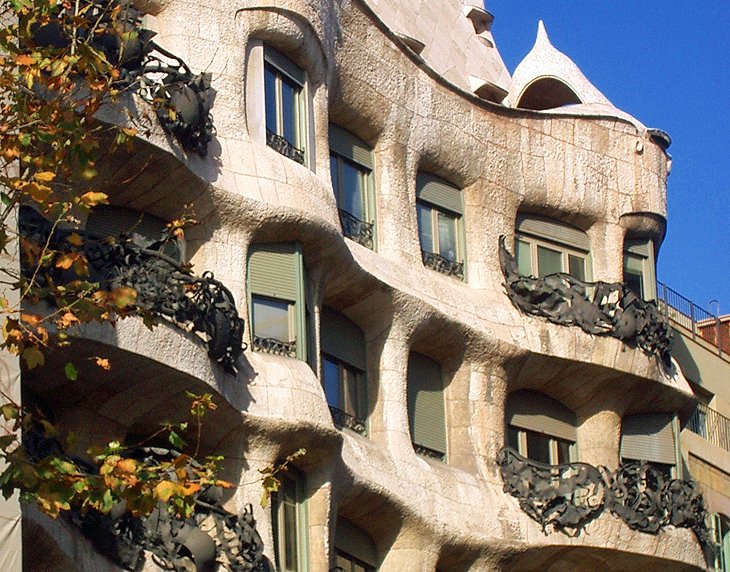
In the Eixample district off the elegant boulevard of Passeig de Gràcia, the UNESCO-listed Casa Milà is Antoni Gaudí's most famous secular building. Casa Milà is also affectionately known as "La Pedrera," which translates to "The Stone Quarry" because the building resembles an open quarry.
Built between 1906 and 1912, this flamboyant avant-garde dwelling looks more like a sculpture than a functional building. Every line of the natural stone facade is curved, with rounded windows and metal balcony railings twining around in plant-like shapes. Even the roof has an undulating form, complemented by the decorative chimneys.
The entrance to the building is on the Carrer de Provença, through a remarkable wrought-iron gate that leads to an inner courtyard. The building is supported by ribbed arches that were designed for load-bearing purposes, a feature that reveals Gaudí's genius as a structural engineer.
Visitors may walk around the rooftop terrace for an up-close look at the strangely shaped mosaic-adorned chimneys. The roof area also rewards visitors with sensational views across the city, with the outlook extending to the Basílica de la Sagrada Família in the distance.
Casa Milà houses the Fundació Catalunya cultural center that organizes events (such as lectures, dance performances, and art exhibitions) throughout the year. The monument is open to the public daily for self-guided visits, and audio guides are available. Guided tours are available on various themes, including a nighttime experience with a light show, music, and refreshments.
Well designed to welcome tourists, Casa Milà has boutiques and a stylish restaurant on the building's mezzanine, Cafè de la Pedrera, which offers gourmet Catalan cuisine for lunch and dinner. This restaurant also serves brunch and tapas.
Address: 261-265 Carrer de Provença, Barcelona
Official site: https://www.lapedrera.com/en/home
4. La Rambla: Barcelona's Social Hub
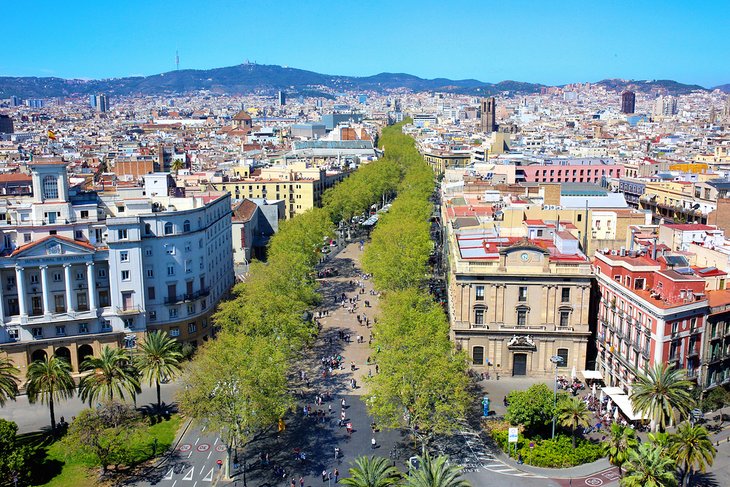
The heart of Barcelona's social life is found on La Rambla, a wide tree-shaded avenue that divides the Old Town into two parts. La Rambla stretches from the Plaça de Catalunya, where the beautiful Romanesque 12th-century Convent of Santa Anna stands, all the way down to the port.
This street features expansive pedestrian sidewalks, lined with shops, restaurants, and outdoor cafés, making it one of the most popular hangouts in the city.
During the day, many locals are found here doing their everyday shopping at the Mercat de la Boqueria. At night, groups of friends and families take their evening paseo (stroll) on La Rambla to enjoy the fresh air and lively ambience. On some days, onlookers might be treated to live music, a mime show, or other impromptu street performances.
On its northeast side, La Rambla borders the Barri Gòtic, and halfway down the avenue is the Plaça Reial, a lovely palm-fringed square enclosed by historic houses. These elegant buildings have arcades filled with shops, cafés, and restaurants. At the center is the Fountain of the Three Graces and a pair of street lamps designed by Antoni Gaudí featuring winged dragons.
Another important monument on La Rambla (number 3-5) is the UNESCO-listed Palau Güell, an ostentatious mansion designed in 1886 by Antoni Gaudí. The owner, Eusebi Güell, was a great patron of the arts, and the building was constructed with a large domed hall intended for poetry readings and private concerts. Open to the public for visits, the building is adorned with sumptuous décor, valuable textiles, and handcrafted furniture created by Gaudí.
5. Bogatell Beach
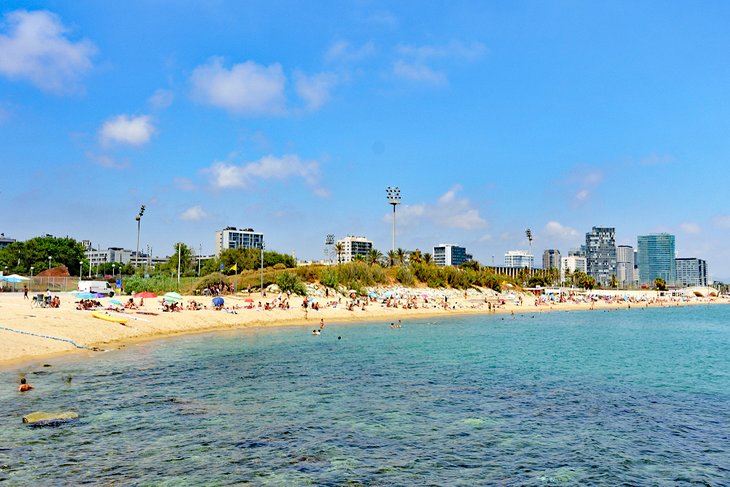
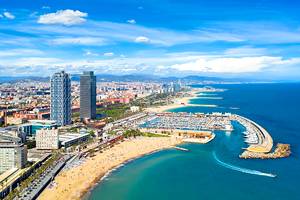
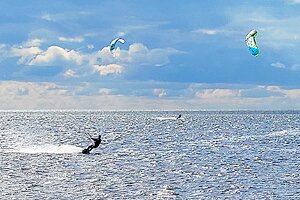
Barcelona is home to 4.5 miles of beaches. And one of the best beaches in Spain is found within the city limits of Barcelona. Locals flock to Bogatell Beach to sunbathe, socialize, relax, play volleyball, or go windsurfing. Other things to do include kitesurfing and kayaking.
The 600-meter-long beach features a sandy shoreline and excellent amenities: restrooms, showers, parking, a beachfront promenade, snack bars, and ice cream shops. There are also multiple lifeguard towers to ensure beach safety.
Address: Sant Martí District, Barcelona
6. Palau de la Música Catalana (Palace of Catalan Music)
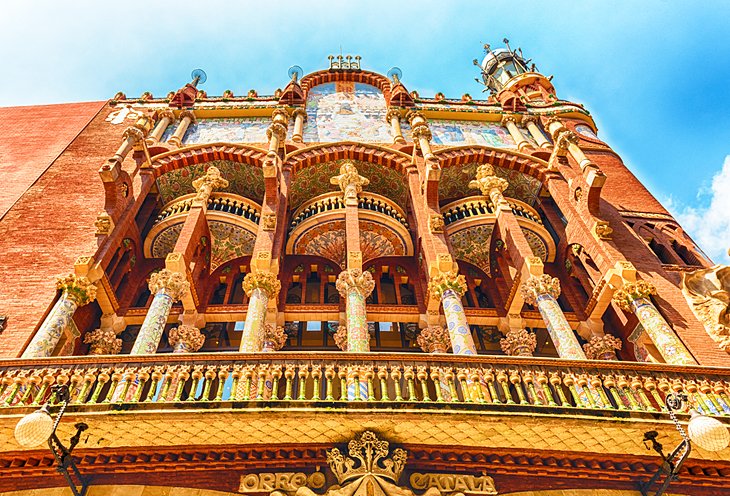
Built between 1905 and 1908 as a concert hall for the choral society Orfeó Català, the Palau de la Música Catalana was designed by the architect Lluís Domènech i Montaner, in the Catalan Modernist style. The UNESCO-listed building exemplifies an ornate Art Nouveau decorative style. The facade is a profusion of intricate mosaics, sculptural elements, and exquisite ironwork.
The interior décor is just as colorful and fanciful within the Concert Auditorium. Adorned with Art Nouveau floral patterns and fruit motifs, this enchanting auditorium provides a marvelous setting for musical performances. The concert hall, which seats about 2,200 people, is the only auditorium in Europe illuminated during daylight hours entirely by natural light.
Eye-catching artworks cover every square inch of the Concert Auditorium's walls and ceiling. The walls on two sides consist primarily of stained-glass panes. The ceiling features an enormous skylight of stained glass designed by Antoni Rigalt whose centerpiece is an inverted dome in shades of gold surrounded by blue that suggests the sun and the sky. Elaborate sculptures of muses frame the concert stage.
A program of evening music performances (including pop music, Spanish guitar, flamenco, jazz, opera, and classical music) is held at the Palau de la Música Catalana throughout the year.
It is possible to see the interior of the Palau de la Música Catalana outside of concert performances by taking a guided tour.
The Palau de la Música Catalana has a gift shop and a café-restaurant, the Cafè Palau, which serves breakfast, lunch, and afternoon refreshments in a cozy indoor space or on a pleasant outdoor patio.
Address: 4-6 Calle Palau de la Música, Barcelona
Official site: https://www.palaumusica.cat/en
7. Catedral de la Santa Cruz y Santa Eulalia
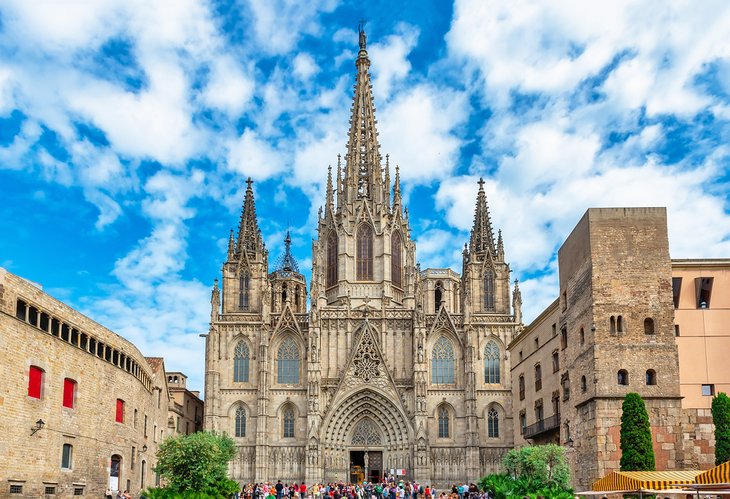
At the center of the Gothic Quarter on the Monte Tabor is the Catedral de la Santa Cruz y Santa Eulalia (Cathedral of the Holy Cross and Saint Eulalia). This medieval cathedral is a masterpiece of Catalan Gothic architecture with an ornately sculpted facade.
The sanctuary contains magnificent works of art, including the Altarpiece of the Transfiguration by Bernat Martorell, as well as other medieval altarpieces and a remarkable gilded, jewel-encrusted monstrance. The cathedral also has an exquisite Gothic choir and keystones that date to the 14th and 15th centuries.
Surprising many visitors, the cathedral's cloister and garden shelter 13 live geese that symbolize the martyrdom of Saint Eulalia. The cloister's pond provides a habitat for the geese.
The Cathedral Museum displays a collection of medieval paintings. The painting of La Pieta by Bartolomé Bermejo is particularly noteworthy.
Mass is celebrated at the Catedral de la Santa Cruz y Santa Eulalia several times daily. Services are held in Spanish or Catalan; there is at least one Spanish-language Mass every day.
Address: Plaça de la Seu, Barcelona
8. Parc Güell: Gaudí's Surrealist Park
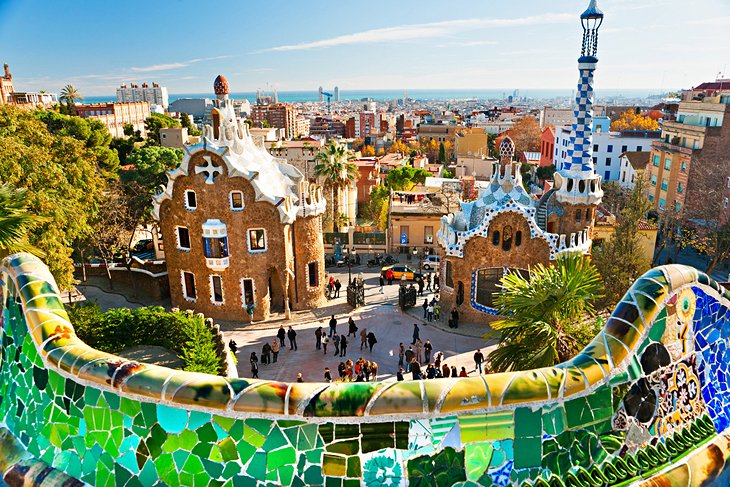
Colorful, cheerful, and full of whimsy, this luxuriant 19-hectare hillside park is a designated UNESCO World Heritage Site. Created between 1900 and 1914, the Park Güell includes 12 acres of landscaped gardens featuring Surrealist architectural elements created by Antoni Gaudí and eight acres of pristine woodlands (pine forest and olive groves).
Splendid fountains, viaducts, grottoes, a colonnaded hall, winding staircases, and semi-closed conversation seats are scattered throughout the garden space. These creative structures are decorated with vibrant mosaics made of ceramic fragments.
There are picnic areas and a spectacular terrace that offers panoramic views of the city and the sea. Gaudí himself loved this area of the city (the Gràcia district), and his home was located here.
Within the Park Güell is the Casa Museu Gaudí (Gaudí House Museum) where Gaudí lived for nearly two decades. The museum educates visitors about Gaudí's life and architectural work. The collection includes decorative objects and furniture, designed by Gaudí.
Entrance tickets are required to visit Parc Güell. Because this is one of the most popular tourist sites in Barcelona, it's recommended to arrive early (in the morning if possible) to avoid the crowds. Guided tours are available.
Address: Carrer d'Olot, Barcelona
9. Casa Batlló
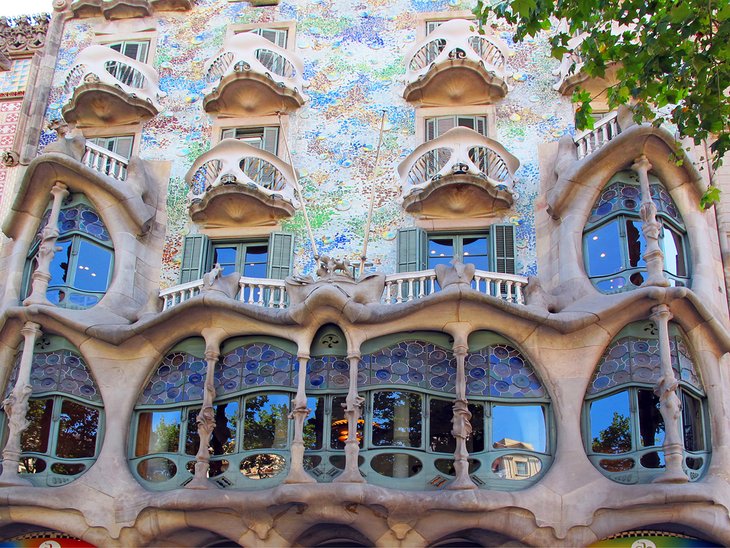
Yet another amazing Gaudí creation, the UNESCO-listed Casa Batlló is one of the most characteristic Modernist buildings in Barcelona. The fantastical mansion was designed as a private residence for the textile manufacturer Josep Batlló i Casanovas. With its freely swinging shapes and ornamental facade, this dreamlike building looks like a castle from a surreal fairy tale.
Most of the design details depart completely from any architectural precedent. The window frame on the first floor is bordered by swinging shapes that suggest plants, others resemble entrances to caves. On the facade, decorative glazed ceramic tiles in green, blue, and ochre colors add to the flamboyance. The wave-shaped roof, like that of Casa Milà, has numerous richly adorned chimneys.
Gaudí also created the interior decorations, which can be seen in the Casa Museu Gaudí in the Parc Güell.
For those seeking a superb gourmet meal, the elegant Moments Restaurant, with two Michelin stars, is just a few steps away at 38-40 Passeig de Gràcia in the Mandarin Oriental, Barcelona. This upscale fine-dining restaurant serves modern gastronomic Catalan cuisine prepared from seasonal ingredients.
Address: 43 Passeig de Gràcia, Barcelona
Official site: https://www.casabatllo.es/en/
10. Museu Picasso de Barcelona
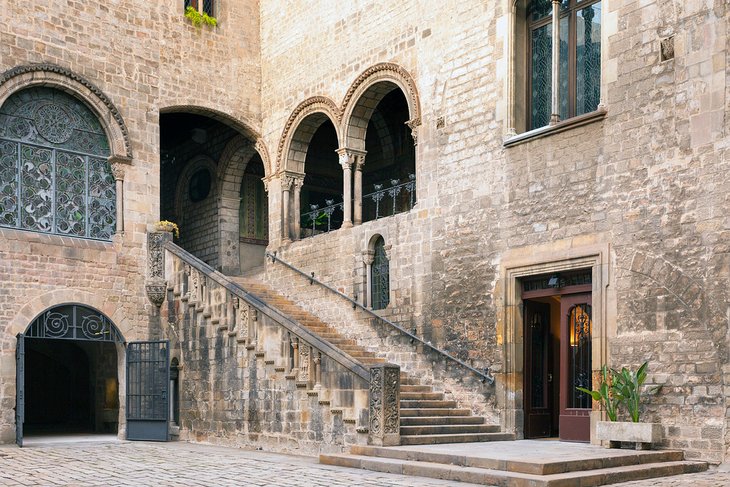
Inaugurated in 1963, the Picasso Museum occupies five medieval palaces in the Gothic Quarter on the Calle de Montcada, named after an important local family of the 12th century. The Calle de Montcada is listed as a Conjunto Monumental Histórico-Artístico (Historic-Artistic Monument), and the five palaces are remarkable Catalan Gothic landmarks dating to the 13th and 14th centuries. The architecture of each building features a central patio and a grand exterior staircase.
The collection of the museum focuses on works created by Pablo Picasso as a young artist. Containing over 4,000 works, the collection reveals the talents of the artist during his formative years. An exhaustive assortment covers paintings created from 1895 and up until Picasso's Blue Period (1901 - 1904).
Other highlights of the collection are several paintings created in 1917 including Arlequín, featuring a harlequin character (the model was a dancer from a Russian ballet company); El Paseo de Colón, illustrating the Hotel Ranzini at number 22 on the Colón passageway; and Blanquita Suárez, depicting a famous singer of the time. Also not to be missed is the series of paintings titled Las Meninas, which portray the Infanta Margarita María.
Address: 15-23 Calle de Montcada, Barcelona
Official site: http://www.museupicasso.bcn.cat/en/
11. La Barceloneta
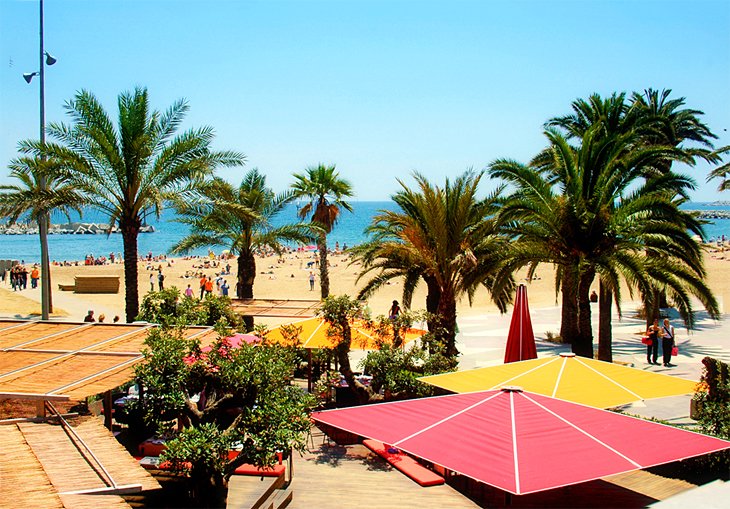
Adjacent to the cruise port, the old fishing village of La Barceloneta (now a seaside neighborhood of Barcelona) borders the long, wide Sant Sebastià Beach, where locals go to sunbathe, surf, and socialize in the many seafood restaurants and tapas venues that overlook the sea.
Sant Sebastià Beach has a wide range of amenities: lifeguards, public restrooms, showers, recreational sports areas, lounge chair and sun umbrella rentals, ice-cream stands, and snack bars. A long promenade lined with palm trees connects the Sant Sebastià Beach area to marinas filled with yachts.
On summer and fall evenings this area comes alive as people flock to the beach, marina, and promenade around the Port Olympic complex (built for the 1992 Barcelona Summer Olympic Games) to watch the spectacular sunsets then head to one of the many cafes and restaurants for tapas and conversations that last late into the evening. You'll also notice many unique sculptures and Modernist buildings in this area.
The popular Barceloneta Beach is also found in La Barceloneta neighborhood. This beach has excellent facilities: lifeguards, public restrooms, changing rooms, showers, lounge chair and sun umbrella rentals, snack bars, ice-cream stands, areas for recreational sports (including beach volleyball and ping pong), and restaurants.
To admire views of La Barceloneta's coastline, marinas, and port area, take a ride on the Port Cable Car, which ascends from here to hilltop Montjuïc.
12. Plaça del Rei
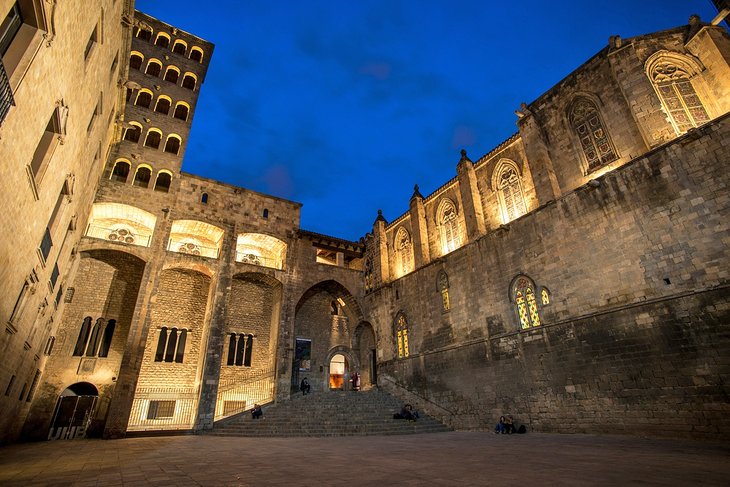
The Plaça del Rei is a quiet square in the Gothic Quarter lined with imposing medieval buildings. The grand architecture speaks to the importance of the monuments: a palace of Catalan counts (the Palau Reial Major), a 16th-century lieutenant's palace, and a 14th-century royal chapel.
One of the most impressive historic landmarks on the square is the 16th-century Casa Clariana Padellàs, which houses the Museu d'Història de la Cuitat de Barcelona (Barcelona History Museum). This fascinating museum traces the history of Barcelona over 2,000 years, beginning with the ancient Roman era, continuing through the Renaissance and Baroque periods and up until the Spanish Civil War.
The Plaça del Rei is also used as an outdoor venue for music concerts.
13. Camp Nou
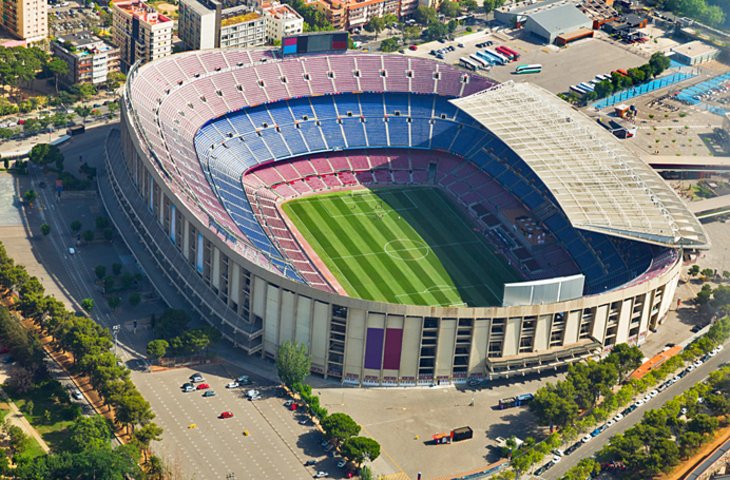
Just as Catalan Modernist buildings are must-see attractions for architecture fans, Camp Nou is a must-see for football (soccer) fans. Camp Nou was one of the venues for the 1992 Summer Olympics in Barcelona and today is home of the FC Barcelona team. The 99,354-seat stadium is the largest in Europe and second largest in the world.
Camp Nou offers guided tours, led by bilingual Official FC Barcelona Guides. The tours (in English and Spanish) cover highlights of the stadium such as the playing field, the team's changing room, players' tunnel, and the commentators' boxes.
Guided tours also include a visit to the Barça Museum. The Barça Museum presents trophies, photos, and multimedia exhibits, including videos of the FC Barcelona's winning goals.
The Barça Cafe at Camp Nou is a fun place to watch live and recorded games on big-screen televisions. The chefs work in an open kitchen, where guests can watch the action, preparing traditional Catalan dishes such as grilled meat and fish cooked on a wood-fired oven, as well as some of the FC Barcelona players' favorite tapas. The Barça Cafe is open daily from 10am until 7pm.
Address: 12 Calle d'Aristides Maillol, Barcelona
14. Magic Fountain of Montjuïc
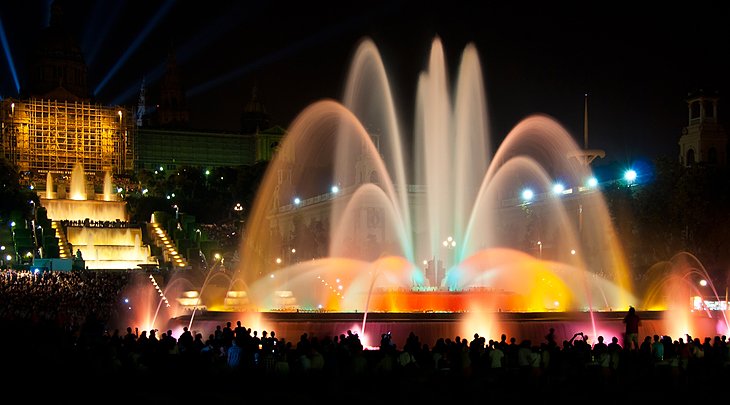
Topping the list of things to do in Barcelona at night is watching the Magic Fountain of Montjuïc, near the Plaça d'Espanya in the Montjuïc neighborhood. The large Art Deco fountain was designed by Carles Buigas for the 1929 International Exhibition, which took place in Montjuïc.
The Magic Fountain of Montjuïc delights all ages with its choreographed light and fountain shows that are set to music. The shows take place Thursday through Sunday during the summer and Friday and Saturday in the off-season. The evening shows last for a few hours, with music sessions every half hour.
Address: 1 Plaça de Carles Buïgas, Barcelona
15. Scenic Views and Art Museums in Montjuïc
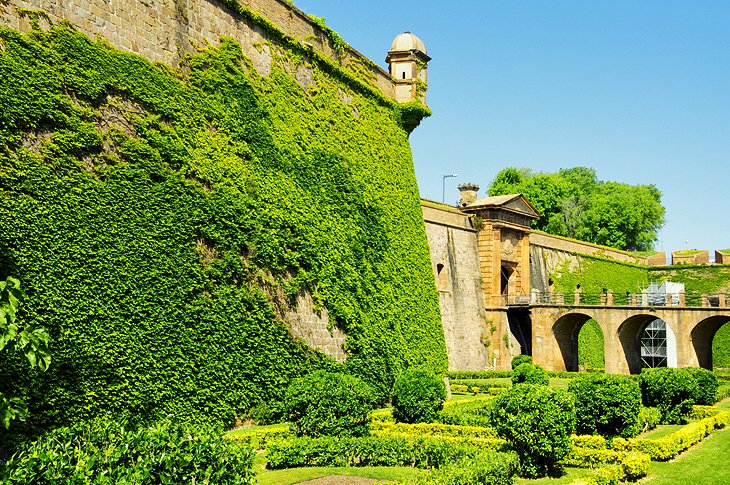
This hilltop neighborhood is on the site of an old Jewish cemetery, explaining its name, "Mont Juïc," which translates to "Mountain of the Jews." Standing 213 meters above the sea, the hillside is crowned by a fortress (the Castell de Montjuïc) on its summit and slopes steeply down to the waterfront. Crowning this scenic area is the Parc de Montjuïc, a beautiful natural park with great views.
One of the top attractions of Montjuïc is the Museu Nacional d'Art de Catalunya (National Art Museum of Catalonia). Housed in the Palau Nacional, the museum has an exceptional collection of Catalan Art from the 10th to the 20th centuries, including sculpture, paintings, drawings, engravings, and photography. The museum also displays European Renaissance and Baroque Art, as well as a collection of modern art that includes avant-garde works created after World War Two.
The Poble Espanyol (Spanish Village) is another popular place to visit. This charming fabricated village was created for the 1929 World Exhibition.
Montjuïc was a venue for the 1992 Summer Olympics, and tourists can visit the stadium where Olympic competitions were held.
16. Reial Monestir de Santa Maria de Pedralbes
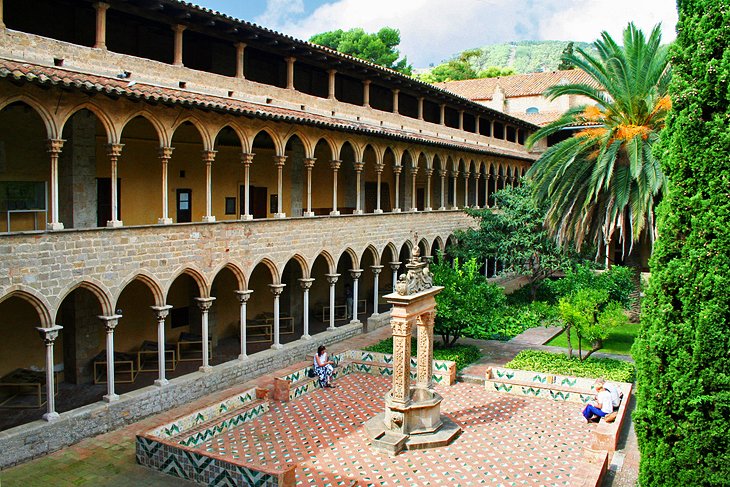
A wonderful example of Catalan Gothic architecture, the Reial Monestir de Santa Maria de Pedralbes is nestled on the gentle slopes of the Sant Pere Màrtir hillside in the outskirts of Barcelona. Queen Elisenda de Montcada founded the convent in 1327 for the Order of Saint Clare.
The monastery has two places of worship: a 14th-century Catalan Gothic church and a small chapel, Saint Michael's Chapel, decorated with magnificent murals. Dating to the early 14th century, the murals were created by Ferrer Bassa in the Italianate Trecento style (influenced by Italian masters such as Giotto). The murals still reveal their original glory, thanks to a careful restoration project.
A distinguishing feature of the monastery is its serene three-story cloister, which is the largest Gothic cloister in the world. The main buildings (chapter house, refectory, dormitory, etc.) of the monastery surround the cloister. At the center of the cloister is a tranquil garden designed to inspire spiritual contemplation and meditation.
The monastery displays an outstanding collection of medieval ecclesiastical art from the 14th century, as well as later religious art created through the 20th century.
The Reial Monestir de Santa Maria de Pedralbes is still managed by the Saint Clare nuns, but the monastery has been converted into a museum that is open to the public year-round (except Mondays) for an admission fee. Entrance is free on the first Sunday of every month. Visitors are expected to respect the quiet ambience of the religious community.
Address: 9 Baixada del Monestir, Barcelona
17. Mercat de la Boqueria
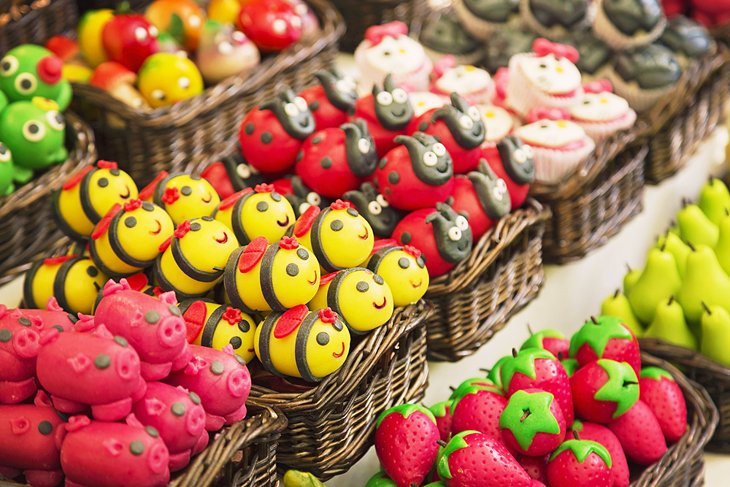
Colorful displays of fruits and vegetables, sandwiches, glistening candied fruits, savory and sweet pastries, chocolates, whimsical marzipan figures, fresh-mixed smoothies, Spanish almonds, burritos, breads, bins of olives, bright strings of peppers – la Boqueria is a riot of colors and aromas.
Since 1836, this traditional open-air market has been a centerpiece in the heart of the city on La Rambla. Locals frequent the market regularly, and shoppers come from all corners of Catalonia to this truly special gourmet food and produce market.
It feels as if half of Barcelona is here on a busy day as they shop for that night's dinner. Tourists gawk at the abundance of authentic specialty foods and then deliberate about what to choose for a to-go lunch or picnic provisions. Mercat de la Boqueria also has casual tapas bars, where tourists can sample local dishes and mingle with locals.
Address: 91 La Rambla, Barcelona
18. Fundació Joan Miró
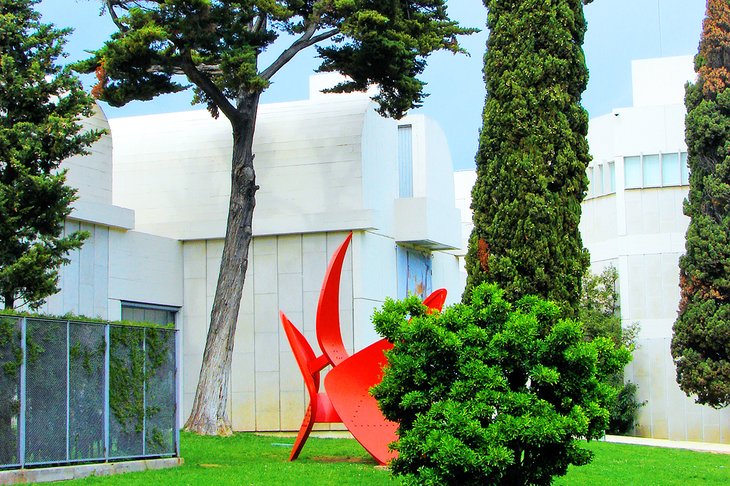
Anyone who appreciates modern art will want to visit the Fundació Joan Miró within the Parc de Montjuïc. Opened in 1975, the Fundació Joan Miró was created by the artist himself as a center for contemporary art research.
Today, the Fundació is dedicated to the study of Miró's work, as well as the presentation of contemporary art. The museum hosts temporary exhibitions of 20th- and 21st-century artists. Visitors will enjoy the permanent collection of paintings, drawings, and sculptures by Joan Miró as well as the thematic exhibitions.
The architecture and design of the museum perfectly suits the avant-garde style of Miró's art. The sleek interior features bright, spacious galleries illuminated by skylights and large windows that look out onto an interior courtyard or gardens. A rooftop terrace affords sweeping views of the Barcelona cityscape.
The museum is open to the public for self-guided visits, as well as guided tours. The guided tours are available in Spanish, Catalan, French, and English.
The Fundació Joan Miró also features a gift shop, bookstore, and restaurant. Special art workshops and educational programs are held at the museum throughout the year.
Address: Parc de Montjuïc, Barcelona
Official site: https://www.fmirobcn.org/en/
19. Parc del Laberint
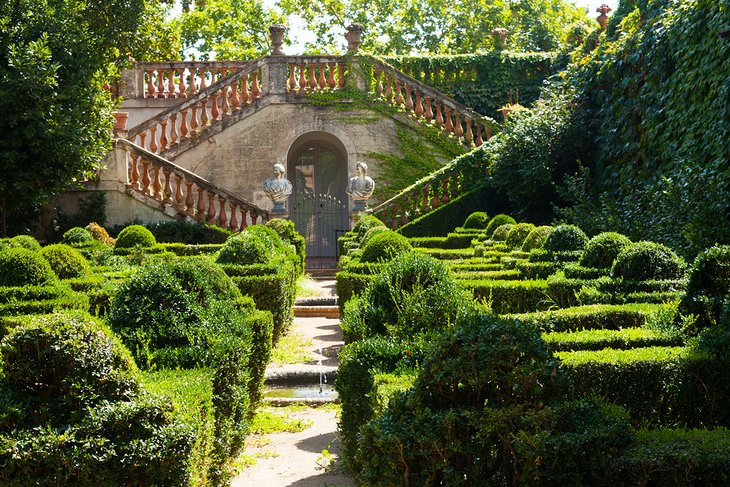
Nestled behind the Collserola Ridge in the Horta-Guinardó district, this 55-acre park dates to 1792 and is the oldest landscaped green space in Barcelona. The park blends formal gardens with a romantic garden that includes a waterfall and woodland.
Taking a stroll through the Parc del Laberint leads to discoveries of small squares, vibrant flower beds, neoclassical sculptures of mythological characters, and a labyrinth. Another treasure found within the park is the Torre Soberana, a 14th-century manor house restored in the 19th century in Moorish style.
Address: 1 Passeig dels Castanyers, Barcelona
20. Quadrat d'Or
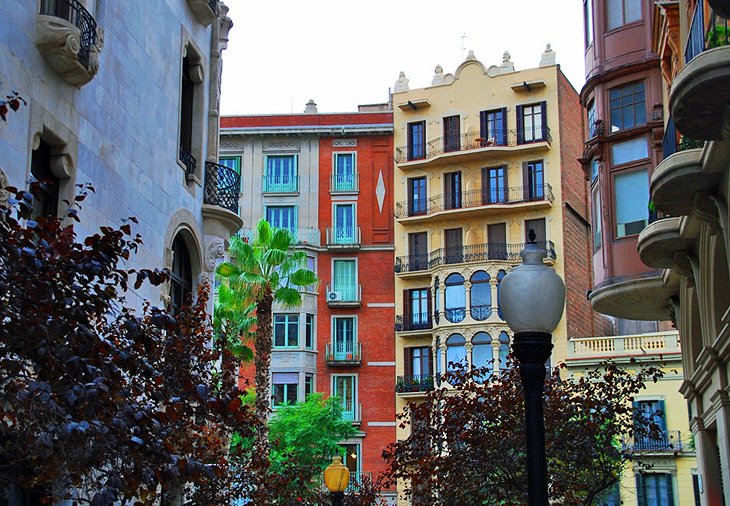
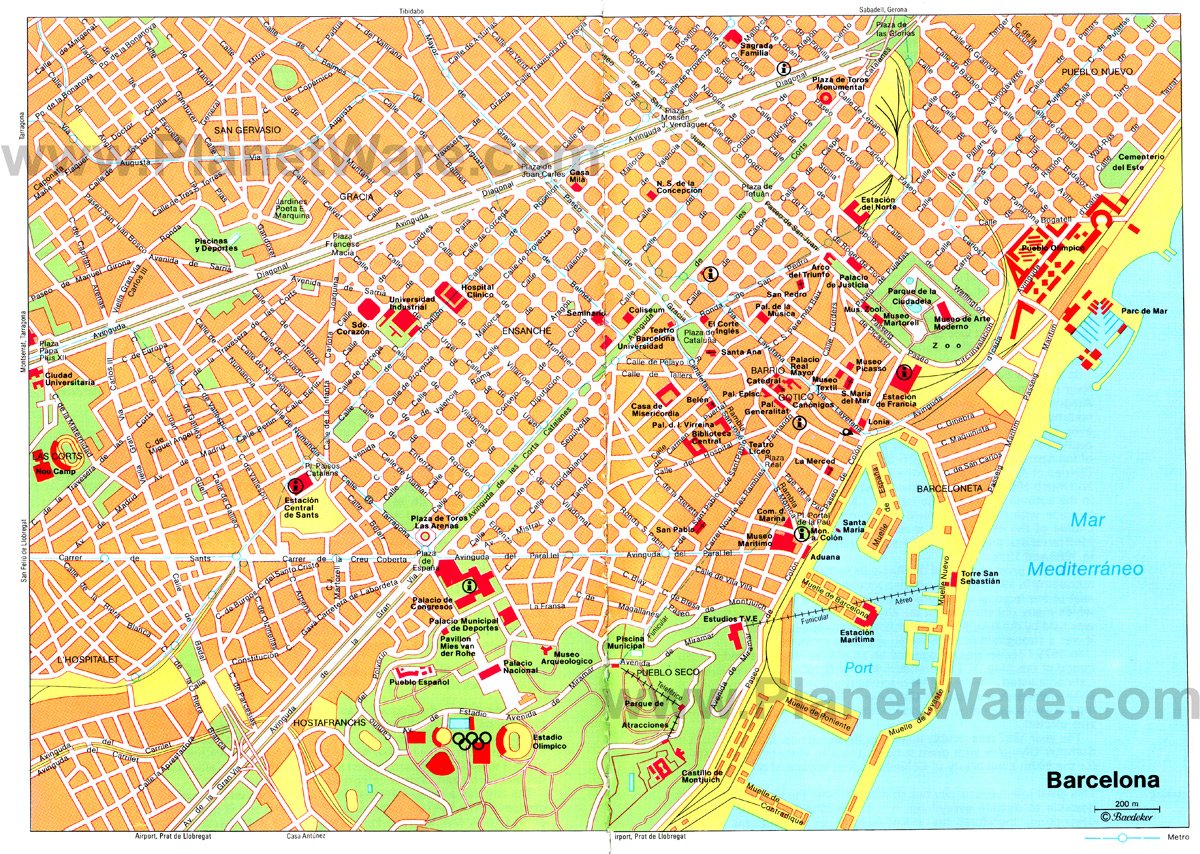
The Quadrat d'Or (Quadrant of Gold) is an area of the Eixample district renowned for its Modernist architecture. The quadrant is found between the Plaça de Catalunya, the Avinguda de la Diagonal, the Passeig de Sant Joan, and the Carrer de Muntaner. The main road through the Quadrat d'Or is the Passeig de Gràcia.
In this area, the exceptional avant-garde buildings were inspired by the work of Antoni Gaudí and constructed in the late 19th and early 20th centuries. Different architects made their mark on the neighborhood, and the result is a diversity of Modernist styles.
A veritable open-air museum, the Quadrat d'Or offers delightful surprises every step of the way. Visitors discover interesting details of ceramic art, stained-glass windows, wrought ironwork, decorative reliefs, mosaics, and statues.
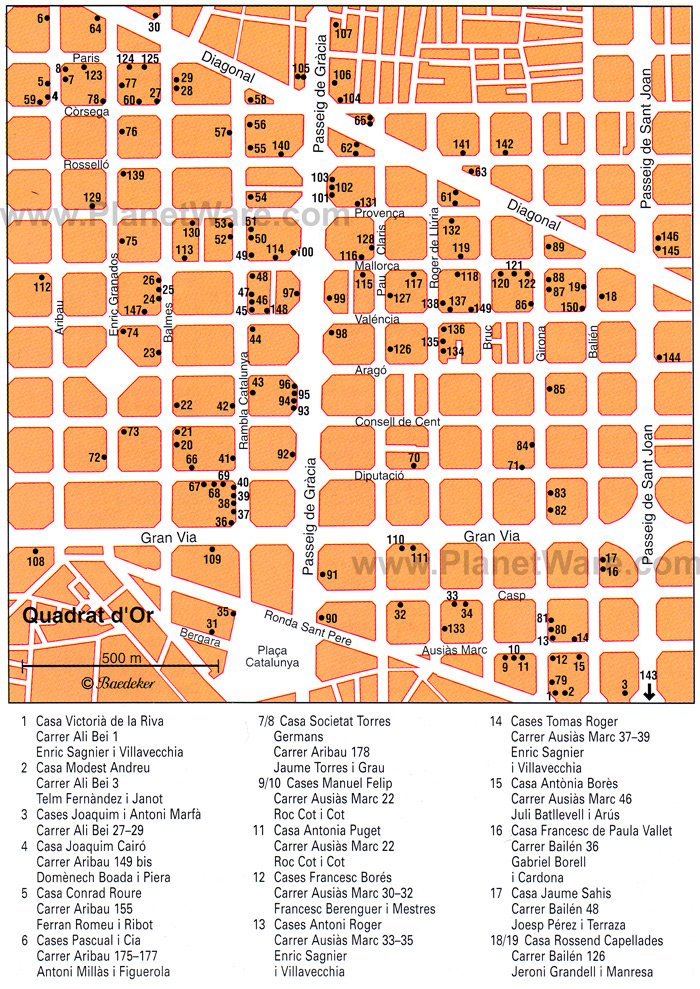
(1) Casa Victoriá de la Riva
(2) Casa Modest Andreu
(3) Cases Joaquim i Antoni Marfà
(4) Casa Joaquim Cairó
(5) Casa Conrad Roure
(6) Cases Pascual i Cia
(7/8) Casa Societat Torres Germans
(9/10) Cases Manuel Felip
(11) Casa Antonia Puget
(12) Cases Francesc Borés
(13) Cases Antoni Roger
(14) Cases Tomás Roger
(15) Casa Antónia Borés
(16) Casa Francesc de Paula Vallet
(17) Casa Jaume Sahis
(18/19) Casa Rossend Capellades
(20/21) Cases Josep J. Bertrand Carrer
(22) Cases Antoni Miquel
(23) Casa Jeroni Granell
(24) Cases Joan Pons
(25) Casa Jaume Larcegui
(26) Cases Frederic Vallet Xiró
(27) Casa Josep Filella
(28) Casa Francesc Fargas
(29) Cases Adolf Ruiz
(30) Casa Lluis Pérez Samanillo
(31) Casa Emilia Carles de
(32) Casa Uorenç Camprubí
(33) Casa Antoni Salvadó Carrer
(34) Casa Calvet
(35) Casa Bosch i Alsina
(36) Casa Pia Batlló
(37) Casa Heribert Pons
(38) Casa Jaume Moysi
(39) Casa Sebastià Pratjusà
(40) Casa Climent Asols
(41) Casa Rodolf Juncadella
(42) Casa Miquel A. Fargas
(43) Casa Dolors Calm
(44) Casa Bonaventura Pollés
(45) Casa Asunción Belloso de Gabriel
(46/47) Casa Evarist Juncosa
(48) Casa Francesc Farreras
(49) Casa Josep i Ramón Queraltó
(50) Casa Pilar i Josefa Albiñana de Regàs
(51) Casa Ferran Cortés
(52/53) Casa Manuel Verde
(55) Cases Godó-Lallana
(56) Casa Antónia Costa
(57) Casa Lorenç Armengol
(58) Casa Serra
(59) Casa Antoni Piera
(60) Casa Pau Marti
(61) Casa Pilar Bassols
(62) Palau Baró de Quadras
(63) Casa Terrades (Casa de les Punxes)
(64) Casa Miquel Sayrach
(65) Casa Comalat
(66) Casa Josep J. Bertrand
(67) Casa Clapés
(68) Casa Miquel Ibarz
(69) Casa Rupert Garriga Nogués
(70) Casa Marcelli Costa
(71) Casa Josep Fabra
(72) Casa Antoni Pàmies
(73) Casa Doménech i Estapà
(74) Casa Leandre Bou
(75) Casa Anna Salvadó de Guitart
(76) Casa Adolf Ruiz
(77) Casa Francesc Cairó
(78) Casa Enric Llorens
(79) Casa Enric i Voctória de la Riva
(80) Casa Antoni Roger
(81) Casa Enric Roger
(82) Casa Ramon Vilà
(83) Casa Jacinta Ruiz
(84) Casa Esperança Isern
(85) Casa Isabel Pomar
(86) Casa Eduardo de Lamadrid
(90) Cases Pons i Pasqual
(91) Cases Antoni Rocamora
(92) Casa Manuel Margarida
(93) Casa Lleó Morera
(94) Casa Ramon Mulleras
(95) Casa Amatller
(96) Casa Batlló
(97) Cases Alexandre i Josefina
(98) Casa Marfà
(99) Casa Joan Coma
(100) Casa Enric Batll6
(101) Casa Milà (La Pedrera)
(102) Casa Josep Codina
(103) Casa Ramon Casas
(104) Casa Rupert Garriga
(105) Casa Bonaventura Ferrer
(106) Casa Lluís Ferrer-Vidal
(107) Casa Fuster
(108) Casa Jeroni Graneli
(109) Casa Josep Portabella
(110) Casa Camil Mulleras Garrós
(111) Casa Ramon Oller
(112) Cases Jeroni Granell
(113) Casa Gustau Peyra
(114) Casa Angel Batlló
(115) Casa Marqués de Julià
(116) Cases Amadeu Maristany
(117) Palau Ramon de Montaner
(119) Casa Thomas
(120/121) Cases Dolors Xiró de Vallet
(122) Casa Carme Carsi de Puig
(124) Casa Josep Batlles
(125) Casa Teresa Vallhonrat
(126) Casa Rafael Barba
(127) Cases Leandre Bou
(128) Casa Dolors Xiró de Vallet
(129) Casa Segarra
(130) Casa Francesc Pastor
(131) Casa Josep Ferrer-Vidal
(132) Casa Francesc Lalanne
(133) Cases Joaquim Cabot
(134) Casa Pere Salisachs
(135) Casa Agustí Anglora
(136) Cases Castillo Villanueva
(137) Casa Jaume Forn
(139) Casa Esteve Recolons
(140) Casa Baldomer Rovira
(141) Casa Leonor Matas
(142) Casa Alexandre Gioan
(143) Casa Enric Laplana
(144) Casa Eulàlia Artés de Mayolas
(145) Casa Macaya
(146) Casa Dolors Alesan de Gibert
(147) Casa Marti Llorens
(148) Casa Domènech i Estapà
(149) Casa Pau Ubarri
(150) Casa Manuel Llopis
Where to Stay in Barcelona for Sightseeing
Many of Barcelona's attractions concentrate in the atmospheric, winding streets of the Gothic Quarter and in the adjoining Eixample district, with others scattered more widely in various directions. Fortunately for tourists, there is a wide choice of hotels in all price ranges in the most convenient neighborhoods. Here are some of the highly rated hotels in Barcelona:
Luxury Hotels:
- In the heart of the Gothic Quarter, the Mercer Hotel Barcelona occupies several historic buildings located around the ancient Roman wall. Original architectural elements include 12th-century frescoes and medieval arches. This five-star hotel has a fine-dining restaurant, a casual tapas bar, and a rooftop deck with a swimming pool and snack bar.
- The four-star Casa Camper Hotel Barcelona is a short walk away from the Plaça de Catalunya, La Rambla, and the Mercat de la Boqueria. This modern boutique hotel boasts top-notch amenities: a trendy tapas-style and Japanese-inspired Michelin-starred restaurant, a rooftop deck with amazing city views, a gym, and game room. Accommodations include breakfast and complimentary snacks all day.
- In a vintage building at the edge of the Gothic Quarter, the Hotel El Palace Barcelona offers sumptuous five-star accommodations with excellent amenities: parking, a fitness center, a rooftop swimming pool, Mayan-inspired spa, several gourmet restaurants, and a splendid historic hall where traditional afternoon tea is served.
Mid-Range Hotels:
- Near La Rambla and at the edge of the Gothic Quarter, the three-star Yurbban Trafalgar Hotel has one of the best rooftop terraces in Barcelona, with sweeping views of the city. This chic, contemporary-style hotel also has a fitness center, a restaurant that specializes in Mediterranean cuisine, and a rooftop swimming pool.
- The Hotel Europark is surrounded by shops and restaurants in the bustling Eixample district, between the Gothic Quarter and the Basílica de la Sagrada Família. This three-star boutique hotel has a fitness center, tapas bar, and a rooftop terrace with a swimming pool.
- Conveniently located near many tourist attractions, the three-star Room Mate Pau is steps away from the Plaça de Catalunya and a short walk to the Gothic Quarter. The renowned interior designer Teresa Sapey spruced up this boutique hotel with eclectic modern decor. Amenities include a concierge, 24-hour front desk, breakfast buffet service, and courtyard patio.
- A few blocks north of the Gothic Quarter in the Eixample district, the Hotel Constanza Barcelona provides sleek contemporary-style guest rooms with updated bathrooms. Many of the rooms have balconies. Solo travelers will appreciate the single rooms. The hotel's cozy modern restaurant serves tapas and Mediterranean cuisine.
Budget Hotels:
- The Hotel Curious is found in the Raval neighborhood, just off La Rambla and near La Boqueria market, an area brimming with shops and restaurants. This affordable hotel has contemporary-style guest rooms with basic amenities. Accommodations include breakfast.
- Although it's a 30-minute walk to the Gothic Quarter, the ibis Barcelona Centro is only a few steps away from the Basílica de la Sagrada Família and is surrounded by restaurants, cafés, and shops. The metro station is also nearby, with connections to all the city's attractions.
Tips and Tours: How to Make the Most of Your Visit to Barcelona
Take a Sightseeing Tour:
- Visit the city's most iconic landmarks on the Best of Barcelona Tour, which provides commentary about the history and art. This guided excursion includes a walking tour of the Gothic Quarter and skip-the-line admission to the Basílica de la Sagrada Família.
Explore the Countryside:
- Picturesque towns dot the countryside around Barcelona. An organized tour is an easy way to explore the area. The Small-Group Medieval Villages Day Trip takes you to the lovely towns of Besalú, Castellfollit de la Roca, and Rupit, where you can explore historic buildings, meander down the cobblestone lanes, and relax at a small outdoor café.
Admire Dalí Artworks:
- For fans of Salvador Dalí, the Costa Brava is not to be missed. This sunny coastline is home to Dalí's birthplace and several museums dedicated to his art. The Salvador Dalí Museum, Port Lligat, and Cadaques Day Trip from Barcelona takes travelers to these fantastic Dalí museums while providing interesting commentary along the way.
Visit Beautiful Villages and Mountains:
- Discover charming historic towns and admire refreshing alpine landscapes on the France, Andorra, Spain from Barcelona One-Day Tour from Barcelona. This full-day tour includes stops at the medieval village of Baga and the spa town of Ax-les-Thermes, plus a scenic drive through the Pyrenees Mountains of Andorra.
More Related Articles on PlanetWare.com
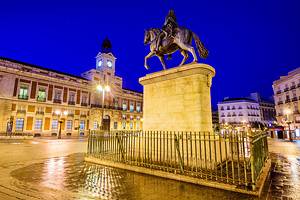
Highlights of Spain: To learn about the best places to visit, see our article on the top tourist attractions in Spain. For more in-depth information about each city, read our guides about Madrid, Seville, Granada, Cordoba, and Toledo. To explore some of the regional highlights, turn to our articles on the top attractions of Andalusia and Catalonia.