17 Top-Rated Tourist Attractions in New Mexico
New Mexico lives up to its state moniker as the "Land of Enchantment" with its vibrant scenery, towns, culture, and attractions. New Mexico's history tells the stories of the Native American, Spanish, Mexican, and Anglo-American cultures that shaped it. It is a unique destination, with more open, empty spaces than people and boundless natural attractions.
Albuquerque, host of the world's largest hot air balloon festival, is New Mexico's largest city but still feels like a small town.
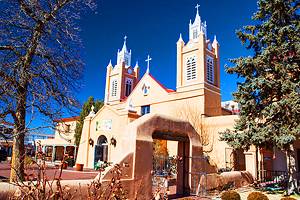
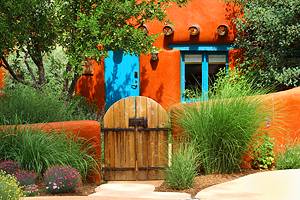
Its capital city, Santa Fe, is the oldest of its kind in the U.S., founded in 1610 and one of the country's most revered art destinations. It also boasts a thriving food scene, great skiing, and a one-of-a-kind all-adobe architectural style.
New Mexico is also home to quirky little towns like Roswell, famed for its alleged UFO crash in 1947 that still attracts devoted believers each year.
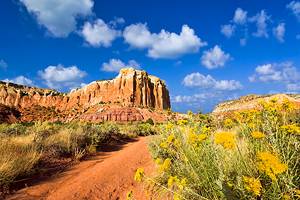
In New Mexico you never have to look far for adventure. This is a destination filled with ethereal high desert landscapes that have served as inspiration for numerous artists over the years, including renowned landscape painter Georgia O'Keefe, who had two homes here.
You can spend a day sledding down 60-foot dunes in White Sands National Monument or riding an elevator that drops the height of the Empire State Building into a bat-filled cavern in Carlsbad Caverns National Park. There is no shortage of things to see and do.
For ideas on the best places to visit, have a read through our list of the top tourist attractions in New Mexico.
- 1. Carlsbad Caverns National Park
- 2. Santa Fe
- 3. White Sands National Monument
- 4. Albuquerque International Balloon Fiesta
- 5. Bandelier National Monument
- 6. Petroglyph National Monument
- 7. Taos Pueblo
- 8. Cumbres-Toltec Scenic Railway
- 9. Gila Cliff Dwellings National Monument
- 10. Taos Ski Valley
- 11. Pecos National Historical Park
- 12. The Very Large Array
- 13. Chaco Culture National Historical Park
- 14. Billy the Kid Museum
- 15. Wheeler Peak Wilderness
- 16. International UFO Museum and Research Center
- 17. Georgia O'Keeffe Museum
1. Carlsbad Caverns National Park
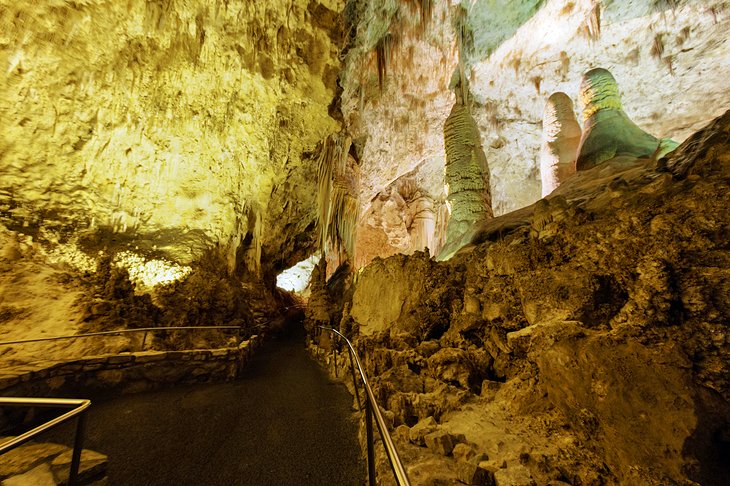
Musty-smelling stone and fluttering Mexican free-tailed bats add to the creepiness as you descend 800 feet into the strange underground world of one of the planet's greatest cave systems in Carlsbad Caverns National Park. One of the country's most underrated national parks, Carlsbad is comprised of nearly 120 known limestone caves created by an ancient sea thousands of years ago.
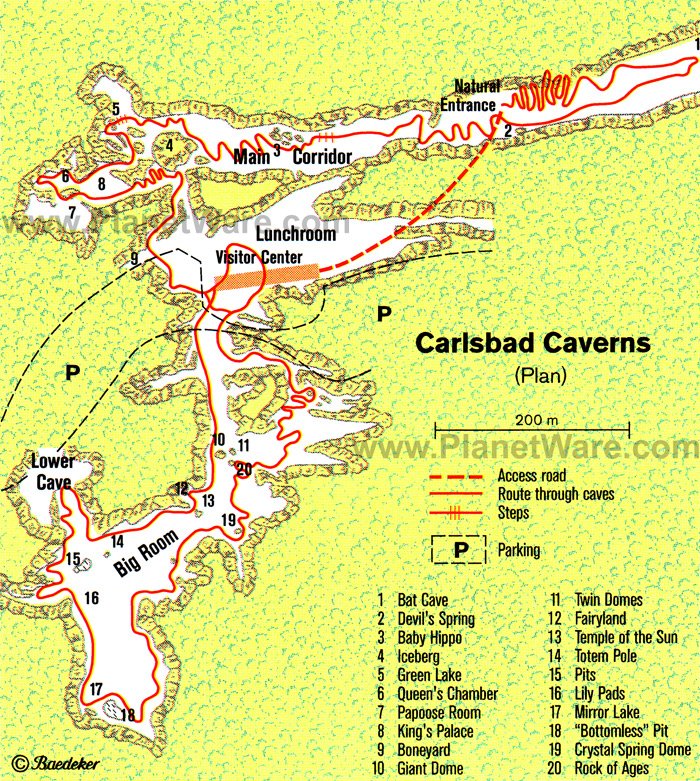
Its most famous attraction is the Big Room, which can be accessed via a 1.25-mile walk through artificially lit subterranean darkness or by taking an elevator down the height of the Empire State Building. The Big Room is just that: a giant space. Running 1800 feet long with a 255-foot-high ceiling, it is filled with stalagmites and other alien-looking landscape features.
You can explore the Big Room on a self-guided tour or make reservations to join one of the ranger-guided tours. These are informative and provide access to parts of the cavern closed to the public. There are also more adventurous guided spelunking adventures to be had in backcountry caves.
The caves are also home to a colony of about 400,000 bats that roost here between mid-April and October. At sunset each evening during this timeframe the bats emerge from the mouth of the caves to hunt down buggy dinners.
It's a beautiful spectacle to watch thousands of bats flying from the mouths of the caves, cutting black lines through the crimson sky. Rangers also offer free Bat Flight talks nightly from late May at the cavern's entrance.
Up above, visitors will find a wide range of opportunities for back-country hikes and backpacking. Be sure to bring ample water.
Official site: http://www.nps.gov/cave/index.htm
2. Santa Fe
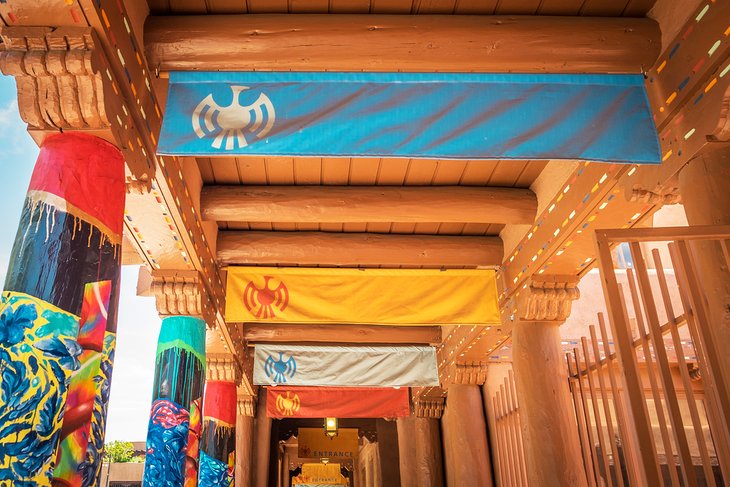
New Mexico's intriguing, all-adobe capital city, Santa Fe, is one of the state's most interesting tourist attractions. With a history dating back more than 400 years, a modern legacy as one of the country's top art destinations, and a multi-cultural population, Santa Fe has a vibrant, unique energy about it. It's also a small city with a walkable downtown focused around its Plaza and the Canyon Road art district.
Head to the Plaza for a stroll and some shopping. With shops and restaurants set around a leafy and grassy center, the Plaza is the city's heartbeat. Arrive early morning and head to the portal fronting the Palace of the Governors to purchase high-quality, handmade jewelry directly from Native American artists.
After exploring around the Plaza area, it's about a 10-minute walk to Santa Fe's other top attraction: Canyon Road. Here you'll find around 80 galleries on a half-mile stretch of pavement. The galleries focus on various mediums from paintings to sculpture. There are also artisan jewelry shops, clothing boutiques, coffee shops, and restaurants mixed in.
While in Santa Fe, make sure you try a dish with red or green chile (if you want both, order your entrée "Christmas style." New Mexico is famous for this dish made from locally grown chile peppers and served as either a sauce for enchiladas or burritos or eaten as a stew. Most restaurants offer vegetarian and meat-based versions as well as mild and hot options. The Shed, located near the Plaza, is one of the best New Mexican restaurants in Santa Fe and is famed for its red chile, although the green version is also excellent.
3. White Sands National Monument
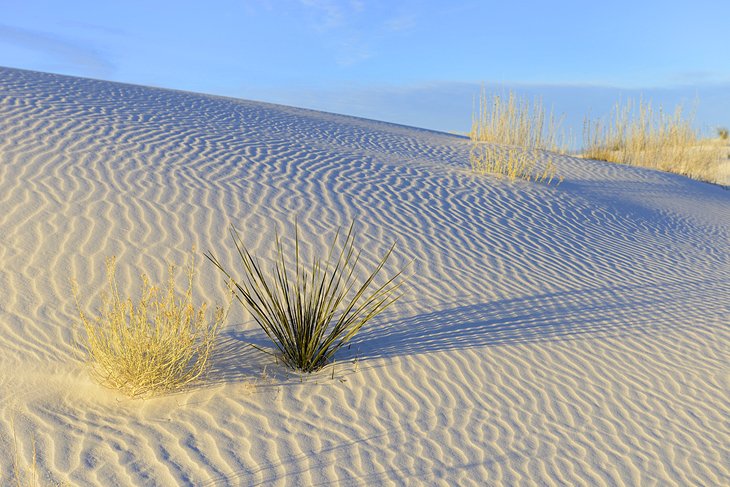
White Sands National Monument is one of the most stunning landscapes in the state, located a half an hour's drive southwest of Alamogordo in the south of New Mexico. It lies in the Tularosa Basin, a northern offshoot of the Chihuahua Desert, and is surrounded by rugged mountains. Here, gleaming white gypsum sand has built up into an extraordinary landscape of dunes up to 60 feet high, which are constantly displaced by the wind.
If you didn't know better, you may be fooled into thinking that sand dunes look like giant snowdrifts. Park your car pretty much anywhere and start your adventure by just walking out into the dune landscape and finding a huge sand dune to explore.
One of the most popular things to do at White Sands is sledding. Round plastic saucers work well, but any sort of plastic snow sled will do the trick. The round saucers are available for purchase at the Park Store.
To get a feel for the vastness of the park, take the 16-mile (round trip) Dunes Drive. This scenic trip takes about 45 minutes, but plan on much longer, as you'll be sure to stop at the hiking trails, picnic tables, and exhibits.
Official site: http://www.nps.gov/whsa/index.htm
4. Albuquerque International Balloon Fiesta

Each autumn, Albuquerque hosts the world's largest hot air balloon festival, drawing crowds of more than 80,000 people.
The tradition, which started in a parking lot in 1973 with only 13 balloons, has grown to occupy a 365-acre park with more than 500 balloons participating.
This nine-day festival is kicked off by the breathtaking "Mass Ascension" and continues with unique displays of coordinated ballooning and nighttime presentations.
In addition to the brightly colored skies, the festival offers plenty of things to do, from kids' activities and live musicians to a juried craft show and dozens of street performers among the numerous vendors.
While in Albuquerque, tourists will enjoy sightseeing in the city's old town, where the Spanish first settled, also home to the Albuquerque Museum, which contains historical artifacts and exhibits about the area.
Address: 5000 Balloon Fiesta Pkwy NE, Albuquerque, New Mexico
Official site: www.balloonfiesta.com
5. Bandelier National Monument
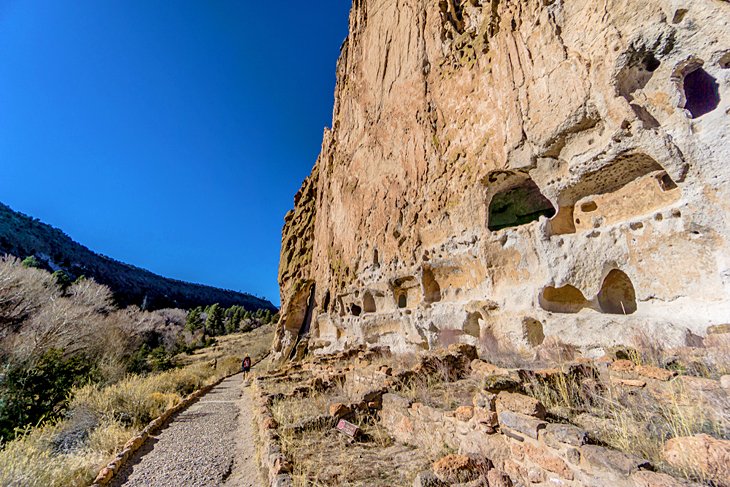
Bandelier National Monument is a 33,677-acre preserve encompassing some of the most dramatic volcanic landscapes and archaeological ruins in the state. Former home of ancestral Pueblo people, the area was likely occupied from AD 1150 to 1600.
Among the remains of the indigenous habitats are structures such as masonry walls and dwellings that were carved from the volcanic rock, as well as petroglyphs that illustrate the Pueblo culture and daily life. This national park has an educational museum, hiking trails, and campsites.
To visit the most popular area of Bandelier National Monument between the hours of 9am and 3pm, you will need to take the free shuttle. The bus runs every 30 minutes during the week and every 20 minutes on the weekend. If you have a pet with you, an exception is made and you can drive to the site at any time.
Location: 15 Entrance Road, Los Alamos, New Mexico
Official site: www.nps.gov/band
6. Petroglyph National Monument
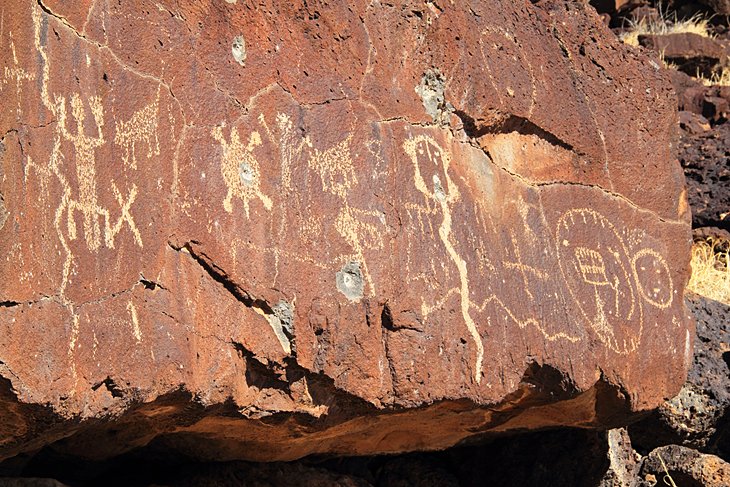
The Petroglyph National Monument is managed jointly by the city of Albuquerque and the National Park Service, which help preserve this culturally significant site while educating visitors.
The area encompasses 7,244 acres consisting of a basalt escarpment, five dormant volcanoes, and an expansive mesa.
The park's most famous feature is its petroglyphs, images which were carved in the basalt by indigenous peoples and early Spanish settlers centuries ago. Approximately 20,000 petroglyphs are found within the park, many of which can be viewed from the hiking trails.
You'll find three main hiking routes, the least strenuous being Boca Negra Canyon, which has 100 petroglyphs along one mile of trails. Those who are up for a longer hike in the desert can take the 2.2-mile Rinconada Canyon trail or the 1.5-mile Marcadas Canyon Loop, each of which have around 300 petroglyphs.
Hikers should be aware of local wildlife, especially rattlesnakes, and should be well prepared with water for the longer treks.
Location: Western Trail NW, Albuquerque, New Mexico
Official site: www.nps.gov/petr
7. Taos Pueblo
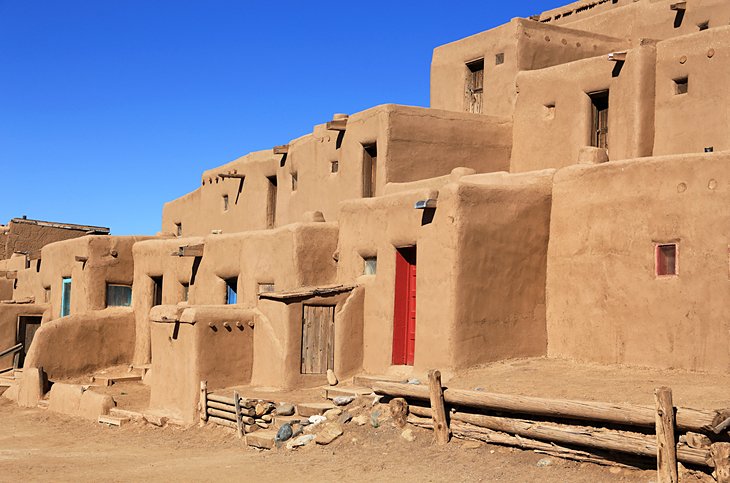
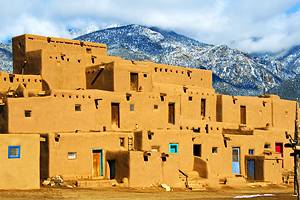
Just outside the city of Taos, the Taos Pueblo has the oldest continuously inhabited dwellings in the United States. These adobe structures have stood for more than 1,000 years, constructed of straw-reinforced mud bricks and timber-supported roofs.
These apartment-style homes are up to five stories high, and around 150 people live within the old town full-time. An additional 2,000 reside on the 95,000-acre property in a variety of traditional and modern homes.
Residents welcome visitors to take a tour of the community, which has been designated both a National Historic Landmark and a UNESCO World Heritage Site. The Pueblo is closed to the public during several of its annual traditional events.
Address: 120 Veterans Highway, Taos, New Mexico
Official site: http://taospueblo.com/
8. Cumbres-Toltec Scenic Railway
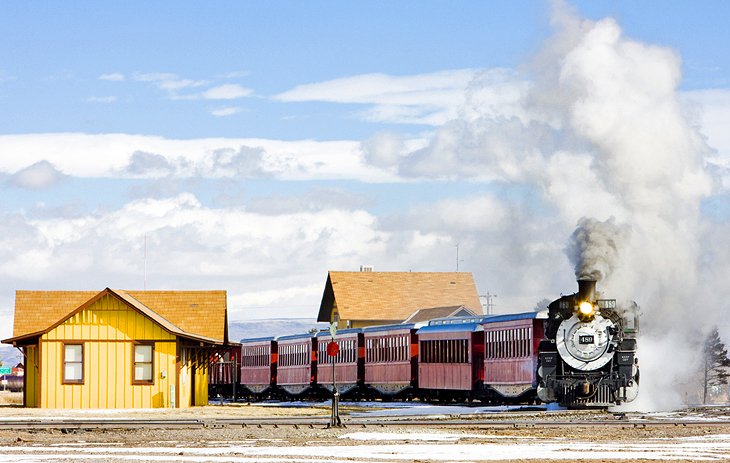
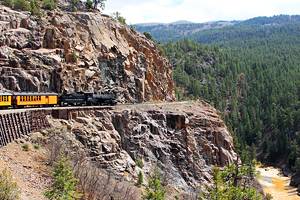
The Cumbres & Toltec Scenic Railroad is a narrow gauge heritage railroad that runs between Chama, New Mexico and Antonito, Colorado. Constructed in 1880-81, this cozy train ride traverses the 10,015-foot Cumbres Pass and heads through the dramatic Toltec Gorge. The ride offers stunning views of the surrounding land, from grassy, deer-filled, hillside meadows to stream-laced mountains.
This is the highest steam-powered railroad in the nation, and the ride has thrilling moments as it crosses the Cascade Creek trestle 137 feet in the air, climbs the face of a cliff, and doubles back dramatically on the Tanglefoot Curve.
Passengers will see many of the Railroad's original structures along the journey and have the chance to stop in the rustic Osier, Colorado halfway through the trip for a lunch break and some exploring.
Official site: http://cumbrestoltec.com/
9. Gila Cliff Dwellings National Monument
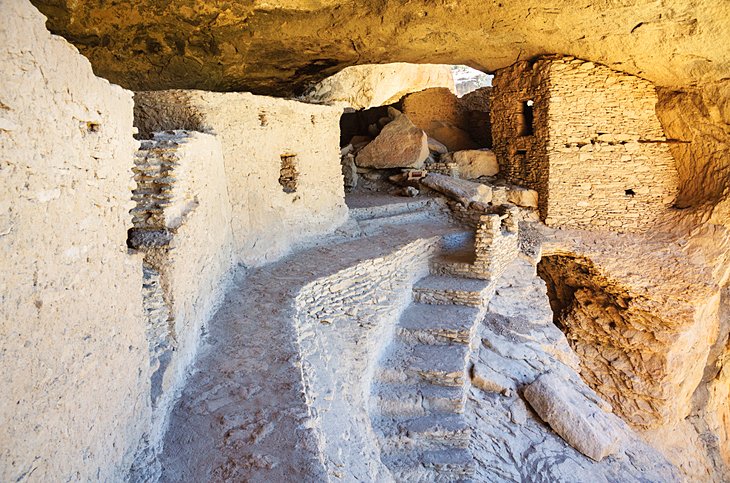
North of the old mining town of Silver City are the Gila cliff dwellings: 42 rooms in six caves, built into the cliff face by the Mogollon Native Americans around the year 1300. Tourists can learn more about the Mogollon culture and the region's natural history at the museum in the visitor center.
Among the park's geological features are numerous natural caves, as well as hot springs, some of which can be reached by trail from the visitor center. Tours of the cliff dwellings are available, although visitors should take note that the tours start at the cliff dwellings themselves, and it takes about a half hour to walk up to them from the trailhead.
Address: 26 Jim Bradford Trail, Mimbres, New Mexico
Official site: www.nps.gov/gicl
10. Taos Ski Valley
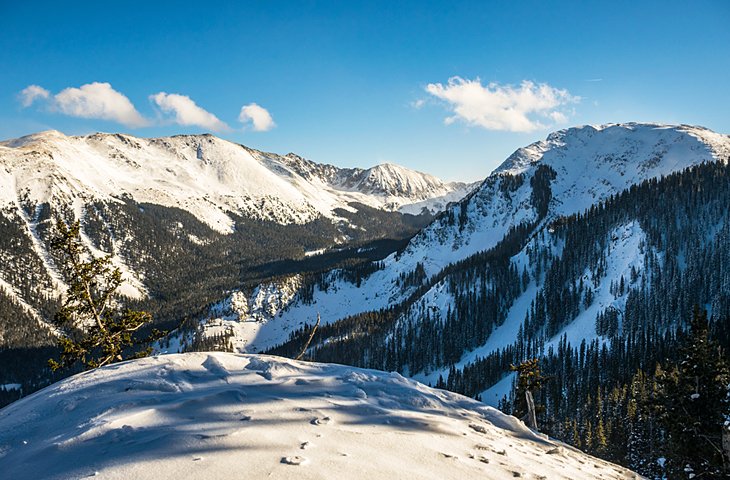
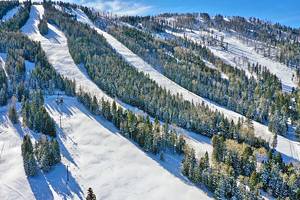
Northeast of Taos, in the Sangre de Cristo Mountains, at 8,900 to 12,500 feet, is the magically beautiful and excellently equipped winter sports region of Taos Ski Valley. This resort is considered the best of New Mexico's ski resorts.
In recent years, the ski resort has come under new ownership and undergone over $300 million in upgrades that have included new lifts and a revamped base area. Fortunately, the new ownership was careful to preserve the charm and vibe of Taos Ski Valley even with the changes and improvements.
Taos has always been known as a skiers' hill, with outstanding intermediate and advanced terrain. Half of the trails are for experts, but don't let that dissuade you from a visit, the ski school here is top-notch, and they'll have you conquering runs you never thought possible.
Finding good conditions here is rarely a challenge with the 25 feet of annual snow the resort receives.
Official site: http://www.skitaos.com/
11. Pecos National Historical Park
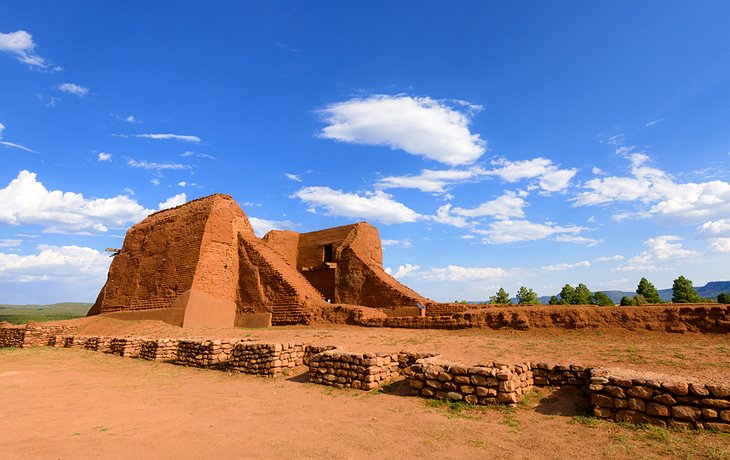
Pecos National Historical Park encompasses what was once one of the largest Native American pueblos in the state.
It was inhabited from the early 14th century until 1838, with a population over 2,000. In 1990, the park was expanded to 6,600 acres. The visitor center contains exhibits and park information and also offers an Ancestral Sites Walking tour, a guided 1.25-mile hike that explores evidence of the area's indigenous peoples.
The park is also home to the Civil War battlefield of Glorieta Pass, which can be toured via a 2.25-mile trail with or without a guide. The visitor center also offers van tours of the Civil War site, as well as tours of nearby Forked Lightning Ranch.
Address: 1 Peach Drive, Pecos, New Mexico
Official site: www.nps.gov/peco
12. The Very Large Array
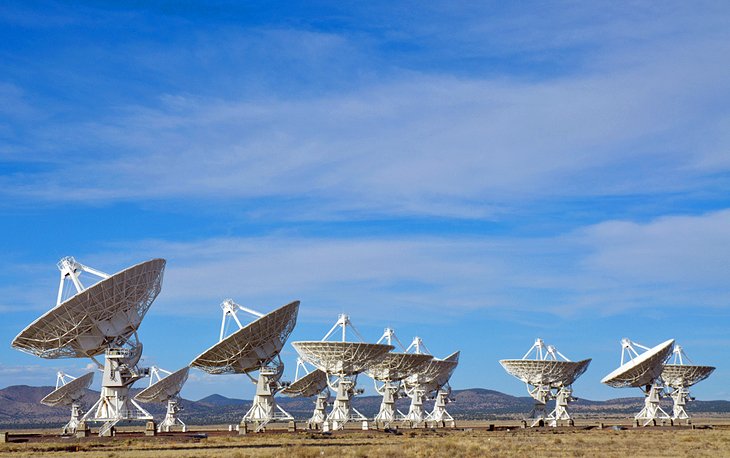
In the remote rolling hills west of Socorro, about two hours from Albuquerque, lies the Karl G Jansky Very Large Array (VLA) - a radio astronomy observatory located on the Plains of San Agustin. The array is used to observe black holes and other astronomical phenomena.
A number of self-guided walking routes run through the site, and the VLA also hosts free, guided tours on the first Saturday of each month. Though reservations aren't required, it is worth checking ahead for times. Tours begin from the VLA Visitor Center.
Official site: http://www.vla.nrao.edu/
13. Chaco Culture National Historical Park
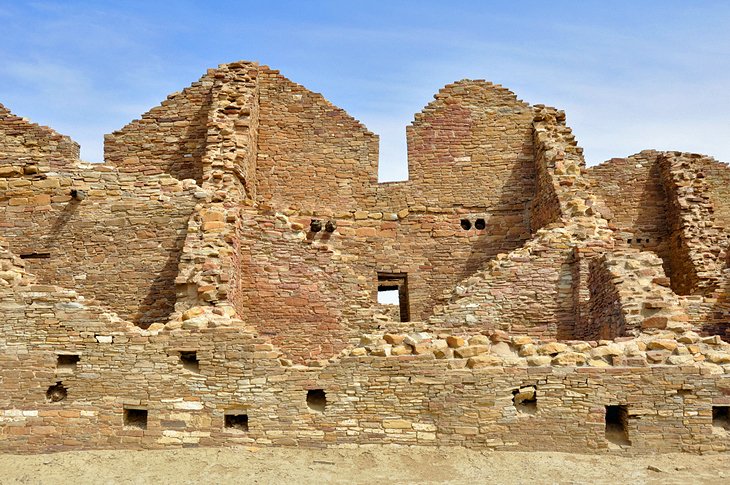
Perhaps one of the most stunning archaeological sites in all of North America, Chaco Canyon was occupied by ancestral Puebloan peoples from about AD 800 to 1200. It was a major center, comprised of 15 massive ruins and hundreds of smaller constructions. Located in a remote area northwest of Albuquerque, the park is also a UNESCO World Heritage Site.
Park facilities and activities include camping, an excellent interpretive center, interpretive and back-country hikes, and astronomy experiences from telescopes located in the canyon. Note that GPS and electronic directions in this area can be unreliable. Be sure to make a note of the directions on the park website.
Official site: http://www.nps.gov/chcu/index.htm
14. Billy the Kid Museum
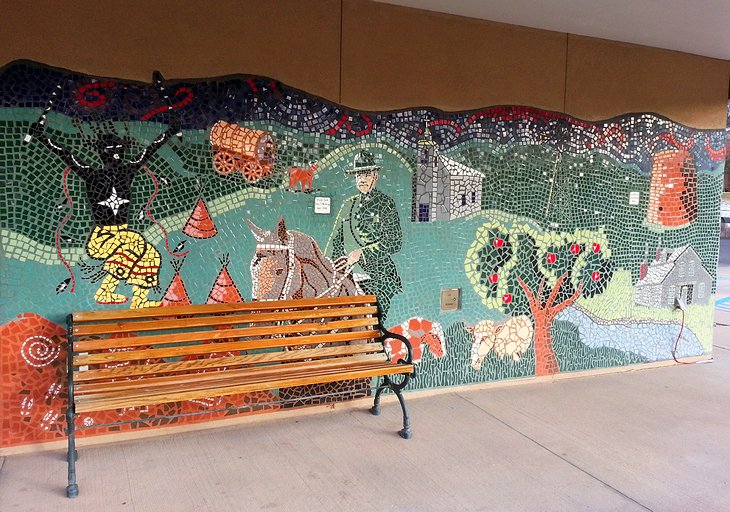
Out on the eastern plains of New Mexico is the small town of Fort Sumner, the resting place of the infamous Billy the Kid. The lanky youth was shot and killed at the nearby Fort Sumner State Monument by Sheriff Pat Garrett at the age of 21.
The museum hosts the Kid's rifle, horse-riding equipment and the original Wanted poster. Rumor has it they even have some of his hair. The museum also has a collection of cavalry swords, old firearms, and antique cars and trucks. Guided tours are available.
Official site: https://www.billythekidmuseumfortsumner.com/index.html
15. Wheeler Peak Wilderness
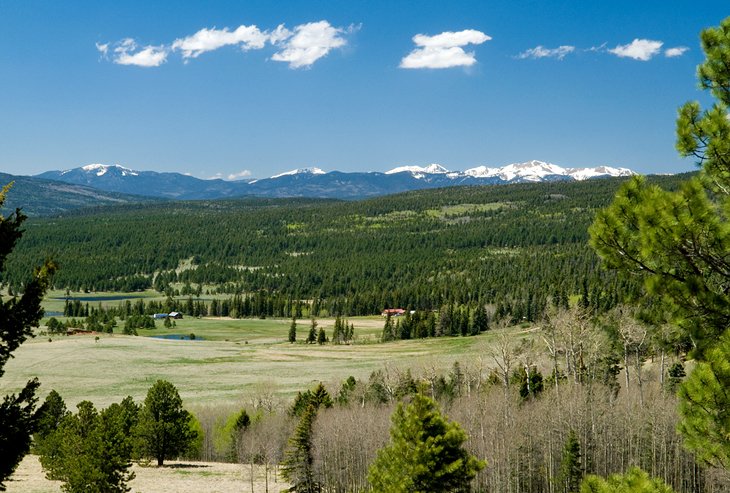
The highest point in New Mexico is the summit of Wheeler Peak, at 13,161 ft. The mountain is next to Moreno Valley near Angel Fire in the Carson National Forest, in the Sangre De Cristo mountain range.
The area is home to a variety of wildlife and visitors may be lucky enough to see marmots, pikas, elk, mule deer, bighorn sheep, and golden eagles. Hiking is one of the most popular things to do with several trails, most ranging from four miles to eight miles long.
Due to the elevation, Wheeler Peak Wilderness Area enjoys moderate summer temperatures and cold winters, when temperatures regularly fall below freezing. Most visitors come here during the summer months, which are warm but also a little wet. July and August are the rainy months, so be sure to bring a rain jacket to deal with passing showers.
Official site: http://www.fs.usda.gov/detail/carson/recreation/?cid=stelprdb5350403
16. International UFO Museum and Research Center
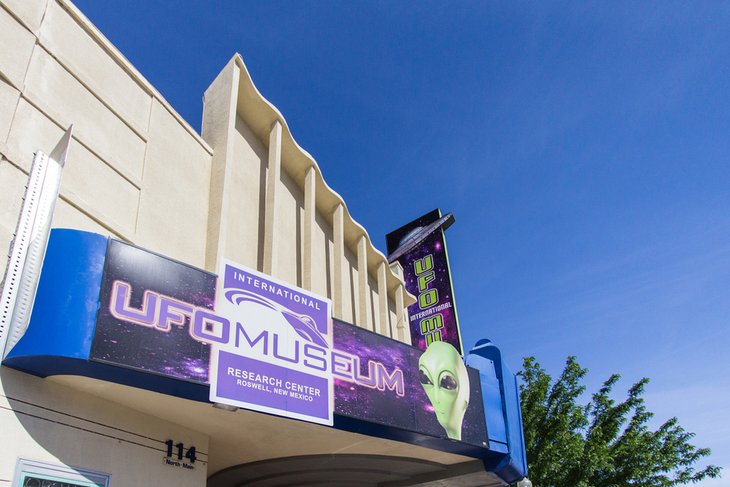
A top tourist attraction in Roswell, the international UFO Museum and Research Center was opened in 1992 as an information center inspired by the 1947 "Roswell incident."
This widely speculated event put Roswell on the map as a hub of UFO activity and curiosity. Despite this, the museum's intention is not to convince visitors to believe in extraterrestrial life or government conspiracy theories. Exhibits take an objective look at local events, as well as numerous others around the world, inviting visitors to come to their own conclusion.
The museum contains a variety of material, including documents, eyewitness accounts, and artifacts related to UFO research. Tourists interested in Roswell's alien mystery will also enjoy one of the many local "UFO tours" that visit spots like Building 84 at the former army base where the downed craft and its occupants were allegedly brought by military personnel.
Address: 114 N Main Street, Roswell, New Mexico
Official site: www.roswellufomuseum.com
17. Georgia O'Keeffe Museum
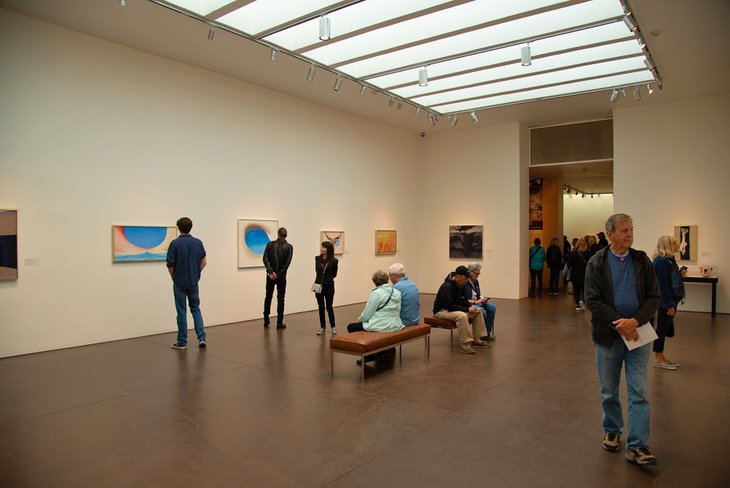
Art lovers will want to make sure they visit the wonderful Georgia O'Keeffe Museum in Santa Fe. This icon of the modern art movement shook up the established art world with her incredible works of art depicting New York skyscrapers and her special take on illustrating flowers.
The museum is home to over 150 of her works and hosts special exhibits from private collections from time to time. In addition to the artwork, the museum has a very active roster of classes, speakers, and other events, making it one of the top cultural sites in Santa Fe.
If you'd like to learn more about the artist, tours of Georgia O'Keeffe's homes and studios are available in Abiquiu, approximately 50 miles from Santa Fe.
Address: 217 Johnson Street Santa Fe, New Mexico
Official site: https://www.okeeffemuseum.org/